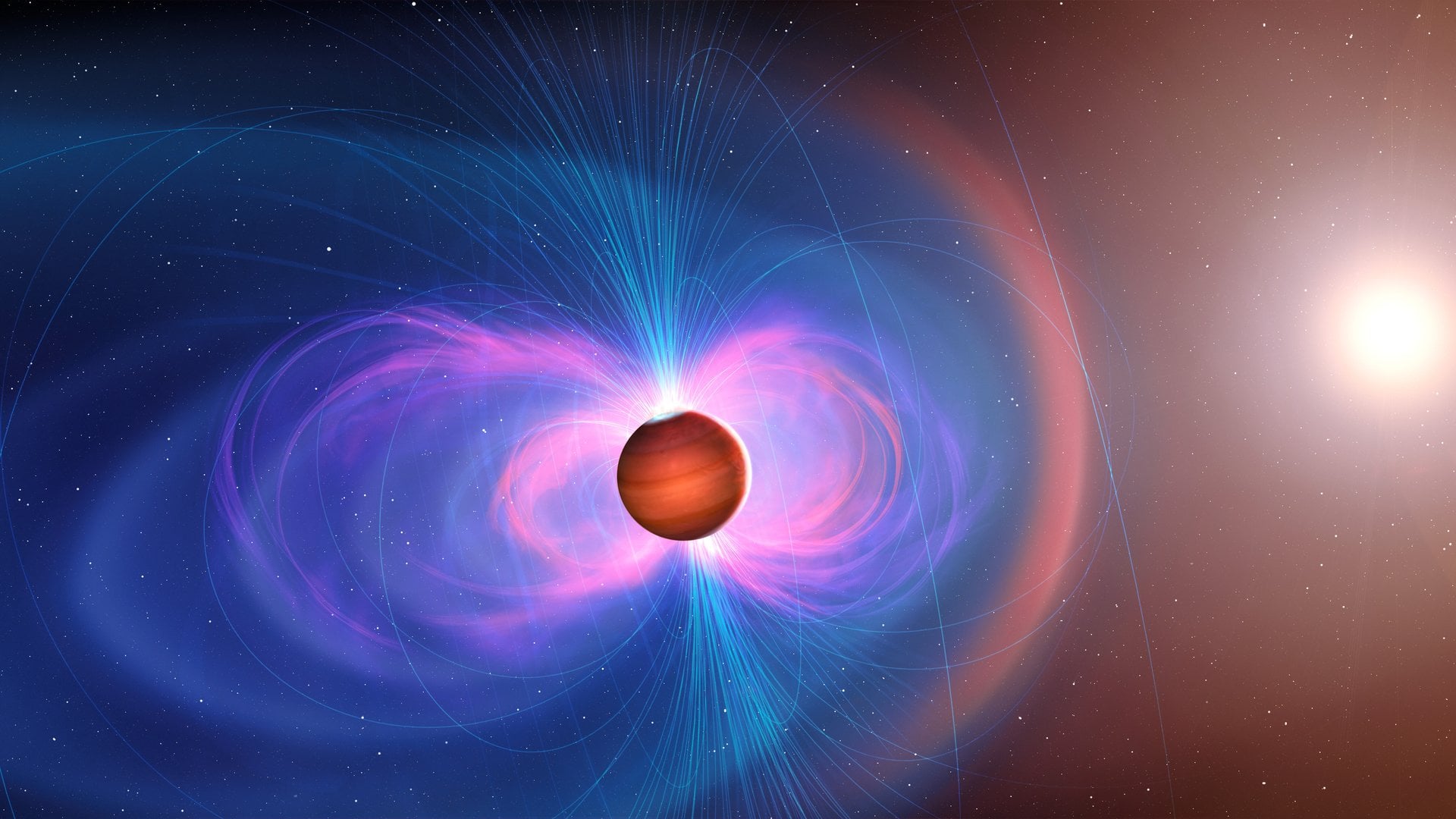
Astronomers studying wind speeds on distant exoplanets have discovered weather systems driven by magnetic fields, rather than the largely hydrodynamic weather patterns observed on Earth. This discovery is among the best evidence yet for the existence of magnetic fields on exoplanets.
Continue reading
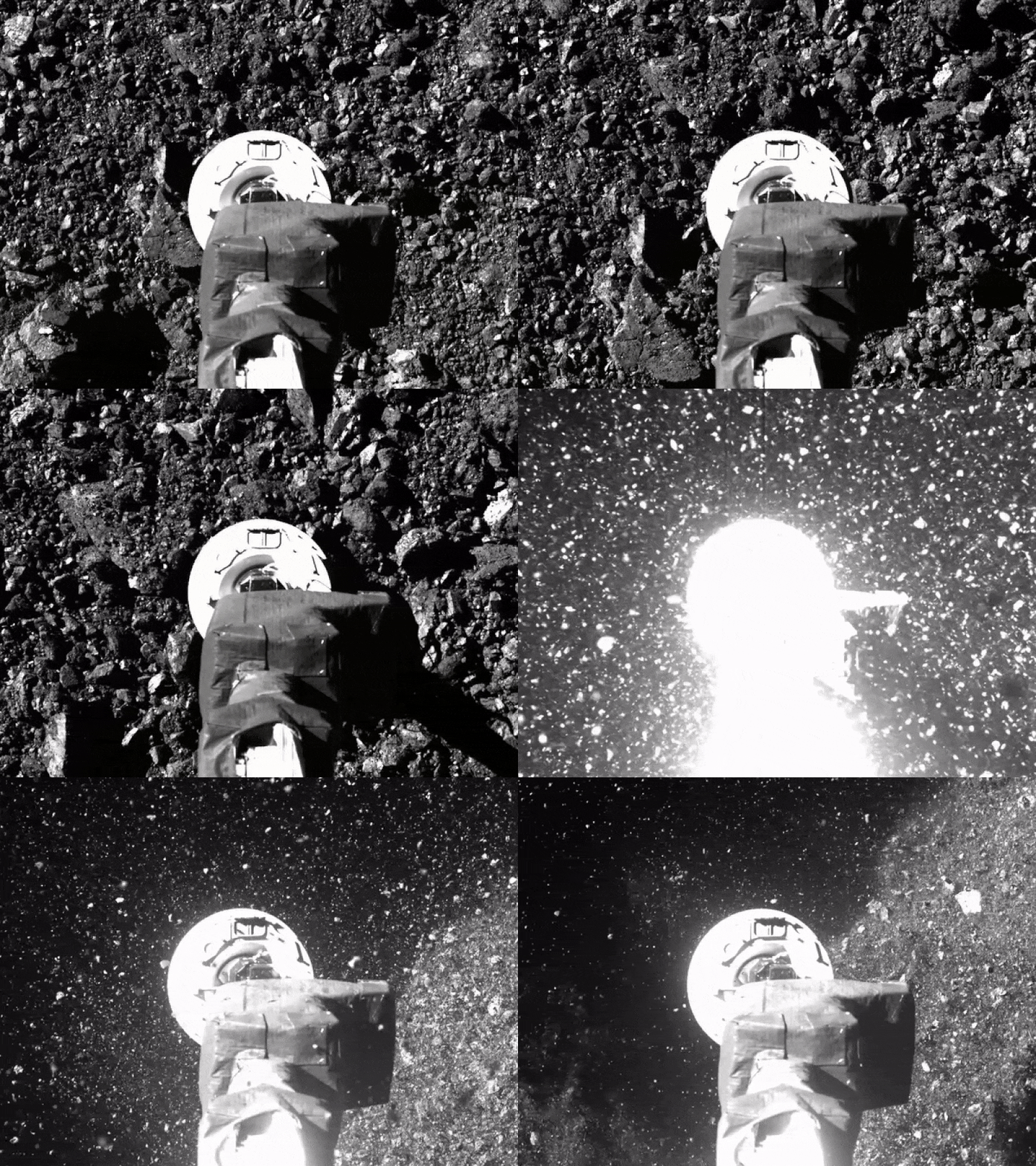
The strength of gravity is different on every body in the solar system. Whether it's the crushing weight of Jupiter or the miniscule pull of a small asteroid, this fundamental force of physics still has a major impact on the material those bodies are made up of. A new paper from researchers at the University of Duisburg-Essen and the German Aerospace Center (DLR) showcases just how different it can be by letting planetary simulants freefall inside a giant drop tower and measuring how “fluffy” the space dirt got.
Continue reading
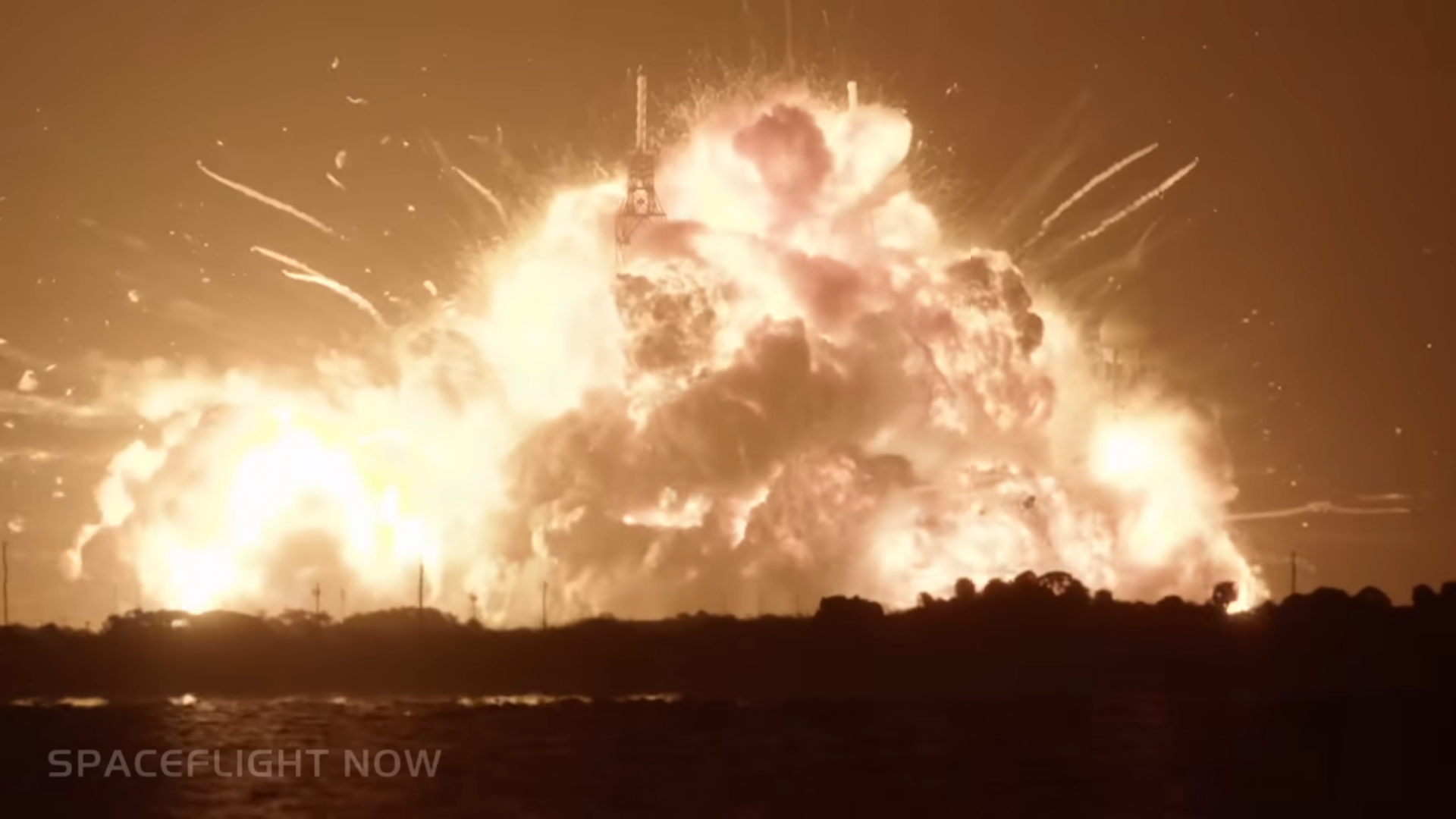
Jeff Bezos' Blue Origin is assessing damage to its launch pad after a rocket exploded during a test firing, creating a giant orange fireball seen and felt for miles around.
Continue reading
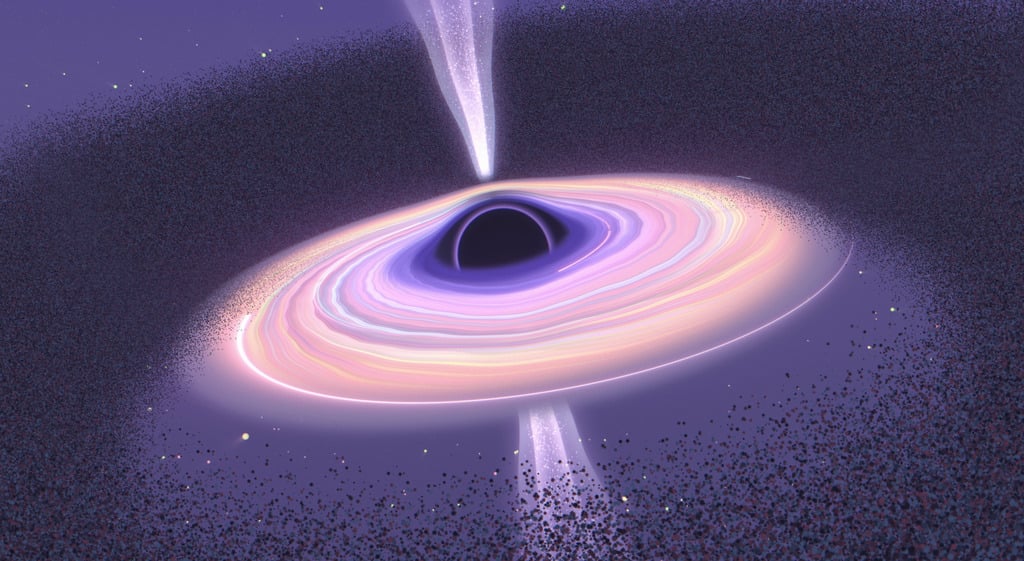
Galactic collisions are events of breathtaking proportions. The Supermassive Black Holes (SMBHs) at their centers plunge into a chaotic orbital dance that eventually coalesce into a single remnant. On their way to that point, they could eventually get “kicked” out of the center of their galaxy - and finding these “recoiling” black holes has been a challenge of cosmology for decades. A new paper, available on arXiv by an international team, used a novel idea to track down these fast-moving behemoths.
Continue reading
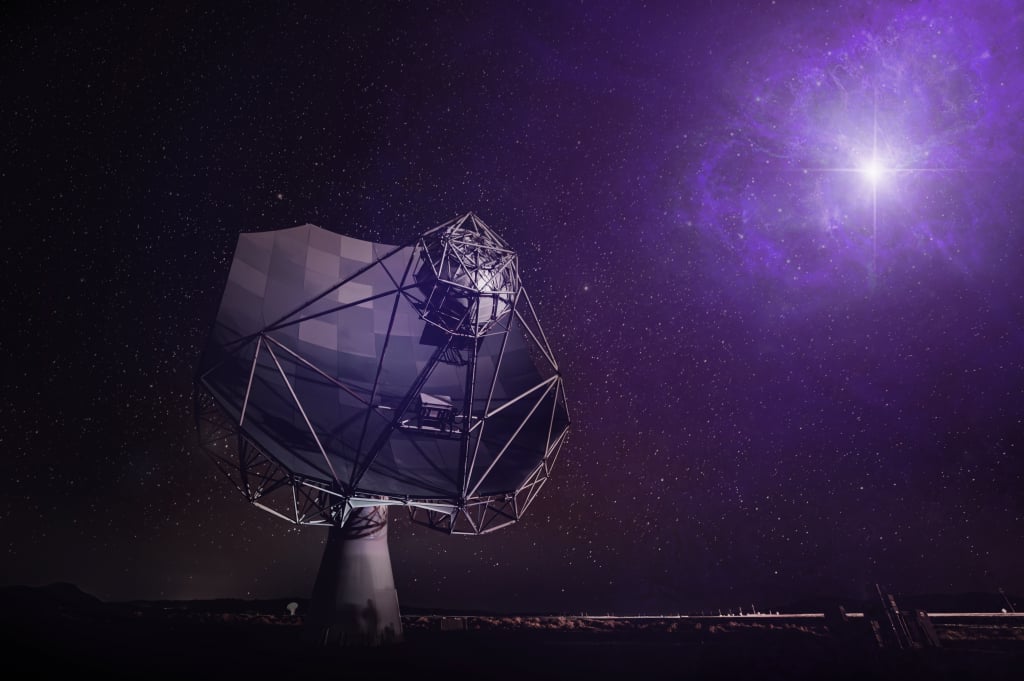
The prototype ngVLA antenna tested its systems by observing and tracking the Crab Nebula, also known as Taurus A (3C144), the remnant of an exploded star.
Continue reading
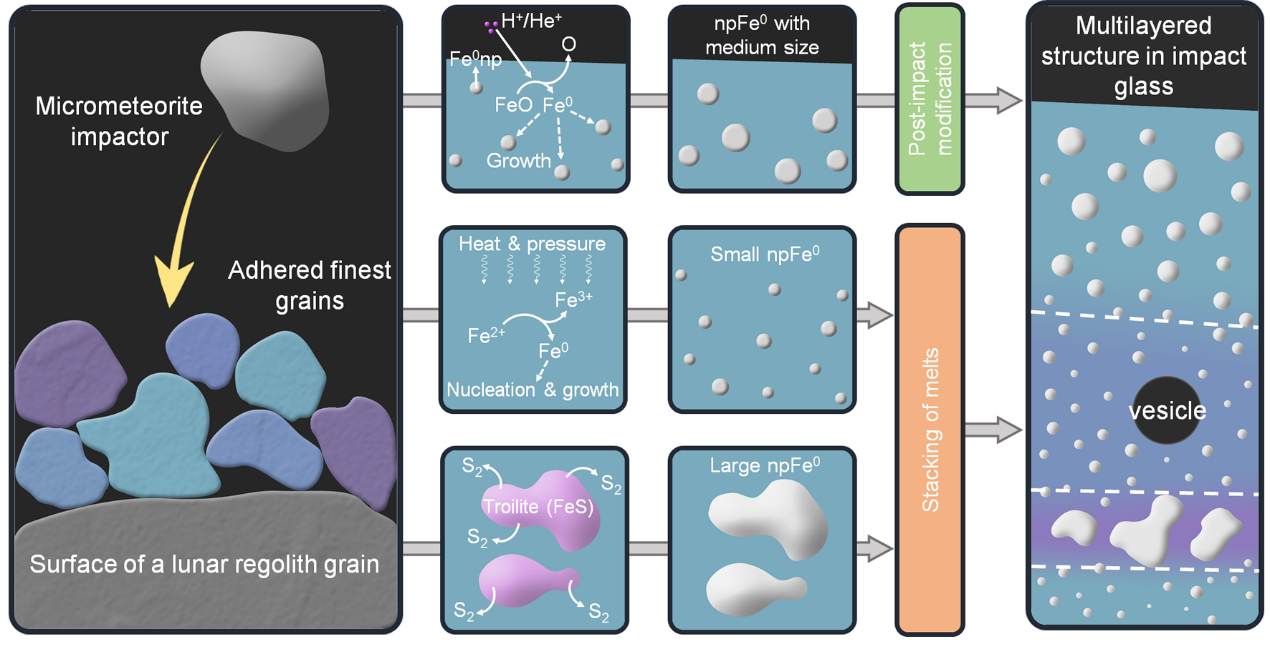
It might not seem like it, but the Moon is constantly being both sandblasted and baked. Its lack of a thick atmosphere allows micrometeorites to impact the surface at speed, and the solar wind isn’t held back either, baking the regolith with a constant flow of high-energy particles. These processes drive what is called “space weathering”, and it can drastically alter the physical and chemical properties of the lunar dirt over the course of billions of years. And we’re finally getting a better sense of what that means in practice thanks to two new papers from researchers at the Chinese Academy of Sciences and Peking University, which used advanced electron tomography and spectroscopic techniques to analyze samples returned from the Chang’e-5 mission to the near side of the Moon.
Continue reading
Though it's a toxic chemical, hydrogen cyanide (HCN) is also important for the development of life. It's a precursor to things like amino acids and nucleic acids and plays a central role in theories of the origin of life on Earth. Recently, difficult questions have been asked about how it could have formed on the early Earth. But the authors of new research in PNAS seemed to have figured it out.
Continue reading
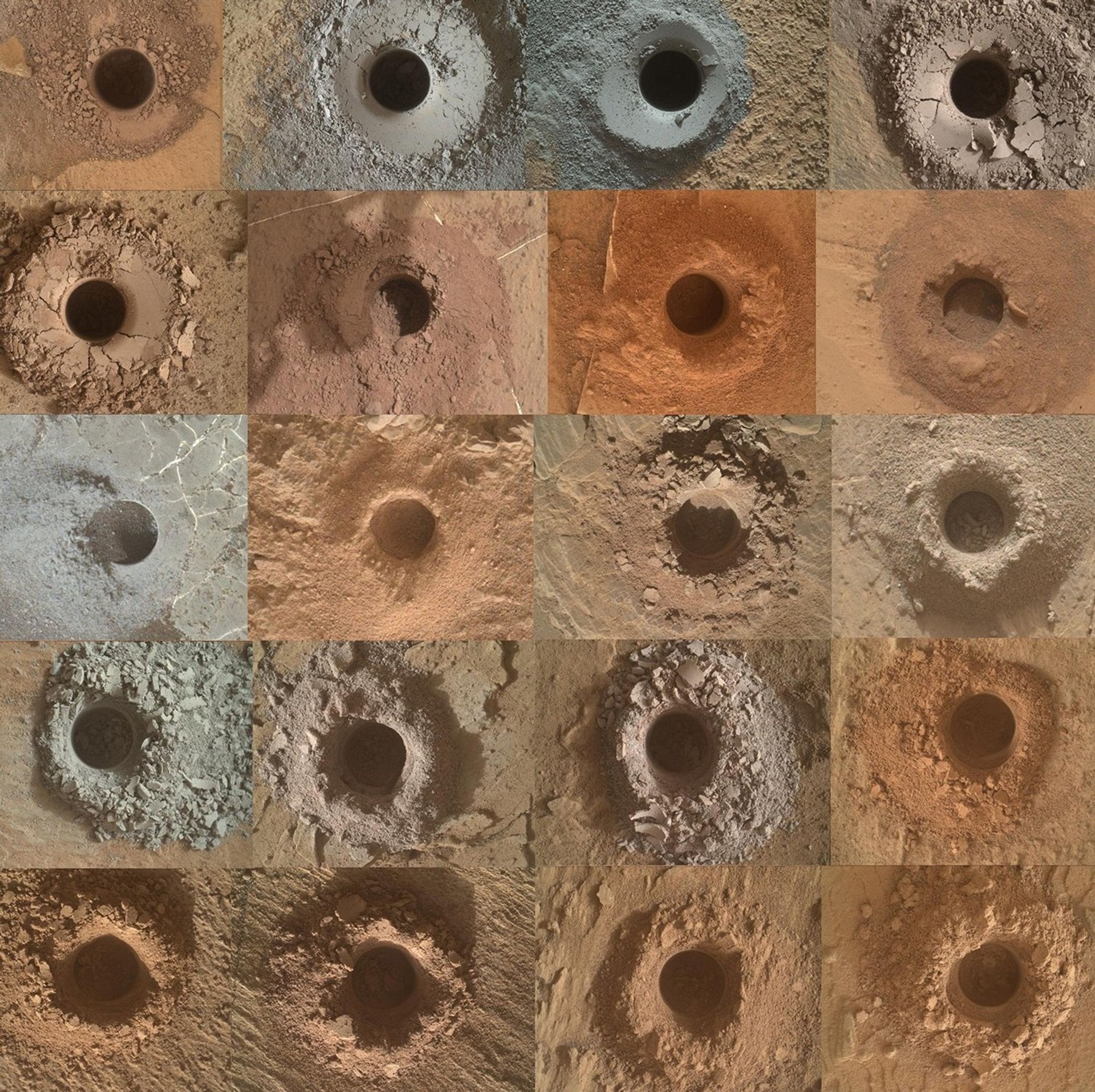
The search for any sign of life on Mars continues. In the latest update, a new data release from Curiosity’s Chemistry and Mineralogy (CheMin) - essentially the rover’s portable X-ray diffraction lab - and published in a paper in Science, analyzes 20 different rock samples from various elevations of Mount Sharp, the mountain in the center of Gale Crater that Curiosity has been slowly climbing. In the paper, the researchers describe how the size of the crystals in those samples could help scientists determine where to look for evidence that life might have evolved on the Red Planet.
Continue reading
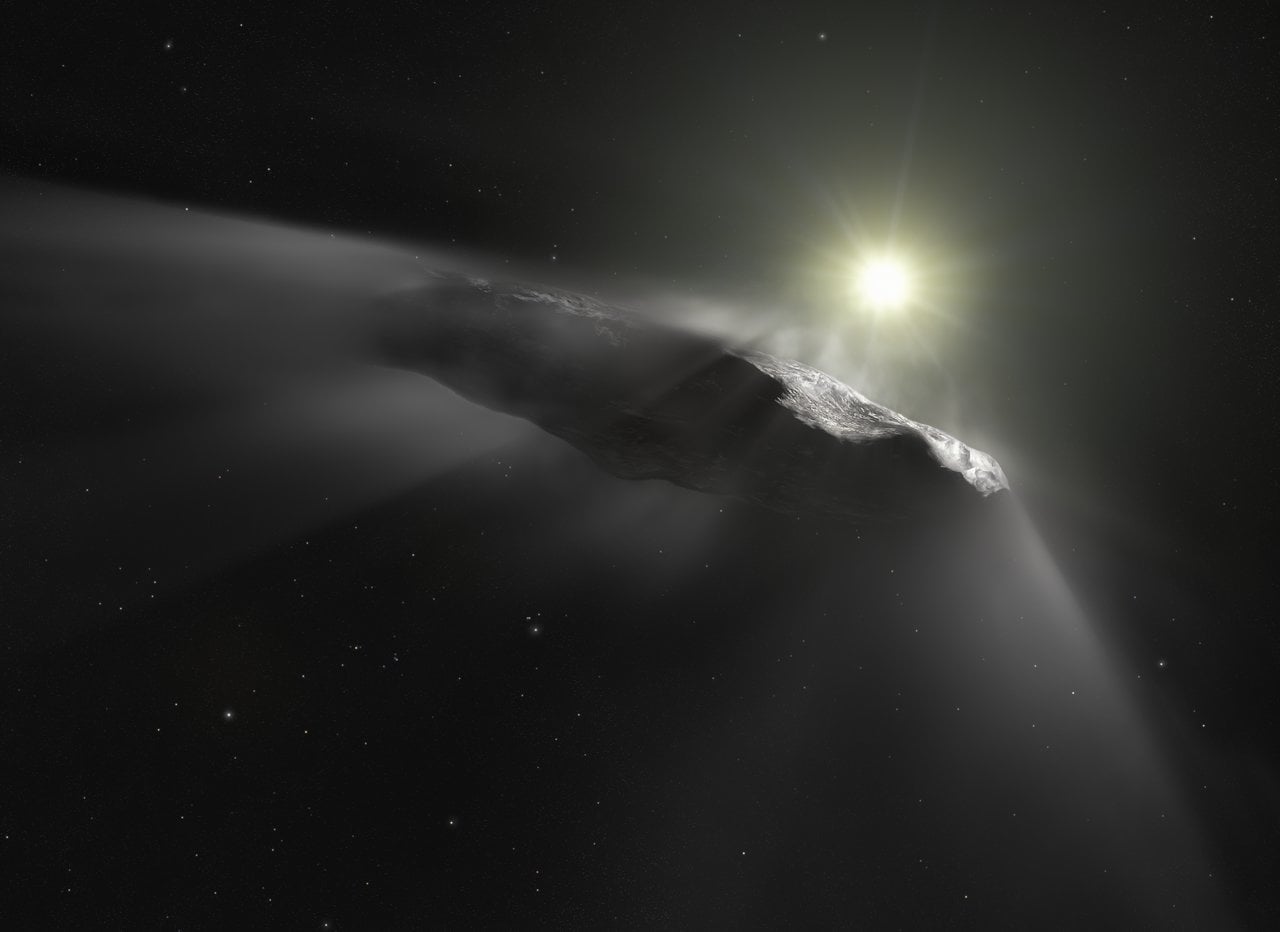
3I/ATLAS has caused quite a stir over the last year, inviting astronomers to update what they know about other solar systems as well as our own. However, this third interstellar visitor may have an unexpected impact on our understanding of dark matter. A new paper, available in pre-print on arXiv from researchers at the University of Hamburg, attempts to calculate the impact that the presence of large amounts of interstellar objects (ISOs) would have on our calculation of dark matter in our galaxy.
Continue reading
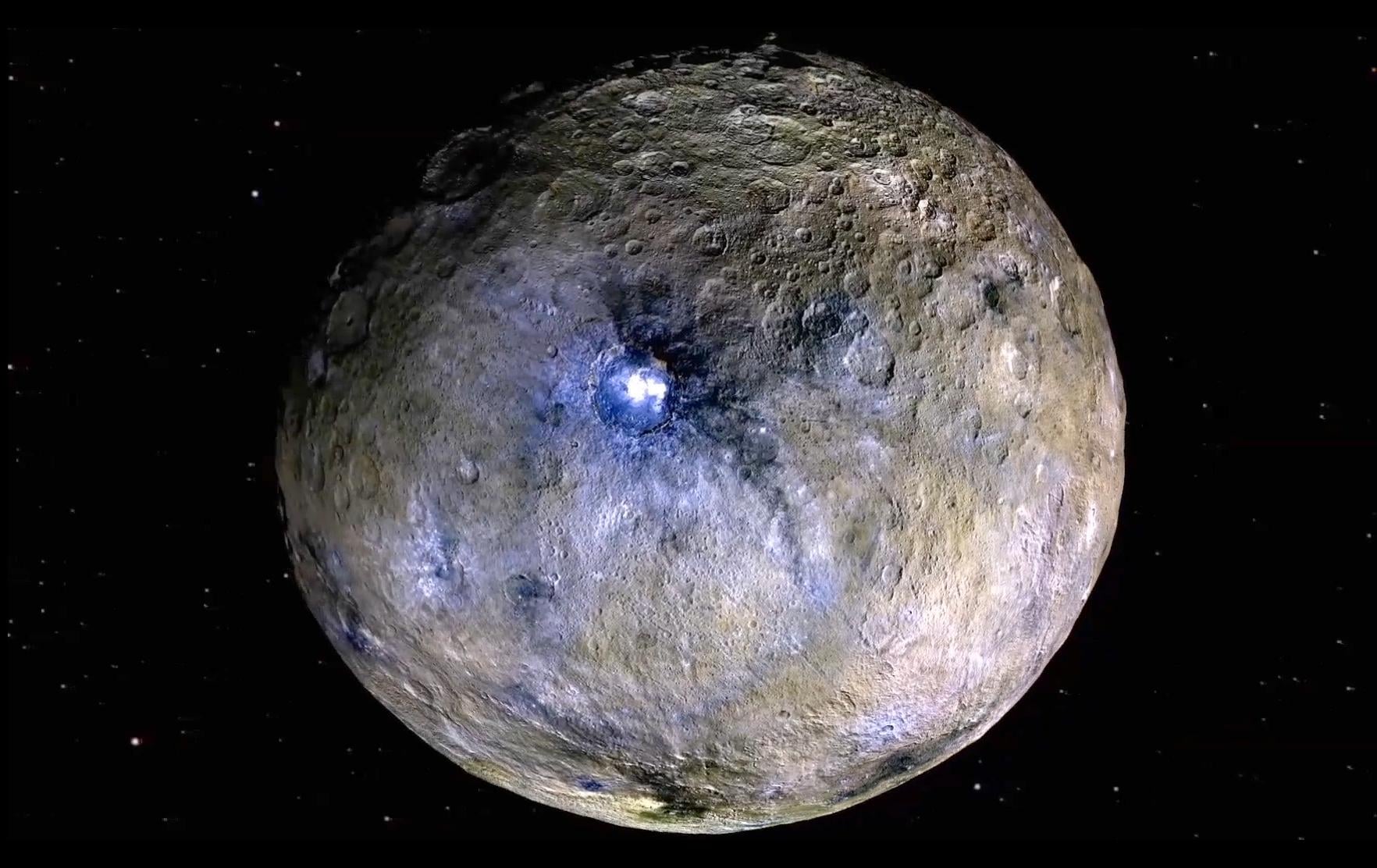
The dwarf planet Ceres has a surface that seems to get more perplexing with each new study. A recent paper presented at EGU26 in Vienna only adds to its mystery.
Continue reading
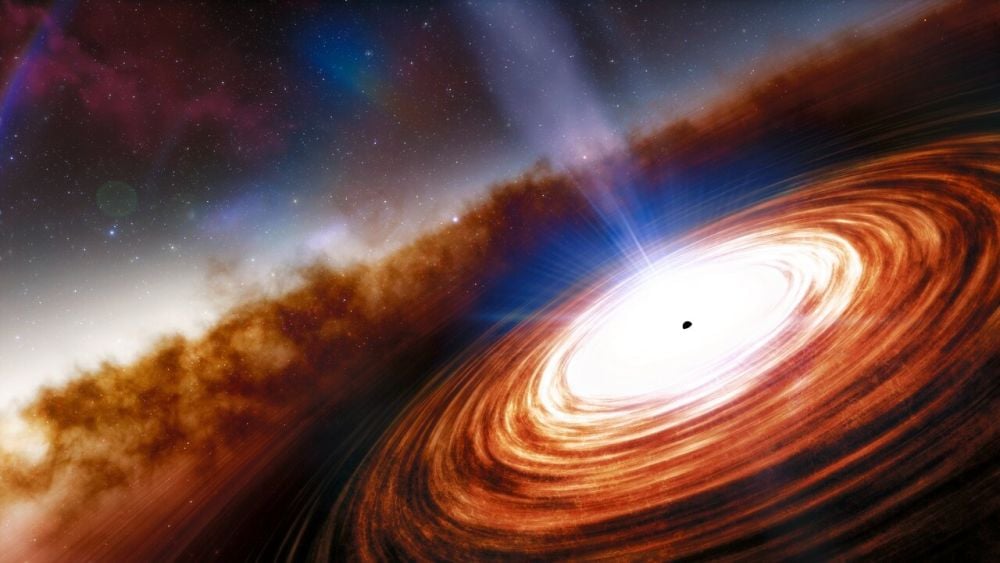
The JWST found an abundance of overmassive black holes at high redshifts, pushing the limits of black hole (BH) science in the early Universe. Results have claimed that these BHs are significantly more massive than expected from the BH mass-host galaxy stellar mass relation derived from the local Universe. But new research shows they were just outliers in the normal range of masses that don't require any special causes.
Continue reading
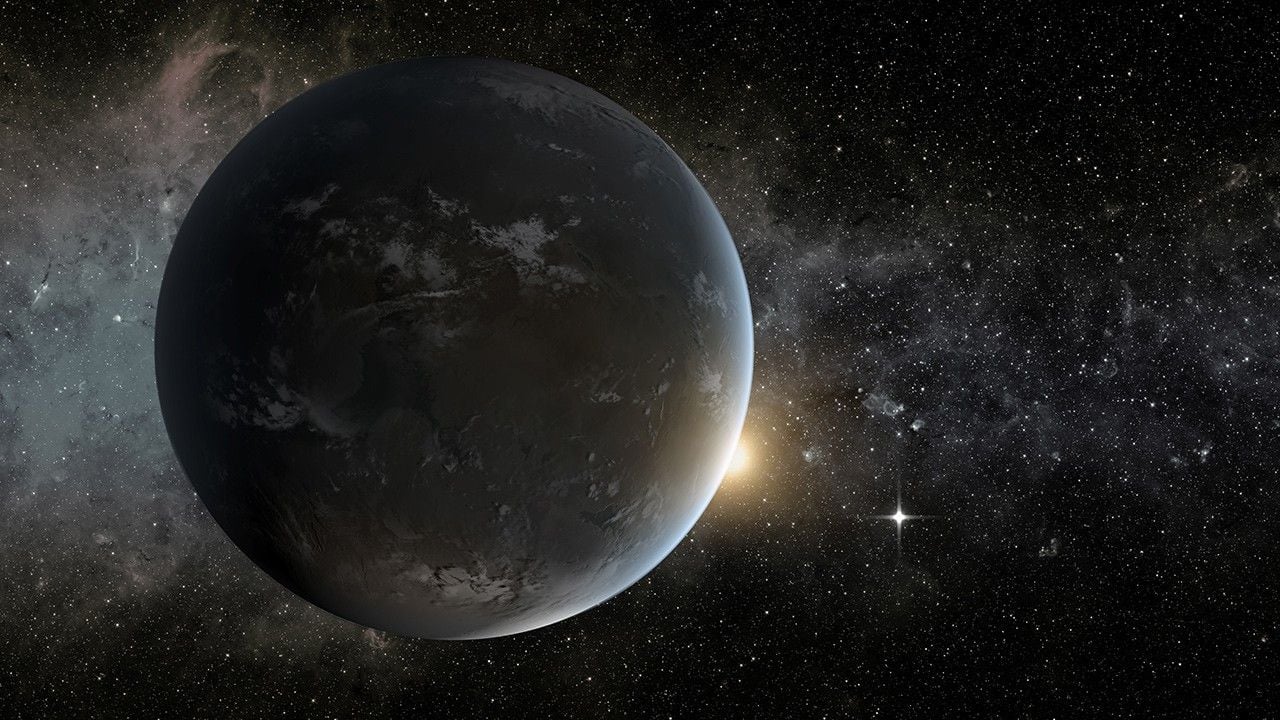
Multi-billion dollar space telescope programs aren’t only feats of aerospace engineering. They also feature “lies, damn lies, and statistics”. Or at least statistics. They definitely feature those, as does all good observational astronomy. The problem with statistics is, in order to get a clear definitive answer, you need lots of samples. And, to put it mildly, it’s hard to find lots of samples of planets with alien life on them. And even harder to prove that the signals we think are caused by alien life aren’t caused by some other non-biological process. Or at least that’s the theory underpinning a new paper available in pre-print on arXiv from David Kipping of Columbia University (and Cool Worlds YouTube fame).
Continue reading
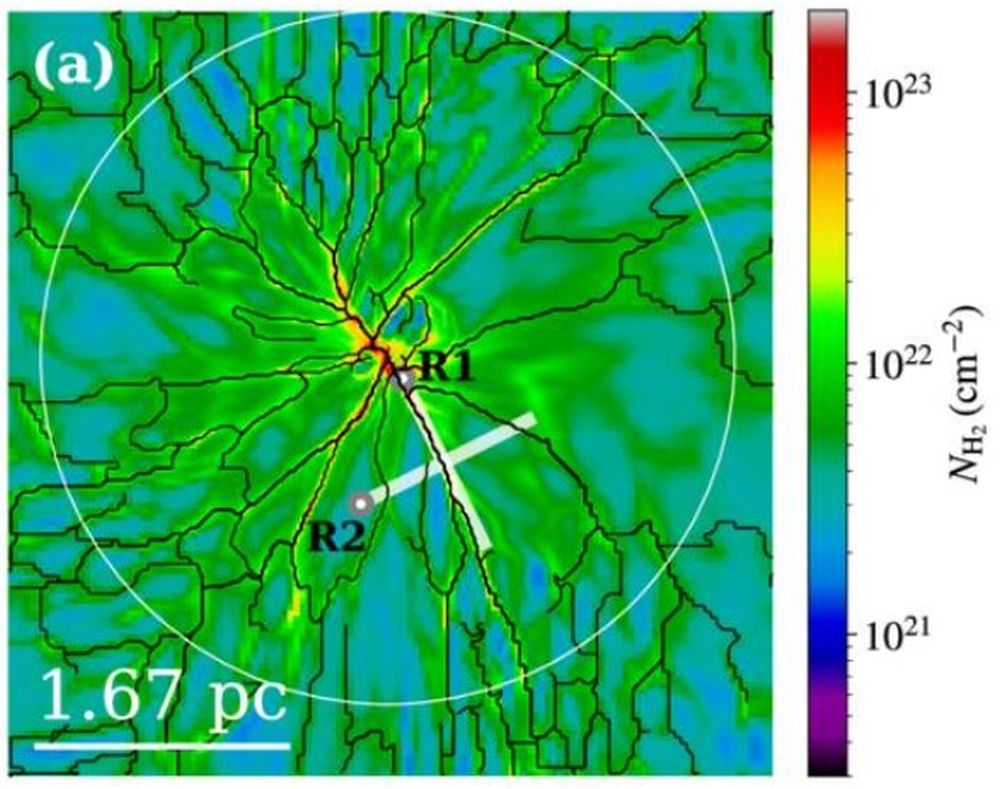
The universe is full of fascinating structures, and some of the most striking take shape inside the giant clouds where stars are born. There, streams of gas appear to converge from all directions toward a dense central hub, like spokes meeting at the center of a wheel. New simulations show why this is, and why star formation overall is so inefficient.
Continue reading
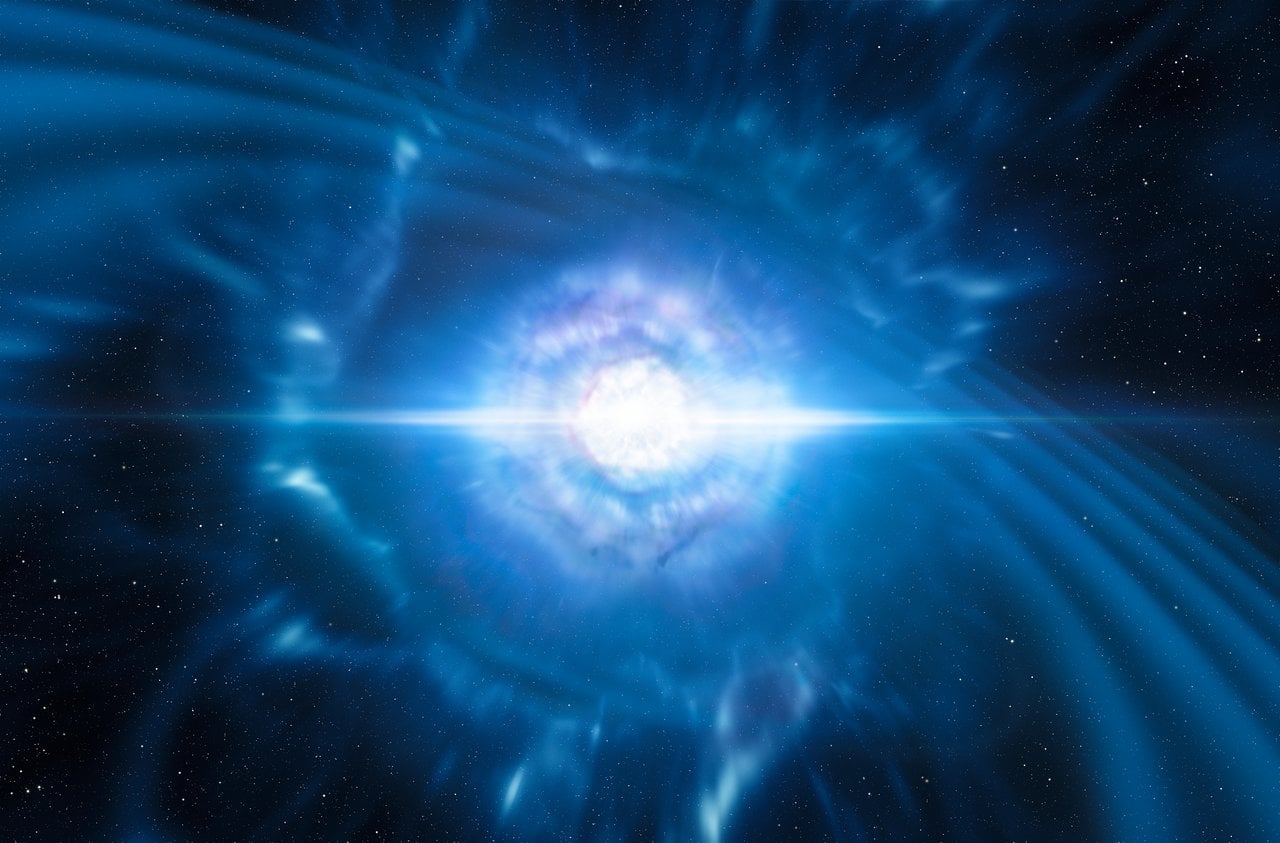
The physics of neutron stars are almost too fantastic to believe. Something the weight of two Suns compacted to a sphere the size of a city. Each teaspoon of its material would weigh billions of tons. If you’ve done any reading on the topic, you’ve heard these facts before. But despite the intense interest these extreme objects hold, we are still actively learning lots about them. One of the most pertinent outstanding questions is where is the line between becoming a neutron star and becoming a black hole when a star dies. A new paper by researchers at the HUN-REN Wigner Research Centre for Physics in Hungary describes what they believe to be a definitive answer to that question - between 2.2 and 2.3 solar masses.
Continue reading
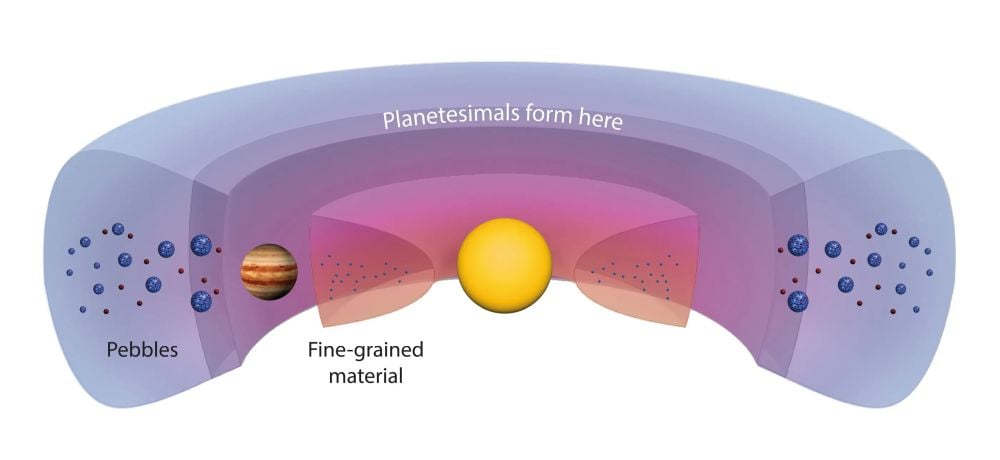
Jupiter helped create the different rocky bodies in the Solar System. The massive gas giant created a planet-induced pressure bump in the gas in the disk surrounding the young Sun. This pressure bump filtered different types of dust at different times, leading to the formation of planetesimals with different compositions at different times.
Continue reading
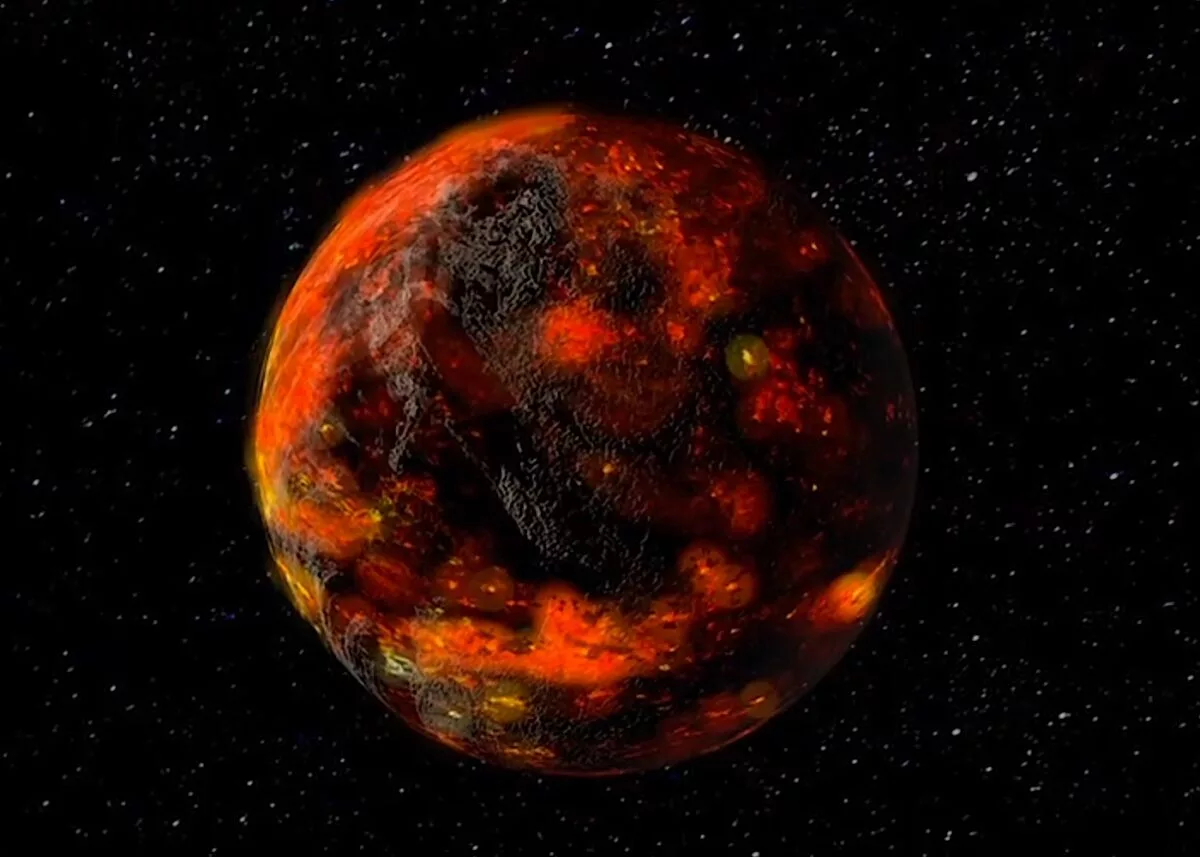
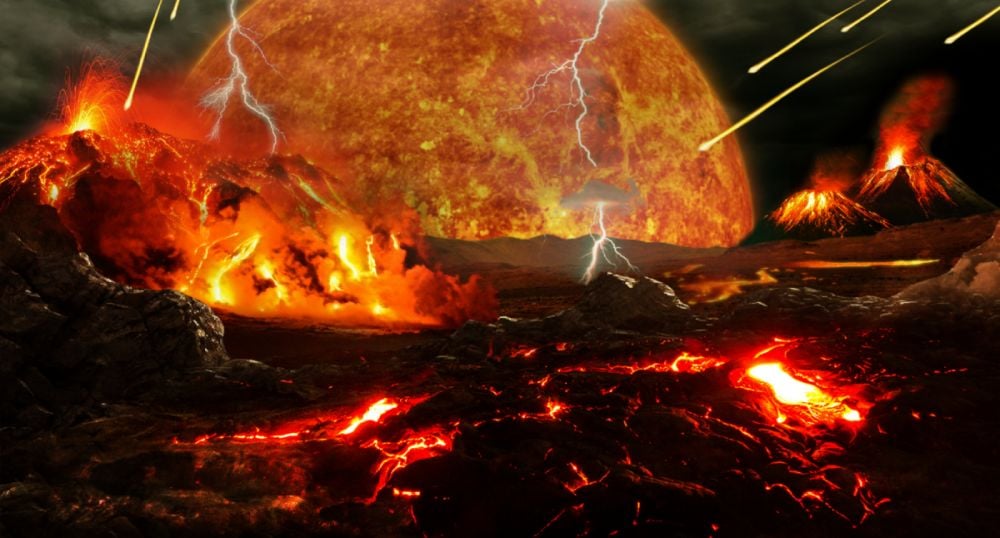
4.5 billion years ago was an interesting time for the Earth. The atmosphere was thick and what we would now think of as toxic. The Moon, which was freshly formed, looks much more massive than it does today and faintly glows with the residual heat from its own creation. And the floor was literally lava. Everywhere. If there were any children alive at the time, they would have no chance of winning that game. But for a long time, scientists had thought this molten phase of the Earth didn’t last long. But according to a new paper, available in preprint on arXiv by researchers at the Kapteyn Astronomical Institute, it might have lasted for upwards of half a billion years.
Continue reading
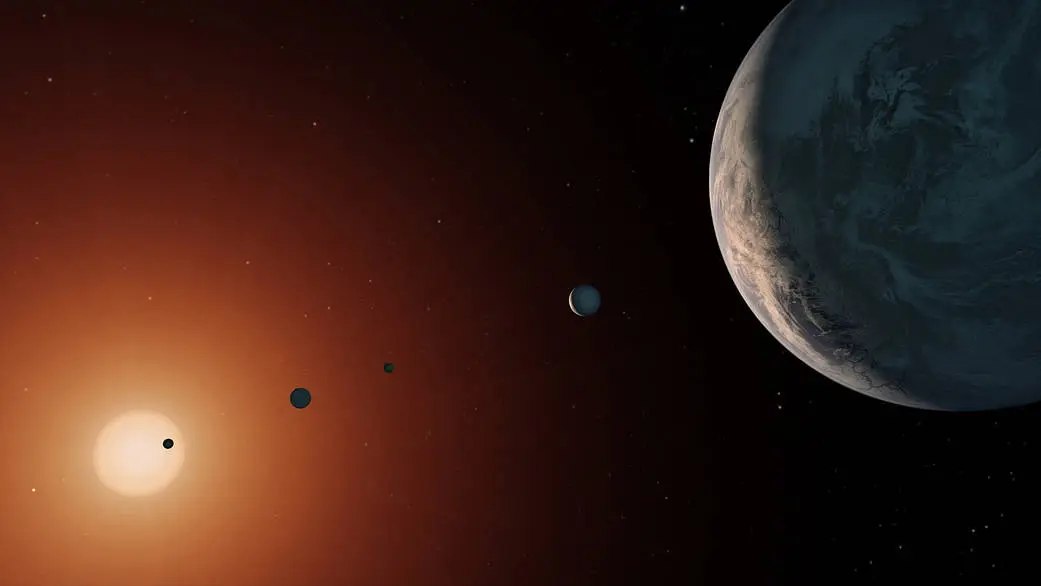
The TRAPPIST-1 system, located about 41 light years from Earth, has been a focal point of much exoplanetary discussion - mainly because it has 7 confirmed planets orbiting a dim M-dwarf star. Two of those planets - TRAPPIST-1e and -1f - are thought to be in the star’s habitable zone. However, the habitable zone of M-dwarfs is so close to the star itself the planets are likely tidally locked to it, meaning they have a permanent day and night side, with a “twilight terminator” in between. Armed with that knowledge, scientists have been attempting to model the climate on these two exoplanets, and a new paper from Jacob Haqq-Misra of Blue Marble Space uses a new type of climate model to accurately do so with much less computational power.
Continue reading
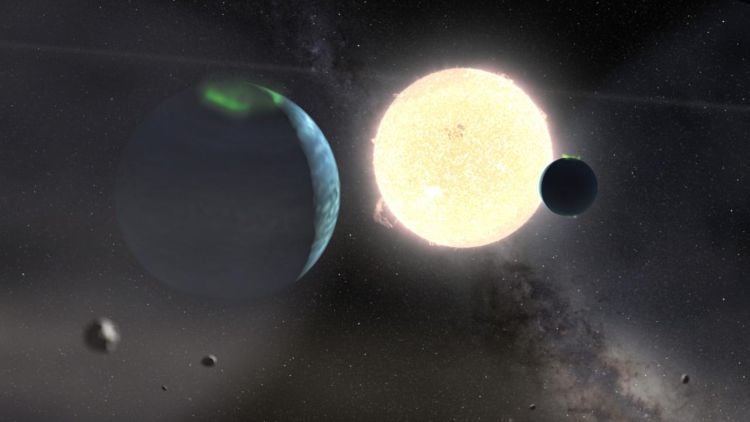
It’s 2234, you’re on your annual class field trip touring exoplanets, and your teacher informs everyone they can pick one more exoplanetary system to explore before heading back to Earth. You and your classmates are exhausted from the day’s activities and you’re hungry. However, you get really excited because you already know what everyone will want. You and your classmates all shout in unison, “The young and far away puffy ones!”
Continue reading
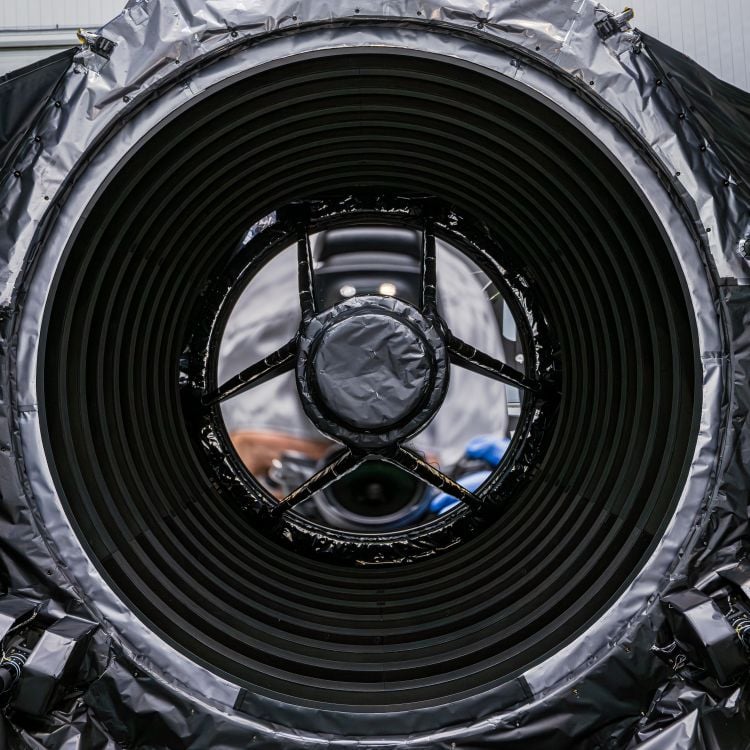
It’s June 2027, and you’re fresh off defending your PhD studying the direct imaging of exoplanets while starting your postdoctoral journey at NASA Jet Propulsion Laboratory. The trauma of eating ramen and living off a sub-living wage for the last five years of your life is still fresh in your brain. But you’re excited to finally get your real career started with funding you received for viewing time on the much-anticipated Nancy Grace Roman Space Telescope (Roman for short). You begin to download the first set of data as your eyes tear up knowing your entire journey in research and academia is about to be worth it.
Continue reading
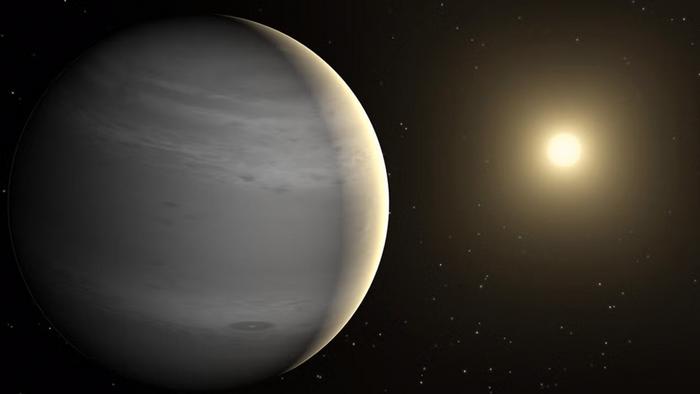
It’s 2165, and methane is in high demand, especially after the Titan Treaty of 2145 made it illegal to harvest methane from Saturn’s moon, Titan. But the advent of interstellar travel has made exoplanetary exploration far easier, enabling corporations to identify and harvest methane from exoplanets. However, it’s far cheaper and easier to harvest methane from exoplanets with reasonable (also called temperate) temperatures, because it means higher quantities of methane. The Exoplanet Exploration Corporation decides to send its first ship to one such exoplanet loaded with methane that could bring their quarterly financial statements back into the green.
Continue reading
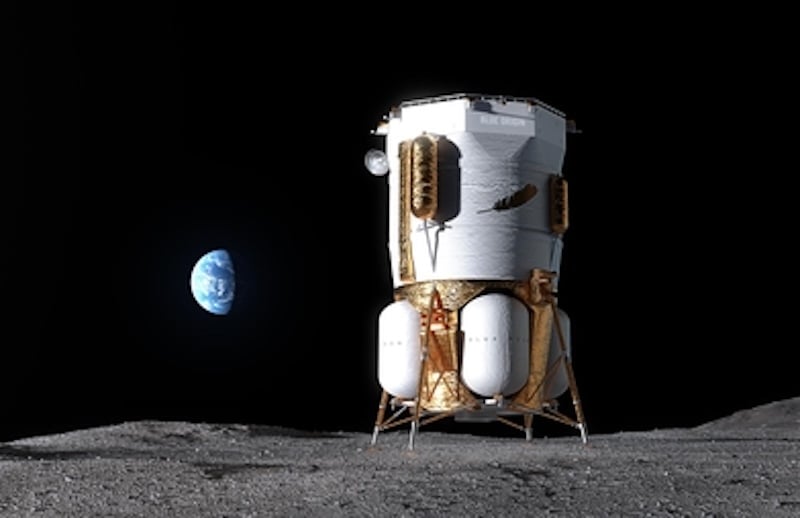
Before any spacecraft can survive the Moon, it has to survive something almost as brutal, a giant metal chamber in Houston that strips away every molecule of air and swings temperatures from scorching to freezing in minutes. Blue Origin's lunar lander just spent time in exactly that chamber and it came out the other side ready for the real thing.
Continue reading
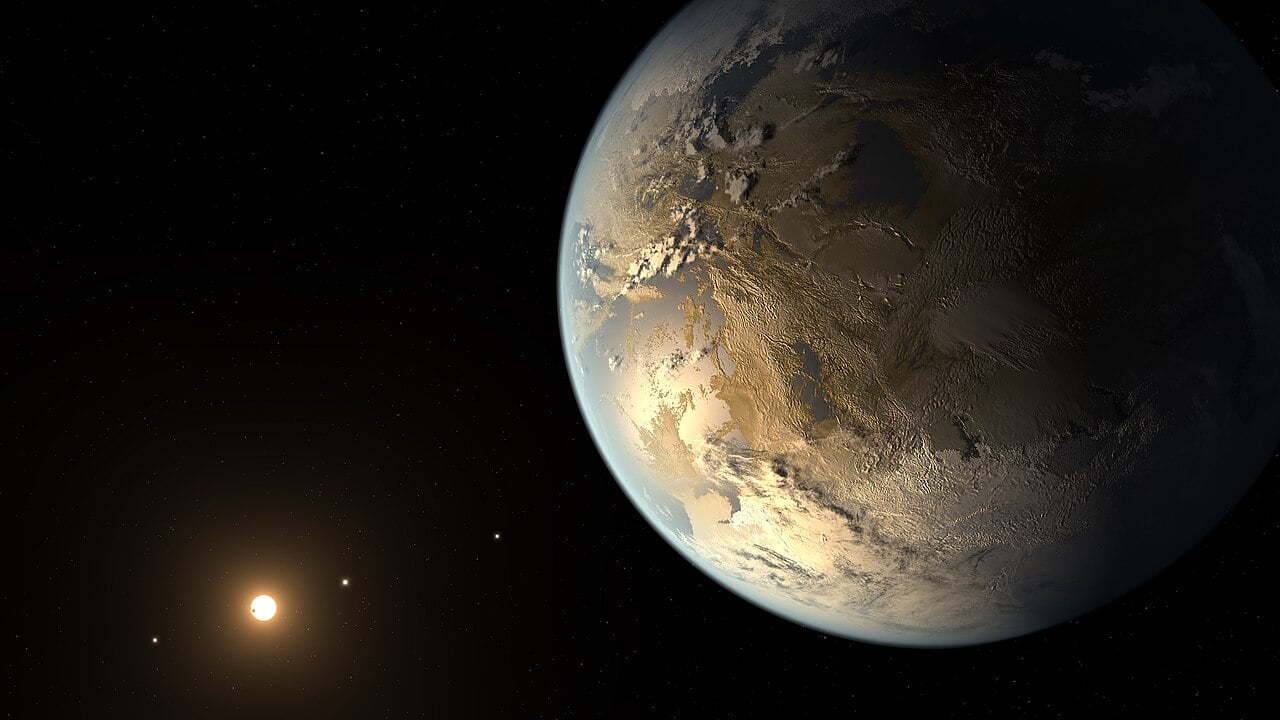
We are closer than ever to detecting signs of life on another world. The James Webb Space Telescope is already ‘sniffing’ alien atmospheres, and the Habitable Worlds Observatory is being built specifically to find biology beyond Earth. But a new paper raises an uncomfortable question; when we do find that first biosignature, will it actually tell us anything meaningful about life in the universe? The answer, it turns out, might be no.
Continue reading
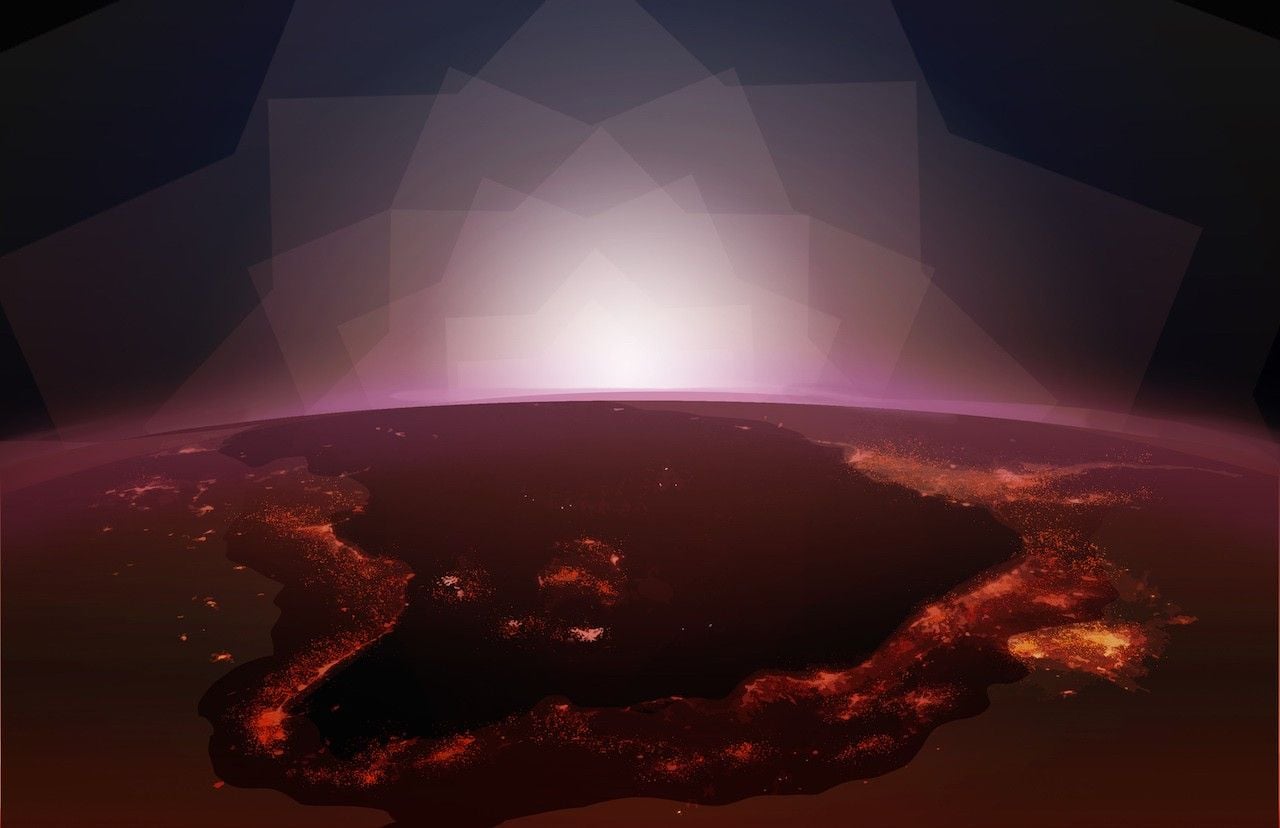
In recent decades, the Search for Extraterrestrial Intelligence (SETI) has seen a revival, and future surveys will benefit from new technologies. Similarly, our perception of what technologies an advanced civilization might use has expanded.
Continue reading
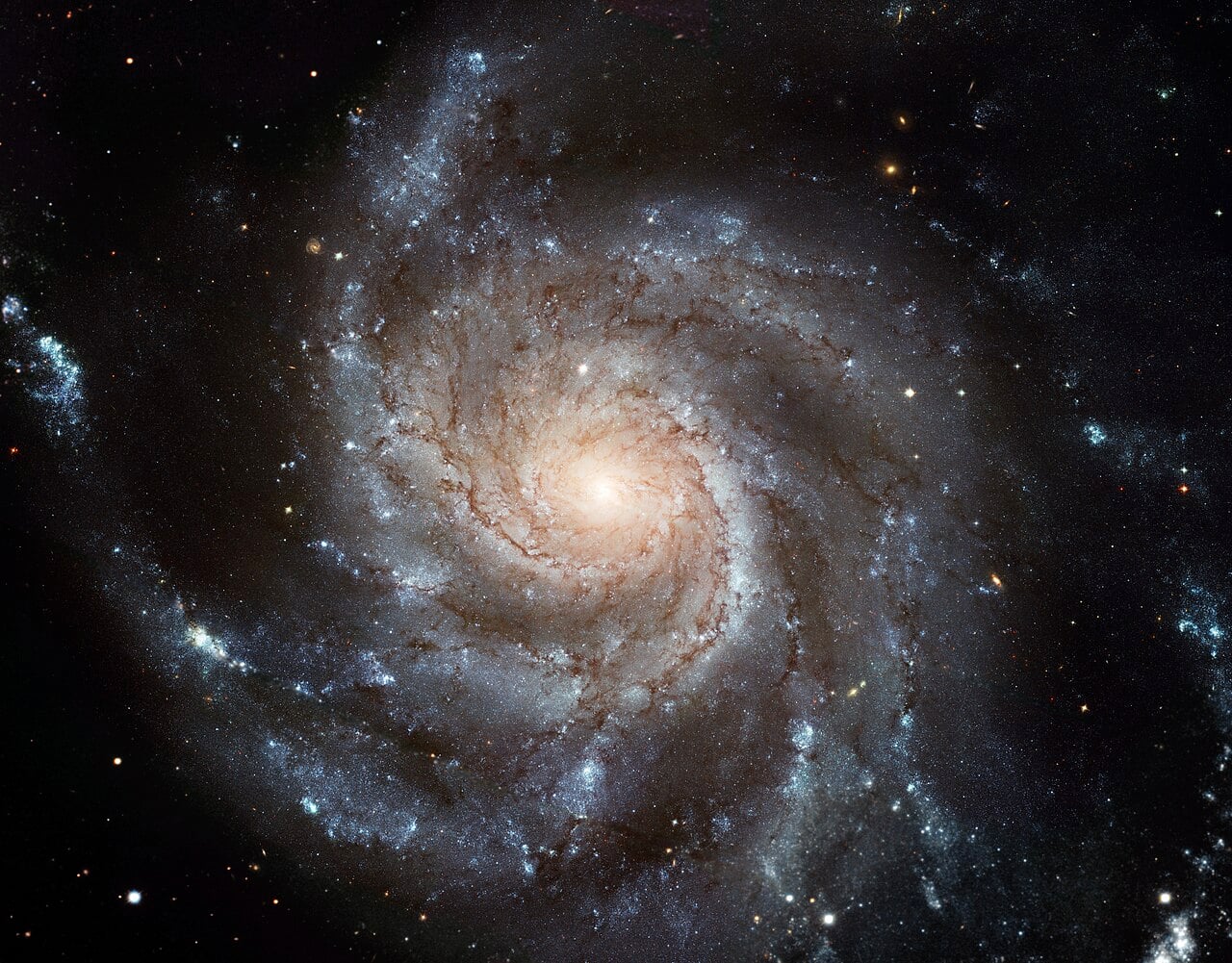
Every galaxy we know of spins. It's one of those rules of the universe so fundamental that astronomers barely think about it anymore. So when the James Webb Space Telescope pointed at one of the most massive galaxies in the early universe and found…well nothing. No spin, just stillness. They had to look twice.
Continue reading
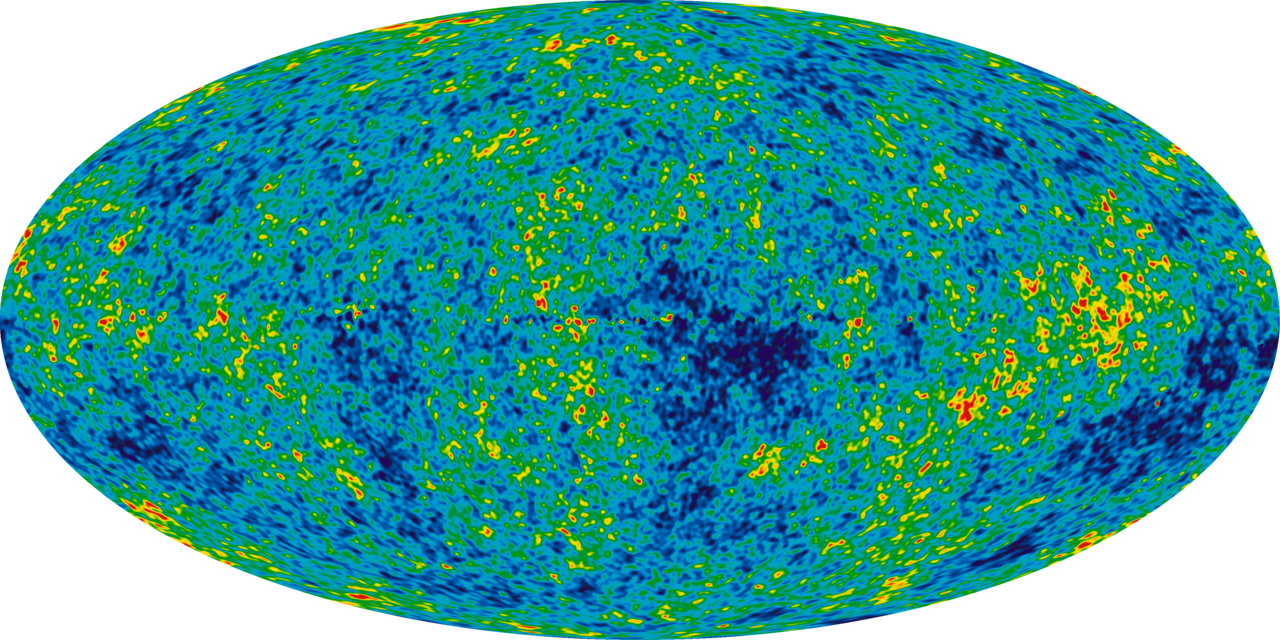
For nearly thirty years, dark energy has been cosmology's great get out of jail free card, the invisible, mysterious force we invented to explain why the universe is expanding faster than it should be. Now a team of mathematicians says we may never have needed it at all. And the implications are stranger than you might think.
Continue reading
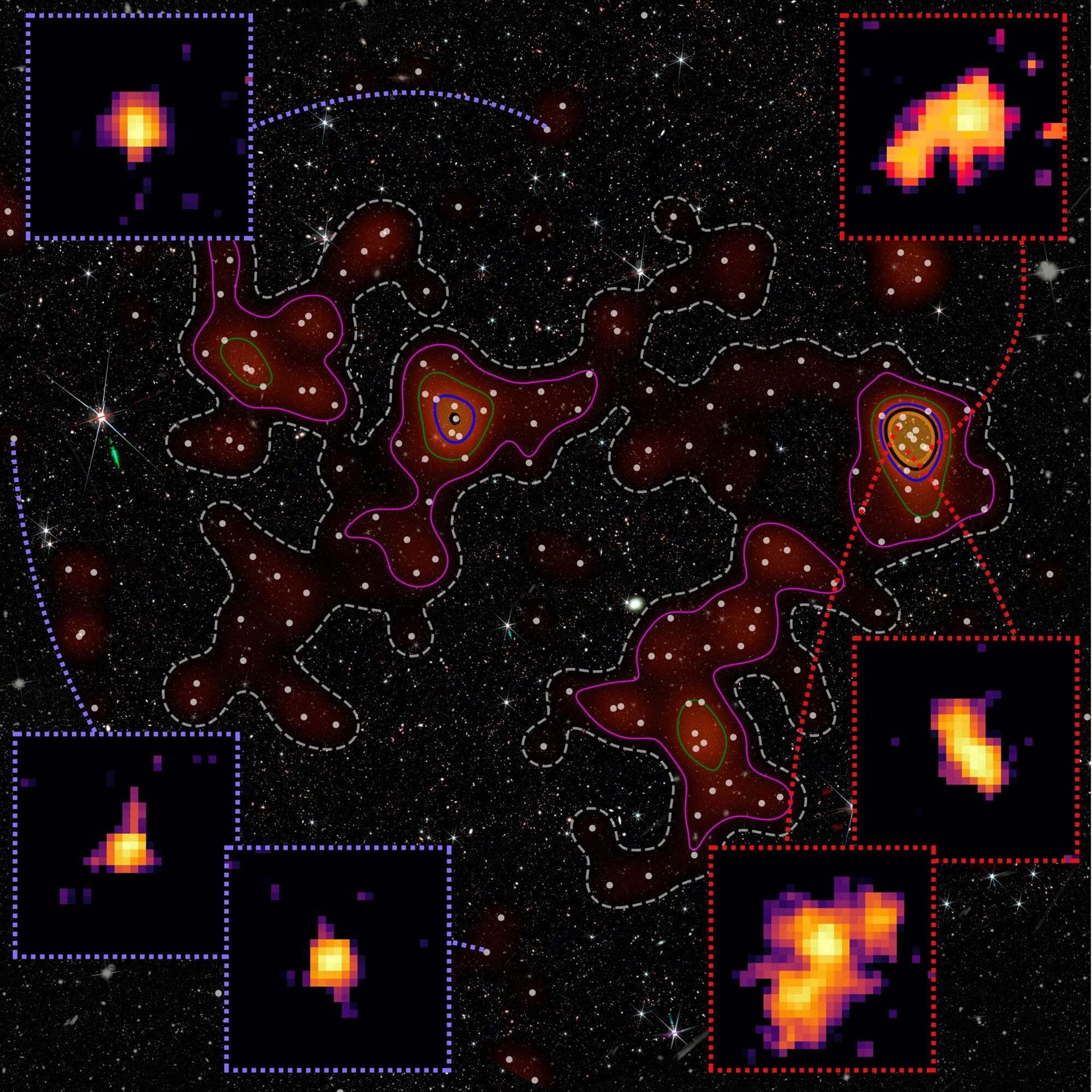
An early galaxy cluster named after an Indian lake is teaching astronomers about influences on galaxy evolution in the infant Universe. Astronomer Ronaldo Laishram of the National Astronomical Observatory of Japan (NAOJ) used the Subaru Telescope’s wide-field camera, Hyper Suprime-Cam (HSC), to conduct a large sky survey to look for early galaxies with active star formation. The result was the discovery of a massive protocluster of galaxies that existed some 12.6 billion years ago, very early in cosmic time. Detailed study of this region could give new insight into how galaxies and their clusters form and evolve.
Continue reading
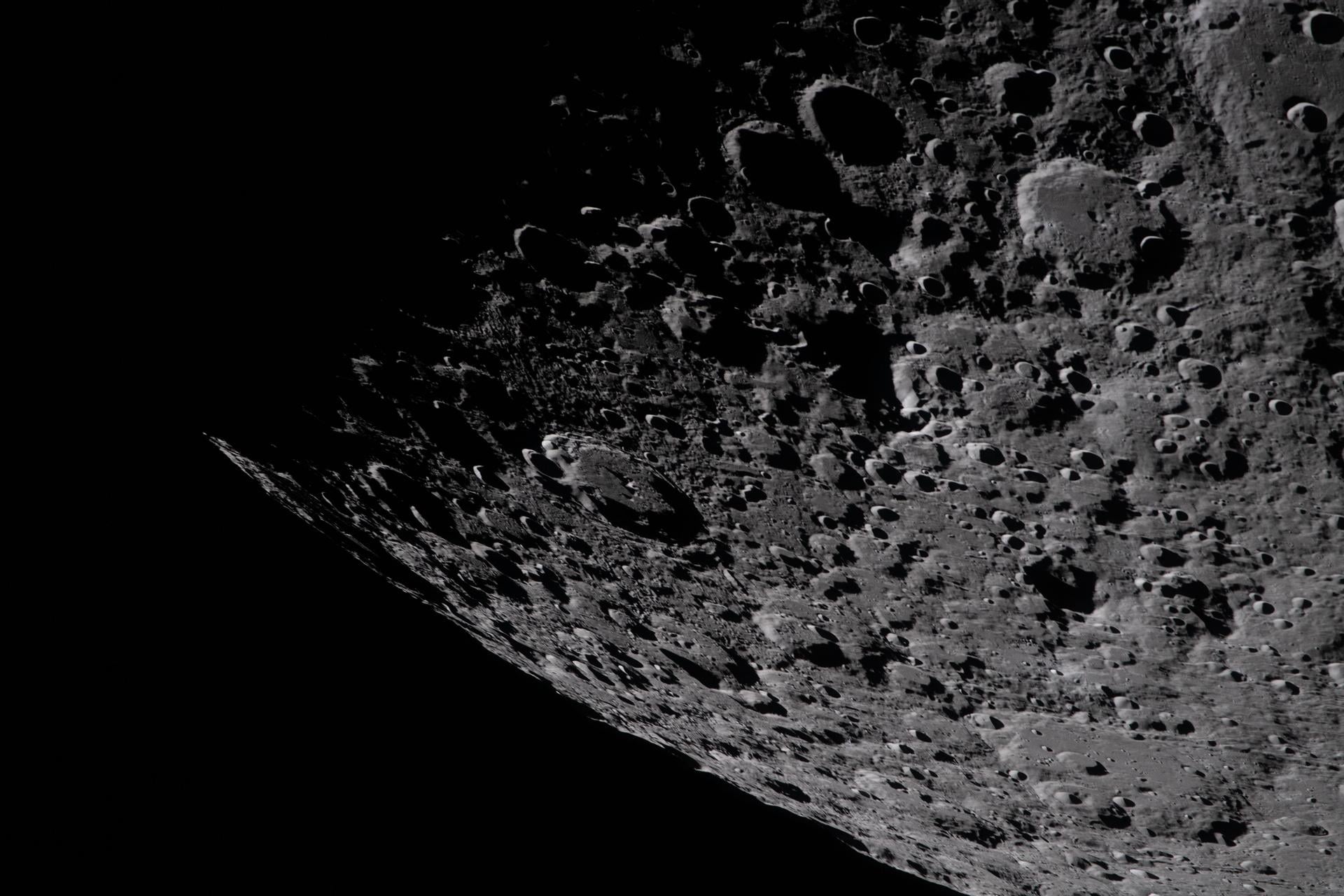
A team of scientists is exploring ways to use dark craters at the lunar poles as sites for ultrastable lasers to aid in surface and near-lunar navigation. The group, led by Physicist Jun Ye, an expert on lasers and precision measurements, were discussing the types of instruments that Artemis astronauts could install and use during their time on the Moon.
Continue reading
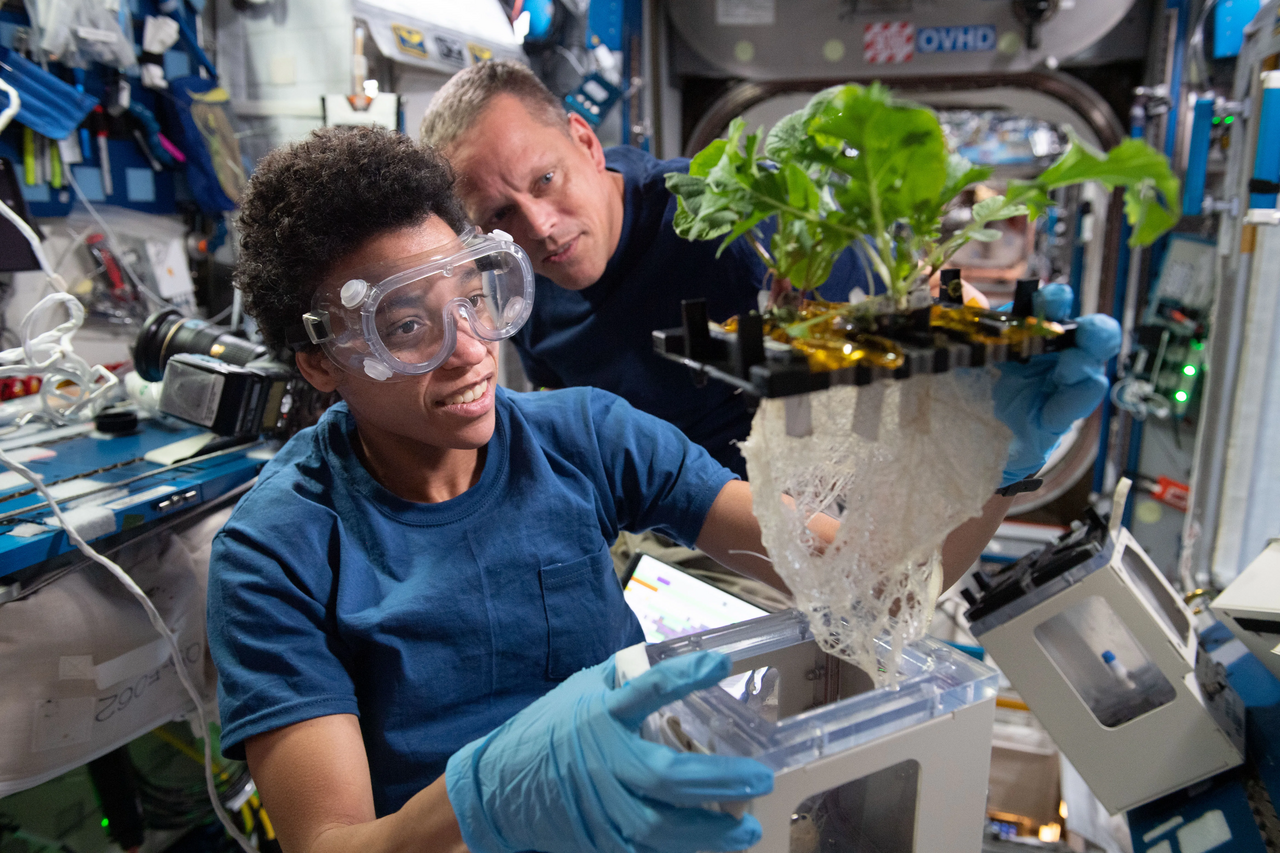
Building a permanent base on the Moon sounds like an engineering problem. Design the habitat, sort the power supply, figure out life support, and you're most of the way there. But the engineers who've spent time thinking hard about this will tell you the real challenge isn't the hardware — it's the humans inside it. Now researchers have built a virtual Moon base and run tens of thousands of simulated missions inside it, studying not the rocket engines or the radiation shielding, but the astronauts themselves. What they found could reshape how we plan humanity's return to the lunar surface.
Continue reading
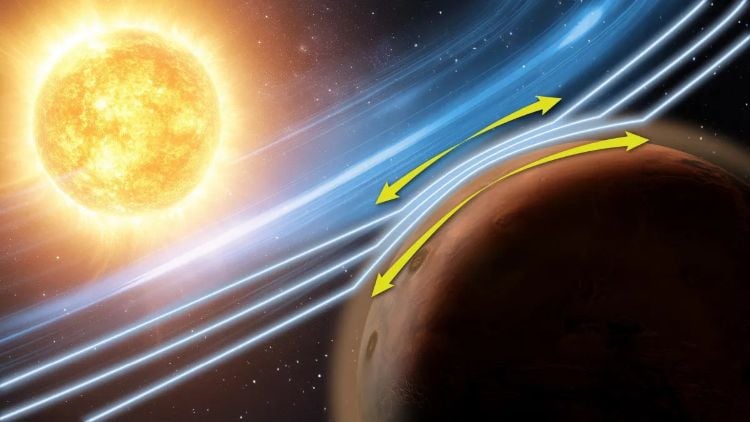
A cloaked alien invasion force is approaching Earth and coming up on Mars. The first officer looks through a viewfinder and says, “Captain, the fourth planet’s atmosphere is behaving strangely. As though it were trying to block incoming energy.” The captain takes a moment, then his (already big) eyes get wide and he exclaims, “It’s a defense shield! The Earthlings are hiding on the fourth planet and are prepared to attack us! Abort the invasion!” The first officer responds, “Aye aye, Captain!”
Continue reading
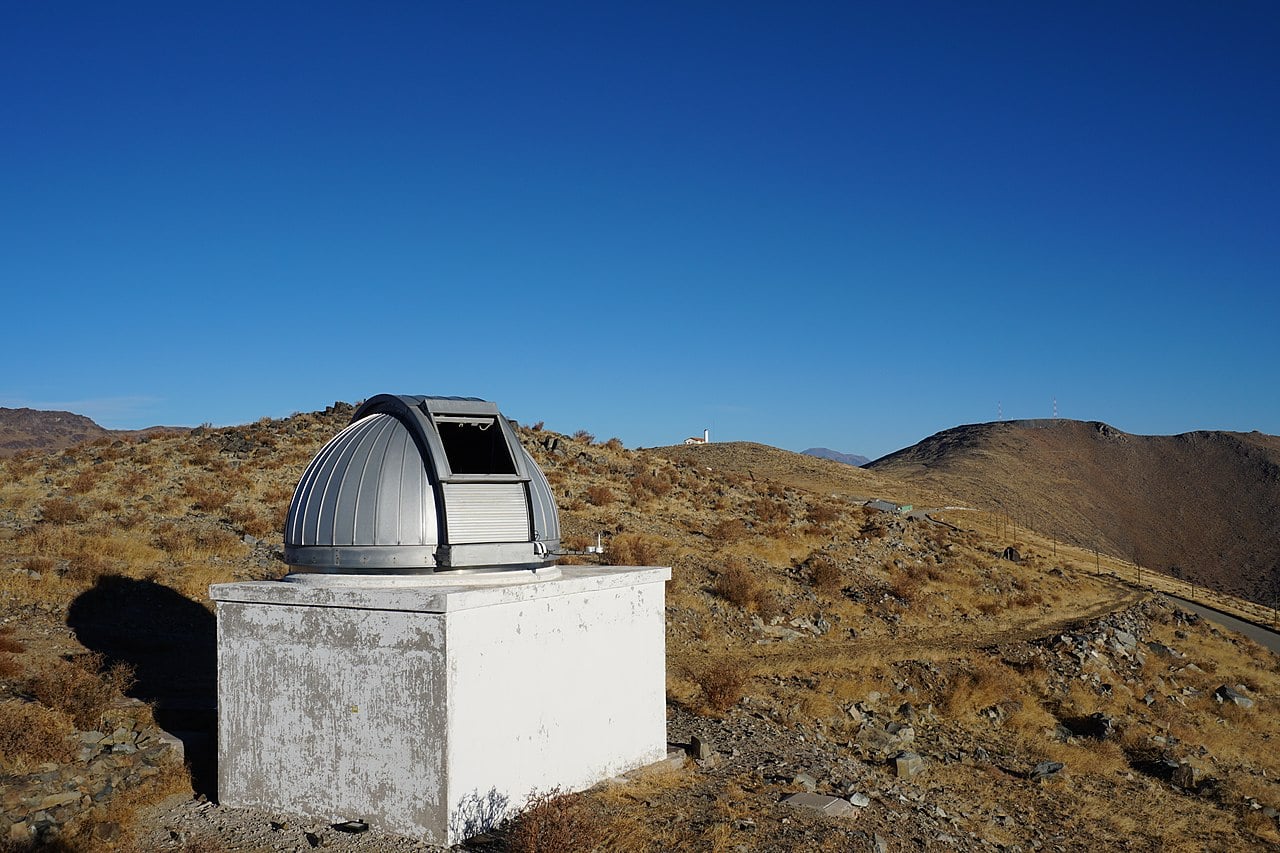
The Sun has a heartbeat. Every eleven years it swells with magnetic fury, hurling solar flares and charged particles into space, sparking auroral displays and threatening power grids, all before quietening down again. We've tracked this rhythm for centuries. But now, scientists listening to sound waves deep inside our local star have found something deeply unexpected, that heartbeat is changing. And nobody yet knows what it means.
Continue reading

When it comes to understanding Earth and our changing environment, space is the place. Not only does it give us an overall holistic view of the planet below, but satellite-based imagery can transcend national boundaries and give us an understanding of key changes that often go unseen at ground level. Now, the European Space Agency (ESA) has chosen two new missions to address key questions in Earth environmental science: Hibidis and SOVA-S.
Continue reading
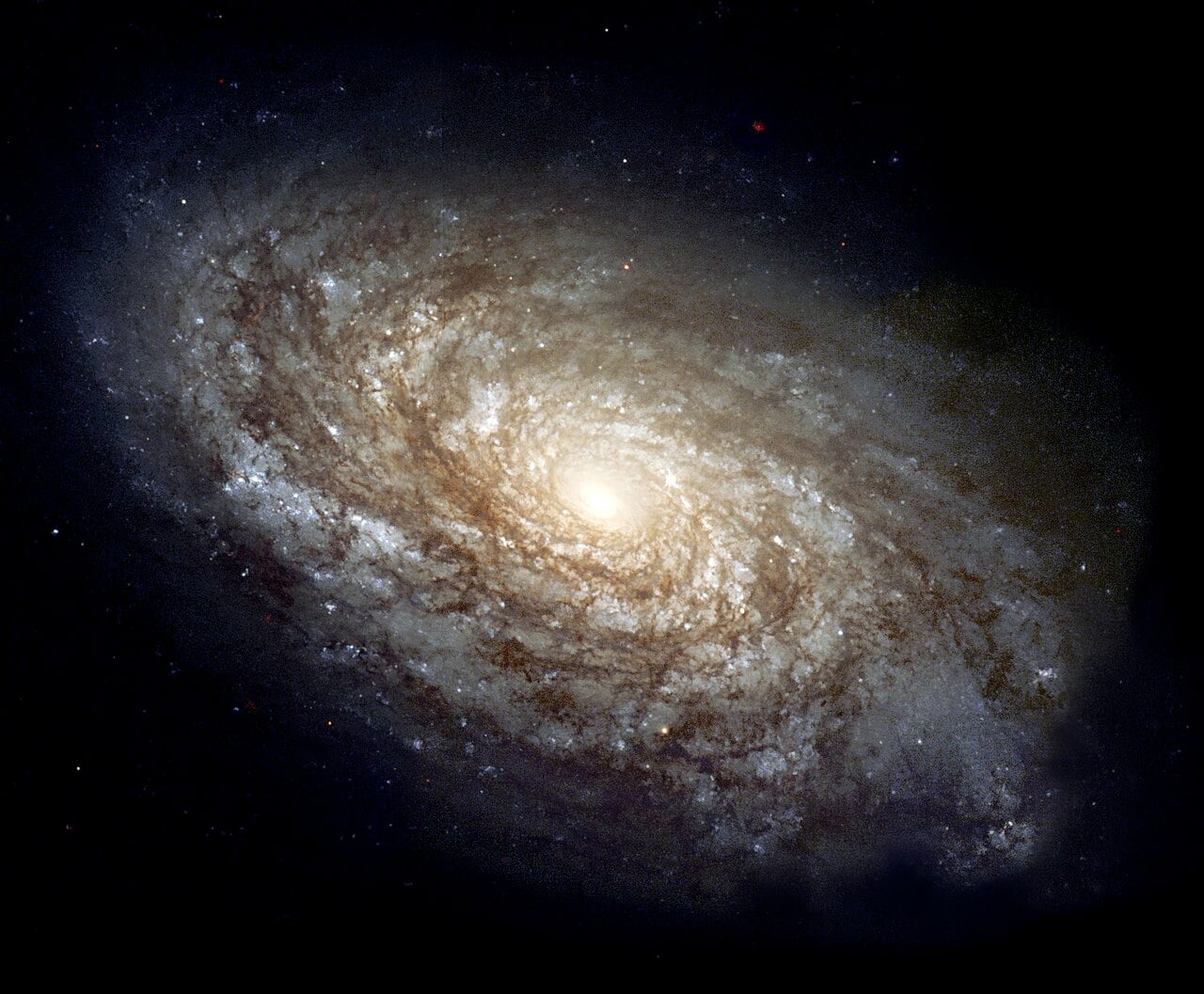
We live in a golden age of astronomical imaging. Telescopes are capturing billions of galaxy images, painting the universe in breathtaking detail. But there's a problem, and it's a big one. A photograph tells you what something looks like but it doesn't tell you what it's made of, how fast it's moving, or how far away it really is. For that, you need spectroscopy. And right now, astronomy has a catastrophic imbalance, billions of images and nowhere near enough spectra to match them. A new telescope currently under construction in the mountains of western China is about to change that quite dramatically.
Continue reading
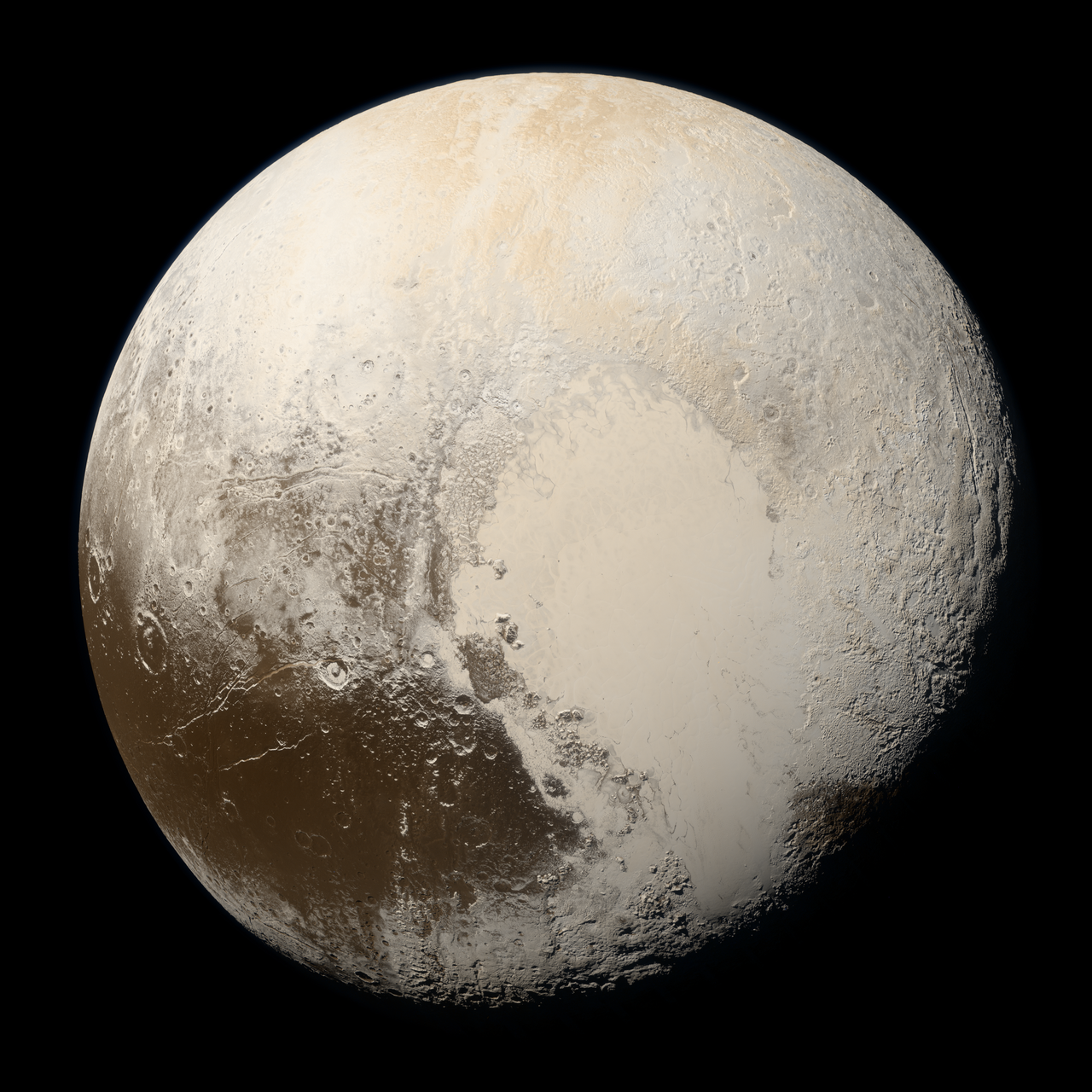
Every byte of data a spacecraft collects, every image, every reading, every scientific measurement has to survive one of the most hostile environments imaginable. Space is awash with radiation, and that radiation is the silent enemy of conventional data storage. Now, a team of researchers have built a new kind of memory chip that doesn't just tolerate radiation, it laughs in its face. Using a quirk of physics called ferroelectricity, this technology can withstand radiation levels equivalent to 100 million X-rays, and it could transform how we store data on missions heading deeper into the Solar System than we've ever ventured before.
Continue reading
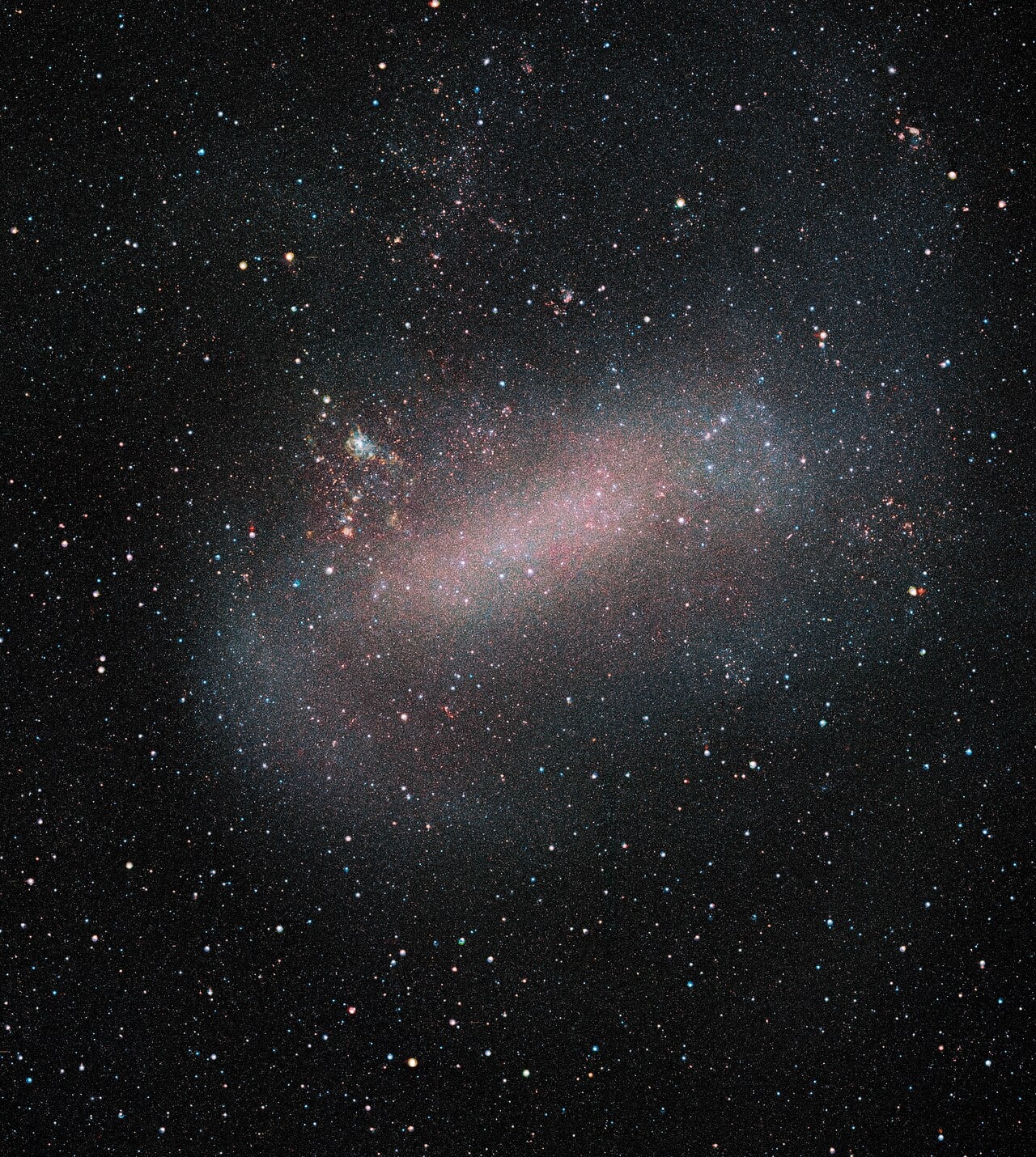
Researchers at the University of Alabama in Huntsville have found a new way to measure the mass of neighbouring galaxies using pulsars. Using the universe's most precise natural clocks it’s possible to detect tiny gravitational disturbances rippling through the Milky Way. By analysing 54 millisecond pulsars, the team directly measured the gravitational pull of both the Large Magellanic Cloud and the Sagittarius Dwarf Galaxy, including their dark matter. The same technique could eventually map dark matter across the entire Galaxy bringing us closer to understanding what it actually is.
Continue reading
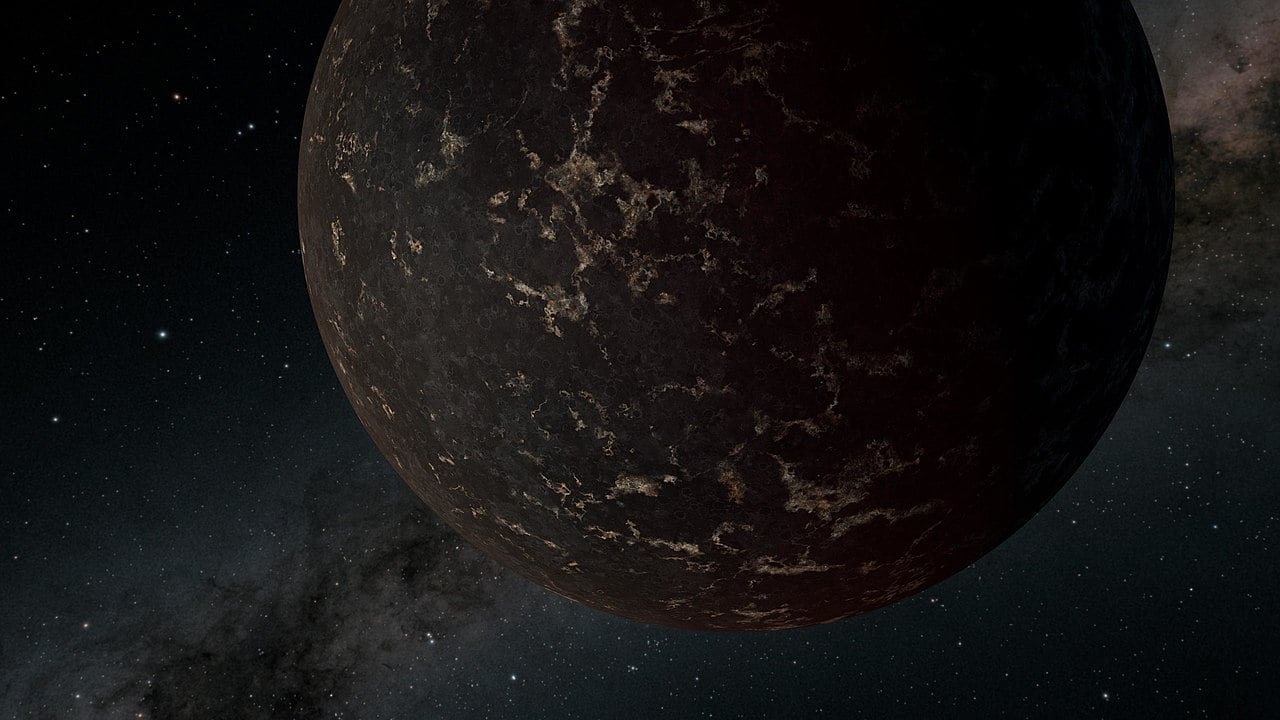
There's a planet out there called LHS 3844 b, orbiting a star about 48 light-years away. The Transiting Exoplanet Survey Satellite (TESS) found it in 2018 when the planet transited across the face of its star. The James Webb Space Telescope zxeroed in on the planet and found it to be a barren, rocky place with no atmosphere.
Continue reading
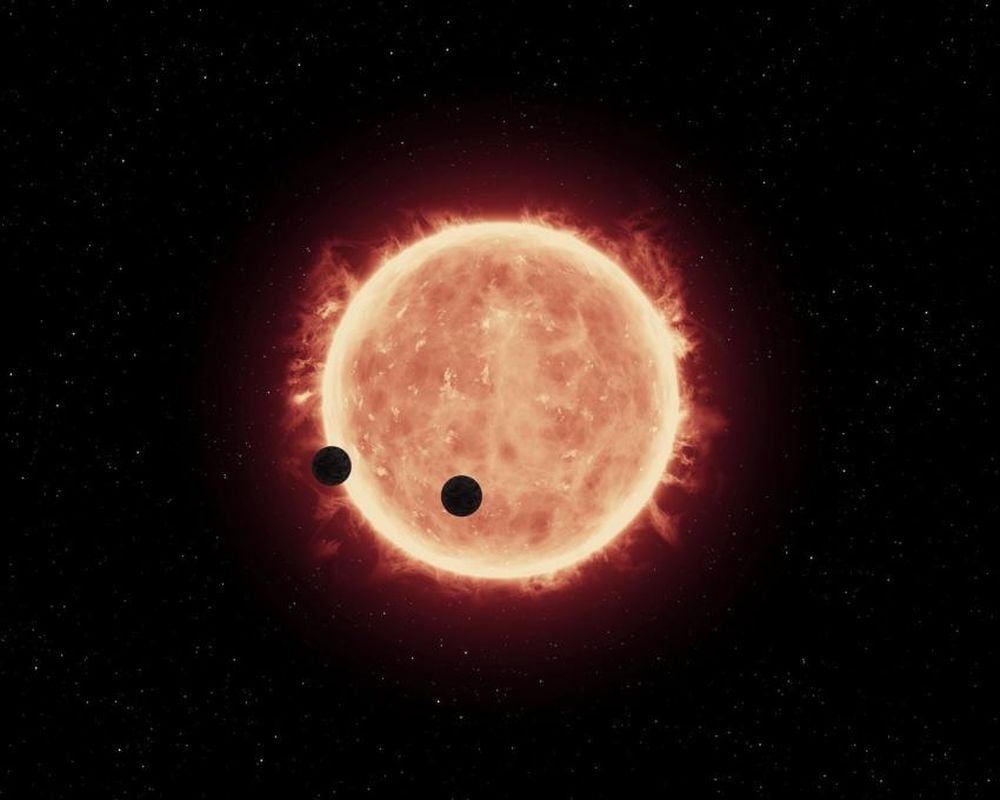
We know that stars can engulf planets because stars that swell up to become red giants overwhelm any close-in planets. The Sun will do this to Venus, Mercury, and possibly Earth in a few billion years. But research shows that it can happen when low-mass stars first enter the main sequence. Lithium gives it away.
Continue reading
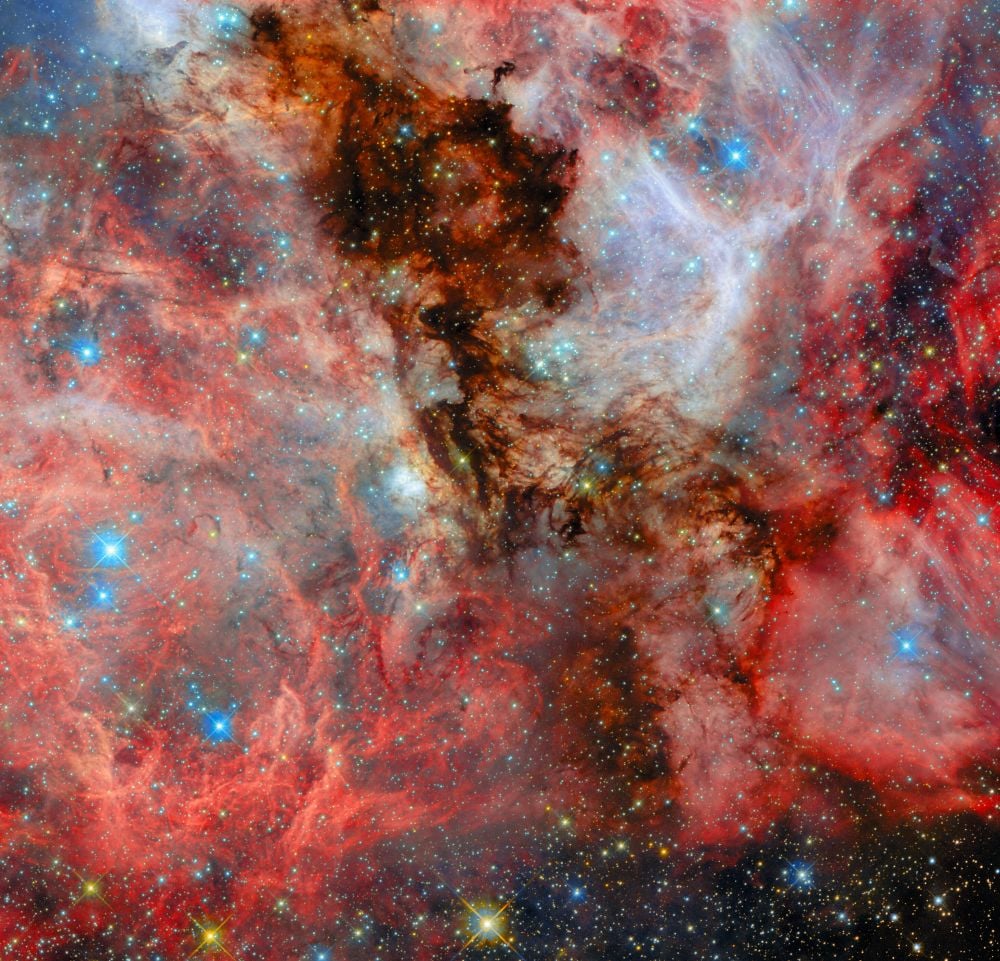
This ESA/Hubble Picture of the Week captures all the glory of the star-forming region N159. It's in the Large Magellanic Cloud, and is dwarfed by its much larger neighbour, the Tarantula Nebula. But N159 is gorgeous, too, so captivating that it's been featured as a Picture of the Week several times.
Continue reading
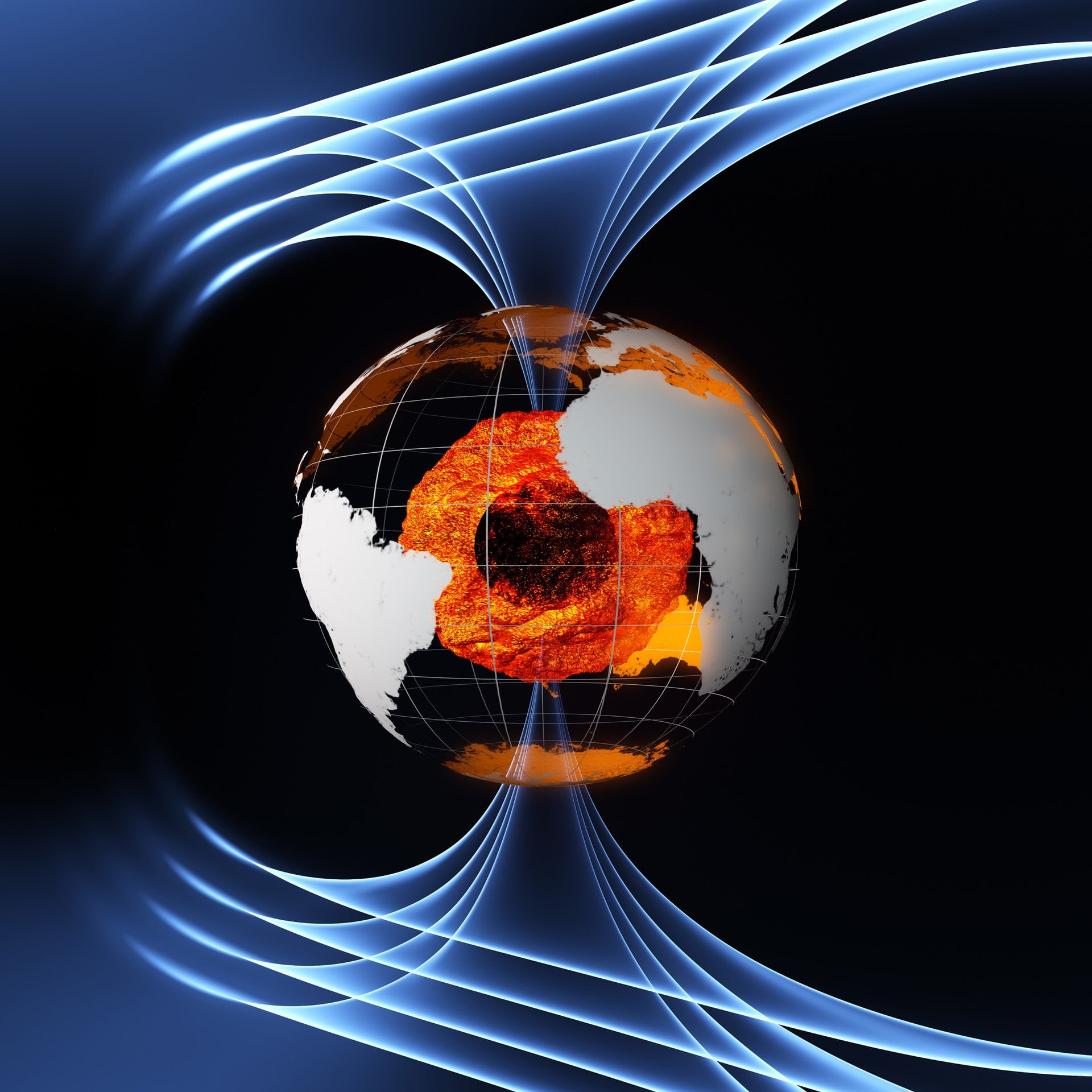
Our planet's liquid iron outer core is slowly giving up its secrets to a trio of satellites launched by ESA in 2013. Called Swarm, the three probes have been studying Earth's magnetic field at the source. In the process, they've revealed startling changes in a molten layer region 2,200 kilometers beneath the Pacific Ocean. In 2010, material in that area of Earth's outer core changed direction. Insteading of moving slowly westward, it's now headed east and picking up speed. Scientists are working to figure out why by using the European Space Agency's (ESA) Swarm data and additional information from ESA's CryoSat mission and ground-based instruments.
Continue reading
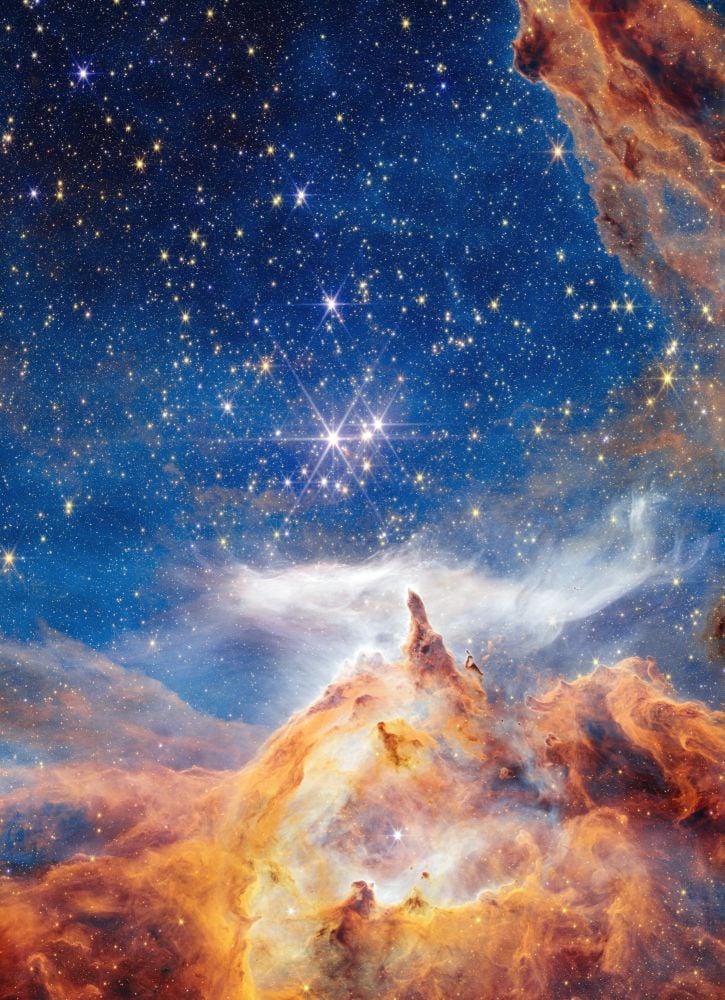
Open star clusters are prevalent stellar structures in the Milky Way. Astronomers think their could be 100,000 of them. But they're not all the same: some are binary clusters, and within those, there's a hierarchy based on how they form. Recent research explores the different types and how many of each type is in the Milky Way.
Continue reading
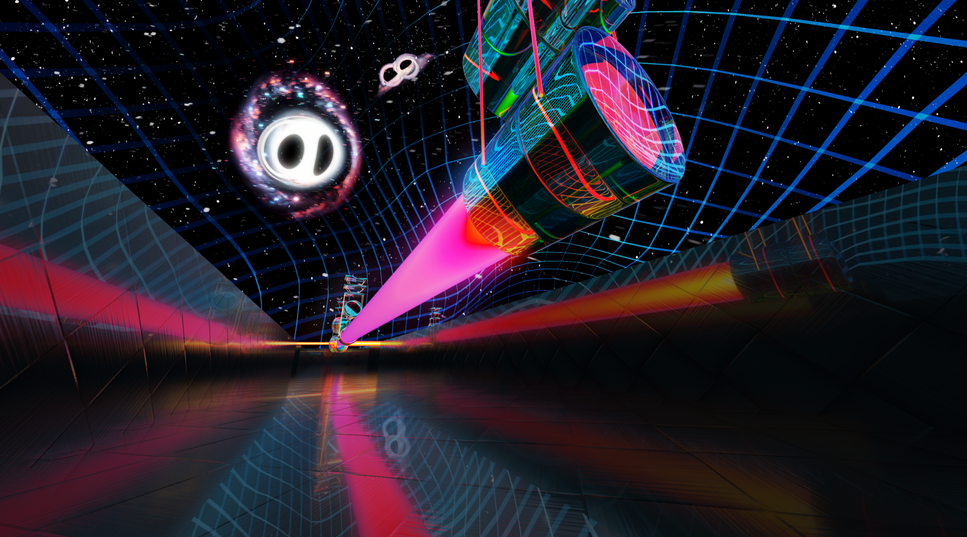
The LIGO–Virgo–KAGRA (LVK) detector network has a new trick up its sleeve to improve the instruments’ sensitivity to gravitational waves: it’s called Astrophysical Calibration and it plays a role similar to auto-tune in music production.
Continue reading
In December 2019, astronomers detected a one hour brightening of a star in the Large Magellanic Cloud, a classic gravitational microlensing event. These occur when a compact object bends a distant the light of a distant star as it passes in front of it. The object responsible in this instance, named Phoebe, has a mass of roughly three times that of our Moon making it far too small to be a stellar black hole, but consistent with a primordial black hole formed moments after the Big Bang.
Continue reading
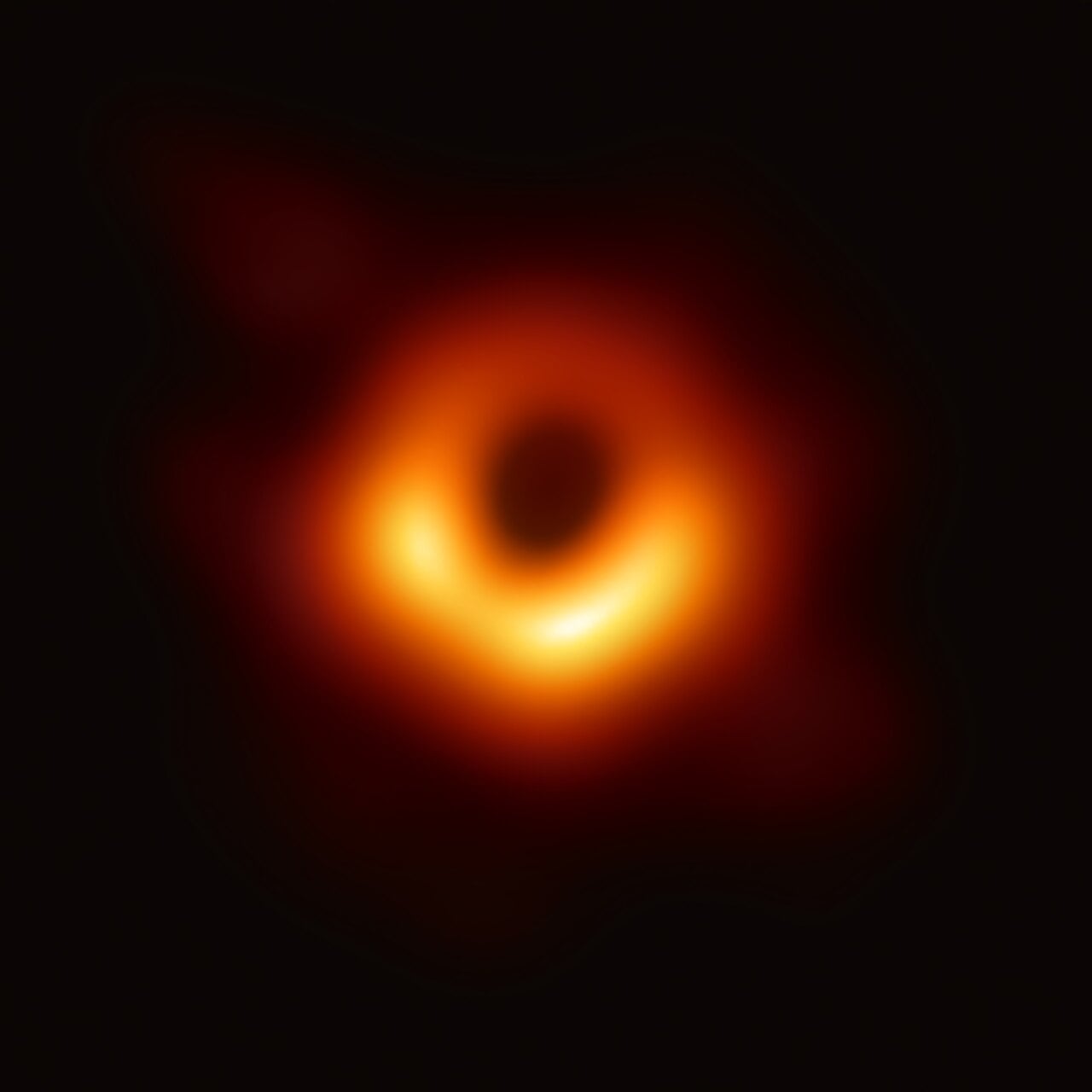
Physicists have thought for decades that microscopic black holes can theoretically emerge not from exploding stars but from delicate "critical states" in which space and time organise themselves into a crystal like structure. Now, for the first time, researchers from TU Wien and Goethe University Frankfurt have derived an exact mathematical formula describing this bizarre phenomenon using a surprising trick involving infinitely many dimensions!
Continue reading
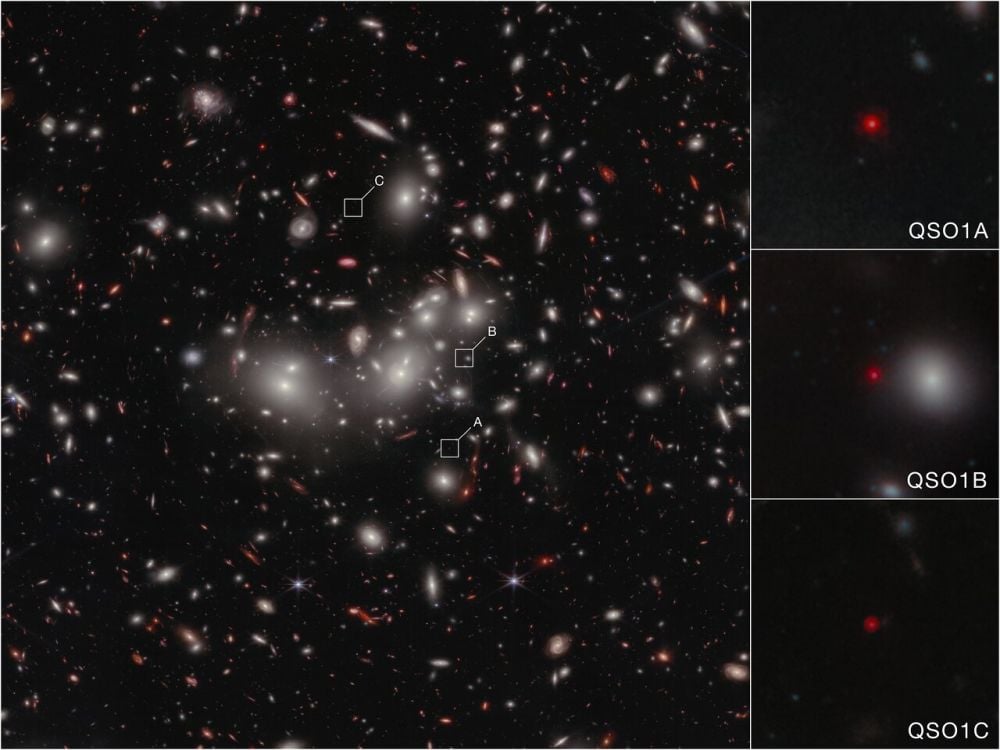
The JWST has shown us some strange things about supermassive black holes (SMBH) in the early Universe. Many of them are far more massive than we think they should be. Now astronomers working with the JWST have found one that seems to have formed before its galaxy did.
Continue reading
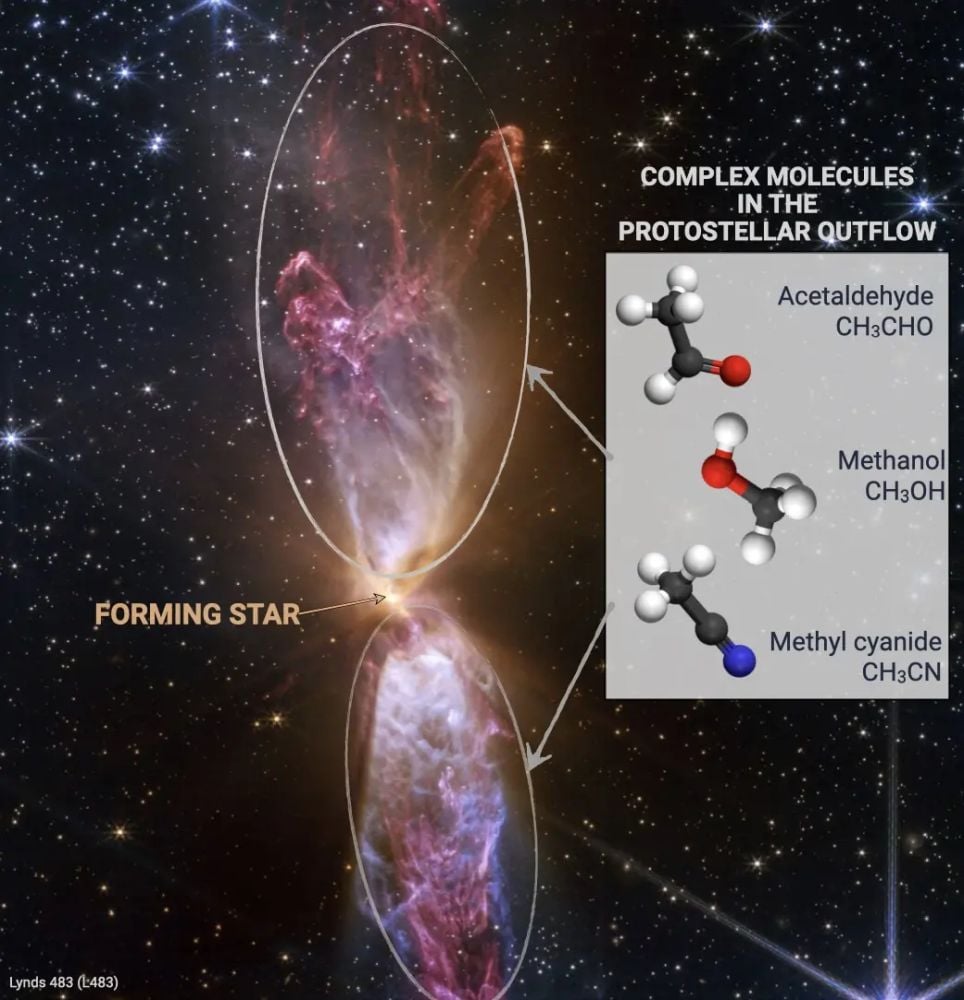
Complex organic molecules (COMS) are at the heart of life. They're created where jets from protostars slam into the interstellar medium, environments that scientists call natural laboratories. In these intense environments, important carbon-bearing molecules are created. Recent research took a close look at one of these jets and found some COMS in them for the first time.
Continue reading
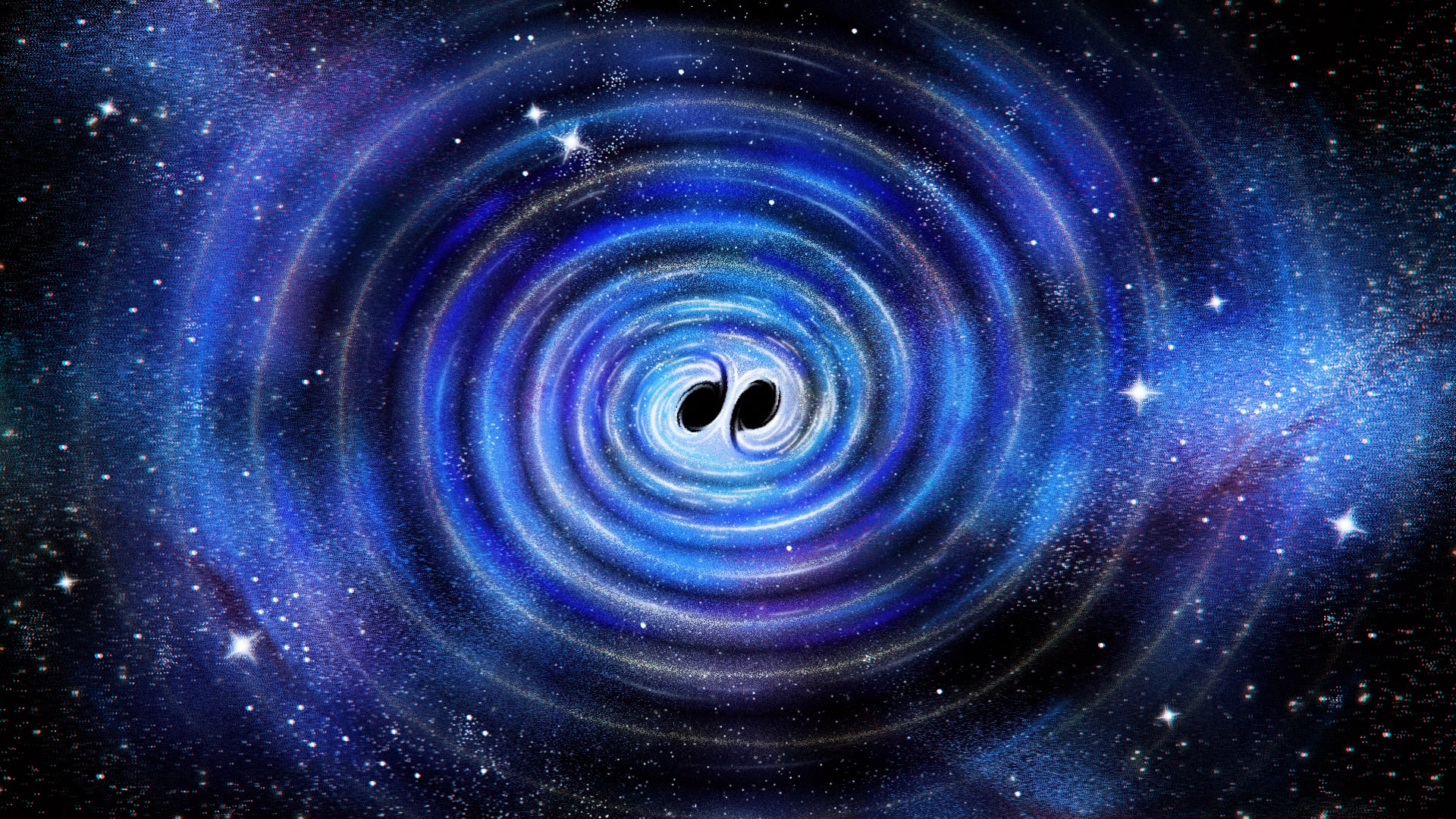
A new statistical model reveals more details about the ringdown period of merging black holes.
Continue reading
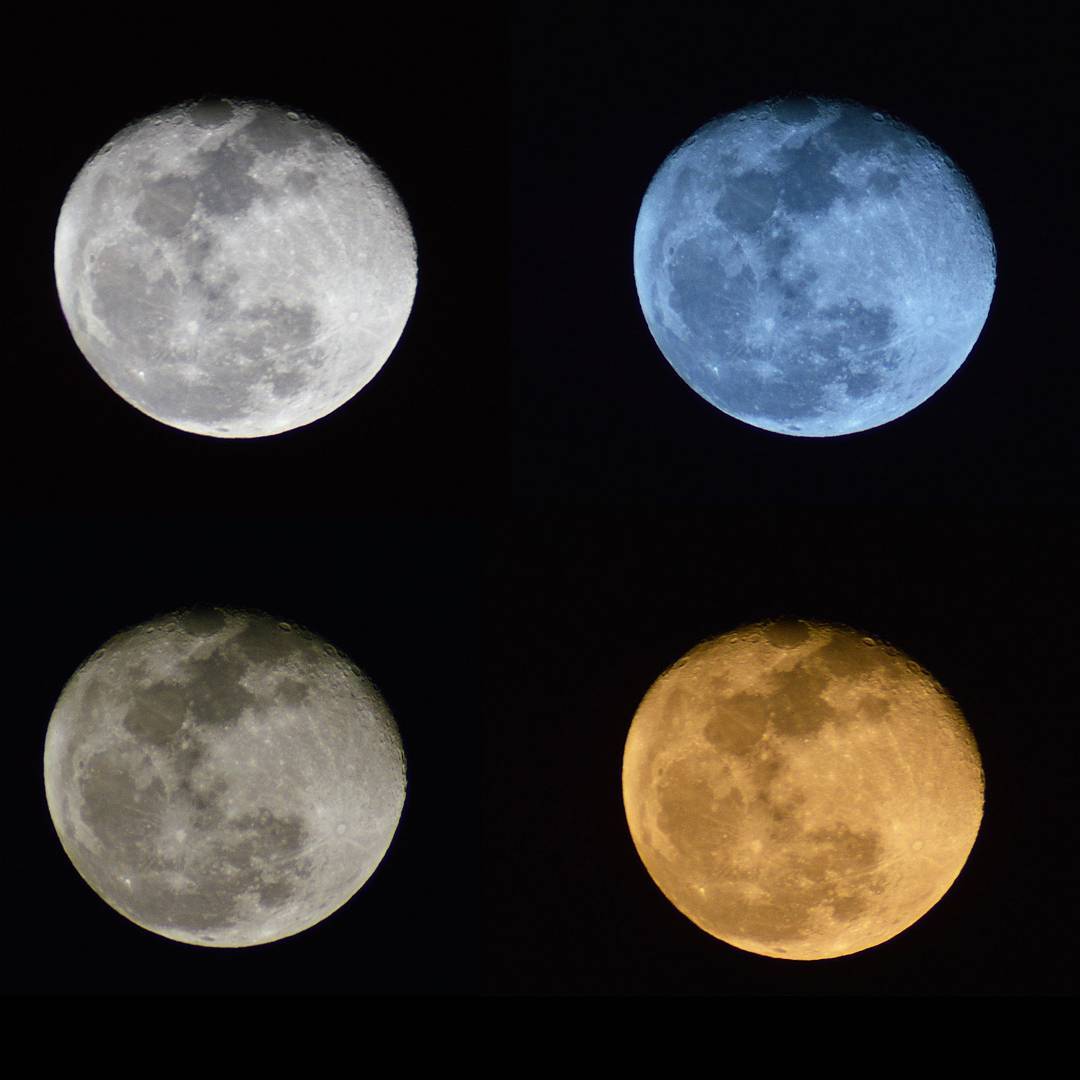
There’s nothing like a random celestial coincidence, turned good internet meme. In this case, the chance event is this weekend’s Full Moon, which also happens to be the second Full Moon of May, and is also the most distant and visually smallest Full Moon of the year.
Continue reading
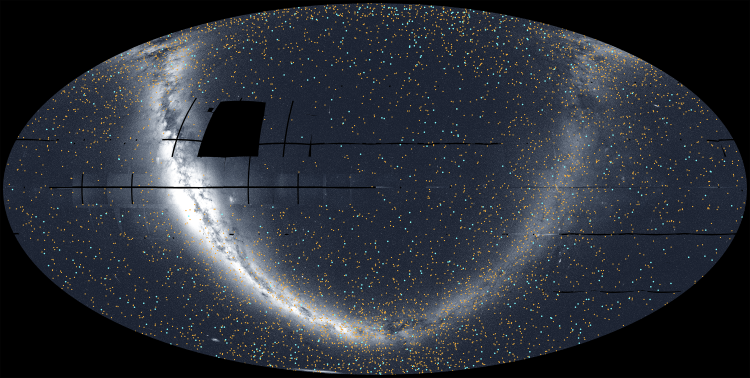
You’re on a camping trip with your family and your parents tell you to turn off all the lights. But, of course, your little brother wants to shine his flashlight directly at the sky saying aliens will see it. You finally get him to shut off his flashlight, and you give your eyes a few minutes to adjust to the darkness. As they do, more and more stars begin to appear in the night sky that were initially hidden beneath the glare of your (loser) brother’s flashlight. As the stars get brighter and increase in number, you start firing off a slew of questions in your head: How far away are they? Are there planets around them? What kinds of life are on those planets?
Continue reading
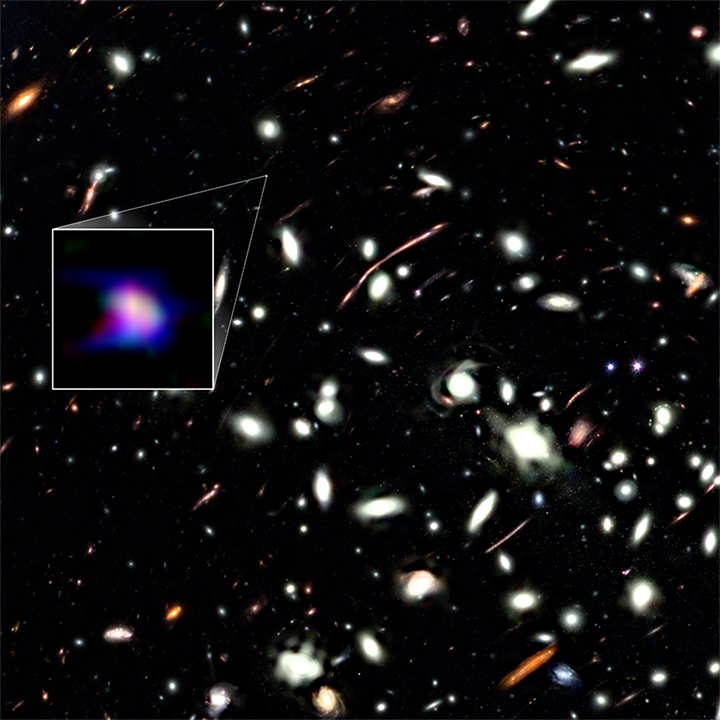
An international team led by Associate Professor Kimihiko Nakajima of Kanazawa University has captured a rare look at the early universe. Using the James Webb Space Telescope (JWST) and the power of gravitational lensing, the team achieved a definitive characterization of LAP1-B, an ultra-faint galaxy from 13 billion years ago.
Continue reading
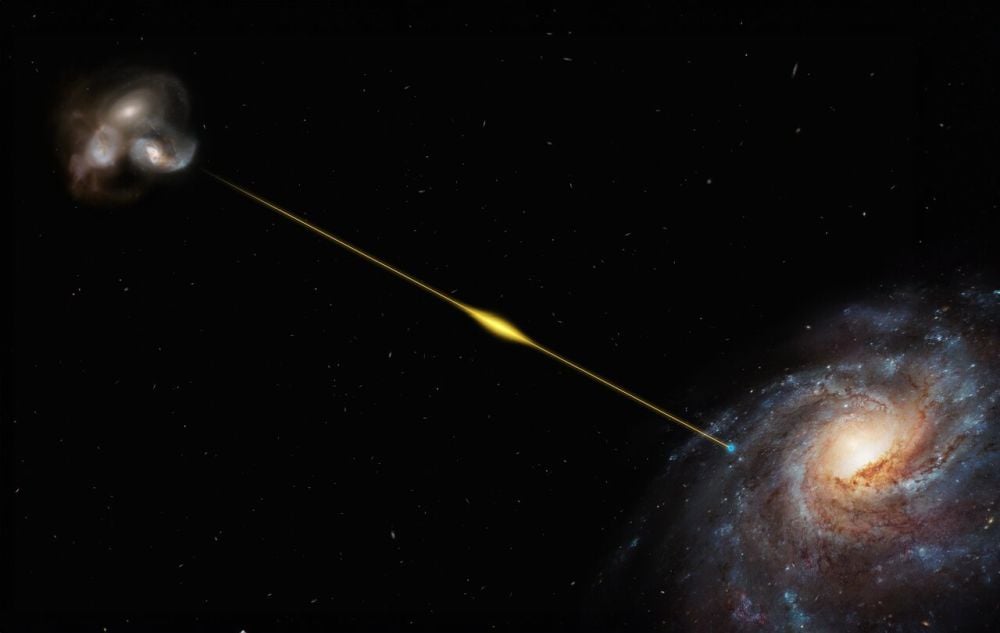
In the heirarchy of black holes, intermediate mass black holes (IMBH) lie in between stellar mass black holes and supermassive black holes. But the problem is that we've never found one. There have been hints, but nothing conclusive. Could gravitational microlensing of Fast Radio Bursts help find them?
Continue reading
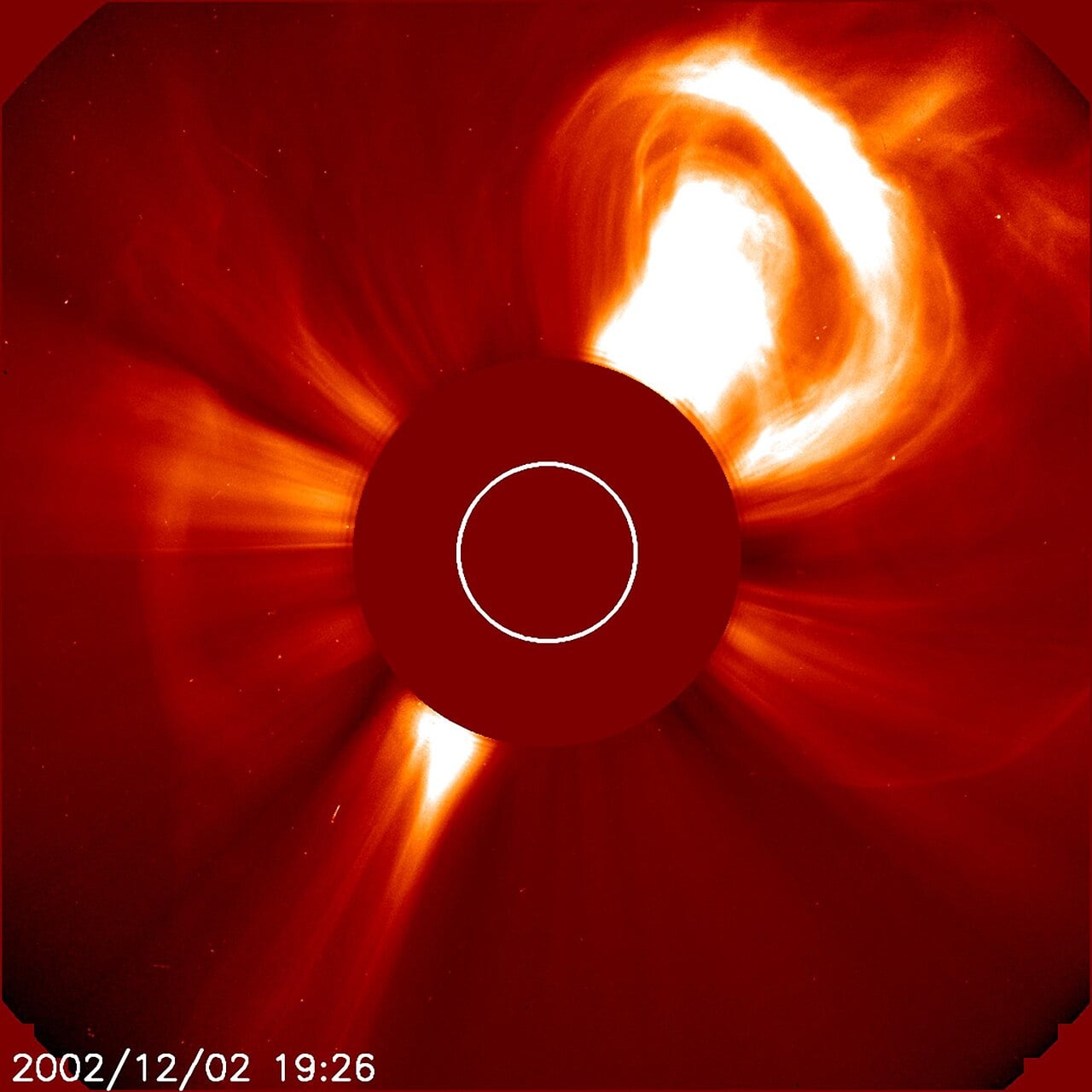
Scientists have captured one of the most detailed observations ever of a failed solar eruption, a powerful blast from the Sun that built into what should have been a billion tonne plasma ejection, then stalled and collapsed back to the surface. Using data from five spacecraft simultaneously, the team identified a double magnetic process that strangled the eruption from both above and below.
Continue reading
 Universe Today