Andy Tomaswick
Andy has been interested in space exploration ever since reading Pale Blue Dot in middle school. An engineer by training, he likes to focus on the practical challenges of space exploration, whether that's getting rid of perchlorates on Mars or making ultra-smooth mirrors to capture ever clearer data. When not writing or engineering things he can be found entertaining his wife, four children, six cats, and two dogs, or running in circles to stay in shape.
Recent Articles
-
-
Why Most Exoplanets Are Magma Worlds
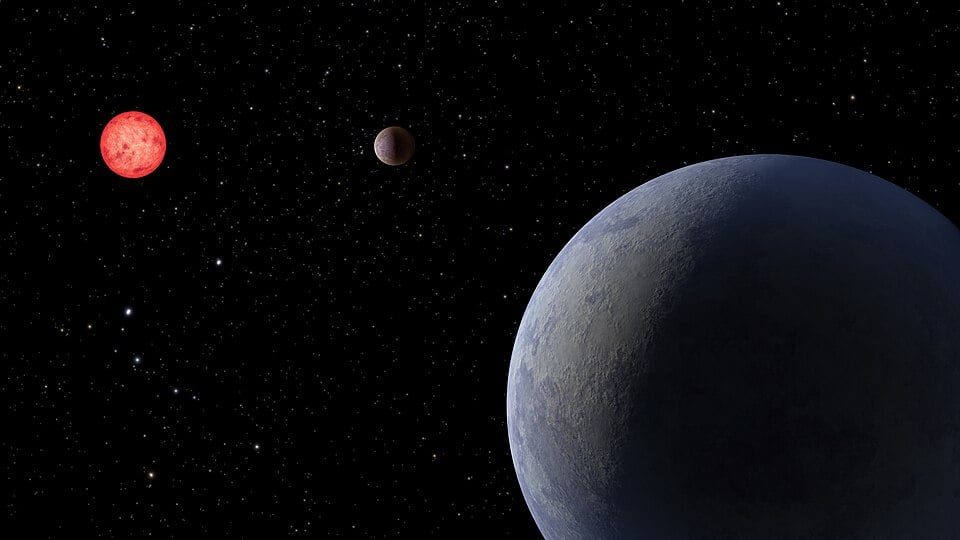
December 17, 2025In astronomy, there is a concept called “degeneracy”. It has nothing to do with delinquent people, but instead is used to describe data that could be interpreted multiple ways. In some cases, that interpretation is translated into exciting new possibilities. But many times, when that happens, other, more mundane explanations are ignored for the publicity that the more interesting possibilities provide. That seems to have been the case for many “sub-Neptune” exoplanets discovered recently. Some theories have described them as Hycean worlds - worlds that are filled with water oceans or ice. But a new paper from Robb Calder of the University of Cambridge and his co-authors shows that, most likely, these planets are almost all made of molten lava instead.
-
Astronomers Snap a Rare Photo of a Super-Jupiter with Two Suns
December 16, 2025If you read enough articles about planets in binary star systems, you’ll realize almost all of them make some sort of reference to Tatooine, the fictional home of Luke Skywalker (and Darth Vader) in the Star War saga. Since that obligatory reference is now out of the way, we can talk about the new “super-Jupiter” that researchers from two separate research teams, including one at Northwestern University and one at the University of Exeter, simultaneously found in old data from the Gemini Planet Imager (GPI).
-
2.8 Days to Disaster - Why We Are Running Out of Time in Low Earth Orbit
December 15, 2025A “House of Cards” is a wonderful English phrase that it seems is now primarily associated with a Netflix political drama. However, its original meaning is of a system that is fundamentally unstable. It’s also the term Sarah Thiele, originally a PhD student at the University of British Columbia, and now at Princeton, and her co-authors used to describe our current satellite mega-constellation system in a new paper available in pre-print on arXiv.
-
Forget Stardust - It Was Star-Ice All Along
December 14, 2025Carl Sagan famously said that “We’re all made of star-stuff”. But he didn’t elaborate on how that actually happened. Yes, many of the molecules in our bodies could only have been created in massive supernovae explosions - hence the saying. Scientists have long thought they had the mechanism for how settled - the isotopes created in the supernovae flew here on tiny dust grains (stardust) that eventually accreted into Earth, and later into biological systems. However, a new paper from Martin Bizzarro and his co-authors at the University of Copenhagen upends that theory by showing that much of the material created in supernovae is captured in ice as it travels the interstellar medium. It also suggests that the Earth itself formed through the Pebble Accretion model rather than massive protoplanets slamming together.
-
Why Old Moon Dust Looks So Different from the Fresh Stuff
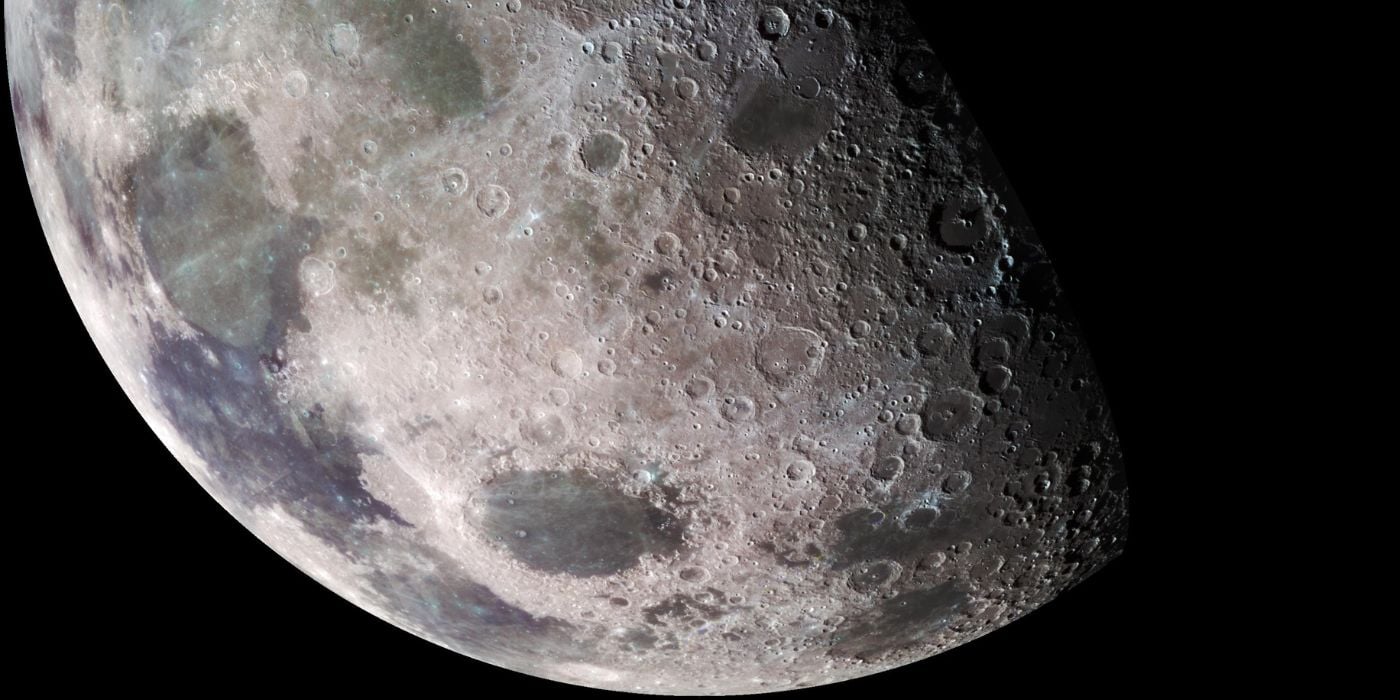
December 13, 2025Tracking down resources on the Moon is a critical process if humanity decides to settle there permanently. However, some of our best resources to do that currently are orbiting satellites who use various wavelengths to scan the Moon and determine what the local environment is made out of. One potential confounding factor in those scans is “space weathering” - i.e. how the lunar surface might change based on bombardment from both the solar wind and micrometeroid impacts. A new paper from a researchers at the Southwest Research Institute adds further context to how to interpret ultra-violet data from one of the most prolific of the resource assessment satellites - the Lunar Reconnaissance Orbiter (LRO) - and unfortunately, the conclusion they draw is that, for some resources such as titanium, their presence might be entirely obscured by the presence of “old” regolith.
-
Gravitational Lenses Deliver a Verdict on the Hubble Tension
December 12, 2025The Hubble Tension is one of the great mysteries of cosmology. Solving it might require a fundamental change in how we understand the universe - but scientists have to prove it actually exists first. A new paper from a collective of cosmologist researchers known as the TDCOSMO Collaboration adds further fuel to that first with updated measurements of the “Late Universe” measurement of the Hubble Constant using gravitational lenses of quasars, which shows that the Tension might exist after all.
-
Reading the "Light Fingerprints" of Dead Satellites
December 11, 2025There are already tens of thousands of pieces of large debris in orbit, some of which pose a threat to functional satellites. Various agencies and organizations have been developing novel solutions to this problem, before it turns into full-blown Kessler Syndrome. But many of them are reliant on understanding what is going on with the debris before attempting to deal with it. Gaining that understanding is hard, and failure to do so can cause satellites attempting to remove the debris to contribute to the problem rather than alleviating it. To help solve that conundrum, a new paper from researchers at GMV, a major player in the orbital tracking market in Europe, showcases a new algorithm that can use ground-based telescopes to try figure out how the debris is moving before a deorbiter gets anywhere near it.
-
The British Robots Bringing Heavy Industry to Orbit
December 10, 2025The UK is actively trying to support the infrastructure to make it a significant player in the coming age of the space economy. It recently received 560 proposals to it’s National Space Innovation Program, and handed out £17M in grants to 17 different organizations following five main themes. One of those is an effort by the University of Leicester and The Welding Institute (TWI) to develop a robotic welder for use in repairing and manufacturing in space, as described by a new press release from the university.
-
NASA Researchers Test Mars Tech In Deserts Throughtout the Country
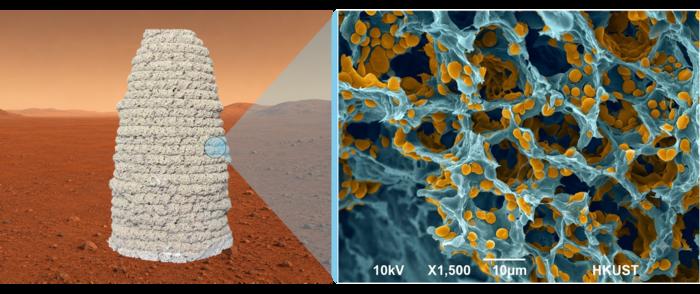
December 09, 2025Engineers can be split into two camps - those who just release whatever they’re building and try to fix whatever might be wrong with it as they get feedback on it, and those who test their product in every possible way before releasing it to the public. Luckily, NASA engineers are in the latter camp - it wouldn’t look great if all of the probes we send throughout the solar system failed because of something we could have easily tested for here at home. However, finding analogues for the places we want to send those probes remains a challenge for some NASA projects, so they make due with the best Earth has to offer. For Mars, that means testing technology in the desert’s rolling sand dune and rocky outcrops, and this year several different NASA technologies were tested in deserts throughout the country, as reported in a press release from the agency.
-
Inspired by Schools of Fish, This Magnetic Material Swarms to Eat Carbon Dioxide
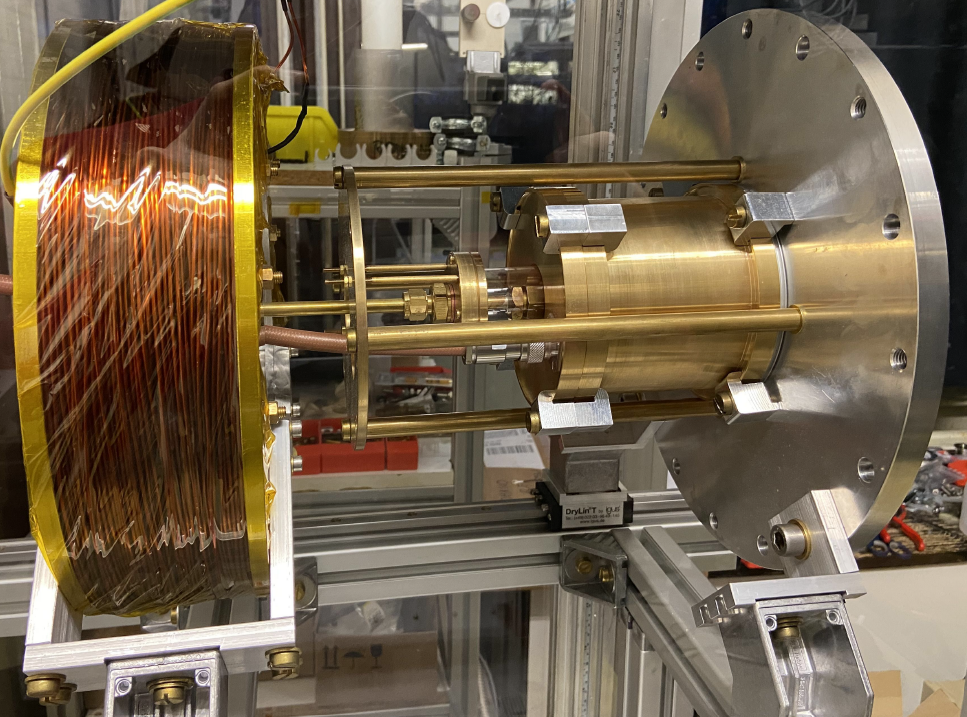
December 08, 2025Removing, or “scrubbing”, carbon dioxide from the air of confined spaces is a critical component of any life support system on a spacecraft or submarine. However, modern day ones are energy intensive, requiring temperatures of up to 200℃ to operate. So a research lab led by Dr. Hui He at Guangxi University in China has developed what they call “micro/nano reconfigurable robots” (MNRM) to scrub CO2 from the air much more efficiently. Their work is described in a new paper in Nano-Micro Letters.
-
Did Asteroids Invent Gum Billions of Years Ago?
December 06, 2025What is “gum”? Most people have probably never considered this question, and might answer something like a chewy material you can put in your mouth. But, to a scientist they might answer something like “nitrogen-rich polymeric sheets”, because precisely defining the chemistry of a material is important to them. Or at least, that’s what they called a type of organic material found in the sample collected of the asteroid Bennu by the OSIRIS-REx spacecraft. But more informally, scientists have taken to calling it “space gum”, and the process it formed under is making some of them question current models of asteroid formation.
-
Scientists and Senators are Excited About the Sugars Found in the OSIRIS-REx Samples
December 05, 2025It’s been over two years since the samples from Bennu gathered by OSIRIS-REx were returned to Earth. But there’s still plenty of novel science coming out of that 121.6 g of material. Three new papers were released recently that describe different aspects of that sample. One in particular, from Yoshihiro Furukawa of Tohoku University in Japan and their co-authors, has already attracted plenty of attention, including from US Senator (and former astronaut) Mark Kelly. It shows that all of the building blocks for early life were available on the asteroid - raising the chances that planets throughout the galaxy could be seeded with the abiotic precursors for life.
-
Ten Versions of Earth's Future Can Help Us Hunt for ET
December 04, 2025Searching for technosignatures - signs of technology on a planet that we can see from afr - remains a difficult task. There are so many different factors to consider, and we only have the technological capabilities to detect a relatively small collection of them. A new paper, available in pre-print on arXiv but also accepted for publication into The Astrophysical Journal Letters, from Jacob Haqq-Misra of the Blue Marble Space Institute of Science and his co-authors explores some of those capabilities by using a framework they developed known as Project Janus that estimates what technology will look like on Earth 1,000 years from now in the hopes that we can test whether or not we can detect it on another planet.
-
How to Catch a Comet That Hasn't Been Discovered Yet
December 03, 2025There’s been a lot of speculation recently about interstellar visitor 3I/ATLAS - much of which is probably caused by low quality data given that we have to observe it from either Earth, or in some case Mars. In either case it’s much further away that what would be the ideal. But that might not be the case for a future interstellar object. The European Space Agency (ESA) is planning a mission that could potentially visit a new interstellar visitor, or a comet that is making its first pass into the inner solar system. But, given the constraints of the mission, any such potential target object would have to meet a string of conditions. A new paper by lead Professor Colin Snodgrass of the University of Edinburgh of his colleagues, discusses what those conditions are, and assesses the likelihood that we’ll find a good candidate within a reasonable time of the mission's launch.
-
New Radar Data Dries Up Hope For Subsurface Liquid Water On Mars
December 02, 2025Remember back in 2018 when there was a discovery of a briny “lake” underground near the Martian south pole? Pepperidge Farm probably does, and anyone that works there that’s interested in space exploration will be disappointed to hear that, whatever might be causing the radar signal that finding was based on, it’s most likely not a lake. At least according to new data collected by the Mars Reconnaissance Orbiter (MRO) and published recently in Geophysical Research Letters by lead author Gareth Morgan of the Planetary Science Institute and his colleagues.
-
Did JWST Find an Exomoon or a Starspot?
December 01, 2025Searching for exomoons - moons the orbit around another planet - was one of the most exciting capabilities expected of the James Webb Space Telescope (JWST) when it launched in late 2021. So, after four years of operation, why hasn’t it found one yet? Turns out it’s really, really hard to find a moon around a planet light-years away. A new paper available in pre-print on arXiv from David Kipping of Columbia University (and Cool Worlds YouTube Channel fame) shows why. They used 60 hours of time on JWST’s NIRSpec instrument and weren't able to definitively confirm the existence of a possible exomoon.
-
Nancy Grace Roman Has Been Shaken, Frozen, and Screamed At. Now It's Ready For Its Next Round of Tests
November 28, 2025The Nancy Grace Roman Space Telescope continues its inexorable march toward launch. It recently completed another series of tests that brings it a few steps closer to a launch pad in Florida. This time, the telescope was split into two separate parts - an inner portion and an outer portion, each of which went through separate tests throughout the fall.
-
Why Being in the "Right Place" Isn't Enough for Life
November 27, 2025A planet’s habitability is determined by a confluence of many factors. So far, our explorations of potentially habitable worlds beyond our solar system have focused exclusively on their position in the “Goldilocks Zone” of their solar system, where their temperature determines whether or not liquid water can exist on their surface, and, more recently, what their atmospheres are composed of. That’s in part due to the technical limitations of the instruments available to us - even the powerful James Webb Space Telescope is capable only of seeing atmospheres of very large planets nearby. But in the coming decades, we’ll get new tools, like the Habitable Worlds Observatory, that are more specifically tailored to search for those potentially habitable worlds. So what should we use them to look for? A new paper available in pre-print on arXiv by Benjamin Farcy of the University of Maryland and his colleagues, argues that we should look to how a planet formed to understand its chances of harboring life.
-
Life Is Just Matter With Meaning
November 26, 2025What are the physics of life? That is more than just a philosophical question - it has practical implications for our search for life elsewhere in the galaxy. We know what Earth life looks like, on a number of levels, but finding it on another planet could require us to redefine what we even mean by life itself. A new paper from Stuart Bartlett of Cal Tech and his co-authors provides a new framework for how life could be defined that could reach beyond just what we understand from our one Pale Blue Dot.
Universe Today