Universe Today
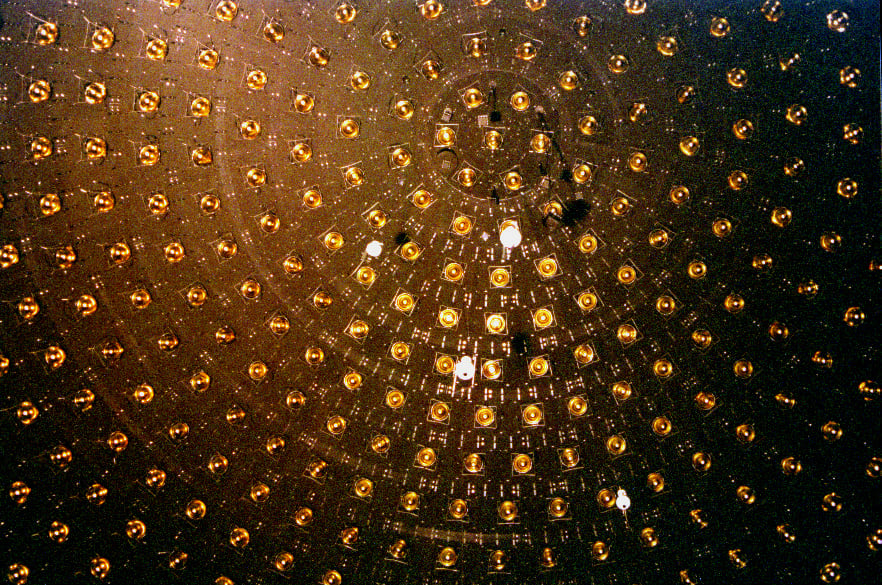
They pass through you at a rate of around a hundred trillion every second, that’s about 12 quadrillion while you read this article, depending on how fast you read of course! You won't feel a thing though since neutrinos are so reluctant to interact with ordinary matter that the entire Earth, and you too, are essentially transparent to them. Yet these ghostly particles, born in the centre of stars are helping to shape the very large scale structure of the universe. And right now, a 70 metre long machine in Karlsruhe is doing something remarkable, it's weighing them.
The KATRIN experiment (KArlsruhe TRItium Neutrino experiment) is unlike anything else in physics. Housed at the Karlsruhe Institute of Technology in Germany, it stretches the length of a Boeing 747 and took years to assemble. At one end sits an intense source of tritium, a radioactive isotope of hydrogen. At the other, the spectrometer which is ten metres across so it had to be transported through the streets of Karlsruhe on a specially designed trailer. The whole apparatus operates under an ultra high vacuum and is magnetically guided with extraordinary precision. It is, in every sense, a machine built to do the impossible.
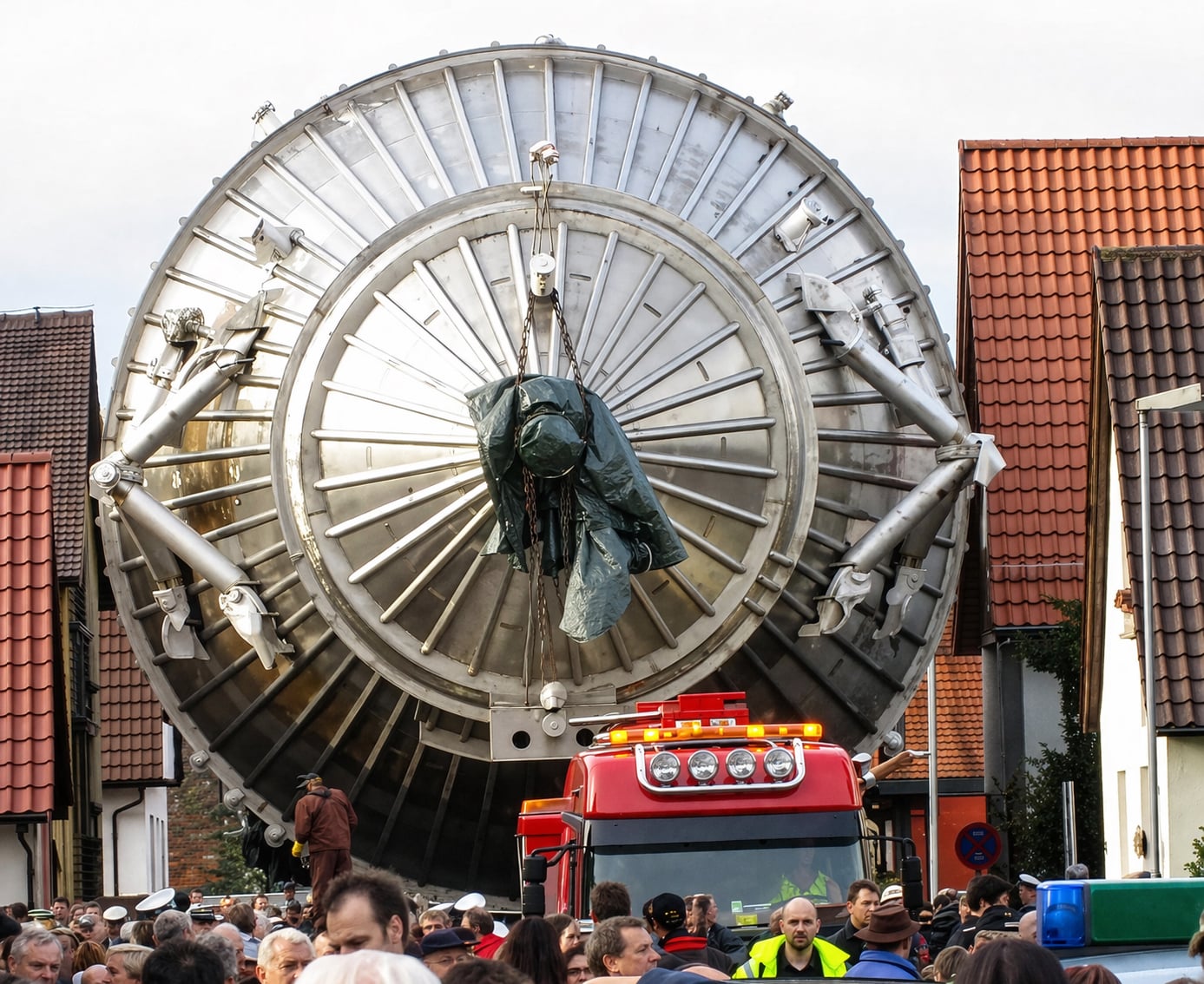 Transport of the main spectrometer to the Karlsruhe Institute of Technology (Credit : Dkw at German Wikipedia)
When the tritium decays, it releases both an electron and a neutrino. If the neutrino has mass, it carries away a tiny sliver of the available energy, leaving the electron fractionally slower. By measuring the precise endpoint of that electron energy distribution, physicists can infer an upper limit for the neutrino's mass without ever directly detecting the neutrino itself.
Using 259 days of data collected between 2019 and 2021, the KATRIN collaboration has now established that the neutrino mass must be less than 0.45 electron volts divided by the square of the speed of light, that’s roughly 8 × 10⁻³⁷ kilograms. To put that in perspective, an electron is already vanishingly light but a neutrino is at least a million times lighter. Compared to KATRIN's 2022 measurements, the upper mass limit has been cut by nearly half and the team has only analysed a quarter of the total data the experiment expects to collect before operations close at the end of 2025.
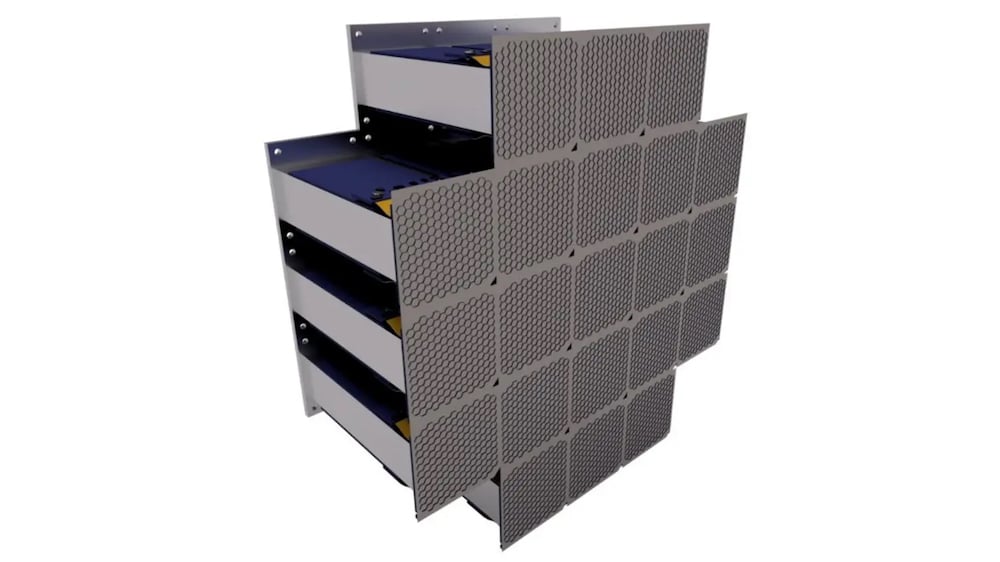 TRISTAN's focal plane consists of 21 modules with almost 3,500 SDD channels and covers a circle of 21cm diameter (Credit : MaxPlanck Semiconductor Laboratory)
The deeper puzzle is why neutrinos are so extraordinarily light in the first place. Explaining the enormous gulf between their mass and that of even the lightest charged particles remains one of the most pressing open questions in fundamental physics, and almost certainly requires new physics beyond our current understanding. KATRIN isn't finished yet though as, from 2026, a new detector system called TRISTAN will be installed, turning the experiment towards the hunt for sterile neutrinos. These hypothetical particles interact even more weakly than ordinary neutrinos, and are a serious candidate for the dark matter that makes up most of the universe's mass.