Universe Today
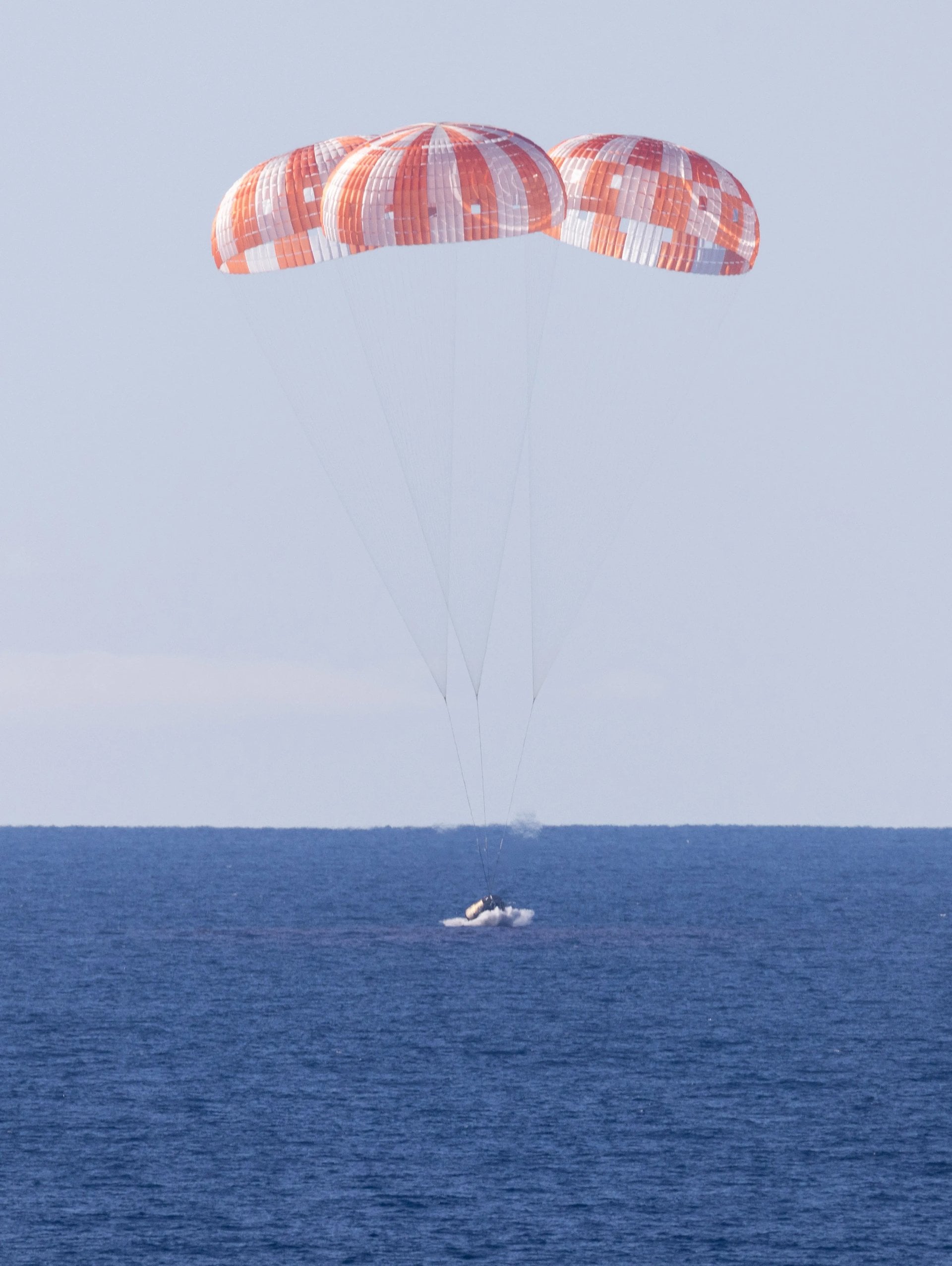
On Friday, April 10, 2026 at 5:07 p.m. PDT (02:07 p.m. EDT), the first astronauts to travel to the Moon in more than fifty years made it back to Earth when their Orion capsule (Integrity) splashed down in the Pacific Ocean off the coast of San Diego. In addition to being a historic accomplishment and a major step towards returning astronauts to the Moon for the first time since the Apollo Era, the Artemis II flight set a new record for distance traveled by a crewed spacecraft.
During their 10-day flight, the crew validated the spacecraft's systems, crew operations, and mission procedures, and took multiple detailed images of the far side of the Moon. Shortly after splashing down, retrieval ships and helicopters rendezvoused with the floating capsule and returned the four-person crew - NASA astronauts Reid Wiseman, Victor Glover, and Christina Koch, and Canadian Space Agency (CSA) astronaut Jeremy Hansen - to the aircraft carrier USS John P. Murtha for initial medical checkouts.
They were flown to NASA's Johnson Space Center in Houston the next day for further check-ups, and all are reported to be in good health. During their mission, Wiseman, Glover, Koch, and Hansen flew a total of 1,117,660 km (694,481 mi) and achieved a new record for farthest distance traveled by a crewed spacecraft from Earth (406,770 km; 252,756 miles), surpassing the previous record set by the Apollo 13 astronauts in 1970.
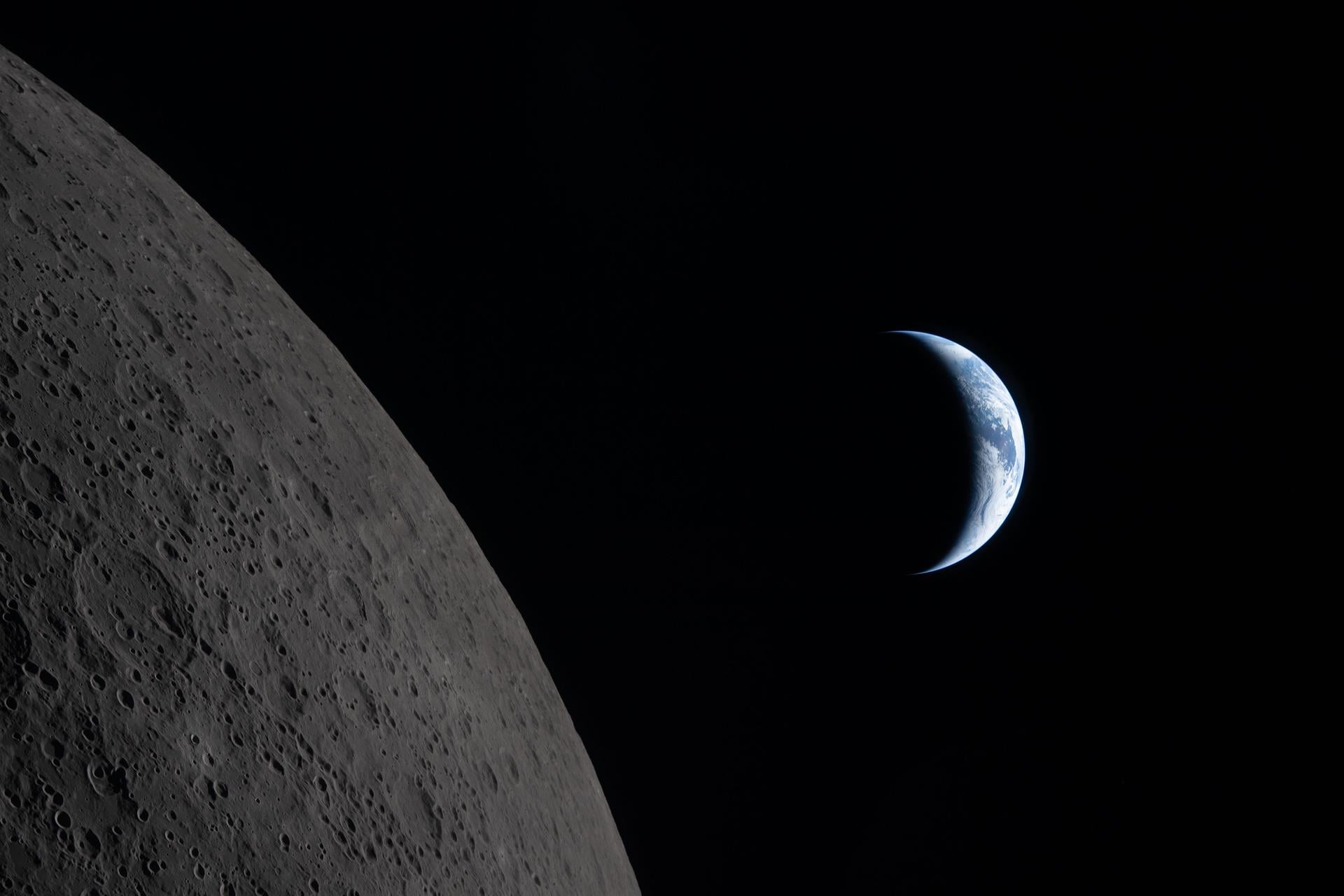 Image of Earth captured as the Artemis II crew began their flight behind the Moon's far side on April 6th. Credit: NASA
As NASA Associate Administrator Amit Kshatriya stated in an official press statement:
The Artemis II crew is home. The entry, descent, and landing systems performed as designed and the final test was completed as intended. This moment belongs to the thousands of people across fourteen countries who built, tested, and trusted this vehicle. Their work protected four human lives traveling at 25,000 miles per hour and brought them safely back to Earth.
Artemis II proved the vehicle, the teams, the architecture, and the international partnership that will return humanity to the lunar surface. Reid, Victor, Christina, and Jeremy carried the hopes of this world farther than humans have traveled in more than half a century. Fifty‑three years ago, humanity left the Moon. This time, we returned to stay. The future is ours to win.
During their April 6 lunar flyby, the crew took more than 7,000 images of the far side of the Moon, revealing impact craters, ancient lava flows, color variations, and surface fractures that provide a historical record of the Moon's geological evolution. They also captured images of the Earth rising and setting behind the Moon's horizon ("Earthrise" and "Earthset"), the Milky Way Galaxy, and a solar eclipse that allowed them to observe the Sun's corona from space. The crew also recommended names for two lunar craters and reported meteoroid impact flashes on the dark side of the Moon.
They also documented the topography along the boundary between lunar day and night (the terminator), which is characterized by long surface shadows similar to those observed around the South Pole-Aitken Basin. This information will help NASA prepare for surface operations when Artemis IV (scheduled for 2028) sends astronauts back to the lunar surface for the first time since the Apollo 17 mission left the surface in 1972. In addition to assisting future astronauts operating in transition zones between lunar day and night, the images will help identify areas of interest for science and exploration.
 The total solar eclipse witnessed by the Artemis II crew during their lunar flyby. Credit: NASA
As NASA Administrator Jared Isaacman said in an official press statement to mark their safe return:
Reid, Victor, Christina, and Jeremy, welcome home, and congratulations on a truly historic achievement. NASA is grateful to President Donald Trump and partners in Congress for providing the mandate and resources that made this mission and the future of Artemis possible.
Artemis II demonstrated extraordinary skill, courage, and dedication as the crew pushed Orion, SLS (Space Launch System), and human exploration farther than ever before. As the first astronauts to fly this rocket and spacecraft, the crew accepted significant risk in service of the knowledge gained and the future we are determined to build.
With Artemis II complete, the agency is now focused on assembling the Artemis III rocket and preparing for the next phase of the program. This will consist of an orbital rendezvous between a crewed Orion spacecraft and a Human Landing System (HLS) sometime next year. This mission will serve as the "dress rehearsal" for a similar rendezvous in lunar orbit in 2028, followed by a descent and landing on the surface.
NASA will hold a rollout meeting on Monday, April 20th, at the agency’s Michoud Assembly Facility in New Orleans, where press members will be able to see the largest section of the Core Stage of the Artemis III Space Launch System (SLS). NASA will also host a postflight news conference at 02:30 p.m. EDT (11:30 a.m. PDT) on Thursday, April 16th, at the Johnson Space Center, where the Artemis II crew will answer questions about their historic flight.
The event will be live-streamed on the agency’s YouTube channel. For those who missed it the first time around, you can also check out the live coverage of the Artemis II mission returning to Earth below:
Further Reading: NASA