Could Advanced Civilizations Communicate like Fireflies?
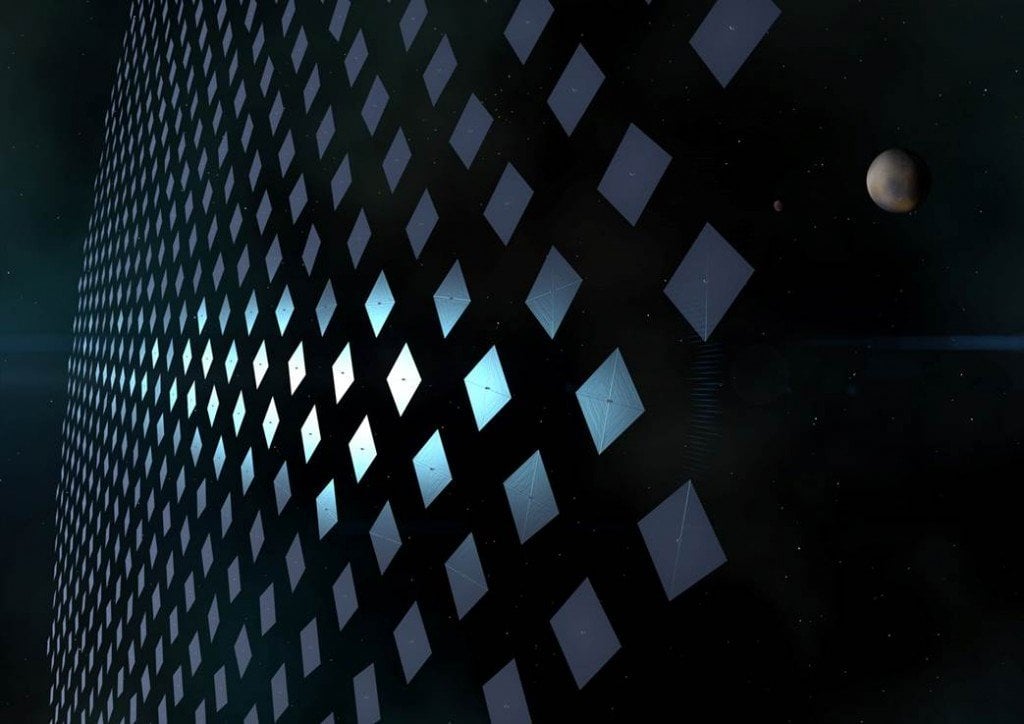
In a new paper, a team of researchers explores how non-human species (in this case, fireflies) could inform new approaches in the Search for Extraterrestrial Intelligence (SETI).
Human and robotic exploration of space
In a new paper, a team of researchers explores how non-human species (in this case, fireflies) could inform new approaches in the Search for Extraterrestrial Intelligence (SETI).
Everyoneâs favorite interstellar comet posed for one more portrait recently. The European Space Agencyâs XMM-Newton mission nabbed 3I/ATLAS on December 3rd from about 283 million kilometers distant. This comes as the comet is set to make its closest passage versus Earth this coming Friday, on December 19th.
Tracking down resources on the Moon is a critical process if humanity decides to settle there permanently. However, some of our best resources to do that currently are orbiting satellites who use various wavelengths to scan the Moon and determine what the local environment is made out of. One potential confounding factor in those scans is âspace weatheringâ - i.e. how the lunar surface might change based on bombardment from both the solar wind and micrometeroid impacts. A new paper from a researchers at the Southwest Research Institute adds further context to how to interpret ultra-violet data from one of the most prolific of the resource assessment satellites - the Lunar Reconnaissance Orbiter (LRO) - and unfortunately, the conclusion they draw is that, for some resources such as titanium, their presence might be entirely obscured by the presence of âoldâ regolith.
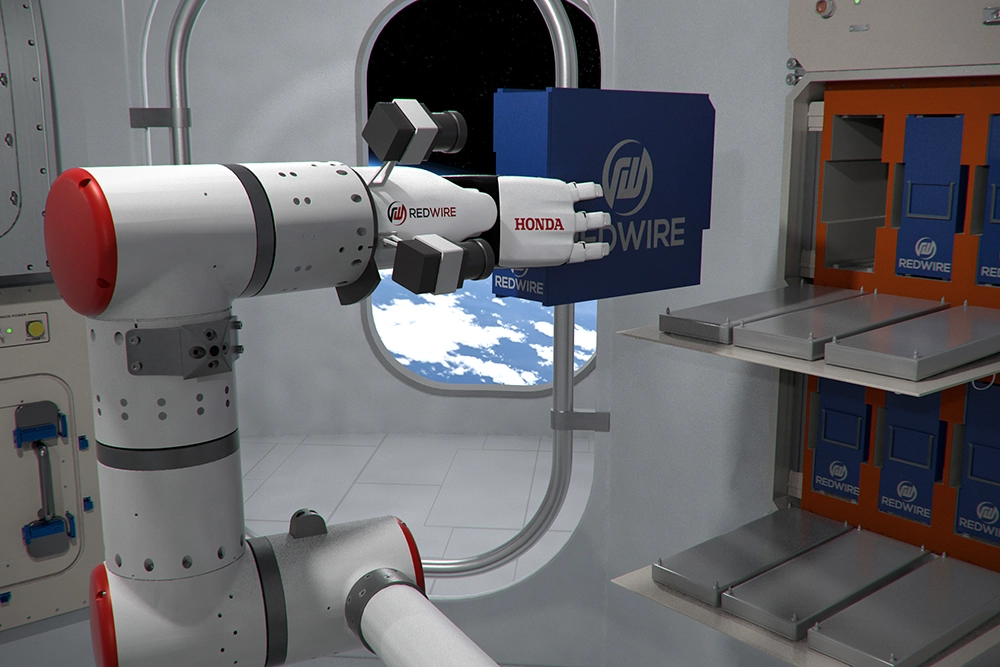
The UK is actively trying to support the infrastructure to make it a significant player in the coming age of the space economy. It recently received 560 proposals to itâs National Space Innovation Program, and handed out ÂŁ17M in grants to 17 different organizations following five main themes. One of those is an effort by the University of Leicester and The Welding Institute (TWI) to develop a robotic welder for use in repairing and manufacturing in space, as described by a new press release from the university.
Engineers can be split into two camps - those who just release whatever theyâre building and try to fix whatever might be wrong with it as they get feedback on it, and those who test their product in every possible way before releasing it to the public. Luckily, NASA engineers are in the latter camp - it wouldnât look great if all of the probes we send throughout the solar system failed because of something we could have easily tested for here at home. However, finding analogues for the places we want to send those probes remains a challenge for some NASA projects, so they make due with the best Earth has to offer. For Mars, that means testing technology in the desertâs rolling sand dune and rocky outcrops, and this year several different NASA technologies were tested in deserts throughout the country, as reported in a press release from the agency.
Removing, or âscrubbingâ, carbon dioxide from the air of confined spaces is a critical component of any life support system on a spacecraft or submarine. However, modern day ones are energy intensive, requiring temperatures of up to 200â to operate. So a research lab led by Dr. Hui He at Guangxi University in China has developed what they call âmicro/nano reconfigurable robotsâ (MNRM) to scrub CO2 from the air much more efficiently. Their work is described in a new paper in Nano-Micro Letters.
A severe accident at the Baikonur Cosmodrome involving a wrecked maintenance cabin has indefinitely delayed Russia's ability to launch crewed missions and payloads to the International Space Station (ISS).
A video that appeared on CGTN's Hot Take details four missions that China will be sending to space in the coming years, including a survey telescope that will search for Earth 2.0.
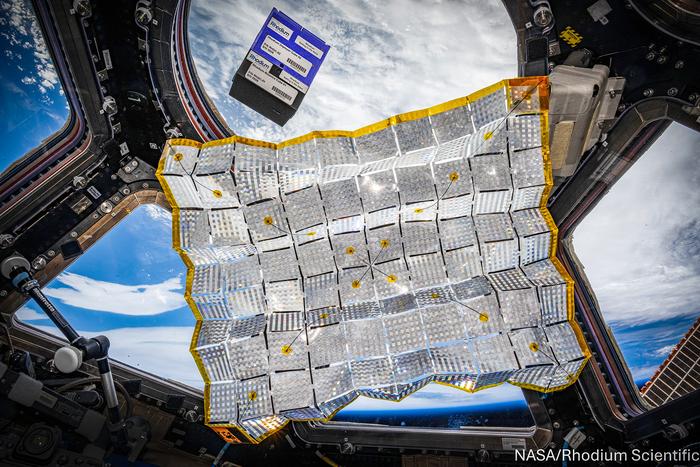
What steps can be taken to improve and enhance the lifetime of space solar cells? This is what a recent study published in Joule hopes to address as an international team of researchers investigated new methods for improving both the lifetime and performance of space solar cells from the harshness of space weather and radiation. This study has the potential to help scientists and engineers develop new space technologies, especially as several private companies and government organizations are extending their reach into space.
Growing fresh lettuce and strawberries might sound mundane until you consider doing it on the Moon or Mars. An international team has created a roadmap for cultivating plants in space, addressing one of NASA's highest priority challenges for long duration missions. These aren't just about providing fresh food for astronauts, plants in space will recycle air and water, produce pharmaceuticals, process waste, and support mental health during years long journeys to distant worlds. With the first lunar greenhouse scheduled to operate during NASA's 2027 Artemis III mission, humanity is on the verge of becoming an agricultural species across multiple worlds.
Understanding how exactly lunar dust sticks to surfaces is going to be important once we start having a long-term sustainable presence on the Moon. Dust on the Moon is notoriously sticky and damaging to equipment, as well as being hazardous to astronautâs health. While there has been plenty of studies into lunar dust and its implications, we still lack a model that can effectively describe the precise physical mechanisms the dust uses to adhere to surfaces. A paper released last year from Yue Feng of the Beijing Institute of Technology and their colleagues showcases a model that could be used to understand how lunar dust sticks to spacecraft - and what we can do about it.
Using in-situ propellant has been a central pillar of the plan to explore much of the solar system. The logic is simple - the less mass (especially in the form of propellant) we have to take out of Earthâs gravity well, the less expensive, and therefore more plausible, the missions requiring that propellant will be. However, a new paper from Donald Rapp, the a former Division Chief Technologist at NASAâs JPL and a Co-Investigator of the successful MOXIE project on Mars, argues that, despite the allure of creating our own fuel on the Moon, it might not be worth it to develop the systems to do so. Mars, on the other hand, is a different story.
Blue Origin announced a series of upgrades to New Glenn designed to increase payload performance and launch cadence, while enhancing reliability. The enhancements span propulsion, structures, avionics, reusability, and recovery operations, and will be phased into upcoming New Glenn missions beginning with NG-3.
Material science plays a critical role in space exploration. So many of the challenges facing both crewed and non-crewed missions come down to factors like weight, thermal and radiation tolerance, and overall material stability. The results of a new study from Young-Kyeong Kim of the Korea Institute of Science and Technology and their colleagues should therefore be exciting for those material scientists who focus on radiation protection. After decades of trying, the authors were able to create a fully complete âsheetâ of Boron Nitride Nanotubes (BNNTs).
Satellite megaconstellations are quickly becoming the backbone of a number of industries. Cellular communication, GPS, weather monitoring and more are now, at least in part, reliant on the networks of thousands of satellites cruising by in low Earth orbit. But, as these constellations grow into the tens of thousands of individual members, the strain they are putting on the communications and controls systems of their ground stations is becoming untenable. A new paper from Yuhe Mao of the Nanjing University of Aeronautics and Astronautics and their co-authors hopes to alleviate some of that pressure by offloading much of the control scheme and network decision-making logic to satellites themselves.
Most people interested in space exploration already know lunar dust is an absolute nightmare to deal with. Weâre already reported on numerous potential methods for dealing with it, from 3D printing landing pads so we donât sand blast everything in a given area when a rocket lands, to using liquid nitrogen to push the dust off of clothing. But the fact remains that, for any long-term presence on the Moon, dealing with the dust that resides there is one of the most critical tasks. A new paper from Dr. Slava Turyshev of NASAâs Jet Propulsion Laboratory, who is enough of a polymath that our last article about his research was covering a telescope at the solar gravitational lens, updates our understanding of the physical properties of lunar dust, providing more accurate information that engineers can use to design the next round of rovers and infrastructure to support human expansion to our nearest neighbor.
The next few months are likely to bring a dramatic transition for NASA, under the leadership of a new administrator who has new ideas about changing the course of the space agency.
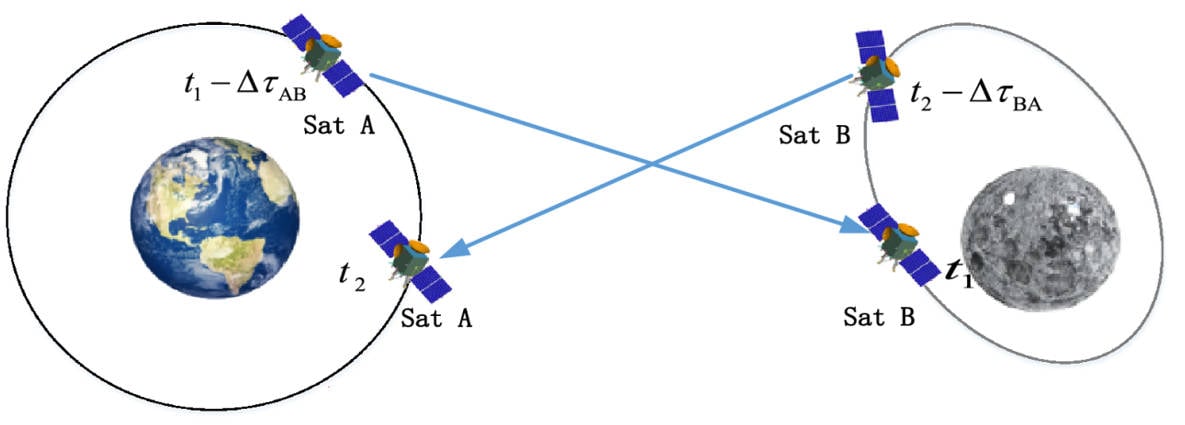
Tracking time is one of those things that seems easy, until you really start to get into the details of what time actually is. We define a second as 9,192,631,770 oscillations of a cesium atom. However, according to Einsteinâs theory of general relativity, mass slows down these oscillations, making time appear to move more slowly for objects in large gravity wells. This distinction becomes critical as we start considering how to keep track of time between two separate gravity wells of varying strengths, such as on the Earth and the Moon. A new paper by Pascale Defraigne at the Royal Observatory of Belgium and her co-authors discusses some potential frameworks for solving that problem and settles on using the new Lunar Coordinate Time (TCL) suggested by the International Astronomical Union (IAU).
After spending four years converting a massive cargo ferry into a rocket catching ship, Blue Origin scrapped the entire vessel and started from scratch. The story of Jacklyn, named after Jeff Bezos's mother, reveals how even a company founded by one of the world's richest people had to learn hard lessons about what actually works when trying to catch 57 metre rocket boosters descending from space at hypersonic speeds. The barge that ultimately took its name represents a dramatic shift in strategy, from elegant complexity to purpose built simplicity.
When a chunk of SpaceX rocket debris crashed into a Polish warehouse this year, it exposed a troubling reality, that the international laws governing space accidents were written for a world where only governments launched rockets. Now, as private companies deploy thousands of satellites and debris rains down with increasing frequency, victims have no direct legal recourse and must rely on their governments to pursue claims on their behalf, thatâs if those governments choose to act at all. A new analysis reveals how a Cold War era treaty struggles to protect ordinary people in the age of commercial spaceflight, and why some nations are now taking matters into their own hands.