Universe Today
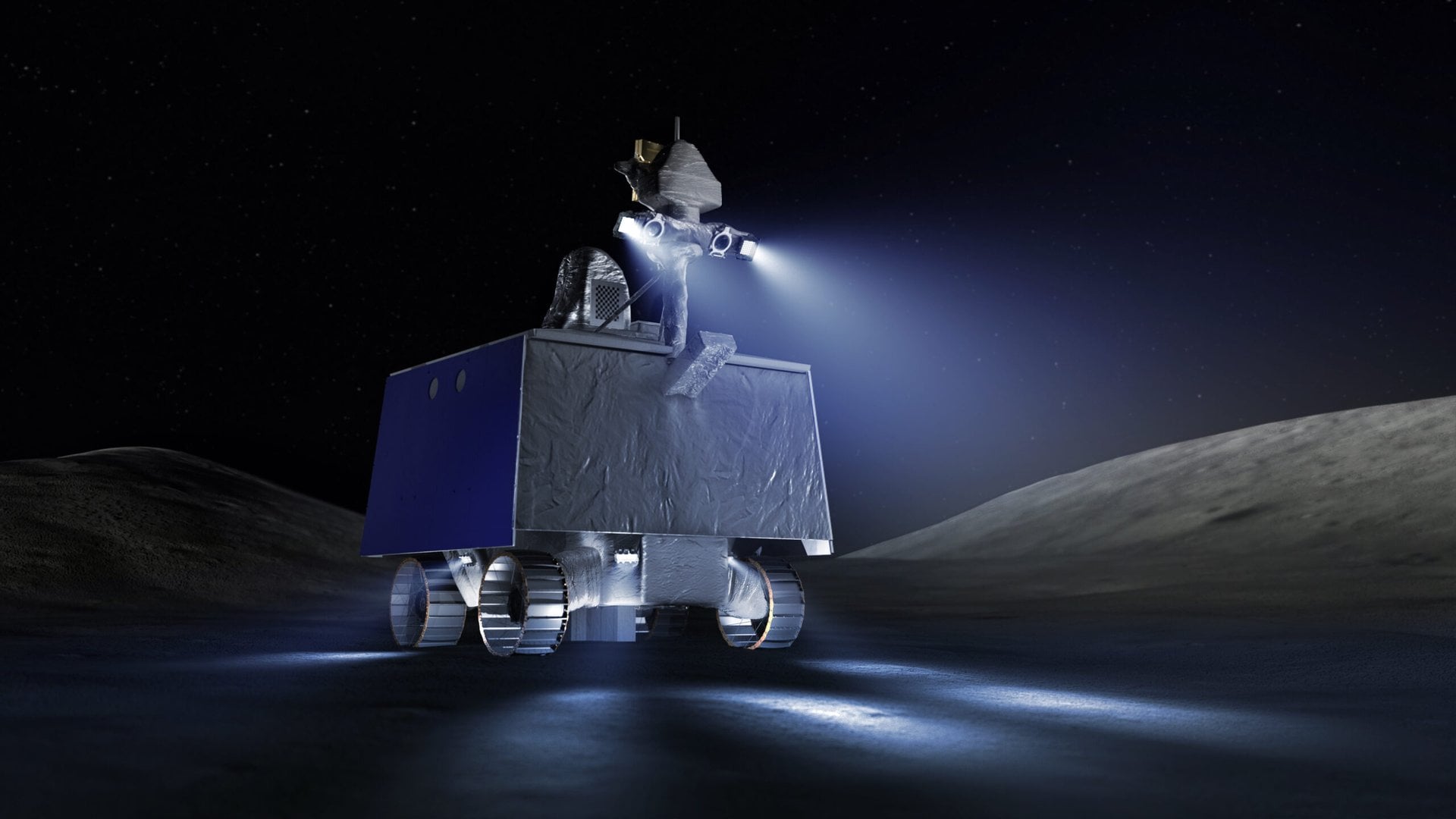
NASA and other space agencies are intent on sending astronauts back to the Moon, and this time, to stay! A vital part of these plans for reducing costs and dependency on Earth is the process of In-Situ Resource Utilization (ISRU), using local resources for construction materials and meeting astronauts' basic needs. This is why the South Pole-Aitken Basin, with its many permanently shadowed regions (PSRs), is considered a promising region for building habitats that will enable long-term exploration and development.
In addition, the water deposits in these craters will enable lucrative scientific research, as they are essentially records of billions of years of Solar System history. Unfortunately, PSRs are one of the most challenging environments in the inner Solar System for scientific operations. These "cold sinks" are never exposed to sunlight, resulting in temperatures below -240 °C (-400 °F), which eliminates solar-powered rovers as an option. This makes nuclear-powered robotic explorers the best option, according to a recent study by two scientists from the commercial space sector.
The study, "Radioisotope mission concepts for in-situ exploration of permanently shadowed regions on the Moon," was authored by Senior VP of Space Business Development A.C. Charania at Zeno Power, and Business Development and Sales Lead Charlie Crouse at Advanced Space. The paper detailing their findings was presented at the 2026 Lunar Planetary Science Conference (LPSC).
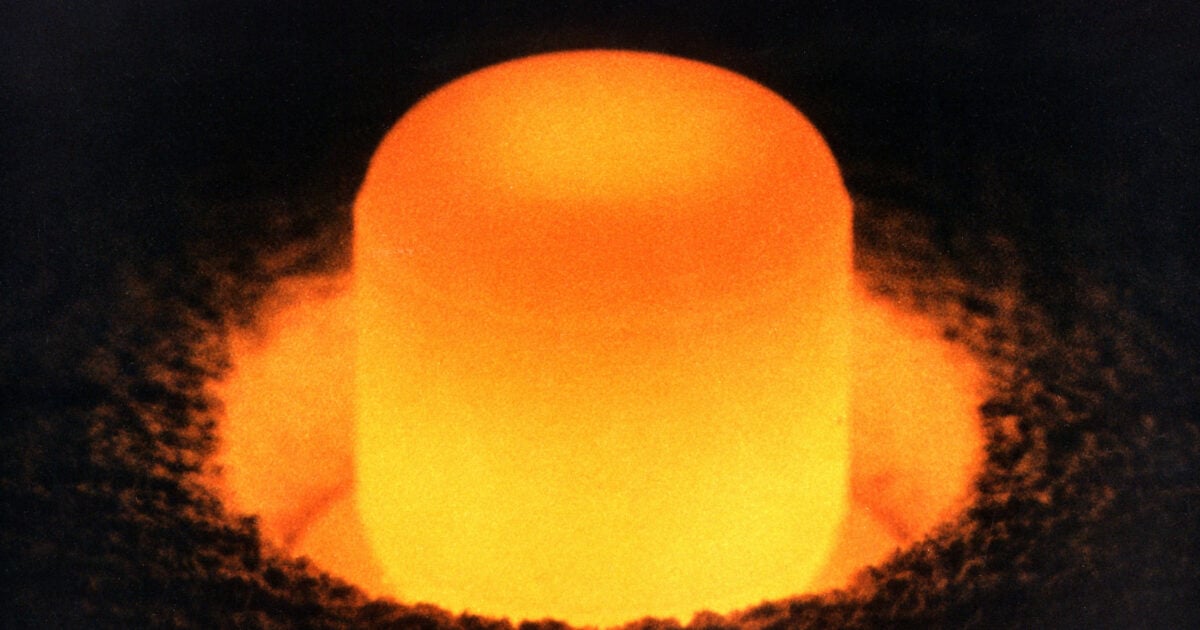 A ceramic fuel pellet of Plutonium-238 glows orange from heat produced by its radioactive decay. Credit: Department of Energy
As Charania and Crouse note, the study of water ice and other volatile elements in lunar craters will expand our knowledge of lunar geologic evolution and Solar System formation. This knowledge will also help resource prospecting for future exploration programs, such as NASA's Artemis Program, the ESA's Moon Village, and the Sino-Russian International Lunar Research Station (ILRS). It will also support commercial activities on the Moon, which are likely to include resource prospecting and extraction. As they state in their paper:
Ground-truth measurements from within PSRs can validate orbital remote sensing and reduce risks for future human landings in these high-priority regions. While previous mission concepts have focused on traversing PSRs from outside to into the PSR (i.e., with mobility assets moving into a PSR), the missions examined here propose direct landing/entry into a PSR.
However, the extreme temperature environment, lack of sunlight, and limited communications (being on the far side of the Moon) make such missions highly difficult. To this end, Charania and Crouse present two mission concepts that would rely on Radioisotopic Power Systems (RPSs), similar to those used by NASA's Voyager I & II probes and the Curiosity and Perseverance rovers. For their concepts, however, they recommend systems powered by Americium-241, an artificially created isotope that offers advantages over traditional Pu-238 systems.
This includes commercial availability, as the United States has been facing a shortage of Pu-238 since production ceased in 1988. While the Department of Energy (DoE) resumed domestic production for NASA missions in 2015, existing stockpiles are running low, and Russian imports are currently not an option due to sanctions.
The two concepts they recommended include an initial mission that uses Americium-sourced Radioisotope Heater Units (RHUs) and a larger system that uses an Americium-sourced Radioisotope Stirling Generator (RSG). The former consists of an RHU-Powered Compact Lander optimized for descent into a selected crater in the Moon's southern polar region. This will be followed by the RSG-Powered Enhanced Lander featuring a more complex design and a robust suite of scientific instruments.
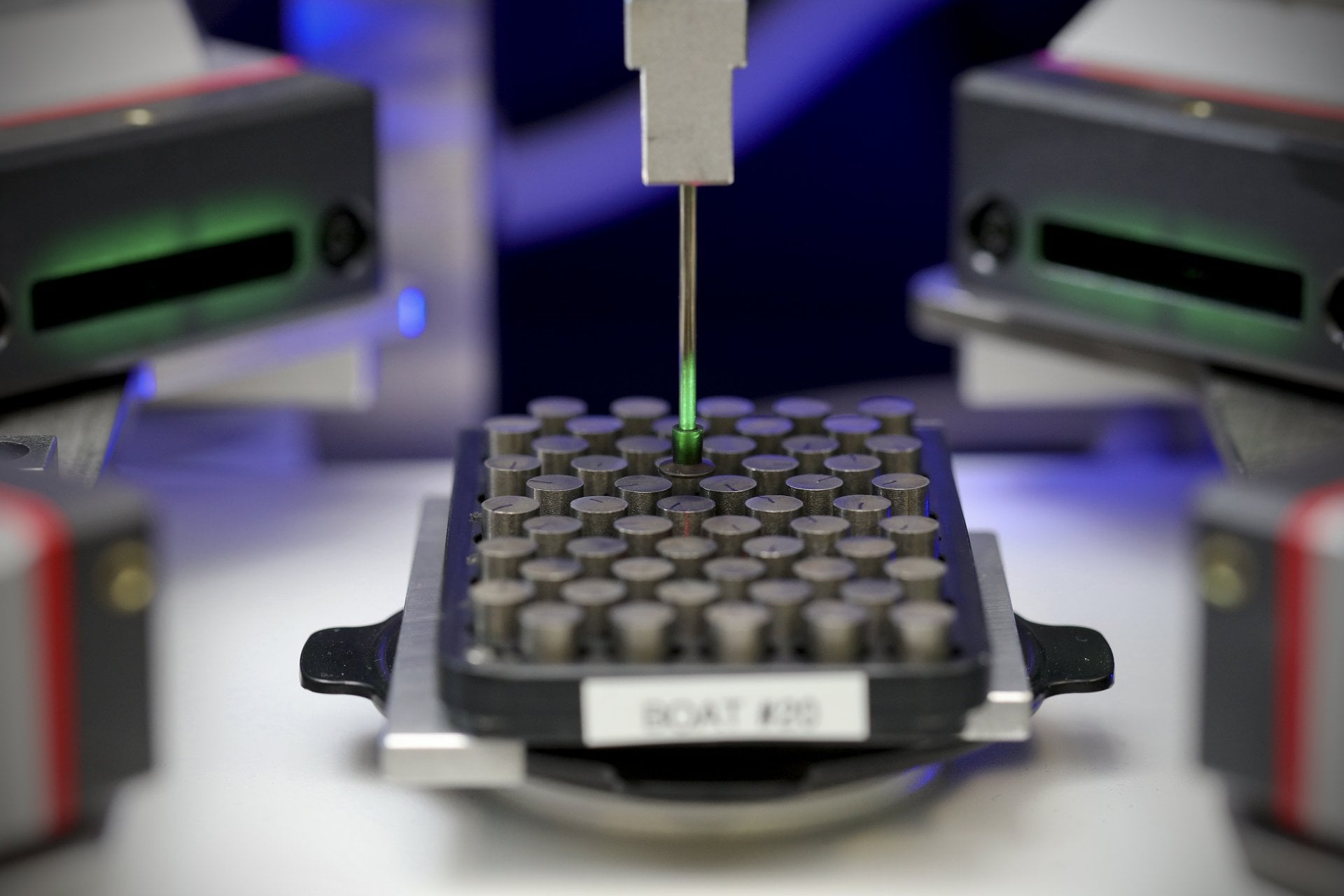 Oak Ridge National Lab developed an automated metrology system for production of Pu-238 pellets. Credit: ORNL/Department of Energy
While previous mission concepts have focused on robotic rovers entering PSRs by traversing the crater rim and descending into the crater, their proposed missions call for direct landing and entry into the crater.
"These mission concepts demonstrate that radioisotope-enabled spacecraft can play a transformative role in lunar science and exploration by enabling persistent operations in the coldest environments on the Moon for both robotic and crewed missions," they write. Such mission concepts would enable important scientific research and fit with the Artemis Program's ultimate aim of establishing a "sustained program of lunar exploration and development."
Further Reading: LPSC 2026