Is the Big Bang a Myth? Part 4: The Emergence of Matter
After the first protons and neutrons formed, after the first light elements formed, the universe…wasn’t really all that great.
The physics of the universe
After the first protons and neutrons formed, after the first light elements formed, the universe…wasn’t really all that great.
The early universe was a very different place than today. And by “early” I don’t mean a billion or even ten billion years ago. The universe is about 13.77 billion years old, and when it was only a handful of seconds old, it was completely unrecognizable.
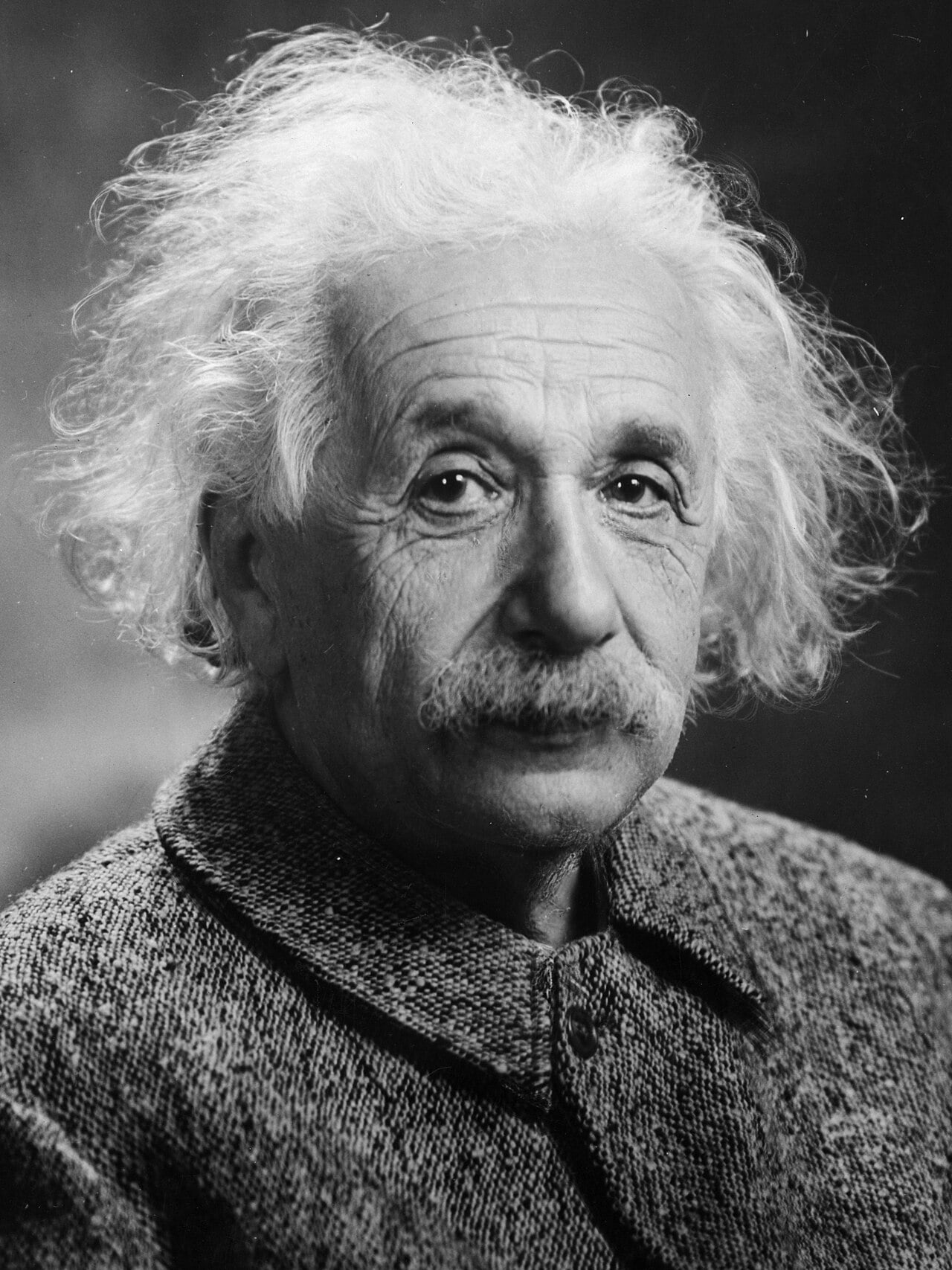
In the early 20th century, after years of effort, Albert Einstein developed his general theory of relativity. This was a massive improvement in our understanding of gravity, giving us a sophisticated view into the inner workings of that fundamental force.
Let’s say you are transported back in time to some ancient culture. And along the way you somehow forget everything you knew about modern cosmology (don’t worry about the details, it’s just to get us going here, pretend if you have to that it’s a very strange and selective sort of amnesia introduced by the time traveling device).
The challenge is that nothing in this universe is simple. And if there’s one thing you take away from today’s episode, then let it be that. Don’t ever let yourself fall into the trap of simple answers for difficult questions. We’re cosmologists, we study the universe as it is, not as we wish it would be.
The early universe was a pretty intense place to be. And not just “early” as in a few billion years ago. I mean early early, just a few seconds after the Big Bang. The universe is small, less than a meter across. It’s hot, with temperatures so high it doesn’t even make sense to say them – they’re just stupidly high numbers with no connection to our everyday existence.
At the same time that Vera Rubin was turning cosmology upside down with conclusive evidence for the existence of dark matter, Stephen Hawking was doing…Stephen Hawking things.
Do I really need to go over the evidence for dark matter again? Okay, fine, for those of you in the back who weren’t paying attention the first time.
Chemical rockets have taken us to the Moon and back, but traveling to the stars demands something more powerful. Space X’s Starship can lift extraordinary masses to orbit and send payloads throughout the Solar System using its chemical rockets but it cannot fly to nearby stars at thirty percent of light speed and land. For missions beyond our local region of space, we need something fundamentally more energetic than chemical combustion, and physics offers or in other words, antimatter.
Ninety five years after Swiss astronomer Fritz Zwicky inferred its existence from galaxies moving impossibly fast, researchers may have detected the first direct evidence of dark matter, the invisible scaffolding that holds the universe together. Using gamma ray data from NASA's Fermi Space Telescope, a Japanese physicist has identified a halo of extremely energetic photons around the Milky Way's center that matches predictions for annihilating dark matter particles. If confirmed, humanity has finally "seen" the unseeable.
A research team has conducted the first systematic search for optical counterparts to a neutrino "multiplet," a rare event in which multiple high-energy neutrinos are detected from the same direction within a short period. The event was observed by the IceCube Neutrino Observatory, a massive detector buried deep within the Antarctic ice.
An international team of researchers, led by the Leibniz Institute for Astrophysics Potsdam (AIP), has shed light on a decades-long debate about why galaxies rotate faster than expected, and whether this behaviour is caused by unseen dark matter or a breakdown of gravity on cosmic scales.
If we take out all the matter, neutrinos, dark matter, cosmic rays, and radiation from the deepest parts of the voids the only thing left is empty space.
The cosmic voids of the universe are empty of matter. But we all know there’s more to the universe than just matter.
There is a limit to how big we can build particle colliders on Earth, whether that is because of limited space or limited economics. Since size is equivalent to energy output for particle colliders, that also means there’s a limit to how energetic we can make them. And again, since high energies are required to test theories that go Beyond the Standard Model (BSM) of particle physics, that means we will be limited in our ability to validate those theories until we build a collider big enough. But a team of scientists led by Yang Bai at the University of Wisconsin thinks they might have a better idea - use already existing neutrino detectors as a large scale particle collider that can reach energies way beyond what the LHC is capable of.
Now that we have tools to find vast numbers of voids in the universe, we can finally ask…well, if we crack em open, what do we find inside?
To answer that question of what’s inside a void, we have to first decide what a void…is.
So where do we go after years of empty searches for dark matter? We haven’t learned nothing.
What if I told you that while you can’t see dark matter, maybe you can hear it?
As a kid you ever play that game Guess Who? If you haven’t, it’s actually kinda fun.