 Universe Today
Wandering Black Holes May Hold Clues to the Evolution of the Universe
According to new research, "wandering" black holes may have left an imprint on the Universe as they traveled for billions of years.
The study of the universe as a whole
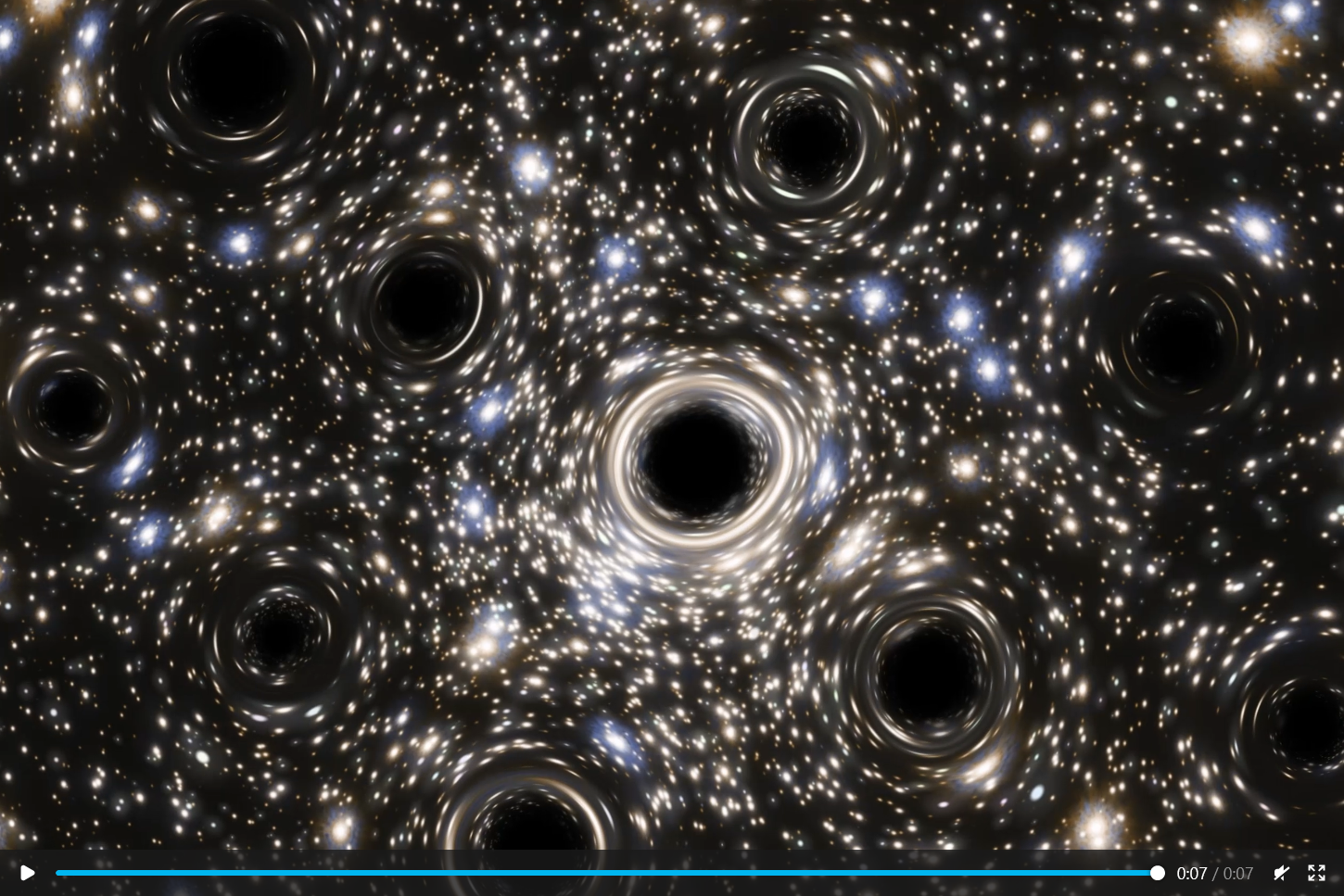
According to new research, "wandering" black holes may have left an imprint on the Universe as they traveled for billions of years.
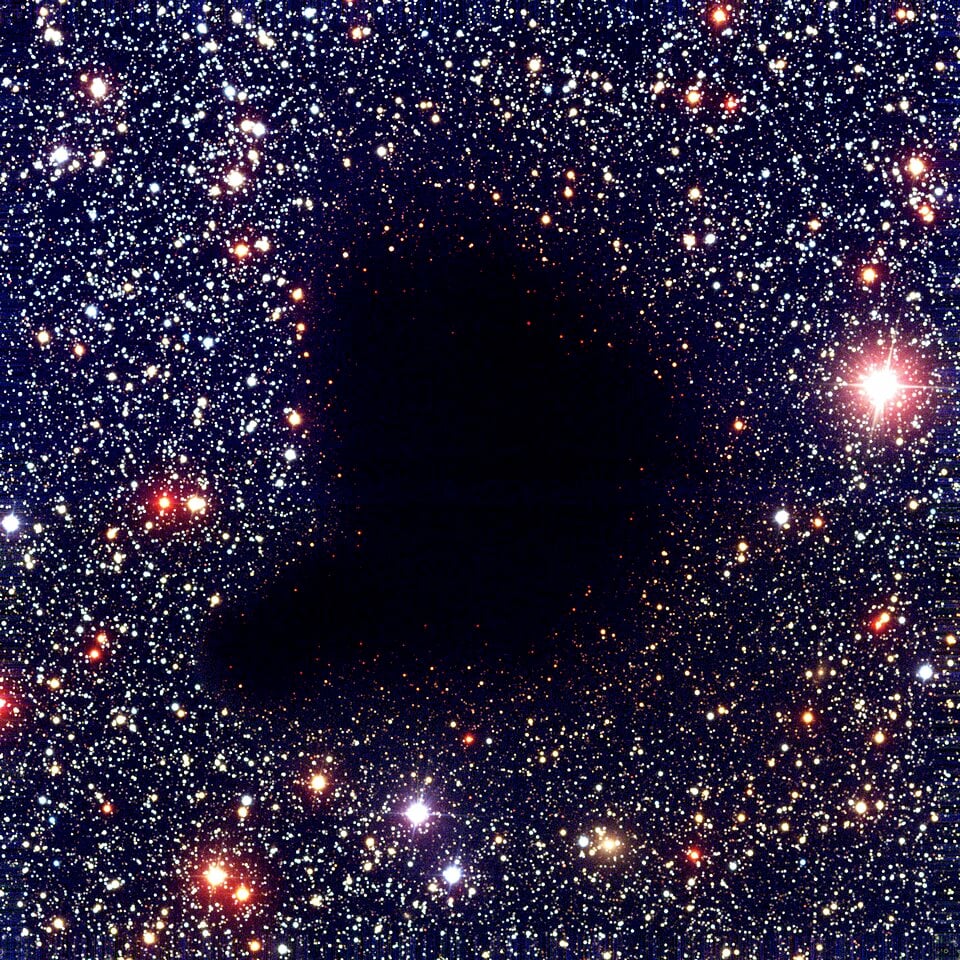
The Universe has been making fewer stars lately and astronomers want to know why. The obvious answer is: there hasn't been enough starbirth material. But, is that true? Is some other process at play? An international team led by researcher Hong Guo of the Chinese Academy of Sciences decided to dig into the reasons why it looks like starbirth is falling off.
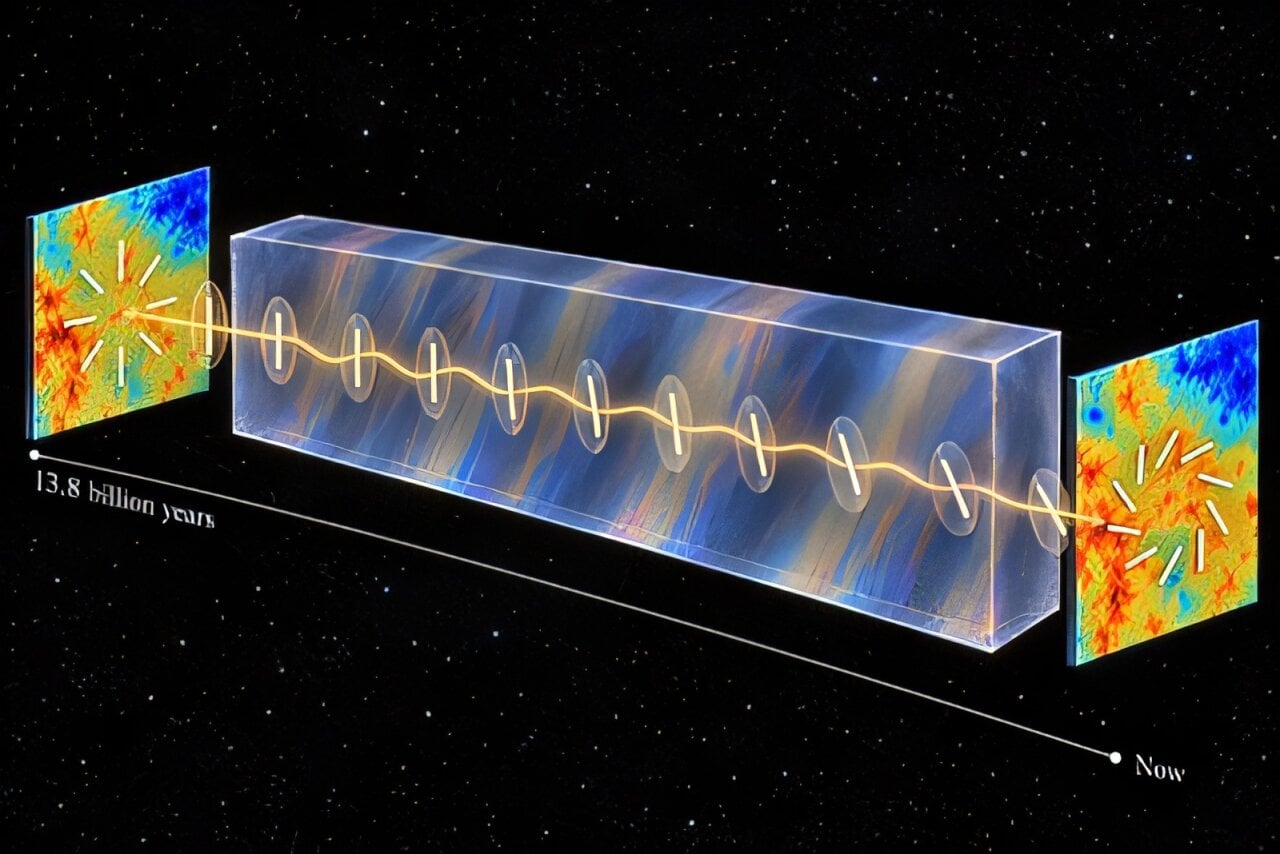
The standard model of cosmology predicts that the Universe is homogeneous. A new study tests this using the polarization of the cosmic microwave background and finds this isn't quite true. This study supports an earlier study which also found a small polarization bias.
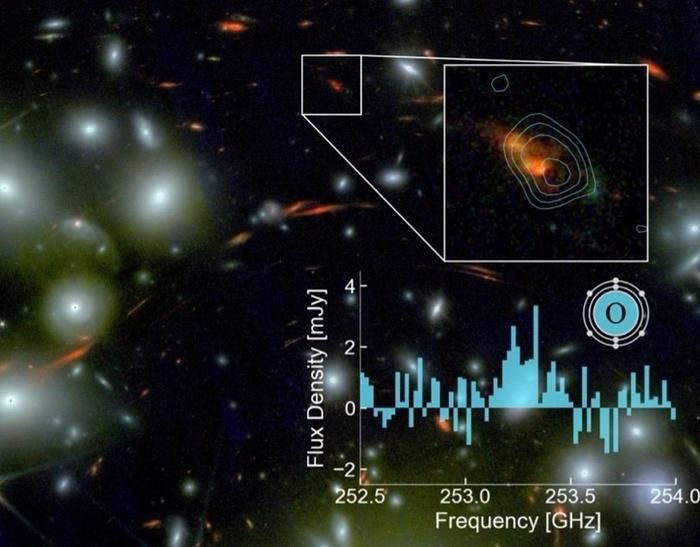
Approximately 13.8 billion years ago, the Big Bang is hypothesized to have occurred, kickstarting our universe and eventually life on our small, blue world. While the Big Bang has yet to be directly observed, scientists have worked tirelessly to piece together the events that happened immediately after the Big Bang, specifically the first billion years or less, with the goal of gaining insight into the how the first stars, and potentially planets, formed and evolved.
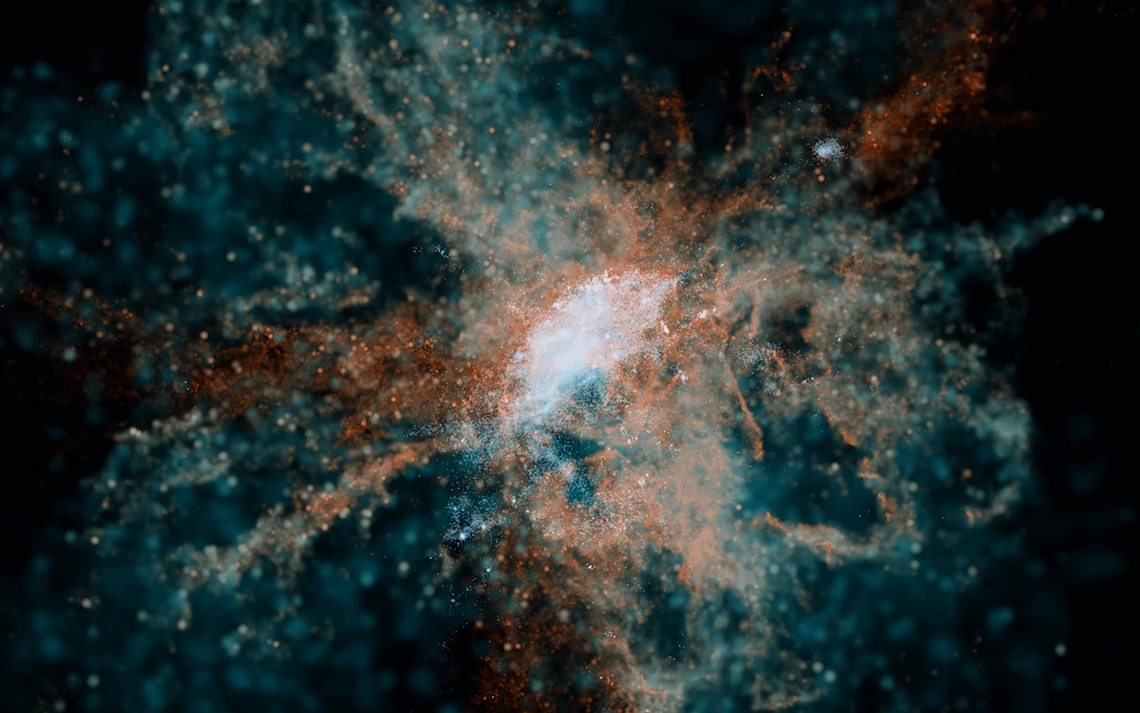
Way back in the earliest epochs of the Universe, the Big Bang was followed by a period called the Cosmic Dark Ages. It was a time when the cosmic soup of primordial particles was so thick that light couldn't propagate. Hence the term "dark"; also, because, even with our best telescopes, we can't see "into" that epoch. Although we don't have a definite "century by century" timeline of activity, that doesn't mean that period of history didn't lead to something interesting.
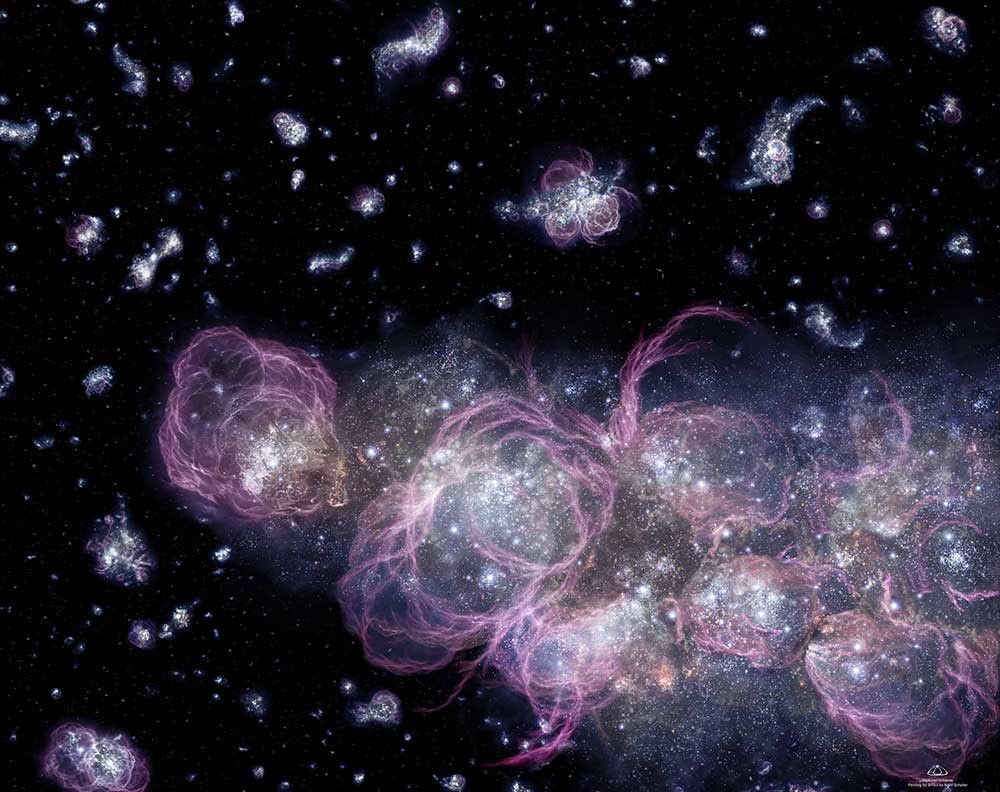
Galaxies and their stars in the early Universe look a lot weirder than those we see today, and astronomers want to know why. A team of researchers at the University of Utah decided to survey certain stars in nearby galaxies as analogs of those that existed when the Universe was still in its infancy. The survey, called the "Treasury of Extremely Metal-Poor O Stars (TEMPOS), used the ultraviolet (UV) light streaming from those relatively close-by stars as detected by the Hubble Space Telescope's Cosmic Origins Spectrograph.
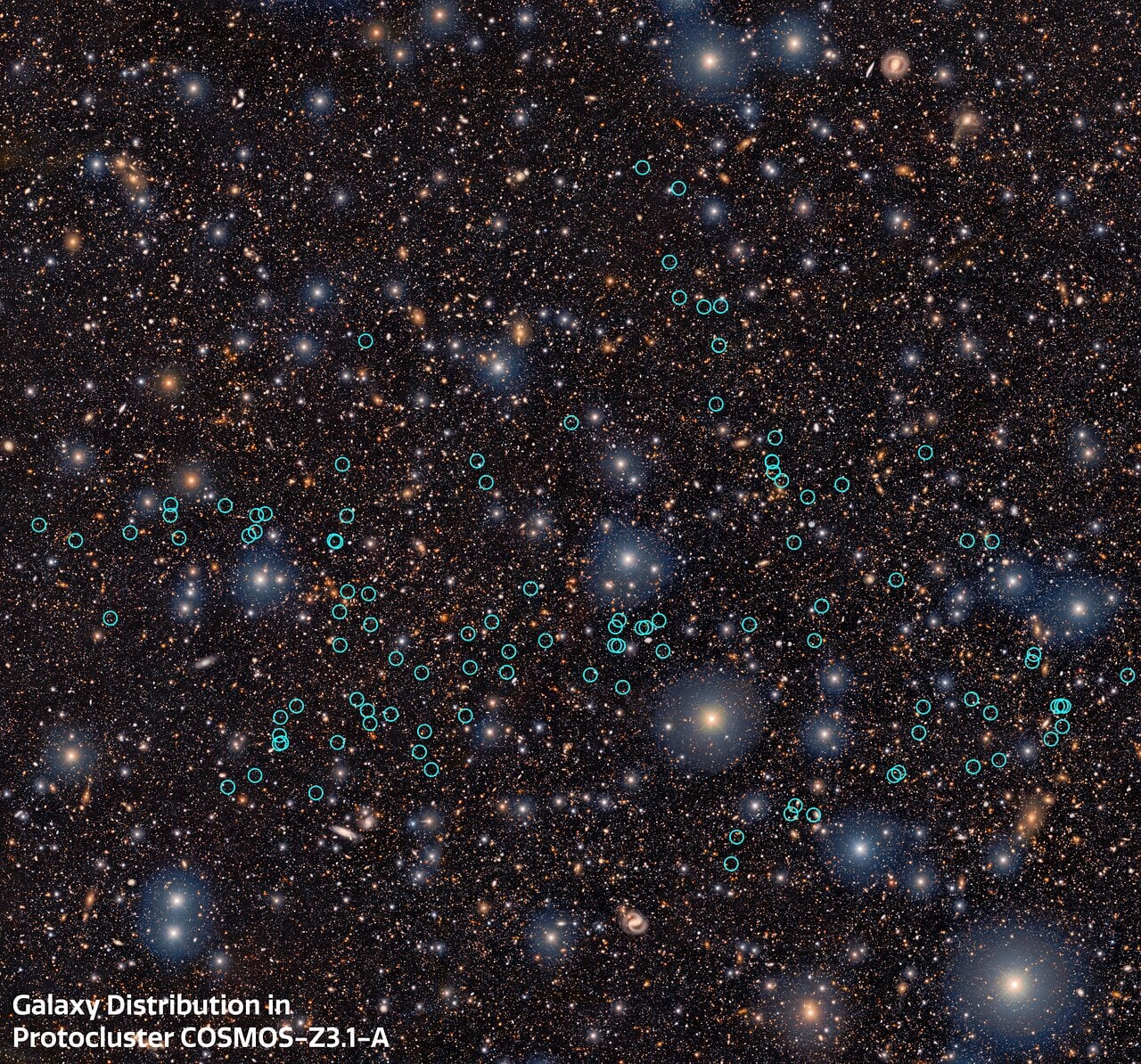
The discovery of a very early and rare proto-supercluster of infant galaxies may help give clues to the formation of such clusters and their connection to the Cosmic Web.
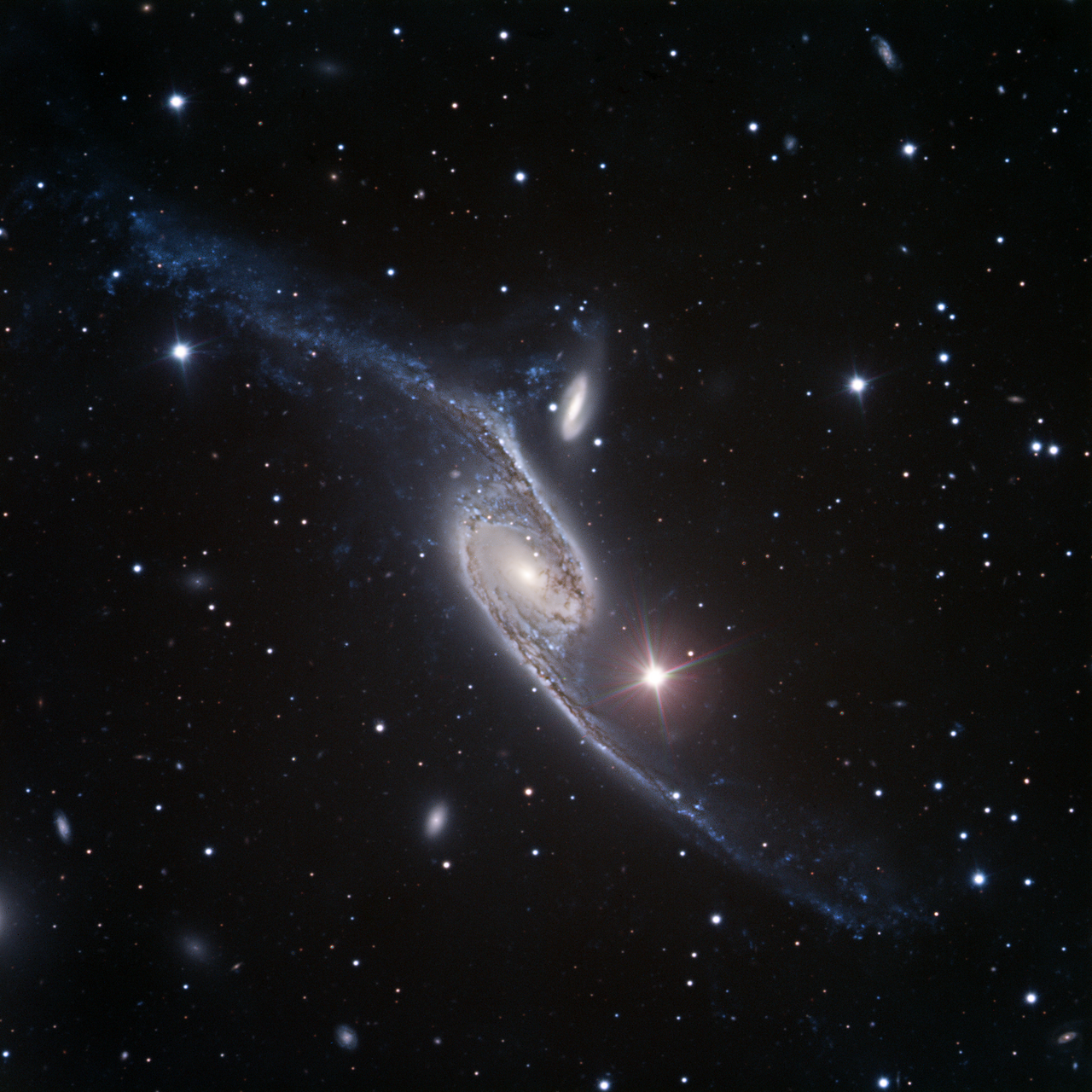
Cosmic topology is as esoteric as cosmology can get. But a growing number of astrophysicists think it holds keys to understanding the universe on its largest scales.
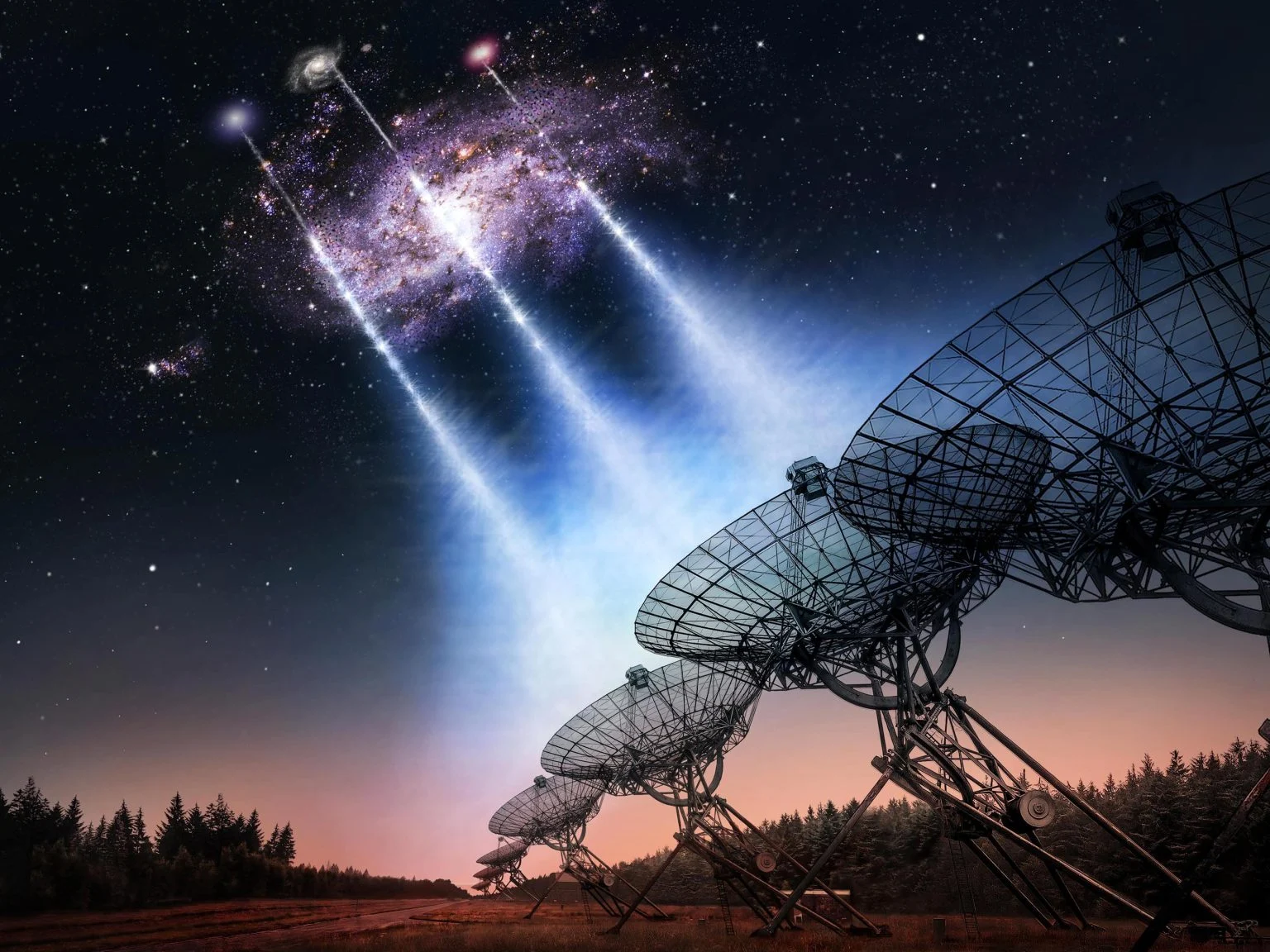
A new study led by researchers from Caltech demonstrates the effectiveness of Fast Radio Bursts (FRBs) as a tool for measuring cosmological distances and the clustering of matter.

Light could only travel freely in the Universe after cosmic reionization. Before that, neutral hydrogen stopped photons from travelling. The JWST has found evidence of an overdensity of galaxies carving out a bubble of reionization. Is this how it all started?

As our telescopes have improved and we’ve been able to peer farther back in time, we’ve begun finding more fascinating features of the universe. But one thing we definitely haven’t found yet is Population III (Pop III) stars. These were the earliest stars in the universe, formed completely from pristine hydrogen and helium, with no “metals” (i.e. elements heavier than those two) polluting their processes. They are also theorized to be absolutely massive, and “die with passion” as Bill Wurtz once put it in a famous YouTube video. A new paper, available in pre-print form on arXiv by Tae Bong Jeon from the Cosmic Frontier Center at the University of Texas at Austin, looks at just how massive those starbursts could be, and whether the James Webb Space Telescope could detect one.
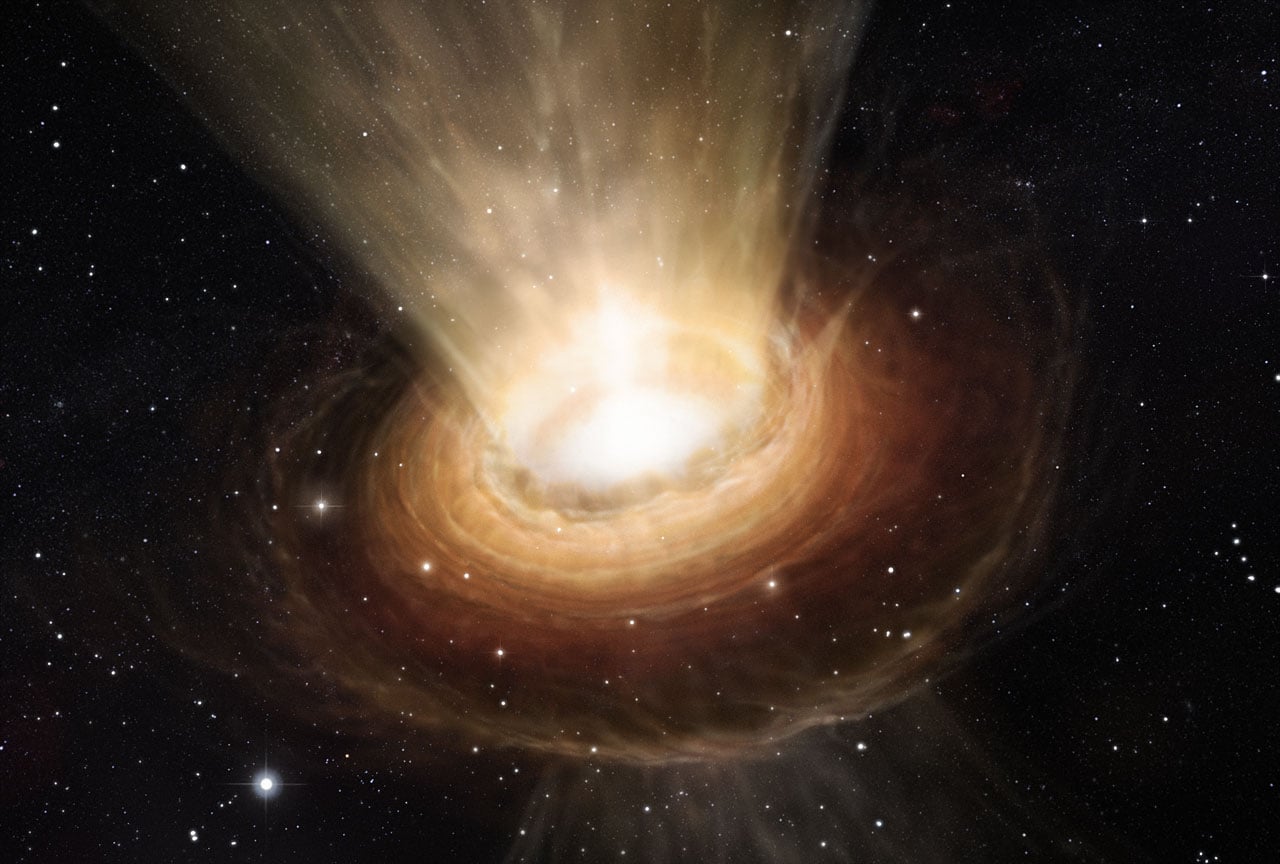
We know the universe is constantly expanding. We also know that gravitationally bound objects, such as solar systems and black holes, seem to be immune to that expansion. But a new paper, available in pre-print on arXiv by theoretical physicists Valerio Faraoni and Massimiliano Rinaldi challenges that assumption. They suggest that black holes can’t just ignore the expanding universe around them. Instead they have to expand along with it.
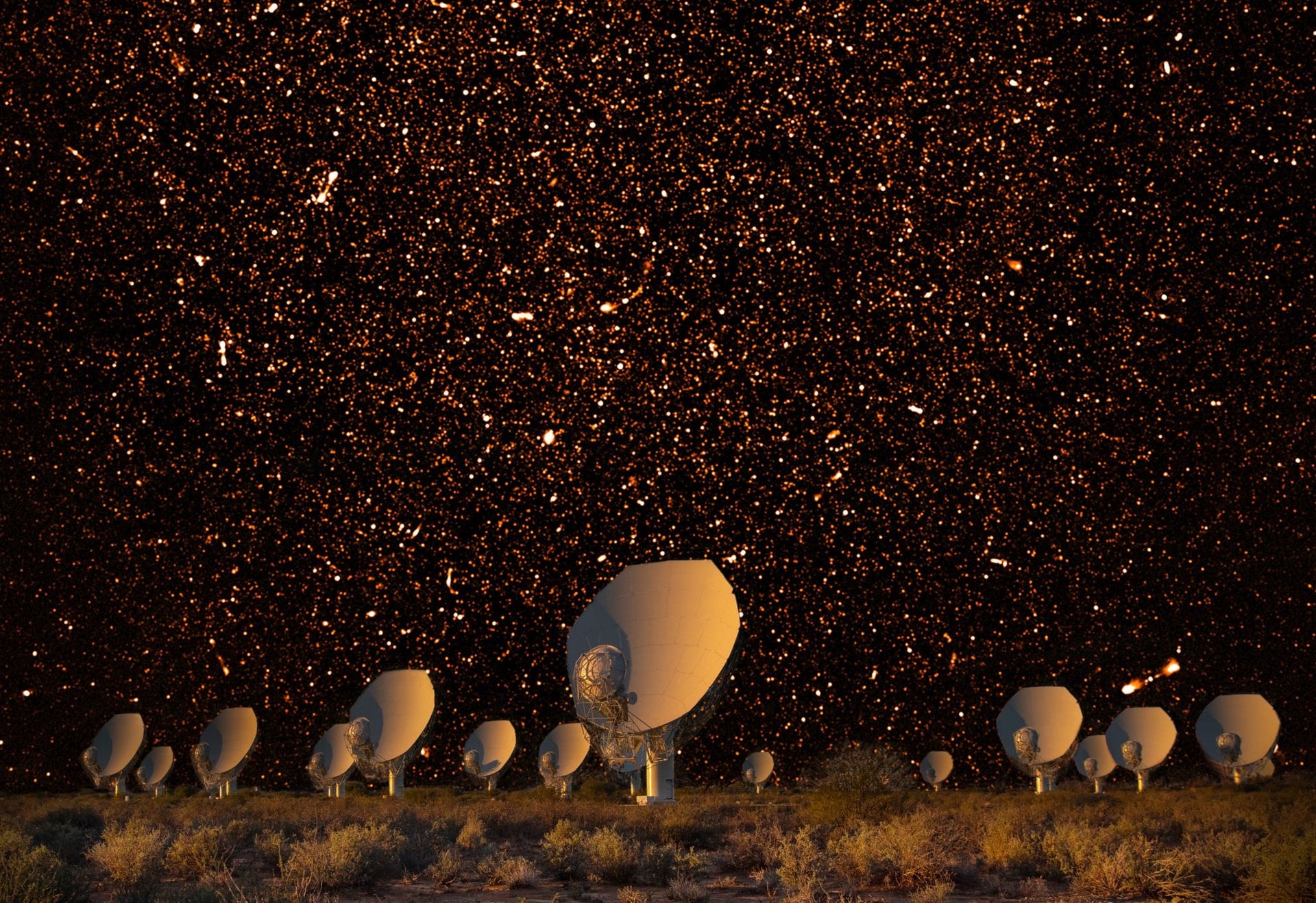
Astronomers have directly detected an extremely faint radio signal from hydrogen gas billions of light years away, demonstrating a powerful new way to map the Universe.
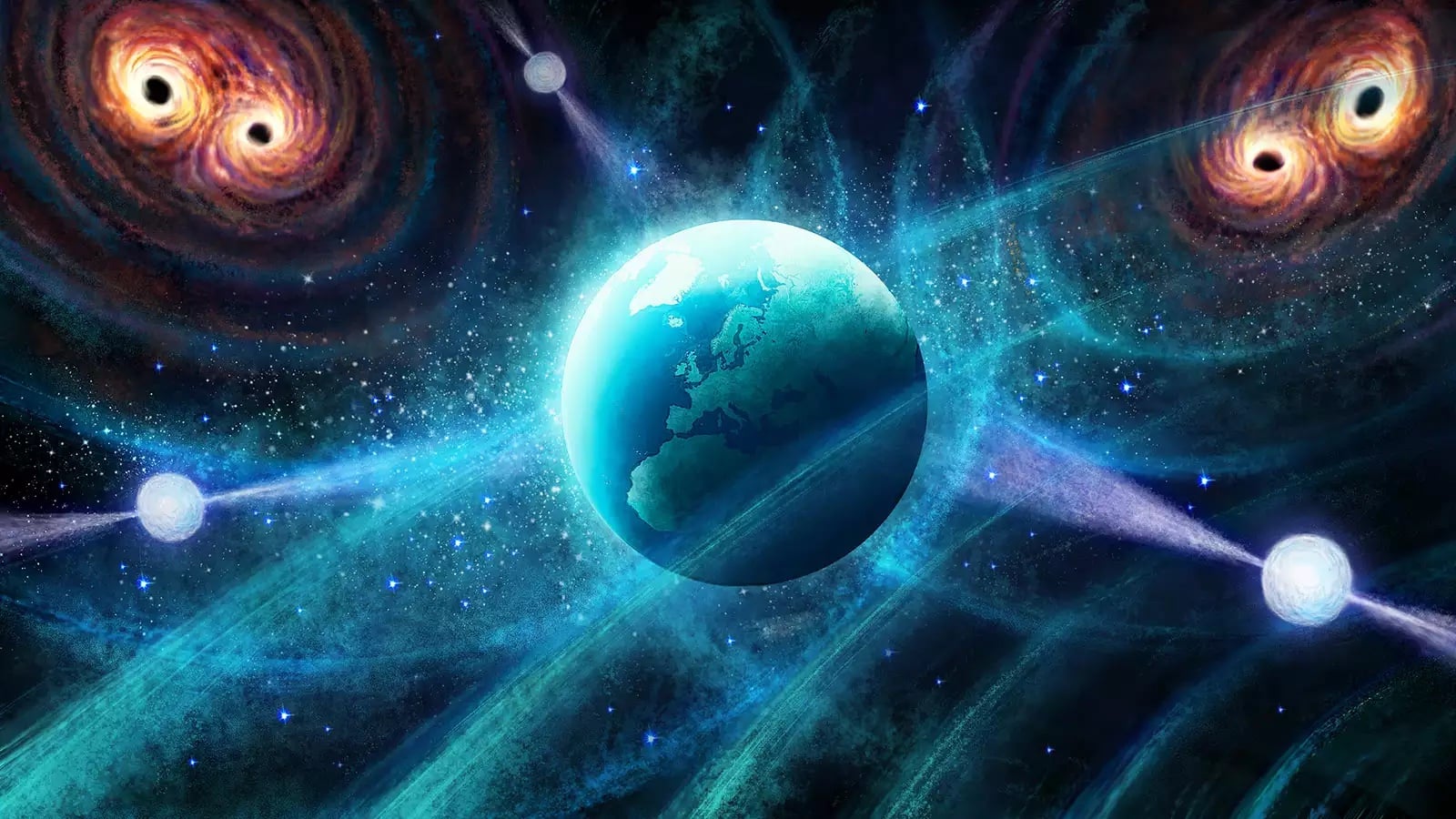
Pulsar Timing Arrays have been used to observe the background of gravitational waves in our galaxy. We aren't certain of their origin, but a new study shows a strong source could be early supermassive giants known as dark stars.
Cross-disciplinary research at Perimeter Institute and University of Maryland shows that dark photons could be lurking in more places than previously thought.
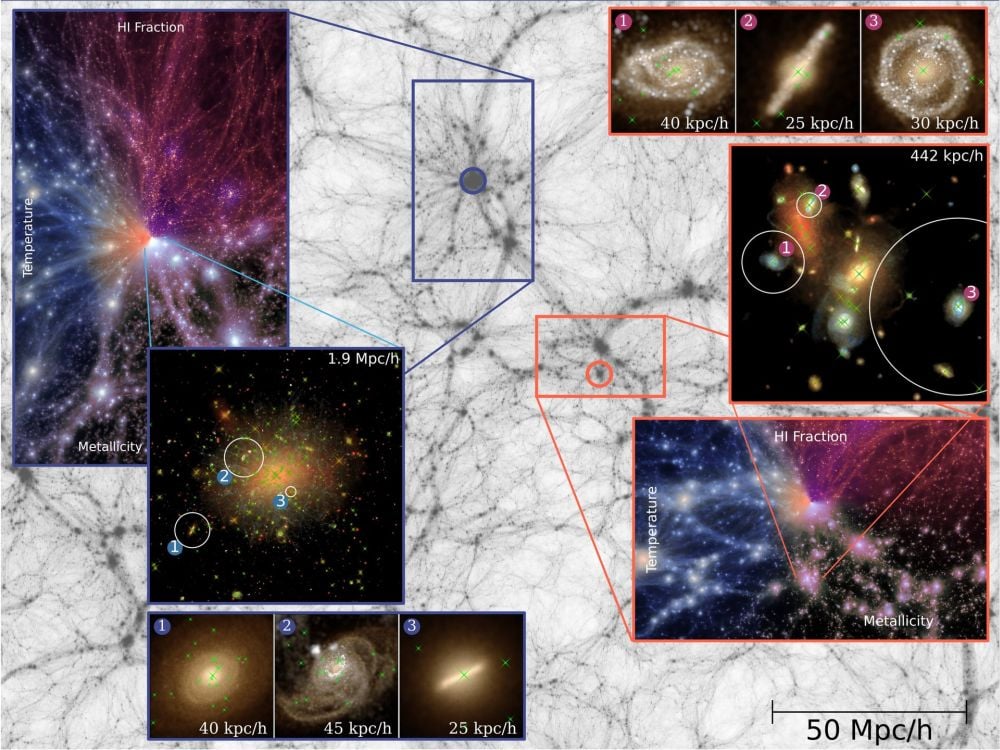
The ASTRID cosmological simulation has run from the Universe's early days up to the present day, z=0. ASTRID is larger than some other simulations, and smaller than others. But with a higher number of particles, it has higher-resolution than its fellows. Among other things, this can tell astronomers where to look for gravitational waves from black hole mergers with future GW observatories.
How do scientists know the mass of the Universe? Measuring it has traditionally relied on knowing how many stars there are in galaxies, as well as clouds of gas and dust, and associated dark matter. Astronomers generally use the mass of the brightest stars to estimate the mass of an entire galaxy. That means the rest of a galaxy's stars and its dark matter are essentially invisible. For decades, astronomers estimated the number of small, unseen stars in clusters and galaxies using a mathematical rule that assumed stars formed in roughly the same mass proportions everywhere in the Universe. That tool is called the initial mass function (IMF). It describes how many stars of each size there are in a given cluster or galaxy. However, there are challenges with the way it's currently applied because of assumptions it contains.
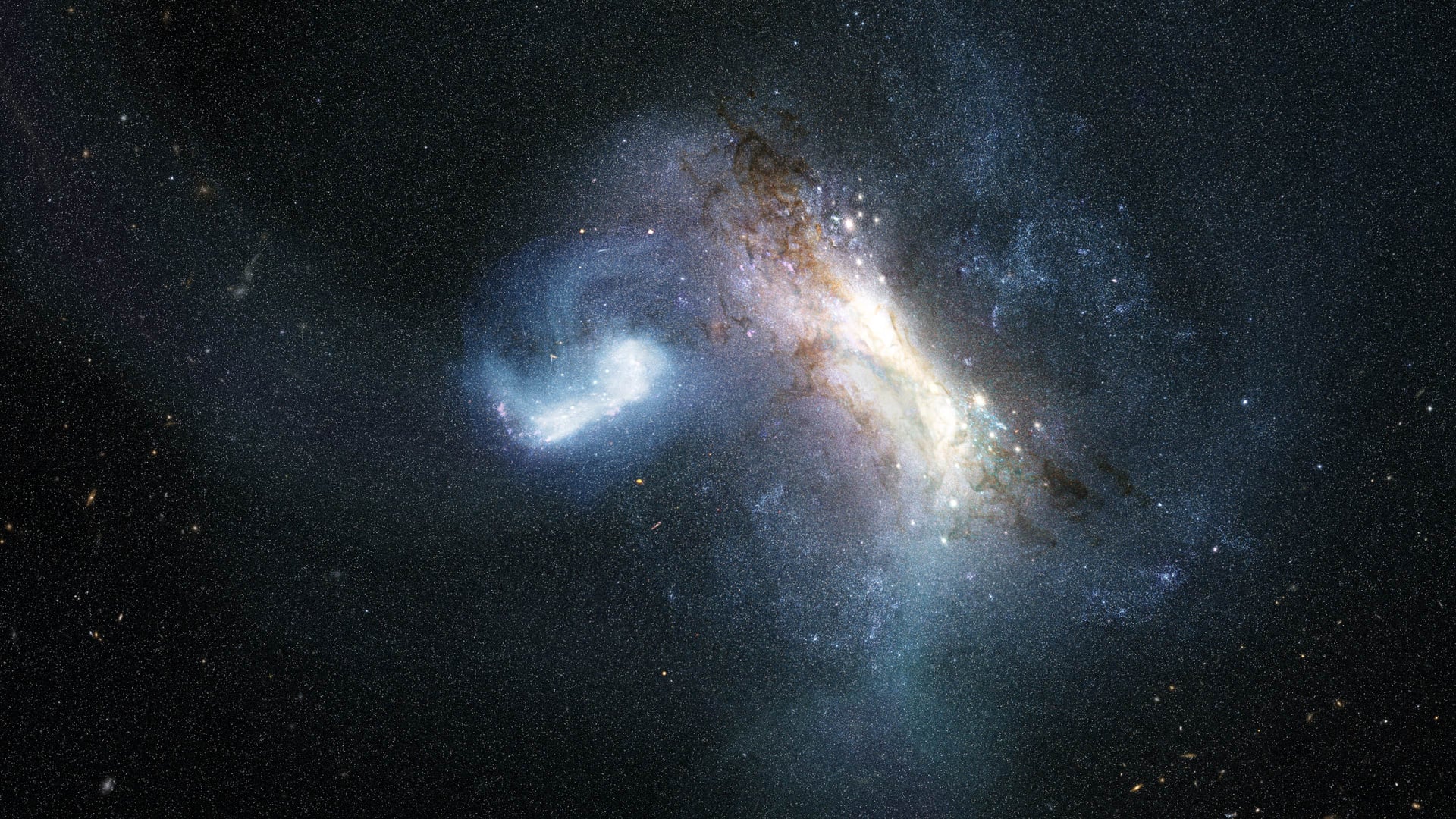
New data from NASA’s Hubble Space Telescope shows definitive evidence of a dwarf galaxy merging with the young Milky Way galaxy in the earliest phases of its evolution. This finding extends our knowledge of our galaxy’s history 1.8 billion years farther back in time than before.
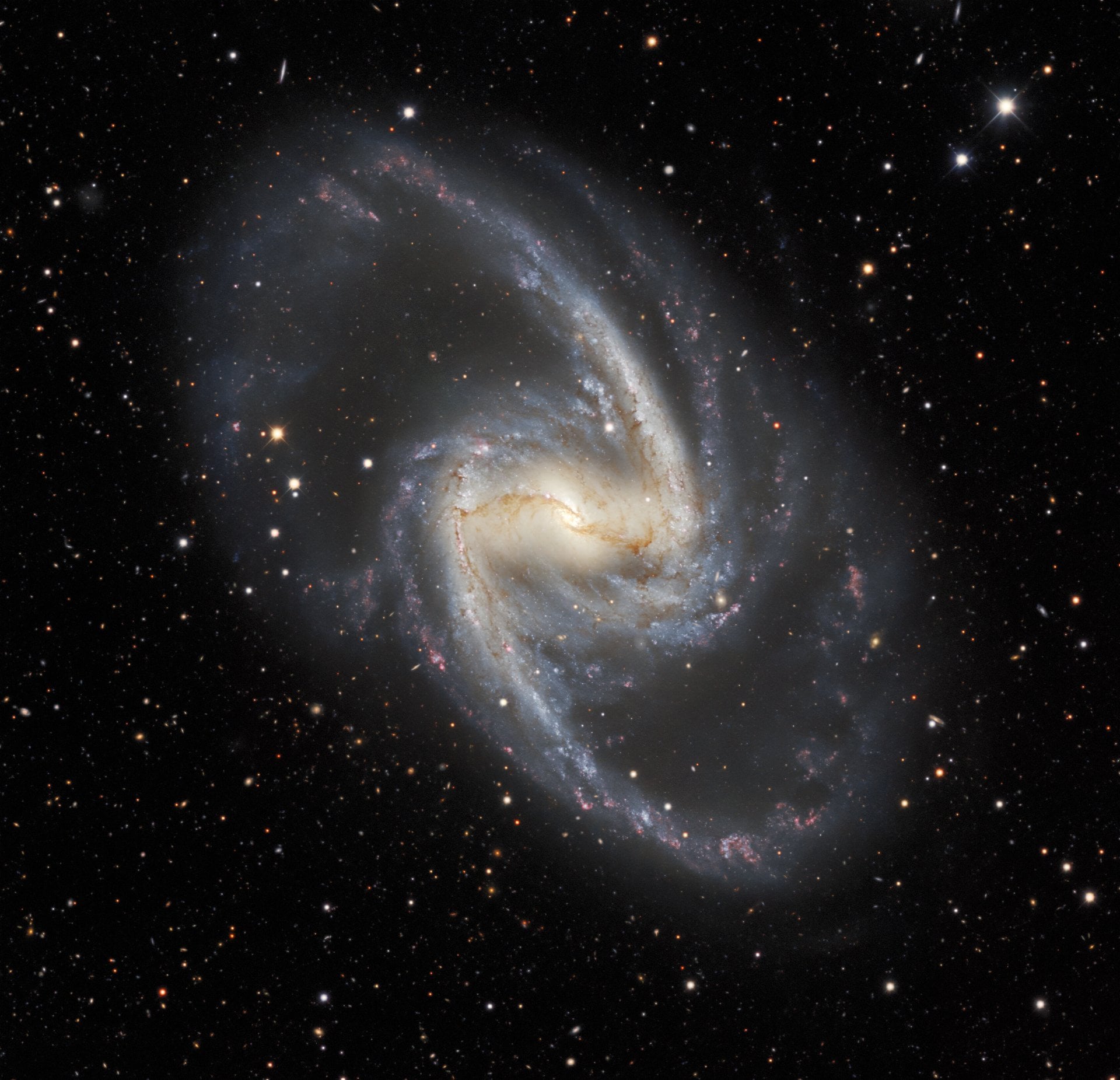
Using a state-of-the-art galaxy simulation, a team led by scientists from the Leibniz Institute for Astrophysics Potsdam (AIP) gained new insights into the processes shaping galactic centres across the Universe and the formation history of the Milky Way.
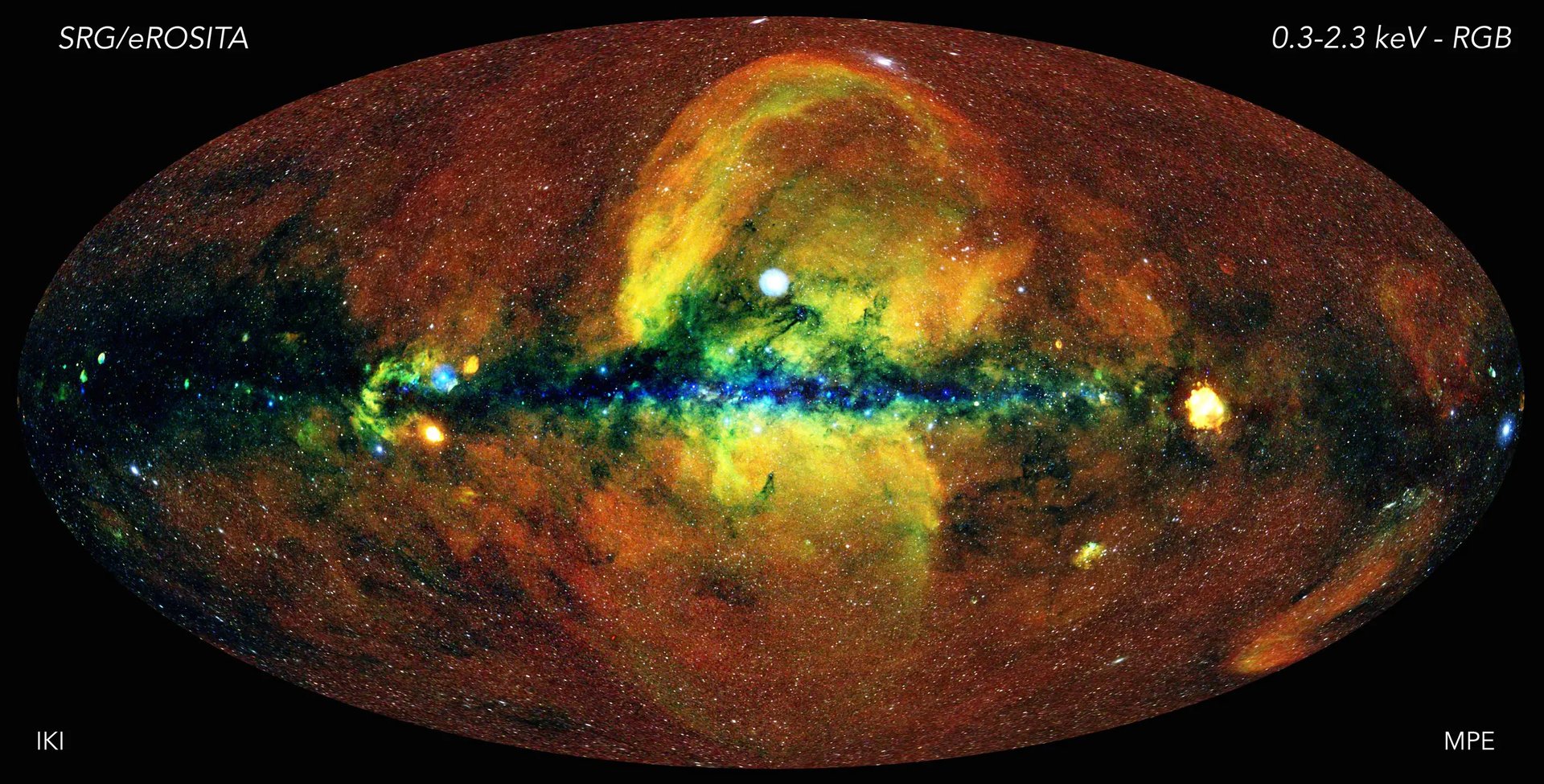
The eROSITA telescope has released its second great catalogue of the X-ray sky with close to two million sources across half the sky, roughly double what it published before. Buried in it is a result from Bonn that matters more than the headline number. A team there went after the faintest part of a massive galaxy cluster, the outer region where fresh material is still arriving along threads of gas stretching between clusters. Nobody had measured that emission before. The gas turns out to be hotter, denser and poorer in heavy elements than the models say it should be.