Universe Today
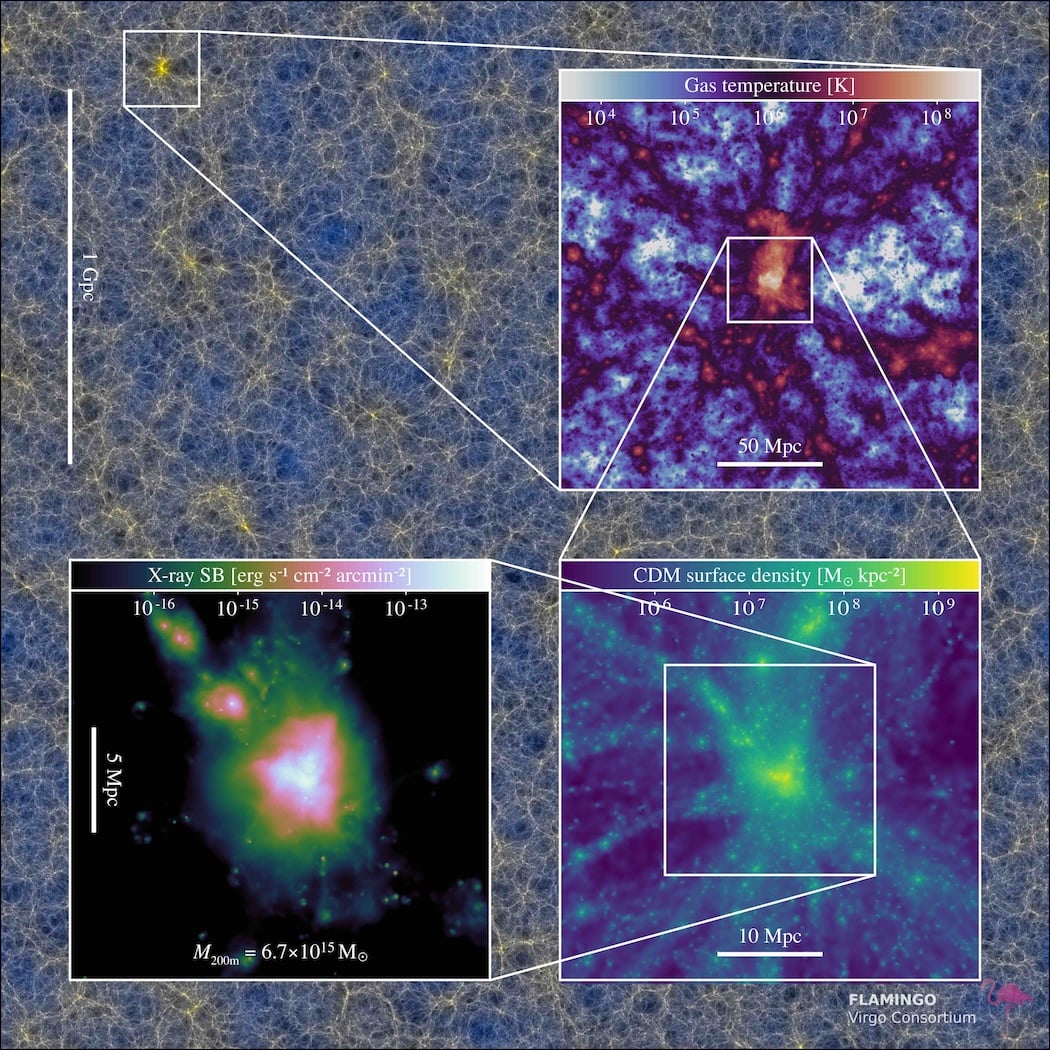
Studying the thing you can never step outside of and look back at is the fundamental problem facing every cosmologist who has ever looked up at the night sky. The Universe is not a laboratory you can peer into from above, it’s the thing you are already inside. The only way to truly test your ideas about how it works is to build a copy of it, run the clock forward from the Big Bang, and see if what emerges matches what your telescopes are actually telling you.
That is exactly what the FLAMINGO project has been doing. And this week, its creators made the results available to the entire world.
An international team of astrophysicists, led by researchers at Leiden University in the Netherlands, has released one of the largest cosmological simulation datasets ever produced. The archive contains more than 2.5 petabytes of data (roughly equivalent to half a million high definition films) and is free to access for researchers anywhere on the planet.
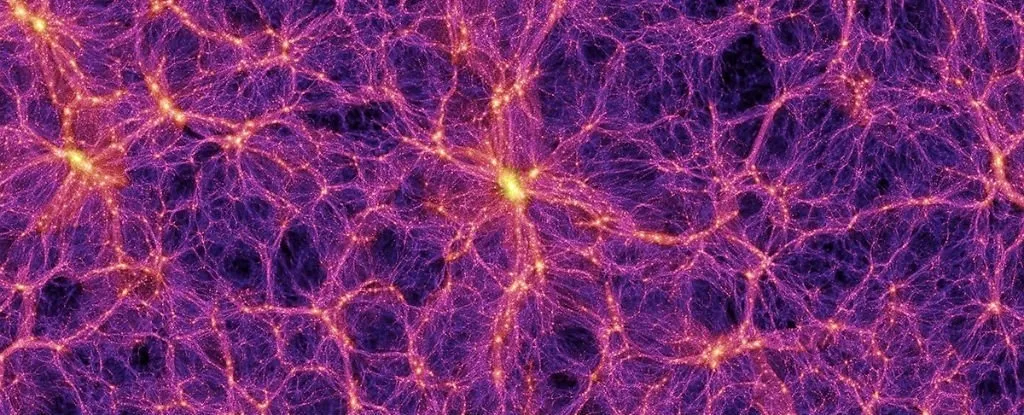 The largest structure in existence — the cosmic web of gas and dark matter stretching across billions of light years, connecting galaxies (Credit : NASA)
The simulations were built to tackle bridging the gap between the physics of individual galaxies and the enormous scales needed for precision cosmology. On the greatest scales, matter in the Universe is not scattered randomly, instead it forms a cosmic web, a network of filaments along which galaxies are strung like beads. Understanding how that structure grew from the tiny ripples present after the Big Bang, and how it relates to the dark matter and dark energy that make up the overwhelming majority of the Universe, is one of the defining questions of modern physics.
The FLAMINGO simulations model volumes spanning billions of light years, large enough to study not just galaxies in isolation but galaxy clusters. These colossal structures are some of the largest in existence, each containing hundreds to thousands of galaxies, and the large scale architecture that connects them all. The computational machinery behind the project is equally impressive since the simulations ran on the COSMA8 supercomputer in the United Kingdom, using specialised code called SWIFT, a level of infrastructure that is beyond the reach of most research groups working independently.
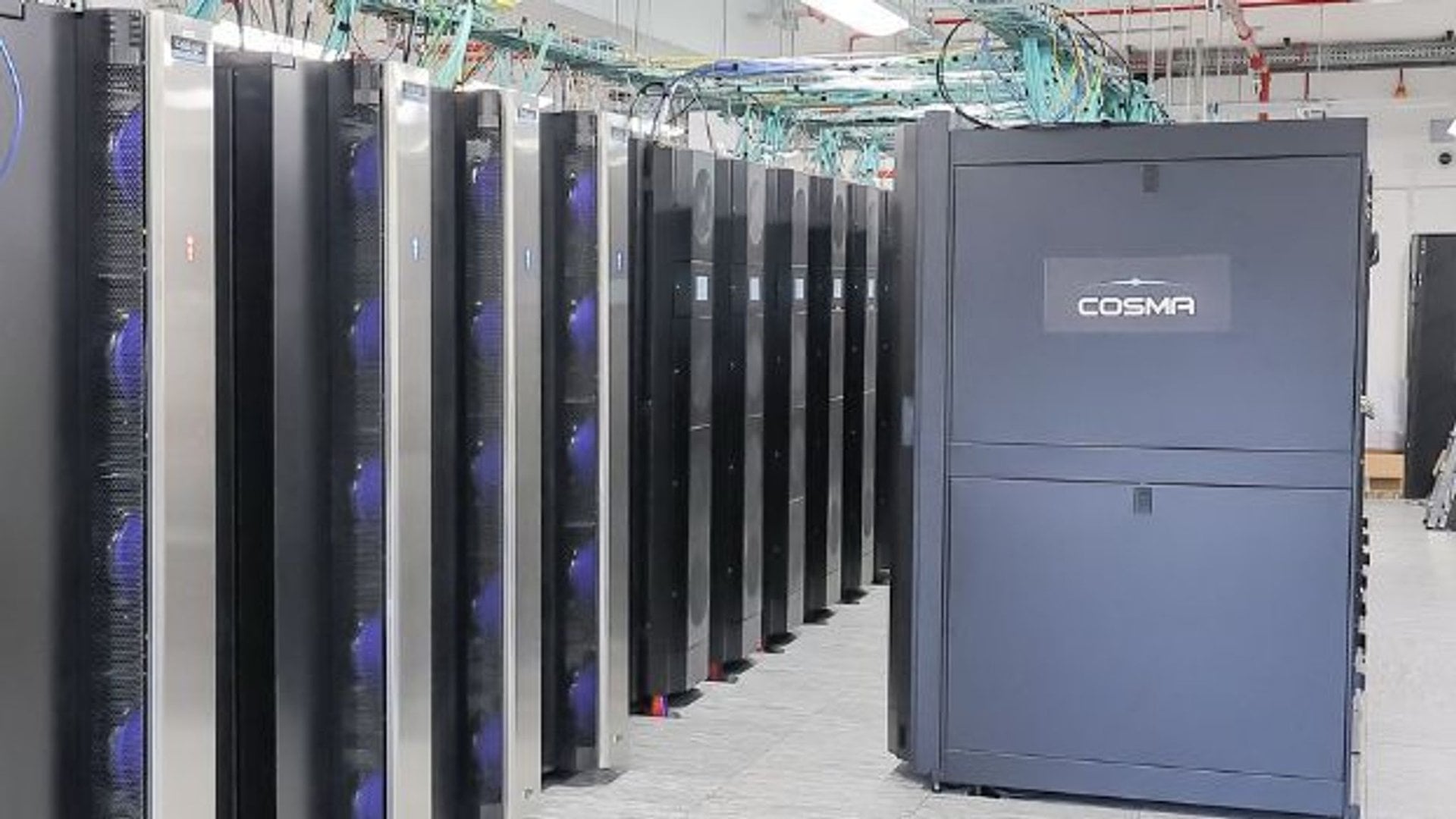 The Cosmology Machine 8 has the power of 17,000 home PCs (Credit : Durham University)
That is precisely the point of making the data public and it continues the wonderful thread of cooperation that runs through the scientific community. Rather than keeping results locked inside a small collaboration, the team built a dedicated online platform allowing researchers to explore and download only the slices of data they actually need, without having to manage files of crushing size. Since the simulations were first introduced in 2023, they have already underpinned dozens of studies on galaxy formation and the distribution of matter across time. The full release is expected to accelerate that pace considerably.
For astronomers trying to understand dark matter, dark energy, or the fundamental geometry of space itself, access to a virtual universe of this scale and resolution is not a convenience, it’s a transformational tool. The answers to some of the biggest questions in science may already be hiding inside this dataset, waiting for the right researcher, with the right idea, to find them.
Source : Astronomers Release Massive Set of "Virtual Universes" for Global Research