Universe Today
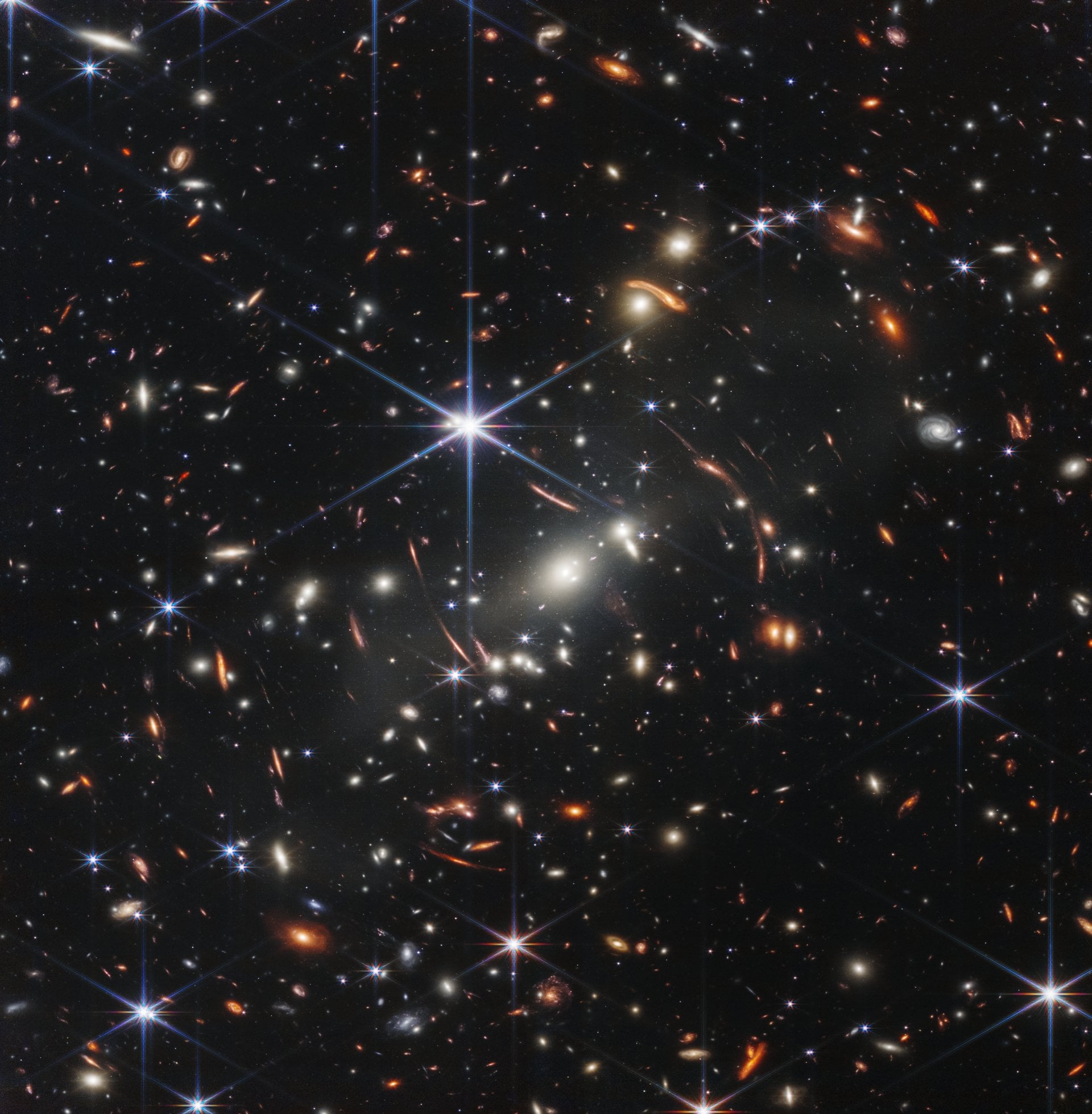
Here's a question that sounds like science fiction but is being asked in deadly earnest by serious philosophers. Does consciousness require flesh and blood? It's a question I wrestled with myself when I wrote a novel that addresses the very nature of consciousness in the universe, so a new paper claiming the answer is almost certainly no caught my eye at once. That's the conclusion of Eric Schwitzgebel, a distinguished professor of philosophy at the University of California, Riverside.
In the new working paper written with former UCR graduate student Jeremy Pober, now at the University of Lisbon, the pair argue that consciousness could arise in life forms built from radically different stuff than us. Picture the rock skinned, crystal brained alien from the recent film Project Hail Mary, and you are somewhere close to what they have in mind.
 Voyager 1's view of Earth from 3.7 billion miles, a pale blue speck in a sunbeam. If we're not central to the universe, the philosophers ask, why assume consciousness is ours alone? (Credit : NASA/JPL Caltech)
The two philosophers are careful not to overreach, since they don't try to define consciousness, and they don't claim exotic alien minds definitely exist. Instead they start from a simpler premise, that consciousness is real and recognisable, and ask a narrower question. Must it be tied to the particular biology that happens to have evolved on Earth?
Their argument rests on an idea called substrate flexibility. A property is substrate flexible if you can achieve it using different materials. A cup holds water whether it's glass or plastic. Music plays whether it's pressed into vinyl or burned onto a disc. Consciousness, they suggest, is the same. It is a phenomenon that could be realised in more than one kind of physical machinery.
It’s interesting to then apply this to the size of the observable universe that holds something like a trillion galaxies, and planets are believed to be everywhere. The authors estimate, conservatively, that at least a thousand behaviourally sophisticated civilisations have existed somewhere in the history of the cosmos. If life can take hold under wildly different chemical conditions, across that many opportunities, it would be very odd if every successful lineage settled on exactly the same biochemical recipe.
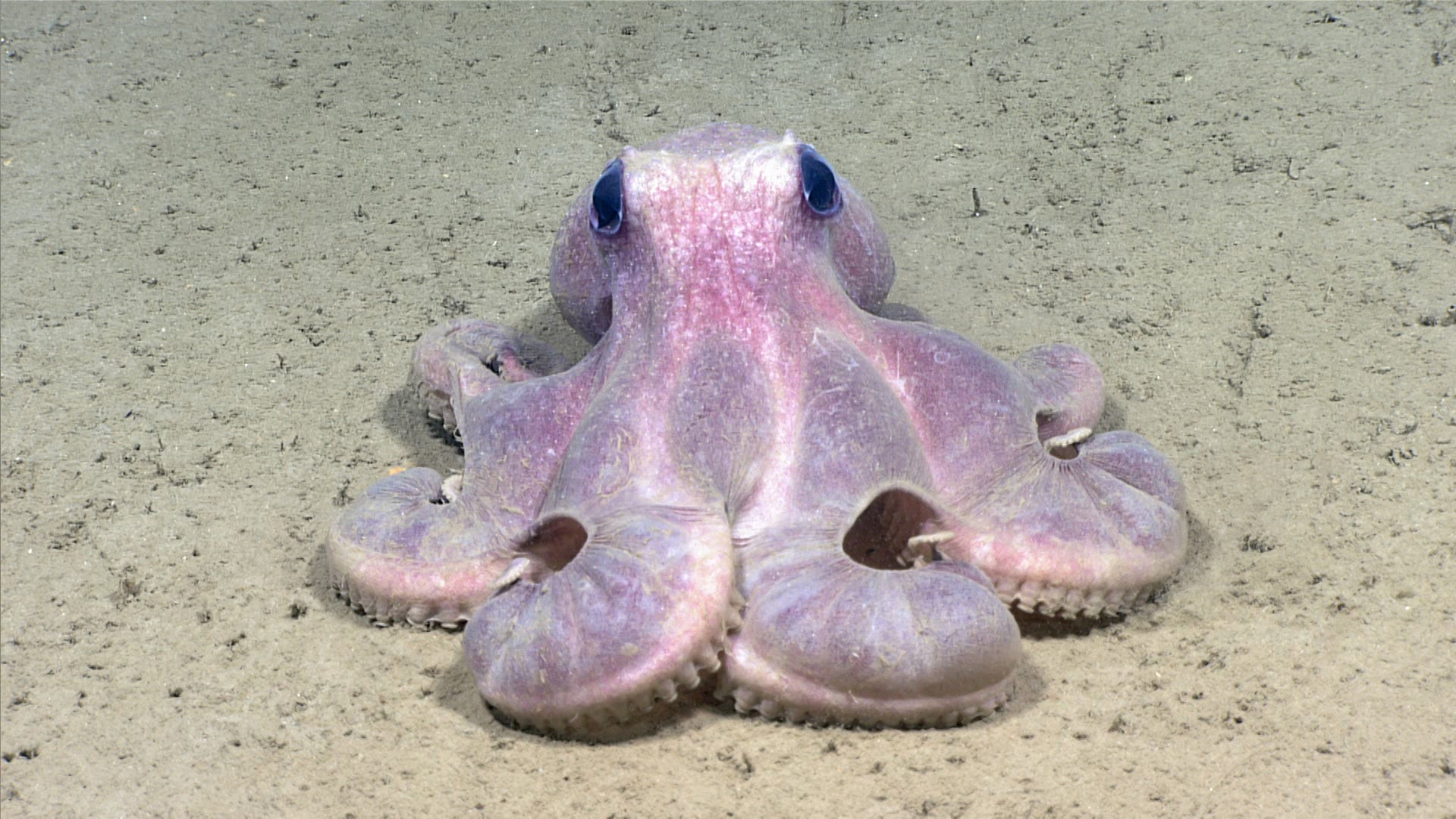 An octopus: an alien-seeming intelligence that evolved on Earth. Even here, nature builds minds to more than one plan (Credit : NOAA Ocean Exploration)
This is where Copernicus comes in. Each great astronomical discovery has shoved humanity a little further from the centre of things. Schwitzgebel and Pober extend that humbling lesson to the mind itself, coining the phrase "the Copernican principle of consciousness." To assume awareness belongs only to creatures like us, they argue, is a kind of terrocentrism, an unjustified conceit that Earthly life is uniquely special.
And inevitably, the argument circles back to artificial intelligence. The two don't agree here. Pober warns that flexibility across some substrates doesn't mean every substrate qualifies, so today's silicon may not make the cut. Schwitzgebel is more open, noting that once you drop the demand for human biology, excluding silicon purely for being silicon gets harder to defend. On one point they agree. The real question isn't whether a machine can copy a human brain, but what kinds of systems can wake up at all.
Source : Consciousness likely not unique to earthlings, paper says