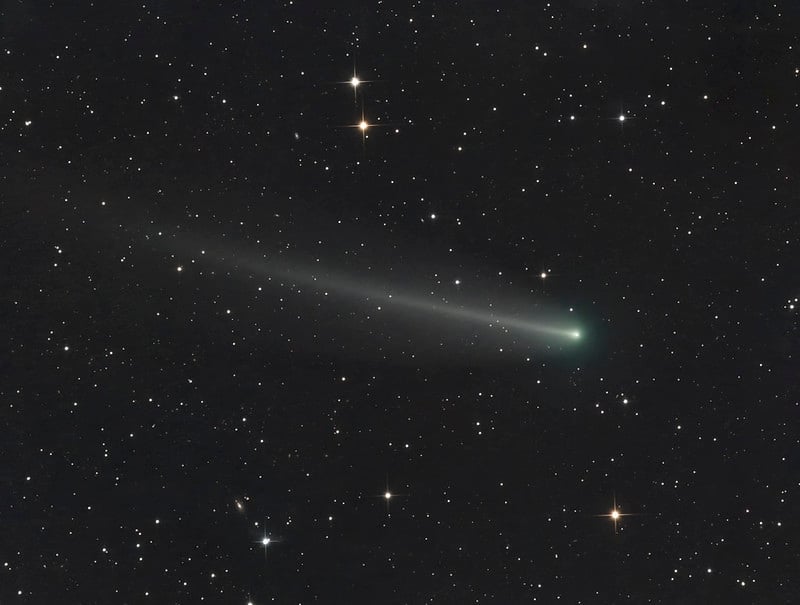
NASA Finally Releases Images of 3I/ATLAS Taken by Its Missions at Mars
Two orbiters and a rover captured images of the interstellar object — from the closest location any of the agency’s spacecraft may get — that could reveal new details.
Astronomy observing tips and guides
Two orbiters and a rover captured images of the interstellar object — from the closest location any of the agency’s spacecraft may get — that could reveal new details.
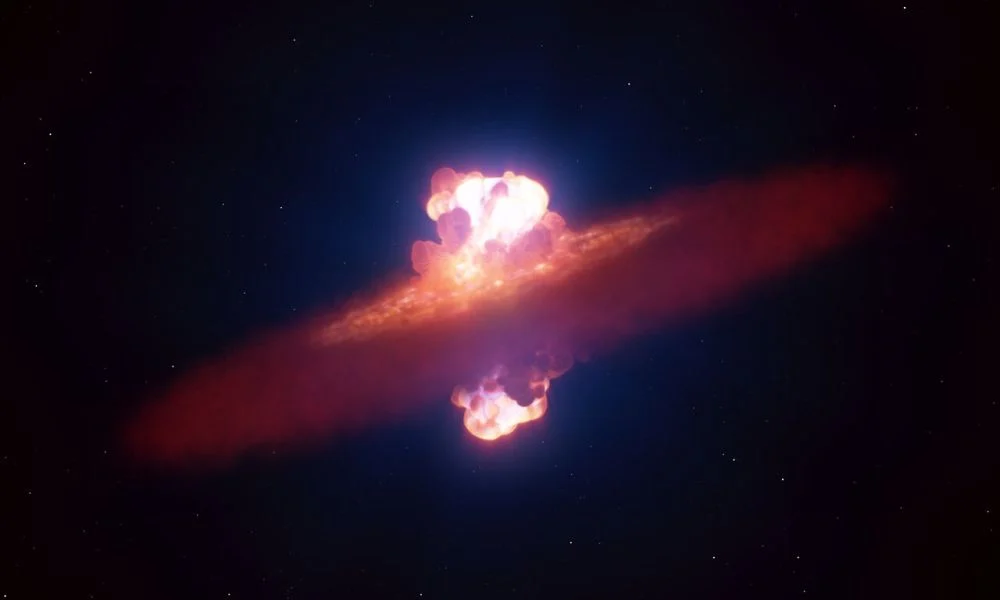
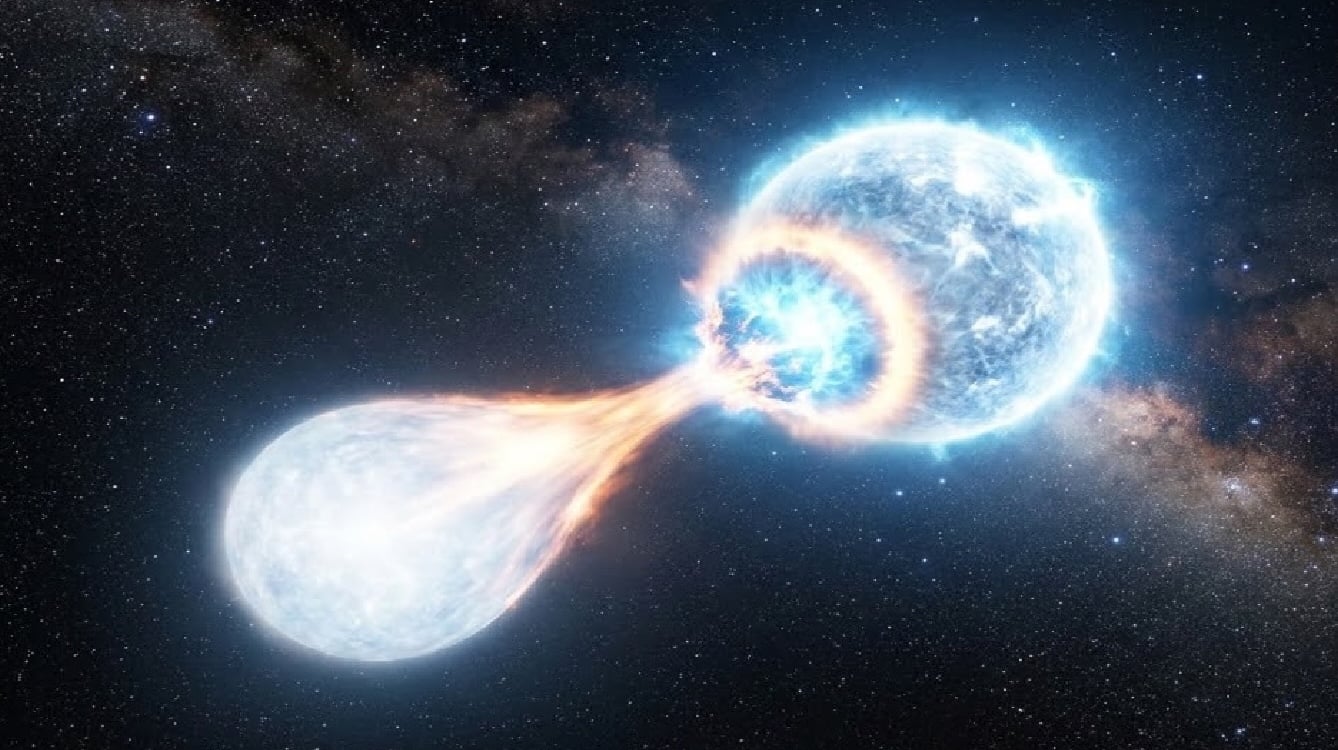
Swift observations with the European Southern Observatory’s Very Large Telescope (ESO’s VLT) have revealed the explosive death of a star just as the blast was breaking through the star’s surface. For the first time, astronomers unveiled the shape of the explosion at its earliest, fleeting stage. This brief initial phase wouldn’t have been observable a day later and helps address a whole set of questions about how massive stars go supernova.
Keep an eye on the sky Sunday night and early Monday morning for the Leonid meteors, and a possible second auroral storm. Once every other generation, the Lion roars. If skies are clear Monday morning, keep an eye out for one of the best annual November showers, the Leonid meteors. Also as an extra treat, the skies may stream with aurora once again.
A spooky bat has been spotted flying over the European Southern Observatory’s (ESO’s) Paranal site in Chile, right in time for Halloween. Thanks to its wide field of view, the VLT Survey Telescope (VST) was able to capture this large cloud of cosmic gas and dust, whose mesmerising appearance resembles the silhouette of a bat.
Everyone’s favorite interstellar comet 3I/ATLAS isn’t really hiding near perihelion this week, as amateur astronomers reveal. Don’t believe the breathless ballyhoo that you’re currently reading around the web about interstellar Comet 3I/ATLAS. In a clockwork Universe, comets are the big wildcard, and interstellar comets doubly so. This particular comet is scientifically interesting enough in its own right, no alien interlopers needed.
Earth's atmosphere has always been the enemy of ground based astronomy and don’t I know it. What would otherwise be crisp, clean datasets gets turned into blurry smudges. Space telescopes avoid the problem entirely but can only photograph tiny fragments of sky. Now, a team of mathematicians has cracked the code with an elegant algorithm that strips away atmospheric interference in seconds, potentially giving ground based observatories space quality vision whilst keeping their ability to survey great regions of sky.
October 2025 may provide a memorable sky scene, as Comet C/2025 A6 Lemmon puts on an encore appearance at dusk. The comet joins Comet R2 SWAN, which slides 0.26 Astronomical Units (AU) past Earth on October 20th. Both are currently fine objects for binoculars or a small telescope, vying for top spot at magnitude +6.
This ESA/Webb Picture of the Month shows eight stunning examples of gravitational lensing. Gravitational lensing, which was first predicted by Einstein, occurs because massive objects like galaxies and clusters of galaxies dramatically warp the fabric of spacetime. When a massive foreground object lines up just so with a background galaxy, the light from the background galaxy bends as it navigates the warped spacetime on its way to our telescopes.
Interstellar visitor 3I/ATLAS has been constantly changing as it makes its way through our solar system. That’s to be expected, as, for the first time in potentially billions of years, it's getting close to the energy put out by a star. Scientists have been keeping a close watch on those changes, both to ensure there’s nothing unexplainable by our current understanding, but also to compare 3I/ATLAS to both previous interstellar visitors as well as comets in our own solar system. A recent paper from European researchers describes how the changes in a particular material ratio in 3I/ATLAS’ coma fit with our current understanding of cometary geology.
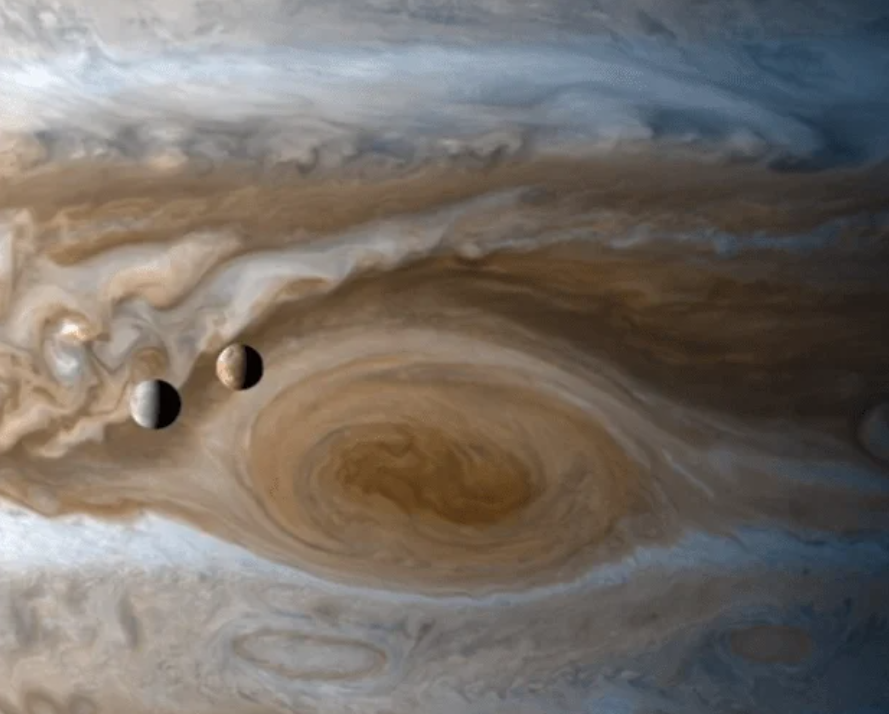
Jupiter and its moons are busy in October. If skies are clear, be sure to set your alarm and follow the largest planet in our solar system this month. While massive Jupiter always warrants a view through even a small telescope, its four major Galilean moons warrant special interest, as we’re in the midst of a season of rare double shadow transits.
What new methods can be employed to help astronomers distinguish the light from an exoplanet and its host star so the former’s atmosphere can be better explored? This is what a recent study accepted to Astronomy & Astrophysics hopes to address as an international team of researchers investigated how a novel and proposed telescopic instrument that could be capable of characterizing exoplanet atmospheres in new and exciting ways. This study has the potential to help scientists develop novel tools for examining exoplanets and whether they could possess life as we know it, or even as we don’t know it.
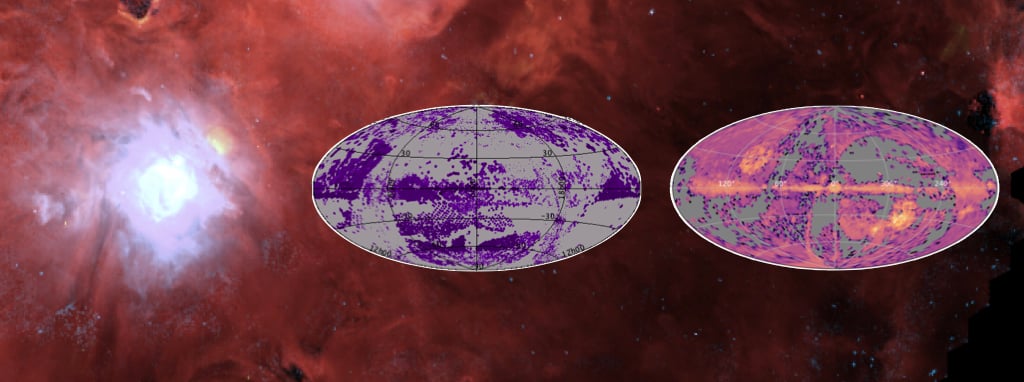
Visual observations have, over the years had to battle light pollution, weather, aircraft and even satellite constellations. Radio observations have until recently, been reasonably well protected however in their attempt to preserve the “quiet skies” a team of radio astronomers have secured a significant victory. For the first time, they've joined forces with the International Special Committee on Radio Interference, a committee that sets global standards for preventing electronic interference.
Interference from human activity has always been a sticking point in astronomical observations. Radio astronomy is notoriously sensitive to unintentional interference - hence why there are “radio silent” zones near telescopes where cell phones are banned. But gravitational wave astronomy is affected to an even worse degree than radio astronomy, according to a new paper by Reed Essick of the University of Toronto, and it’s not clear there’s much we can do about it.
Subtle astronomical events can still produce memorable scenes, hidden away in distant locales. Such a spectacle goes down on Sunday/Monday, September 21st/22nd, with a partial solar eclipse. Although the eclipse only skims the southernmost portion of the South Pacific, viewers along the eastern coast of Australia, Antarctica and all of New Zealand will see an unforgettable sight, as a partially-eclipsed Sun rises out of the sea.
It seems like most of the planets have fled the evening scene. But that’s about to change this week. Saturn reaches opposition on Sunday, September 21st, passing closest to the Earth at just over 8.5 Astronomical Units (AU) or 1.3 billion kilometers distant, and rising opposite to the setting Sun. This marks the best time to view the ringed world, as it dominates the night sky from sunset until sunrise.
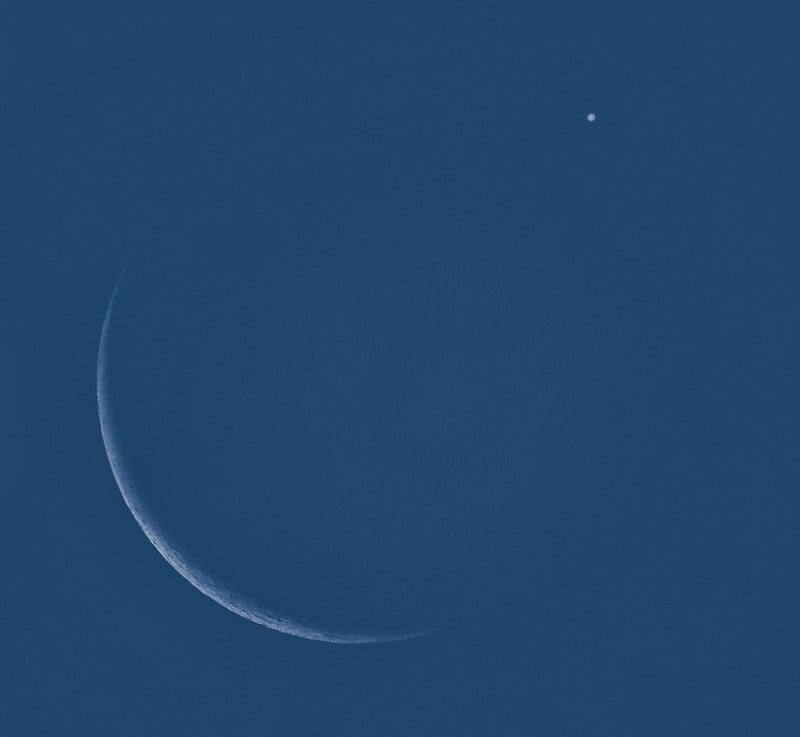
Sometimes, it seems as if the Universe is literally smiling down upon us. If skies are clear this coming Friday September 19th, be sure to wake up early to catch a bizarre celestial scene as Venus, Regulus and the slim crescent Moon huddle together in the eastern dawn. This triple play is a complicated one, evolving one of the best conjunctions for 2025.
A new comet approaching from sunward could make a fine dusk appearance in October. There was chatter on the boards this past Friday September 12th, about a comet seen in the Solar Wind Anisotropies (SWAN) images near the Sun. Tentatively named SWAN25B and now formally designated as C/2025 R2 SWAN, this comet could put on a brief show in late September into October if it holds up.
An examination of the interstellar object 3I/ATLAS shows that it is likely to be a remnant of the Galaxy's “Cosmic Noon” period, ca. 9 to 13 billion years ago. An examination of the object by an active mission could provide clues about stellar and planetary formation, and maybe the emergence of life, during this early period of galactic history.
The earliest images of 3I/ATLAS, newly uncovered by Michigan State University, reveal how the interstellar object evolved as it traveled through our solar system—and how other distant solar systems might be different from our own.
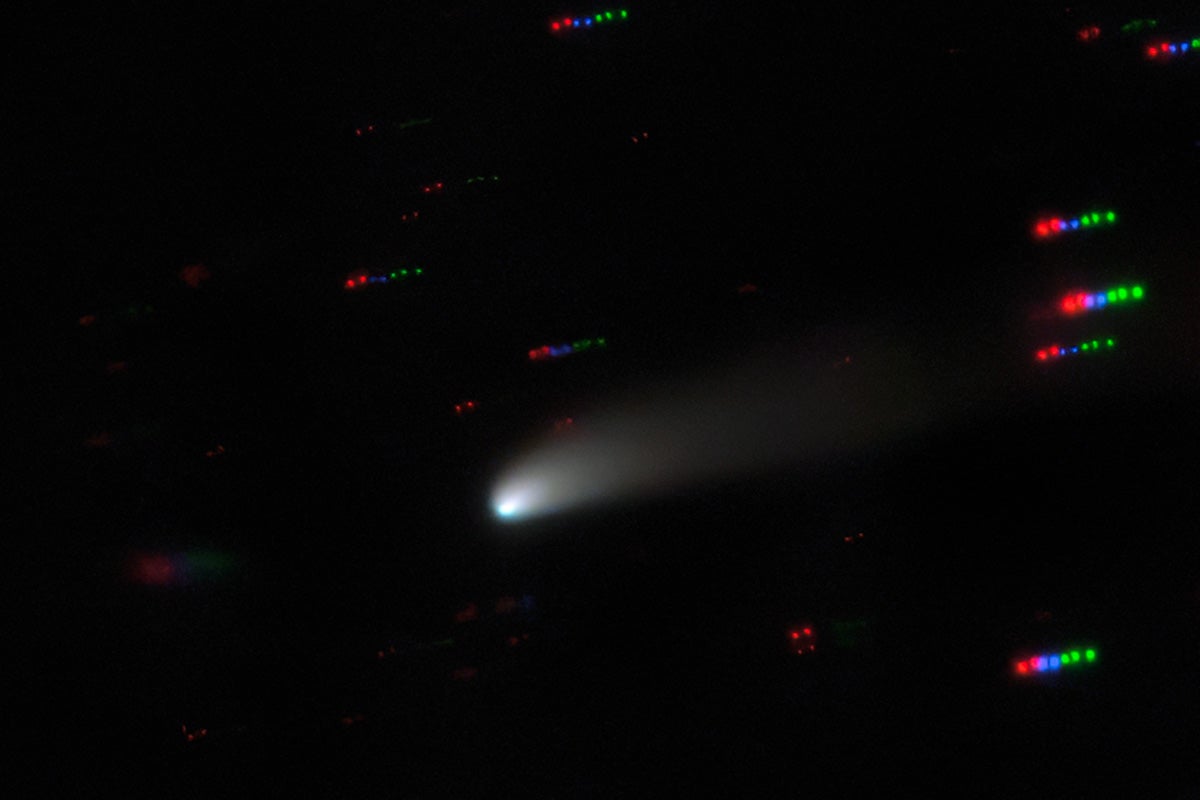
Interstellar comets are rare, and astronomers don't like to miss an opportunity to observe one. Now the Gemini South Telescope has taken a turn at imaging Comet 3I/ATLAS, the visitor from another star system. The images help show that the comet's tail is growing as it approaches the Sun.