Universe Today
An elusive meteor shower kicks off the skywatching year for 2026.
It sneaks up on us, every annual flip of the calendar into the new year. If skies are clear, keep an eye out for the brief but strong Quadrantid meteors this weekend.
The Quadrantids or ‘Quads’ have a brief but strong annual peak just after New Year’s Day. This also makes the shower notoriously elusive for observers.
Circumstances for 2026
The 2026 Quadrantids peak early on Saturday, January 3rd at 3:00 Universal Time (UT)/10:00 PM Eastern Time on Friday (January 2nd). Expect a swift six hour peak, perhaps topping out at a Zenithal Hourly Rate (ZHR) of 100 to 120. The near Full Moon makes this year’s shower difficult, but not impossible to catch. Add to this the fact that the first week of January typically sees temperatures plunge for northern hemisphere observers. It’s no wonder that even dedicated meteor shower watchers have failed to see the Quadrantids.
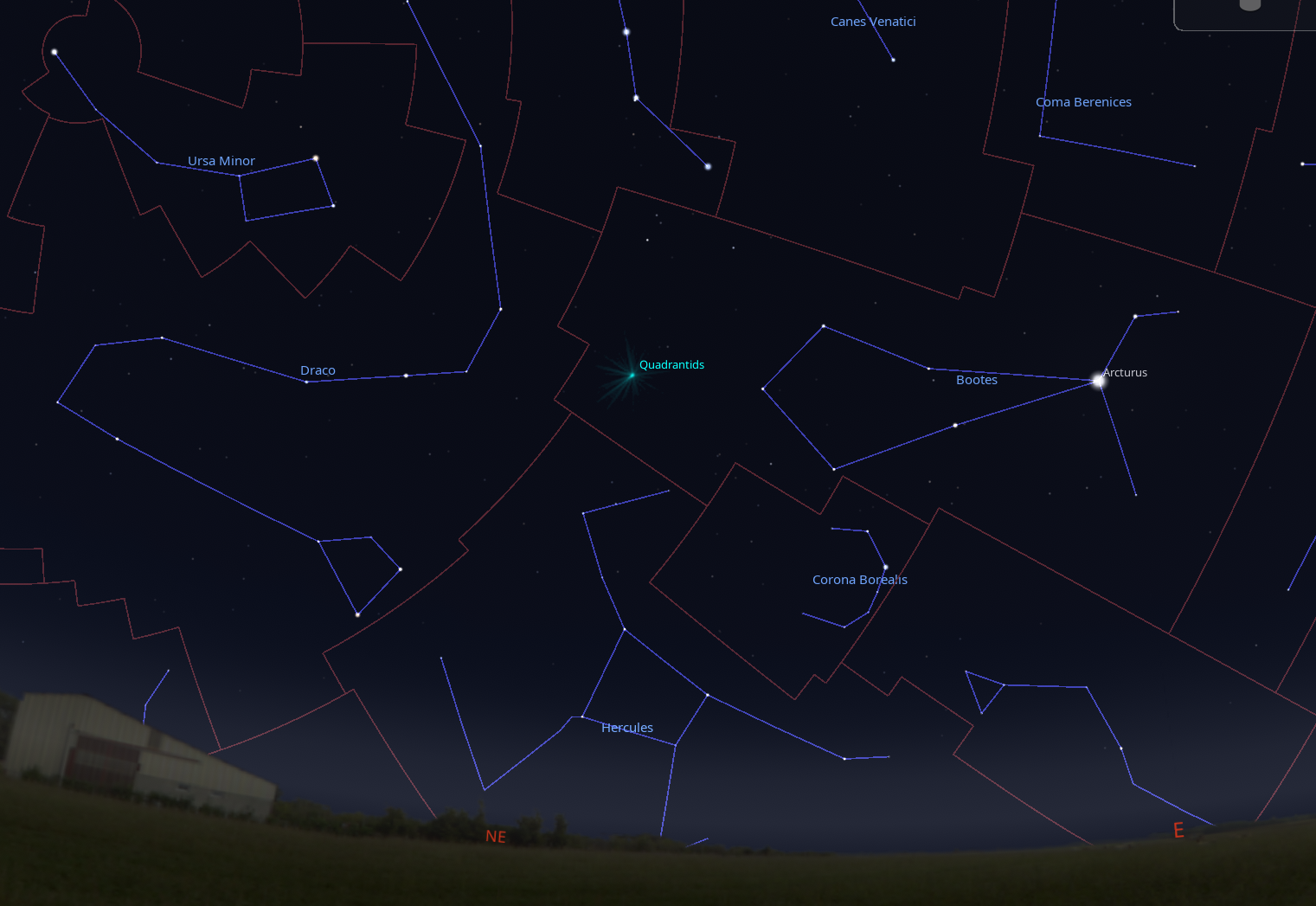 The Quadrantid meteor shower radiant. Credit: Stellarium.
The peak favors European longitudes this year, though North America may still have a shot a few hours later as the radiant rotates into view.
Unfortunately, the first Full Moon of 2026 also falls on the same date as the peak of the Quadrantids. The January Full Wolf Moon falls just over seven hours after the shower’s peak, with the Moon riding high in the constellations Auriga the Charioteer crossing into Gemini the Twins.
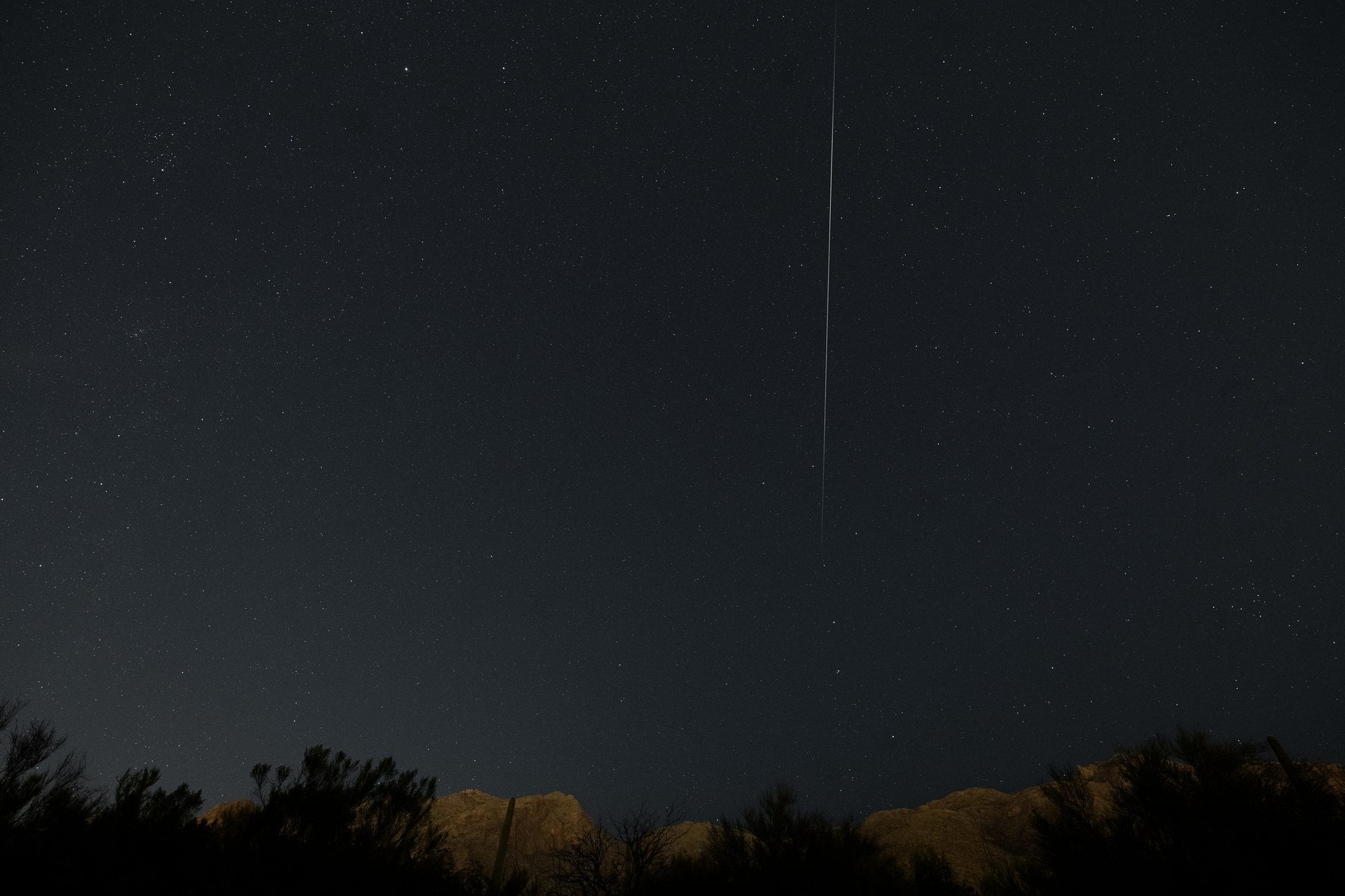
 An elusive Quadrantid meteor. Credit: Filipp Romanov.
The Quads have a relatively high 72 degree declination for the radiant. The stream approaches the Earth at near perpendicular, meaning that like the Geminids, the Quads can start to pick up before local midnight. The Quadrantid meteors have a mid-range velocity versus the Earth of about 41 kilometers per second.
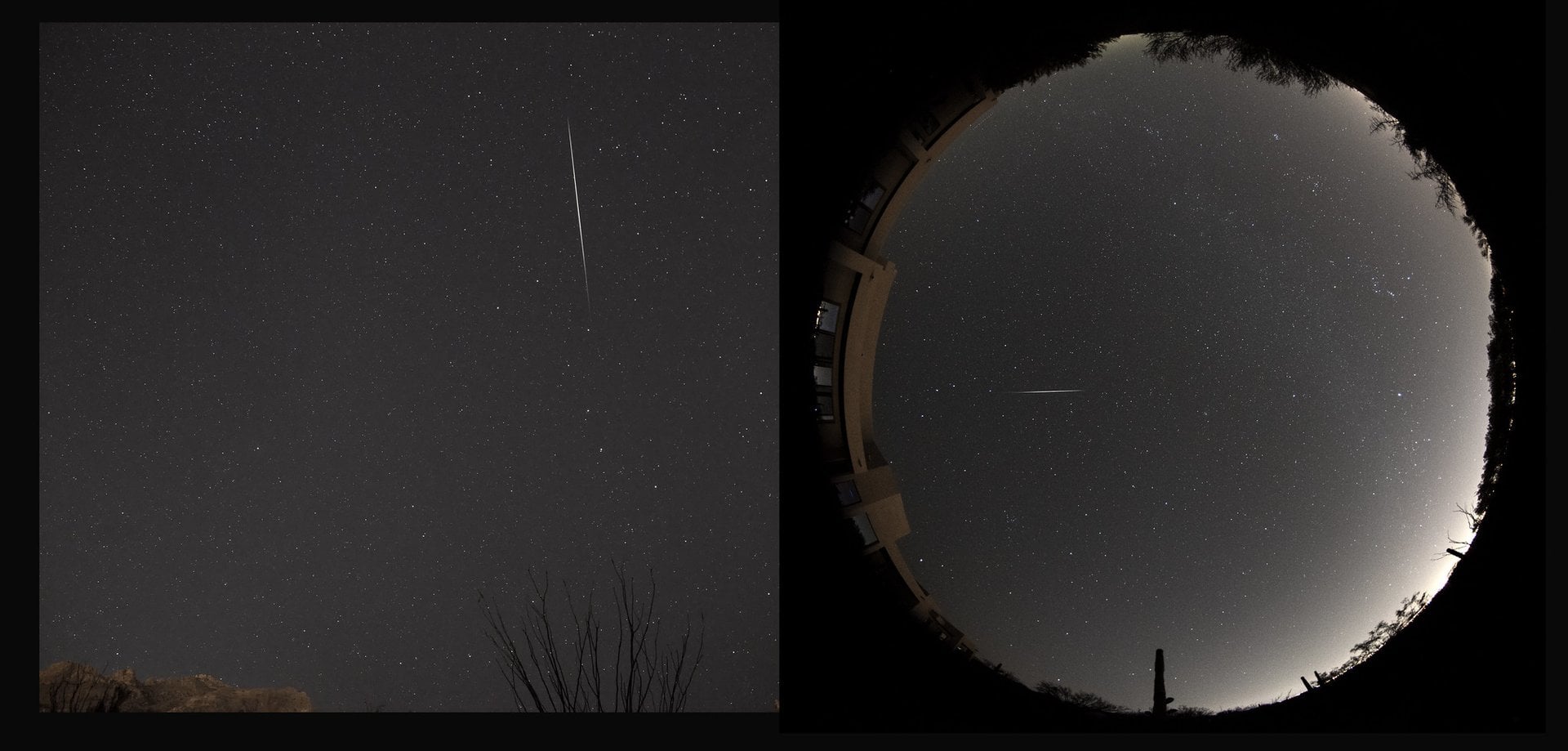 A Quadrantid meteor over Arizona in 2019. Credit: Eliot Herman.
The source of the Quads is asteroid and potentially extinct comet 2003 EH1. This enigmatic object is on a short 5.5 year orbit around the Sun. The Quadrantid meteors have been known of since the early 19th century.
What’s in a name? The shower takes its name from a defunct 18th century constellation known as Quadrans Muralis or the Mural or Wall Quadrant. This is a device used for measuring star positions. Quadrans Muralis is one of many obsolete constellations that fell to the wayside when the International Astronomical Union made its formal list of modern 88 constellations in 1922.
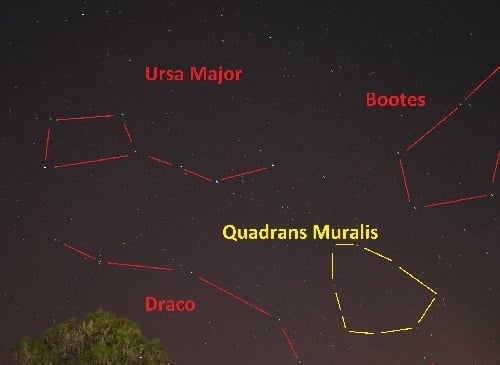 The Quadrans Muralis constellation, against modern constellations. Credit: Dave Dickinson.
Today, the radiant for the Quadrantids falls in the constellation Boötes the Herdsman.
The best way to beat the Moon is to observe from a site that places it behind a building or hill. Dress warm, and be sure to take a hot beverage of choice along.
Though it may not feel like it, we have the added event of Earth reaching perihelion this weekend on January 3rd, at 17:16 Universal Time (UT) as we make our annual passage of 0.9833 AU (91.45 million miles or 147.17 million kilometers) from the Sun. Photograph Sol this weekend and again when we reach aphelion this summer on July 6th, and you can see the difference in apparent size:
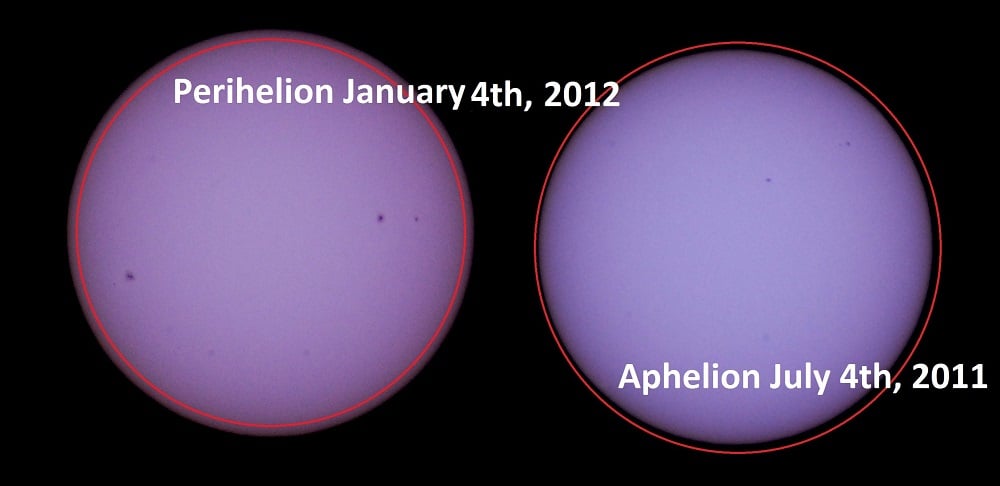 The Sun at perihelion vs. aphelion. Credit: Dave Dickinson
And there’s more meteor showers and more in store, as we start another busy year of skywatching for 2026. If skies are clear, be sure to cross the Quadrantids off of your skywatching life list.