Universe Today
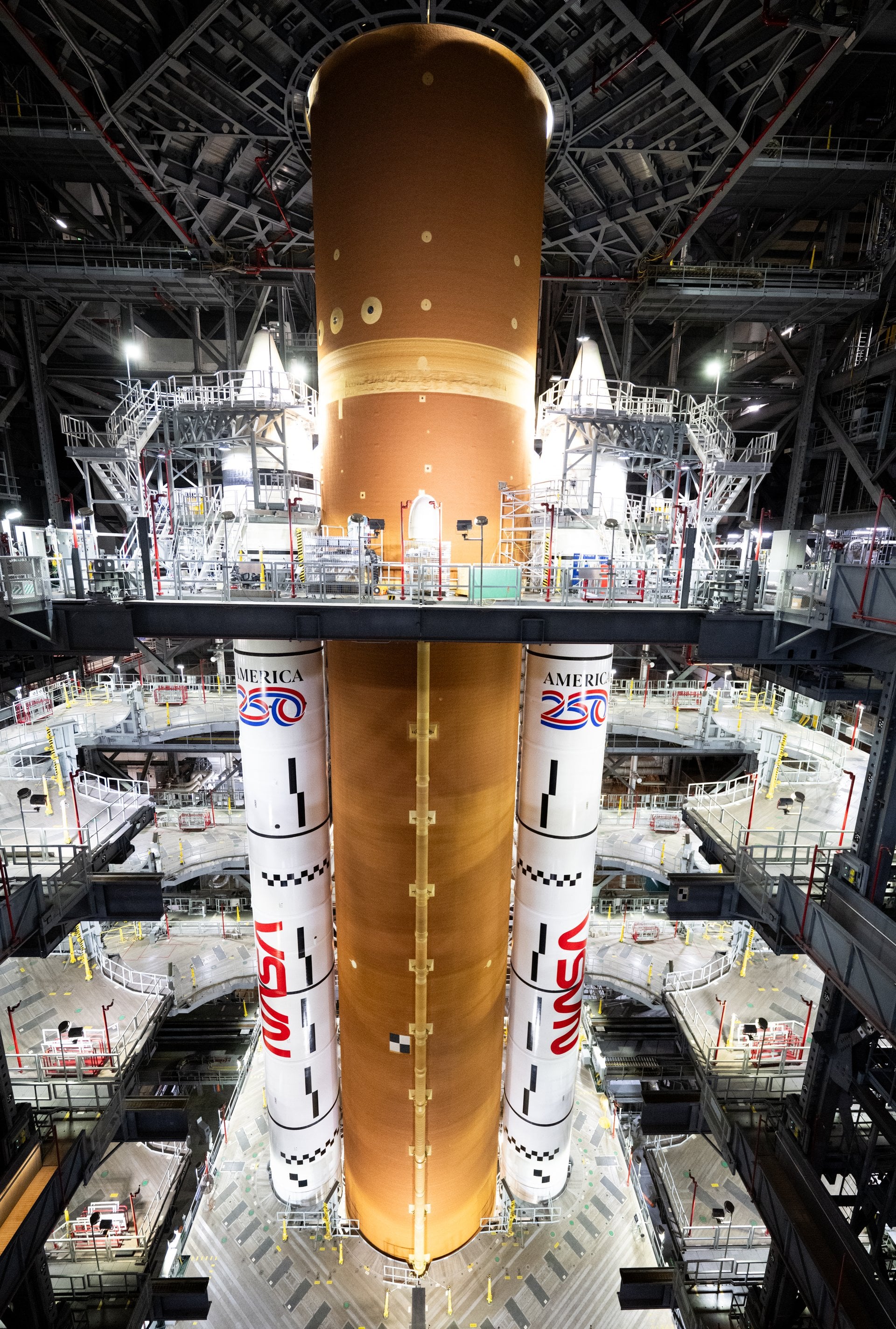
Between February and April of this year, NASA will conduct its first crewed mission beyond Low Earth Orbit (LEO) in over fifty years. At 09:41 p.m. EST (06:41 p.m. PDT), the Artemis II crew will launch aboard their Orion spacecraft atop the Space Launch System (SLS) from Launch Pad-39B at the Kennedy Space Center in Florida. With the launch date rapidly approaching, NASA is entering the final stages of preparation, including the rollout of the SLS and Orion to the launch pad for the first time. This will be followed by the final integration and testing of the rocket and spacecraft, then launch rehearsals.
The Artemis II crew consists of NASA astronauts Reid Wiseman (commander), Victor Glover (pilot), and Christina Koch (mission specialist), and Canadian Space Agency (CSA) astronaut Jeremy Hansen (mission specialist). Building on the success of the uncrewed Artemis I mission, Artemis II will see this crew execute a circumlunar flight, taking them around the Moon without landing and returning them to Earth. The entire mission will take 10 days and will be the curtain-raiser for the first crewed mission to the lunar surface since Apollo 17 landed there in 1972.
The rollout is targeted for no earlier than this Saturday (Jan. 17th) and will take up to 12 hours for the rocket and crawler-transporter-2 to travel the ~6.5 km (4 mi) that lie between the Vehicle Assembly Building and Launch Pad 39B. "We are moving closer to Artemis II, with rollout just around the corner," said Lori Glaze, acting associate administrator for NASA’s Exploration Systems Development Mission Directorate (ESDMD). "We have important steps remaining on our path to launch, and crew safety will remain our top priority at every turn, as we near humanity’s return to the Moon."
Teams are currently working around the clock to complete all remaining tasks ahead of the rollout, a process that has been ongoing for months. In December, during a countdown demonstration test, engineers detected a problem with a valve associated with the Orion capsule's hatch pressurization. They replaced the valve on Jan. 5th, which was followed by a successful pressure test. They also resolved a leak with the ground support hardware that is part of the loading system for pressurizing the Orion with oxygen gas. The work will continue for weeks after the SLS and Orion roll out to the launch pad.
At this point, ground crews will begin connecting electrical lines, fuel-control-system ducts, cryogenic propellant feeds, and other ground-support equipment. They will then power up all of the rocket's integrated systems for the first time to ensure they work properly with each other, the mobile launcher, and the launch pad infrastructure. The final preparation, scheduled for the end of January, will consist of a prelaunch fuel test (aka a "wet dress rehearsal") where NASA will fuel the rocket with about 2.65 million liters (700,000 US gallons) of cryogenic fuel into the rocket, conduct a launch countdown, then safely unload it.
Several countdowns are scheduled to allow mission controllers to hold, resume, and recycle back to previous times in the final 10 minutes before liftoff (aka terminal count). Several lessons from the previous mission have been integrated into this launch's preparations, including the challenges ground crews experienced while loading liquid hydrogen propellant during Artemis I's wet dress rehearsal. So in addition to carefully watching the propellant loading process, the ground teams will also closely monitor the effectiveness of recently updated procedures that limit how much nitrogen gas accumulates between the Orion crew module and the launch abort system.
Additional wet dress rehearsals may be required to make sure the vehicle is ready for flight, and NASA may opt to roll the SLS and Orion back into the VAB for additional work (as they did with Artemis I). Following a successful wet dress rehearsal, NASA's mission management team will convene a "flight readiness review" to assess the readiness of all systems before committing to a firm launch date. Once all of this is complete, and in what will be a major media event, the Artemis II astronauts will conduct a final walkdown at the pad.
While the Artemis II launch window opens as early as Friday, Feb. 6th, the mission management team may push the launch to a date before the window closes (no later than April). These launch opportunities require that the planned trajectory account for the complex orbital mechanics of Earth and the Moon. Basically, the rotation of the Earth and the Moon's orbit result in a pattern of approximately a week of launch opportunities, followed by three weeks without. The opportunities between February and April (subject to change) are available here.
NASA and its partners have high expectations for the Artemis II test flight. Much like the Apollo 10 mission, which was a dress rehearsal for the first landing on the Moon, this mission will provide the necessary experience and validate the systems that will allow humans to return to the lunar surface after more than 50 years. Currently scheduled for 2028, Artemis III will last for about 30 days and will depend on the development of the Human Landing System (HLS).
Further Reading: NASA