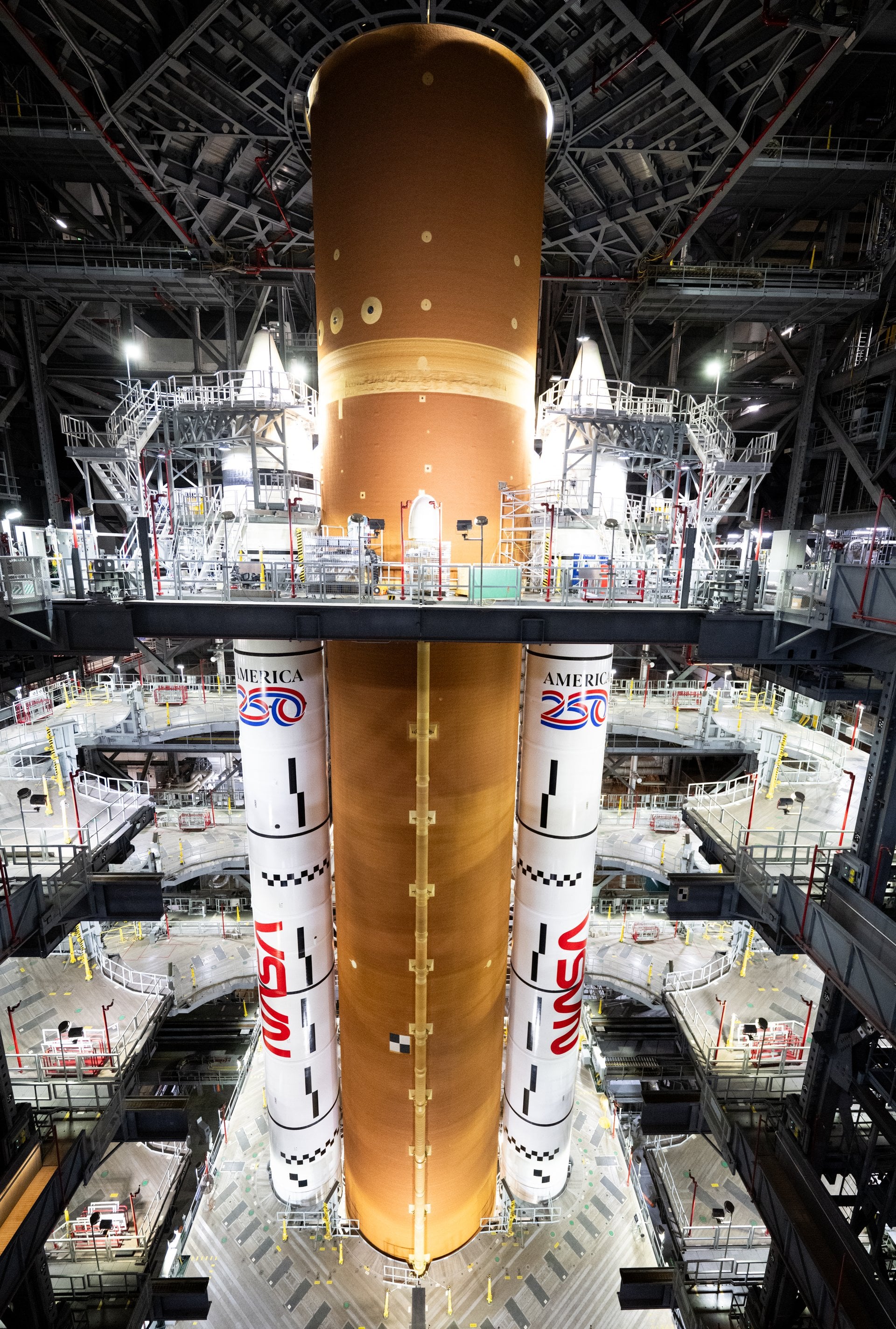
As NASA moves closer to launch of the Artemis II test flight, the agency soon will roll its SLS (Space Launch System) rocket and Orion spacecraft to the launch pad for the first time at the agency’s Kennedy Space Center in Florida to begin final integration, testing, and launch rehearsals. NASA is targeting no earlier.
Continue reading
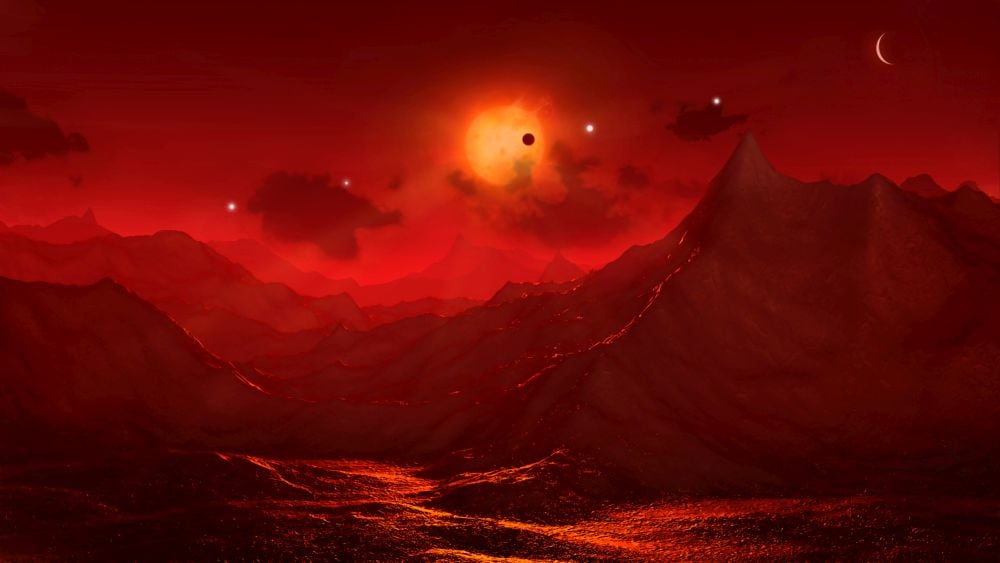
New research shows that complex life is unlikely to ever exist around cool, dim red dwarfs. About 33% of the Milky Way's stars are late M dwarfs, which are the smallest, coolest stars, and are the easiest stars to detect Earth-like planets around. The stars aren't bright enough for photosynthetic organisms to create a Great Oxygenation Event, which led to complex animal life here on Earth.
Continue reading
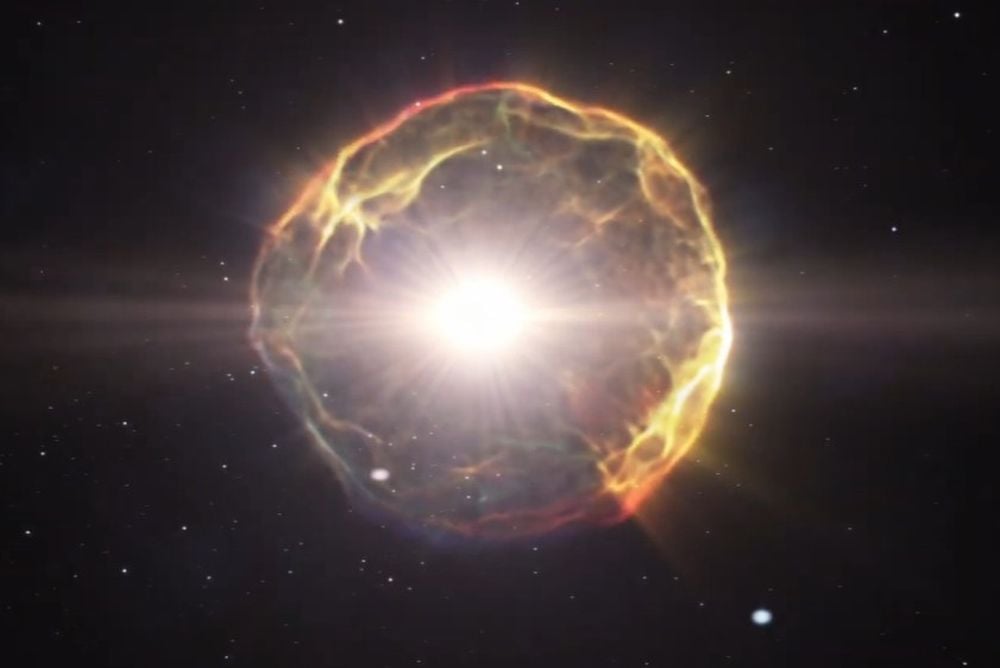
Researchers used the JWST to find a pair of strong gravitationally lensed Supernovae. They exploded billions of years ago, and their light is just reaching us now. Because of the lensing, we'll see multiple images of them, separated by years or decades. This could reveal the expansion rate of the Universe, and provide a solution to the Hubble Tension.
Continue reading
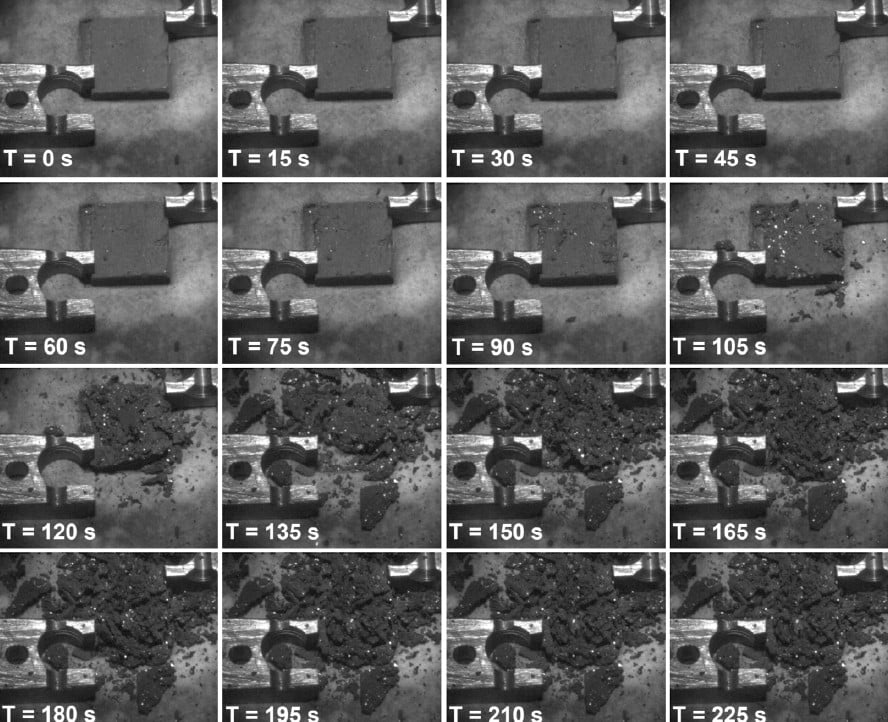
Back in the earlier days of the internet, there was a viral video from a creator called Bill Wurtz called “the history of the entire world, i guess” which spawned a number of memorable memes, some of which are still in use to this day. One of those was a clip from the video where Wurtz states “The Sun is a deadly laser.” Apparently, that was more true than even he knew, as a new paper from Georgios Tsirvouils of the Luleå University of Technology in Sweden and his co-authors have shown experimental evidence that the Sun’s laser-like radiation is likely responsible for the death of a vast majority of closely-orbiting asteroids.
Continue reading
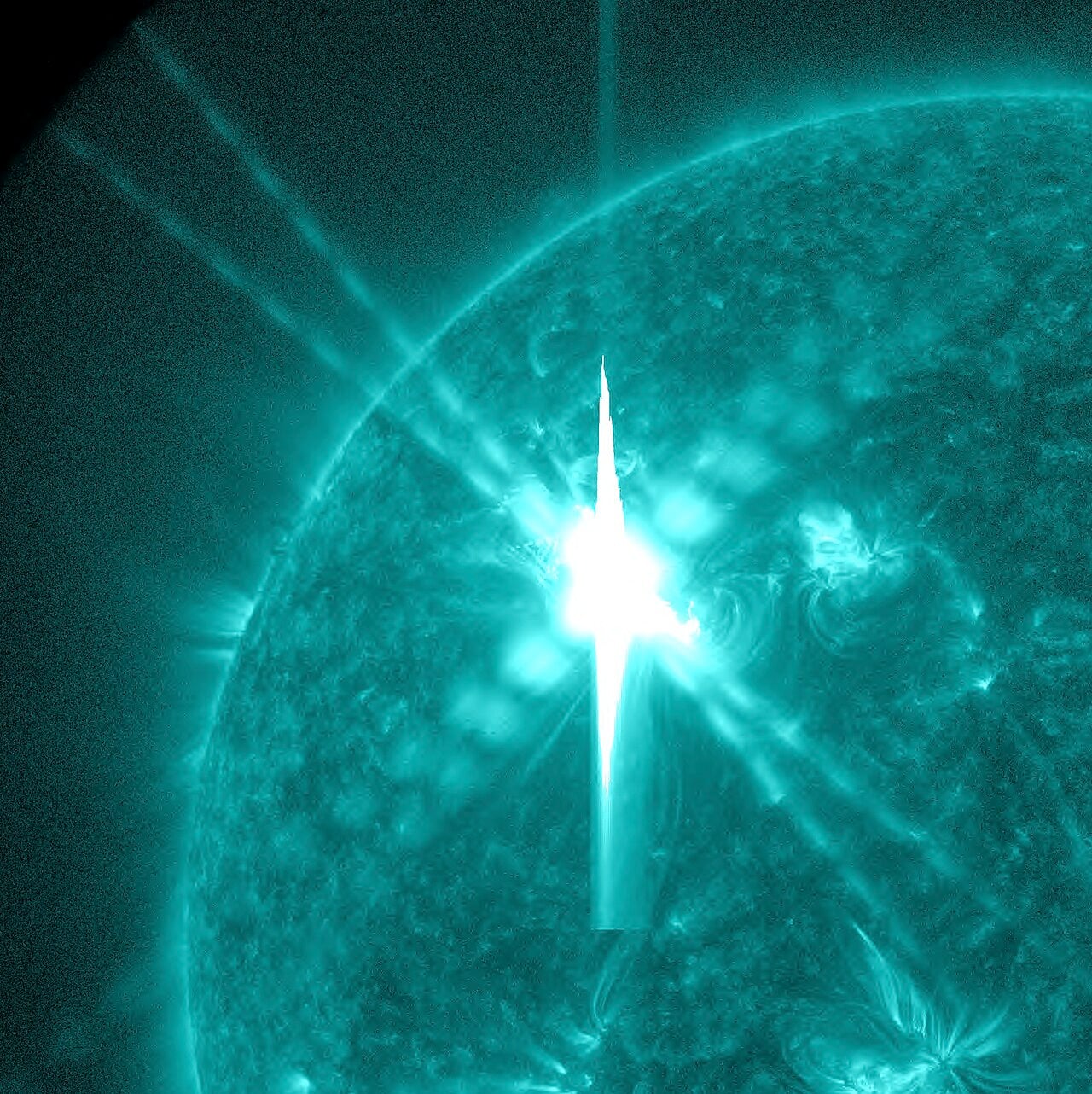
Scientists have finally identified where some of the most powerful radiation bursts from solar flares originate, solving a mystery that has puzzled solar physicists for decades. Researchers at the New Jersey Institute of Technology traced intense gamma rays back to a previously unknown population of particles supercharged to millions of electron volts in the Sun’s atmosphere, revealing the mechanism behind these strange signals.
Continue reading
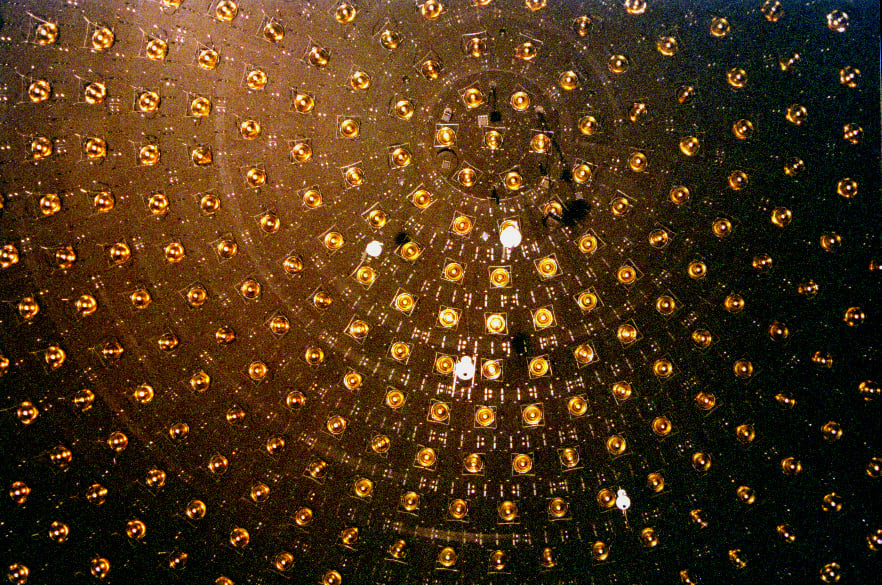
Every second, a trillion ghost particles stream through your body unnoticed, invisible messengers carrying secrets from the hearts of distant stars. Astrophysicists at the University of Copenhagen have now mapped exactly where these neutrinos originate across our Milky Way Galaxy and how many reach Earth, creating the most comprehensive picture yet of these elusive particles.
Continue reading
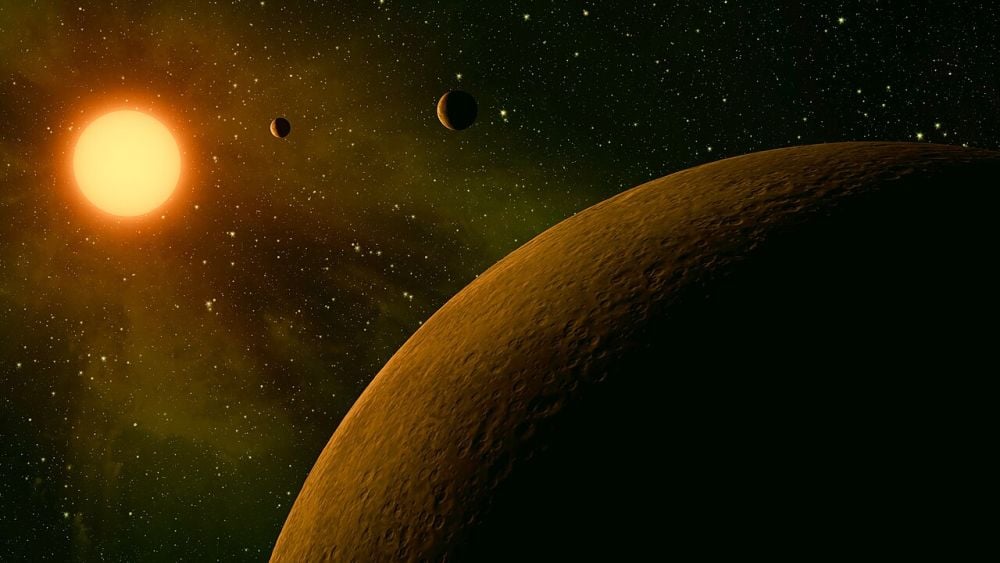
How solid is our understanding of exoplanet habitability? Are the ideas of an Optimistic Habitable Zone and a Conservative Habitable Zone sufficient to advance our understanding? New research introduces an expanded exoplanet 'temperate zone,' highlighting planets that are amenable to atmospheric study by the JWST.
Continue reading
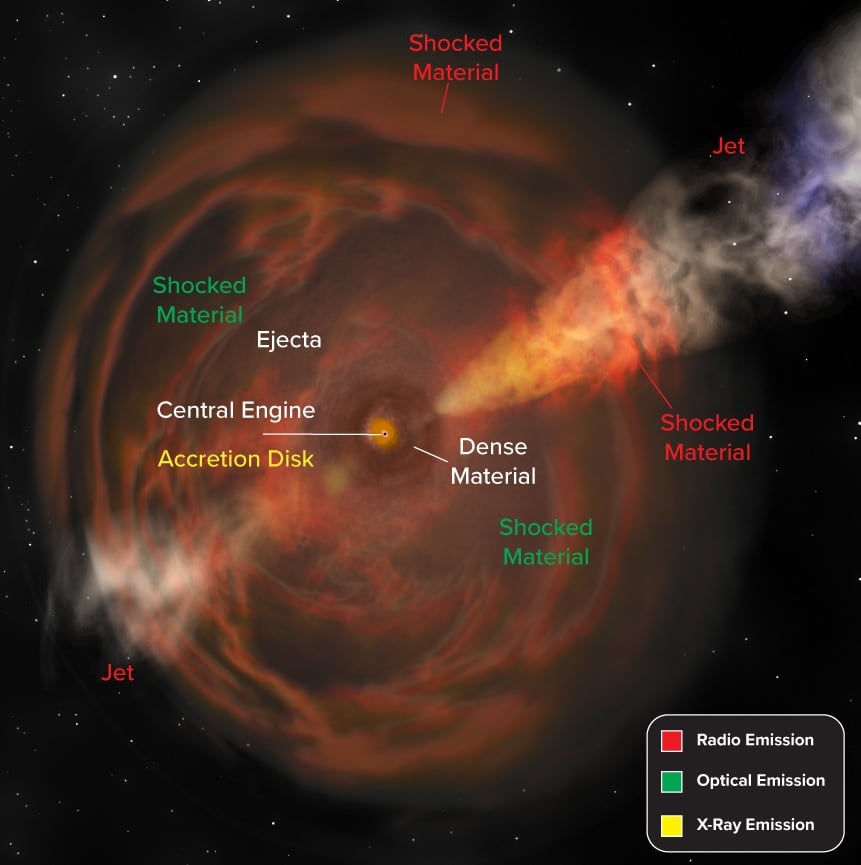
Brief, brilliant flashes of blue light occasionally appear across the universe, burning hundreds of times brighter than ordinary supernovae before fading within days. Astronomers have puzzled over these luminous fast blue optical transients for years, unable to determine whether they were unusual stellar explosions or something else entirely. Observations of AT 2024wpp, the brightest example ever detected, have finally solved the mystery.
Continue reading
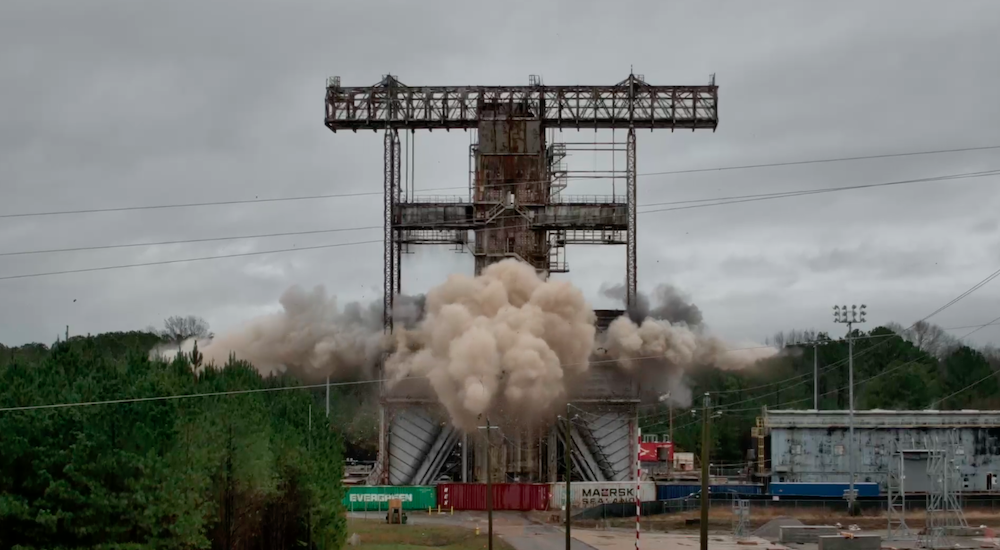
Two towering buildings that helped launch humanity's greatest space achievements came down on January 10 at NASA's Marshall Space Flight Centre in Alabama. The Dynamic Test Stand and the T-tower, both designated National Historic Landmarks, played crucial roles in developing the Saturn V rockets that carried Apollo astronauts to the Moon and the Space Shuttle that defined an era of spaceflight. Their carefully orchestrated demolition marks a transformation, as NASA clears the way for a modernised infrastructure ready to support the next generation of space exploration.
Continue reading
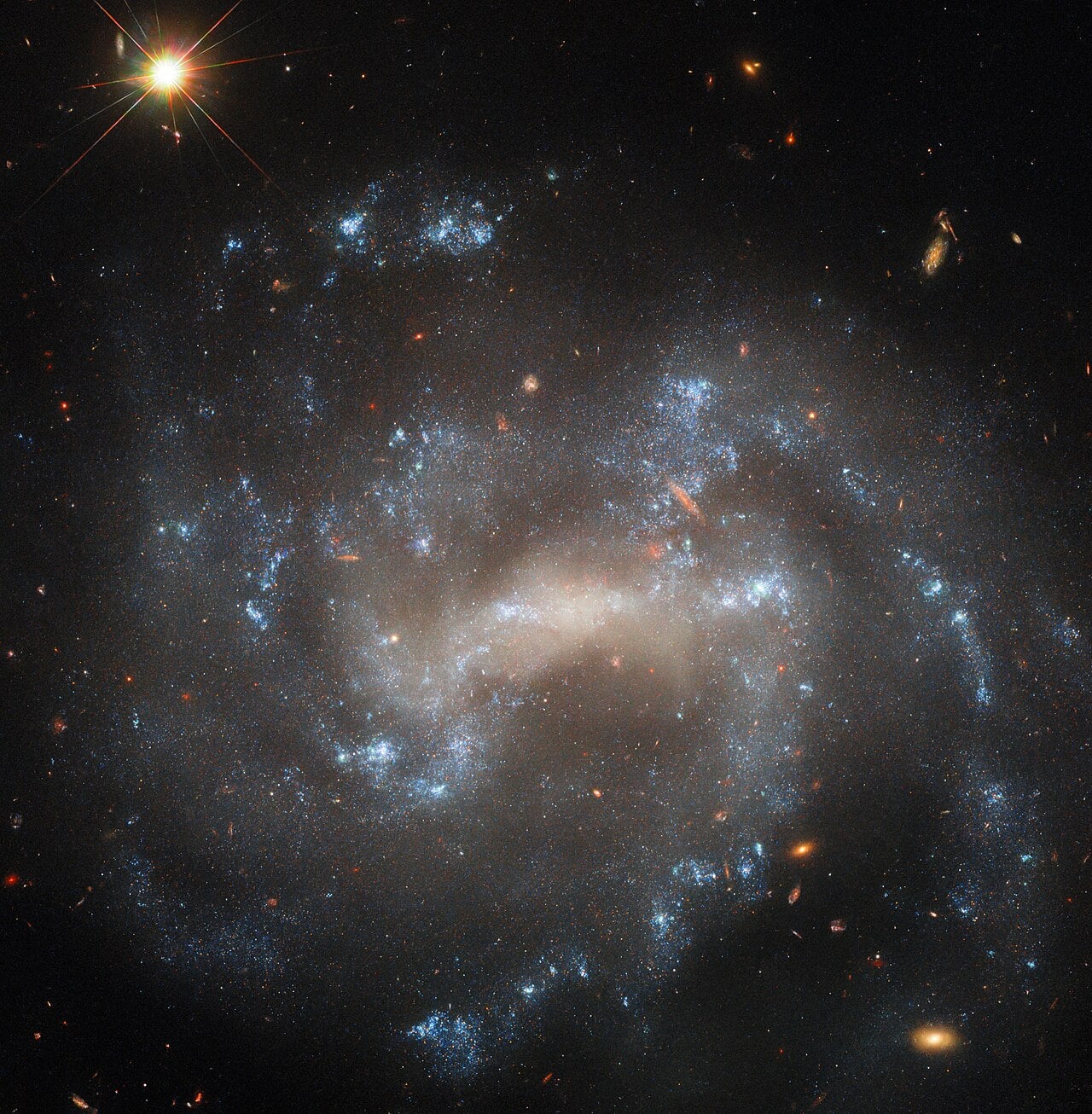
For decades, astronomers believed that the most massive stars in the universe lived fast and died quietly, collapsing directly into black holes without the spectacular fireworks of a supernova explosion. That understanding has been dramatically overturned by observations of SN 2022esa, a peculiar supernova that erupted from an incomprehensibly massive star and is now destined to become a black hole binary system.
Continue reading
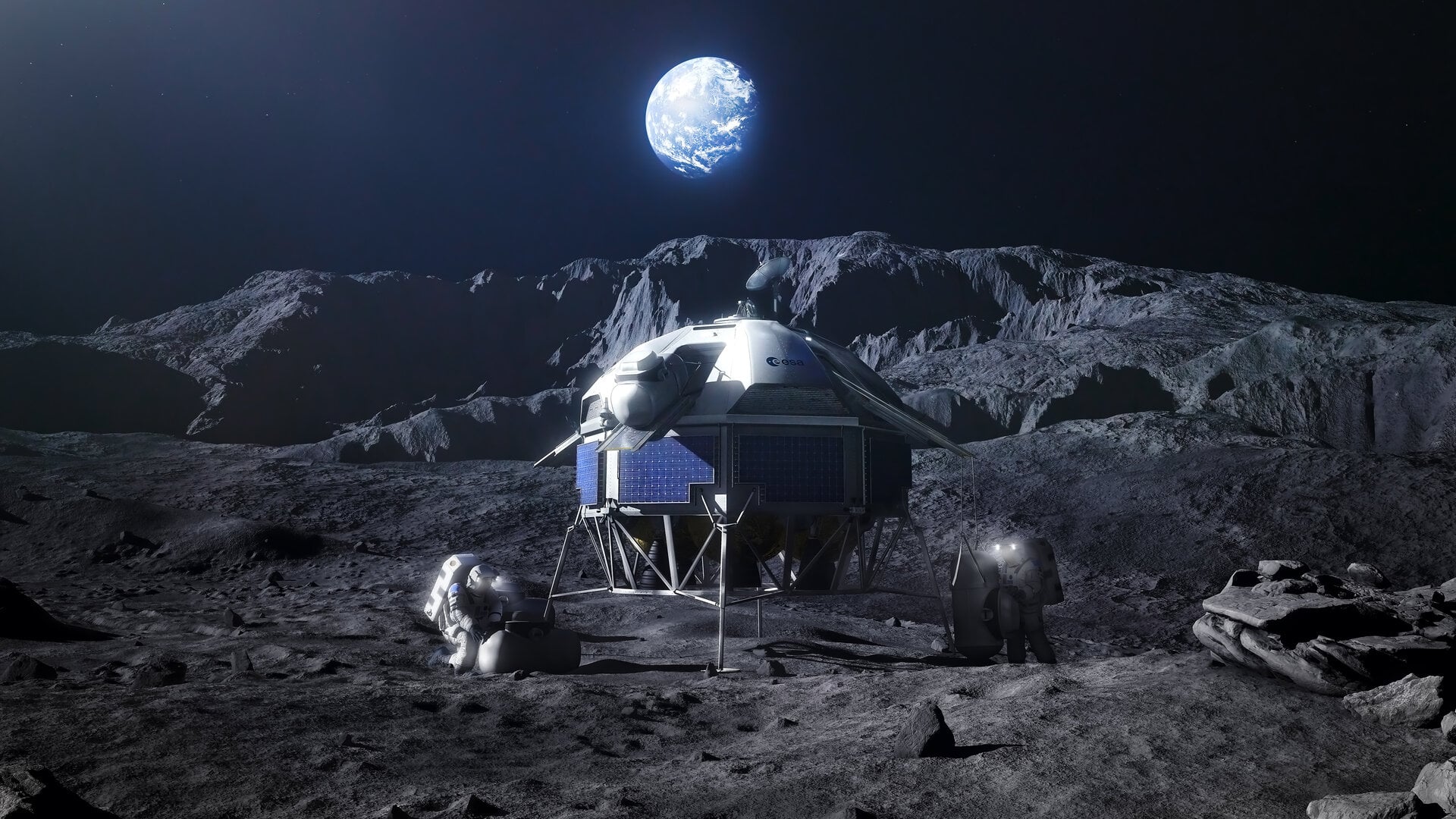
There is a fundamental tension in space exploration that has created ongoing debates for decades. By creating the infrastructure we need to explore other worlds, we damage them in some way, making them either less scientifically interesting or less “pristine,” which some would argue, in itself, is a bad thing. A new paper available in JGR Planets, from Francisca Paiva, a physicist at Instituto Superior Técnico, and Silvio Sinibaldi, the European Space Agency’s (ESA’s) planetary protection officer, argues that, in the Moon’s case at least, the problem is even worse than we originally thought.
Continue reading
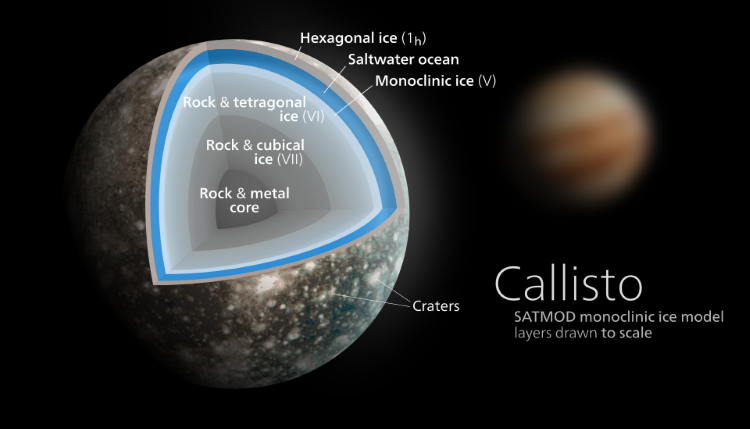
What exists beneath the surface of Jupiter’s icy moon, Callisto? This is what a recent study accepted by The Planetary Science Journal hopes to address as a team of researchers investigated the subsurface composition of Callisto, which is Jupiter’s outermost Galilean satellite. This study has the potential to help scientists better understand the interior composition of Callisto, which is hypothesized to possess a subsurface liquid water ocean, and develop new techniques for exploring planetary subsurface environments.
Continue reading
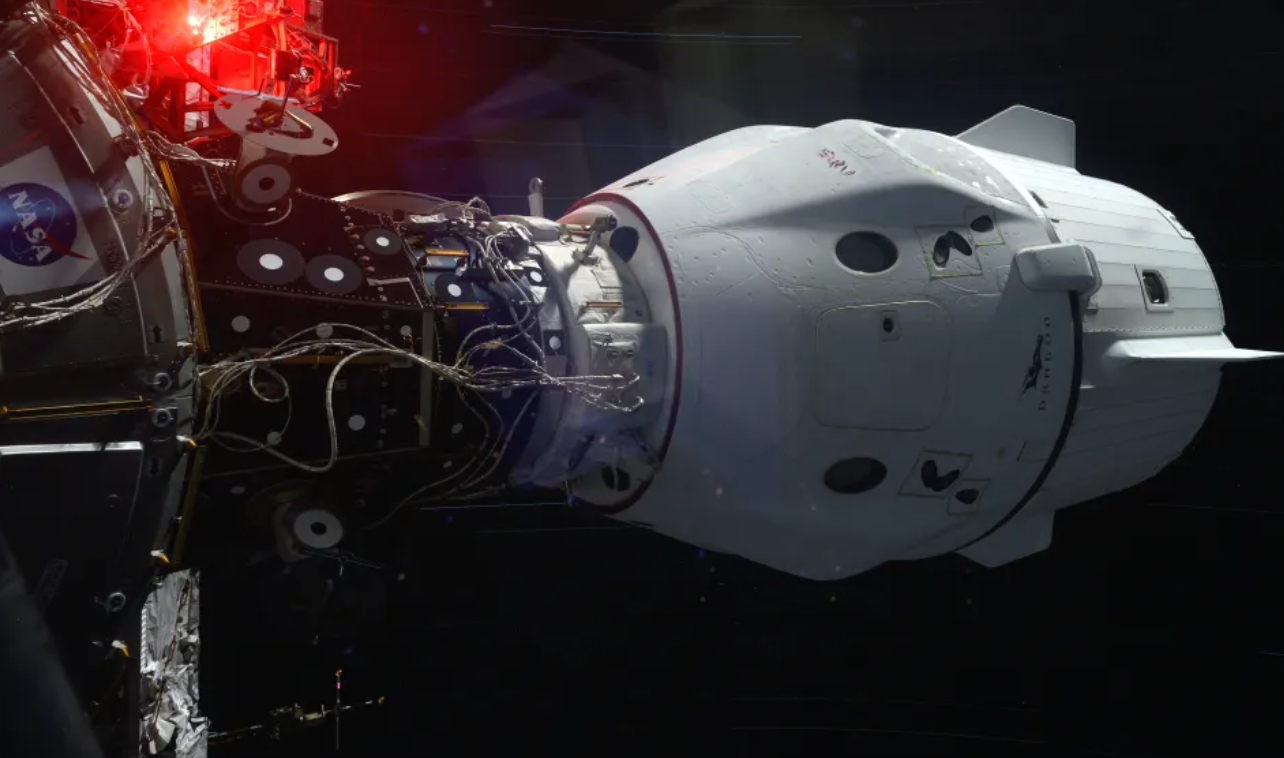
In a historic first, an unspecified medical issue is prompting an early return from the International Space Station on Wednesday night, January 14th. And while the return will be featured live online from undocking to splashdown, if skies are clear, you might just be able to see the pair crossing the night sky tonight, shortly after undocking.
Continue reading
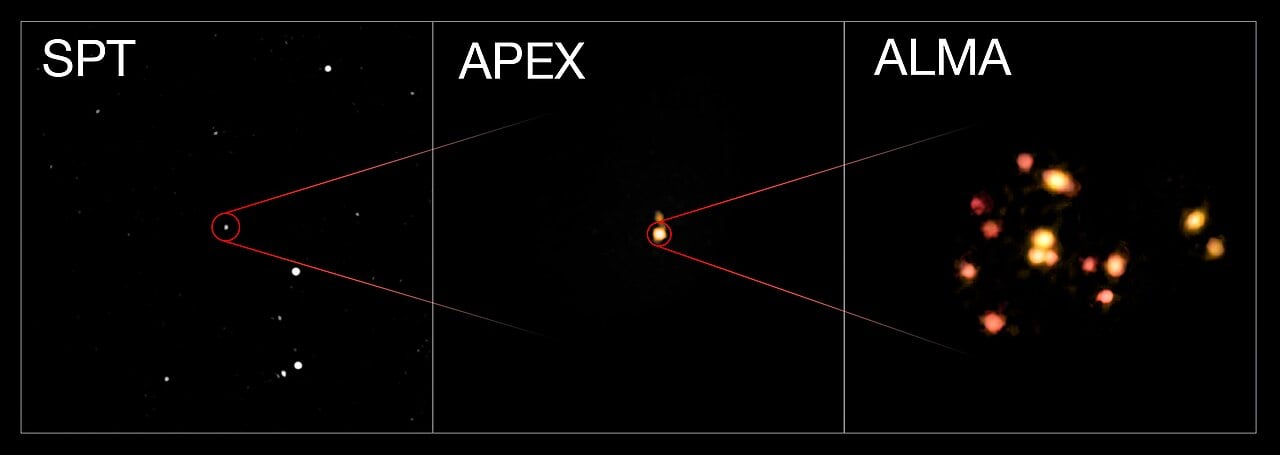
Astronomers using ALMA have detected the earliest hot galaxy cluster atmosphere ever observed, revealing a massive reservoir of superheated gas in the infant cluster SPT2349-56 just 1.4 billion years after the Big Bang. The gas is far hotter and more pressurised than current theories predicted for such a young system, forcing scientists to completely rethink how galaxy clusters evolved in the early universe. This discovery suggests that violent processes like supermassive black hole outbursts and intense starbursts heated these cluster atmospheres much earlier and more efficiently than anyone expected, fundamentally challenging our understanding of how the universe’s largest structures formed.
Continue reading
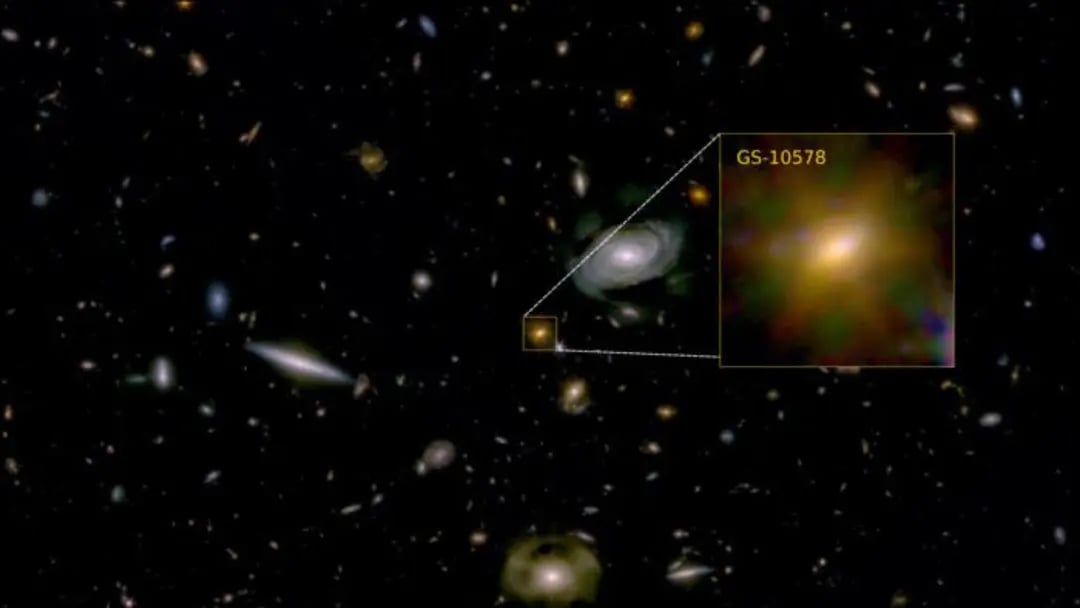
Astronomers using the James Webb Space Telescope and ALMA have discovered one of the oldest ‘dead’ galaxies in the universe, revealing that supermassive black holes can kill galaxies through slow starvation rather than violent destruction. The galaxy, nicknamed ‘Pablo’s Galaxy’, formed most of its 200 billion solar masses of stars between 12.5 and 11.5 billion years ago before abruptly stopping, not because its black hole blew away all the gas in one catastrophic event, but because it repeatedly heated incoming material over multiple cycles, preventing fresh fuel from ever replenishing the galaxy’s star forming reserves.
Continue reading
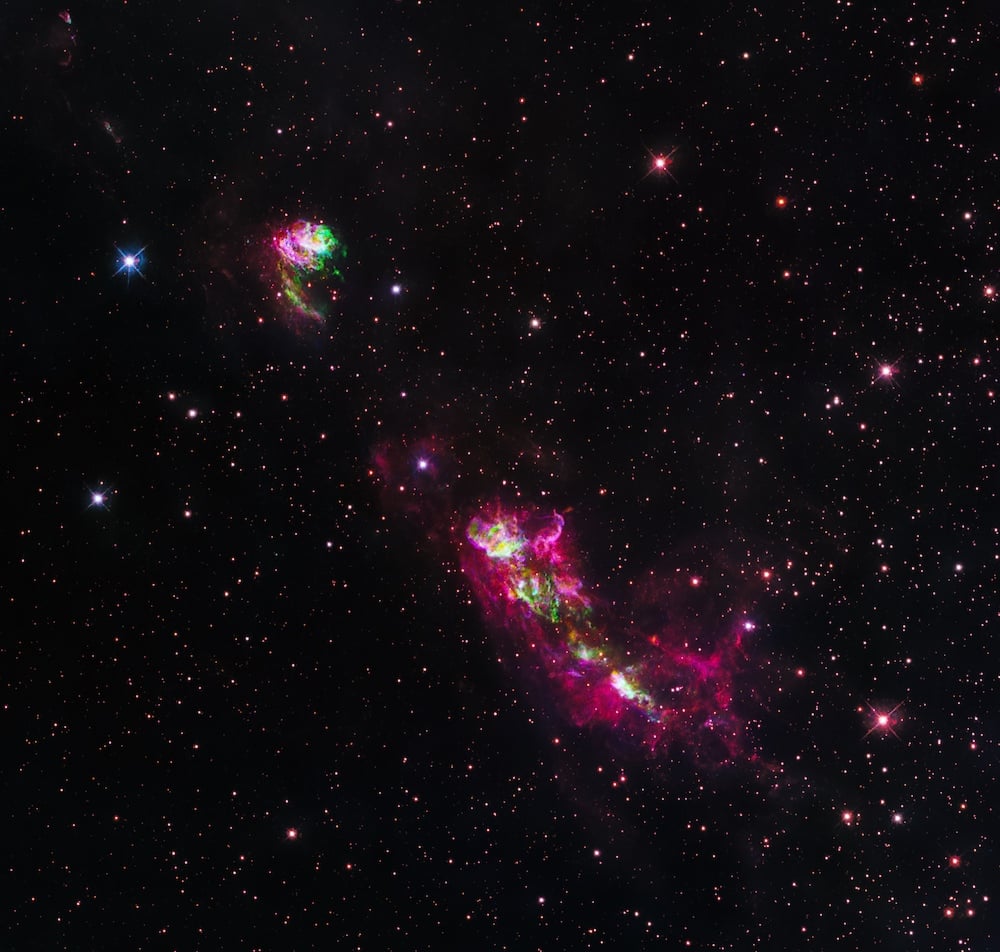
NASA’s Hubble Space Telescope has captured stunning new image of HH 80/81, a pair of objects created when supersonic jets from a newborn star slam into previously expelled gas clouds, heating them to extreme levels. These jets, powered by a protostar 20 times more massive than our Sun, stretch over 32 light years through space and travel at speeds exceeding 1,000 kilometres per second, making them the fastest outflows ever recorded from a young star.
Continue reading
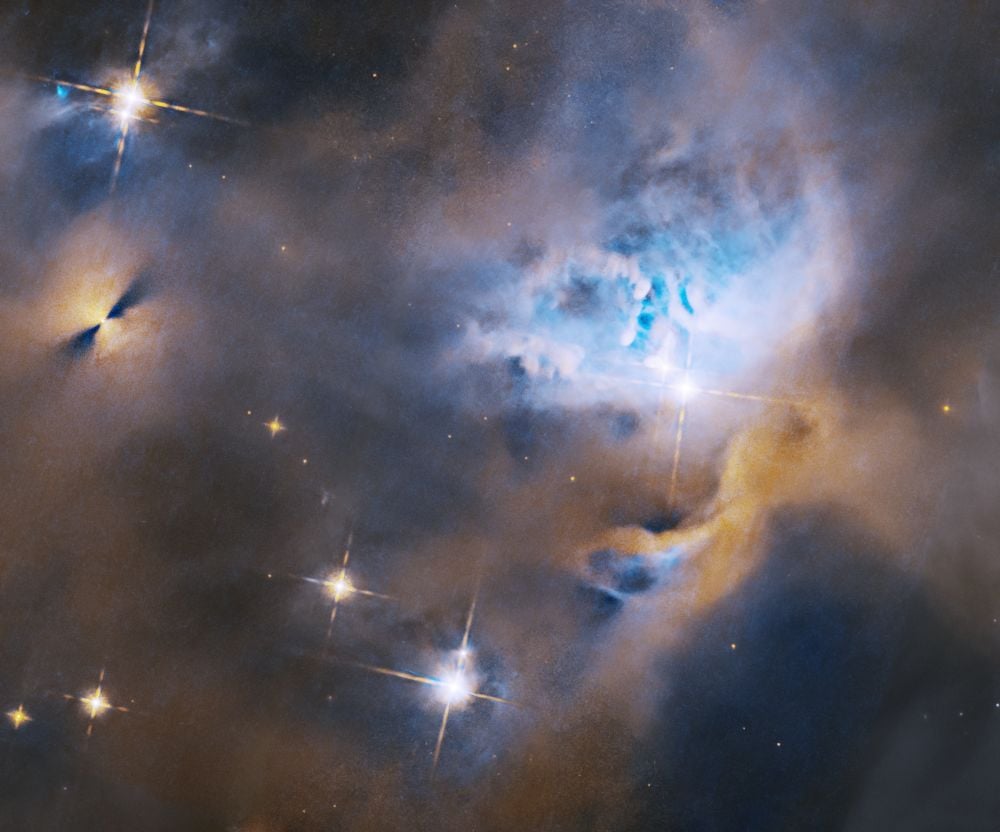
A disparate collection of young stellar objects bejewels a cosmic panorama in the star-forming region NGC 1333 in this new image from NASA’s Hubble Space Telescope. To the left, an actively forming star called a protostar casts its glow on the surrounding gas and dust, creating a reflection nebula. Two dark stripes on opposite sides […]
Continue reading
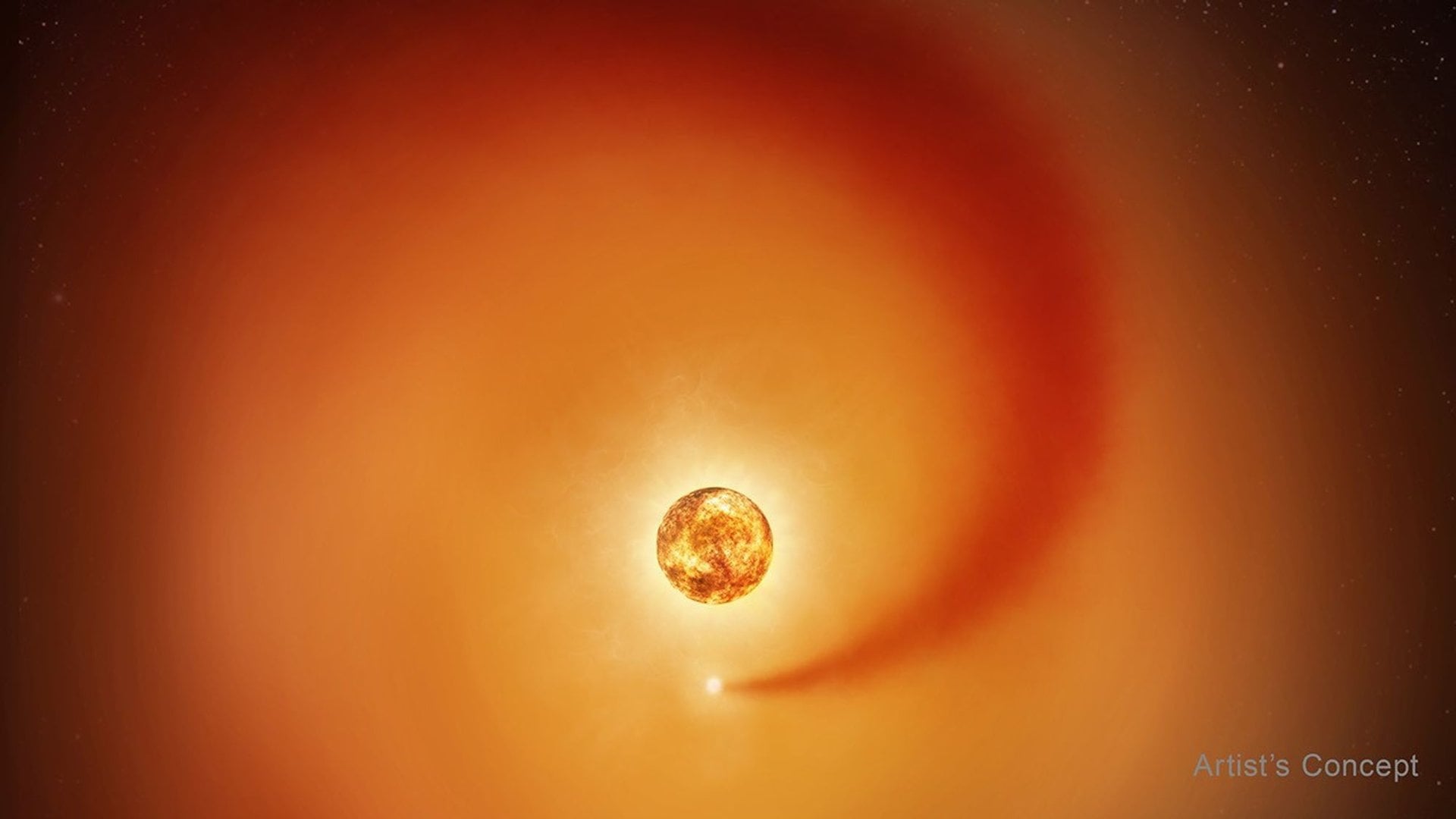
Betelgeuse is the star that everybody can't wait to see blow up, preferably sooner than later. That's because it's a red supergiant on the verge of becoming a supernova and there hasn't been one explode this close in recorded human history. It's been changing its brightness and showing strange surface behavior, which is why astronomers track its activity closely. Are these changes due to its aging process? Do they mean it's about to blow up? Probably not.
Continue reading
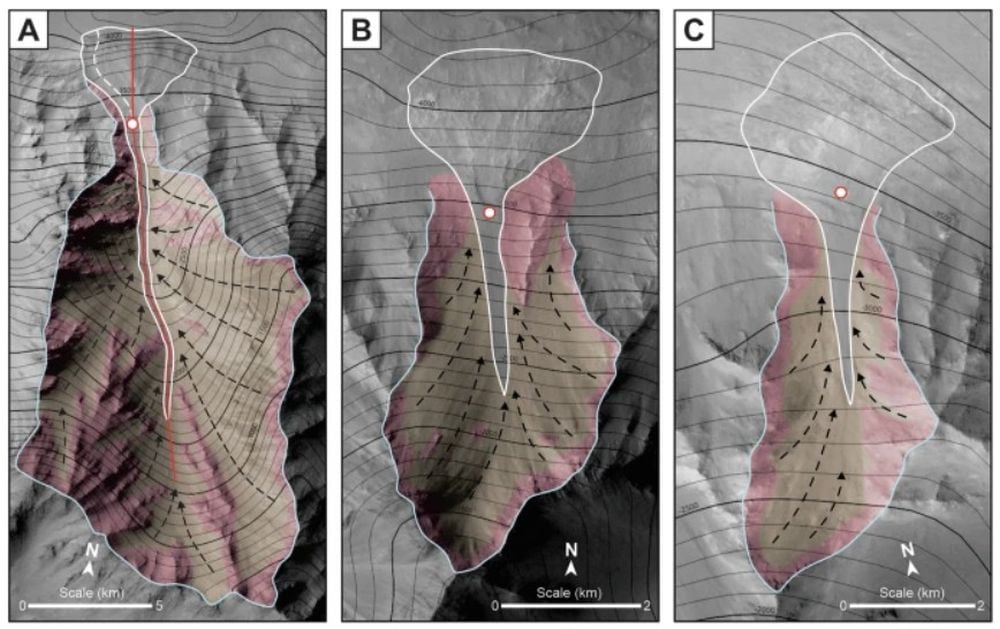
Mars Was Half Covered by an Ocean
susannakohler33808
Mon, 01/12/2026 - 12:00
Mars Was Half Covered by an Ocean
https://mediarelations.unibe.ch/media_releases/2026/media_releases_2026/mars_was_half_covered_by_an_ocean/index_eng.html
Continue reading
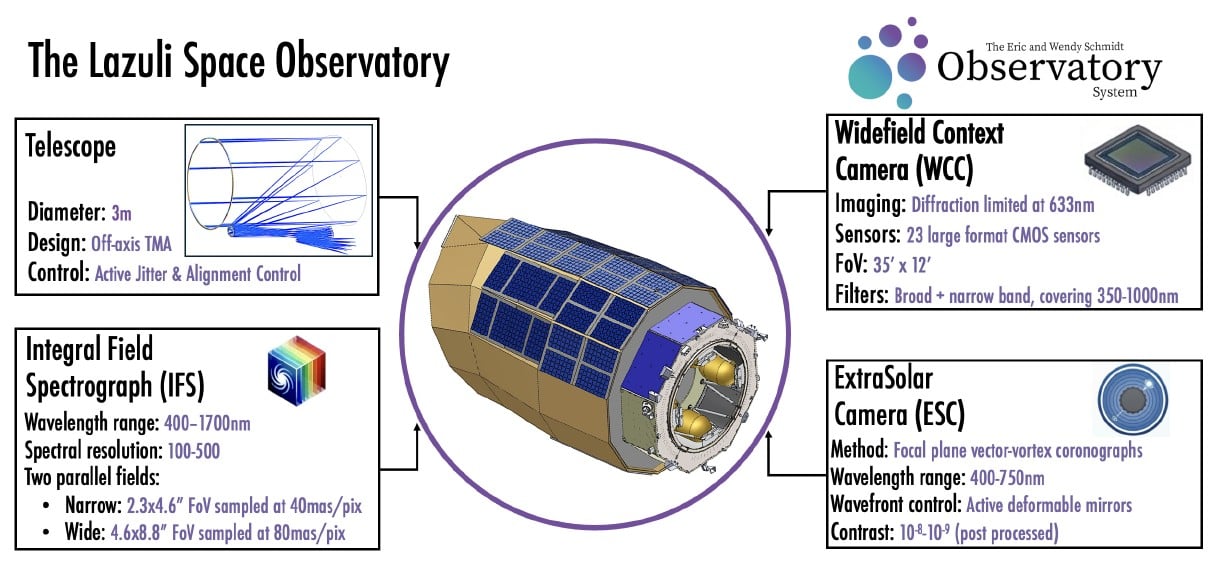
New Space is a term now commonly used around the rocketry and satellite industries to indicate a new, speed focused model of development that takes its cue from the Silicon Valley mindset of “move fast and (hopefully don’t) break things.” Given that several of the founders of rocketry and satellite companies have a Silicon Valley background, that probably shouldn’t be a surprise, but the mindset has resulted in an exponential growth in the number of satellites in orbit, and also an exponential decrease in the cost of getting them to orbit. A new paper, recently published in pre-print form in arXiv from researchers at Schmidt Sciences and a variety of research institutes, lays out plans for the Lazuli Space Observatory, which hopes to apply that same mindset to flagship-level space observatory missions.
Continue reading
 Universe Today