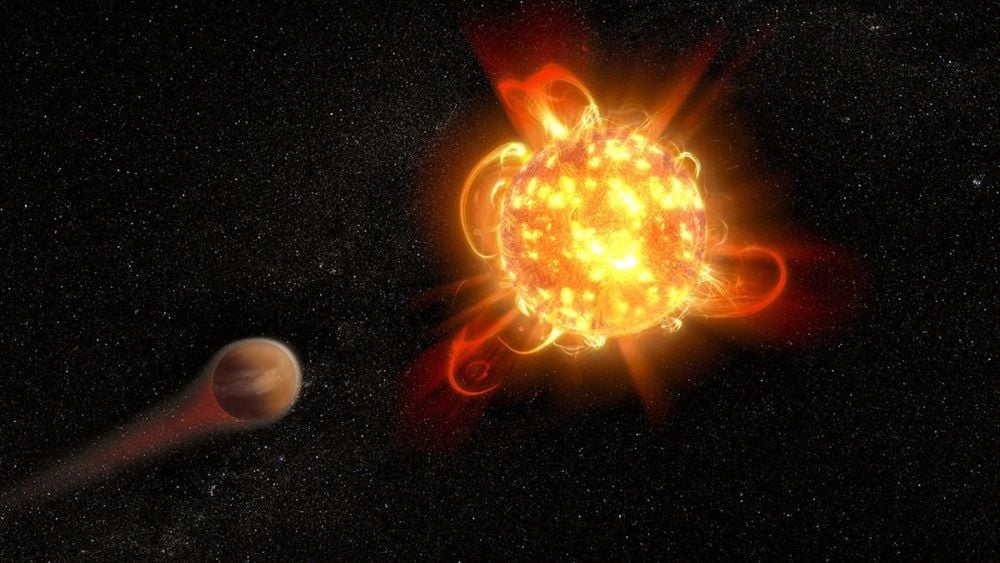
Without a better grasp of stellar flaring, our understanding of exoplanet habitability is at an impasse. Red dwarfs are the most numerous type of star in the galaxy, and they host many rocky exoplanets in their habitable zones. The problem is, they're known to flare so violently that it may negate their habitable zones. A group of researchers propose a new telescope designed solely to study stellar flaring.
Continue reading
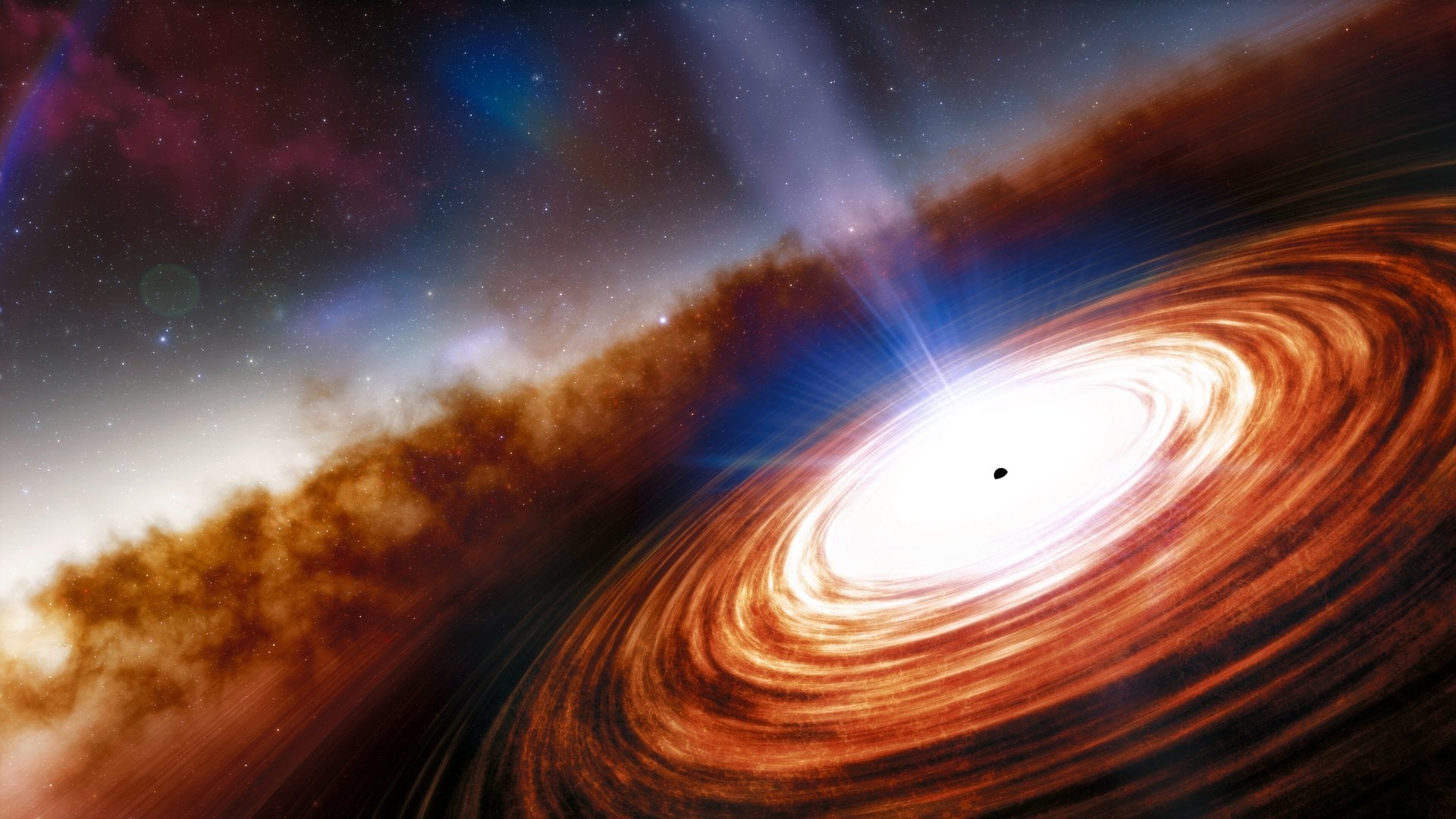
There is a strong relation between the size of a galaxy's black hole and the motion of stars in the galaxy's core, known as the M-sigma relation. It turns out this relation doesn't work well for galaxies with ultramassive black holes.
Continue reading
So far, humanity has yet to find its first “exomoon” - a Moon orbiting a planet outside of the solar system. But that hasn’t been for lack of trying. According to a new paper by Thomas Winterhalder of the European Southern Observatory and his co-authors available as a pre-print on arXiv, the reason isn’t because those Moons don’t exist, but simply because we lack the technology to detect them. They propose a new “kilometric baseline interferometer” that can detect moons as small as the Earth up to 200 parsecs (652 light years) away.
Continue reading
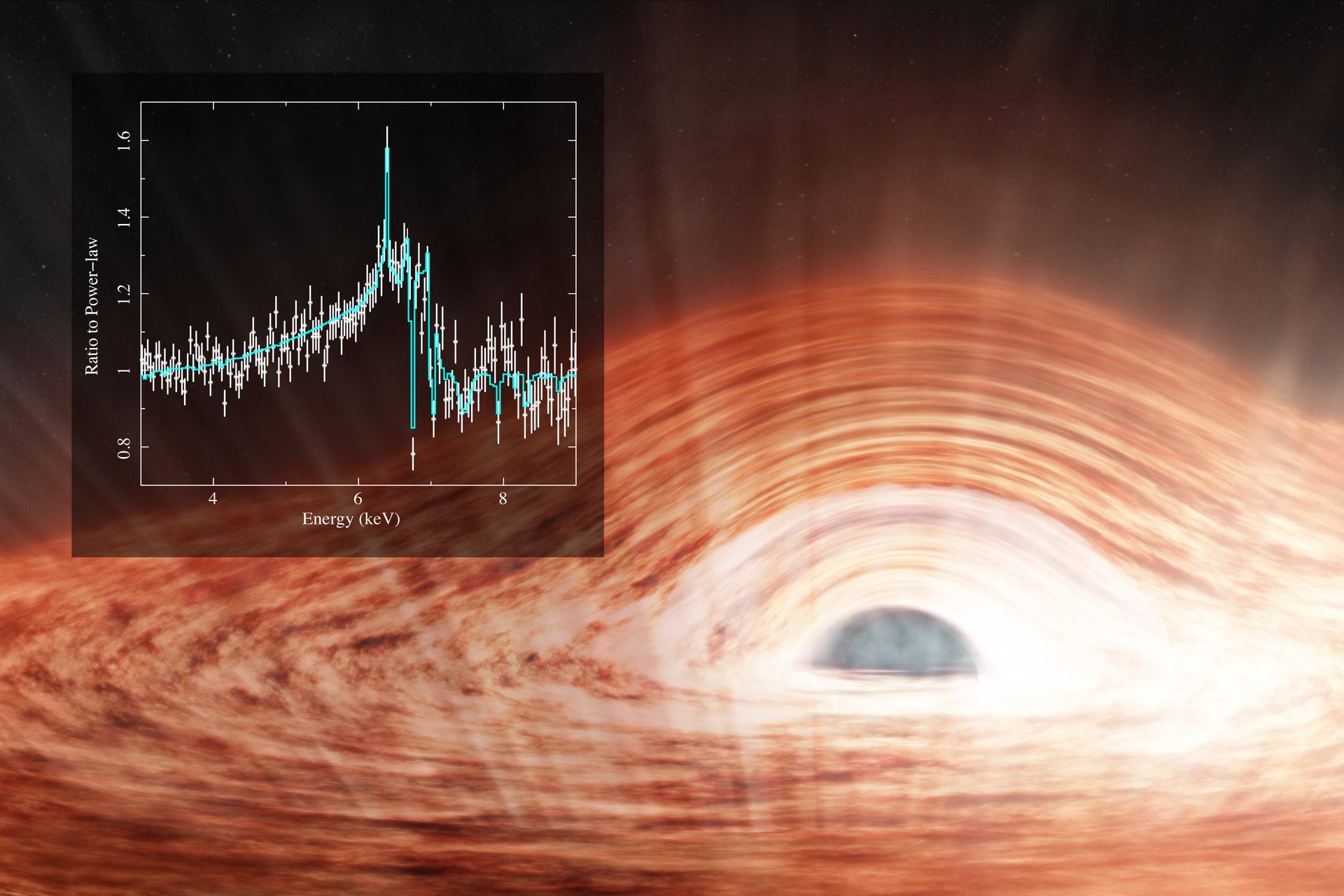
The first results on the iconic active galactic nucleus MCG–6-30-15 captured with the XRISM mission show the most precise signatures yet of its supermassive black hole’s extreme gravity and the outflows that shape its galaxy.
Continue reading
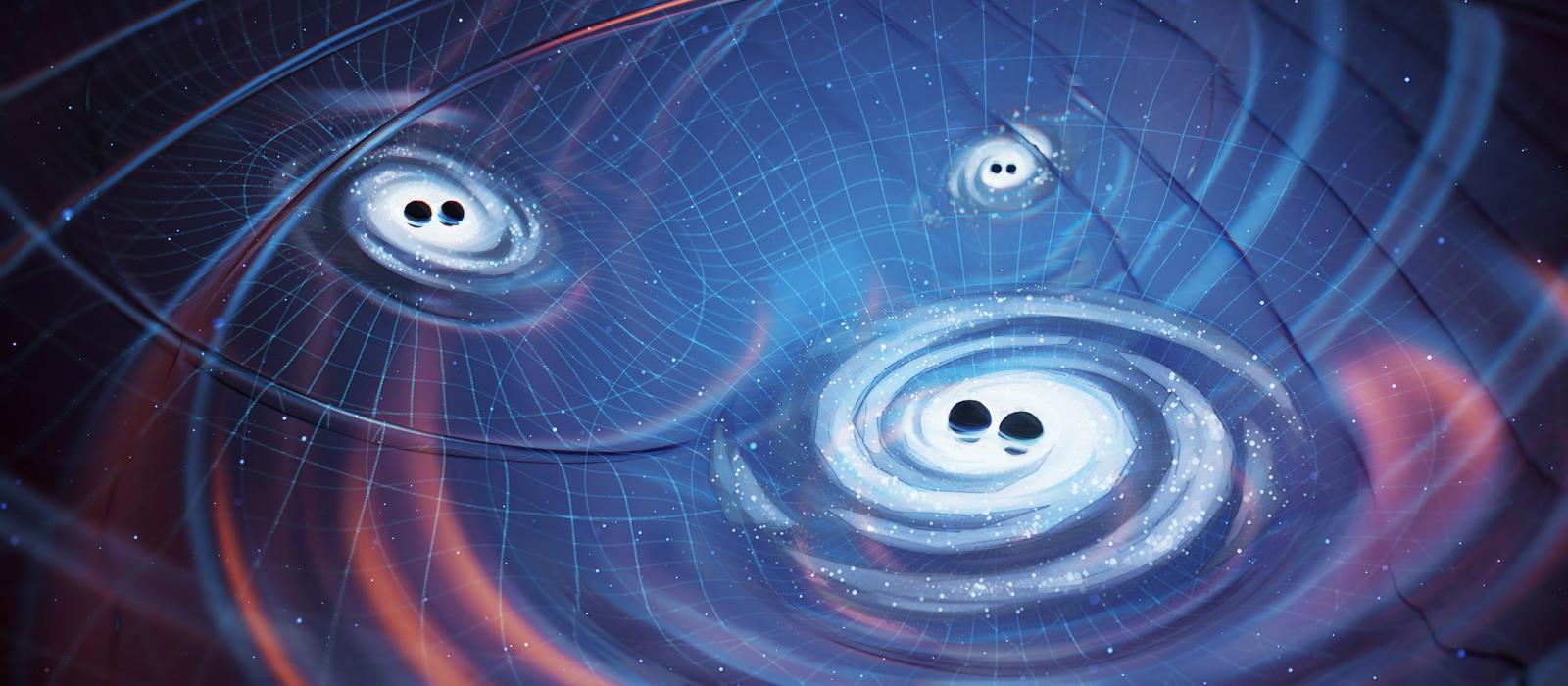
A new study by researchers at the University of Amsterdam shows how gravitational waves from black holes can be used to reveal the presence of dark matter and help determine its properties. The key is a new model, based on Einstein’s theory of general relativity, that tracks in detail how a black hole interacts with the surrounding matter.
Continue reading
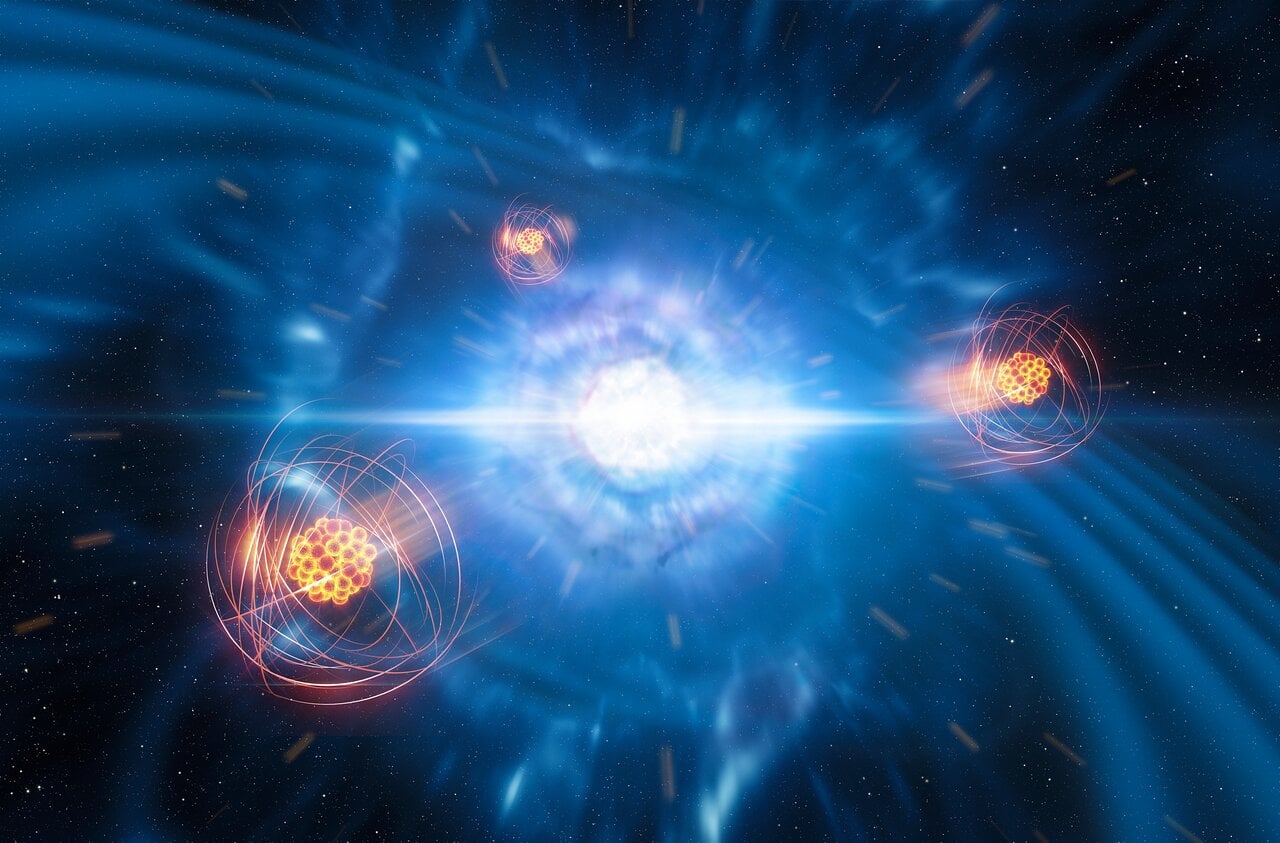
Terrestrial planets such as Earth need an early solar system rich in short-lived radioisotopes. But the supernovae that create these elements would tend to rip an early system apart. A new study suggests that these isotopes are produced by a bath of cosmic rays from more distant supernovae.
Continue reading
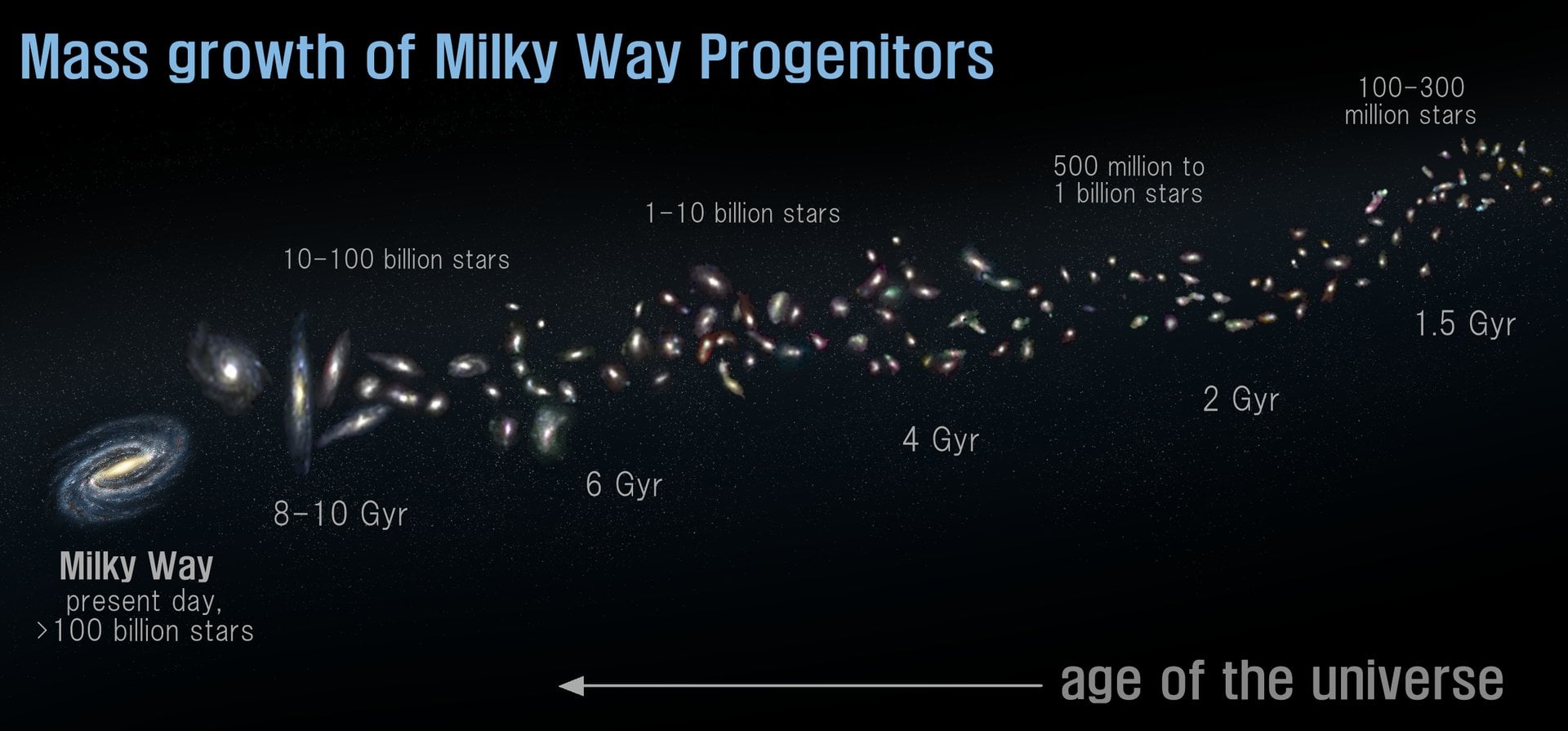
A team of Canadian astronomers has used Webb's observations of "Milky Way twins" in the early Universe to learn more about our galaxy's turbulent youth.
Continue reading
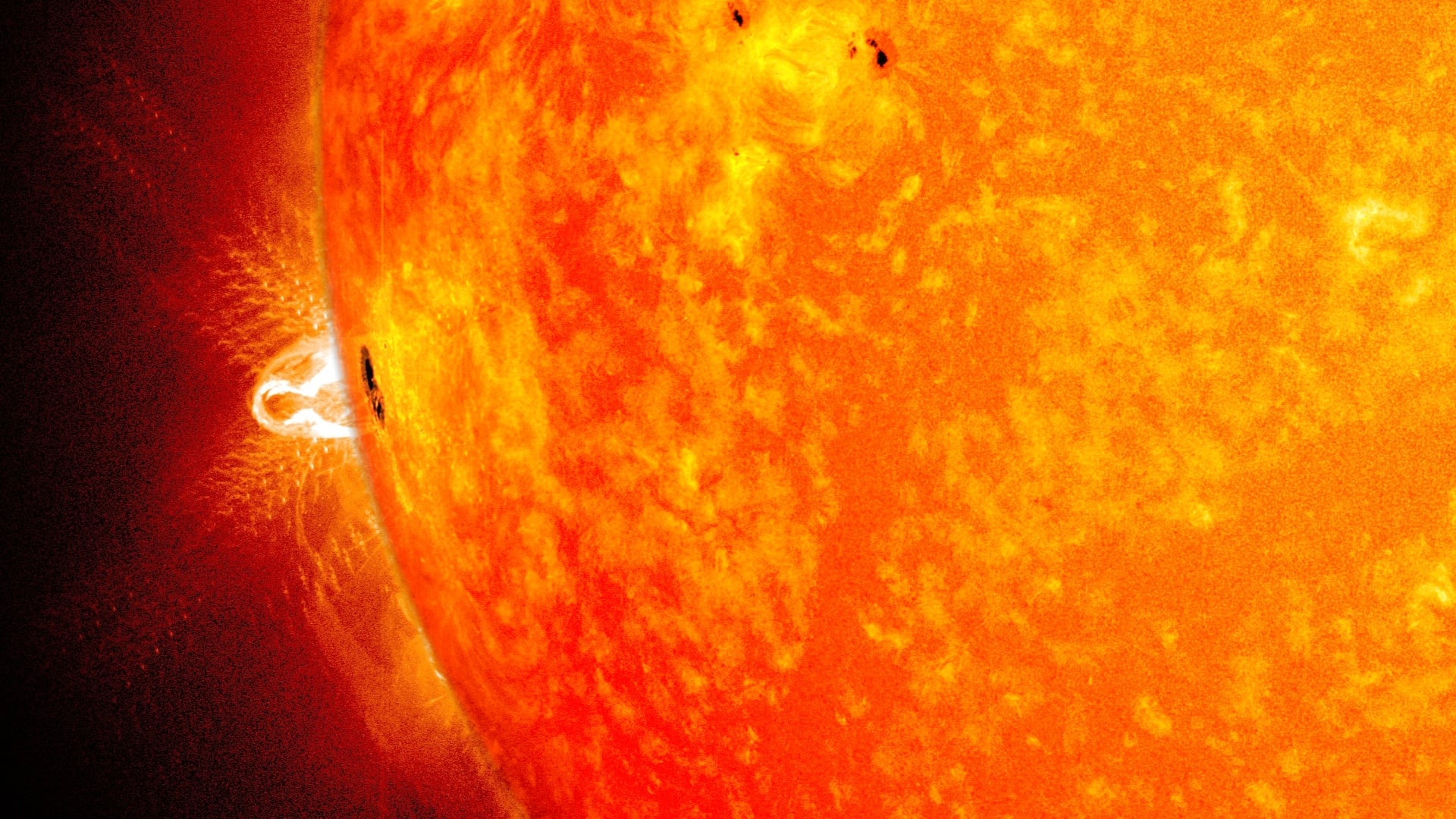
Sunspots and solar flares go hand in hand. They generally occur in the same region of the Sun around the same time. We've long thought the same would be true for other stars, but a new study finds that isn't the case.
Continue reading
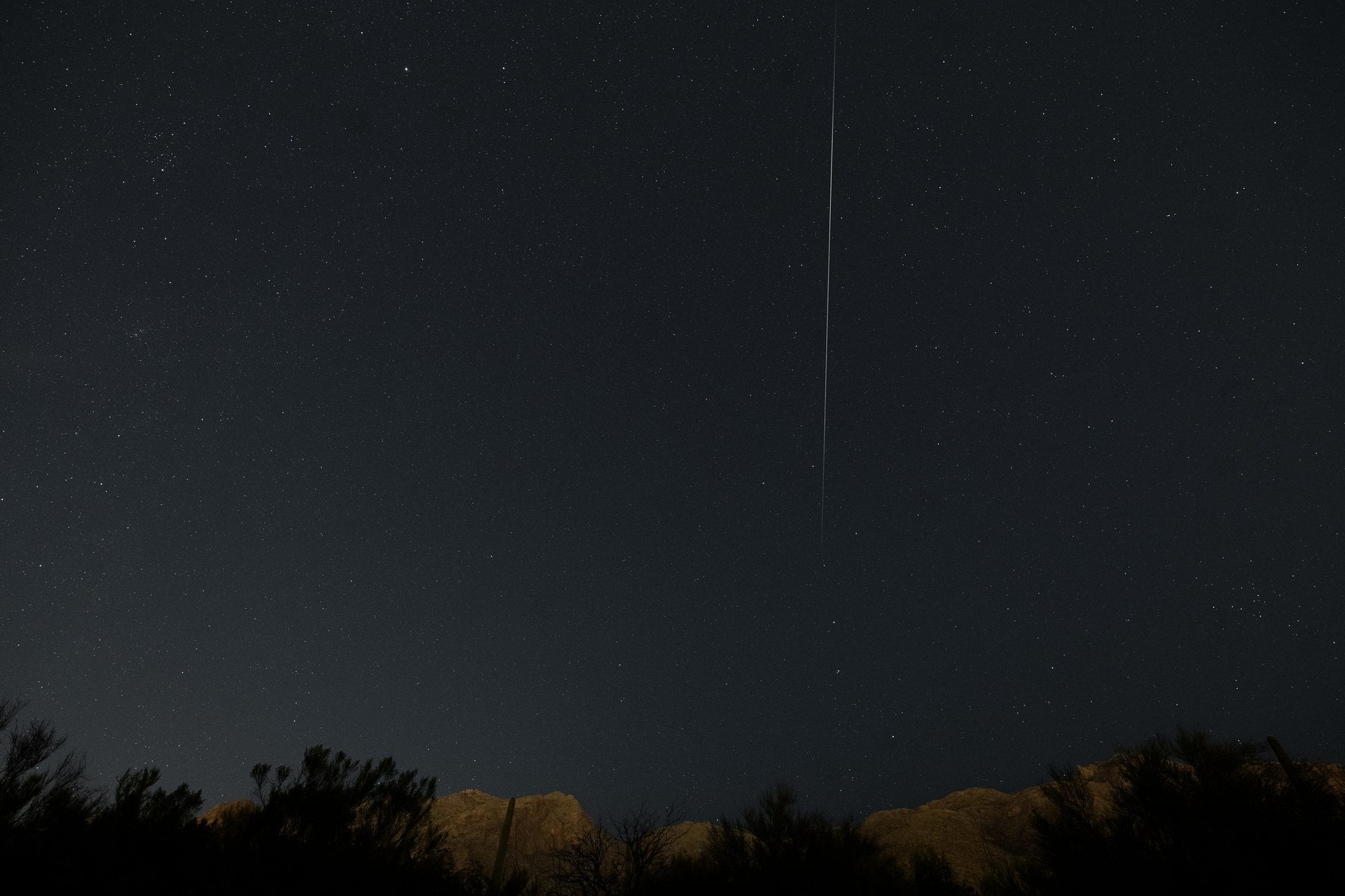
It sneaks up on us, every annual flip of the calendar into the new year. If skies are clear, keep an eye out for the brief but strong Quadrantid meteors this weekend. The Quadrantids or ‘Quads’ have a brief but strong annual peak just after New Year’s Day. This also makes the shower notoriously elusive for observers.
Continue reading
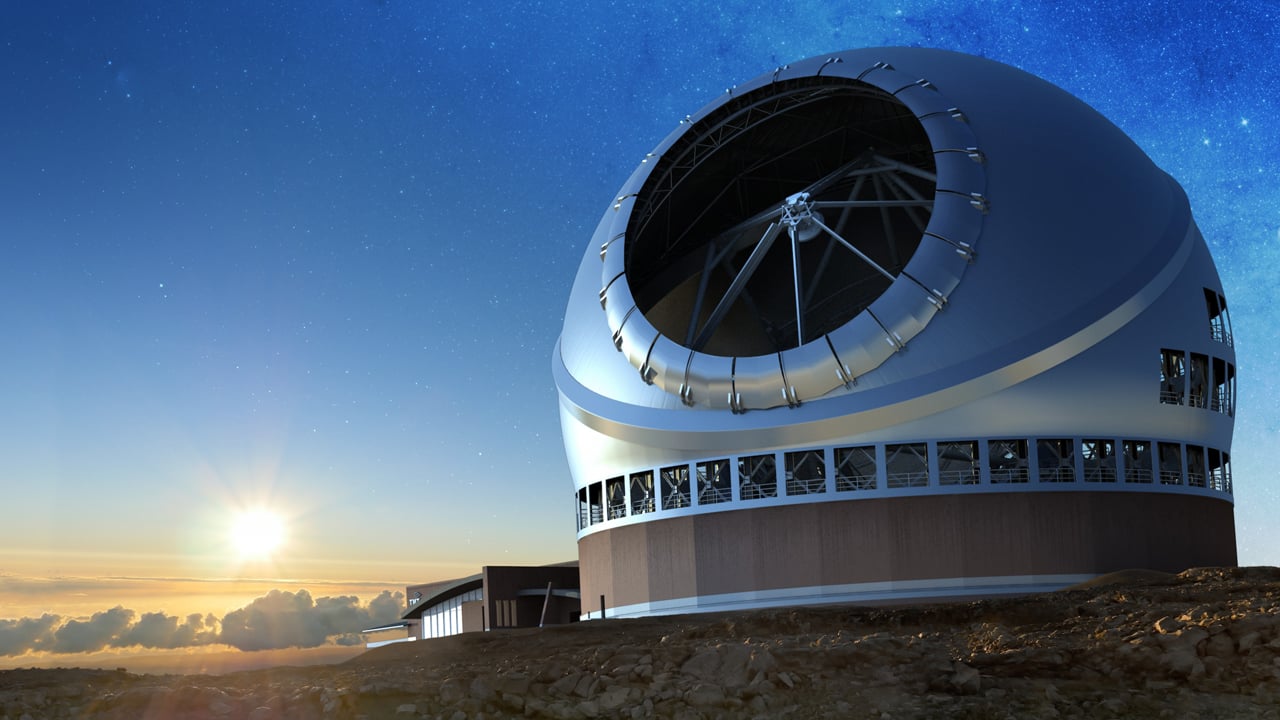
Size matters when it comes to telescopes. The bigger they are, the farther they can see. Prioritizing constructing large ones is therefore high on the priority list for many observational organizations. But doing so comes at a cost, and not just in terms of money. Finding a suitable site can be a challenge, and that has been particularly true for the effort to build a 30-meter telescope in the Northern hemisphere. A new paper, available in pre-print on arXiv by Francesco Coti Zelati of the Spanish Institute of Space Sciences in Barcelona and his co-authors, makes the argument for building it at the Roque de los Muchachos Observatory in La Palma.
Continue reading
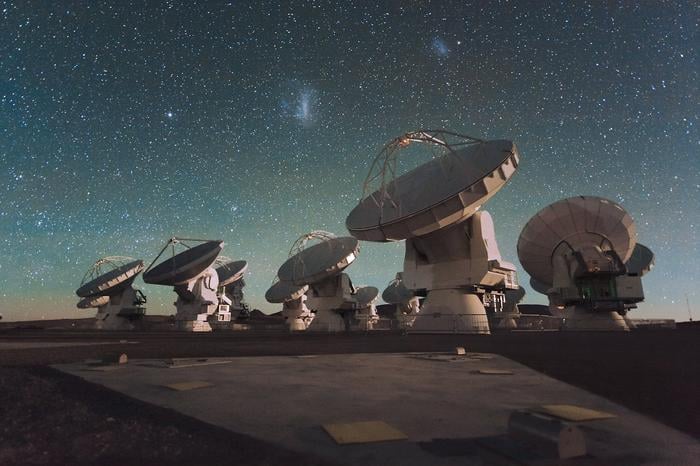
The Atacama Millimeter/Submillimeter Array (ALMA), the world's most powerful radio telescope, has received 145 new low-noise amplifiers (LNAs) that will increase its range and sensitivity.
Continue reading

For the first time, astronomers have caught a stellar nursery in the act of blowing giant celestial bubbles, revealing a massive outflow of gas stretching over 650 light-years from one of the Milky Way’s most extraordinary star clusters. Using nearly two decades of data from NASA’s Fermi Gamma-ray Space Telescope, researchers traced this budding stream of supercharged particles as it expands beneath our Galaxy’s disk, offering crucial insights into how young, massive stars shape galactic evolution.
Continue reading
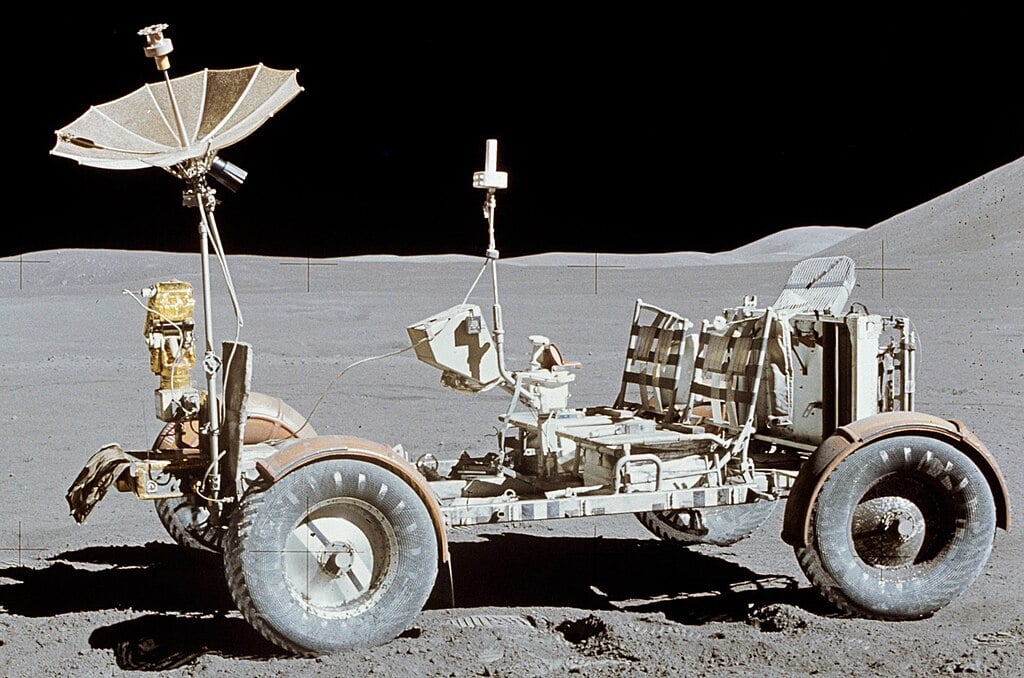
Lunar dust poses one of the most persistent challenges for spacecraft operations on the Moon, clinging stubbornly to surfaces and infiltrating equipment with potentially devastating consequences. Now, researchers have developed a comprehensive mathematical model that reveals exactly how electrically charged dust particles behave when they collide with spacecraft at low speeds, uncovering surprising insights about what makes them stick and what allows them to bounce away.
Continue reading
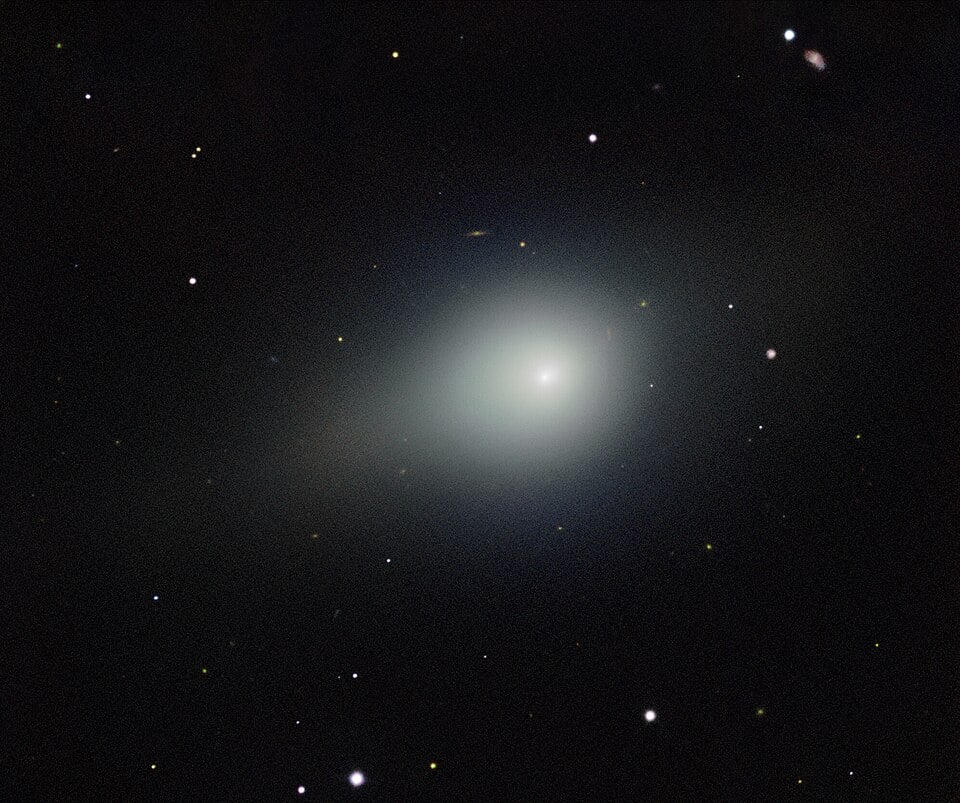
Astronomers have measured water streaming from interstellar comet 3I/ATLAS for the first time since it passed closest to the Sun. Using a spacecraft that’s been watching the Sun for nearly three decades, scientists detected hydrogen glowing around the comet and calculated that it was producing water at extraordinary rates. These measurements not only confirm that interstellar comets behave remarkably like our own Solar System’s icy wanderers, but also provide crucial clues about what comets looked like in the early universe.
Continue reading
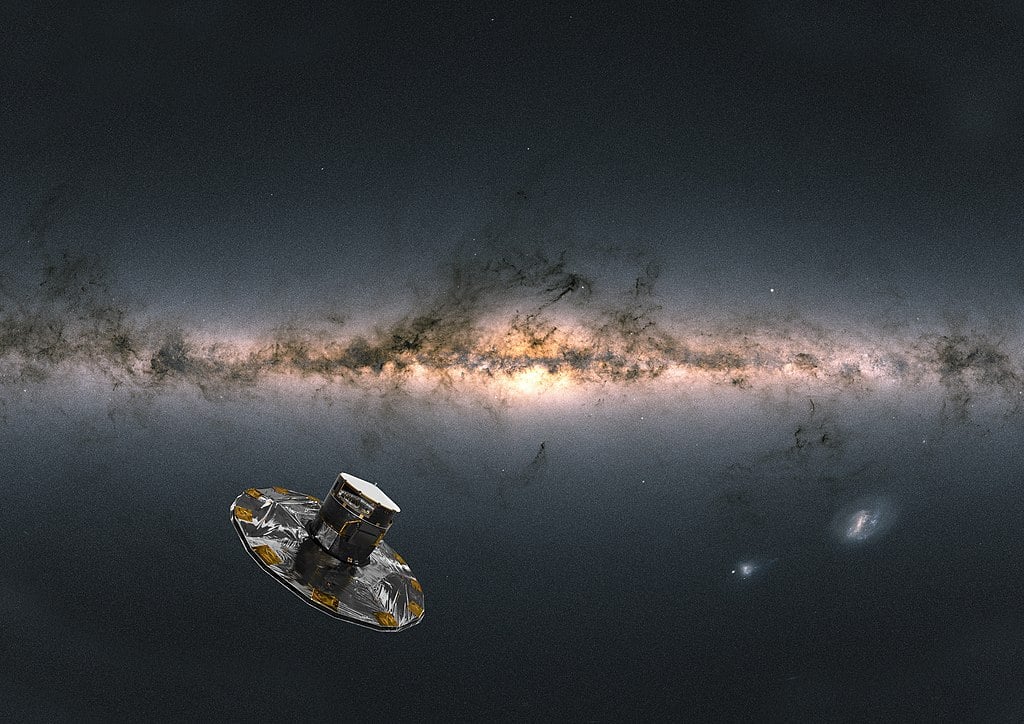
ESA’s Gaia space telescope has achieved something astronomers thought nearly impossible, detecting planets while they’re still forming inside the dusty discs surrounding newborn stars. By measuring the subtle gravitational wobbles that unseen companions induce on their host stars, Gaia has found hints of planets, brown dwarfs, and companion stars in 31 young stellar systems out of 98 surveyed.
Continue reading
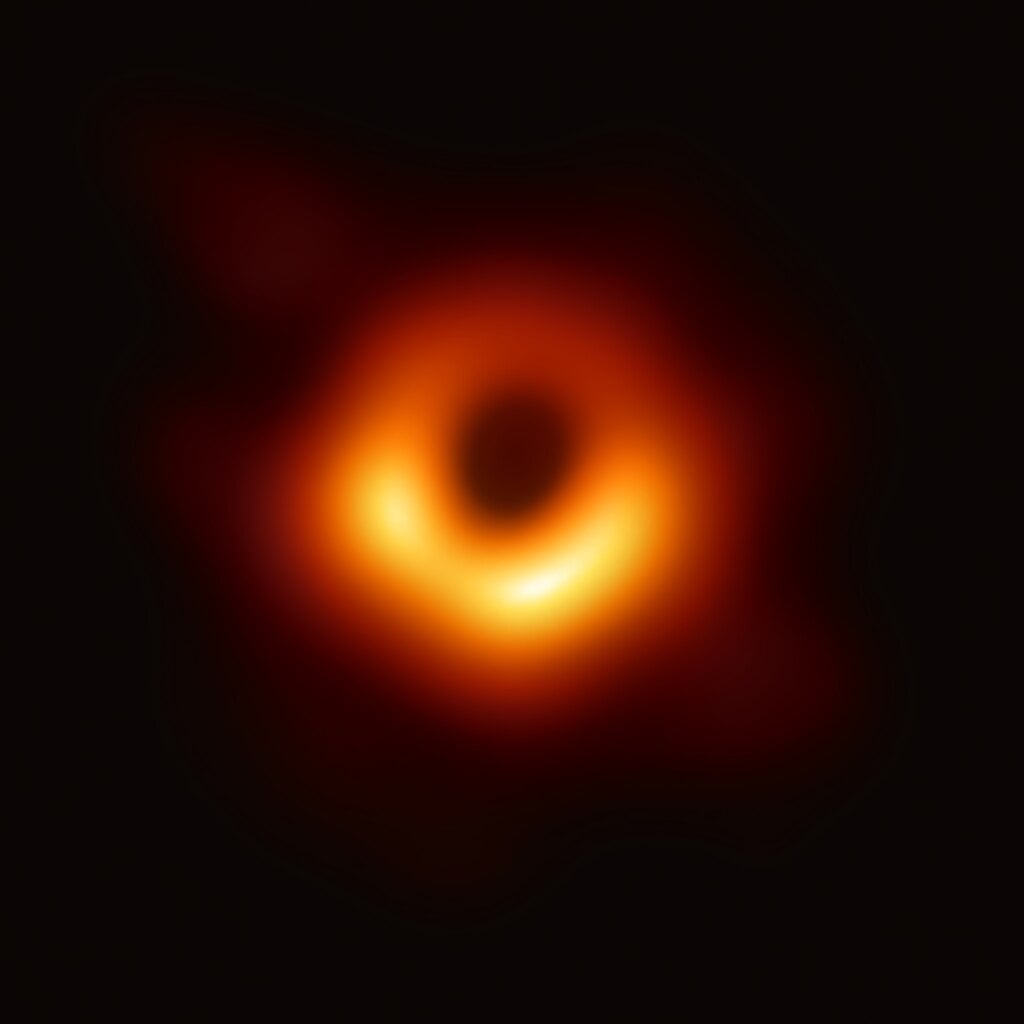
The iconic 2019 and 2022 photographs of black holes M87* and Sagittarius A* captivated astronomers worldwide with their fuzzy orange doughnut shapes. Now, scientists are preparing to take the next giant leap by creating the first ever 3D movies of black holes that could fundamentally reshape our understanding of gravity and the universe’s most violent phenomena.
Continue reading
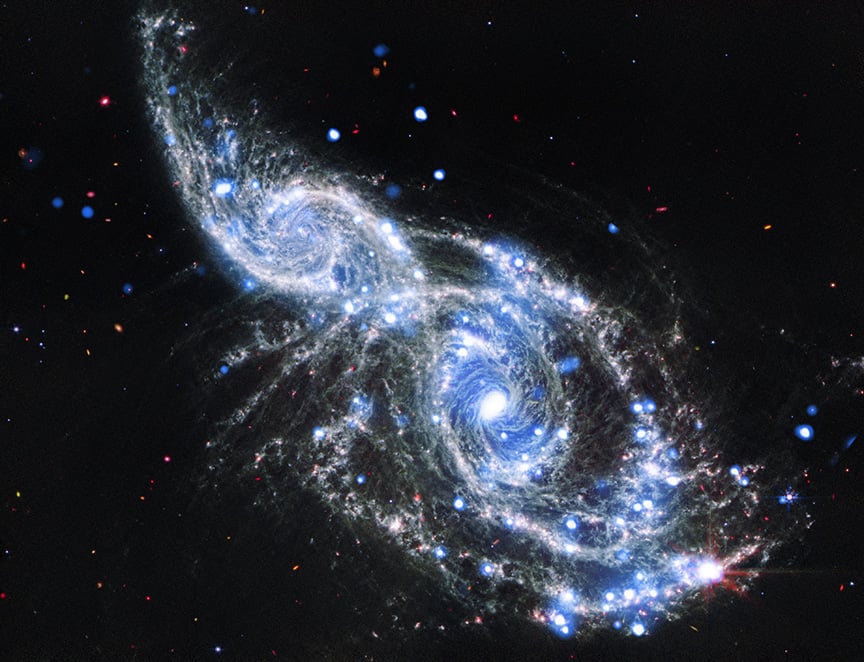
Two spiral galaxies locked in a slow motion collision have been captured in stunning detail by NASA’s James Webb Space Telescope and Chandra X-ray Observatory. The pair grazed past each other millions of years ago, triggering spectacular waves of star formation and distorting their elegant spiral arms into sweeping silver blue streamers. This celestial dance, playing out over hundreds of millions of years, offers astronomers a rare glimpse into the violent yet creative process that shapes galaxies across the universe.
Continue reading
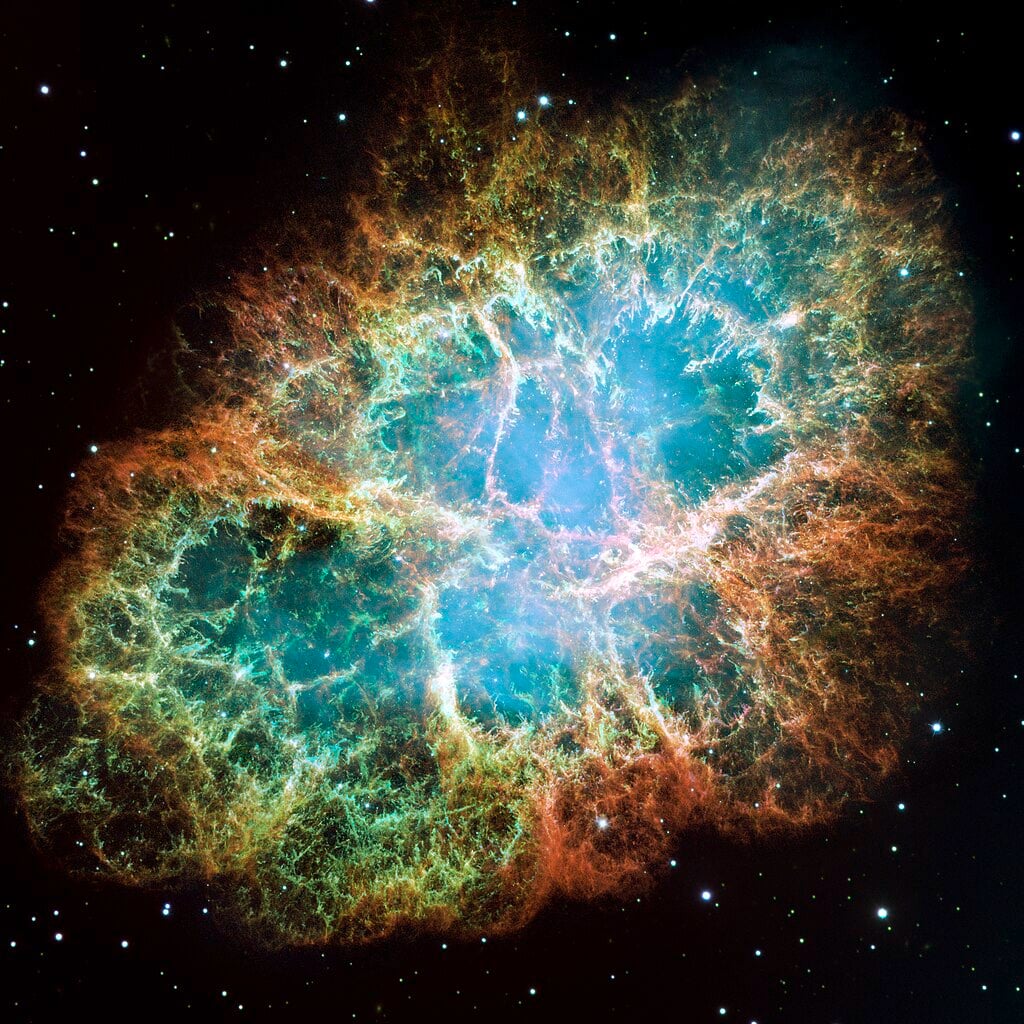
A supernova observed by Chinese and Japanese astronomers in 1181 CE didn’t fully explode, instead it sputtered and left behind a rare “zombie star” surrounded by long filaments resembling fireworks. New research by Syracuse University physicist Eric Coughlin explains how these unusual structures formed. After the failed detonation, the surviving white dwarf launched a fast, dense wind that slammed into surrounding gas. The collision created finger-like plumes through a fluid instability, but a second instability that normally tears such structures apart never activated. In some sense, the stars didn’t quite die!
Continue reading
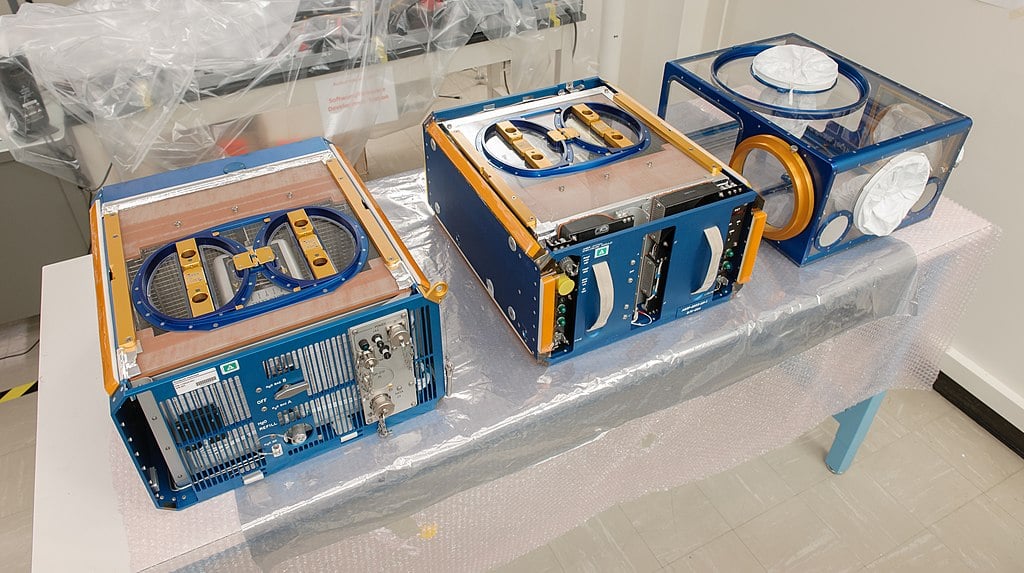
A female mouse that spent two weeks aboard China’s space station has successfully given birth to healthy pups after returning to Earth. This marks the first time offspring have been born from mammals that have traveled in space. The birth demonstrates that short term spaceflight doesn’t impair reproductive capability and provides crucial data for understanding how space environments affect mammalian development, a critical question for future long-l duration human missions beyond Earth.
Continue reading
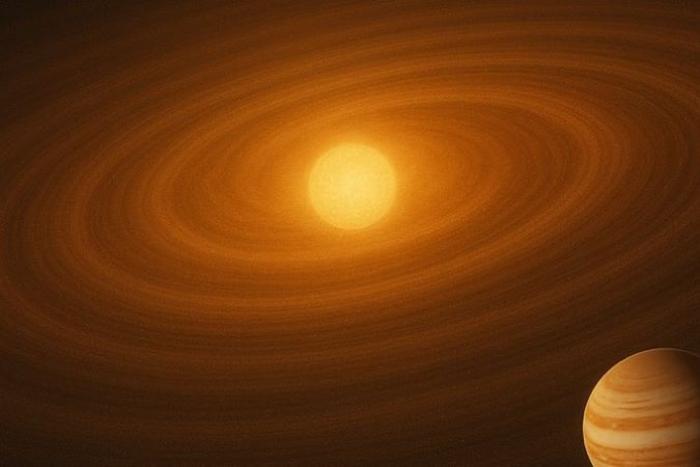
How did hot Jupiters end up orbiting so close to their stars, thus earning their moniker? This is what a recent study published in The Astronomical Journal hopes to address as a team of researchers from The University of Tokyo investigated the orbital evolution of hot Jupiters ended, specifically regarding where their orbits started before orbiting so close to their stars. This study has the potential to help scientists better understand the formation and evolution of exoplanets and what this could mean for finding life beyond Earth.
Continue reading
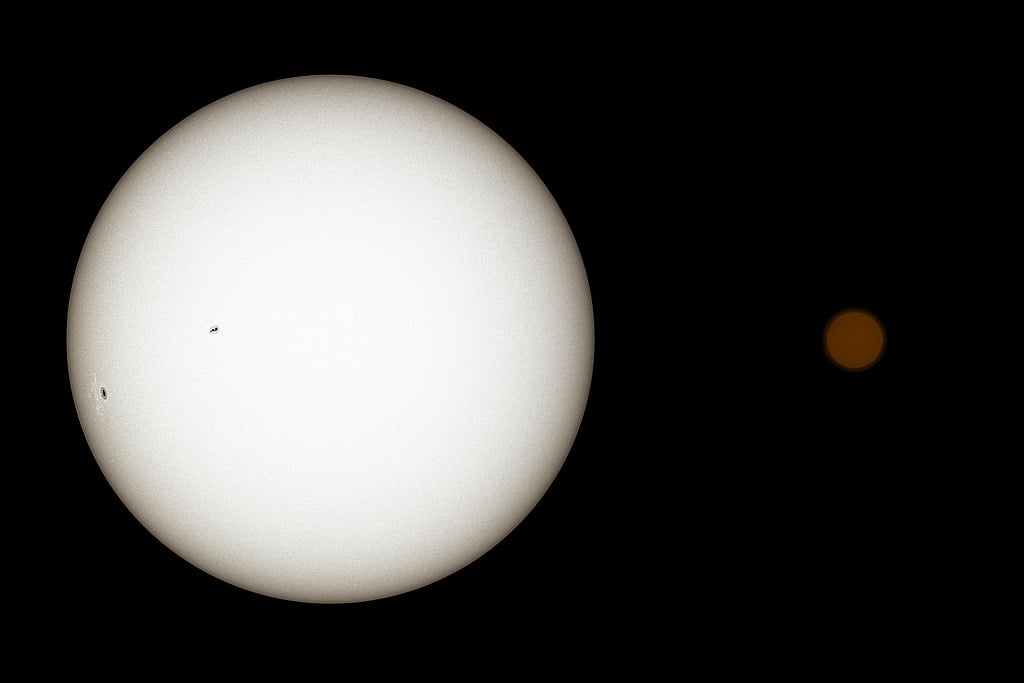
Scientists have discovered that moons could theoretically orbit all seven planets in the TRAPPIST-1 system despite the complex gravitational environment. Using computer simulations, a team of researchers have mapped stable zones where satellites could survive around each planet. They found that moons can remain stable up to about 40-45% of each planet’s sphere of gravitational influence. The neighbouring planets squeeze these stable zones slightly inward compared to isolated planets, but the effect is modest. Long term calculations suggest only tiny moons, roughly one ten millionth the mass of Earth, could survive the immense tidal forces.
Continue reading
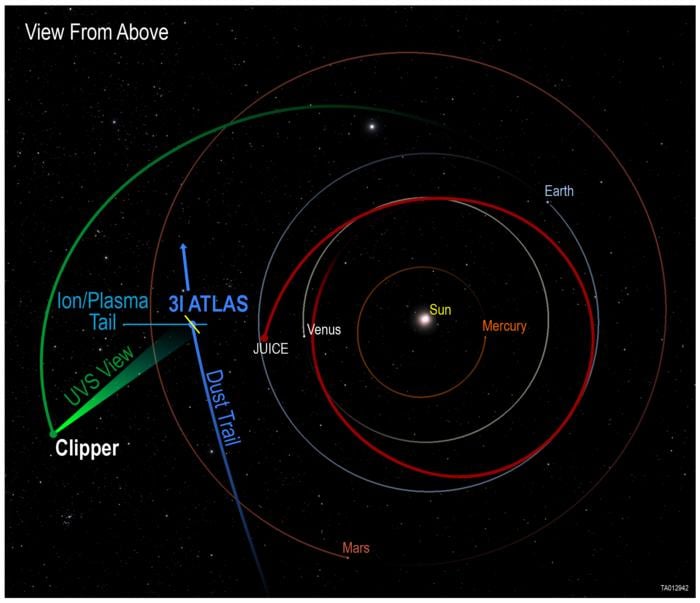
Researchers have been trying to look at interstellar object 3I/ATLAS from every conceivable angle. That includes very unconventional ones. Recently, while 3I/ATLAS passed out of view of the Earth, it moved into a great vantage point for one of our interplanetary probes. Europa Clipper, whose main mission is to explore Jupiter’s active moon, turned its gaze during its six year journey back towards the center of the solar system and observed 3I/ATLAS as it was reaching its perihelion, and out of sight from the Earth.
Continue reading
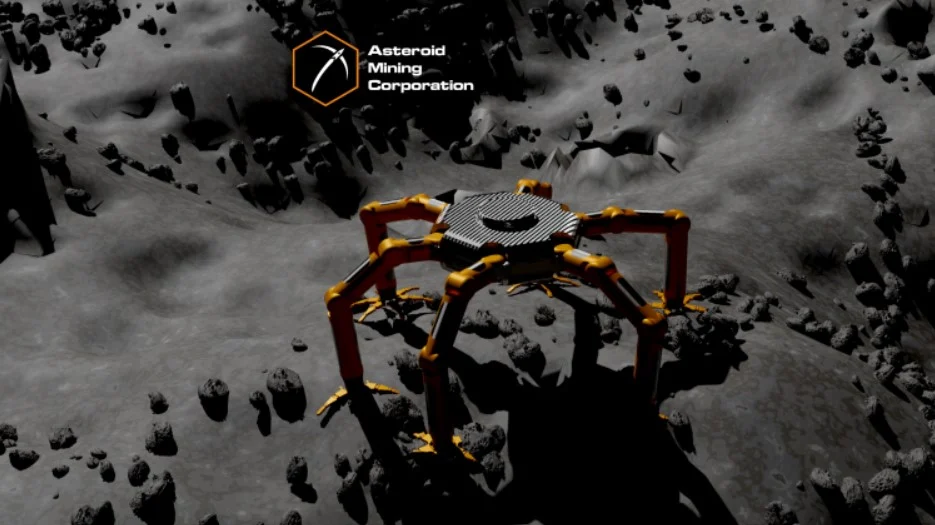
A team led by the Institute of Space Sciences (ICE-CSIC) analyzed samples of C-type asteroids in a recent study. Their findings support the idea that these asteroids can serve as a crucial source of materials if and when asteroid mining is realized.
Continue reading
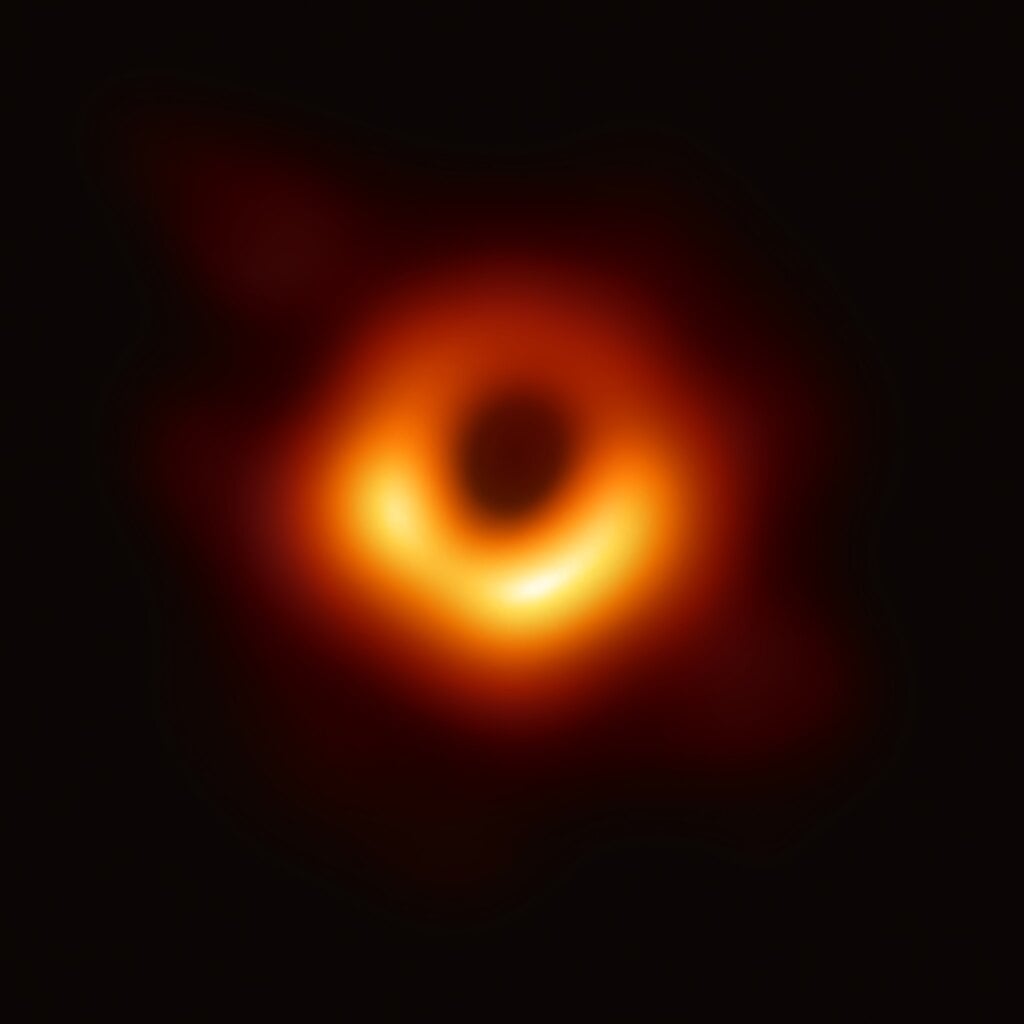
Supermassive black holes have a reputation for devouring everything in sight, but new observations from the Atacama Large Millimetre/submillimetre Array reveal they can be surprisingly picky eaters. Even when galaxy mergers deliver enormous amounts of cold molecular gas directly to a black hole’s doorstep, many choose to nibble rather than gorge raising questions about what triggers feeding episodes. The discovery suggests black hole growth during galaxy collisions may be far more inefficient and episodic than we previously thought.
Continue reading
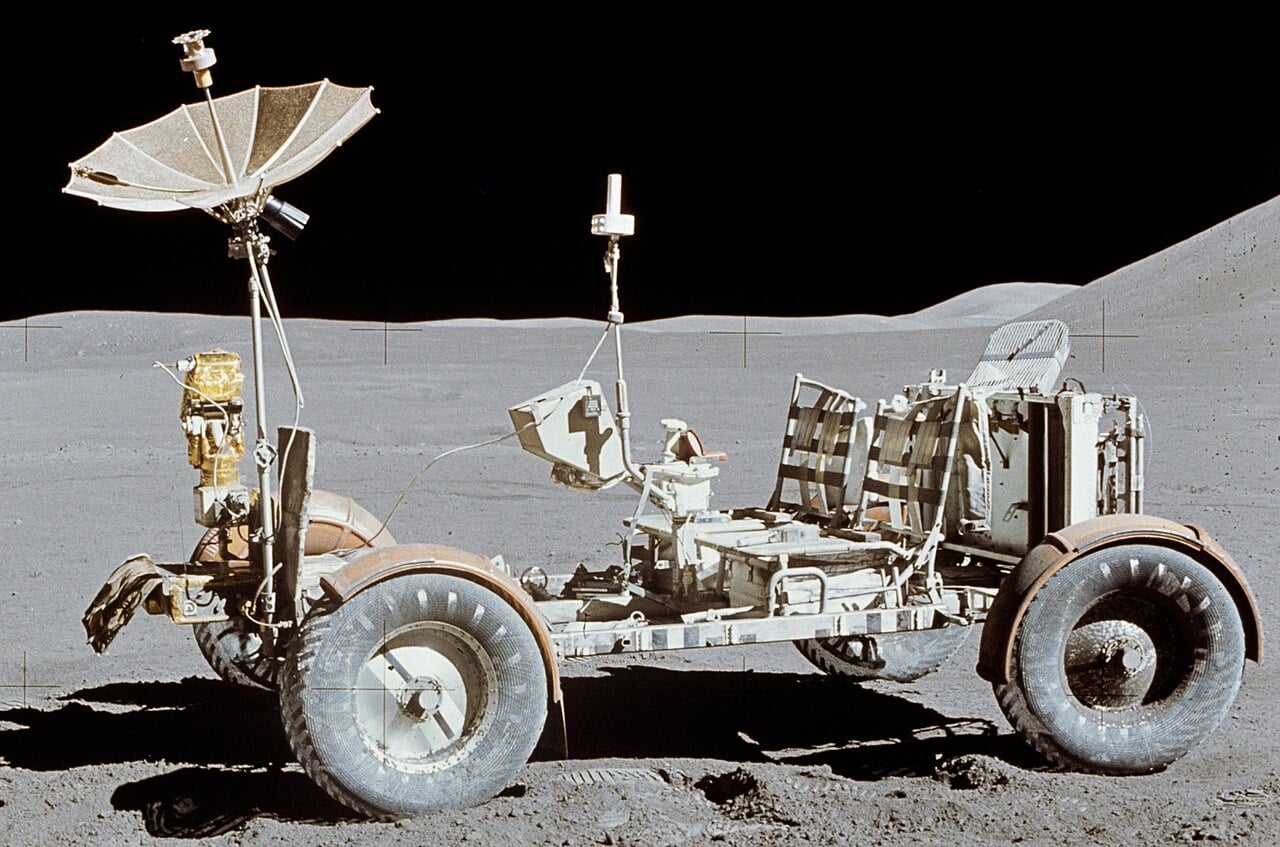
A joint research team from South Korea has developed a fascinating wheel inspired by origami and Da Vinci bridge principles that could unlock access to the Moon’s most dangerous and scientifically useful terrain. The wheel expands from 230 mm to 500 mm in diameter on demand, allowing small rovers to navigate steep lunar pits and lava tube entrances that would trap conventional vehicles.
Continue reading
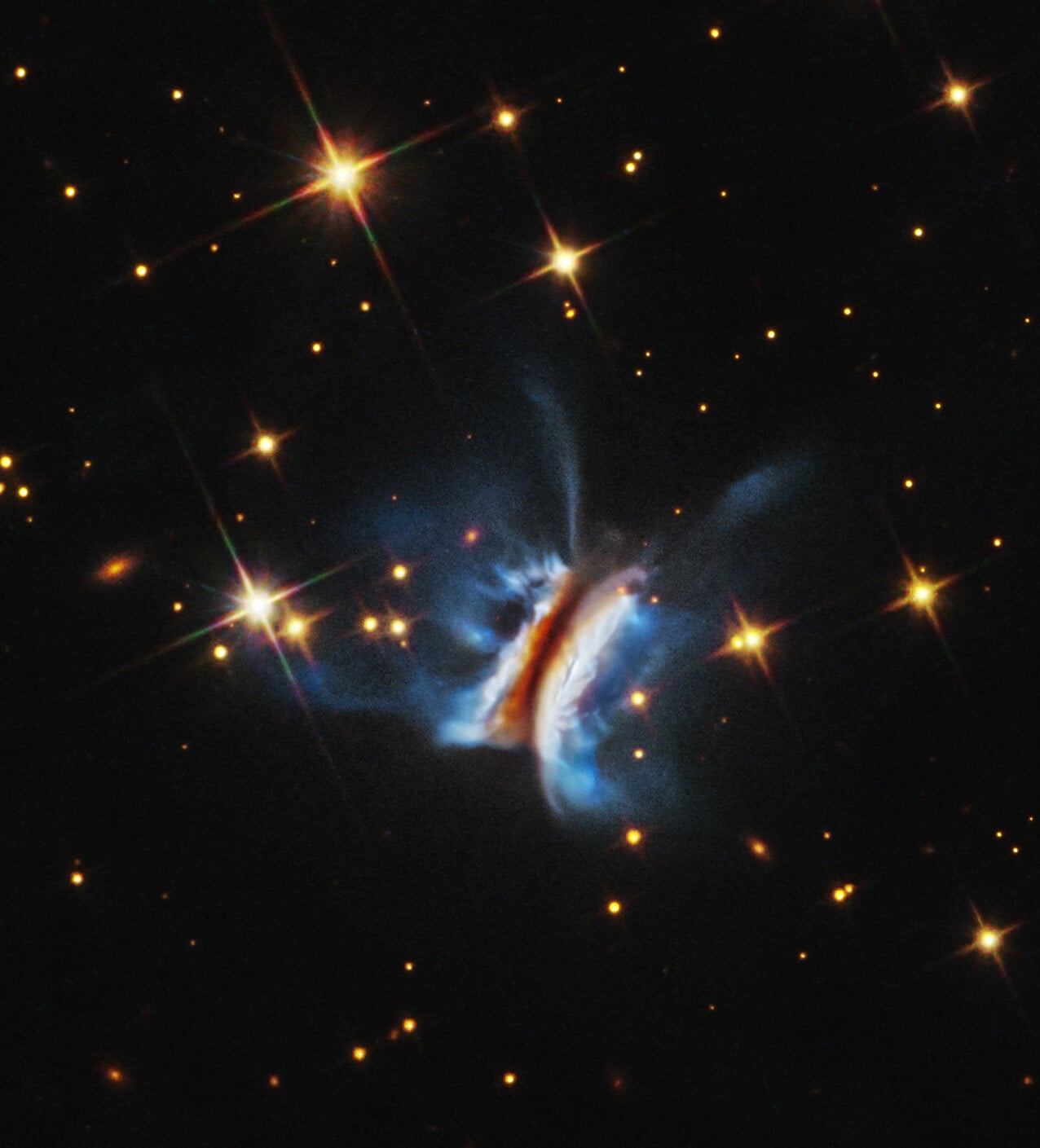
Astronomers using the Hubble Space Telescope have discovered the largest planet forming disk ever observed around a young star, stretching nearly 40 times the diameter of our Solar System. Nicknamed “Dracula’s Chivito” for its hamburger like appearance when viewed edge on, this massive disk reveals an unexpectedly chaotic and asymmetric structure with wisps of material extending far above and below its central plane. The discovery offers an unprecedented window into how planets might form in extreme environments, challenging previous assumptions about the orderly nature of planetary nurseries.
Continue reading
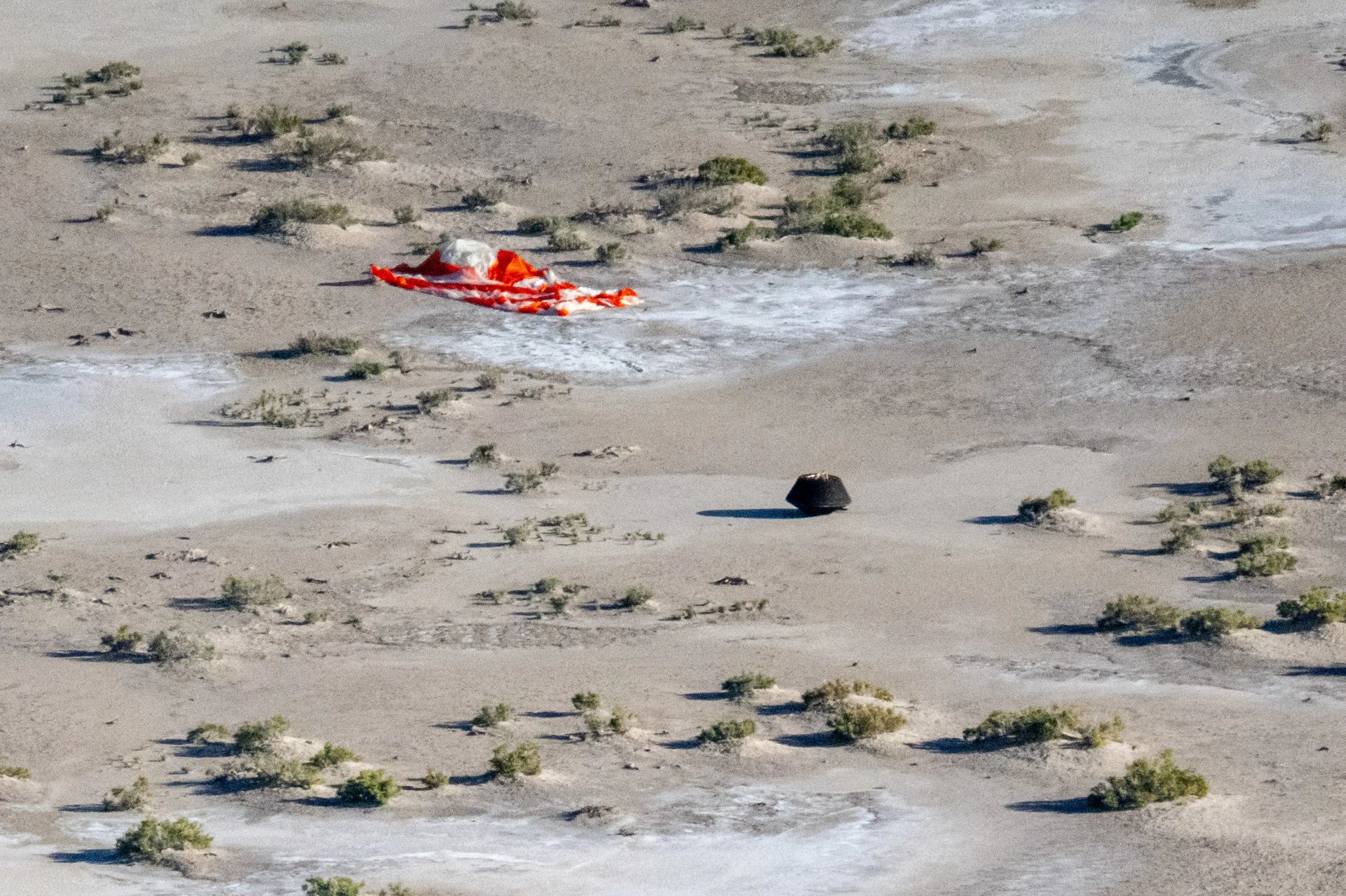
At the end of their lives, most satellites fall to their death. Many of the smaller ones, including most of those going up as part of the “mega-constellations” currently under construction, are intended to burn up in the atmosphere. This Design for Demise (D4D) principle has unintended consequences, according to a paper by Antoinette Ott and Christophe Bonnal, both of whom work for MaiaSpace, a company designing reusable launch vehicles for the small satellite market.
Continue reading
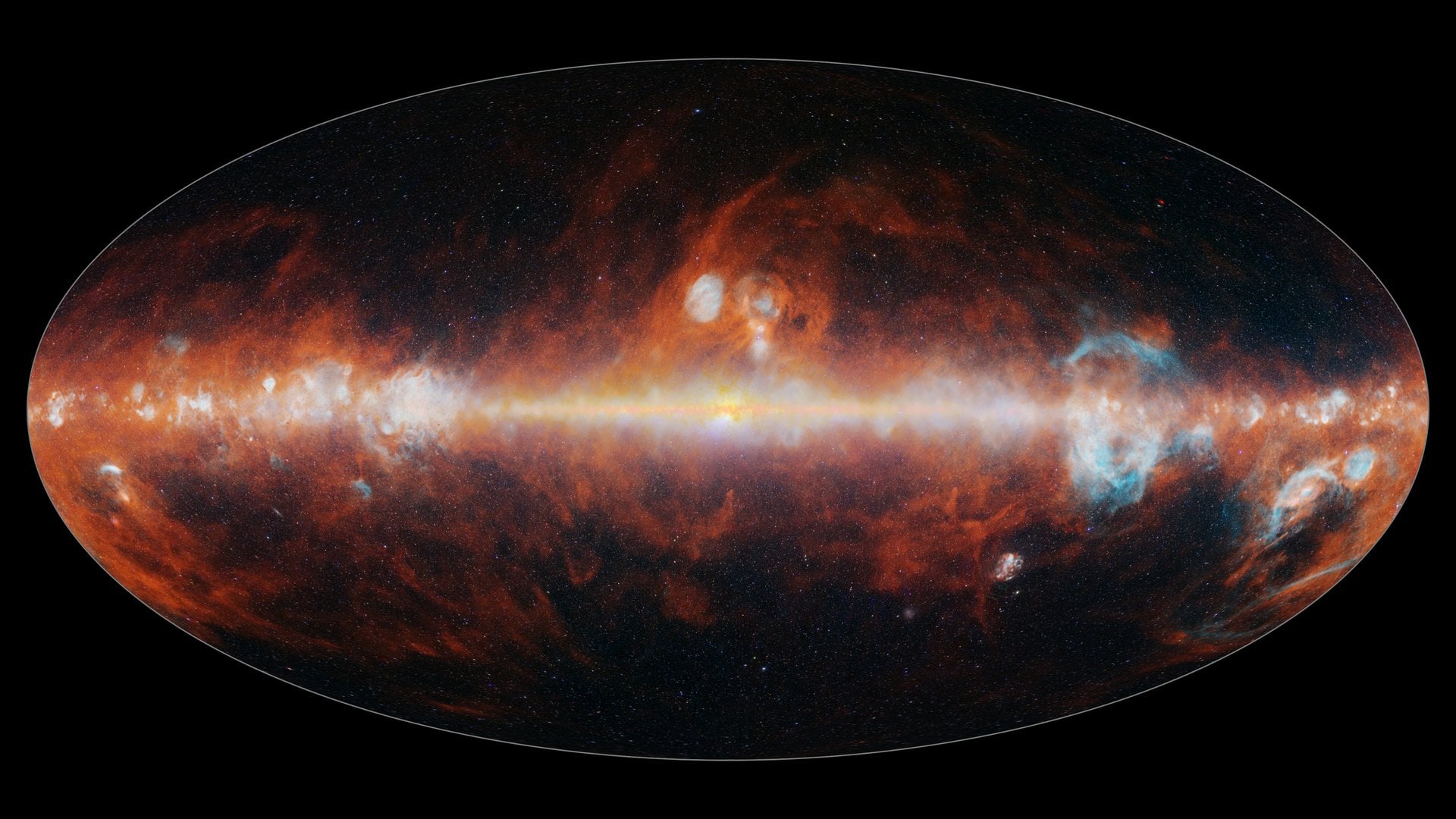
Launched in March, NASA’s SPHEREx space telescope has completed its first infrared map of the entire sky in 102 colors. This map will enable 3D distance measurements to other galaxies and allow astronomers to measure the influence of Cosmic Inflation on the large-scale structure of the Universe.
Continue reading
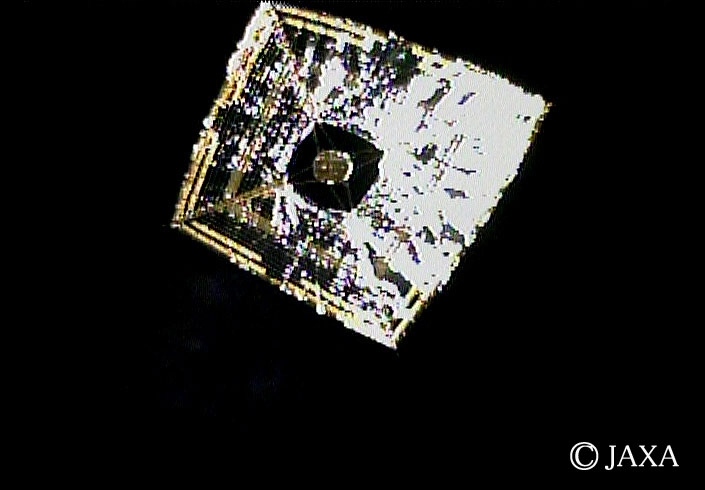
Solar sails have some major advantages over traditional propulsion methods - most notably they don’t use any propellant. But, how exactly do they turn? In traditional sailing, a ship’s captain can simply adjust the angle of the sail itself to catch the wind at a different angle. But they also have the added advantage of a rudder, which doesn’t work when sailing on light. This has been a long-standing challenge, but a new paper available in pre-print from arXiv, by Gulzhan Aldan and Igor Bargatin at the University of Pennsylvania describes a new technique to turn solar sails - kirigami.
Continue reading
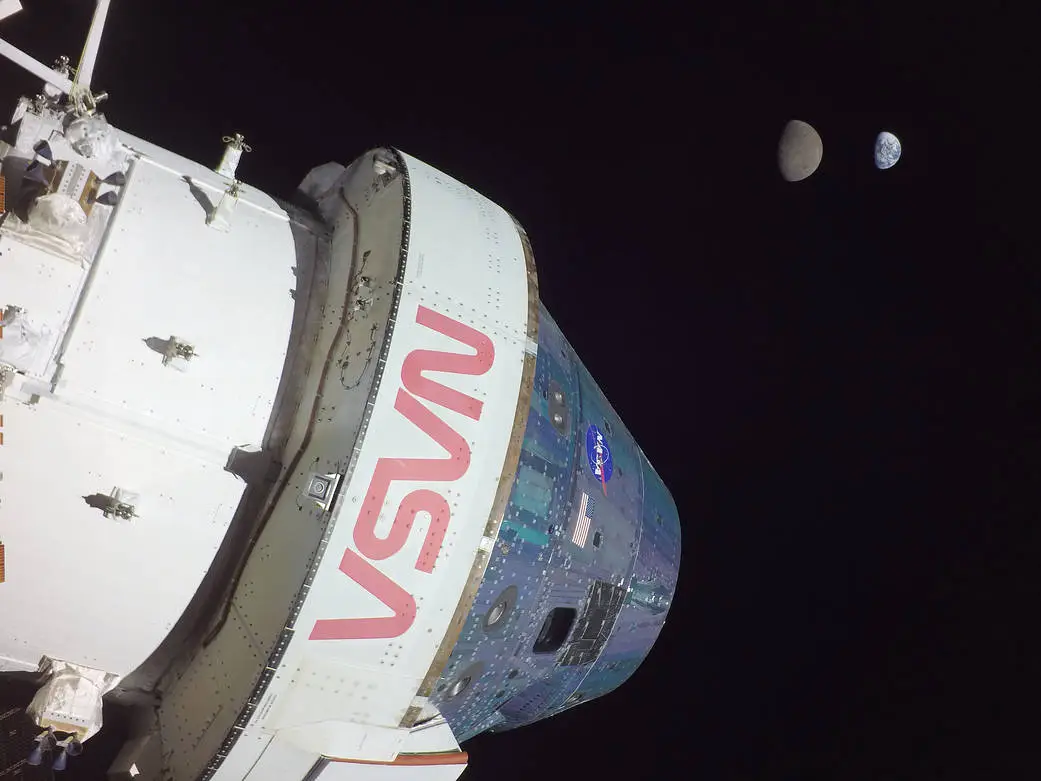
Even most rocket scientists would rather avoid hard math when they don’t have to do it. So when it comes to figuring out orbits in complex three-body systems, like those in Cis-lunar space, which is between the Earth and the Moon, they’d rather someone else do the work for them. Luckily, some scientists at Lawrence Livermore National Laboratory seems to have a masochistic streak - or enough of an altruistic one that it overwhelmed the unpleasantness of doing the hard math - to come up with an open-source dataset and software package that maps out 1,000,000 cis-lunar orbits.
Continue reading
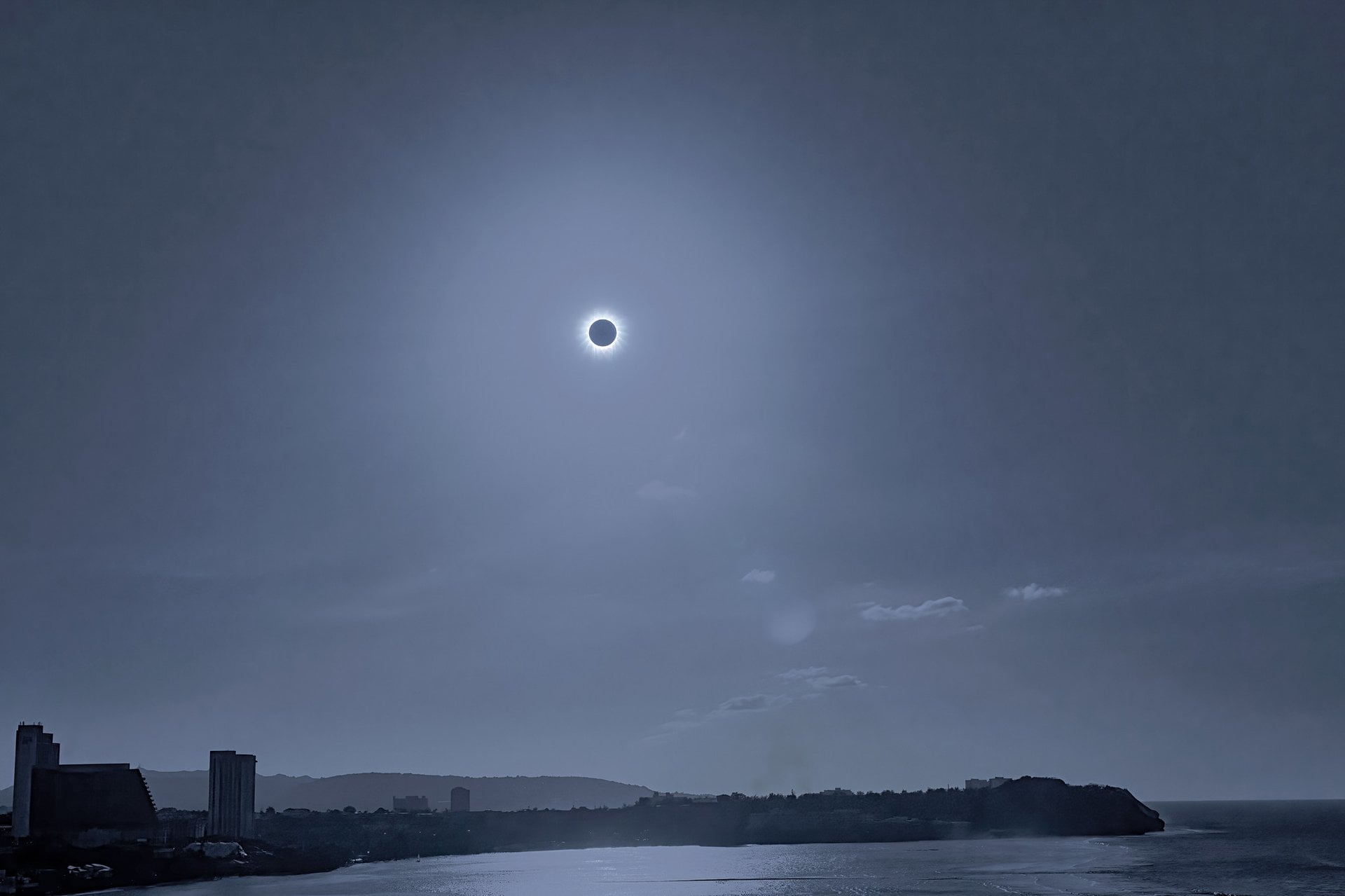
Ready for another amazing year of skywatching? 2025 was a wild year, with a steady parade of comets knocking on naked eye visibility, and one extra special interstellar comet, 3I/ATLAS.
The sky just keeps on turning into 2026. Watch for mutual eclipse season for the major moons of Jupiter, as the moons pass one if front of the other. The ongoing solar cycle is also still expected to be active into 2026, producing sunspots space weather and more. And (finally!) we’ll see the return of total solar eclipses on August 12th, as umbral shadow of the Moon crosses Greenland, Iceland and northern Spain.
Continue reading
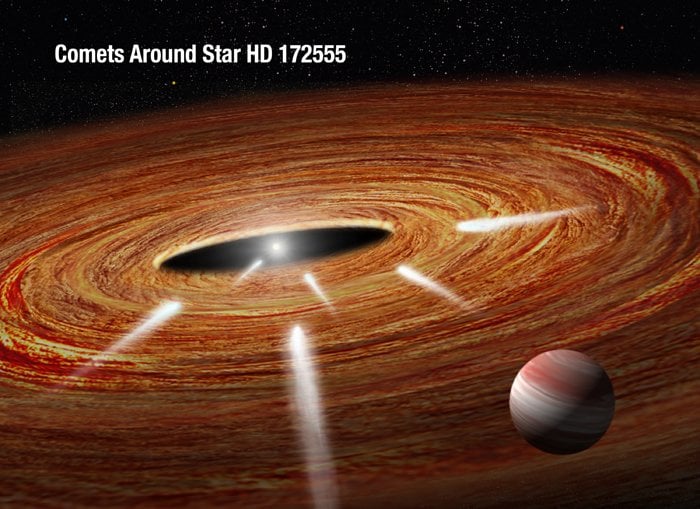
The James Webb Space Telescope (JWST) was involved in yet another first discovery recently available in pre-print form on arXiv from Cicero Lu at the Gemini Observatory and his co-authors. This time, humanity’s most advanced space telescope found UV-fluorescent carbon monoxide in a protoplanetary debris disc for the first time ever. It also discovered some features of that disc that have considerable implications for planetary formation theory.
Continue reading
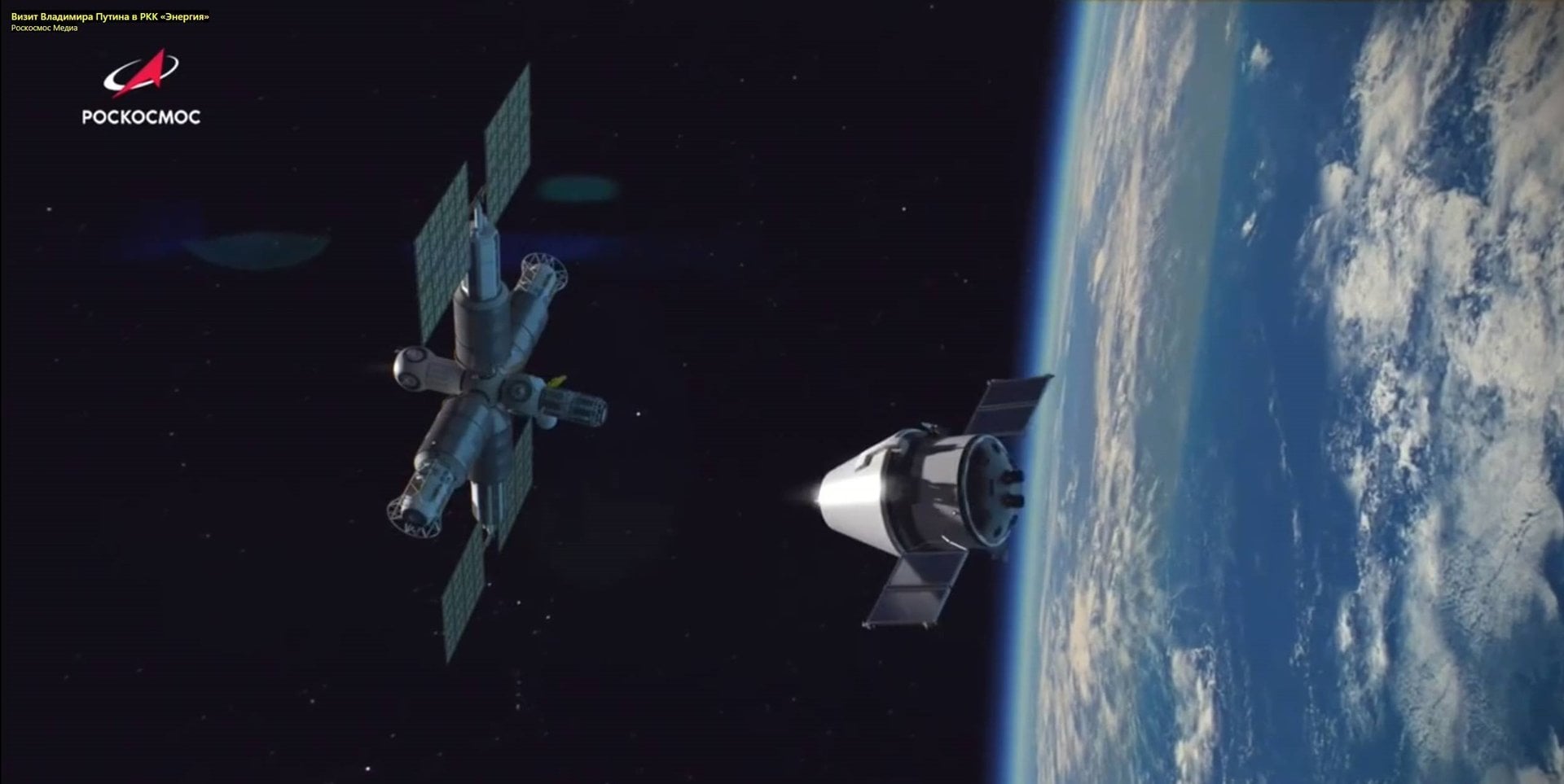
Oleg Orlov, Director of the Institute of Biomedical Problems at the Russian Academy of Sciences (RAS), announced that the Russian Orbital Station (ROS) will include the modules that make up the Russian Orbital Segment of ISS.
Continue reading
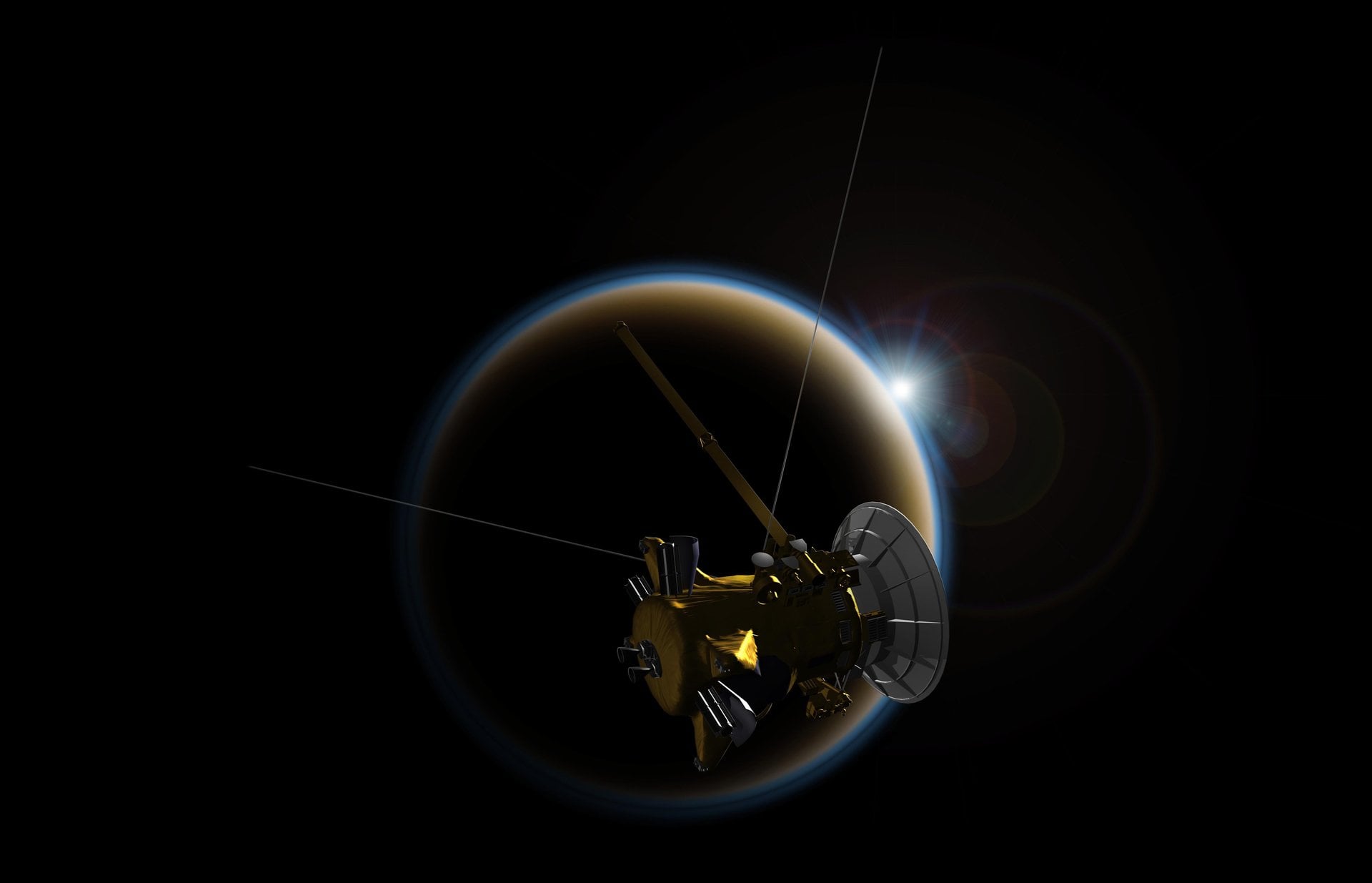
Saturn’s largest moon, Titan, may not have a subsurface ocean after all.
That’s according to a re-examination of data captured by NASA’s Cassini mission, which flew by Titan dozens of times starting in 2004. By 2008, all the evidence suggested a subsurface ocean of liquid water waited beneath Titan’s geologically complex crust. But the latest analysis says the interior is more likely to be made of ice and slush, albeit with pockets of warm water that cycle from core to surface.
Continue reading
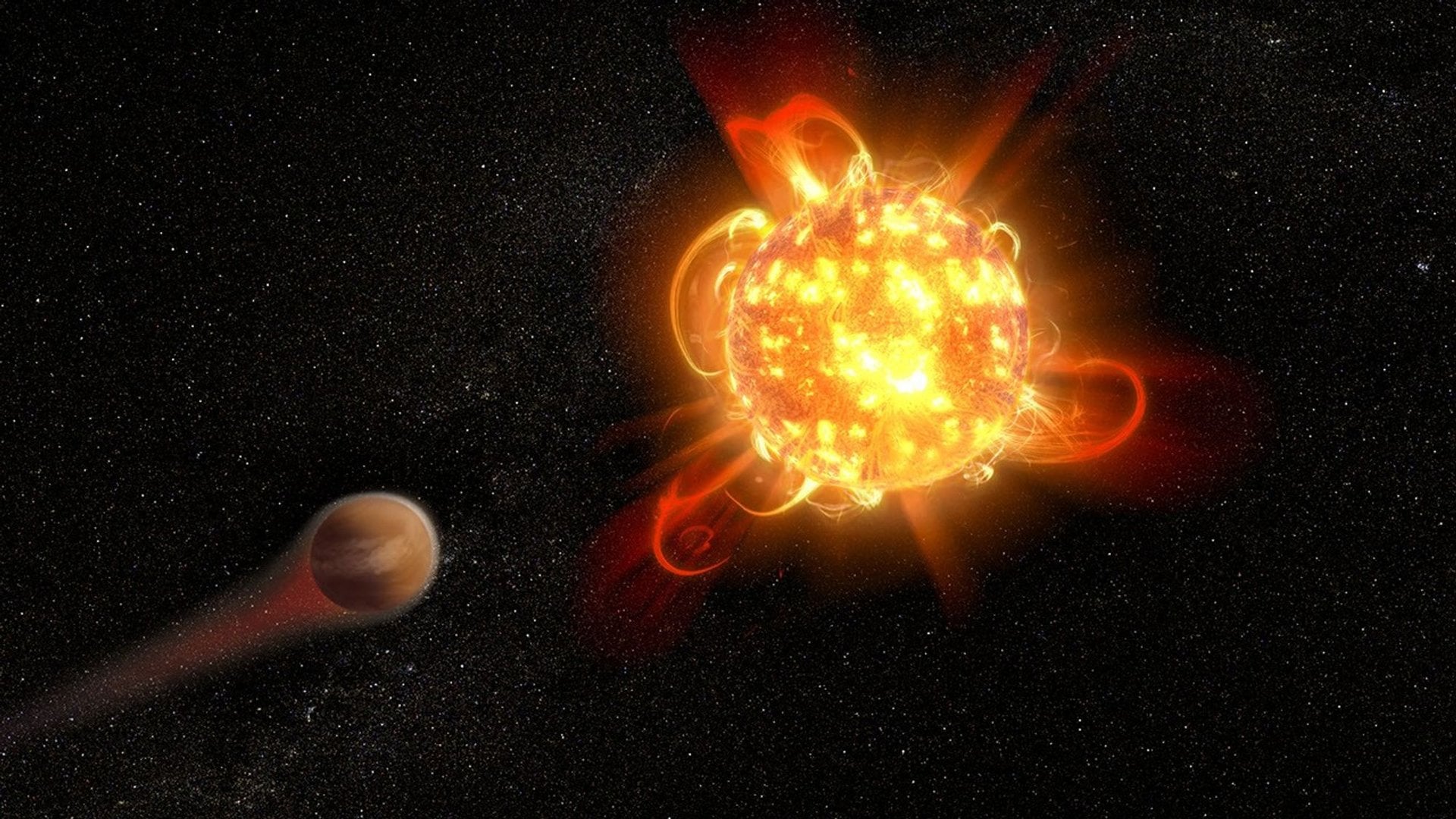
One of the primary goals of the James Webb Space Telescope (JWST) is to detect atmospheres around exoplanets, to try to suss out whether or not they could potentially support life. But, in order to do that, scientists have to know where to look, and the exoplanet has to actually have an atmosphere. While scientists know the location of about 6000 exoplanets currently, they also believe that many of them don’t have atmospheres and that, of the ones that do, many aren’t really Earth-sized. And of those, many are around stars that are too bright for our current crop of telescopes to see their atmosphere. All those restrictions mean, ultimately, even with 6000 potential candidates, the number of Earth-sized ones that we could find an atmosphere for is relatively small. So a new paper available on arXiv from Jonathan Barrientos of Cal Tech and his co-authors that describes five new exoplanets around M-dwarf stars - two of which may have an atmosphere - is big news for astrobiologists and exoplanet hunters alike.
Continue reading
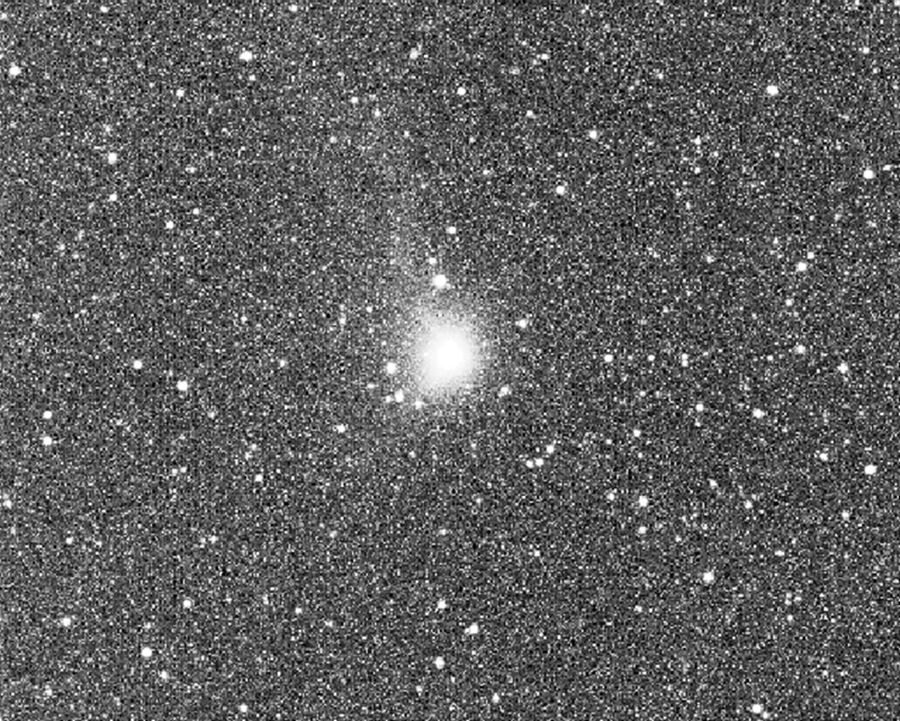
During November 2025, ESA’s Jupiter Icy Moons Explorer (JUICE) used five of its science instruments to observe 3I/ATLAS. The instruments collected information about how the comet is behaving and what it is made of.
Continue reading
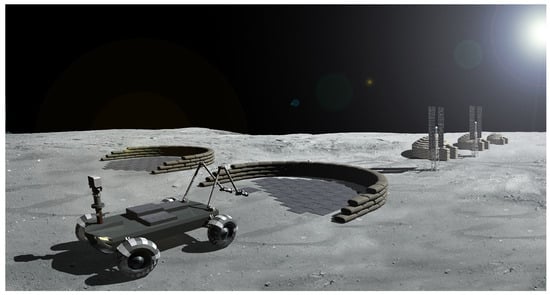
Engineers need good data to build lasting things. Even the designers of the Great Pyramids knew the limestone they used to build these massive structures would be steady when stacked on top of one another, even if they didn’t have tables of the compressive strength of those stones. But when attempting to build structures on other worlds, such as the Moon, engineers don’t yet know much about the local materials. Still, due to the costs of getting large amounts of materials off of Earth, they will need to learn to use those materials even for critical applications like a landing pad to support the landing / ascent of massive rockets used in re-supply operations. A new paper published in Acta Astronautica from Shirley Dyke and her team at Purdue University describes how to build a lunar landing pad with just a minimal amount of prior knowledge of the material properties of the regolith used to build it.
Continue reading
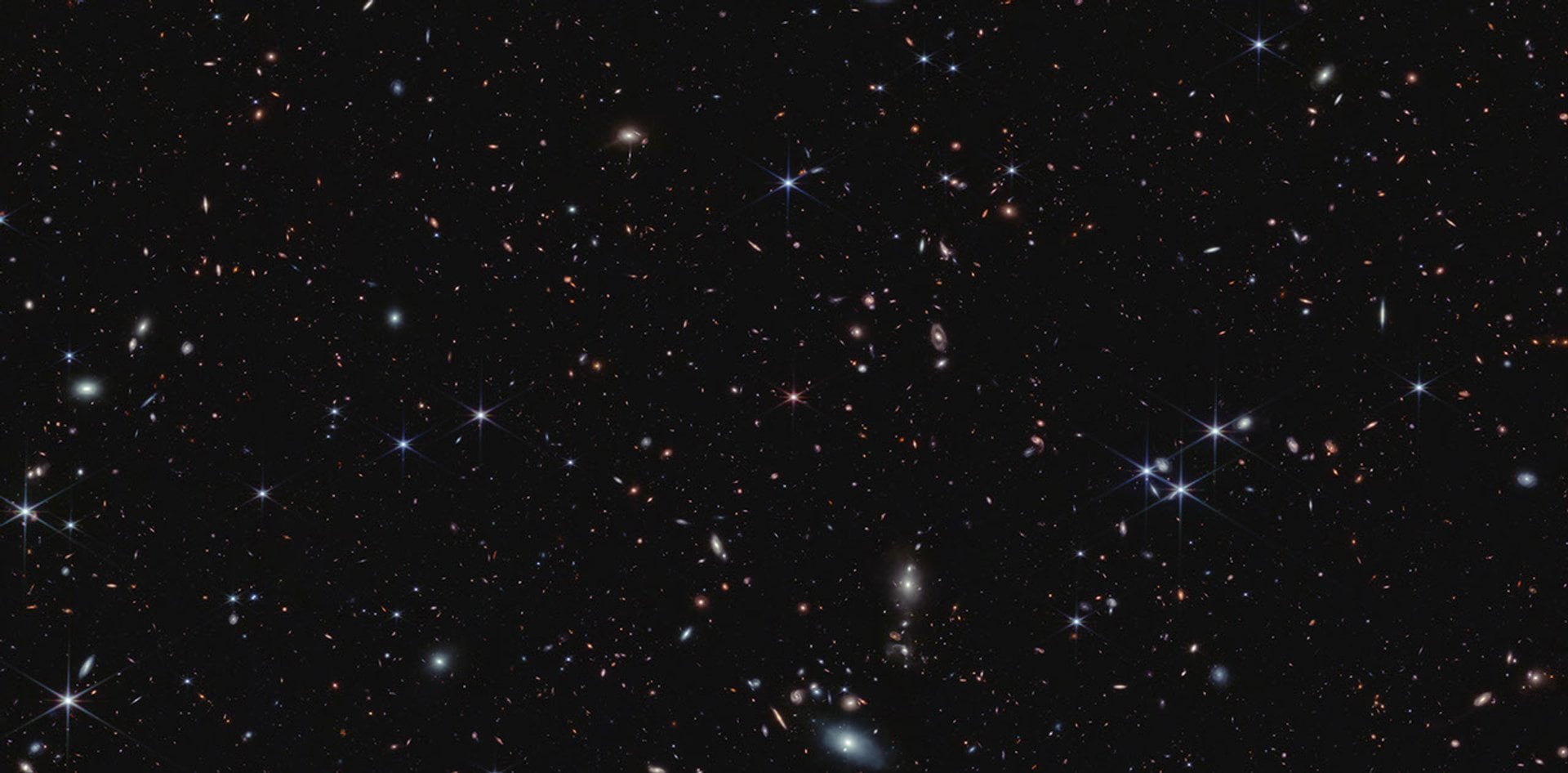
Using the James Webb Space Telescope, a team of international researchers has discovered chemical fingerprints of gigantic primordial stars that were among the first to form after the Big Bang.
Continue reading
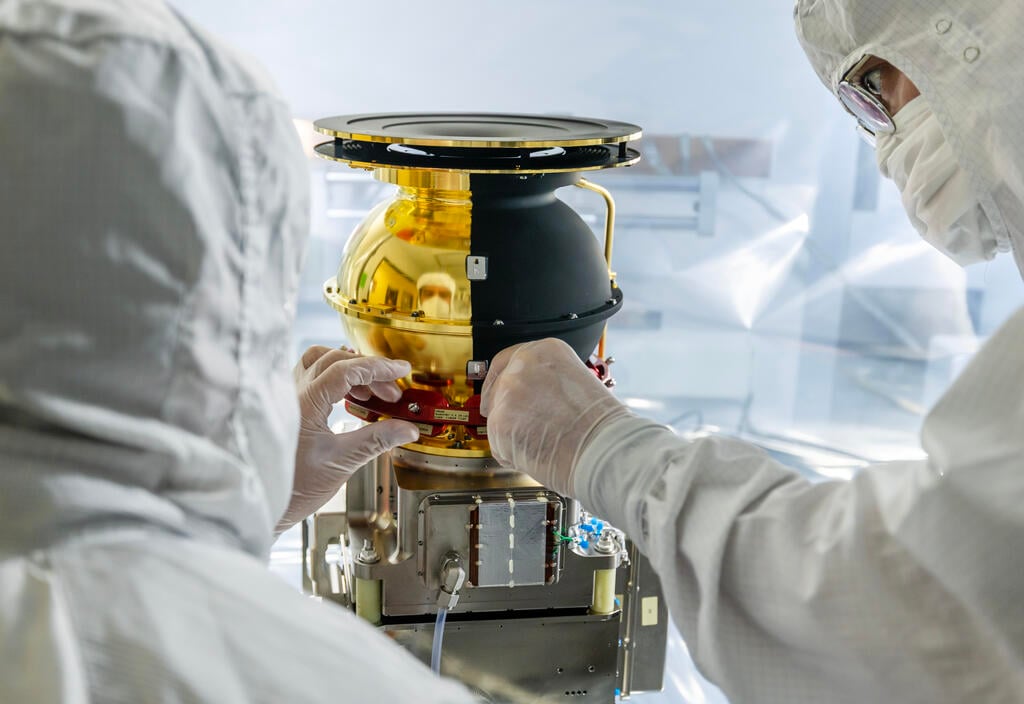
During the deployment of new space telescopes that are several critical steps each has to go through. Launch is probably the one most commonly thought of, another is “first light” of all of the instruments on the telescope. Ultimately, they’re responsible for the data the telescope is intended to collect - if they don’t work properly then the mission itself it a failure. Luckily, the Interstellar Mapping and Acceleration Probe (IMAP) recently collected first light on its 10 primary instruments, and everything seems to be in working order, according to a press release from the Southwest Research Institute who was responsible for ensuring the delivery of all 10 instruments went off without a hitch.
Continue reading
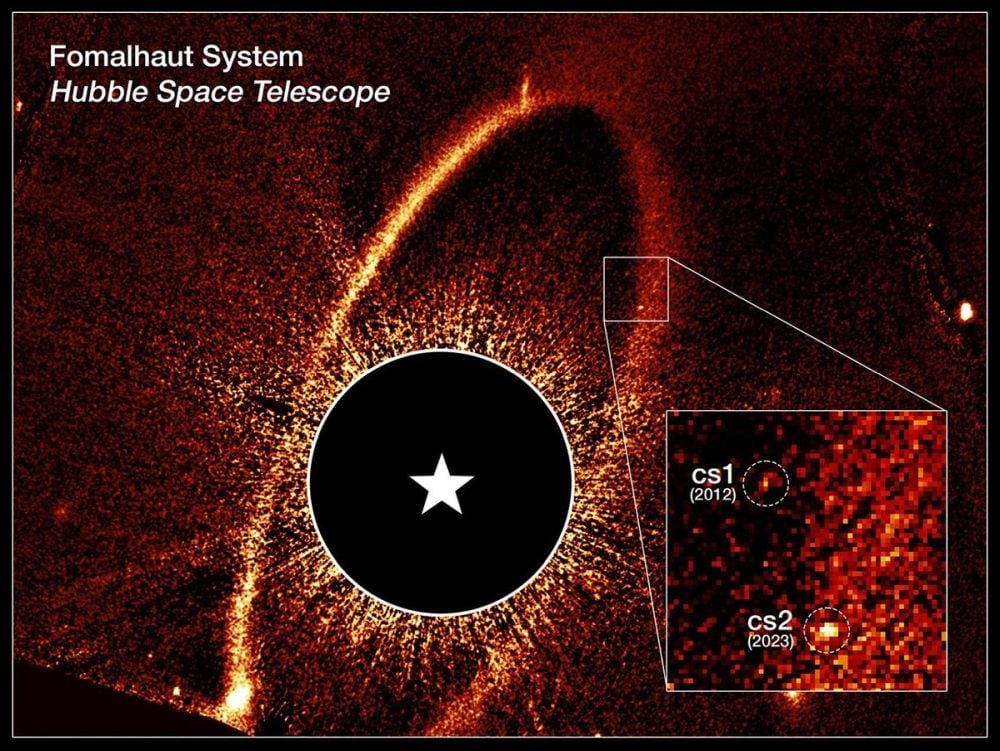
For the first time, astronomers using the Hubble Space Telescope have spotted a pair of catastrophic collisions in another solar system. They were observing Fomalhaut, a bright star about 25 light-years away, and detected a pair of planetesimal collisions and their light-reflecting dust clouds. The system is young, and the collisions reflect what our Solar System was like when it was young.
Continue reading
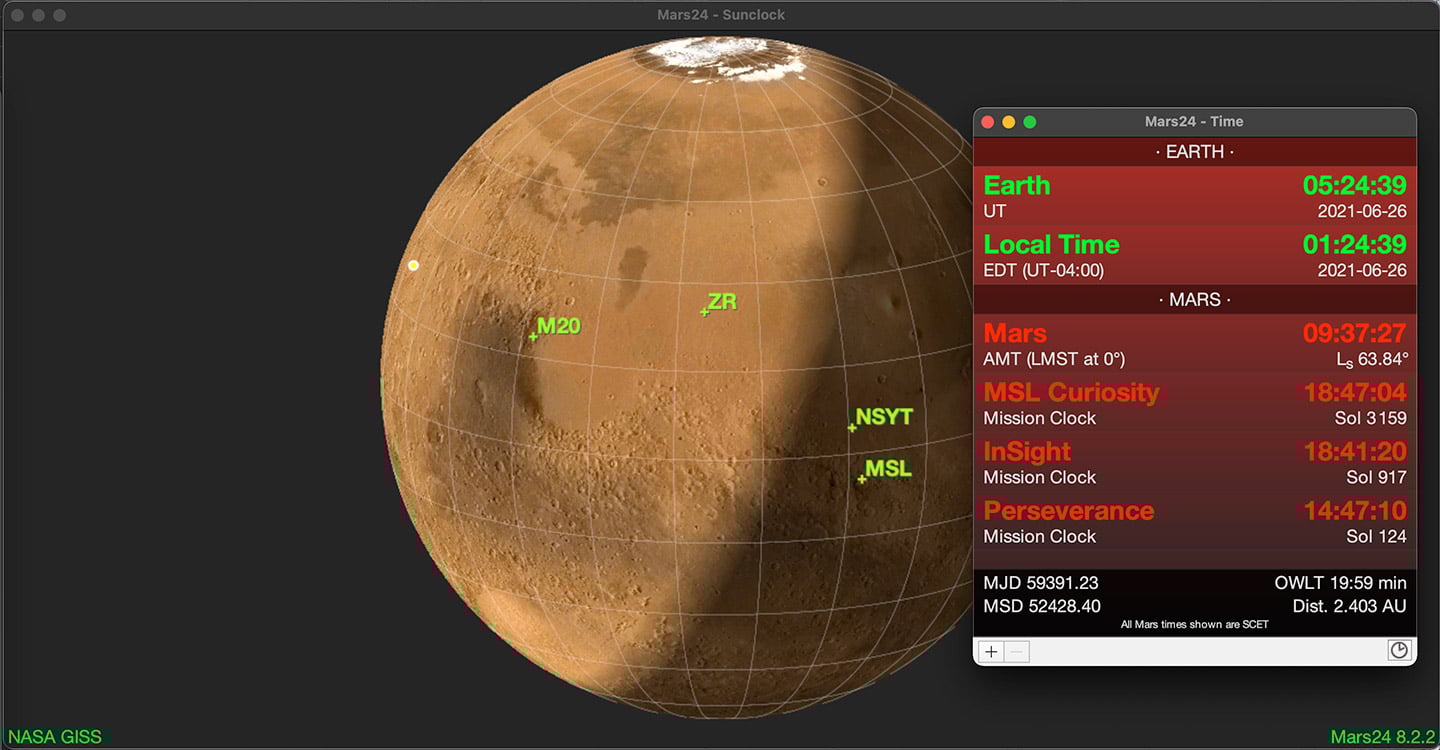
Ask someone on Earth for the time and they can give you an exact answer, thanks to our planet's intricate timekeeping system, built with atomic clocks, GPS satellites and high-speed telecommunications networks. Ask for the time on Mars and the answer gets much more complicated.
Continue reading

Getting close to things is one way for scientists to collect better data about them. But that's been hard to do for the Sun, since getting close to it typically entails getting burnt to a crisp. Just ask Icarus. But if Icarus had survived his close encounter with the Sun, he might have been able to see massive magnetic “tadpoles” tens of thousands of kilometers wide reconnecting back down to the surface of our star. Or maybe not, because he had human eyes, not the exceptionally sensitive Wide-Field imagers the Parker Solar Probe used to look at the Sun while it made its closest ever pass to our closest star. A new paper in The Astrophysical Journal Letters from Angelos Vourlidas of Johns Hopkins University’s Applied Physics Laboratory and his co-authors describes what they say on humanity’s closest brush with the Sun so far.
Continue reading
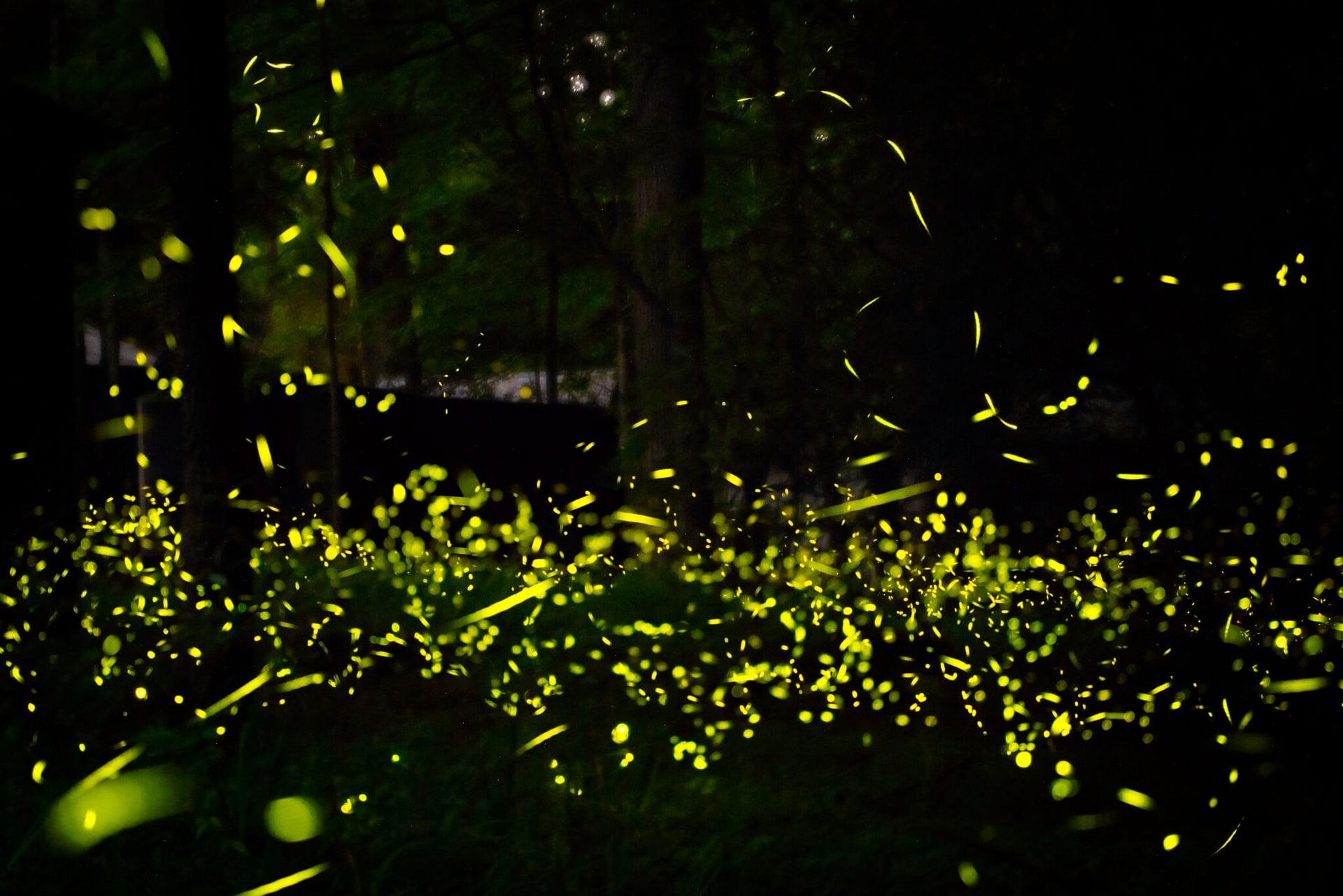
In a new paper, a team of researchers explores how non-human species (in this case, fireflies) could inform new approaches in the Search for Extraterrestrial Intelligence (SETI).
Continue reading
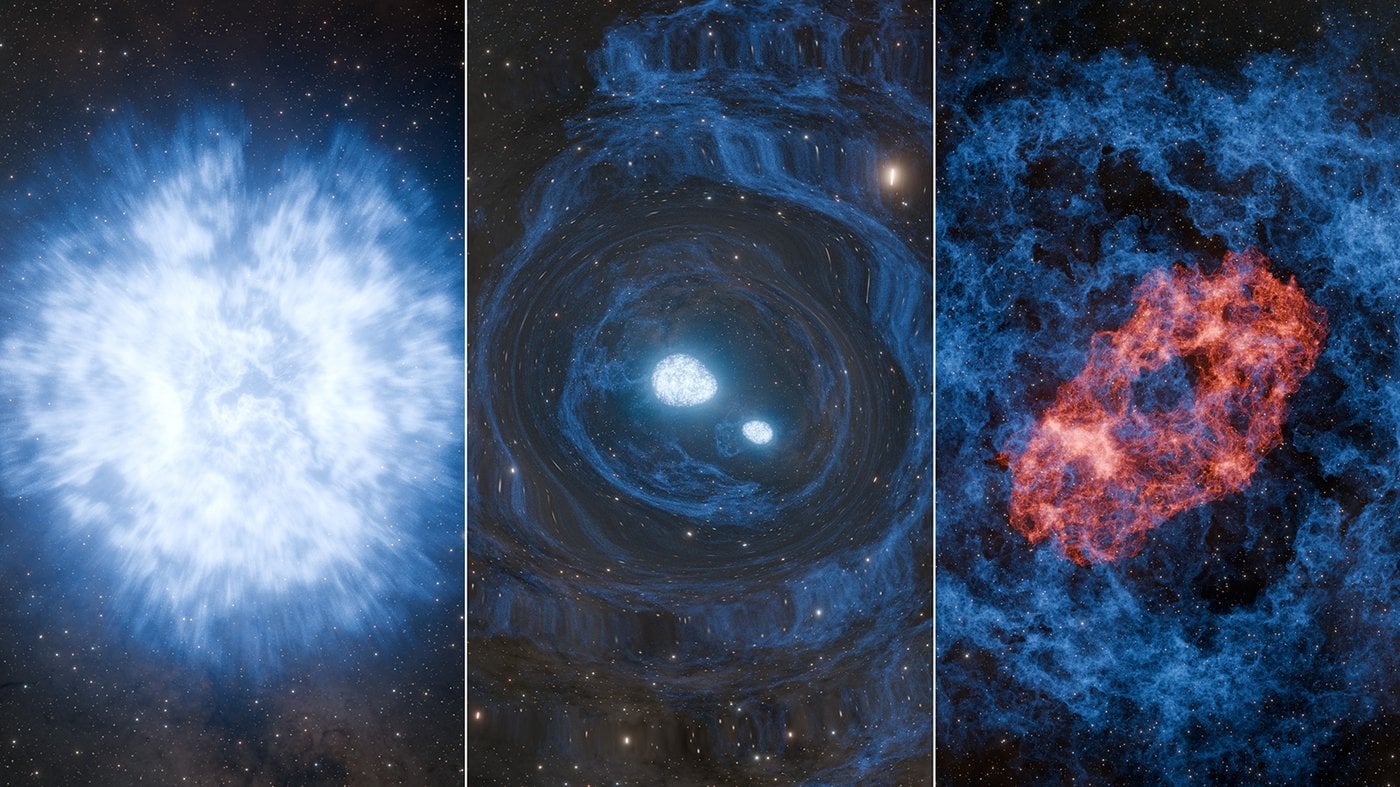
Astronomers may have just seen the first ever ‘superkilonova,’ a combination of a supernova and a kilonova. These are two very different kinds of stellar explosions, and if this discovery stands, it could change the way scientists understand stellar birth and death.
Continue reading
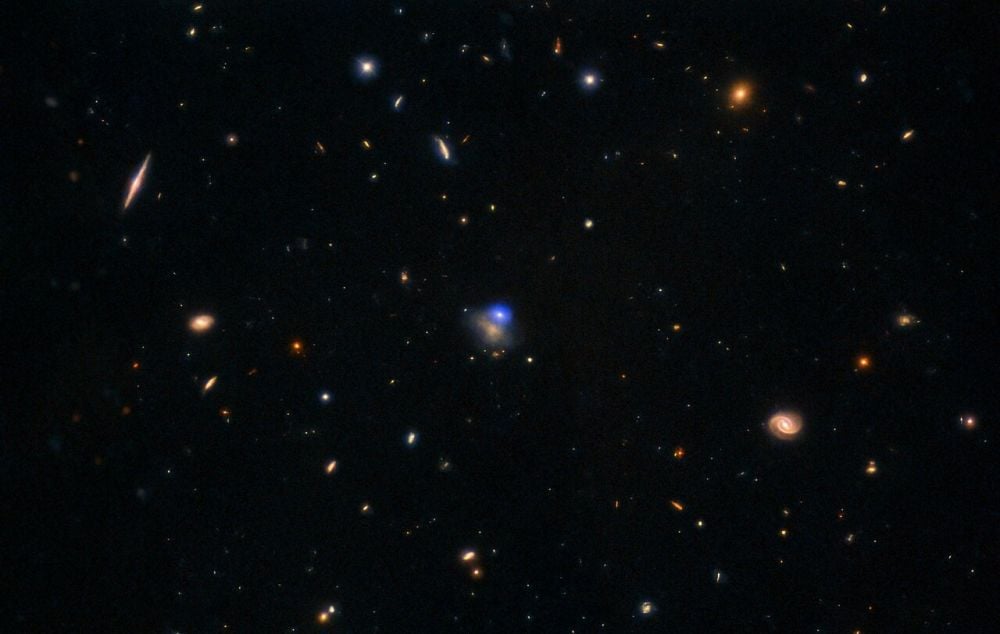
In 2024, astronomers discovered the brightest Luminous Fast Blue Optical Transient (LFBOT) ever observed. LFBOTs are extremely bright flashes of blue light that shine for brief periods before fading away. New analysis of this record-breaking burst, which includes observations from the International Gemini Observatory, funded in part by the U.S. National Science Foundation, challenges all prior understanding of these rare explosive events.
Continue reading
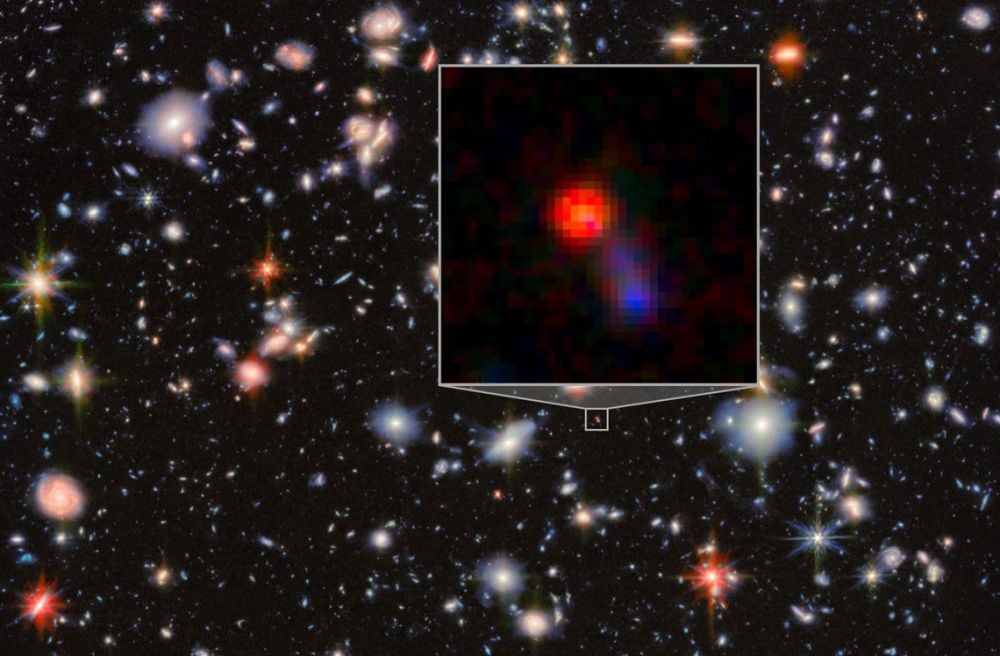
In a glimpse of the early universe, astronomers have observed a galaxy as it appeared just 800 million years after the Big Bang – a cosmic Jekyll and Hyde that looks like any other galaxy when viewed in visible and even ultraviolet light but transforms into a cosmic beast when observed at infrared wavelengths.
This object, dubbed Virgil, is forcing astronomers to reconsider their understanding of how supermassive black holes grew in the infant universe.
Continue reading
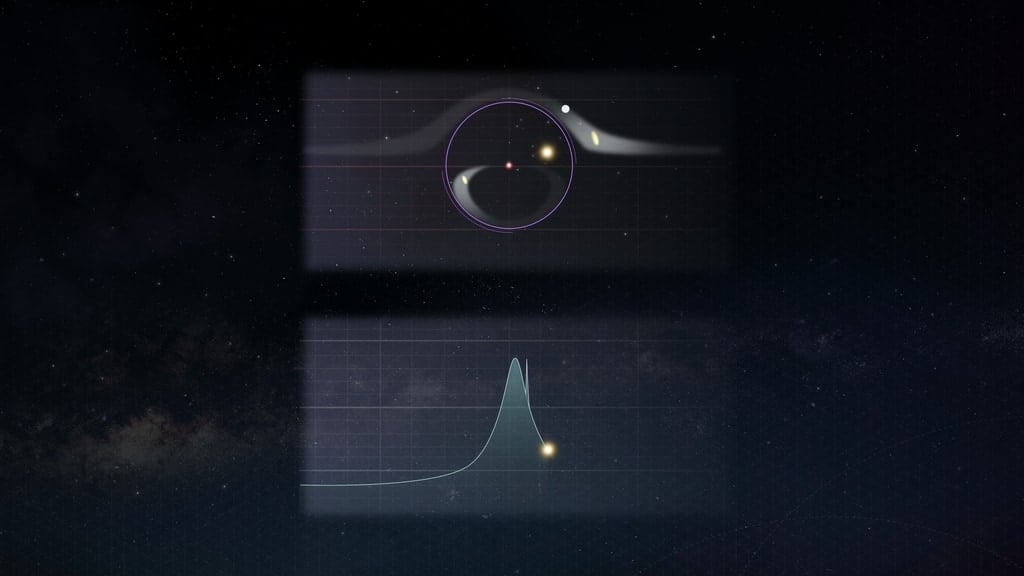
With new technologies comes new discoveries. Or so Spider Man’s Uncle Ben might have said if he was an astronomer. Or a scientist more generally - but in astronomy that saying is more true than many other disciplines, as many discoveries are entirely dependent on the technology - the telescope, imager, or processing algorithm, used to collect data on them. A new piece of technology, the Nancy Grace Roman Space Telescope, is exciting scientists enough that they are even starting to predict what kind of discoveries it might make. One such type of discovery, described in a pre-print paper on arXiv by Vito Saggese of the Italian National Institute for Astrophysics and his co-authors on the Roman Galactic Exoplanet Survey Project Infrastructure Team, is the discovery of many more multiplantery exoplanet systems an astronomical phenomena Roman is well placed to detect - microlensing.
Continue reading

Gemini North captured new images of Comet 3I/ATLAS after it reemerged from behind the Sun on its path out of the Solar System. The data were collected during a Shadow the Scientists session — a unique outreach initiative that invites students around the world to join researchers as they observe the Universe on the world’s most advanced telescopes.
Continue reading
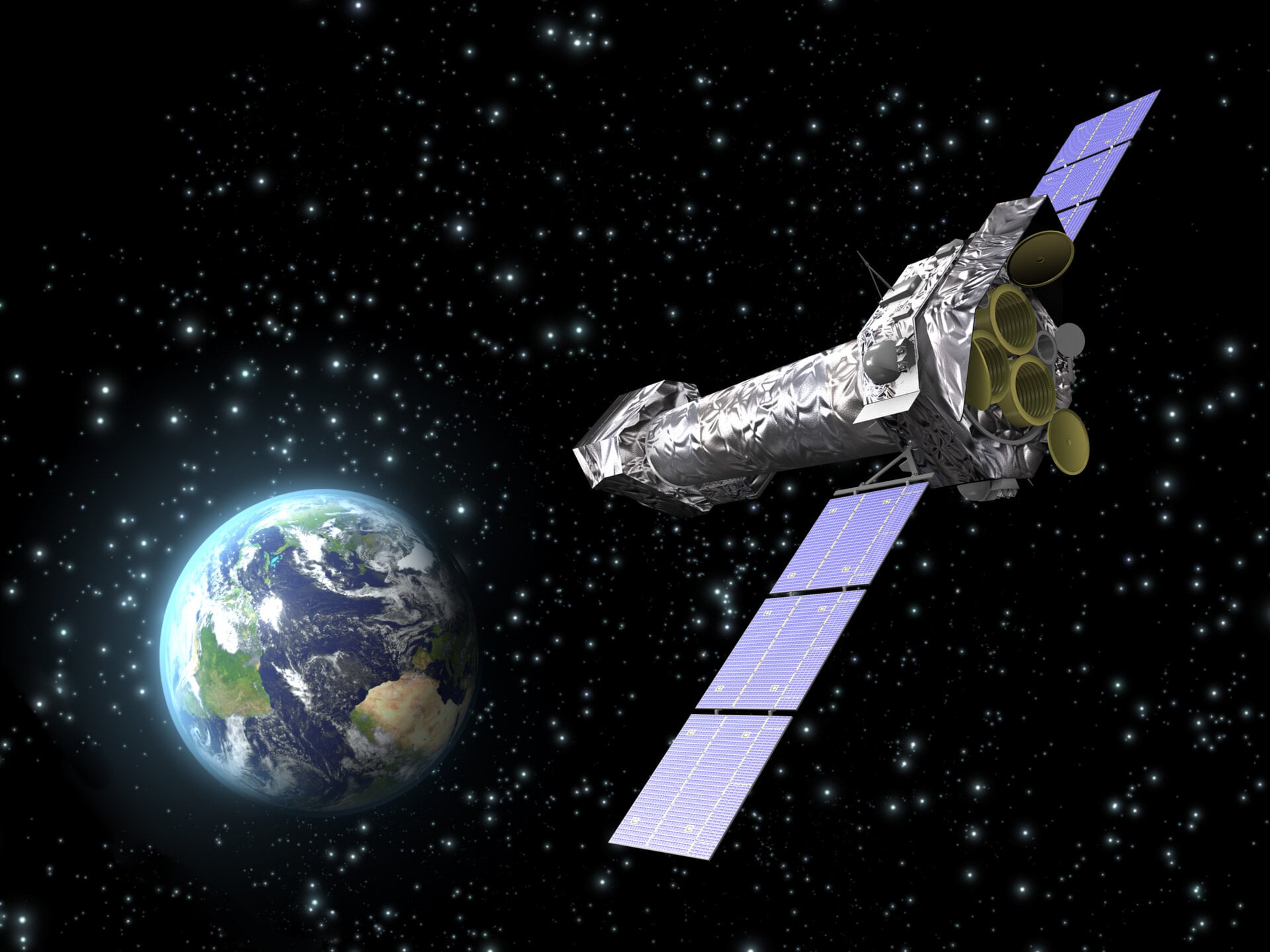
Everyone’s favorite interstellar comet posed for one more portrait recently. The European Space Agency’s XMM-Newton mission nabbed 3I/ATLAS on December 3rd from about 283 million kilometers distant. This comes as the comet is set to make its closest passage versus Earth this coming Friday, on December 19th.
Continue reading
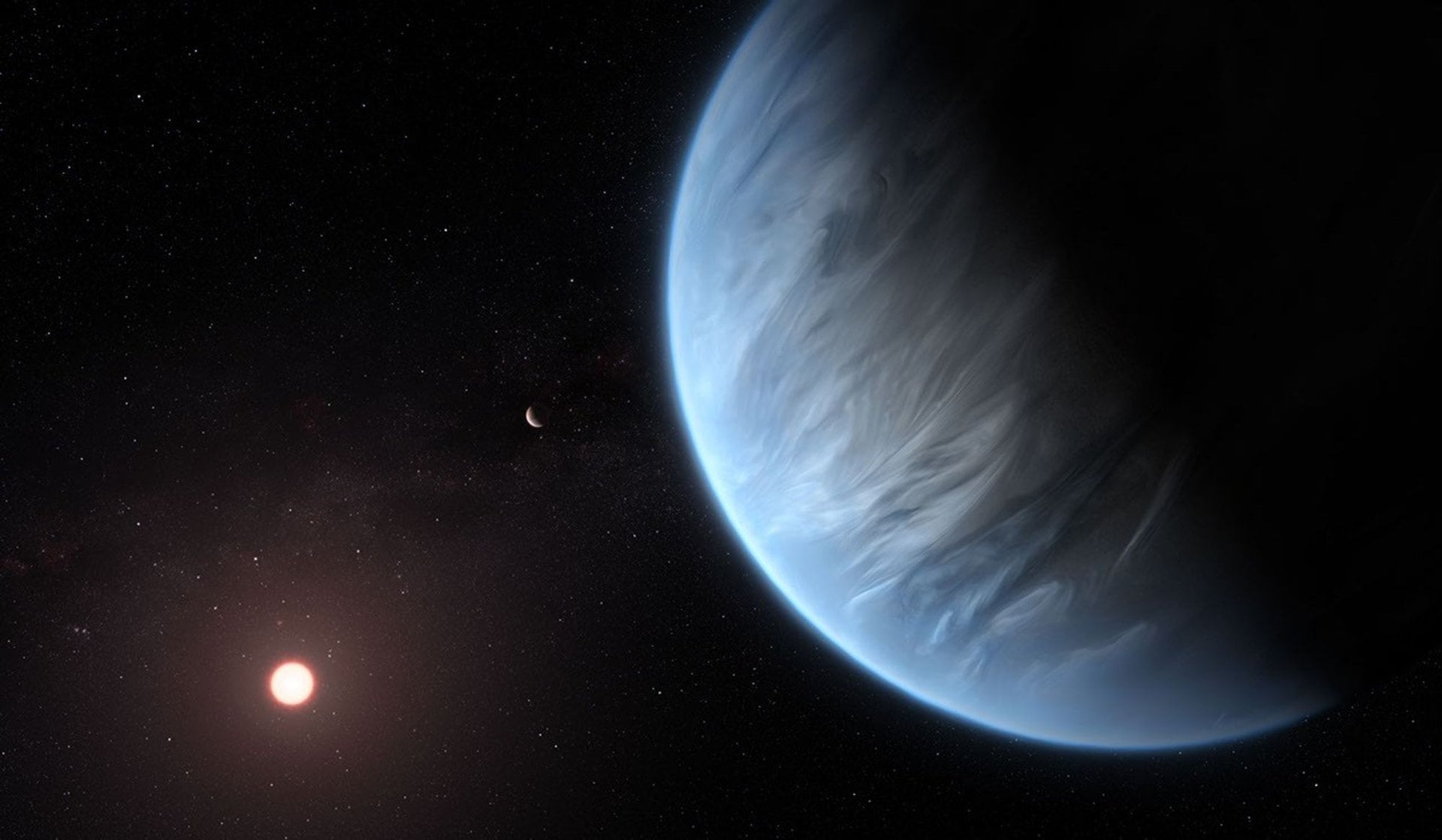
In astronomy, there is a concept called “degeneracy”. It has nothing to do with delinquent people, but instead is used to describe data that could be interpreted multiple ways. In some cases, that interpretation is translated into exciting new possibilities. But many times, when that happens, other, more mundane explanations are ignored for the publicity that the more interesting possibilities provide. That seems to have been the case for many “sub-Neptune” exoplanets discovered recently. Some theories have described them as Hycean worlds - worlds that are filled with water oceans or ice. But a new paper from Robb Calder of the University of Cambridge and his co-authors shows that, most likely, these planets are almost all made of molten lava instead.
Continue reading
 Universe Today