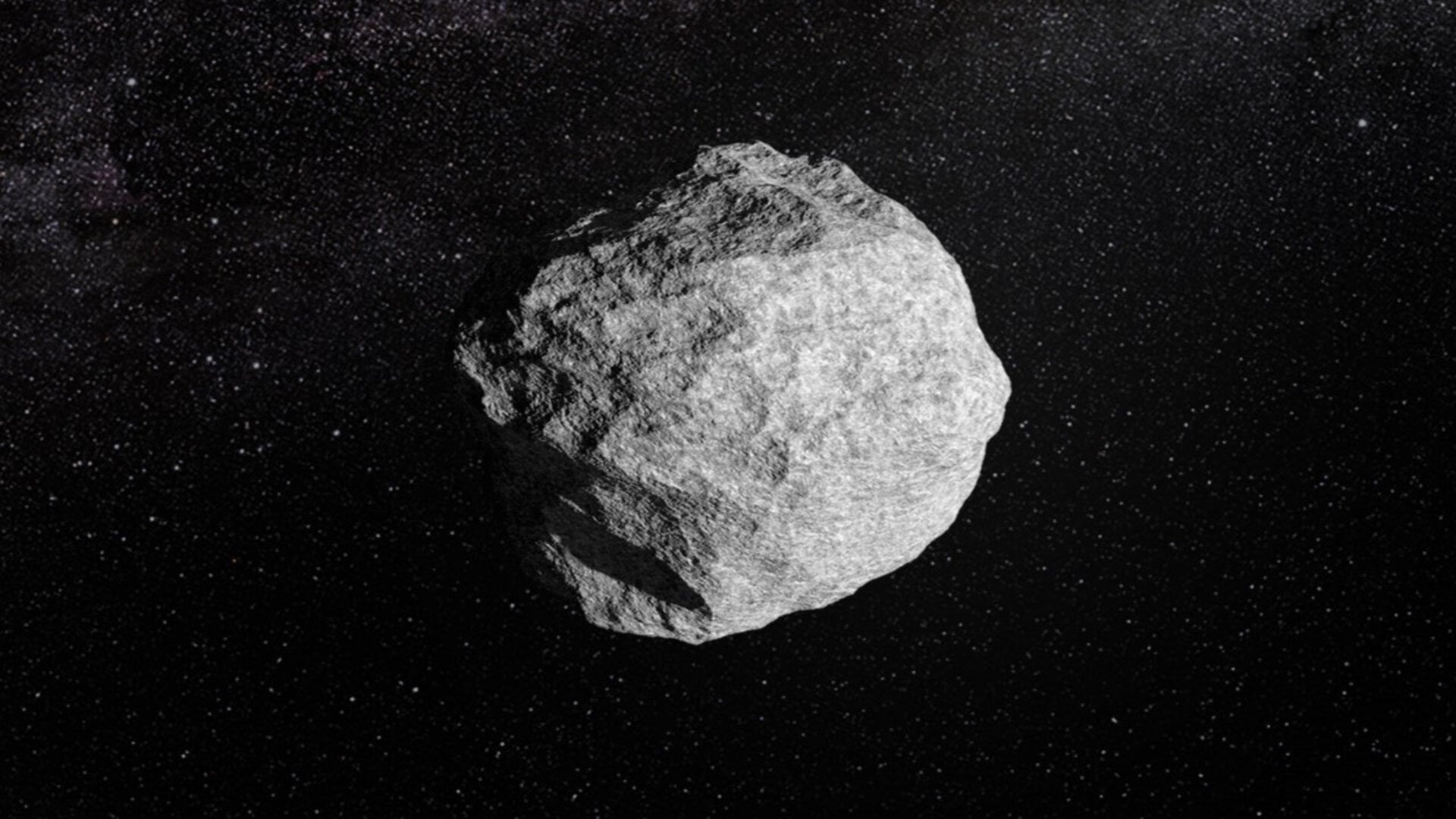
arXiv:2509.12351v1 Announce Type: new Abstract: Near-Earth asteroid 2024 YR4 was discovered on 2024-12-27 and its probability of Earth impact in December 2032 peaked at about 3% on 2025-02-18. Additional observations ruled out Earth impact by 2025-02-23. However, the probability of lunar impact in December 2032 then rose, reaching about 4% by the end of the apparition in May 2025. James Webb Space Telescope (JWST) observations on 2025-03-26 estimated the asteroid's diameter at 60 +/- 7 m. Stu...
Continue reading
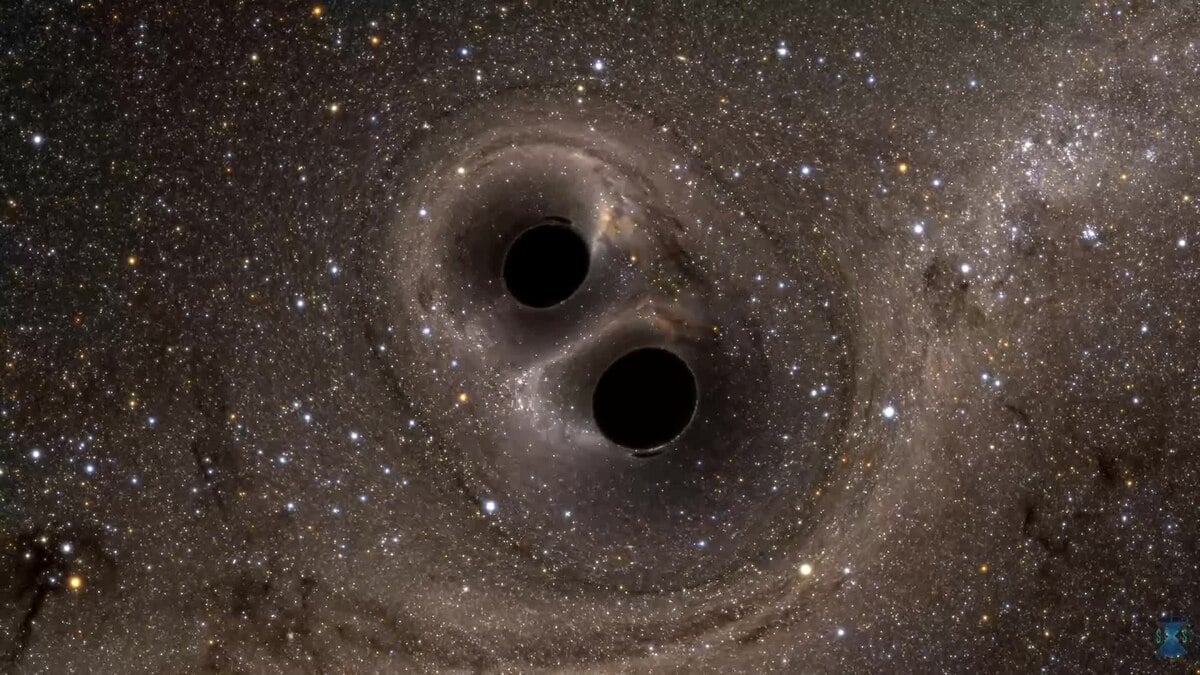
When two black holes collide and merge, they release gravitational waves. These waves can be detected by sensitive instruments on Earth, allowing scientists to determine the mass and spin of the black holes. The clearest black hole merger signal yet, named GW250114 and recorded by LIGO in January 2025, offers new insights into these mysterious objects.
Continue reading
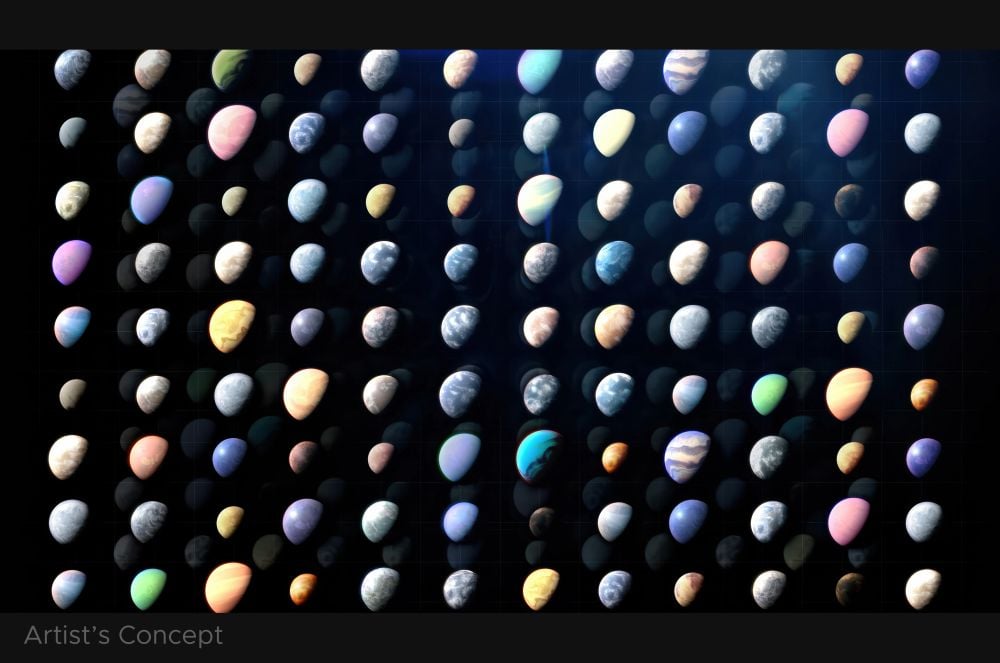
NASA says we now know of 6,000 confirmed exoplanets. At first there was just a trickle of discoveries. But the pace has quickened and shows no signs of slowing down.
Continue reading
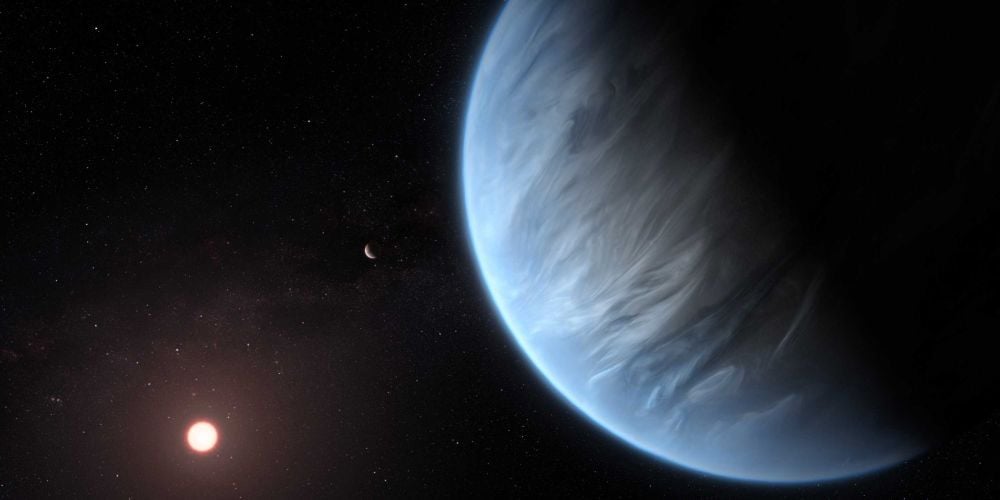
New research shows that the purported water world K2-18b isn't a marine world with a deep ocean. In fact, so-named Hycean worlds may not exist at all. But on the bright side, Earth's water content may not be unusual.
Continue reading
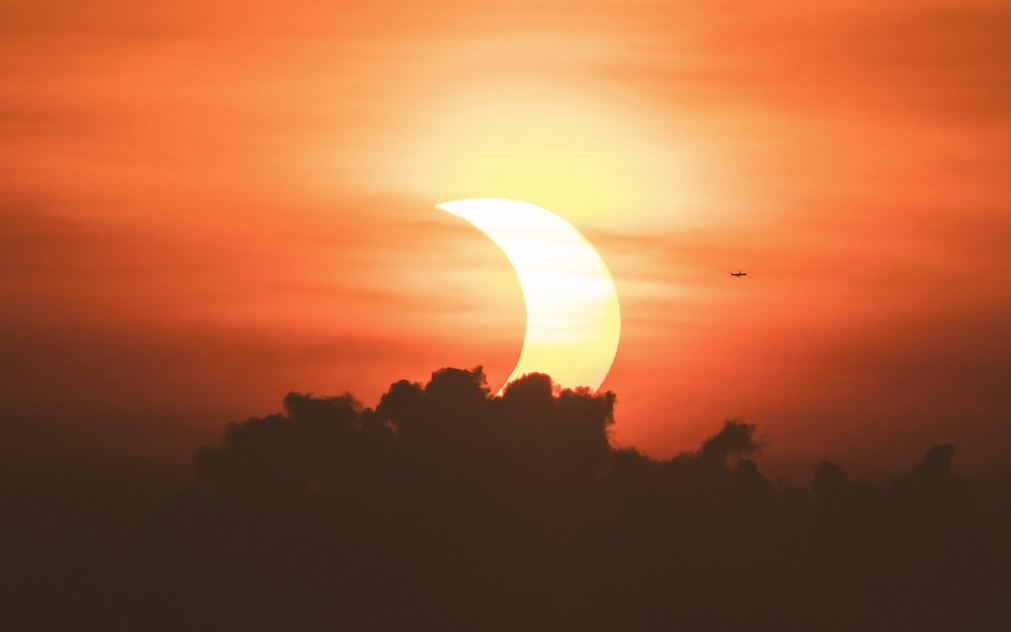
Subtle astronomical events can still produce memorable scenes, hidden away in distant locales. Such a spectacle goes down on Sunday/Monday, September 21st/22nd, with a partial solar eclipse. Although the eclipse only skims the southernmost portion of the South Pacific, viewers along the eastern coast of Australia, Antarctica and all of New Zealand will see an unforgettable sight, as a partially-eclipsed Sun rises out of the sea.
Continue reading
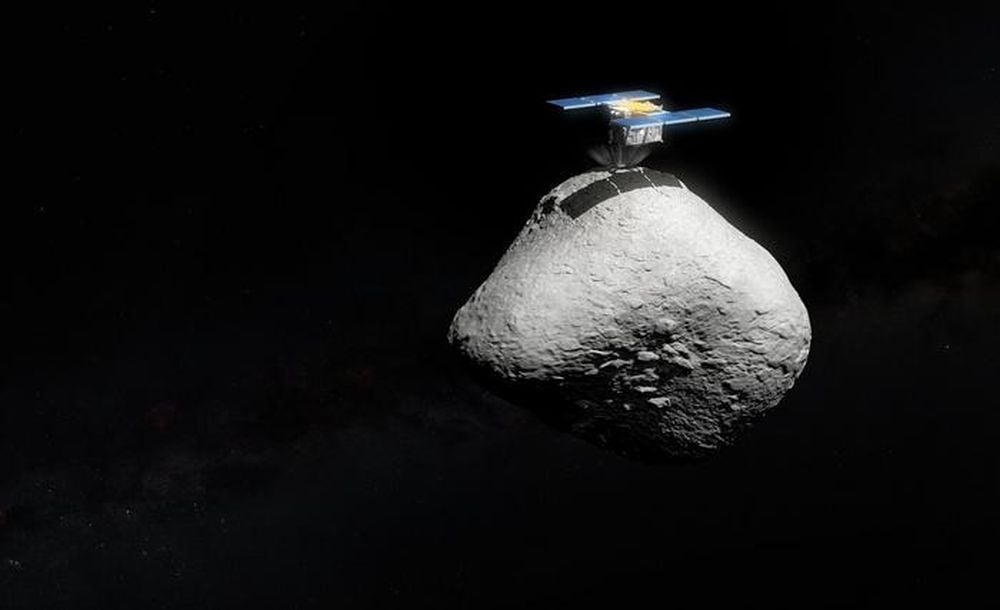
Hayabusa 2 may need to alter its visit to its next target. VLT observations show that the asteroid 1998 KY26 is three times smaller than thought and spinning much more rapidly.
Continue reading
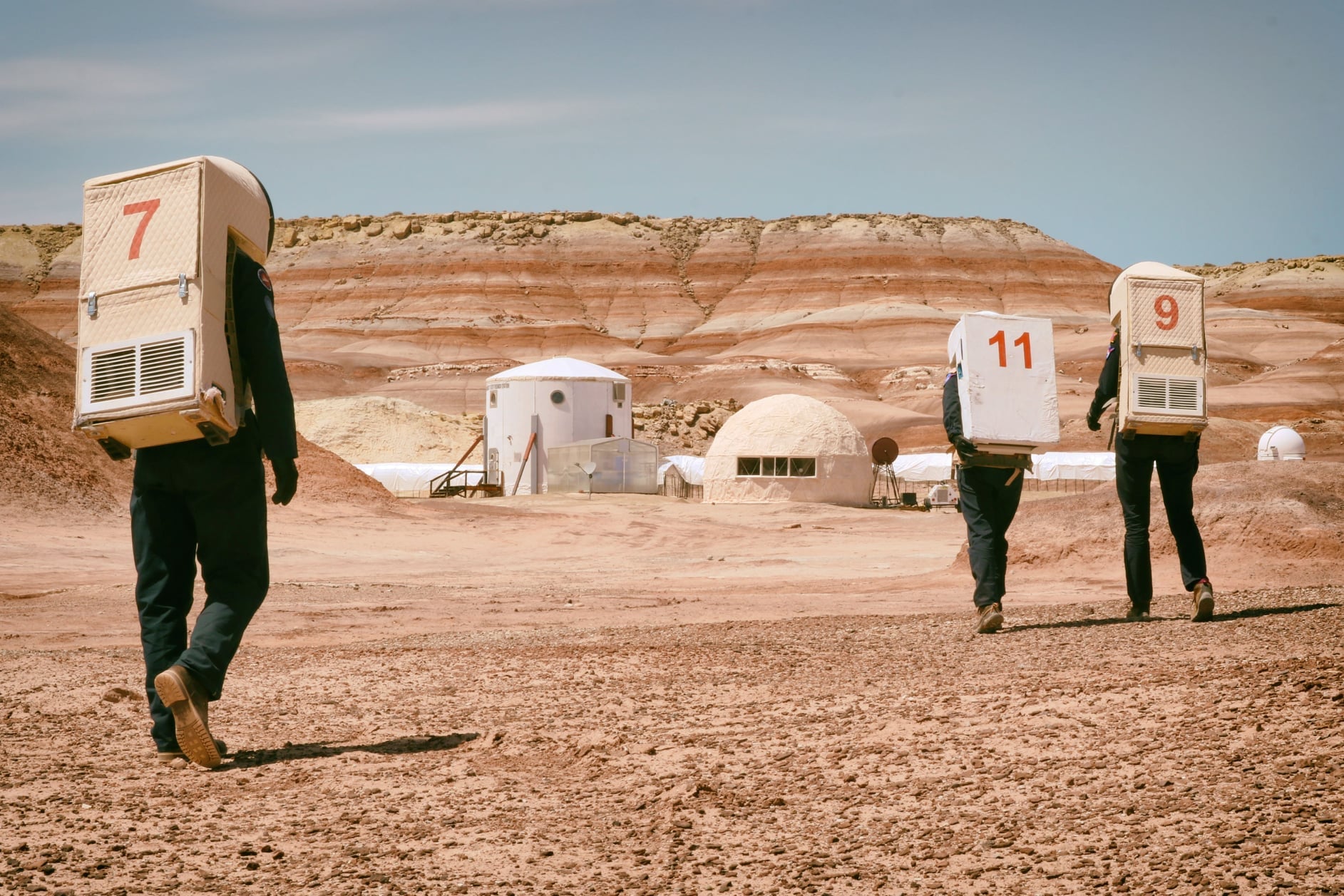
Before we get to Mars, we’re going to have to practice. And develop radical leaps in technology, but also practice.
Continue reading
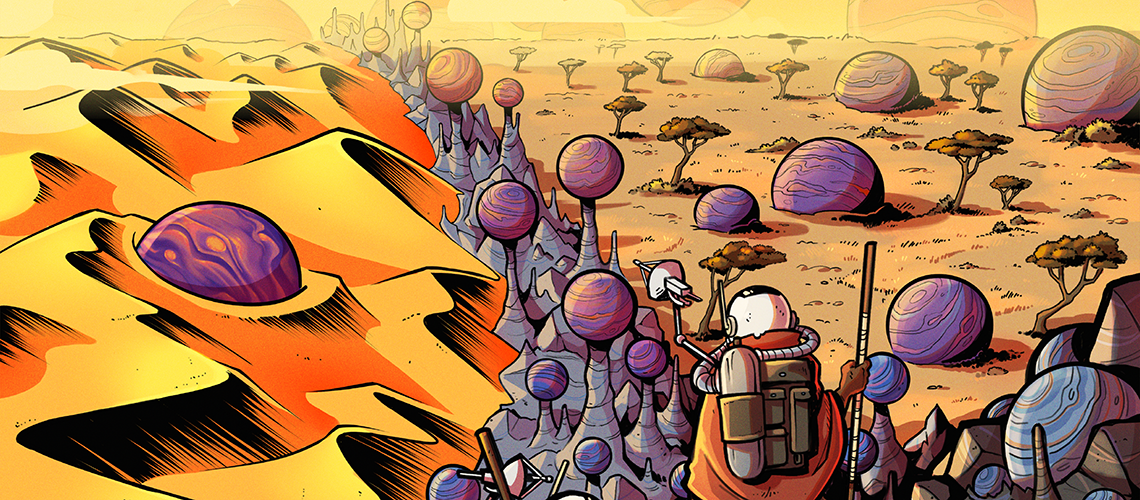
Exoplanet surveys are useful for more than just astrobiology or increasing the tally of known planets in other solar systems. They can also help us understand the evolution of planetary systems themselves. That’s what a new paper from researchers led by astronomers at the University of Geneva and published in Astronomy & Astrophysics attempts to do - by looking at a large population of “exo-Neptunes” they are attempting to understand the intricacies of how planetary systems are formed.
Continue reading
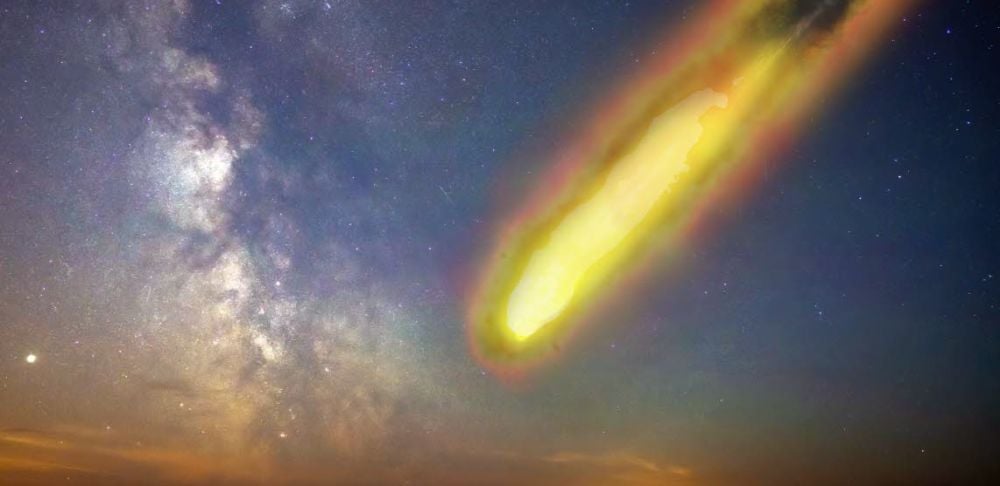
Researchers have dated the appearance of microbial life in a 78 million year old impact crater. Life colonized the fractured hydrothermal system the impact created, and thrived for millions of years. It could do the same on other worlds.
Continue reading
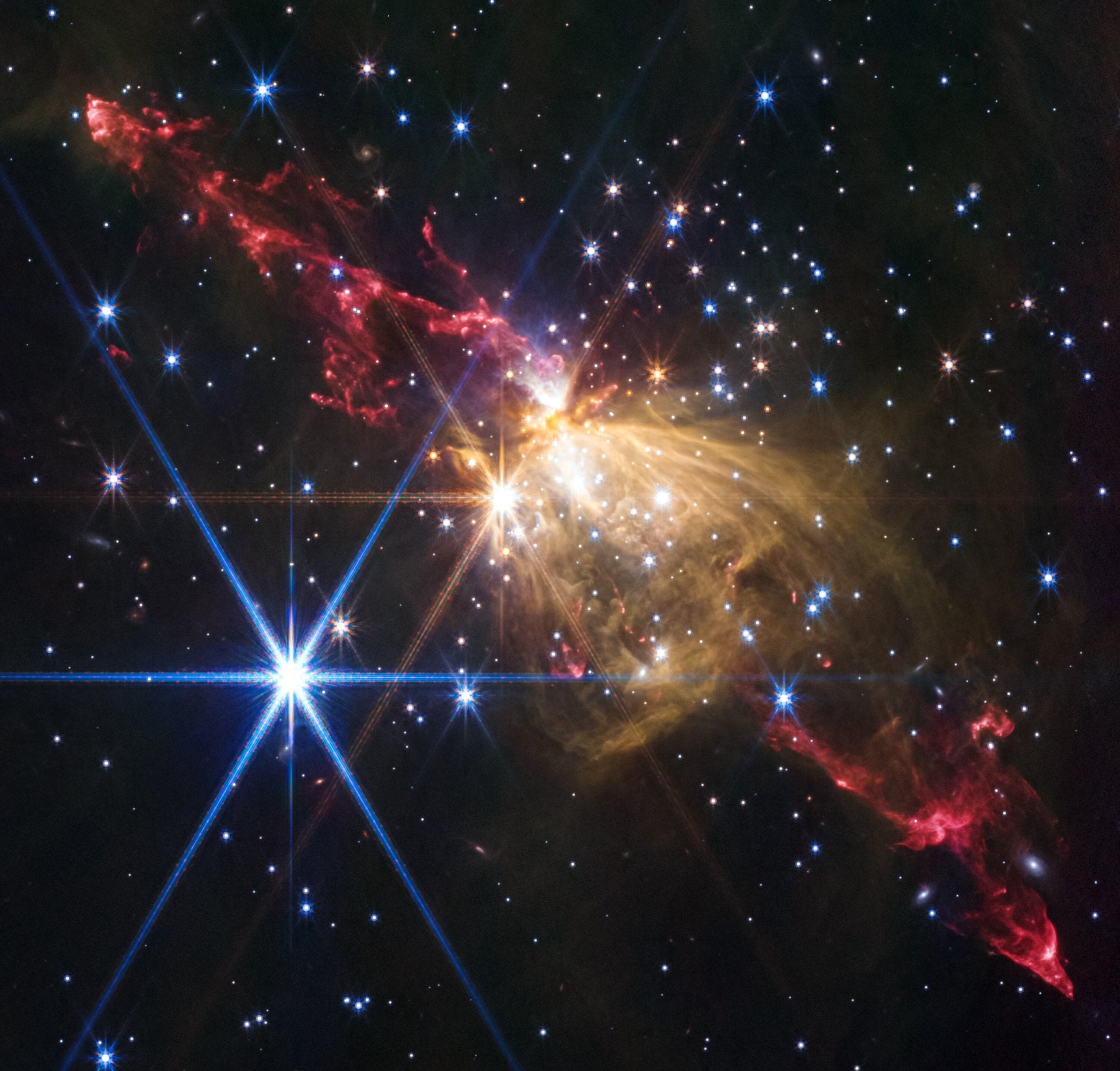
NASA's James Webb Space Telescope recently imaged an extremely large and symmetric protostellar jet at the outskirts of our Milky Way galaxy. From tip to tip, this protostellar jet is 8 light-years across, about double the distance from our Sun to its closest neighboring star system, Alpha Centauri.
Continue reading
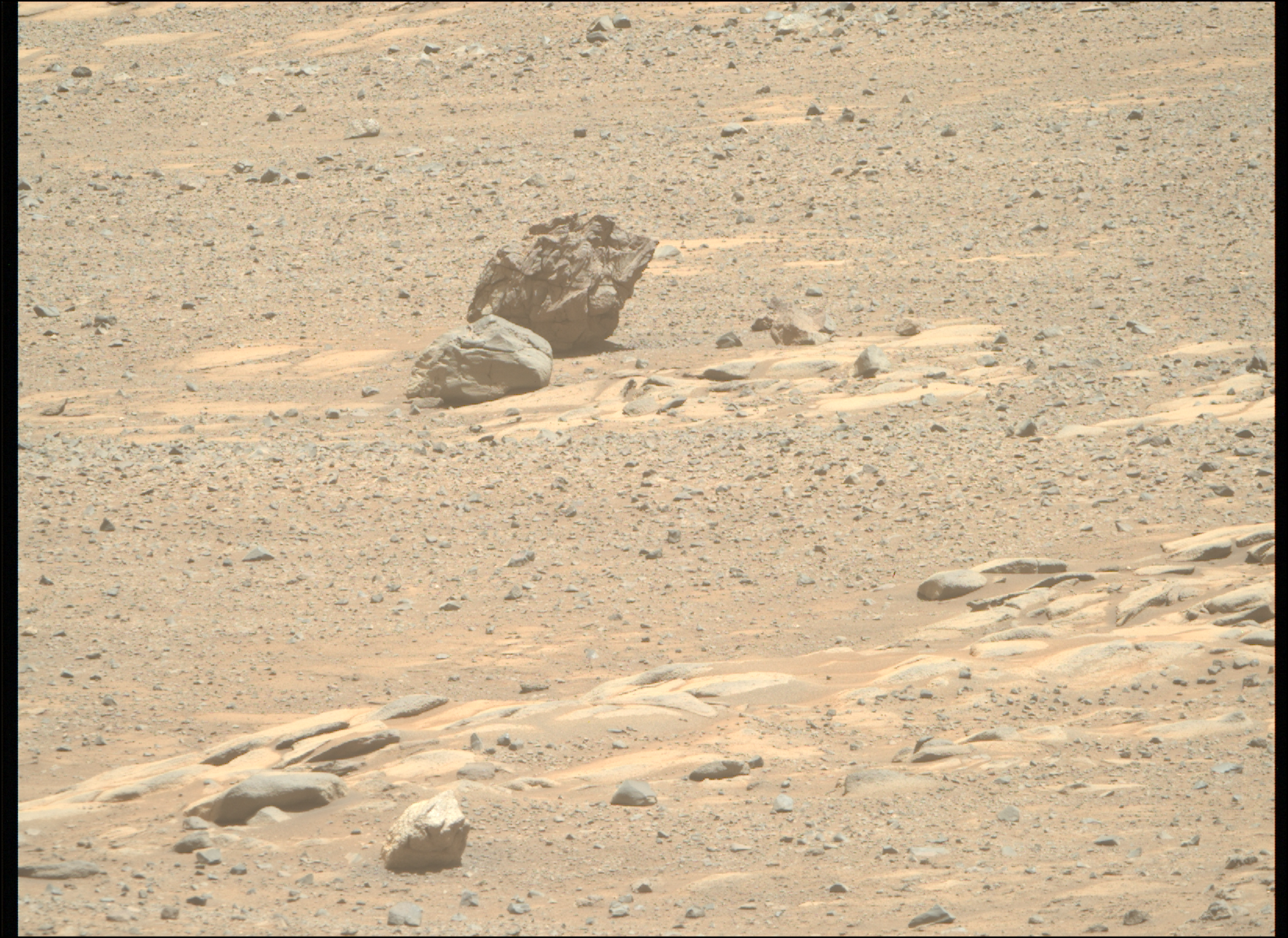
You know, if you take away the lack of air and water, the weaker Sun, the lower gravity, and the toxic soil, Mars isn’t all that bad of a place to live.
Continue reading
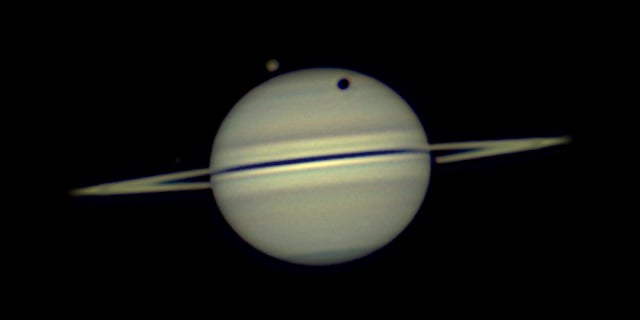
It seems like most of the planets have fled the evening scene. But that’s about to change this week. Saturn reaches opposition on Sunday, September 21st, passing closest to the Earth at just over 8.5 Astronomical Units (AU) or 1.3 billion kilometers distant, and rising opposite to the setting Sun. This marks the best time to view the ringed world, as it dominates the night sky from sunset until sunrise.
Continue reading
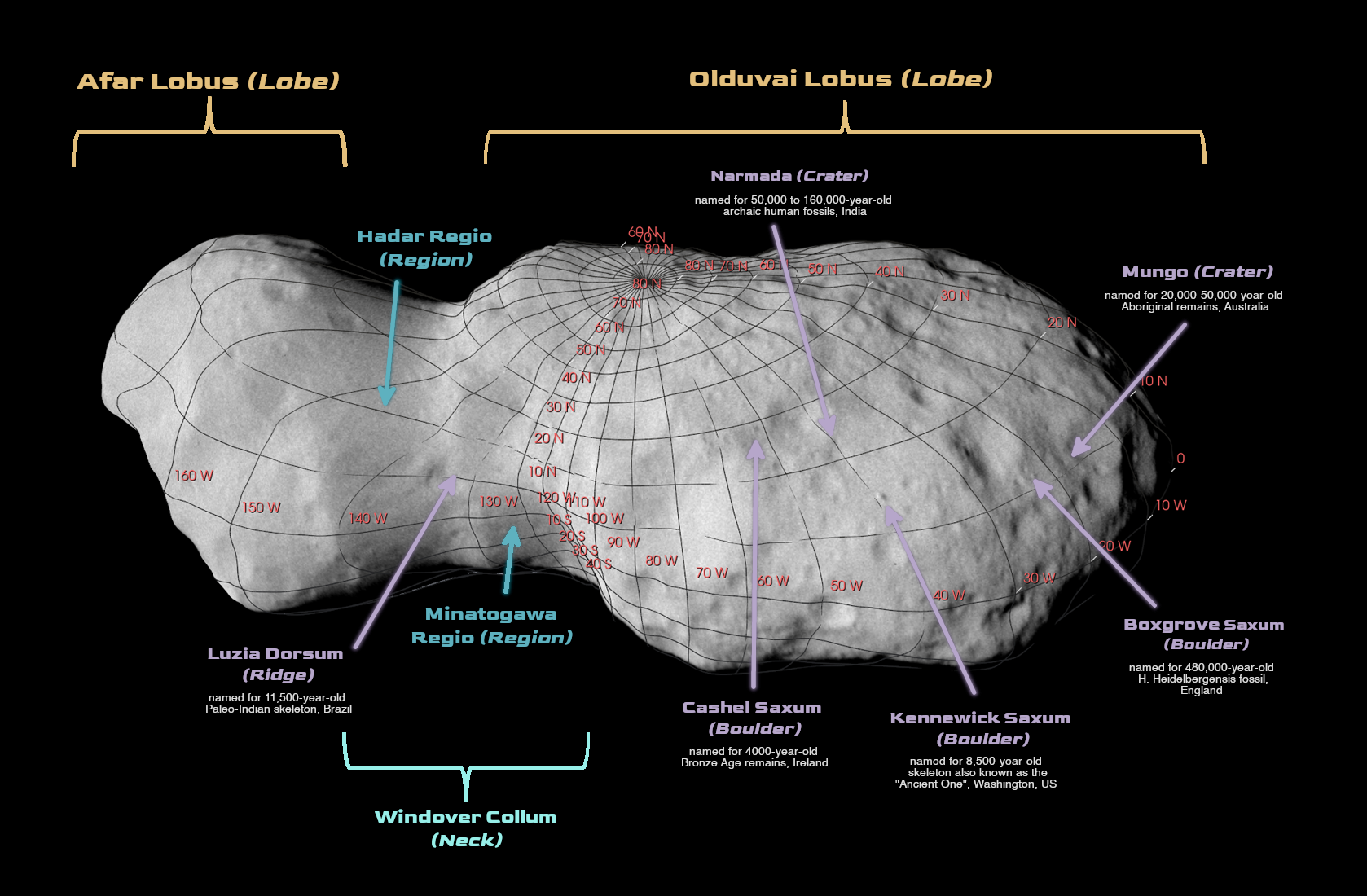
When considering the unnamed major features of all the moons, asteroids, and comets in our solar system there are still a lot of places out there that need proper names. That means the International Astronomical Union (IAU), the non-governmental body responsible for naming astronomical objects, has its work cut out for them. Recently they tackled a relatively easy challenge by approving a series of names on the asteroid Donaldjohnson, the first and only target of NASA’s Lucy mission in the main asteroid belt. With those names come a whole new way to talk about one of the asteroids that humanity has studied most closely thus far.
Continue reading
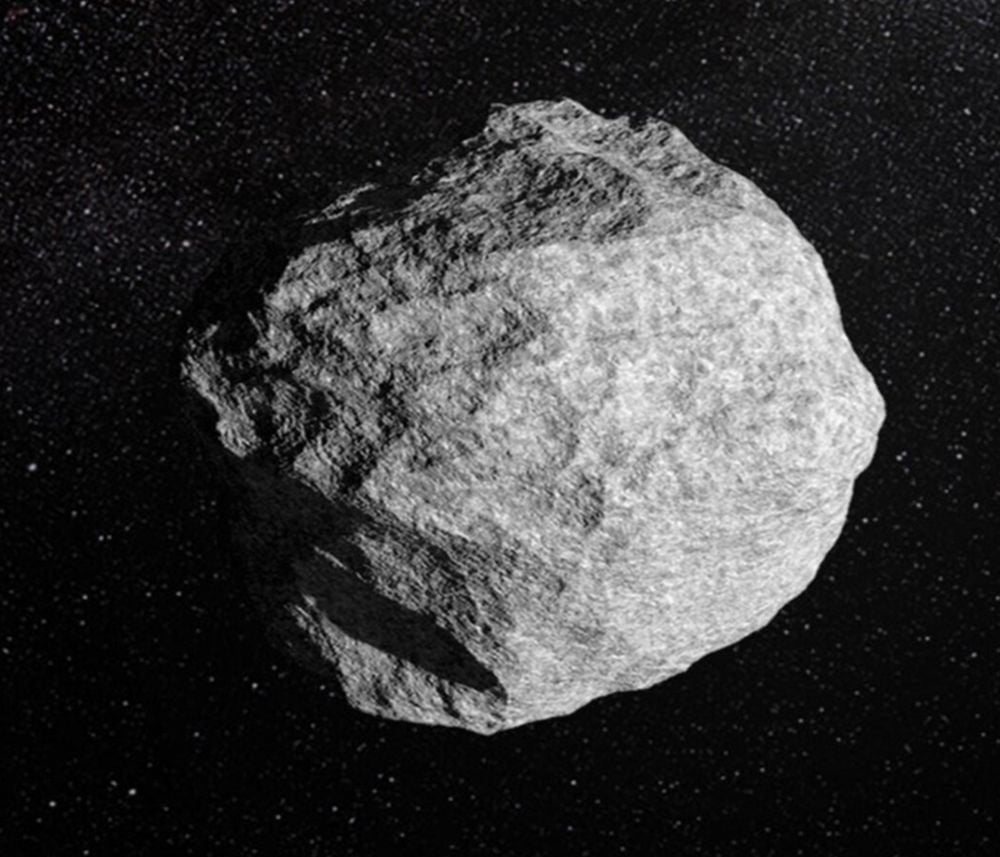
Earth has a new co-moving neighbour. It's a new member of the group of asteroids that follow Earth-like orbits and are called quasi-satellites. Together, they constitute an asteroid belt.
Continue reading
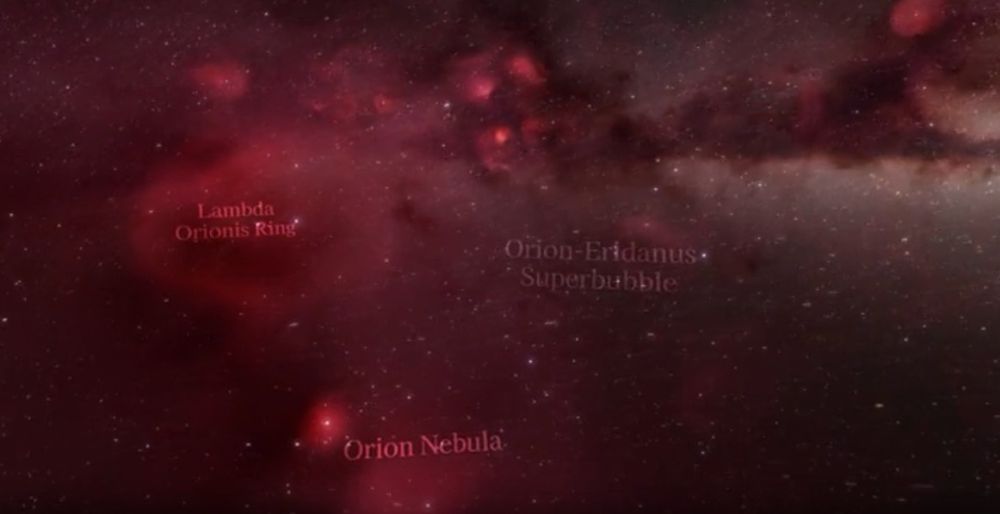
Here we fly through Gaia’s new 3D map of stellar nurseries. This new map includes 3D-views of the Gum Nebula, the North American Nebula, the California Nebula, and the Orion-Eridanus superbubble. It allows us to fly around, through, and above these areas containing stellar nurseries. At the end of the animation, we arrive at our Sun.
Continue reading
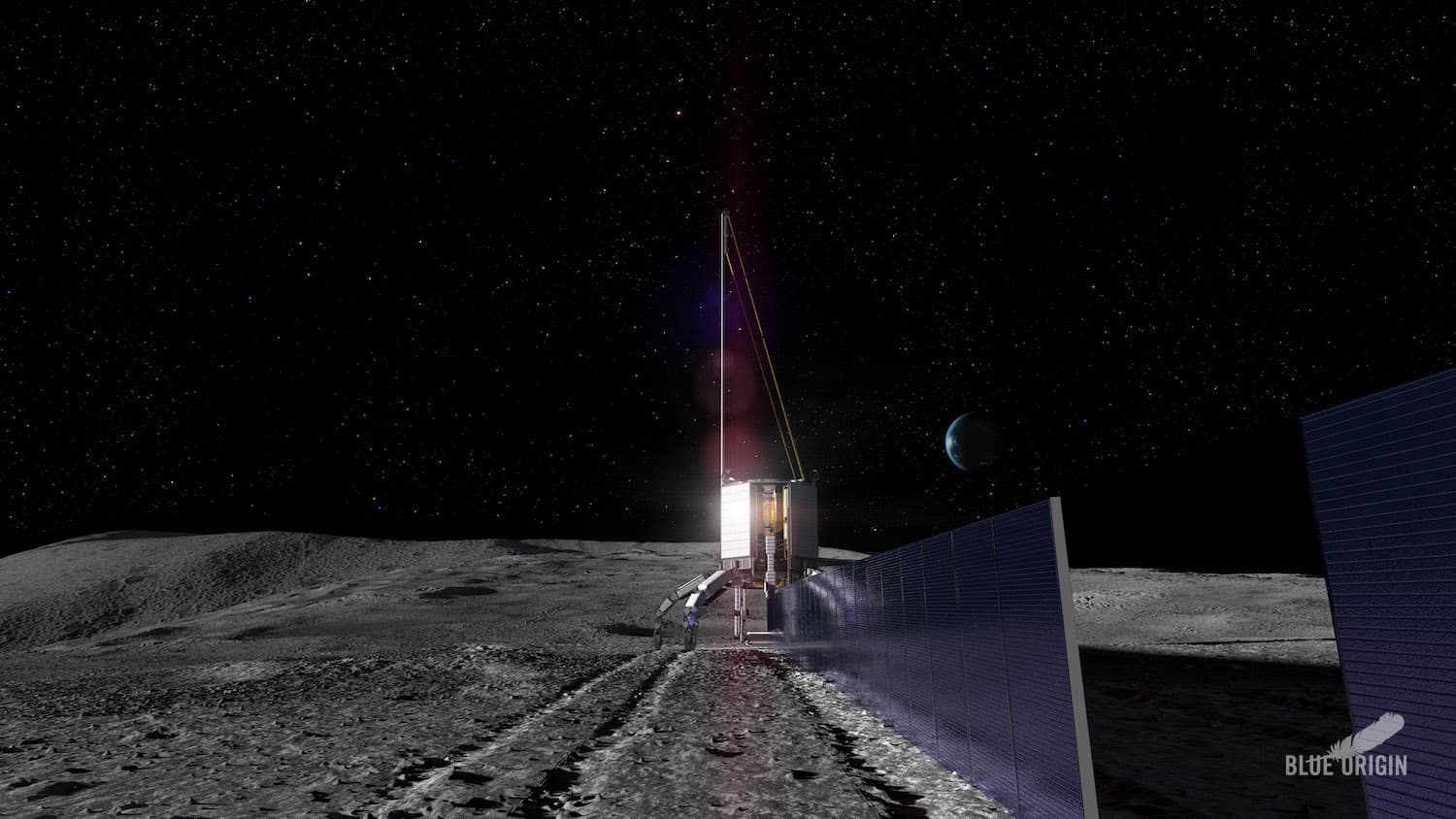
Blue Origin's breakthrough in-space resource utilization system aims to turn lunar regolith into solar arrays, metals, and breathable and propellant-grade oxygen, enabling sustainable robotic and human Moon missions and future Mars exploration.
Continue reading
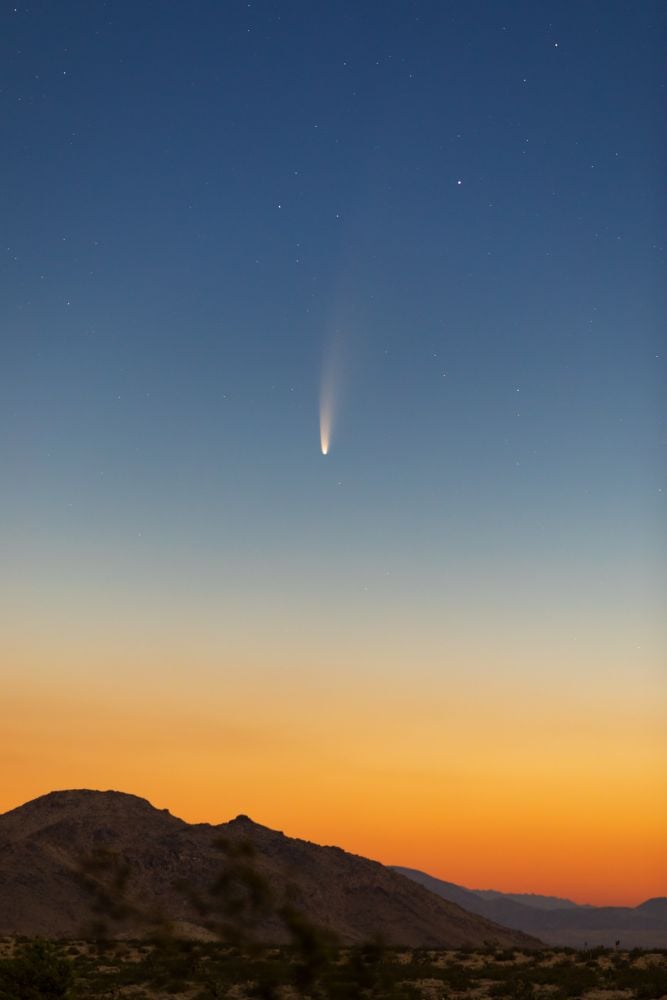
A swarm of fragments from an air burst comet could've triggered the Younger Dryas cooling period. A wave of megafauna extinctions followed, as did the disappearance of the Clovis culture.
Continue reading
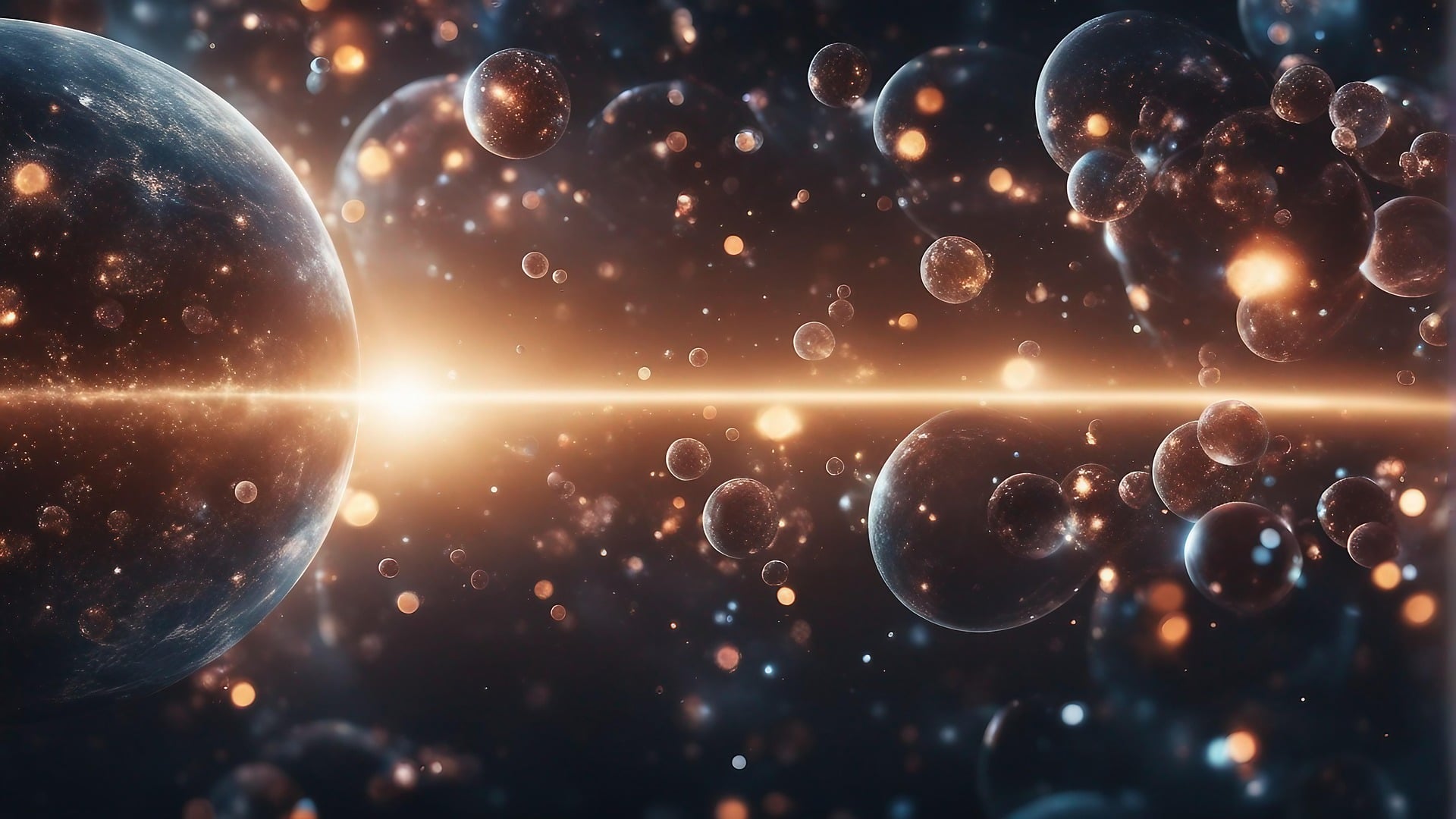
One possibility to explain the constants of nature is that there’s more than one universe.
Continue reading
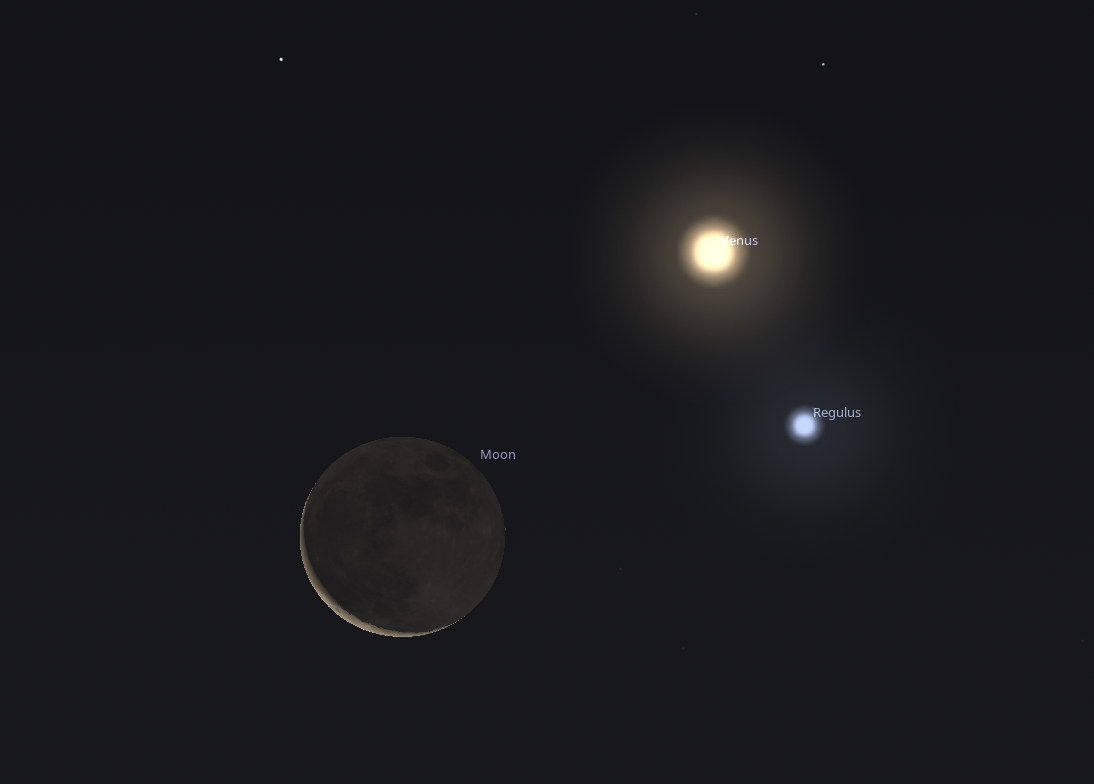
Sometimes, it seems as if the Universe is literally smiling down upon us. If skies are clear this coming Friday September 19th, be sure to wake up early to catch a bizarre celestial scene as Venus, Regulus and the slim crescent Moon huddle together in the eastern dawn. This triple play is a complicated one, evolving one of the best conjunctions for 2025.
Continue reading
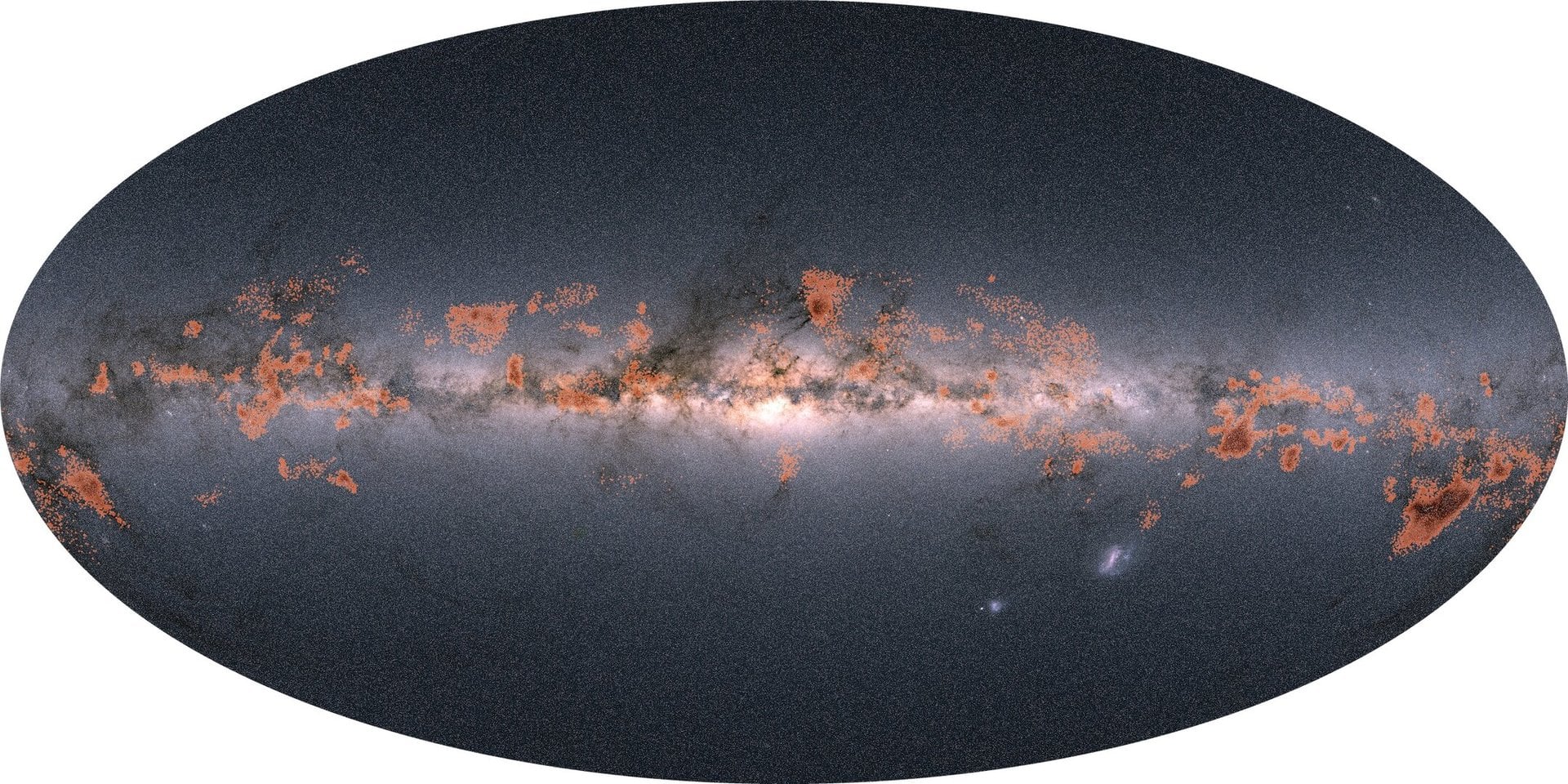
Gaia Proves Our Skies Are Filled with Chains of Starry Gatherings
Gaia Proves Our Skies Are Filled with Chains of Starry Gatherings
https://www.esa.int/Science_Exploration/Space_Science/Gaia/Gaia_proves_our_skies_are_filled_with_chains_of_starry_gatherings
Continue reading

There are plenty of theories about what dark matter is and how it might be gravitationally affecting the universe. However, proving those theories out is hard since it hardly ever interacts with anything, especially on “small” scales like galaxies. So when a research team claims to have found evidence for dark matter in our own galaxy, it's worth taking a look at how. A new paper from Dr. Surkanya Chakrabati and her lab at the University of Alabama at Huntsville (UAH) does just that. They found evidence for a dark matter “sub-halo” in the galactic neighborhood, by looking at signals from binary pulsars.
Continue reading
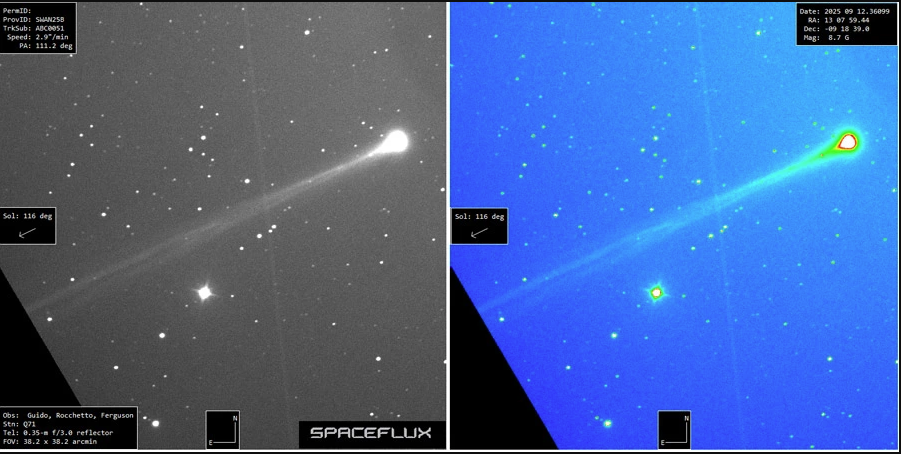
A new comet approaching from sunward could make a fine dusk appearance in October. There was chatter on the boards this past Friday September 12th, about a comet seen in the Solar Wind Anisotropies (SWAN) images near the Sun. Tentatively named SWAN25B and now formally designated as C/2025 R2 SWAN, this comet could put on a brief show in late September into October if it holds up.
Continue reading
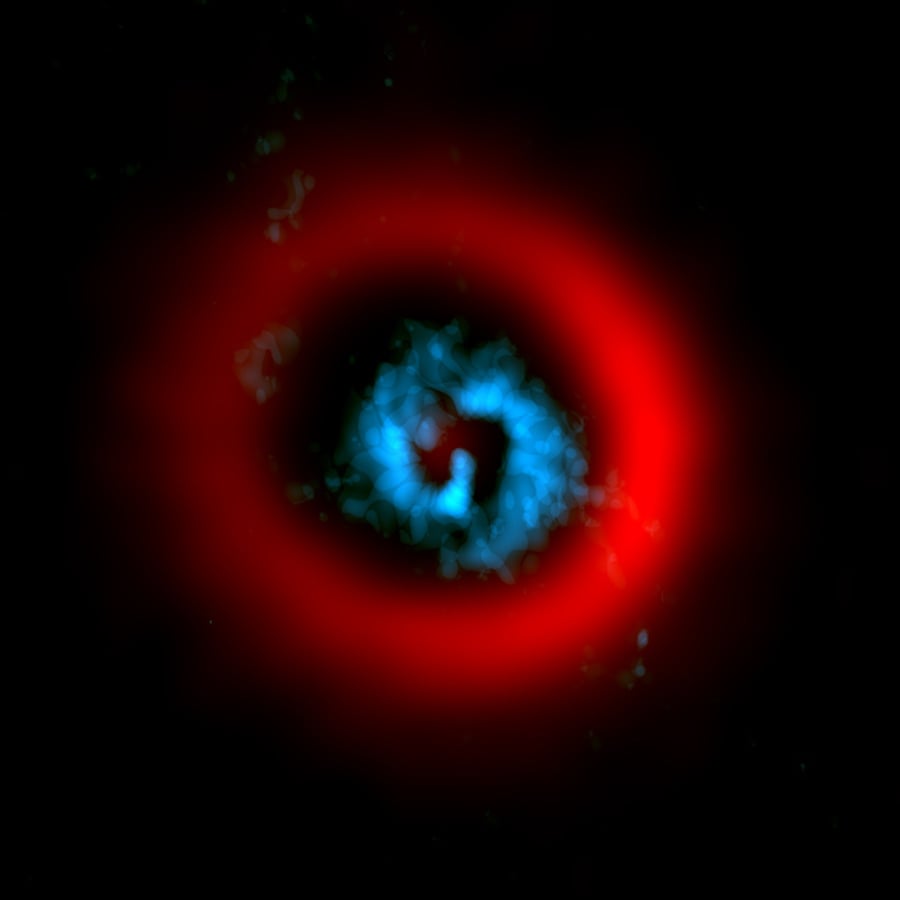
It’s rather strange to think about catching a planet in the act of being born given that the process takes millions of years but for the first time, astronomers have done just that! The evidence reveals a planet actively forming and feeding from its surrounding disk of gas and dust. The discovery of hydrogen emission from the protoplanet offers a new glimpse into the violent stages of planetary formation, revealing processes that shaped our own Solar System billions of years ago.
Continue reading
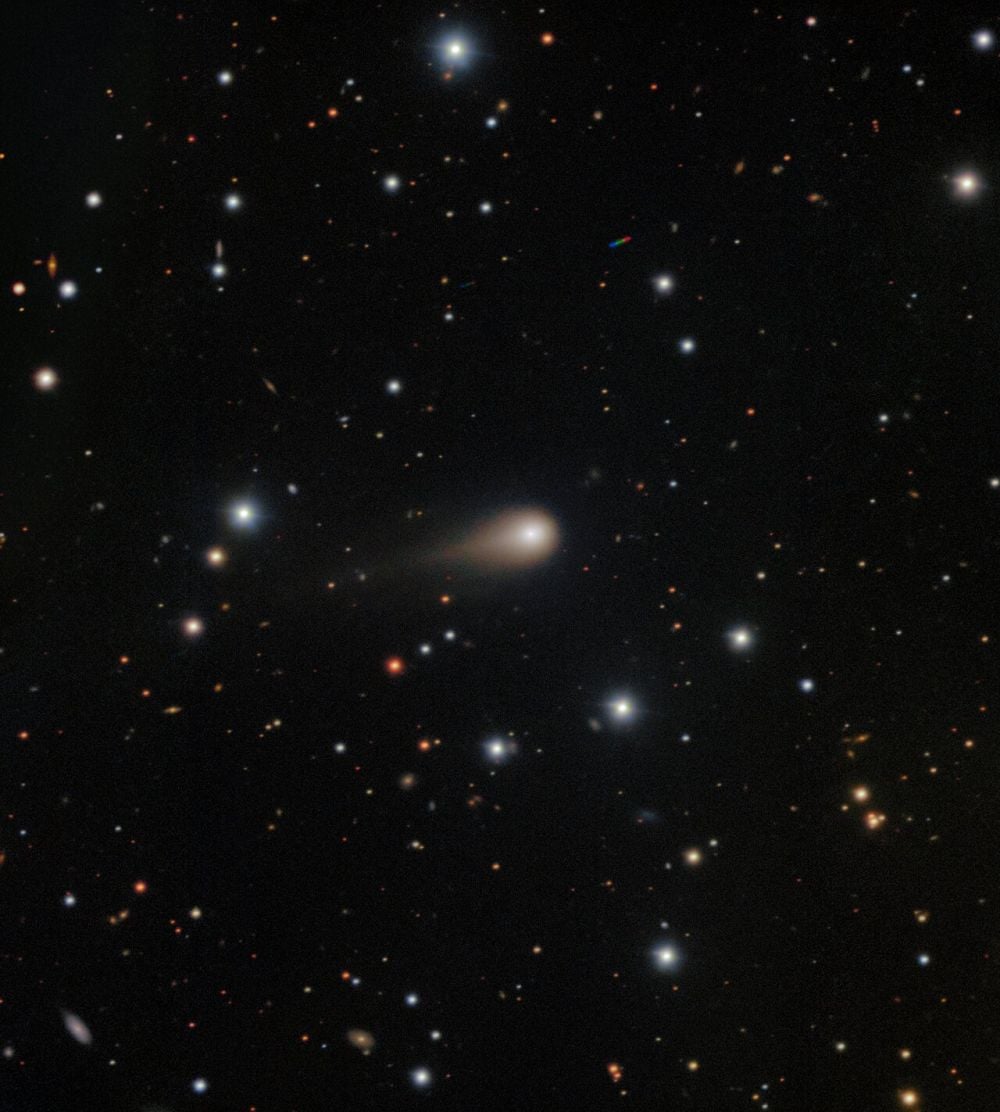
ISOs like Comet 3I/ATLAS are fascinating yet fleeting visitors from distant solar systems. New research suggests that when captured by a young solar system that's still forming planets, these objects could act as planetary seeds for the formation of planets.
Continue reading
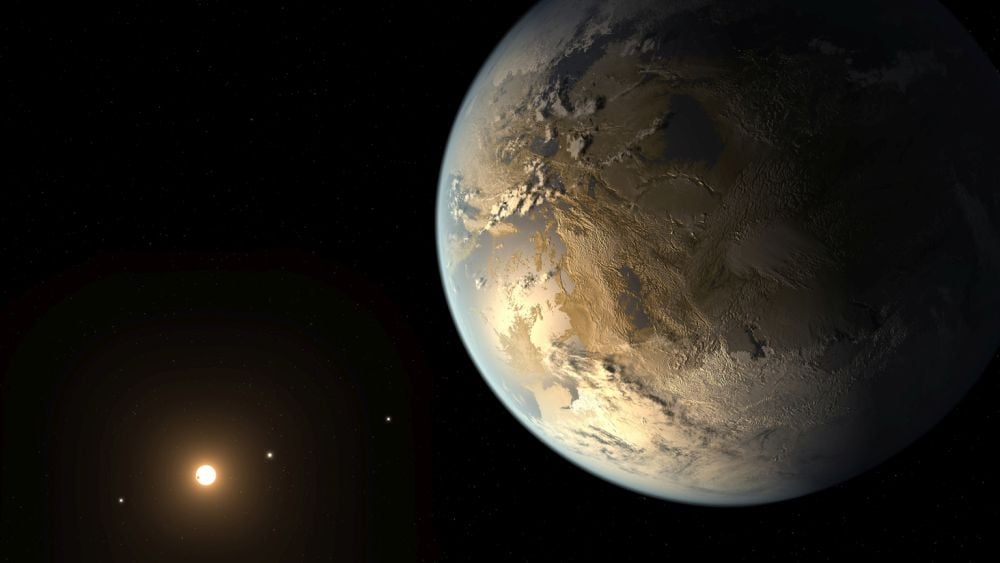
Can a planet that lacks plate tectonics and has very little carbon dioxide support life? Maybe. Can it support life long enough for a technological civilization to arise? New research says no.
Continue reading
According to every experiment, the constants of nature appear to be constant.
Continue reading
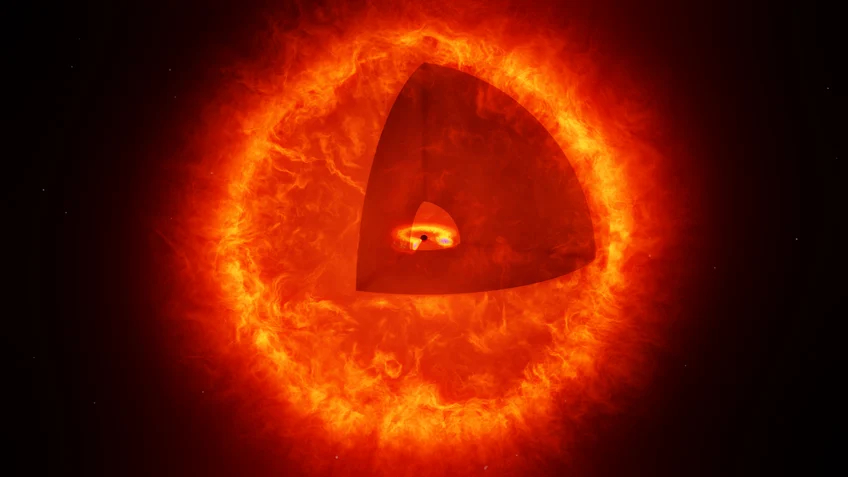
A bizarre new type of object could solve one of astronomy's most puzzling mysteries. The James Webb Space Telescope spotted some “little red dots” and until now, it’s been thought they were galaxies. Now, a team of astronomers have come up with an alternative theory, supermassive black holes wrapped up in a thick envelope of gas and they are calling them ‘black hole stars!’
Continue reading
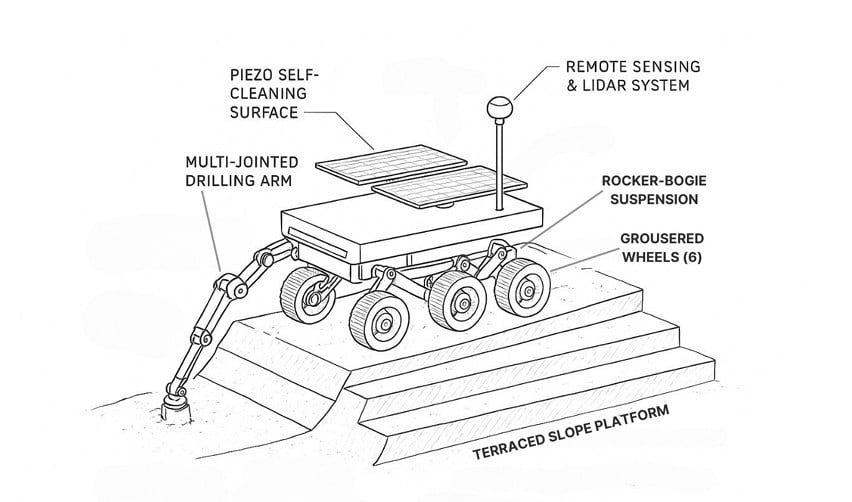
Different parts of Mars have different advantages and disadvantages when it comes to their available resources, just like Earth. The polar caps are likely the most valuable in terms of their water content, which will be critical to any early stage crewed mission to the Red Planet. But to really unlock the fully potential of Mars, geologists think we’ll need to look to the volcanoes, where there is likely to be easily accessible valuable materials like nickel, titanium, and chromium, that were placed there when the volcanoes were active. Reaching those deposits on the side of some of the largest mountains in the solar system safely is a challenge, and one that is tackled in a new paper by Divij Gupta and Arkajit Aich, where they look at the necessary requirements to set up an effective mining operation on the slopes of Olympus and Elysium Mons.
Continue reading

David Bowie once sung ‘Is there life on Mars?’ and along with being a question in a hit song, its also a question that has driven decades of missions to the red planet. From early orbital surveys to rovers hunting for evidence that life once existed beyond Earth the search has become more and more sophisticated. Europe's upcoming Mars rover mission is one such mission and it has received an unexpected boost in its search for signs of ancient life, as two new studies reveal that natural Martian processes could deliver rich organic materials directly to the rover, eliminating the need for long distance travel to find the building blocks of life.
Continue reading
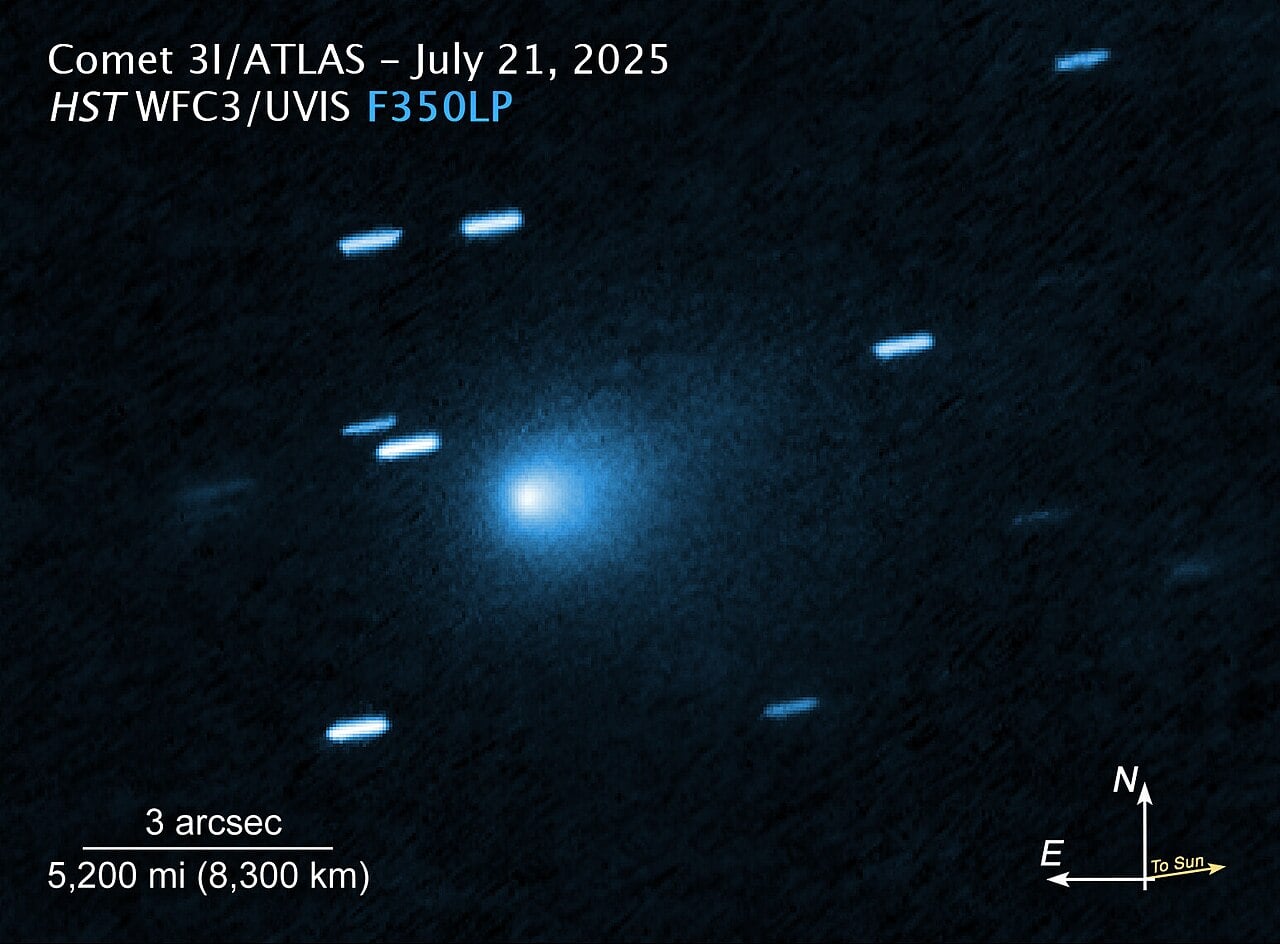
An examination of the interstellar object 3I/ATLAS shows that it is likely to be a remnant of the Galaxy's “Cosmic Noon” period, ca. 9 to 13 billion years ago. An examination of the object by an active mission could provide clues about stellar and planetary formation, and maybe the emergence of life, during this early period of galactic history.
Continue reading
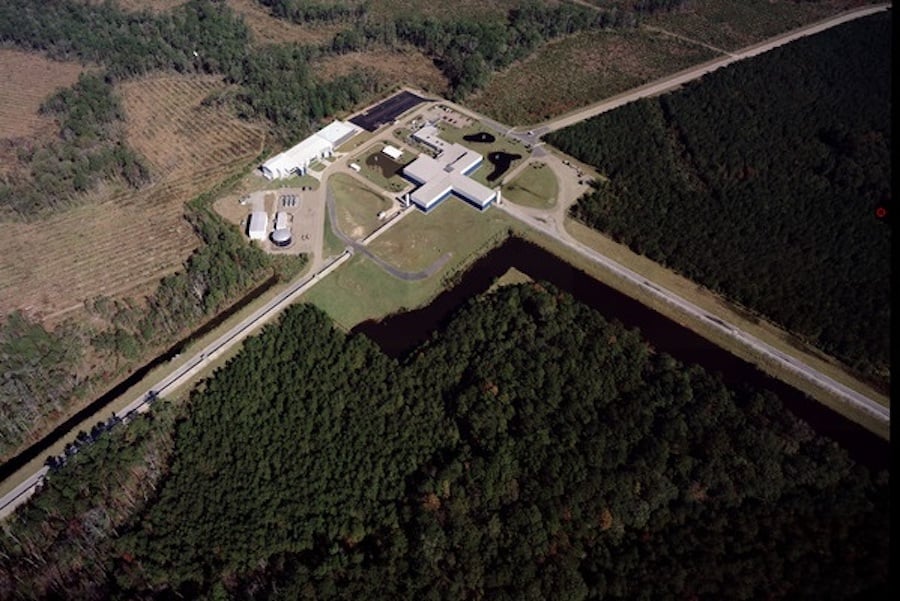
Ten Years Later, LIGO is a Black-Hole Hunting Machine
lexigault60428
Fri, 09/12/2025 - 10:00
Ten Years Later, LIGO is a Black-Hole Hunting Machine
https://www.caltech.edu/about/news/ten-years-later-ligo-is-a-black-hole-hunting-machine
Continue reading
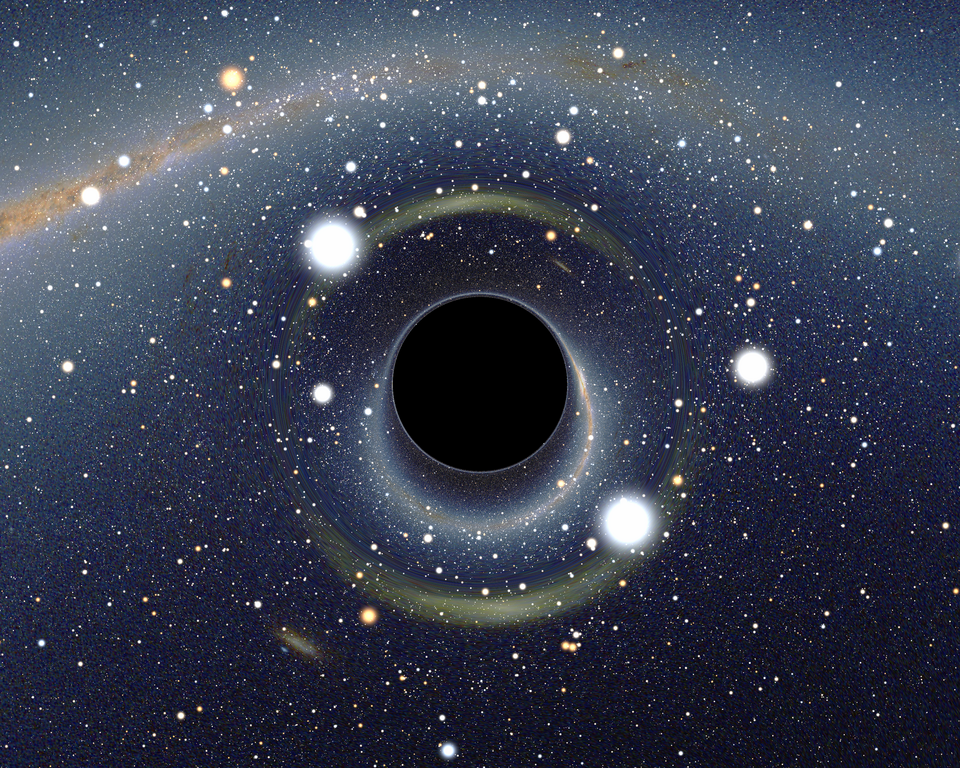
Physicists at the University of Massachusetts Amherst have calculated a more than 90% probability that we'll observe an exploding black hole within the next ten years. An event like this in our own celestial backyard may well be quite the spectacle but would revolutionise our understanding of physics and reveal the fundamental building blocks of everything in existence. Bold claims but a real possibility.
Continue reading
Of course physicists debate about which of the constants are the important ones, because physicists debate EVERYTHING.
Continue reading

A recent discovery solves a decades old mystery about the chemistry of Jupiter and Saturn's atmosphere. Using powerful telescopes, a team of researchers detected a molecule in the atmosphere of an ancient brown dwarf offering new ideas into how clouds form on gas giant planets.
Continue reading
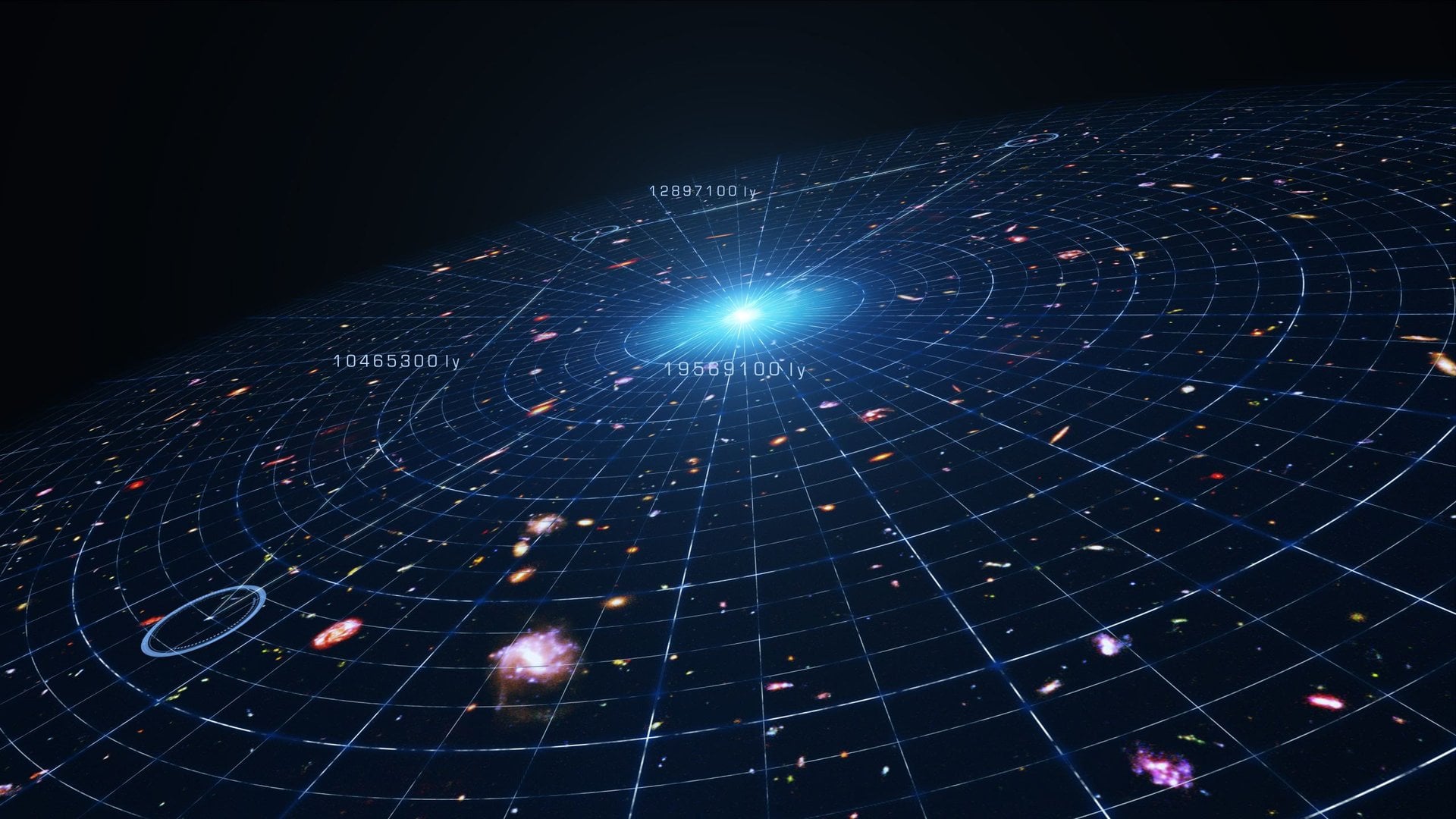
Science is a story of coming up with theories then doing our best to disprove them. That is especially true for theories on a grand, cosmological scale, though disproving them can be particularly hard. One of the most famous examples of a hard to disprove theory is that of dark energy and dark matter. In large parts of space we see unequivocal evidence that something is messing with general relativity. But down at the scale of our own solar system, there’s no evidence of it whatsoever, at least as far as we can see. A new paper from Slava Turyshev, a physicist at NASA’s Jet Propulsion Laboratory, discusses a way scientists might be able to deal with this discrepancy - by being very, very selective with the way we test for evidence of dark matter and energy in our solar system.
Continue reading

Is it possible that Mars could have once been warm enough to support life? New research suggests that volcanic emissions billions of years ago may have created a greenhouse effect that made the red planet surprisingly hospitable, challenging our understanding of early Martian climate. The key lies in unusual sulphur compounds that ancient Martian volcanoes released into the atmosphere.
Continue reading
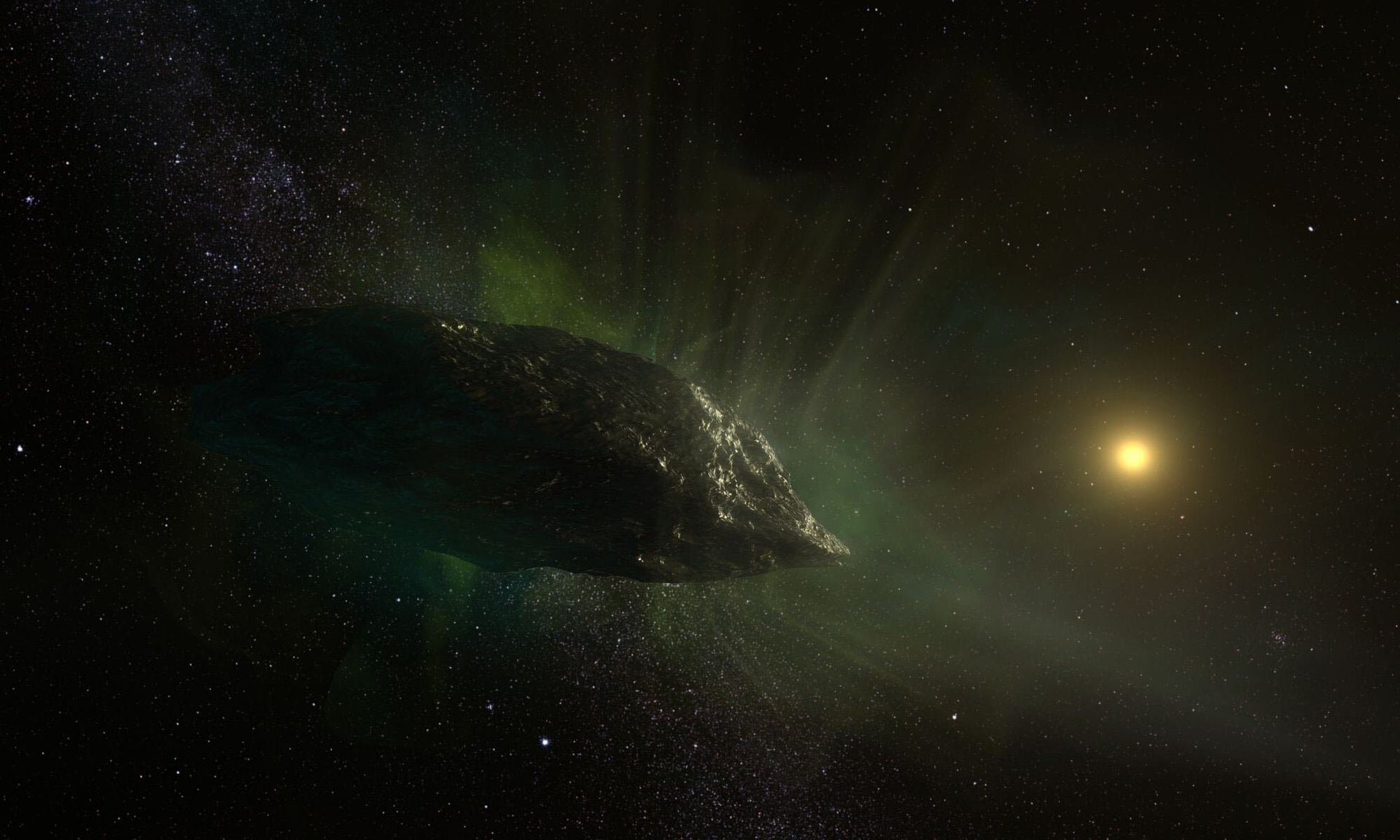
The earliest images of 3I/ATLAS, newly uncovered by Michigan State University, reveal how the interstellar object evolved as it traveled through our solar system—and how other distant solar systems might be different from our own.
Continue reading

What are the constants of nature? What do they do? What do they tell us…and what do they not tell us?
Continue reading
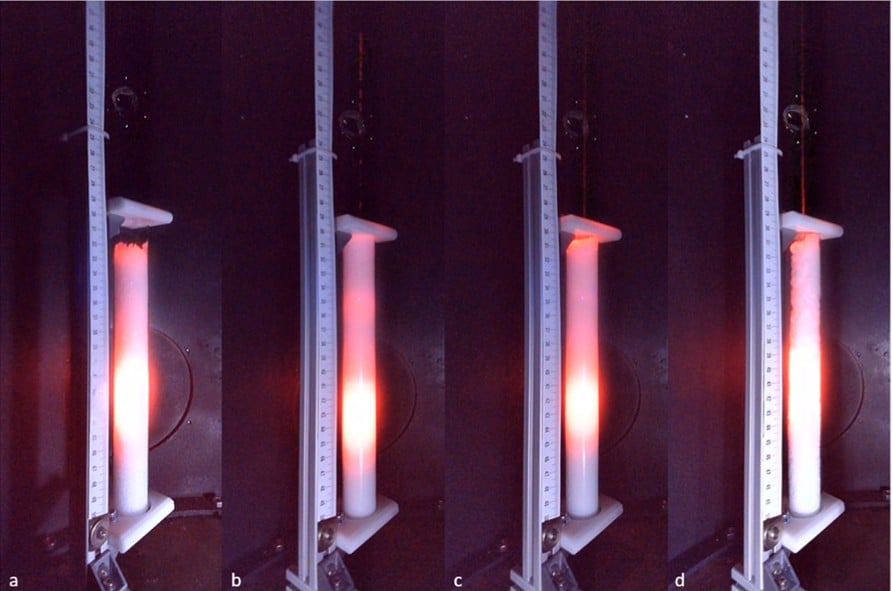
Lasers aren’t just useful for entertaining cats or pointing out features of powerpoint slides. They can also drill holes on icy extraterrestrial bodies from comets to Mars polar caps. At least according to a new paper in Acta Astronautica by researchers at the Technical University of Dresden, who describe a new laser drill for use on icy surfaces throughout our solar system.
Continue reading
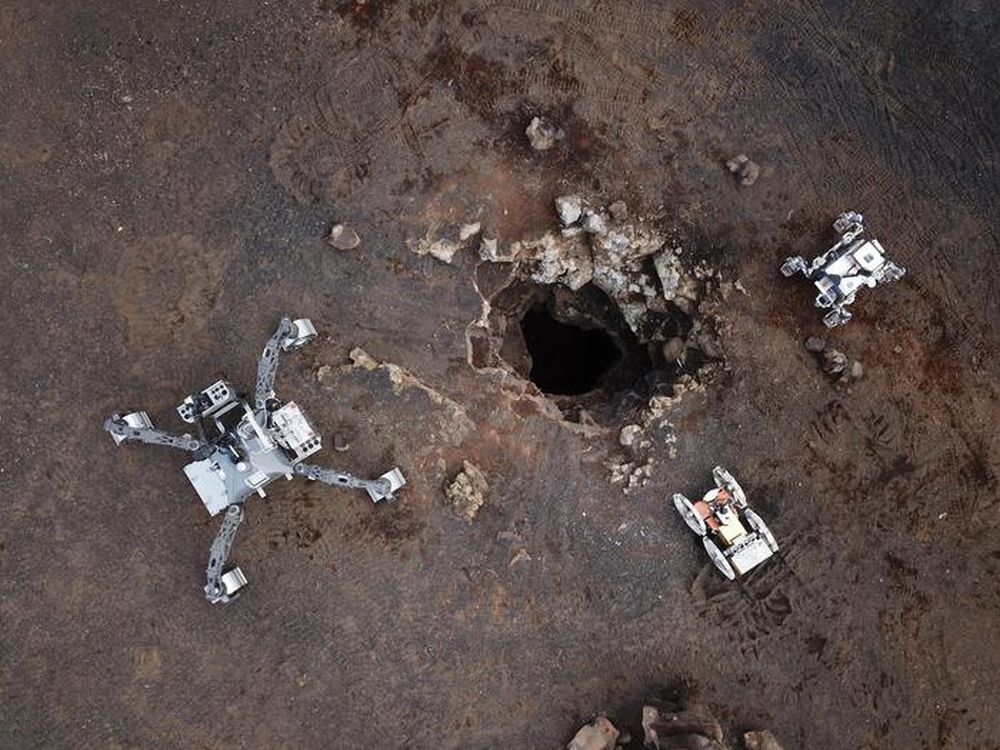
Seeking refuge in caves is natural. Animals do it, and so did our ancestors. Future lunar astronauts may do the same when they visit the Moon. Lunar caves can provide protection from the harsh radiation that bathes the Moon, the wild temperature swings on its surface, and from meteorites that can damage spacesuits and equipment. But these caves need to be explored first, and new research outlines how a team of three diverse robots working together could do the job.
Continue reading
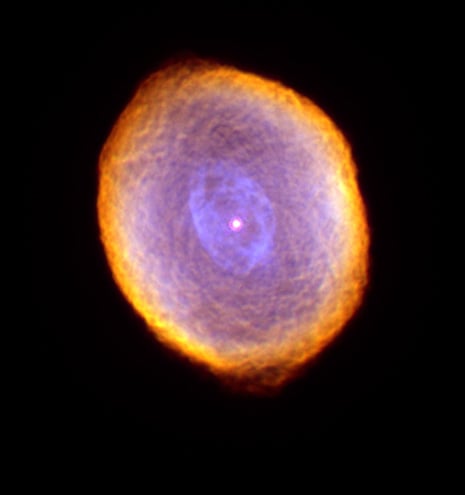
A study published in a recent edition of Astrophysical Journal Letters by researchers at the University of Manchester and Hong Kong University has charted the growth and evolution of IC418, spanning observations going all the way back to years after its discovery in the late 19th century.
Continue reading
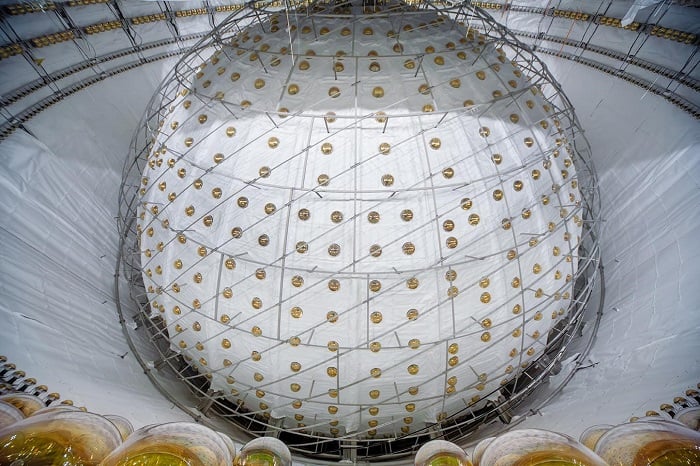
Neutrinos are one of the most enigmatic particles in the standard model. The main reason is that they’re so hard to detect. Despite the fact that 400 trillion of them created in the Sun are passing through a person’s body every second, they rarely interact with normal matter, making understanding anything about them difficult. To help solve their mysteries, a new neutrino detector in China recently started collecting data, and hopes to provide insight on between forty and sixty neutrinos a day for the next ten years.
Continue reading
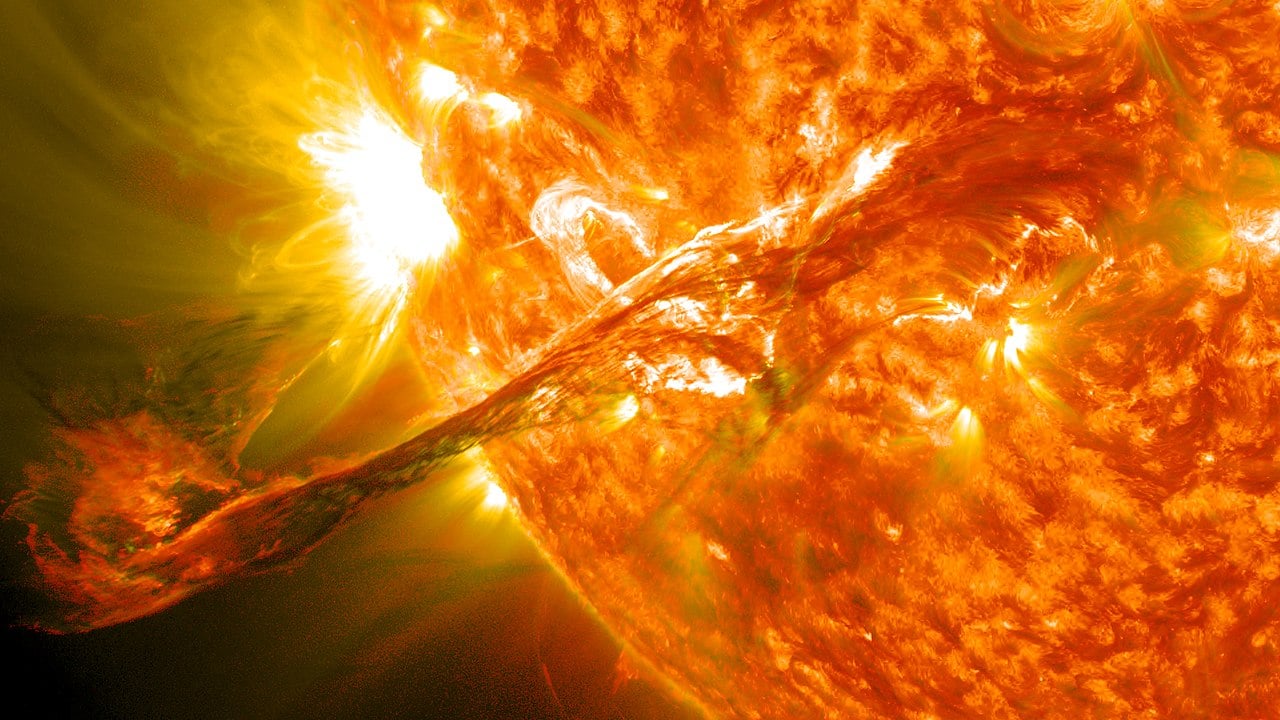
Just as Earth has its four familiar seasons, our Sun experiences its own version of seasonal cycles that affect life on our planet. But unlike Earth's yearly rhythm, the Sun's "seasons" unfold over an 11 year magnetic cycle that scientists are now understanding in entirely new ways.
Continue reading
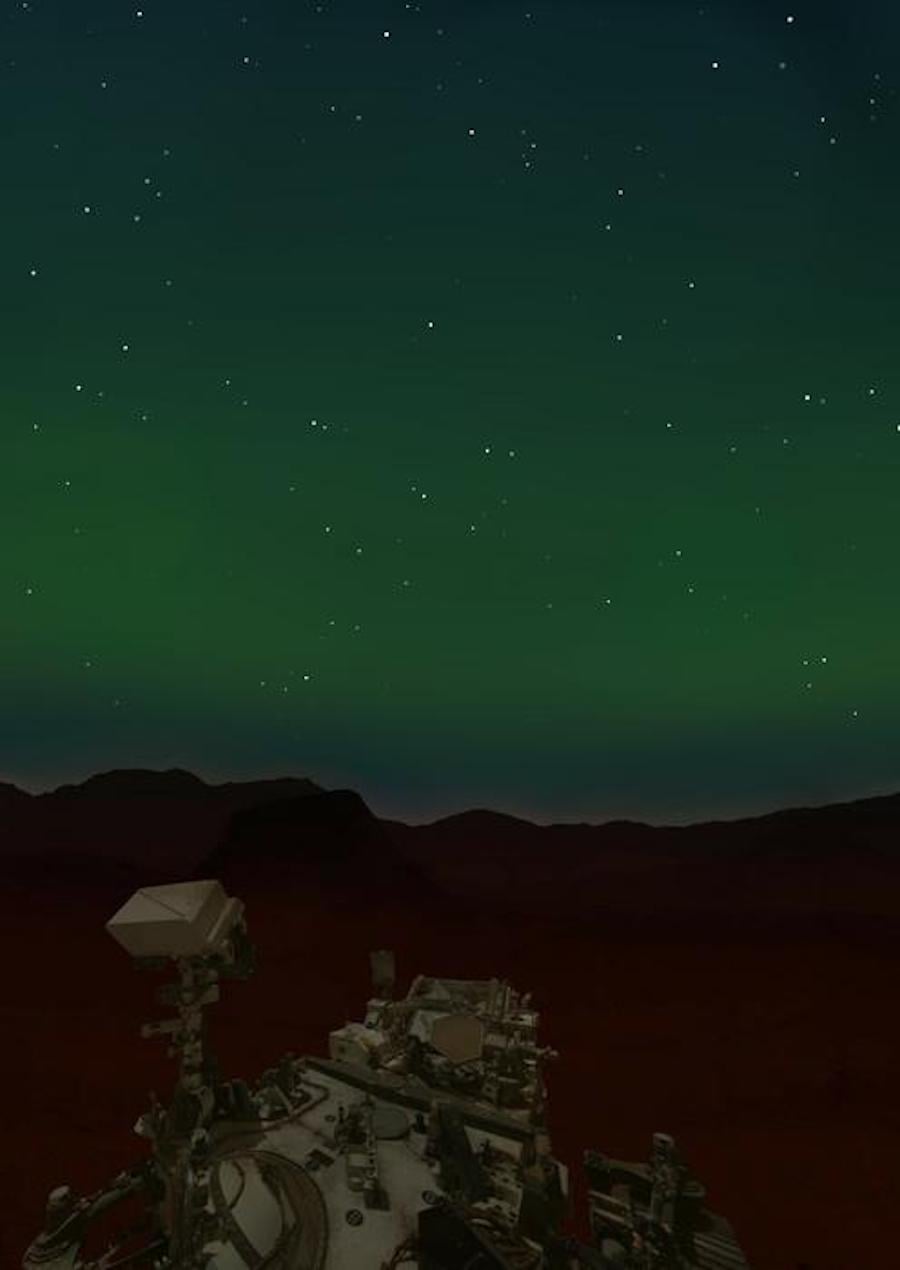
For the second time in history, the gentle glow of the aurora has been captured in Mars's night sky. It’s a phenomenon we enjoy here on Earth and we can, to a varying degree of success predict its appearance. Now a team of scientists are learning how to predict when these spectacular light shows will happen on Mars too. It's a breakthrough that could one day help protect future astronauts on the red planet while also helping us to understand these beautiful displays work in alien skies.
Continue reading
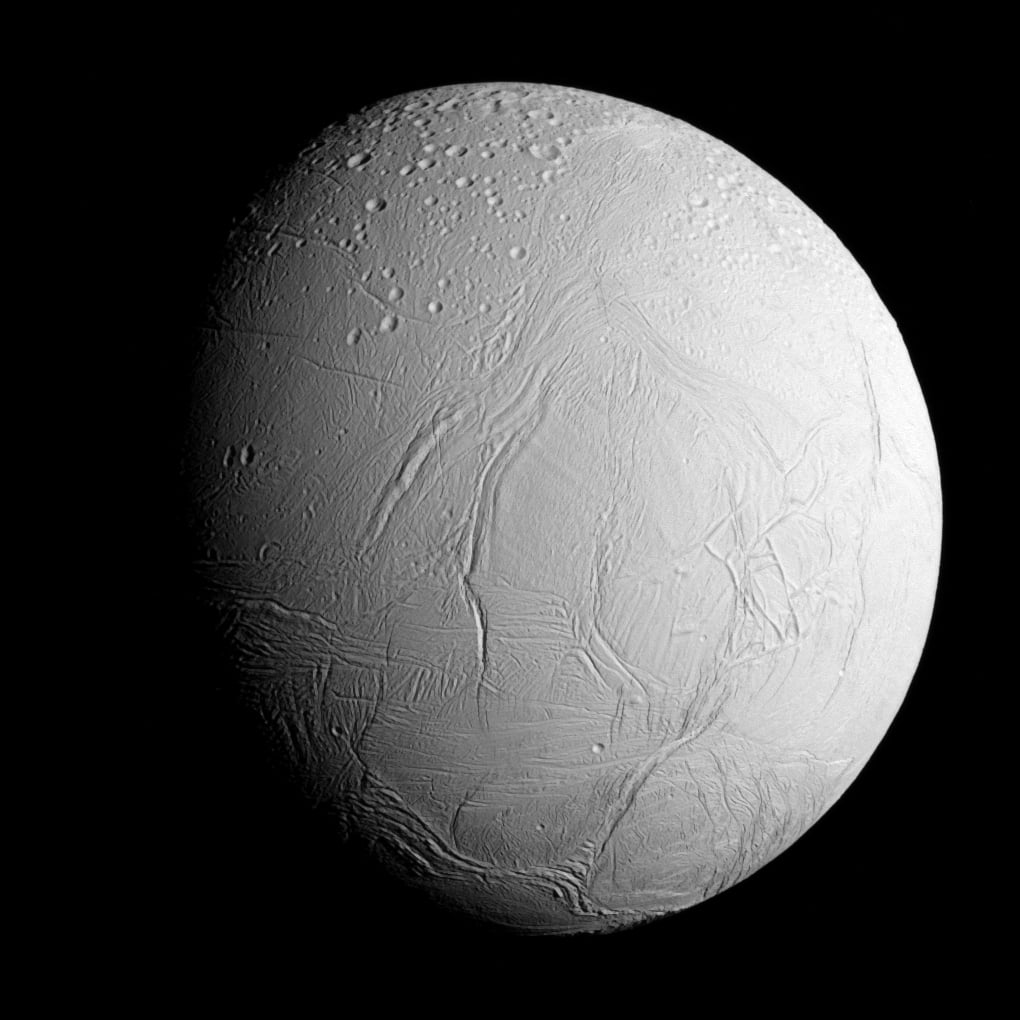
I still remember the first time I saw Saturn through a 10 inch telescope when I was ten years old. It looked just like it did in pictures, a pale yellow disk circled by its stunning ring system. What I couldn't see then were Saturn's moons, including the small, icy world of Enceladus that has since become one of the most exciting targets in the search for life beyond Earth. This tiny moon shoots spectacular plumes of water from cracks in its frozen surface, plumes that contain organic molecules. But a new study suggests we shouldn’t get too excited about what these molecules actually tell us about the possibility of life.
Continue reading
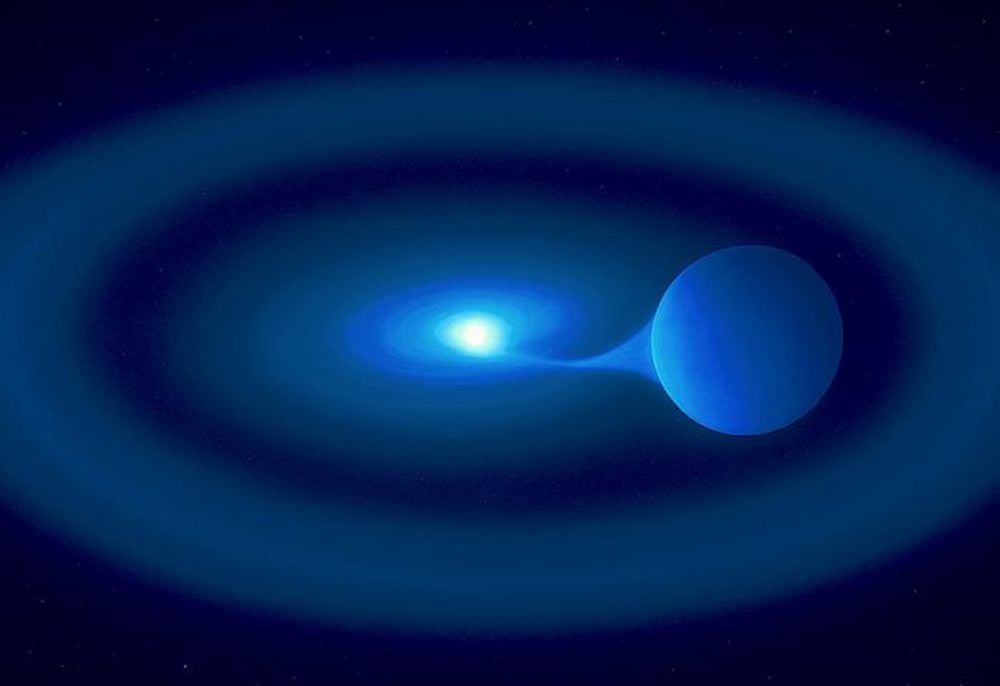
A binary star that has puzzled astronomers for decades may finally be explained. The accretor star is sucking material from its donor star so rapidly that it can't contain it all and is forming a bright, circumbinary ring.
Continue reading

In a new study, a team led by [Prof. Heidi Newberg](https://faculty.rpi.edu/heidi-newberg) from the [Rensselaer Polytechnic Institute](https://www.rpi.edu/) (RPI) recommended building a telescope with a triangular mirror rather than a traditional circular one. Such a telescope could greatly aid in the search for Earth analogs around nearby stars.
Continue reading
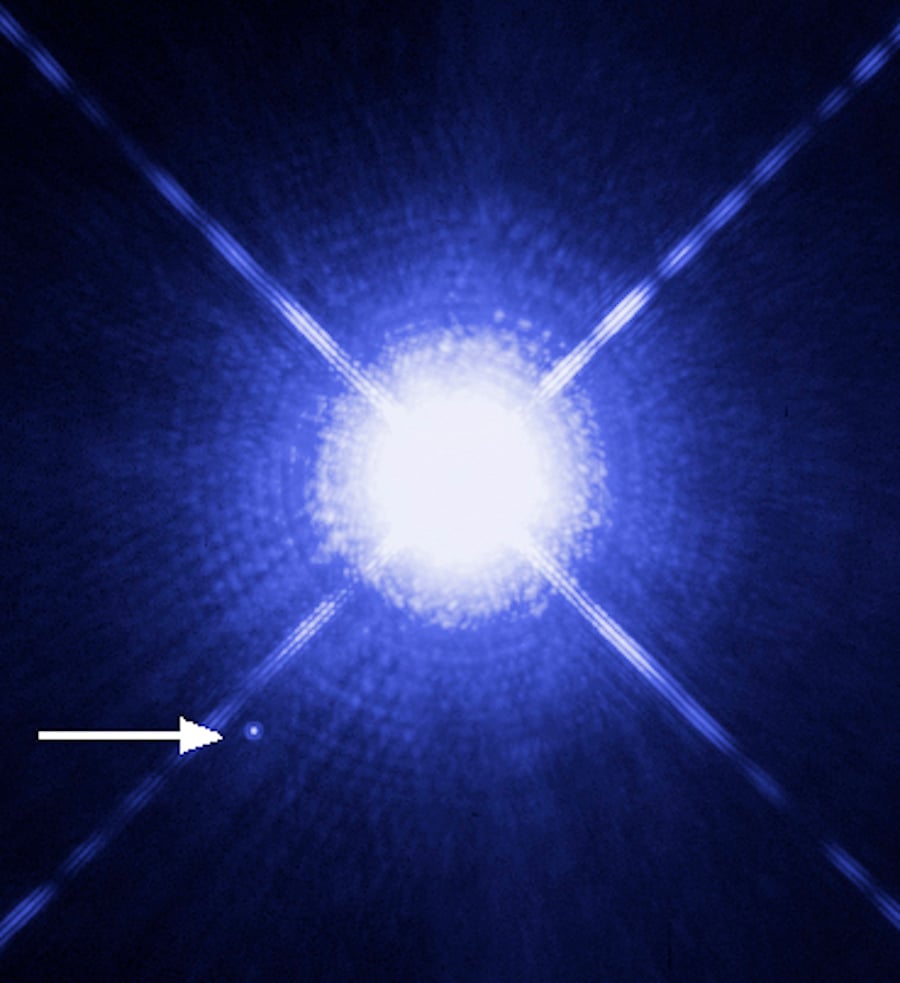
It’s really quite reasonable to assume the stars don’t move! Indeed that was the opinion of our ancestors however we now know they are far from stationary. Imagine a star racing through space so fast it could travel from Earth to the Moon in just three minutes. These are known as hypervelocity white dwarfs and they have puzzled astronomers for years. Now, a team of researchers have finally cracked the mystery of how they get launched at such incredible speeds.
Continue reading
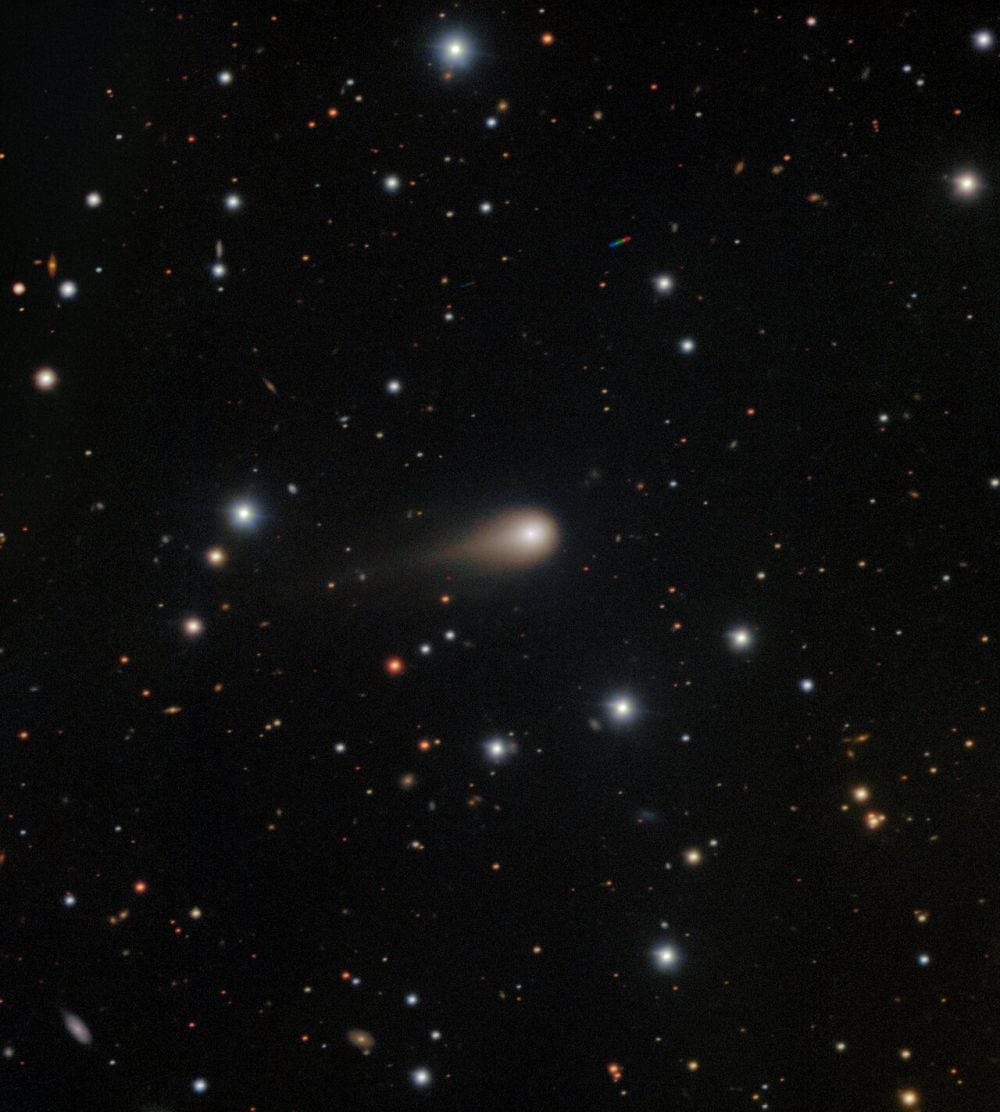
When an interstellar object (ISO) travels through our inner Solar System, the immediate question is "Where did it come from?" There are only fleeing opportunities to study these, since their trajectories take them out of the Solar System pretty quickly. A new research effort aims to understand where the most recent ISO, 3I/ATLAS, originated.
Continue reading
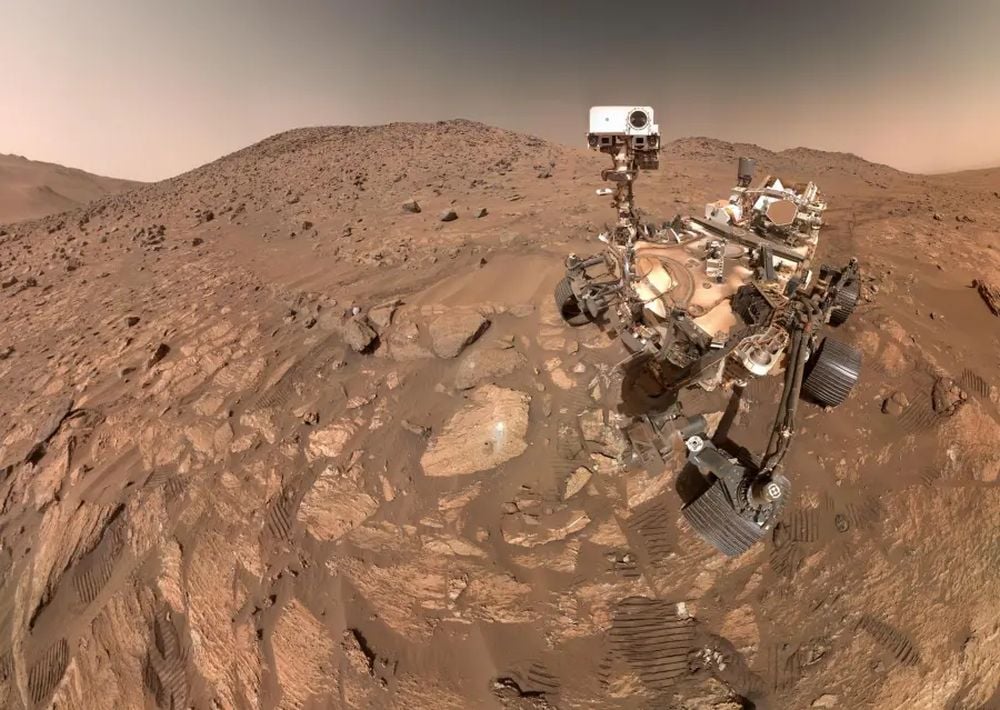
NASA Says Mars Rover Discovered Potential Biosignature Last Year - https://www.nasa.gov/news-release/nasa-says-mars-rover-discovered-potential-biosignature-last-year/
Redox-driven mineral and organic associations in Jezero Crater, Mars - https://www.nature.com/articles/s41586-025-09413-0
Continue reading
 Universe Today