Using the Solar Gravitational Lens Will Be Extremely Difficult

By Andy Tomaswick - May 05, 2025 10:27 AM UTC | Solar Astronomy
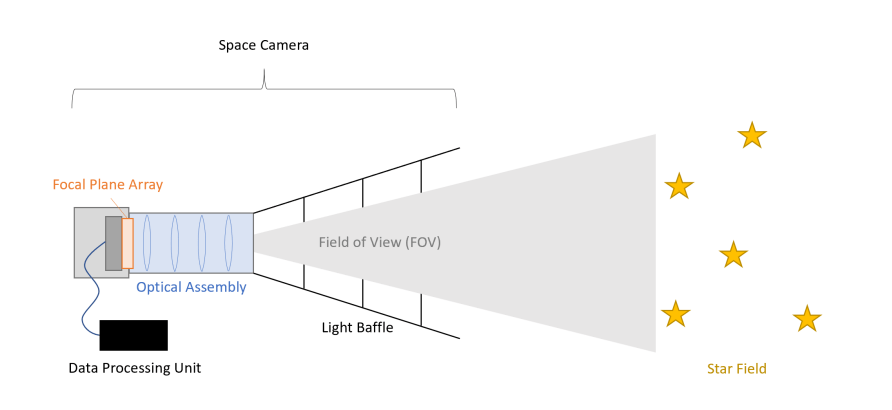
The solar gravitation lens (SGL) has much potential as a telescope. This point in space, located about 650 AU away from the Sun, uses fundamental properties of physics to amplify the light from extremely far-away objects, allowing us to see them at a level of detail unachievable anywhere else. However, any SGL mission would face plenty of technical and physical challenges. A new paper by independent researcher Viktor Toth is the latest in a series that discusses those challenges when imaging a far-away exoplanet, and in particular, looks at the difficulties in dealing with potential moving cloud cover. He concludes that using the SGL might not be the most effective way of capturing high-resolution images of an exoplanet, after all.
Continue reading

African Space Agency takes flight

By Allen Versfeld - May 04, 2025 07:30 PM UTC | Missions
On 20 April, 2025, the African Space Agency (AfSA) was formally launched at an inauguration ceremony in Cairo, Egypt. The decision to create AfSA was made by the African Union (AU) in 2016 to coordinate the continent's approach to space, and enact the African Space Policy and Strategy. AfSA will coordinate African space cooperation with Europe and other international partners.
Continue reading

A Fast-Moving Pulsar Fractures the Milky Way's Galactic Bone

By Evan Gough - May 02, 2025 02:31 PM UTC | Extragalactic
The center of the Milky Way is a busy place, tightly packed with stars and dominated by the supermassive black hole Sagittarius A*. It also features powerful magnetic fields that regulate star production, influence gas dynamics and gas cloud formation, and even affect the accretion processes around Sagittarius A*. Gigantic filaments of gas that look like bones form along the magnetic field lines, and one of them appears to be fractured.
Continue reading

Book Review: The Biggest Ideas in the Universe - Space, Time and Motion

By Mark Mortimer - May 02, 2025 07:50 AM UTC | Cosmology
Has your dinner time conversations been dragging a bit of late? Feel like raising its knowledge level to a bit higher than the usual synopsis of the most recent reality TV show? Then take the challenge presented by Sean Carroll in his book "The Biggest Ideas in the Universe – Space, Time and Motion". Using this, your conversation might soon be sparkling with grand thoughts about modern physics, time travel, going faster than light and the curvature of the universe.
Continue reading

Juno Continues to Teach us About Jupiter and Its Moons

By Carolyn Collins Petersen - May 01, 2025 03:56 PM UTC | Planetary Science
The Juno spacecraft circling in Jovian space is the planetary science gift that just keeps on giving. Although it's spending a lot of time in the strong (and damaging) Jovian radiation belts, the spacecraft's instruments are hanging in there quite well. In the process, they're peering into Jupiter's cloud tops and looking beneath the surface of the volcanic moon Io.
Continue reading

Scientists Gain a New Understanding of How Stars and Planets Form

By Evan Gough - May 01, 2025 12:11 PM UTC | Astrobiology
As young stars form, they exert a powerful influence on their surroundings and create complex interactions between them and their environments. As they gobble up gas and dust, they generate a rotating disk of material. This protoplanetary disk is where planets form, and new research shows that stars can feed too quickly and end up regurgitating material back into the disk.
Continue reading

Kardashev Type 2 Civilizations Might Be An Unsustainable Fantasy

By Evan Gough - May 01, 2025 08:33 AM UTC | Astrobiology
We tend to think of Extraterrestrial Intelligences (ETIs)—if they exist—as civilizations that have overcome the problems that still plague us. They're advanced, peaceful, disease-free technological societies that enjoy absolute political stability as they accomplish feats of impeccable engineering. Can that really be true in a Universe where entropy sets the stage upon which events unfold?
Continue reading

Flexible Launch Opportunities for the Uranus Flagship Mission

By Laurence Tognetti, MSc - April 30, 2025 09:18 PM UTC | Missions
What methods can be employed to send a spacecraft to Uranus despite the former's immense distance from Earth? This is what a recent study presented at the 56th Lunar and Planetary Science Conference hopes to address as a team of scientists investigated ways to cut the travel time to the second most distant planet from the Sun. This study has the potential to help scientists, engineers, and mission planners develop low-cost and novel techniques for deep space travel while conducting cutting-edge science.
Continue reading

Harnessing Nanosatellite Technology for Lunar Infrastructure

By Laurence Tognetti, MSc - April 30, 2025 08:23 PM UTC | Space Exploration
How can nanosatellites help advance lunar exploration and settlement? This is what a recent study presented at the 56th Lunar and Planetary Science Conference hopes to address as a team of researchers from Grahaa Space in India investigated the pros, cons, and applications for using nanosatellites on the Moon. This study has the potential to help scientists, engineers, mission planners, and future lunar astronauts develop and test new technologies for advancing lunar exploration, and possibly beyond the Moon.
Continue reading

Exploring Valles Marineris on Mars with Helicopters, Not Rovers

By Laurence Tognetti, MSc - April 30, 2025 06:20 PM UTC | Planetary Science
What are the best methods to explore Valles Marineris on Mars, which is the largest canyon in the solar system? This is what a recent study presented at the 56th Lunar and Planetary Science Conference hopes to address as a team of researchers investigated how helicopters could be used to explore Valles Marineris, which could offer insights into Mars' chaotic past. This study has the potential to help scientists and engineers develop new methods for studying Mars's history and whether the Red Planet once had life as we know it.
Continue reading

Astronomers Observe Dark Matter Bridge in the Perseus Cluster

By Matthew Williams - April 30, 2025 03:54 PM UTC | Extragalactic
For decades, astronomers considered the Perseus cluster to be a stable grouping of galaxies, but more recent observations have shown signs that it experienced a merger in the past. Thanks to an international team of astronomers using the Subaru Telescope at Maunakea, Hawaii, a "Dark Matter bridge" connecting Perseus to a subcluster of galaxies has been discovered.
Continue reading

ESA's Biomass Mission is Off to Weigh the World's Forests

By Mark Thompson - April 30, 2025 03:54 PM UTC | Missions
Space exploration not only allows us to look out into the universe but it also allows us to look back at Earth. ESA's Biomass satellite will measure the amount of carbon in the world's forests, tracking how the carbon cycle absorbs and releases carbon over the seasonal cycles. It launched this week from the Kourou Spaceport in French Guiana atop a Vega-C rocket and safely reached its intended orbit. It has a synthetic aperture radar that can penetrate forest canopies like an infrared telescope can peer through dark dust clouds.
Continue reading

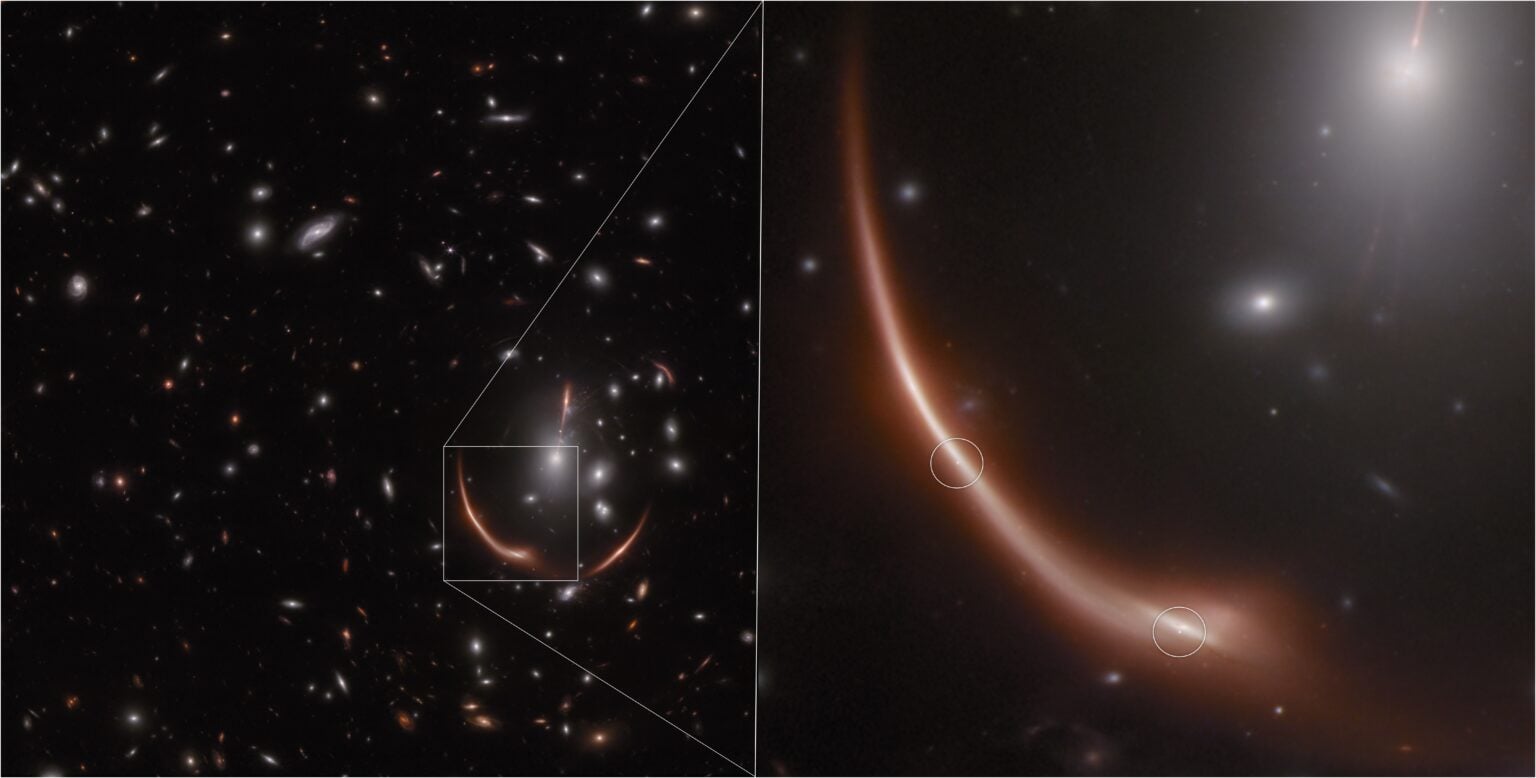
JWST Completes a Huge Survey of the Earliest Galaxies

By Mark Thompson - April 30, 2025 03:12 PM UTC | Telescopes
The James Webb Space Telescope has a number of science goals. One of them is to help understand the evolution of galaxies and their formation within the first billion years after the Big Bang. Astronomers have completed an initial Webb telescope survey that discovered 1,700 galaxy groups. Many of these groups date back to when the Universe was less than 1 billion years old. The survey spans 12 billion years of cosmic history, from these ancient formations to the present day.
Continue reading

JWST Sees How Methanol Evolves in the Outer Solar system

By Evan Gough - April 30, 2025 03:06 PM UTC | Astrobiology
Understanding how life started on Earth means understanding the evolution of chemistry in the Solar System. It began in the protoplanetary disk of debris around the Sun and reached a critical point when life appeared on Earth billions of years ago. Close to the Sun, the chain of chemical evidence is broken by the Sun's radiation. But further out in the Solar System, billions of kilometres away, some of that ancient chemistry is preserved.
Continue reading

A Comprehensive Plan To Manufacture A Solar Power Satellite From Lunar Materials

By Andy Tomaswick - April 30, 2025 01:53 PM UTC | Solar Astronomy
Space-based solar power (SBSP) has long been the dream of many space enthusiasts and energy economists. However, the reality of economic constraints has long left any practice projects on the ground. There has been plenty of discussion about how to lower the cost of entry to build the kind of space-based solar power satellite described by John Mankins in his books and articles. However, even with the advent of lower costs to orbit thanks to reusable rockets, the economic case for SBSP is still not great simply due to the sheer amount of mass required to get into orbit. Unless we get that mass from somewhere else, with a smaller gravity well. Astrostrom, which means something like "Star current" in German, is an organization based in Switzerland that hopes to make space-based solar power a reality.
Continue reading

The GEO600 Gravitational Wave Detector is Getting a Big Upgrade

By Andy Tomaswick - April 30, 2025 12:48 PM UTC | Physics
Astronomy has entered the age of gravitational waves. While there are plenty of differences between gravitational wave astronomy and typical waves of the electromagnetic spectrum, they share one similar feature: frequency. While we have detectors for a wide range of electromagnetic frequencies, gravitational wave detectors only focus on a narrow band of relatively low-frequency signals. That will change with the upgrade of the GEO600 gravitational wave detector located at the Max Planck Institute for Gravitational Physics.
Continue reading