 Universe Today
Galaxy Outflows Likely Regulate Star Formation At ‘Cosmic Noon’ NASA’s Webb Reveals
A galaxy’s ultimate habitability is likely linked to massive gaseous outflows that regulate star formation.
Beyond the Milky Way galaxy
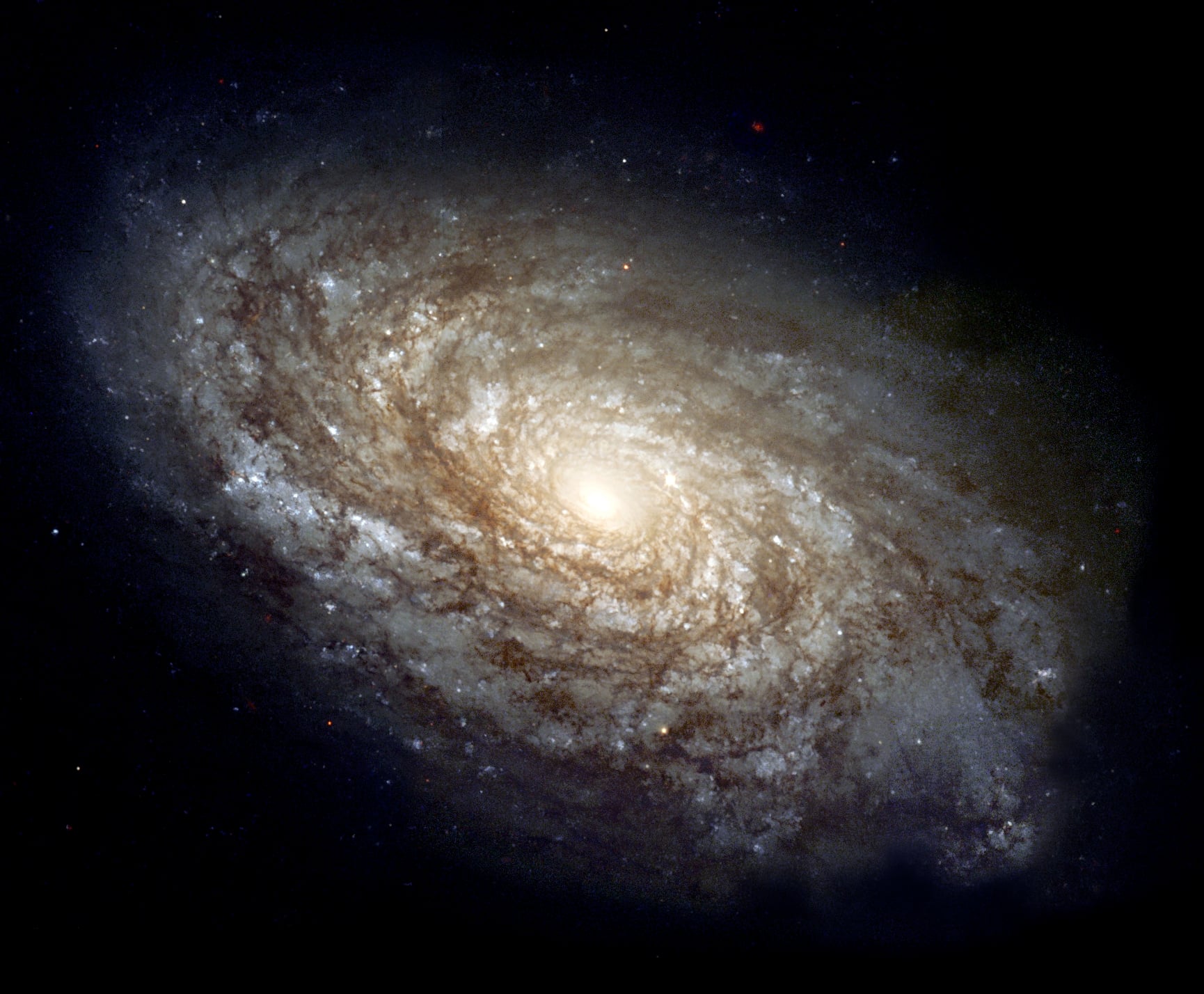
A galaxy’s ultimate habitability is likely linked to massive gaseous outflows that regulate star formation.
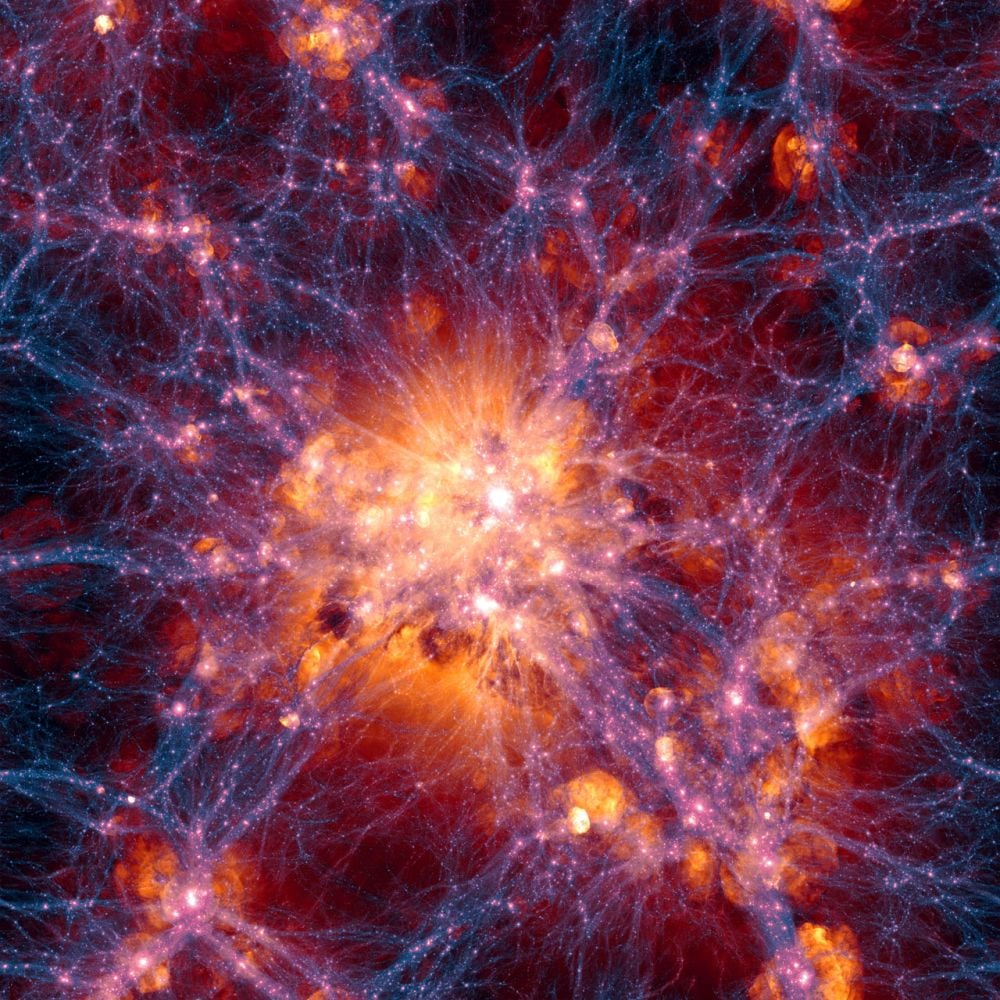
The Cosmic Noon was when the Universe's Stelliferous Era Began, and star formation was prodigious during that epoch. But since then, star formation has slowed to a relative crawl, despite the fact that we can watch them forming in regions throughout the Milky Way. What happened to the hydrogen gas that forms stars? New research found clues in a particulary dense galaxy cluster.
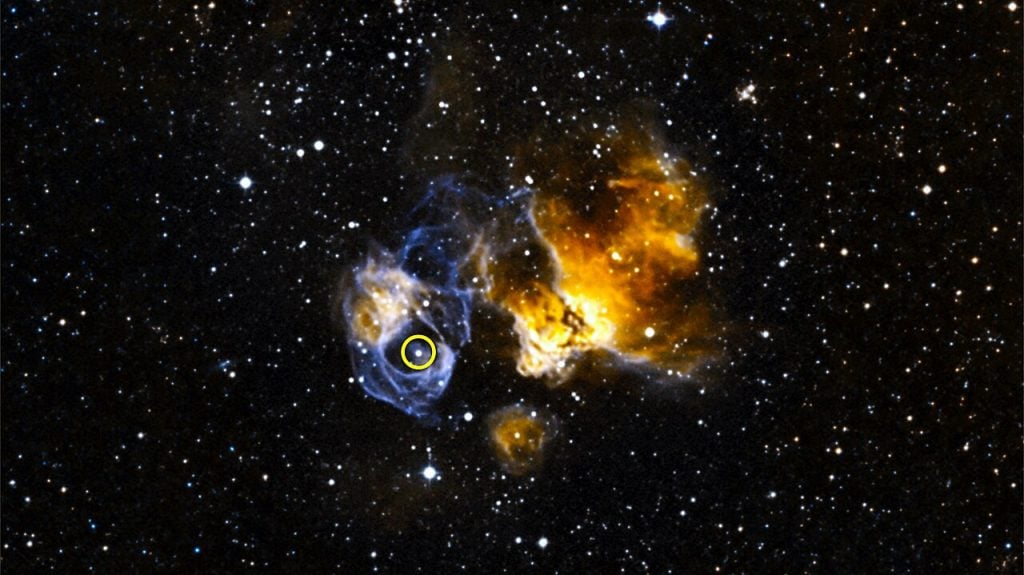
There's a strange gamma-ray emitter in the Large Magellanic Cloud that has astronomers stumped about its source. It lies within the ashes left behind by a supernova that created a compact object that's part of the system. The supernova remnant provides some evidence for the emissions, but not the whole story.
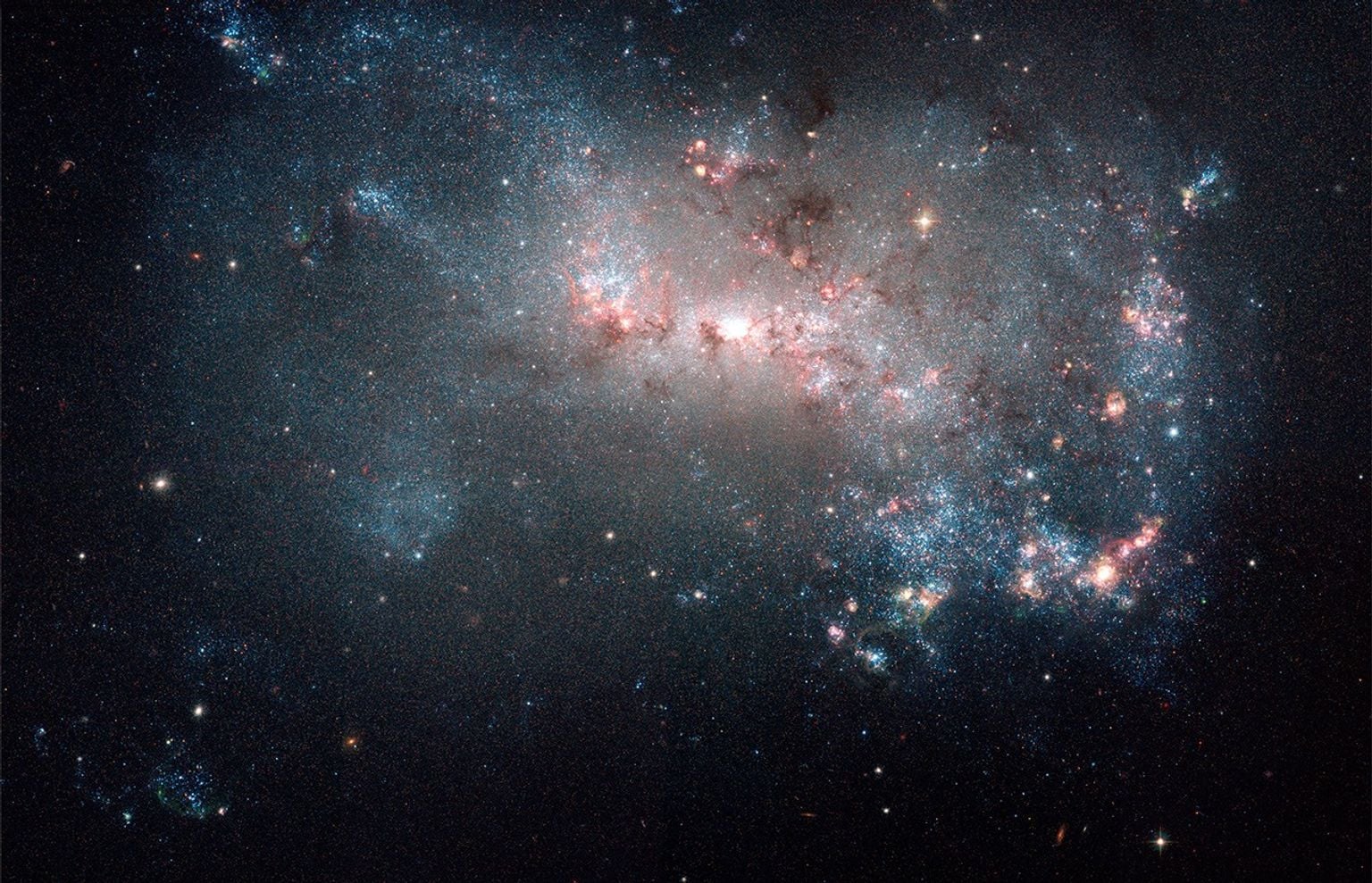
A new study of more than three dozen dwarf galaxies has surprised researchers with just how little oxygen they have been able to retain over cosmic time. The results reveal that we still have major gaps in our understanding of galaxy evolution.
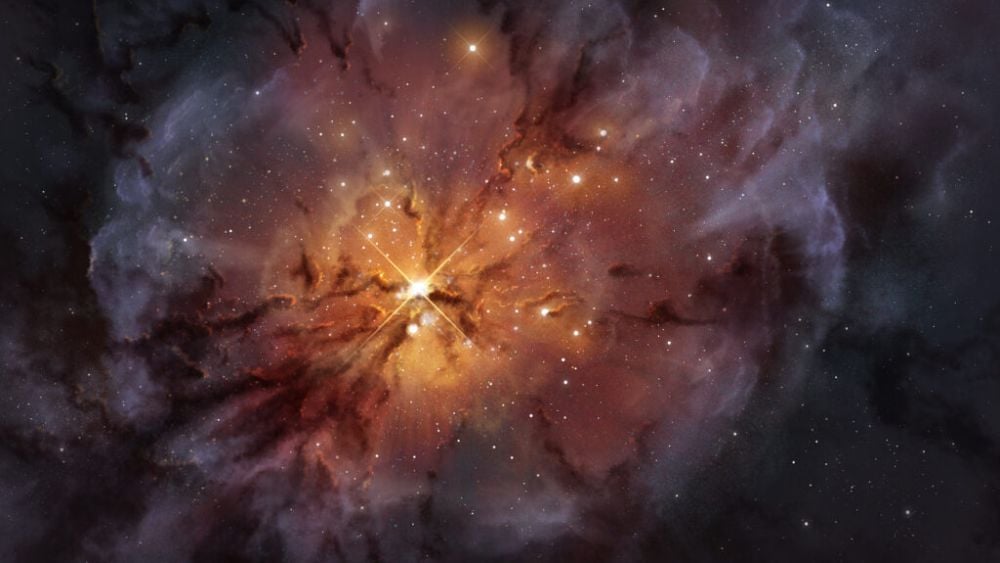
When astronomers looked at photos of the early universe taken by the James Webb Space Telescope, they found something odd: an overabundance of bright galaxies about 400 to 500 million years after the Big Bang. But these galaxies should have been far less common so soon after the Big Bang. Researchers may have figured this out: Powerful ultraviolet (Lyman-alpha) radiation produced by dense clusters of young stars acted like a leaf blower, driving light-blocking gas and dust out of the galaxy and thereby making the galaxies appear brighter.
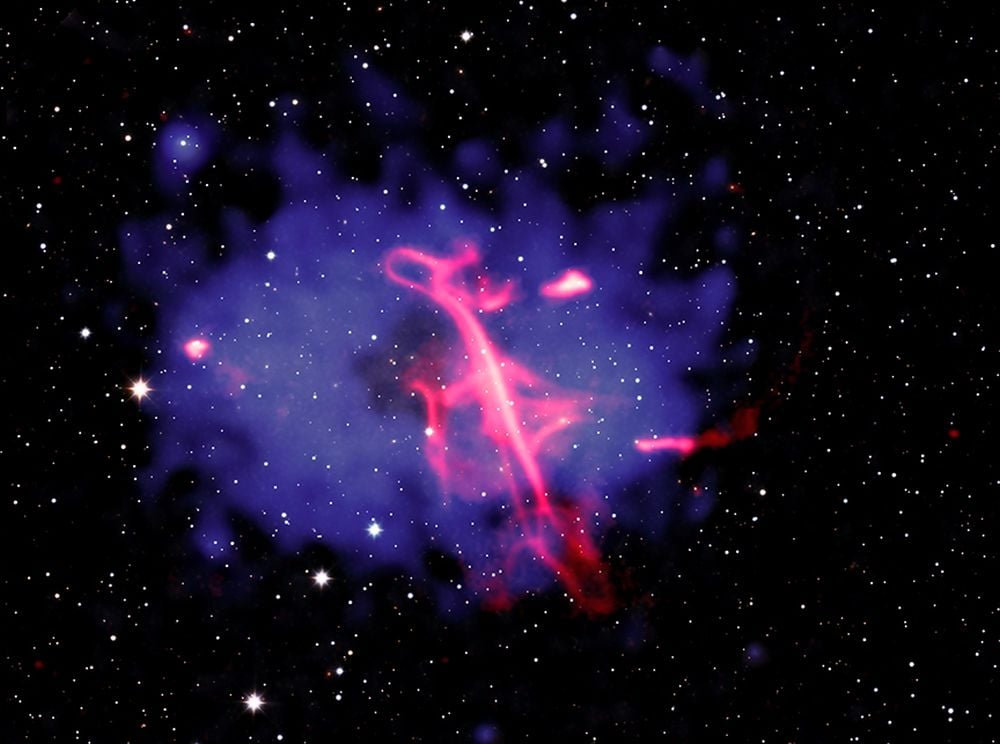
Years ago, astronomers spotted a strange radio formation beyond the Zone of Avoidance. The formation resembles a treble clef, a symbol in musical notation, and the nickname has stuck. Determining what created it has been difficult, but new research has revealed that the Treble Clef is a radio phoenix.
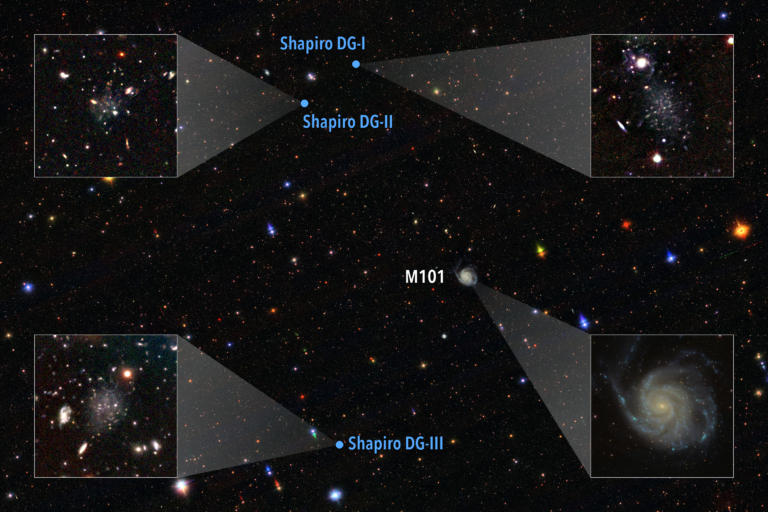
It's not too often that a high school student-turned undergraduate gets three galaxies named after him, especially ones that are breaking the rules of star formation. Julian Shapiro, an astrophysics student at the University of California, Berkeley, found strange dwarf galaxies in the vicinity of the large spiral M101 while doing research into their star formation rates as a high school student. They're now known as Shapiro I, II, and III. In the process, he's become an inspiration to other students who might be interested in astrophysical research.
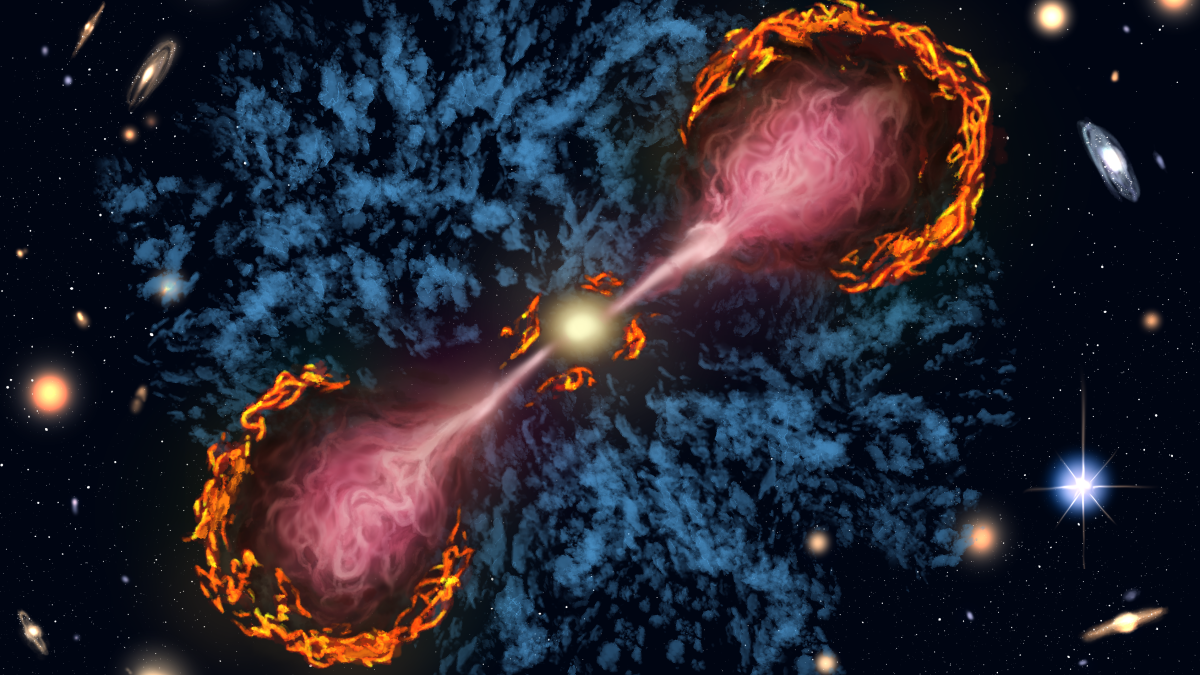
In recent decades, astronomers have found evidence that supermassive black holes can really mess with their galaxies' evolution. They gobble up material intended for star formation, quenching the birth of stars. Conversely, jets streaming away from those hungry monsters can also energize gas-rich regions and enhance the chances of a galaxy birthing batches of stars in those areas.
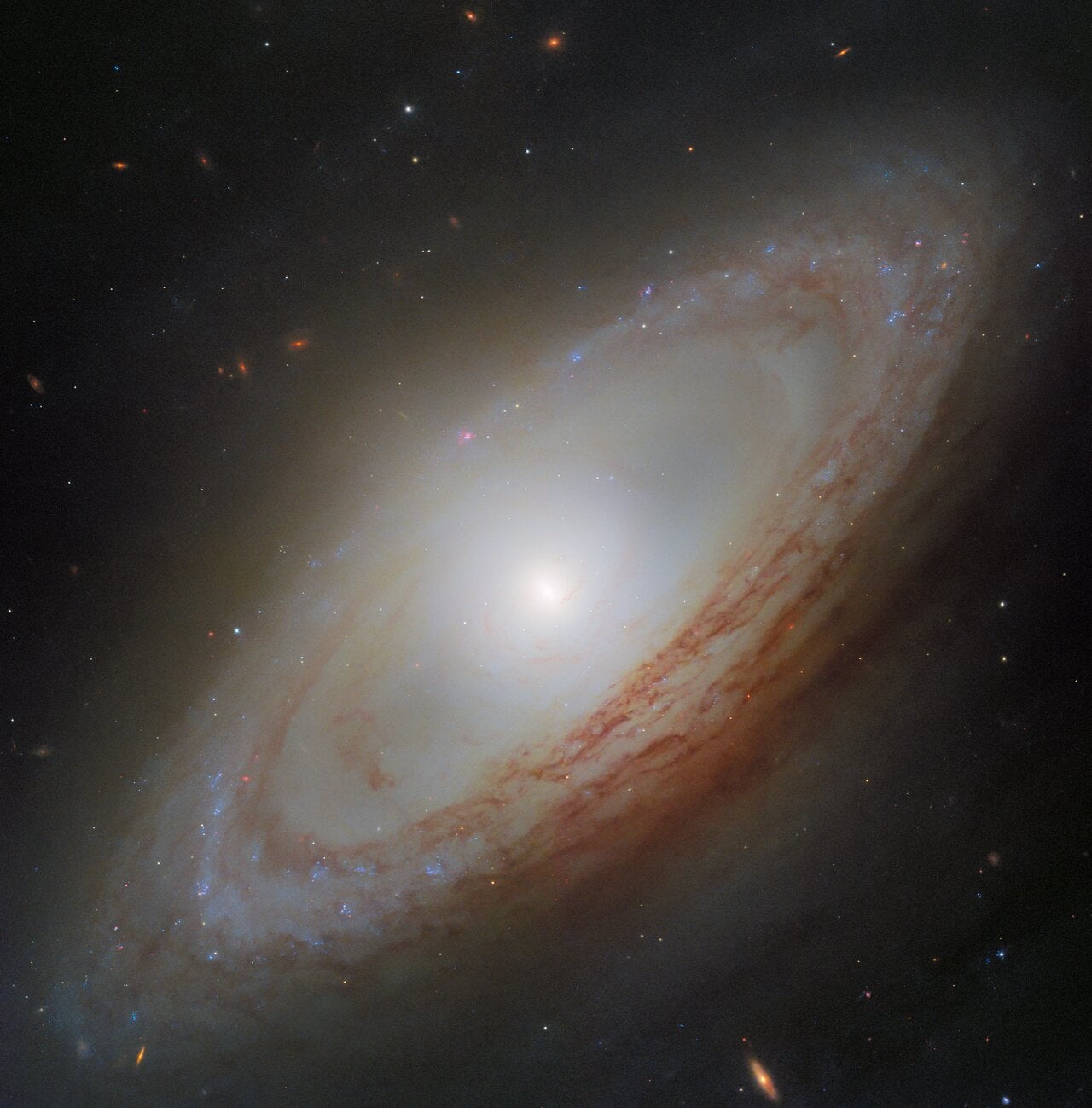
Galaxies are like snowflakes, no two exactly alike, even the spirals. The Hubble Space Telescope did a visual dive into the distant spiral NGC 4693 and found some intriguing hints to its past. For one thing, this member of the Virgo Cluster seems to have a central region that's rotating out of sync with the spiral arms and bulge. Those arms don't seem to connect to the central region, and the bulge itself seems to extend out above the plane of the galaxy.
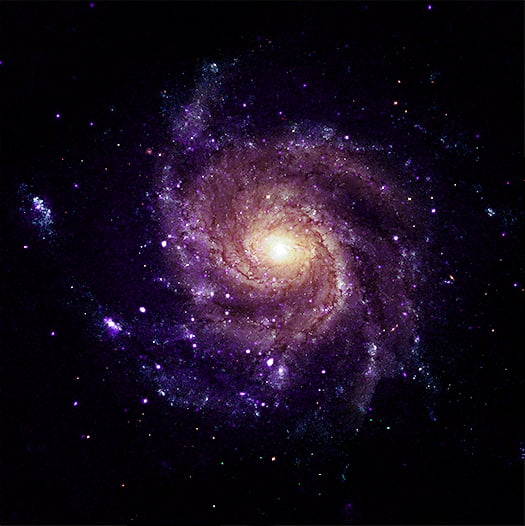
X-rays showcase some of the most unique astronomical objects in the universe. Neutron stars and black holes siphoning gas from companion stars stick out like sore thumbs at this level of radiation. However, according to a new paper by Mustafa Muhibullah and Jimmy Irwin from the University of Alabama and Rosanne Di Stefano from the Center for Astrophysics at Harvard & the Smithsonian, there appears to be another group of ultra-bright X-ray emitters that we’ve completely missed until now. They call them Hypersoft X-ray Sources (HSSs) and, according to a press release accompanying the paper, might answer two long-standing astronomical questions.

Stephan's Quintet contains the most well-studied compact galaxy group. Japanese researchers have mapped star forming gas in the Quintet, along with its turbulence. The results show that the Quintet is an evolved group of interacting galaxies where gas struggles to settle down and form stars. Even where gas is concentrated, turbulence from interactions throttles star formation.
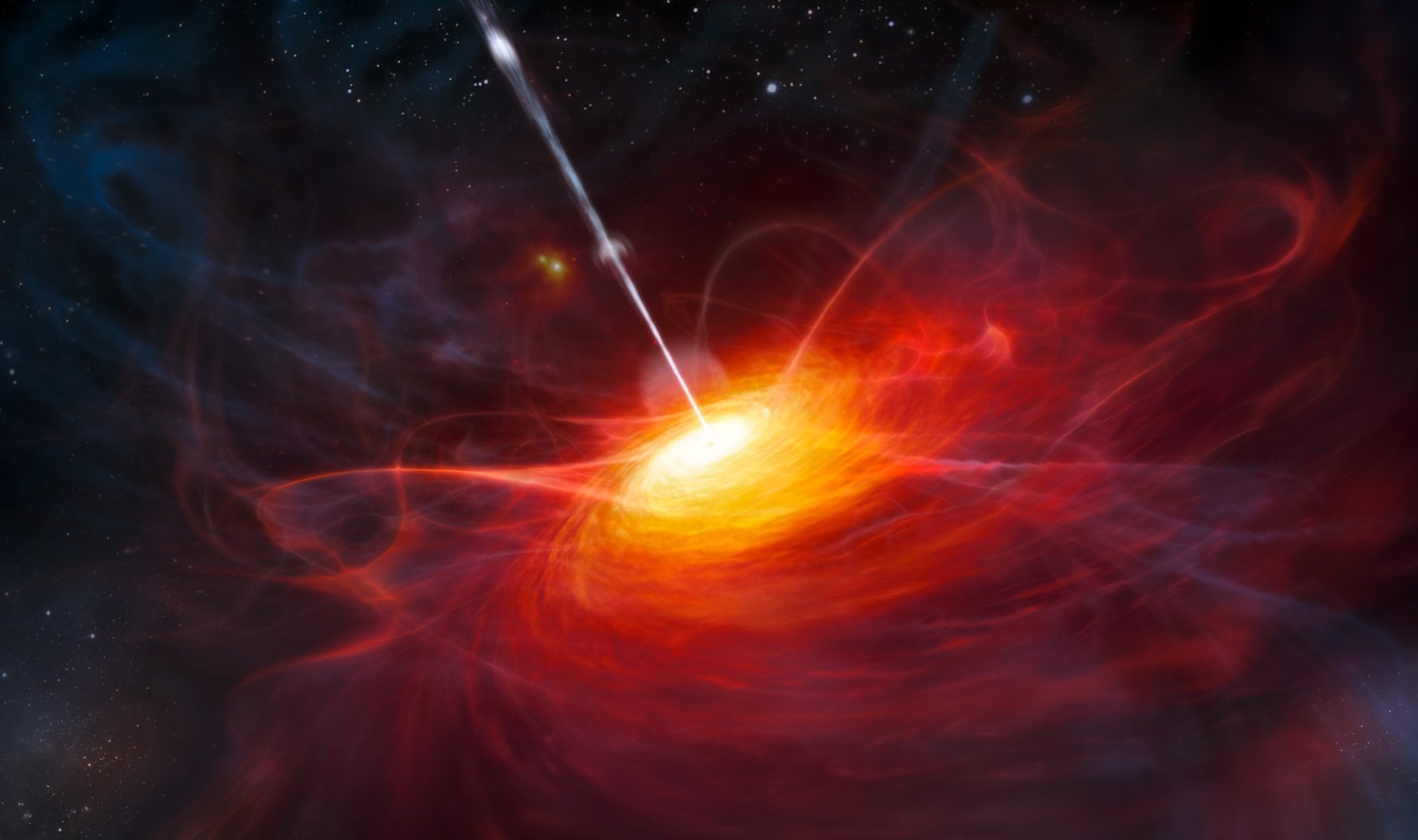
Extreme quasars near the dawn of time are giving astrophysicists clues to the formation of supermassive black holes.
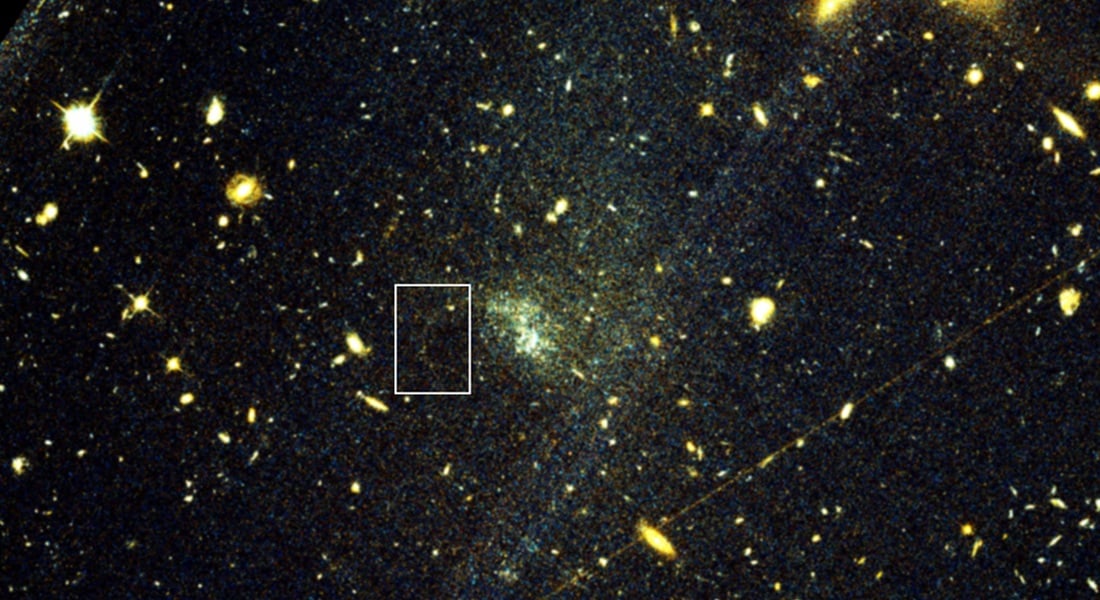
Dark matter continues to challenge astronomers as they work to solve the mystery of this so-far-unseen material that permeates the Universe. It's not that the stuff doesn't exist. It does, but we just can't see it. The only way it can be detected is by its gravitational effects on ordinary matter. A team of researchers led by University of Copenhagen PhD student Julie Kiel Holm has found a stream of stars stretching out more than 3,000 light-years from a globular cluster that appears to have been shaped by dark matter in a distant galaxy.
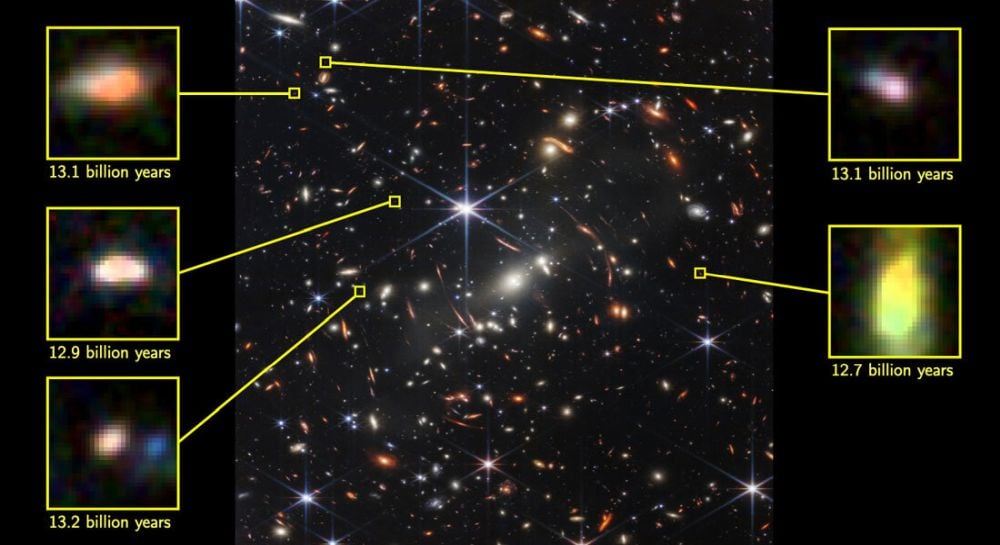
When the JWST peered into the ancient Universe, it found surprisingly massive galaxies. These galaxies were so massive they challenged our understanding of how quickly galaxies can assemble. But new research says that multitudes of low-mass stars are hiding in these galaxies, and they're actually even more massive than we thought. When will it end?
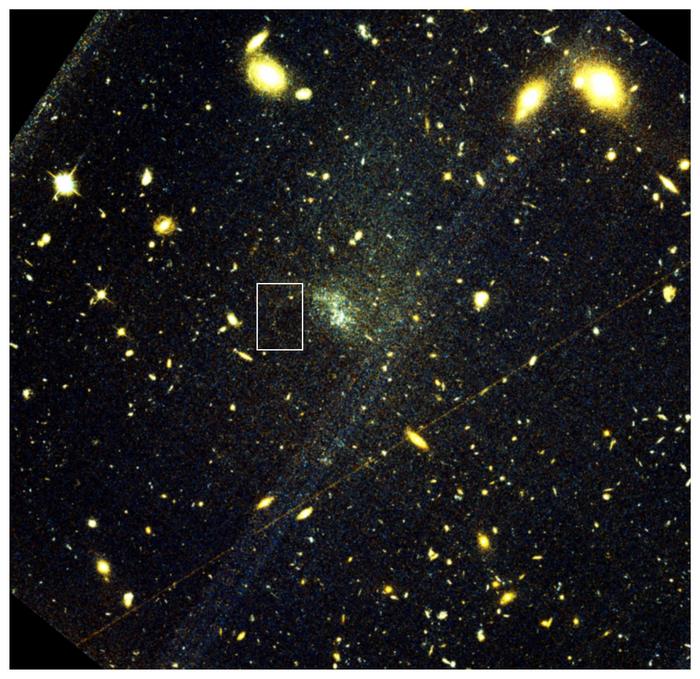
Scientists have discovered a rare star formation hidden in a distant galaxy, unlike anything seen before beyond the Milky Way. What’s more, the discovery offers a brand new way to measure the distribution of dark matter in distant galaxies.
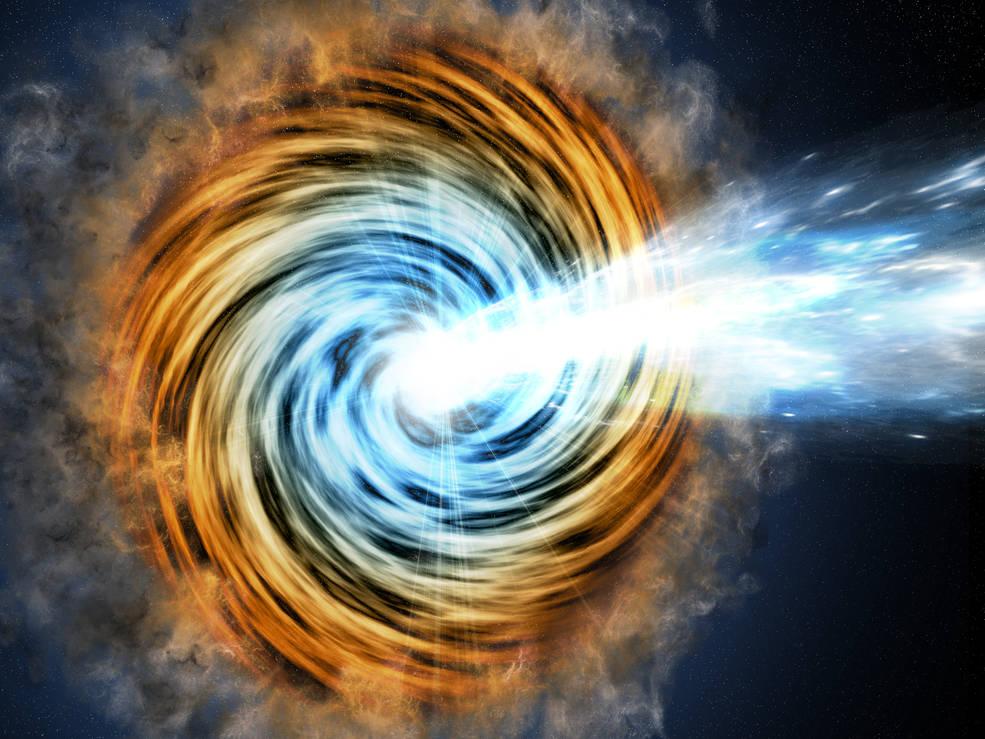
Blazars are galaxies with a jet aimed almost directly at us, and they flicker across every part of the spectrum at once. Almost everything we think we know about them comes from short observing campaigns just a handful of days, every year or two, in one narrow band of energy. A Polish and German team has now done the opposite, following a single blazar for nearly twenty years with two orbiting observatories and in two observations from 2012 they found something in the spectrum that nobody had predicted.
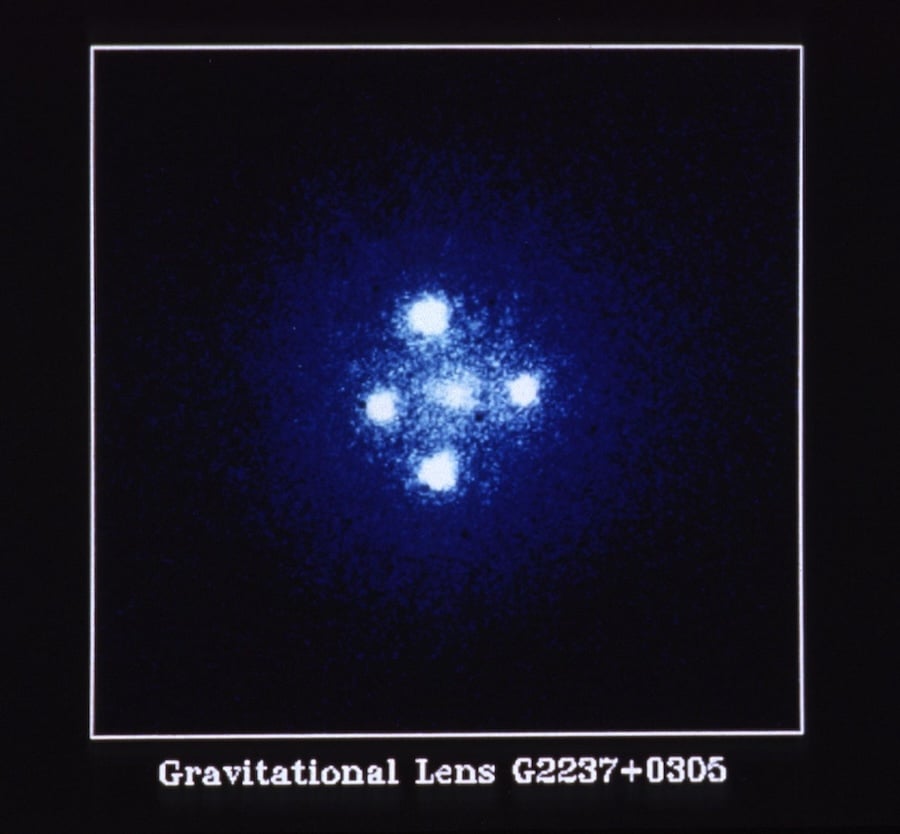
A quasar is a supermassive black hole in the act of feeding, and it’s so bright that it drowns out the galaxy it sits in. That is a nuisance if you want to weigh the galaxy and weighing it is exactly what you need to do to understand how black holes and the host galaxies grew up together. There is a way round it however, catch a quasar whose galaxy happens to be bending the light of something further away, and the bending betrays the mass. The catch is that such alignments are vanishingly rare, and the survey that might contain them holds 800,000 quasars. A team at Ohio State set a neural network on the pile and it came back with seven.
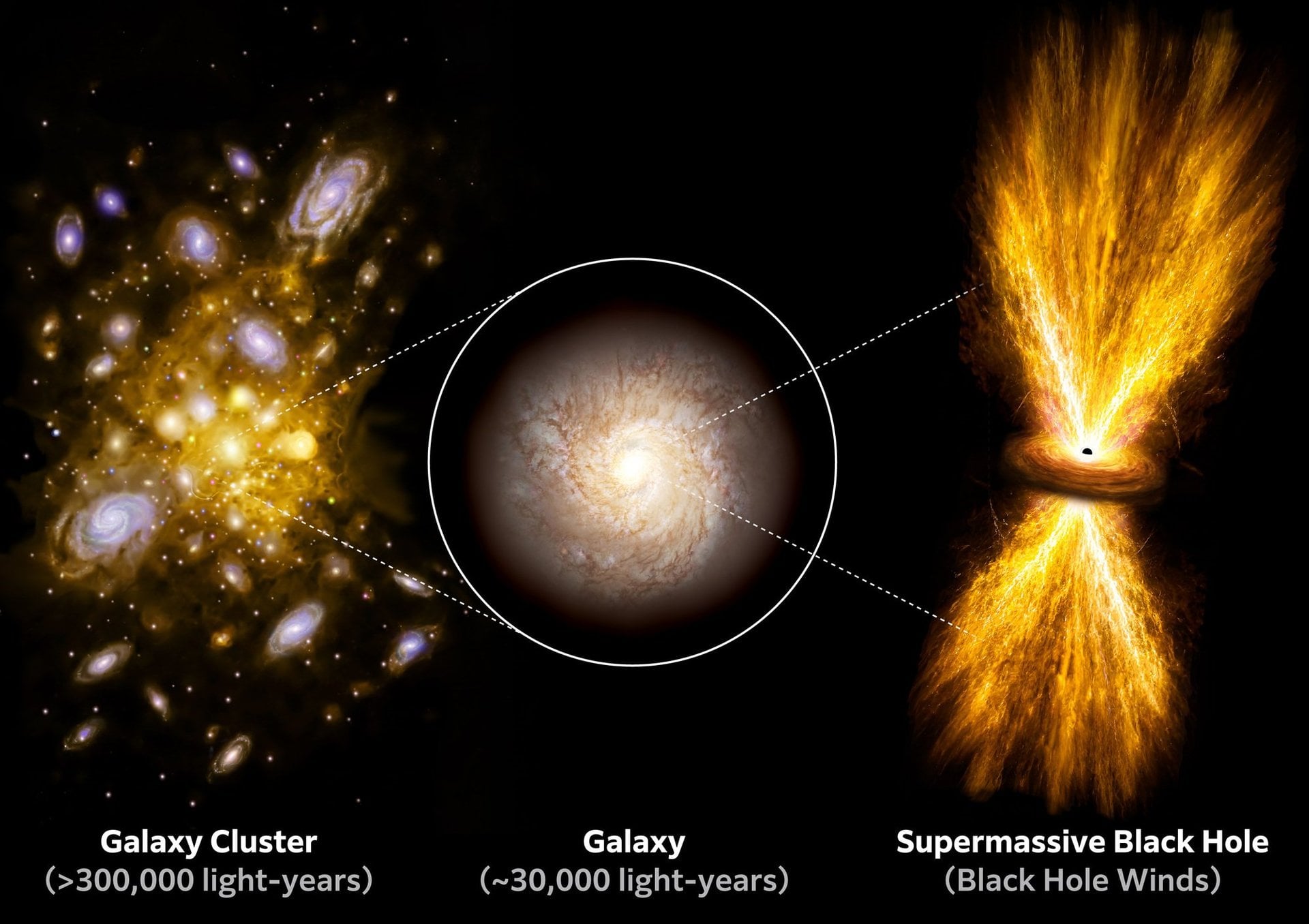
There are a number of things in the Universe that could wipe out life as we know it, but — for now, and for Earth — a blast from our galaxy's supermassive black hole isn't one of them. That's not to say that Sagittarius A* doesn't pose a danger. If it wakes up someday and blasts out a strong wind, that definitely could affect Earth. It could well have powered a quasar in the past, and could do so again.
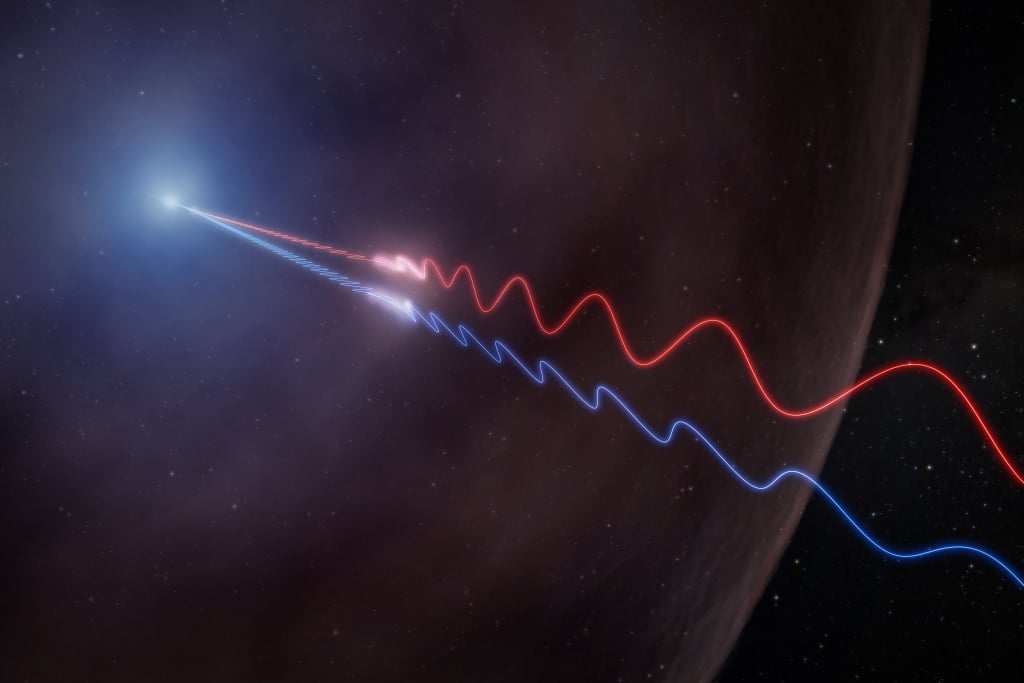
On March 10, 2026, the Fermi telescope gamma-ray burst team reported the detection of a long-duration gamma ray burst that occurred when a star exploded inside a dense, highly magnetized cloud of hydrogen gas. That HII region is a bubble of ionized hydrogen created by winds from a massive young star. Astronomers immediately turned as many telescopes as possible to view the burst and its afterglow, including the NSF's Karl Jansky Very Large Array.
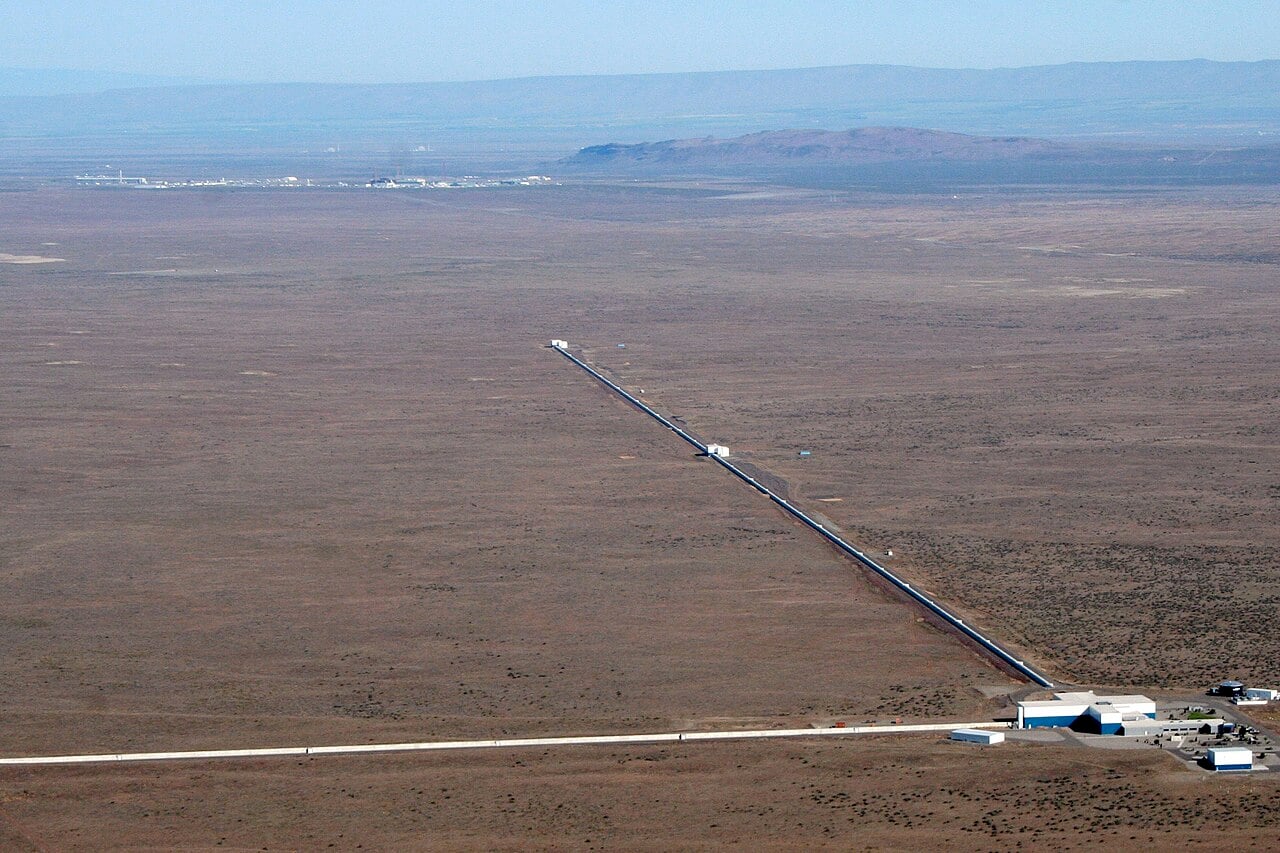
A team of researchers have found a surprisingly simple way to boost the sensitivity of gravitational wave detectors like LIGO. It’s surprisingly simple to, just point an ordinary thermal imaging camera at the mirrors themselves. The technique could improve LIGO's next upgrade by up to 31%, letting it detect neutron star collisions tens of millions of light years farther away, and is already being built into the design of its planned successor, Cosmic Explorer.