Massive Exoplanets Could Form Around Supermassive Black Holes
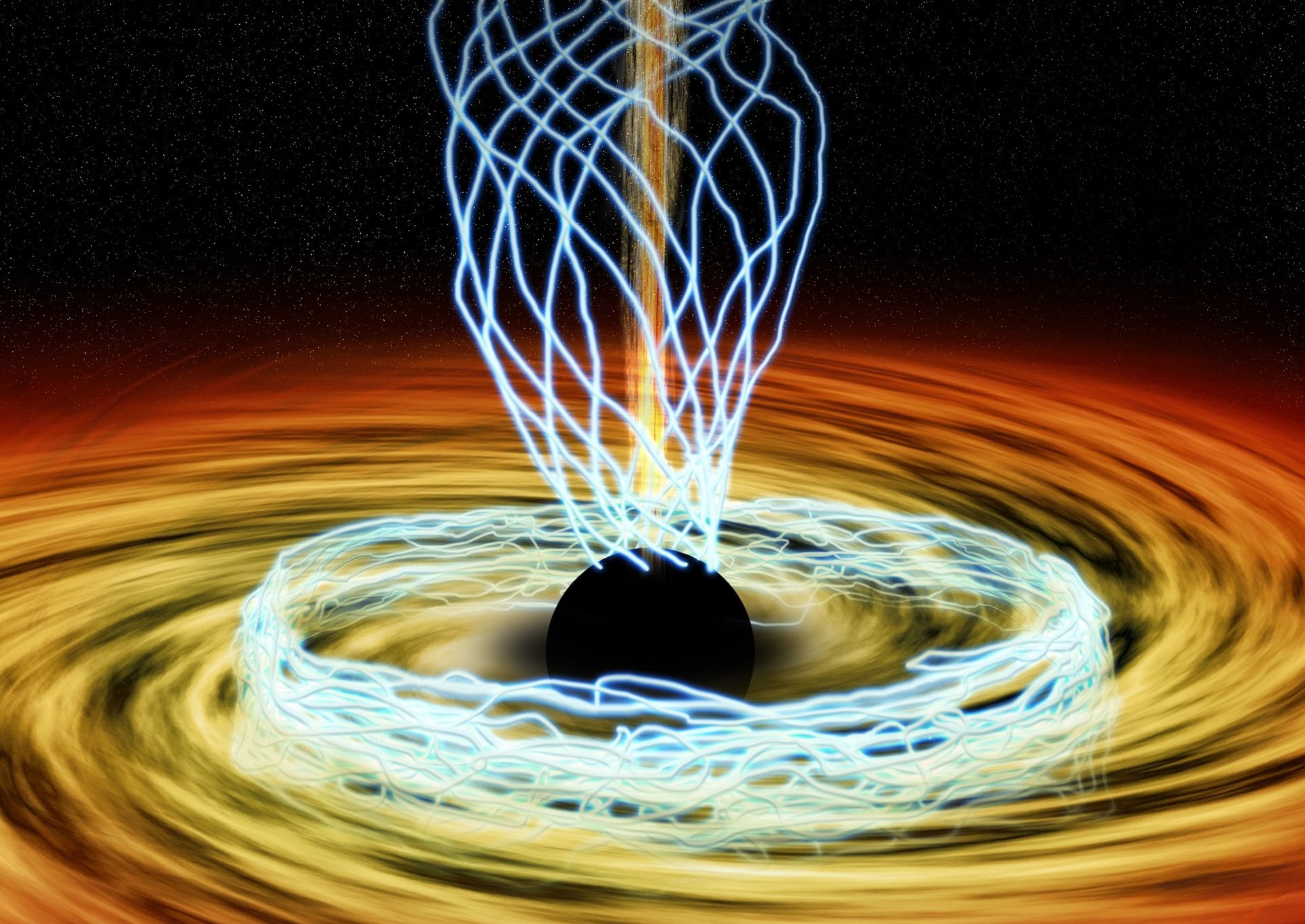
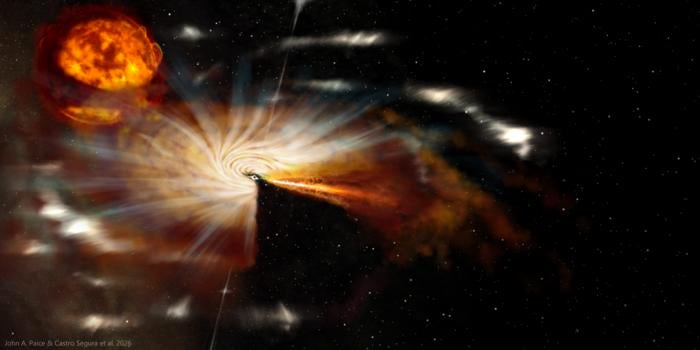
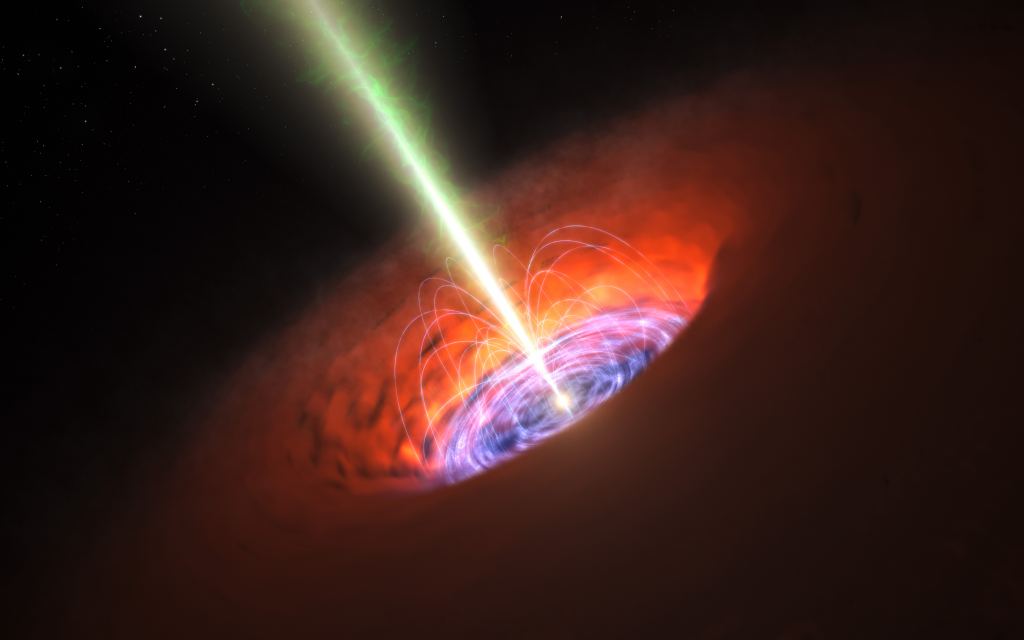
Black holes aren't just engines of inexorable destruction. They're complex regions of space and time, and under the right conditions, giant planets can form in their AGN disks.
Black holes and their mysteries
Black holes aren't just engines of inexorable destruction. They're complex regions of space and time, and under the right conditions, giant planets can form in their AGN disks.
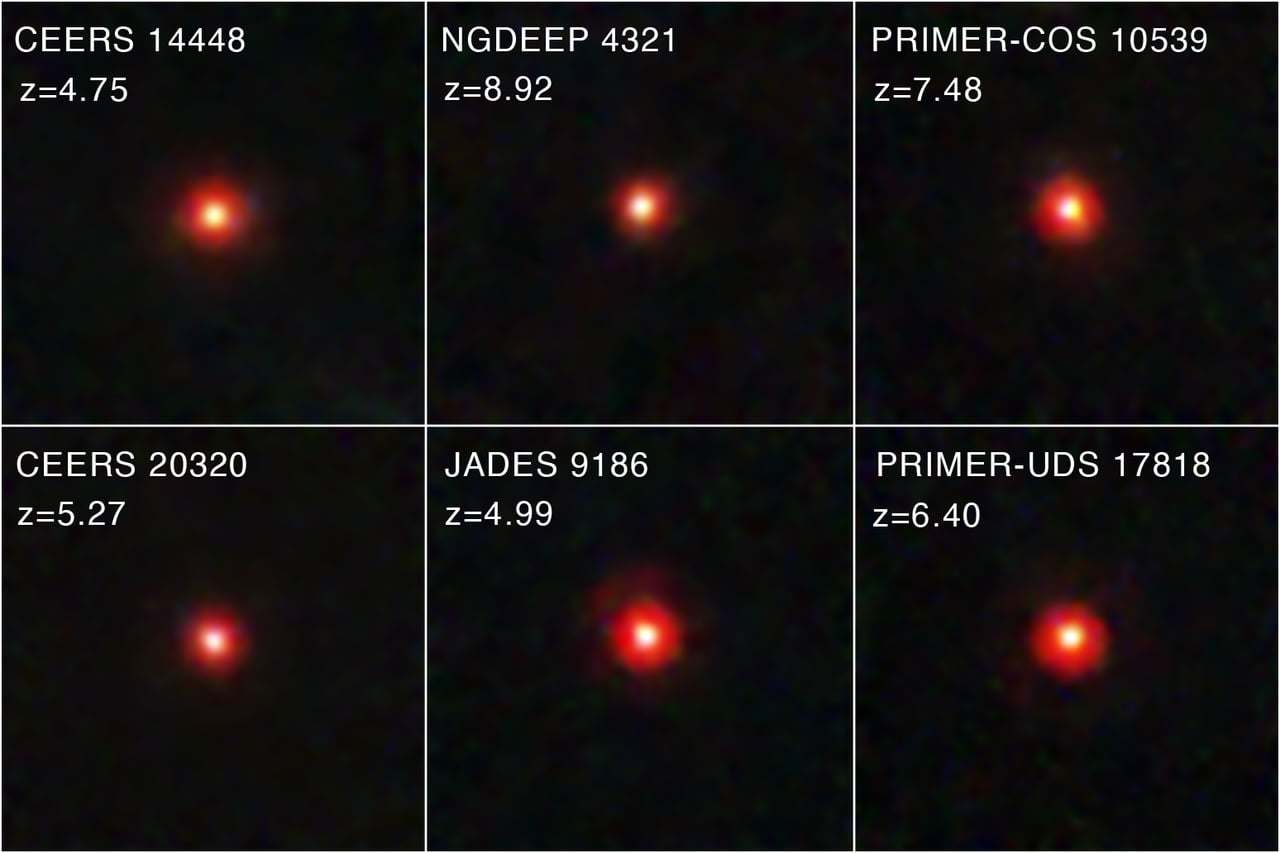
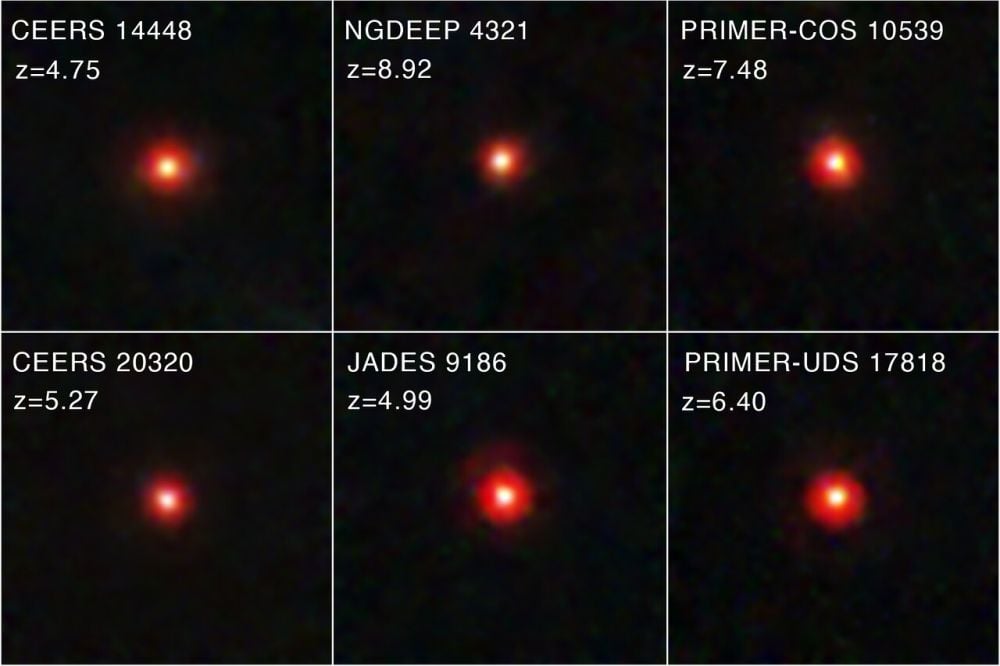
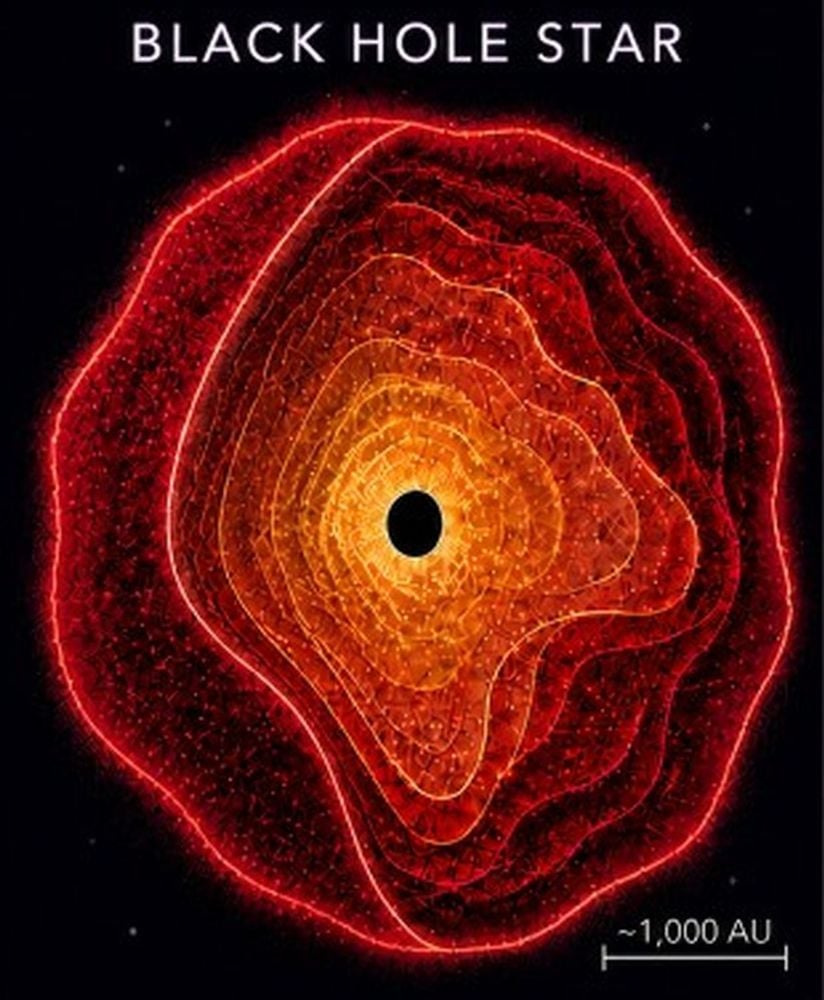
Little red dots have puzzled astronomers since their discovery in JWST data from the Universeâs deep past. Their âpowering enginesâ might resemble a newly discovered phenomenon dubbed a âblack hole starââan early, rapidly growing black hole wrapped in dense gas. This object, described in a study published today in Nature by researchers at the Institute of Science and Technology Austria (ISTA) and international collaborators, may help explain how billion-solar-mass black holes formed so soon after the Big Bang.
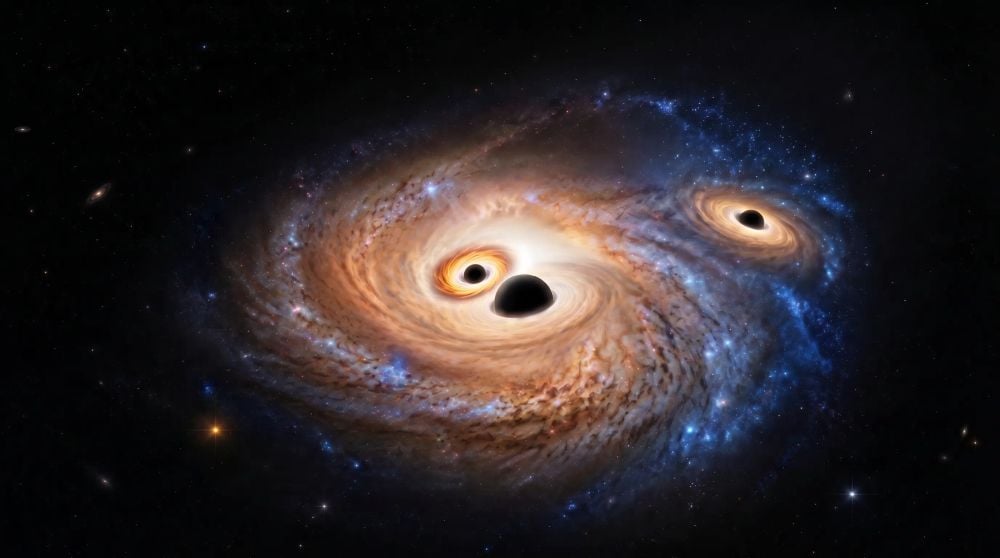
Astronomers working with the JWST have found a galaxy only 1.3 billion years after the Big Bang that contains three black holes. Two are close to the galaxy's center and will merge soon. The third is more distant, and is expected to merge much later. The discovery shows that black hole mergers were an important contributor to the masses of the SMBH we find in galaxies today.
Ask what lies inside a black hole and the honest answer has always been a bit of a shrug and something about a singularity, a point where density becomes infinite and physics stops being able to tell you anything at all. It is the most unsatisfying answer in astrophysics, second only perhaps to what happened before the Big Bang. Now two theorists in China have produced a solution in which something else sits inside the horizon entirely, a neutron star, whole and intact, twelve kilometres across, its interior perfectly well behaved and apparently defying the laws of physics.
Primordial black holes (PBH) remain hypothetical, but that isn't stopping astrophysicists from figuring out how they could interact with other stellar objects. New research shows how PBHs, formed in the early Universe from collapsing pockets of dense subatomic matter instead of from stars, can enter white dwarfs. In some cases, that could've triggered a Type Ia supernova with particular chemical fingerprints, which should be detectable.
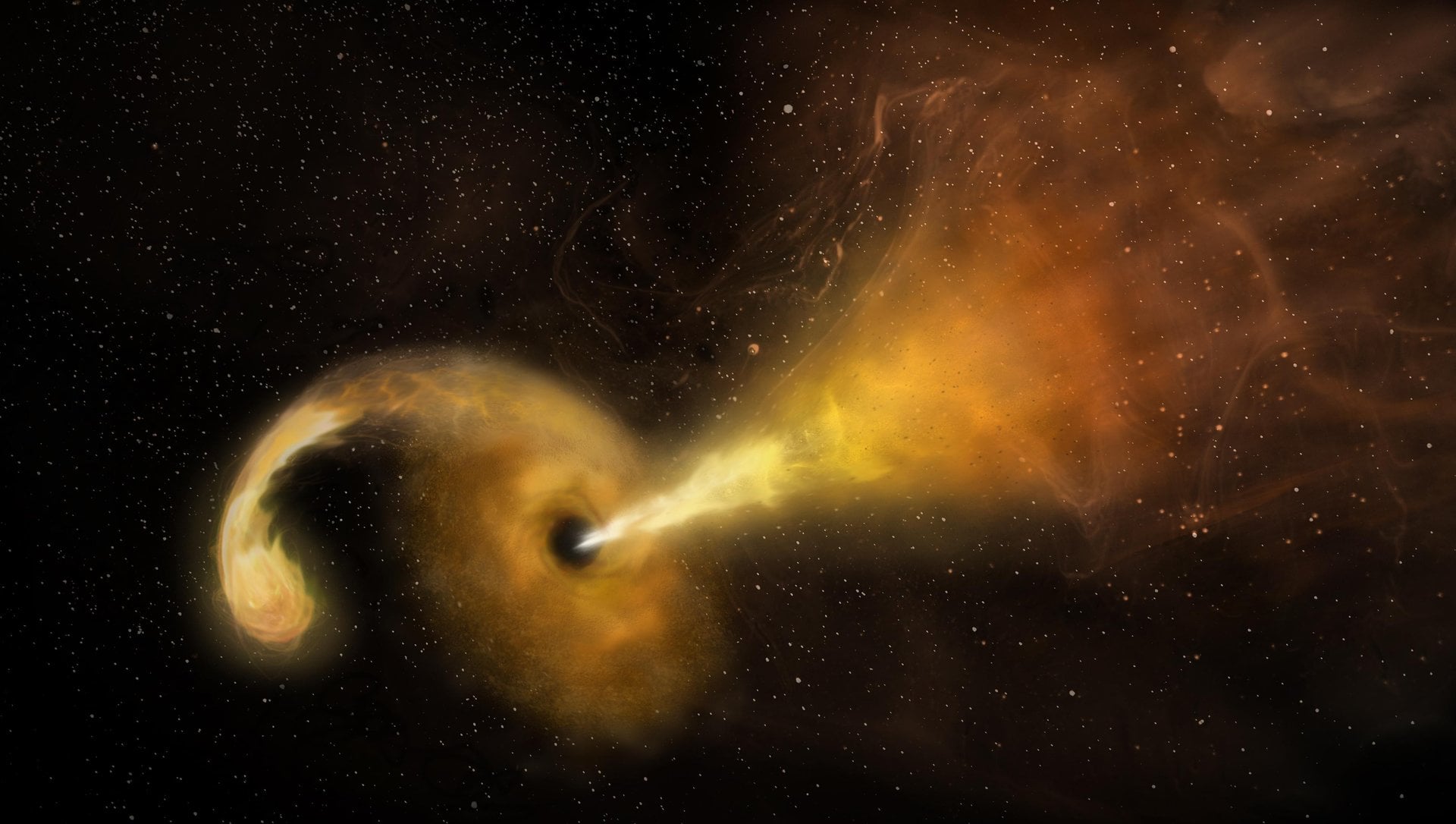
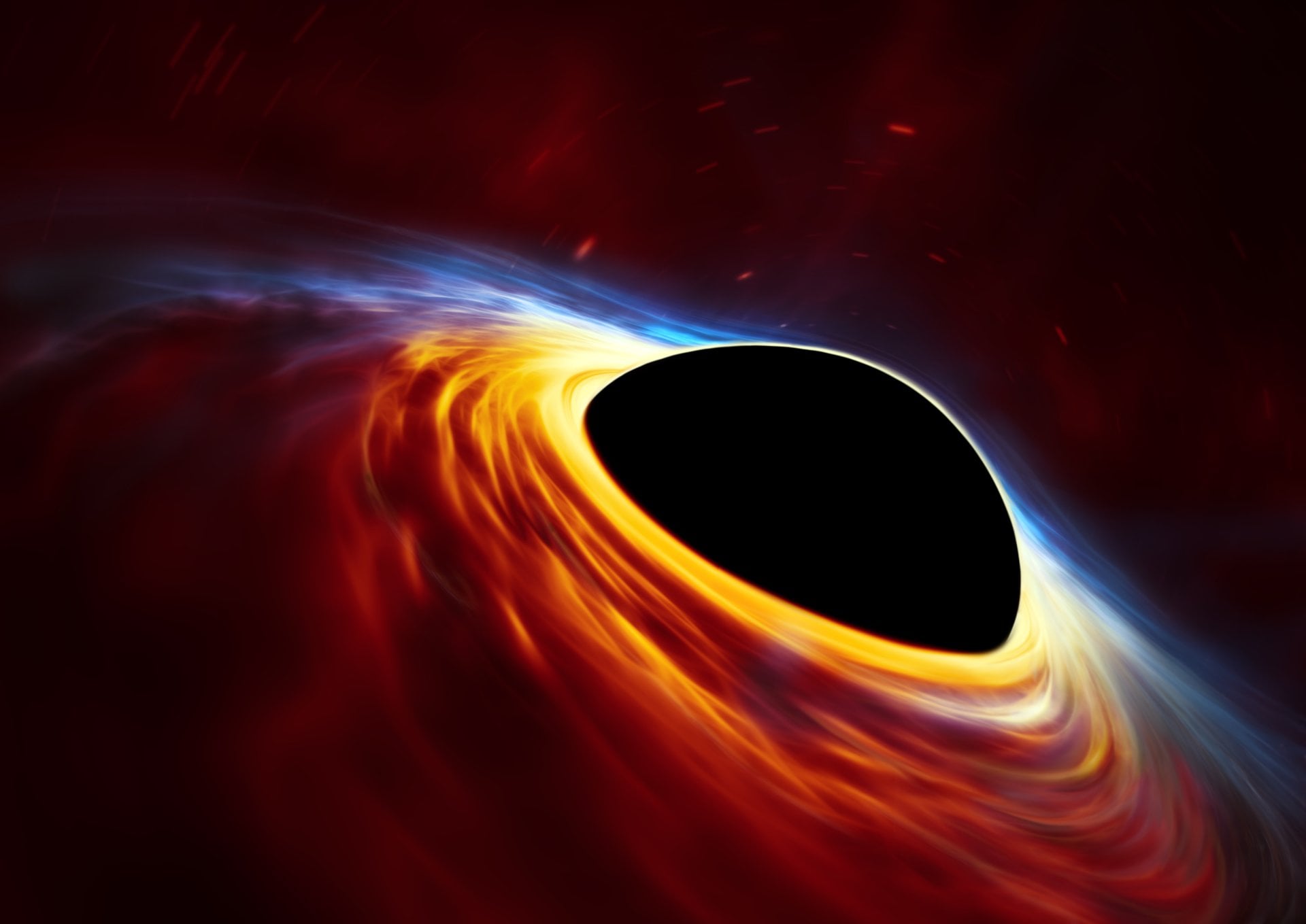
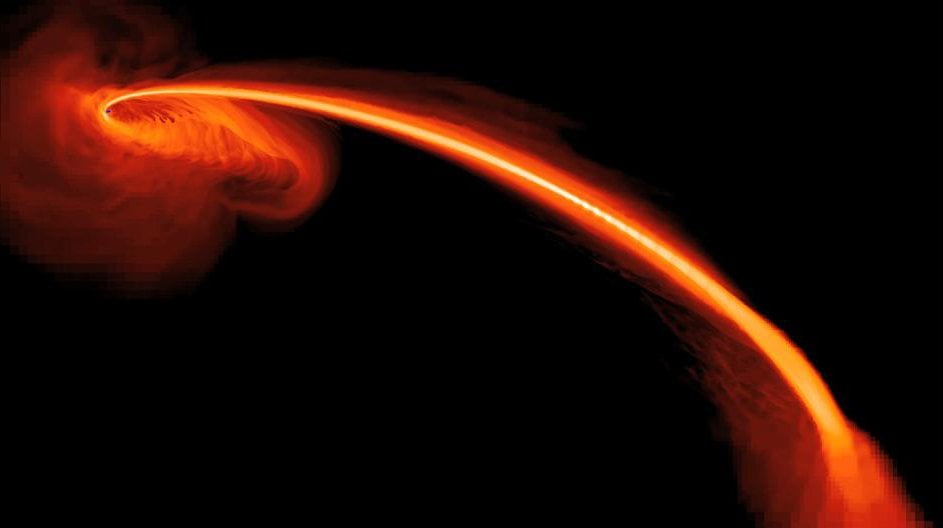
What happens when a black hole and a star meet in the middle of nowhere in a galaxy? It sounds like it could be a dramatic science fiction backdrop, with some hapless starship caught in the crunch. Actually, such encounters in real life are pretty rare. They happen maybe once every 100,000 years. But, when they <i>do</i> occur, the immense gravity of the supermassive black hole tears the star apart. It's an eerie-looking process. The star gets "spaghettified" — that is, pulled on one side by the black hole. That rips out a stream of gas from the star which eventually forms a disk around the black hole.
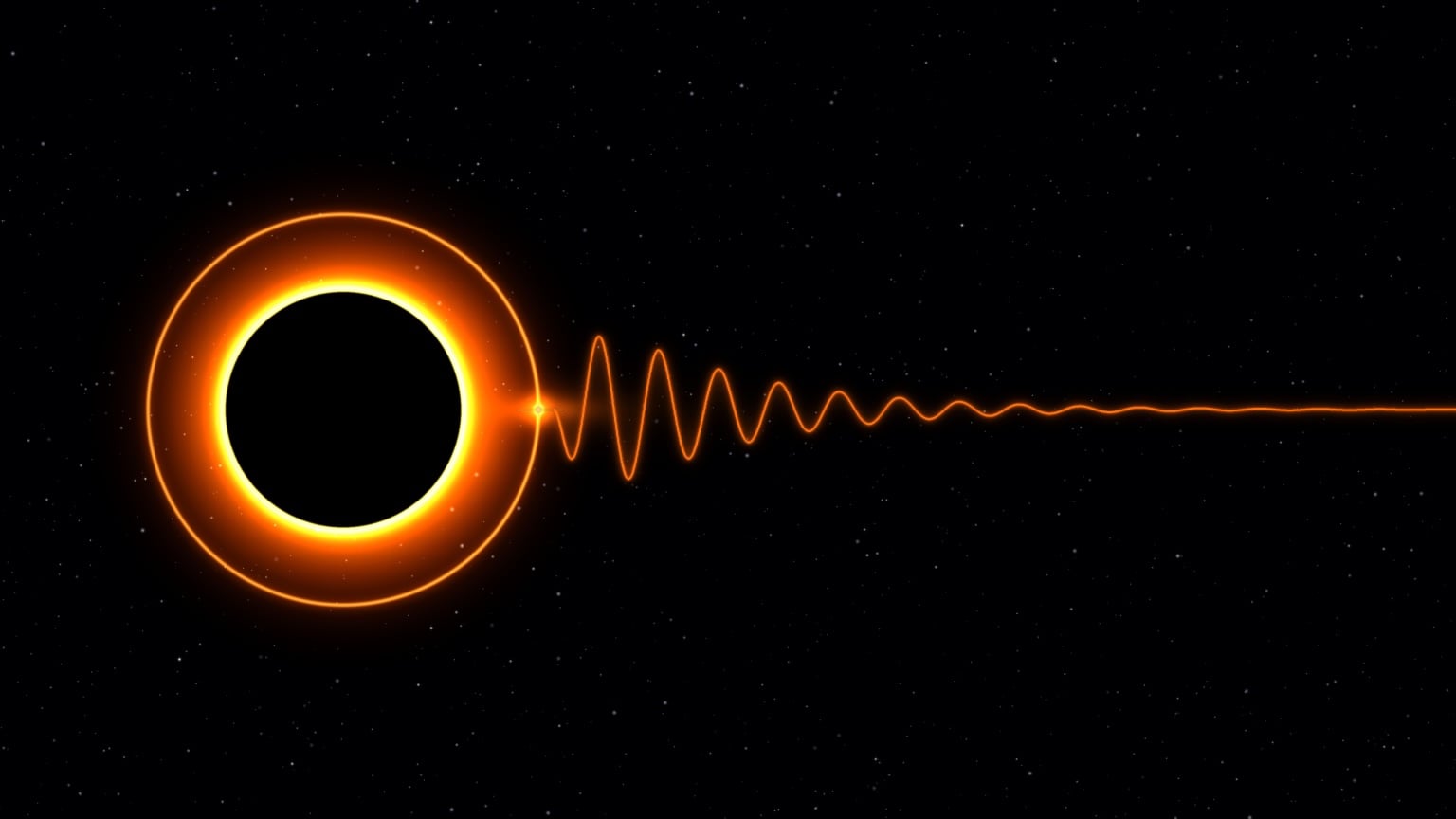
A black hole merger is one of the Universe's most energetic and massive events. During such a collision, two black holes orbit closer and closer until they collide and become a much more massive black hole. The event also gives off radiation and, as it happens, gravitational waves. They help tell the story of the two objects involved in the collision.
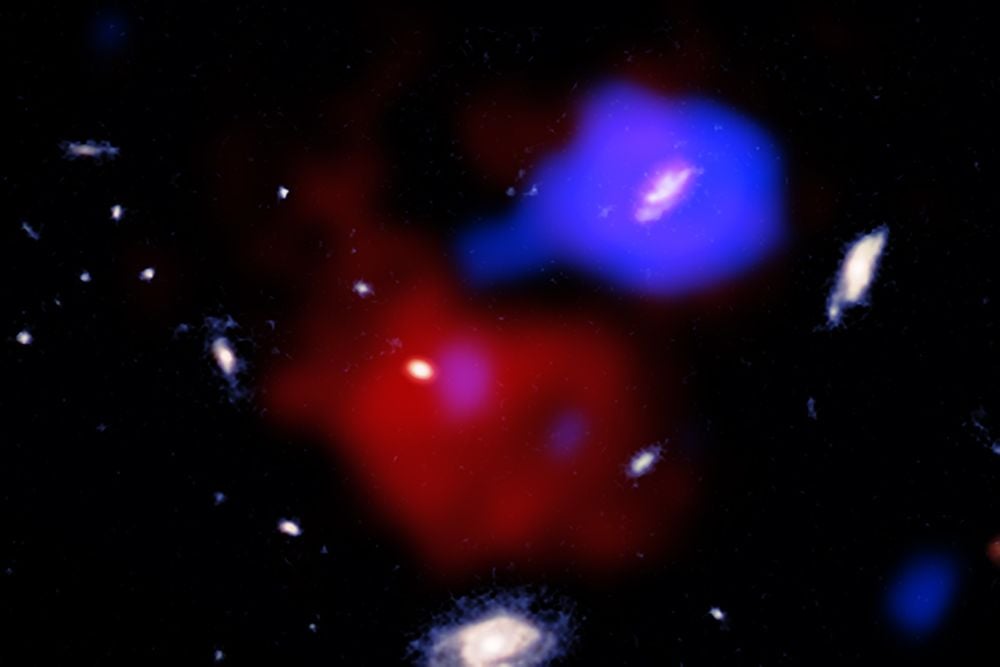
Galaxies attract cold gas from the intergalactic medium and turn it into stars. But the JWST has found galaxies that aren't forming stars in the early Universe, long before they should've become quiescent. In at least one instance involving the Red Potato Galaxy, an AGN jet from a neighbouring galaxy is the likely culprit.
Astronomers using the U.S. National Science Foundation Very Large Array (NSF VLA) have detected an extraordinary burst of radio light from a rare cosmic event in which an intermediate-mass black hole tears apart a star, revealing what appears to be the off-axis afterglow of a powerful jet.
Despite their depiction as massive monsters that simply suck in everything, including light, astronomers know black holes actually spin. And they spin really, really quickly at that. Determining just how quickly is key to understanding how they impact their immediate vicinity, but also the galaxies that surround them. A new paper by Tegan Thomas of the University of Virginia and her colleagues, available in pre-print on arXiv, has some good news and bad news on that front. The bad news is we currently canât determine how fast black holes are actually spinning. The good news is that, hopefully in the next few years, we will have a new tool that will allow us to.
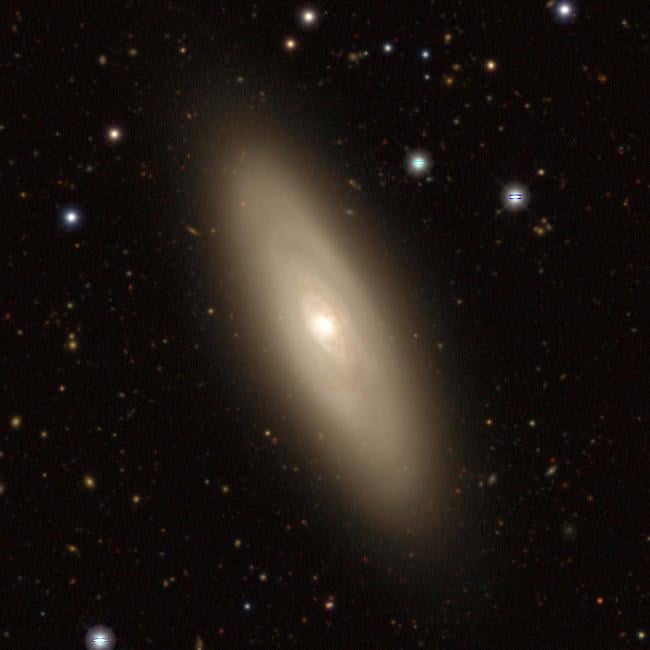
The black hole at the centre of a nearby galaxy is growing exceptionally fast, and is producing a burst of radio emission that has never been observed before. With characteristics that are expected in the early Universe, this unique galaxy provides important insights into the processes that governed the growth of the first black holes.
Some of the most massive galaxies in the Universe appear to be missing a lot of stars. That seems unusual, since birthing stars is one of a galaxy's main tasks as it grows. According to Xin "Cindy" Xiang of the University of Michigan, something is suppressing or quenching the births of stars in these and she thinks that black holes might be the culprit.
The way that dark matter is distributed may need a rethink. New research shows that dark matter could gather near supermassive black holes. The evidence is based on a new detection method, and is only moderately convincing so far. But if true, it also turns SMBH into 'dark matter labs' and could change how we understand SMBH growth.
Stellar mass black holes may not be black holes at all. Instead, they could be a type of extremely compact star called a gravastar, which mimics a black hole. This is according to theoretical phsyicists who have discovered a solution to Einstein's Theory of General Relativity that doesn't automatically result in a black hole when a star collapses at the end of its life.
There are multiple ways to form black holes. The one most commonly taught in high school physics classes is that they are created from the collapse of a dying star. But there are another class of black holes, known as Primordial Black Holes (PBHs) that could have been created immediately after the Big Bang by matter collapsing in on it. Or thatâs the theory at least. Though long theorized, weâve never actually seen one of them, though scientists have suggested that they might account for the missing mass of the universe, which we otherwise describe as âdark matterâ. But a new paper, available in pre-print on arXiv from researchers at Oakland University in Michigan and Rice University in Texas, calls that theory into question, at least for a certain type of PBH.
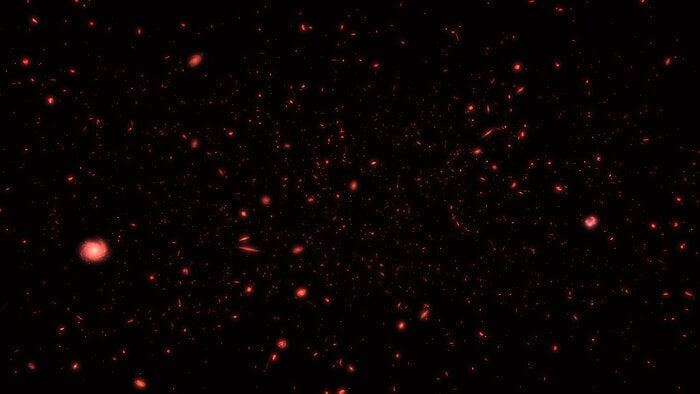
For three years they've been one of the strangest puzzles in astronomy. Tiny, mysterious red dots scattered across the early universe, so abundant and so bright that some researchers wondered if they had "broken" cosmology itself. Now the James Webb Space Telescope has captured the most detailed look yet at one of them, and the answer it reveals is as exotic as the name suggests: a star sized object that is, in fact, a black hole wearing a disguise.
Astronomers may have found the missing link in the SMBH feeding process. New observations with the JWST show that a galaxy's circumnuclear disk, which feeds gas into its black hole, is connected to a much larger network of filaments. Cool gas flows through these filaments into the SMBH's sphere of influence.
According to theory, all active black holes should produce winds or jets. Astronomers have long searched for wind around the Milky Wayâs central supermassive black hole. New images reveal a vacant, cone-shaped region pointing to the black hole. According to new research, only a supermassive black hole could've created this region.
Galactic collisions are events of breathtaking proportions. The Supermassive Black Holes (SMBHs) at their centers plunge into a chaotic orbital dance that eventually coalesce into a single remnant. On their way to that point, they could eventually get âkickedâ out of the center of their galaxy - and finding these ârecoilingâ black holes has been a challenge of cosmology for decades. A new paper, available on arXiv by an international team, used a novel idea to track down these fast-moving behemoths.
The JWST found an abundance of overmassive black holes at high redshifts, pushing the limits of black hole (BH) science in the early Universe. Results have claimed that these BHs are significantly more massive than expected from the BH mass-host galaxy stellar mass relation derived from the local Universe. But new research shows they were just outliers in the normal range of masses that don't require any special causes.