 Universe Today
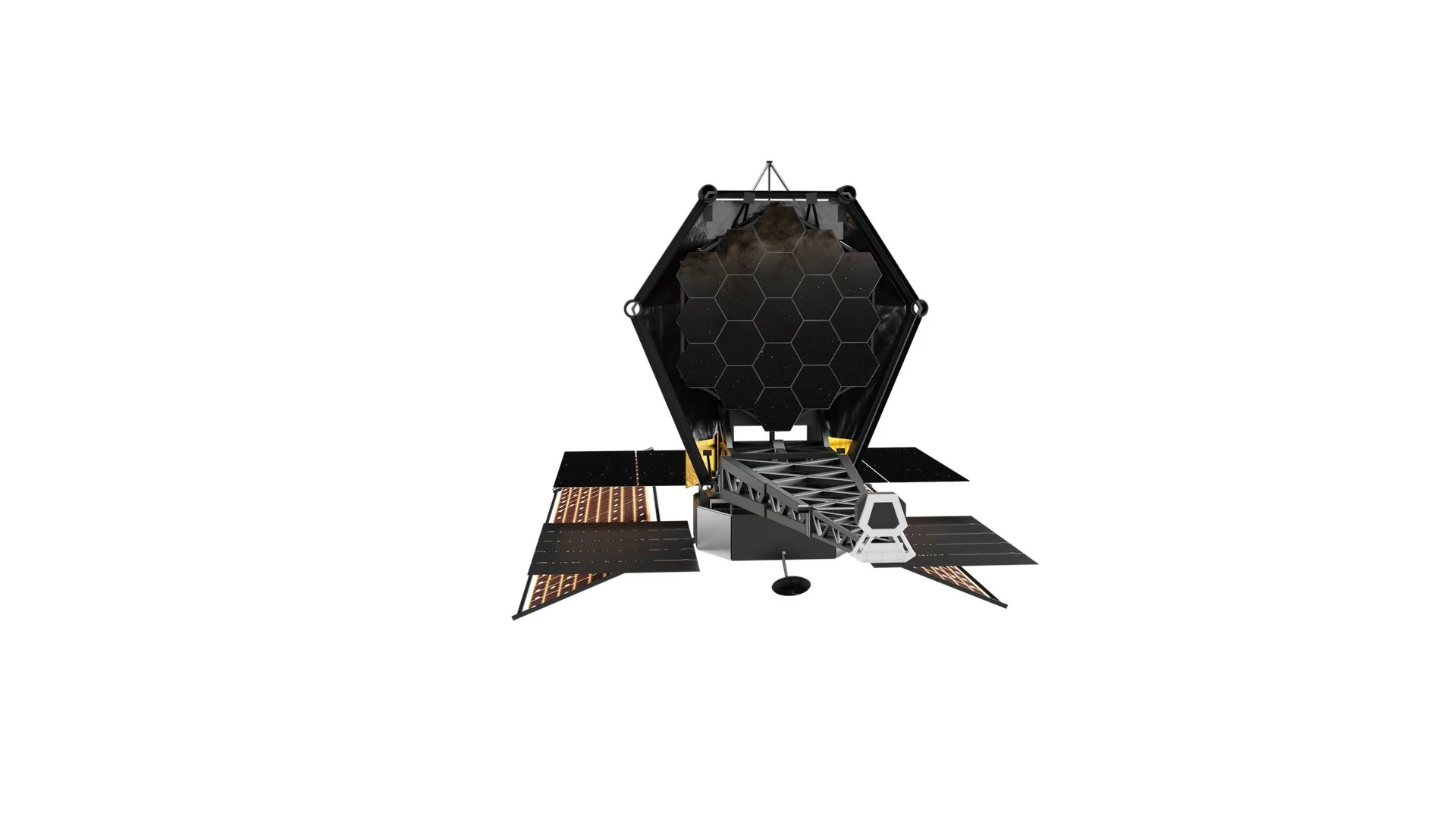
Lately we’ve been reporting about a series of studies on the Habitable Worlds Observatory (HWO), NASA’s flagship telescope mission for the 2040s. These studies have looked at the type of data they need to collect, and what the types of worlds they would expect to find would look like. Another one has been released in pre-print form on arXiv from the newly formed HWO Technology Maturation Project Office, which details the technology maturation needed for this powerful observatory and the “trade space” it will need to explore to be able to complete its stated mission.
That mission has a few different goals, but perhaps the most important one is to search for signs of life on at least 25 different Earth-like worlds - hence the name of the mission. Other objectives include observing ocean worlds in our own backyard (like Europa and Enceladus) as well as characterizing potentially hazardous asteroids with unprecedented sensitivity. Mapping far away galaxies is another goal, along with studying how star formation is regulated by supermassive black holes. But the main point of the Habitable Worlds Observatory is to monitor potentially habitable worlds.
Unfortunately, that is the goal that is the most technically challenging. To find “Earth 2.0”, the components that make up the HWO will not be able to move or distort more than a few picometers. To put that in perspective, a typical atom is about 100 picometers across. It needs such precision because the planets it is trying to directly observe are 10 billion times dimmer than the star they are orbiting. For comparison, the current most capable telescope we have in orbit - the James Webb Space Telescope - has stability on the order of nanometers. So HWO will have to be 1,000 times more stable than Webb.
NASA video describing the HWO. Credit - NASA Goddard YouTube ChannelThat is a difficult design requirement to say the least, and to track progress towards that goal, the project team is using a system called Concept Maturity Levels (CMLs). Similar to the more widely used Technology Readiness Levels (TRLs), the purpose of a CML is to track the “health” of an entire mission concept. As the mission matures, the CML goes up, from 1 to 8, with one representing just a basic idea and 8 representing completion of a “project baseline” and into full scale implementation.
The recently released paper is to announce that HWO has moved from CML 2 (Initial Feasibility Phase) to CML 3 (Trade Space). During a Trade Space study, project team members use a tool called Exploratory Analytical Cases, where they attempt to model different telescope configurations and identify what technology gaps are holding back certain implementations. The design of the telescope isn’t finalized, but several different possibilities are considered.
Several critical technical pieces have been noted as part of those possibilities. First is the Coronagraph - the starshade that will be absolutely critical for the success of the mission. It will be responsible for blocking the starlight from the planet’s host star, but also has to be made deformable while still meeting the picometer stability requirement. The telescope itself, with its massive mirrors is another challenge. Handling the thermal deformation of a massive mirror, which is expected to be at least 6.5 m in diameter, requires advanced materials to say the least. A final engineering challenge is the light-collecting equipment itself. They require development of things like far-UV coatings and low-noise single-photon detectors.
Dr. Becky interviews one of the lead scientists on the Habitable Worlds Observatory. Credit - Dr. Becky YouTube ChannelAll of these technologies are still simply part of the “trade-space” discussion, which has coalesced around two main launch compatible designs - a 6.5-7m wide aperture, which doesn’t require folding for launch, and a 8-8.5m aperture with folded segment similar to Webb. Over the next two years, the project team will focus on modeling the advantages, disadvantages, and challenges of each of the three main technologies. After those studies, it will narrow down to a single design and move on to CML 4.
The team’s hope is to hold a Mission Concept Review (MCR) - a major milestone on NASA’s project timeline - around 2029, and to formally move the project to CML 5 at that point. That would mean the project is still on track for a launch in the early 2040s, though that official date will be finalized as part of the MCR. Given the agency’s funding woes lately, as well as the potential of another imminent governmental shutdown just months after the last one, it is unclear whether or not even the most immediate timelines are realistic. We’ll just have to wait and see.
Learn More:
L. D. Feinberg et al. - Habitable Worlds Observatory’s Concept and Technology Maturation: Initial Feasibility and Trade Space Exploration
UT - The Alien Hunter's Shopping List

