 Universe Today
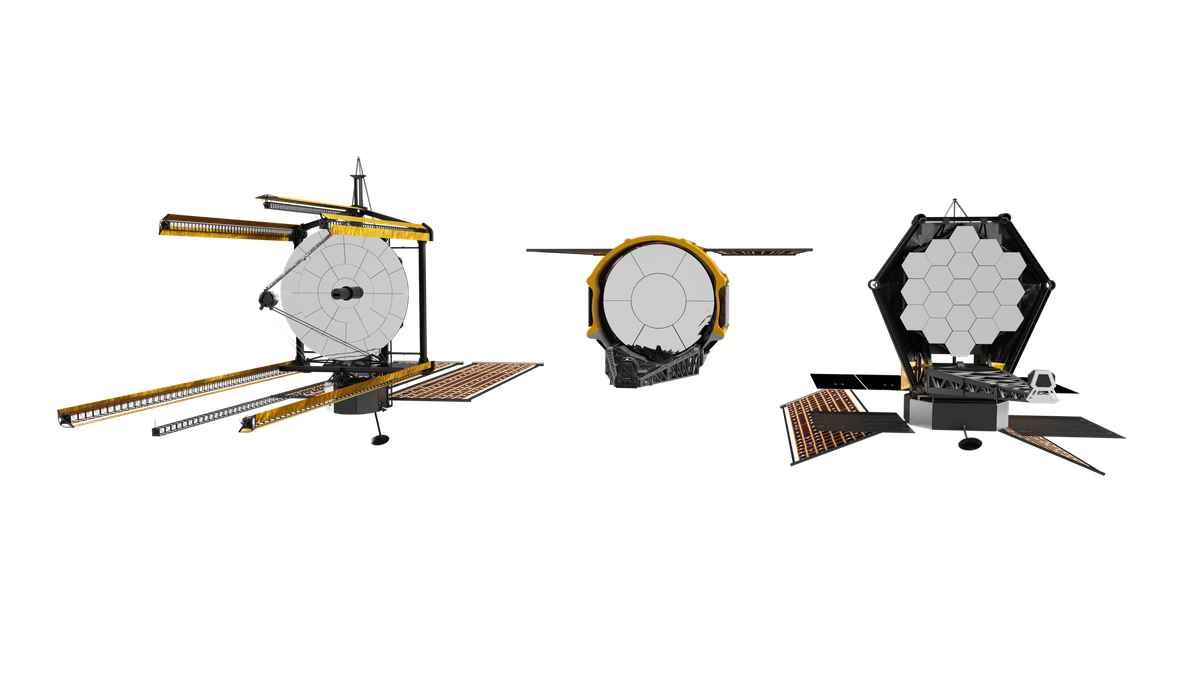
We recently discussed the different types of worlds that the Habitable Worlds Observatory (HWO) is expected to find that might have noticeable biosignatures. However, no matter how good the instrumentation on board the observatory is, the data it collects will be useless if scientists don’t know how to interpret it. A paper explaining what data they need to collect before analyzing HWO data was authored by Niki Parenteau, a research biologist at NASA, and her co-authors, which is now available in pre-print on arXiv.
That data wishlist can be broken down into three main categories. First is one that can be thought of as “computational astrochemistry”. This focuses on an abundance of gases that are lacking parameters in one form or another that would allow researchers to determine if they show up in the data. For example, plenty of potentially interesting gases, such as methyl halides and organosulfurs have never been quantified to determine how much of it would need to be present in the atmosphere before HWO can pick it up.
Another shortfall is a lack of visible/near-infrared data, which are the wavelengths HWO is going to operate in, about several types of industrial waste or potential terraforming molecules. These include household names like CFCs, which were a by-product of refrigerants, but also caused a hole to develop in Earth’s ozone layer several decades ago. Even for common gases like methane and acetylene, we don’t know how they will behave in non-Earth-like atmospheres, making it difficult to determine whether they’re present in exoplanet atmospheres, and if they are, then in what quantity.
Fraser discusses the tech behind the HWOAnother category would be our understanding of the stars the target exoplanets are in orbit around. Estimates of their composition, specifically for iron, magnesium, silicon, and oxygen, must be measured to within 10% accuracy to accurately guess what the inside of rocky exoplanets orbiting them would look like. Other characteristics, such as whether Carbon, Hydrogen, Nitrogen, Oxygen, Phosphorus, and Sulfur (CHNOPS) are available, are key to understanding the likelihood of life developing in that system.
If it could potentially do so, understanding how long a system has had to develop it would be a key finding. Collecting accurate data about the age of the stars with these planets is critical for those estimations, but also for our understanding of the composition of the stars themselves, via their photochemical signature that can be detected from light years away. Another important fact is that more than half of the Sun-like worlds currently on HWO’s target list are part of multi-star systems. We have a very limited understanding of how habitable planets could form in these complex gravitational systems, and will likely need some additional modeling before we are able to understand whether such conditions are beneficial to the development of life, or potentially harmful to it. Given that the chaotic gravitational environment could easily pull a planet too close to its parent star, there’s a good chance for the latter, which means that HWO would be spending half its observational time fruitlessly.
If it does manage to find a planet in those systems, however, the coloration of the planet, such as we talked about in the last article, is a key feature. But there are plenty of other minerals that could mimic the “Red Edge” of vegetation besides cinnabar. Creating a large database with surface reflectance spectra of a wide variety of pigments and even organisms could help future astronomers narrow down potential causes of certain patterns in HWO data.
Fraser talks about what would happen if we do find extraterrestrial lifeLuckily, astronomers will have a while to complete all this additional “ground work” before HWO is ready for launch sometime in the 2040s. Once this powerful telescope takes its place amongst the stars, it will undoubtedly have some data that is still up for interpretation, and the ongoing work to quantify and clarify those results will last even farther into the future.
Learn More:
N. Parenteau et al. - NASA Decadal Astrobiology Research and Exploration Strategy (NASA-DARES 2025) White Paper -- Habitable Worlds Observatory Living Worlds Science Cases: Research Gaps and Needs
UT - Searching for 'Green Oceans' and 'Purple Earths'
UT - HWO Could Find Irrefutable Signs Of Life On Exoplanets
UT - Simulating HWO’s Ability to Characterize Earth-Sized Exoplanets

