Andy Tomaswick
Andy has been interested in space exploration ever since reading Pale Blue Dot in middle school. An engineer by training, he likes to focus on the practical challenges of space exploration, whether that's getting rid of perchlorates on Mars or making ultra-smooth mirrors to capture ever clearer data. When not writing or engineering things he can be found entertaining his wife, four children, six cats, and two dogs, or running in circles to stay in shape.
Recent Articles
-
-
How to Catch a Comet That Hasn't Been Discovered Yet
December 03, 2025There’s been a lot of speculation recently about interstellar visitor 3I/ATLAS - much of which is probably caused by low quality data given that we have to observe it from either Earth, or in some case Mars. In either case it’s much further away that what would be the ideal. But that might not be the case for a future interstellar object. The European Space Agency (ESA) is planning a mission that could potentially visit a new interstellar visitor, or a comet that is making its first pass into the inner solar system. But, given the constraints of the mission, any such potential target object would have to meet a string of conditions. A new paper by lead Professor Colin Snodgrass of the University of Edinburgh of his colleagues, discusses what those conditions are, and assesses the likelihood that we’ll find a good candidate within a reasonable time of the mission's launch.
-
New Radar Data Dries Up Hope For Subsurface Liquid Water On Mars
December 02, 2025Remember back in 2018 when there was a discovery of a briny “lake” underground near the Martian south pole? Pepperidge Farm probably does, and anyone that works there that’s interested in space exploration will be disappointed to hear that, whatever might be causing the radar signal that finding was based on, it’s most likely not a lake. At least according to new data collected by the Mars Reconnaissance Orbiter (MRO) and published recently in Geophysical Research Letters by lead author Gareth Morgan of the Planetary Science Institute and his colleagues.
-
Did JWST Find an Exomoon or a Starspot?
December 01, 2025Searching for exomoons - moons the orbit around another planet - was one of the most exciting capabilities expected of the James Webb Space Telescope (JWST) when it launched in late 2021. So, after four years of operation, why hasn’t it found one yet? Turns out it’s really, really hard to find a moon around a planet light-years away. A new paper available in pre-print on arXiv from David Kipping of Columbia University (and Cool Worlds YouTube Channel fame) shows why. They used 60 hours of time on JWST’s NIRSpec instrument and weren't able to definitively confirm the existence of a possible exomoon.
-
Nancy Grace Roman Has Been Shaken, Frozen, and Screamed At. Now It's Ready For Its Next Round of Tests
November 28, 2025The Nancy Grace Roman Space Telescope continues its inexorable march toward launch. It recently completed another series of tests that brings it a few steps closer to a launch pad in Florida. This time, the telescope was split into two separate parts - an inner portion and an outer portion, each of which went through separate tests throughout the fall.
-
Why Being in the "Right Place" Isn't Enough for Life
November 27, 2025A planet’s habitability is determined by a confluence of many factors. So far, our explorations of potentially habitable worlds beyond our solar system have focused exclusively on their position in the “Goldilocks Zone” of their solar system, where their temperature determines whether or not liquid water can exist on their surface, and, more recently, what their atmospheres are composed of. That’s in part due to the technical limitations of the instruments available to us - even the powerful James Webb Space Telescope is capable only of seeing atmospheres of very large planets nearby. But in the coming decades, we’ll get new tools, like the Habitable Worlds Observatory, that are more specifically tailored to search for those potentially habitable worlds. So what should we use them to look for? A new paper available in pre-print on arXiv by Benjamin Farcy of the University of Maryland and his colleagues, argues that we should look to how a planet formed to understand its chances of harboring life.
-
Life Is Just Matter With Meaning
November 26, 2025What are the physics of life? That is more than just a philosophical question - it has practical implications for our search for life elsewhere in the galaxy. We know what Earth life looks like, on a number of levels, but finding it on another planet could require us to redefine what we even mean by life itself. A new paper from Stuart Bartlett of Cal Tech and his co-authors provides a new framework for how life could be defined that could reach beyond just what we understand from our one Pale Blue Dot.
-
Modeling the Fight Between Charged Lunar Dust and Spacecraft Coatings
November 25, 2025Understanding how exactly lunar dust sticks to surfaces is going to be important once we start having a long-term sustainable presence on the Moon. Dust on the Moon is notoriously sticky and damaging to equipment, as well as being hazardous to astronaut’s health. While there has been plenty of studies into lunar dust and its implications, we still lack a model that can effectively describe the precise physical mechanisms the dust uses to adhere to surfaces. A paper released last year from Yue Feng of the Beijing Institute of Technology and their colleagues showcases a model that could be used to understand how lunar dust sticks to spacecraft - and what we can do about it.
-
The Box vs The Bulldozer: The Story of Two Space Gas Stations
November 24, 2025Using in-situ propellant has been a central pillar of the plan to explore much of the solar system. The logic is simple - the less mass (especially in the form of propellant) we have to take out of Earth’s gravity well, the less expensive, and therefore more plausible, the missions requiring that propellant will be. However, a new paper from Donald Rapp, the a former Division Chief Technologist at NASA’s JPL and a Co-Investigator of the successful MOXIE project on Mars, argues that, despite the allure of creating our own fuel on the Moon, it might not be worth it to develop the systems to do so. Mars, on the other hand, is a different story.
-
How a Detergent Ingredient Unlocked the Potential of Nanotubes
November 22, 2025Material science plays a critical role in space exploration. So many of the challenges facing both crewed and non-crewed missions come down to factors like weight, thermal and radiation tolerance, and overall material stability. The results of a new study from Young-Kyeong Kim of the Korea Institute of Science and Technology and their colleagues should therefore be exciting for those material scientists who focus on radiation protection. After decades of trying, the authors were able to create a fully complete “sheet” of Boron Nitride Nanotubes (BNNTs).
-
How Mega-Constellations Are Learning to Manage Themselves
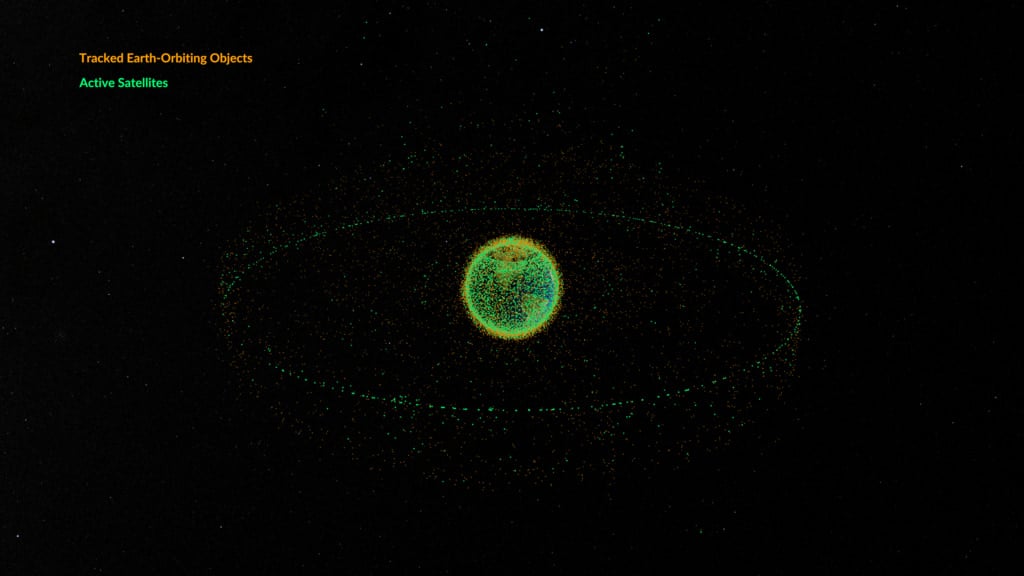
November 21, 2025Satellite megaconstellations are quickly becoming the backbone of a number of industries. Cellular communication, GPS, weather monitoring and more are now, at least in part, reliant on the networks of thousands of satellites cruising by in low Earth orbit. But, as these constellations grow into the tens of thousands of individual members, the strain they are putting on the communications and controls systems of their ground stations is becoming untenable. A new paper from Yuhe Mao of the Nanjing University of Aeronautics and Astronautics and their co-authors hopes to alleviate some of that pressure by offloading much of the control scheme and network decision-making logic to satellites themselves.
-
Astronomers Spot "First Stars" Billions of Years After They Were Supposed to Die
November 20, 2025Over the course of billions of years, the universe has steadily been evolving. Thanks to the expansion of the universe, we are able to “see” back in time to watch that evolution, almost from the beginning. But every once in a while we see something that doesn’t fit into our current understanding of how the universe should operate. That’s the case for a galaxy described in a new paper by PhD student Sijia Cai of Tsinghua University’s Department of Astronomy and their colleagues. They found a galaxy formed around 11 billion years ago that appears to be “metal-free”, indicating that it might contain a set of elusive first generation (Pop III) stars.
-
Hunting For "Wandering" Black Holes In Dwarf Galaxies
November 19, 2025Tracking down black holes at the center of dwarf galaxies has proven difficult. In part that is because they have a tendency to “wander” and are not located at the galaxy’s center. There are plenty of galaxies that might contain such a black hole, but so far we’ve had insufficient data to confirm their existence. A new paper from Megan Sturm of Montana State University and her colleagues analyzed additional data from Chandra and Hubble on a set of 12 potential Active Galactic Nuclei (AGN) galaxy candidates. They were only able to confirm three, which highlights the difficulty in isolating these massive wanderers.
-
How Three Runaway Stars Solved A Galactic Mystery
November 18, 2025All motion is relative. That simple fact makes tracking the motion of distant objects outside our galaxy particularly challenging. For example, there has been a debate among astronomers for decades about the path that one of our nearest neighbors, the Large Magellanic Cloud (LMC), took over the last few billion years. A new paper from Scott Lucchini and Jiwon Jesse Hand from the Harvard Center for Astrophysics grapples with that question by using a unique technique - the paths of hypervelocity stars.
-
Asteroid 2024 YR4 Was Earth's First Real-Life Defense Test
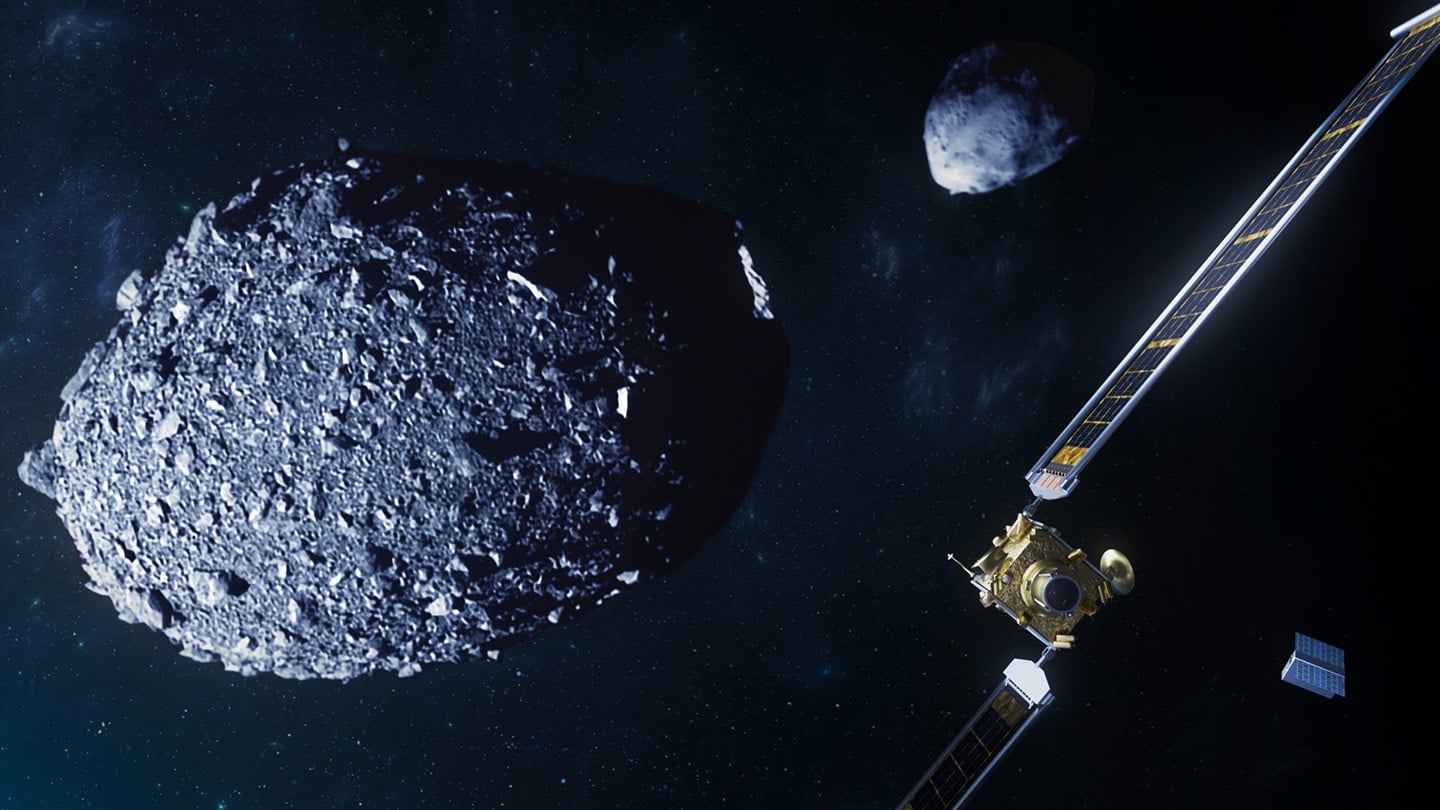
November 17, 2025At this point in history, astronomers and engineers who grew up watching Deep Impact and Armageddon, two movies about the destructive power of asteroid impacts, are likely in relatively high ranking positions at space agencies. Don’t Look Up also provided a more modern, though more pessimistic (or, unfortunately, realistic?), look at what might potentially happen if a “killer” asteroid is found on approach to Earth. So far, life hasn’t imitated art when it comes to potentially one of the most catastrophic events in human history, but most space enthusiasts agree that it's worth preparing for when it will. A new paper, available in pre-print on arXiv, from Maxime Devogèle of ESA’s Near Earth Object (NEO) Coordination Centre and his colleagues analyzes a dry run that happened around a year ago with the discovery of asteroid 2024 YR4.
-
Cohesion, Charging, And Chaos On The Lunar Surface
November 16, 2025Most people interested in space exploration already know lunar dust is an absolute nightmare to deal with. We’re already reported on numerous potential methods for dealing with it, from 3D printing landing pads so we don’t sand blast everything in a given area when a rocket lands, to using liquid nitrogen to push the dust off of clothing. But the fact remains that, for any long-term presence on the Moon, dealing with the dust that resides there is one of the most critical tasks. A new paper from Dr. Slava Turyshev of NASA’s Jet Propulsion Laboratory, who is enough of a polymath that our last article about his research was covering a telescope at the solar gravitational lens, updates our understanding of the physical properties of lunar dust, providing more accurate information that engineers can use to design the next round of rovers and infrastructure to support human expansion to our nearest neighbor.
-
Life Might Show Up As Pink And Yellow Clouds On Distant Worlds
November 15, 2025Carl Sagan, along with co-author Edwin Salpeter, famously published a paper in the 70s about the possibility of finding life in the cloud of Jupiter. They specifically described “sinkers, floaters, and hunters” that could live floating and moving in the atmosphere of our solar system’s largest planet. He also famously talked about how clouds on another of our solar system’s planets - Venus - obfuscated what was on the surface, leading to wild speculation about a lush, Jurassic Park-like world full of life, just obscured by clouds. Venus turned out to be the exact opposite of that, but both of those papers show the impact clouds can have on the Earth for life. A new paper by authors as the Carl Sagan Institute, led by Ligia Coelho of Cornell, argues that we should look at clouds as potential habitats for life - we just have to know how to look for it.
-
Demand for JWST's Observational Time Hits A New Peak
November 14, 2025Getting time on the James Webb Space Telescope (JWST) is the dream of many astronomers. The most powerful space telescope currently in our arsenal, the JWST has been in operation for almost four years at this point, after a long and tumultuous development time. Now, going into its fifth year of operation, the Space Telescope Science Institute (STScI), the organization that operates the science and mission operations centers for the JWST has received its highest number ever of submission for observational programs. Now a team of volunteer judges and the institute's scientists just have to pick which ones will actually get telescope time.
-
It's Time to Give the Moon Its Own Time
November 13, 2025Tracking time is one of those things that seems easy, until you really start to get into the details of what time actually is. We define a second as 9,192,631,770 oscillations of a cesium atom. However, according to Einstein’s theory of general relativity, mass slows down these oscillations, making time appear to move more slowly for objects in large gravity wells. This distinction becomes critical as we start considering how to keep track of time between two separate gravity wells of varying strengths, such as on the Earth and the Moon. A new paper by Pascale Defraigne at the Royal Observatory of Belgium and her co-authors discusses some potential frameworks for solving that problem and settles on using the new Lunar Coordinate Time (TCL) suggested by the International Astronomical Union (IAU).
-
This 1.4kg Soft Suit Simulates Earth's Gravity to Stop Muscle Loss in Space
November 12, 2025Astronauts lose significant amounts of muscle mass during any prolonged stay in space. Despite spending 2-3 hours a day exercising in an attempt to keep the atrophy at bay, many still struggle with health problems caused by low gravity. A new paper and some further work done by Emanuele Pulvirenti of the University of Bristol’s Soft Robotics Lab and his colleagues, describe a new type of fabric-based exoskeleton that could potentially solve at least some of the musculoskeletal problems astronauts suffer from without dramatically affecting their movement.
Universe Today