Venus Moon Would Have Been Doomed From The Start, Says New Paper
Venus likely never had a moon and even if it did, it would have soon been torn asunder by the planet’s own gravity, says prominent planetary astrophysicist.
The study of planets and moons
Venus likely never had a moon and even if it did, it would have soon been torn asunder by the planet’s own gravity, says prominent planetary astrophysicist.
Scientists were shocked when they received the first images of Martian gullies. They were even more shocked as those gullies appeared to change over time. Their similarities to gullies seen on Earth were uncanny, but all of Earth’s gullies are formed by the water run-off, and Martian is too cold and has too sparse an atmosphere to have liquid water on its surface. Whatever has been causing those changing gullies couldn’t have been water, so what was it? A new paper from Apolline Leclef of the Institut d’Astrophysique Spatiale at Université Paris-Saclay and her colleagues, available in pre-print on arXiv, shows how they are likely caused by CO2 frost turning into a fluid.
JAXA's Martian Moon eXploration (MMX) will be on its way to Mars and Phobos next month. It will collect samples from Phobos and return them to Earth. A new morphodynamic atlas of the small moon will help scientists collect and understand the samples.
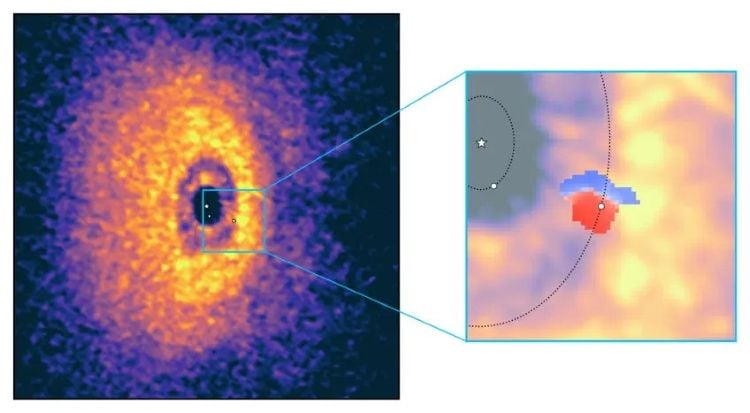
Did icy comets deliver water to the young Earth? That idea won't go away. Now, astronomers at Lund University in Sweden have found evidence of exocomets orbiting a young star named PDS 70. The observations suggest that these comets are delivering water to that system's inner regions.
The Earth and the Moon have nearly identical isotopic compositions, and the Giant Impact Hypothesis strives to explain this. New research into the ancient impact shows how the temperature of both worlds, and how it affects the strength of the materials involved in the collision, shaped the outcome, including the isotopic compositions.
Researchers have figured out how to use lunar samples to determine the nature of volcanic activity on ancient Mercury. It's all based on SiO2, or silicon dioxide. Its abundance in a planet's crust reveals a lot about magma and volcanic activity.
If you visit the New Horizons mission website frequently, you'll notice that the spacecraft continues to generate excellent science as it plows its way through the Kuiper Belt. It recently woke up from its latest hibernation period in good health and is transmitting data it gathered back to Earth. The spacecraft, in addition to studying the Jupiter system in 2007, the Pluto system in 2015, and the Kuiper Belt Object Arrokoth in early 2019, has been doing some other fascinating solar system science since then thanks to two mission extensions in 2016 and 2023. Now, as a result of budget cuts at NASA, an important part of the NH science mission could end as early as October of this year.
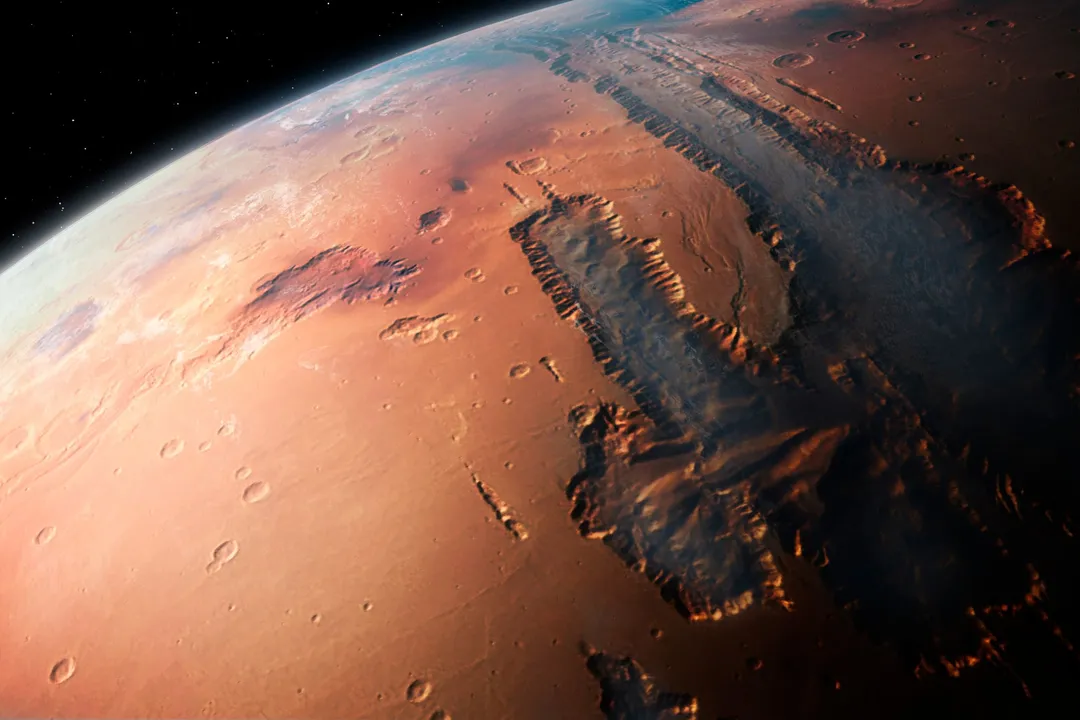
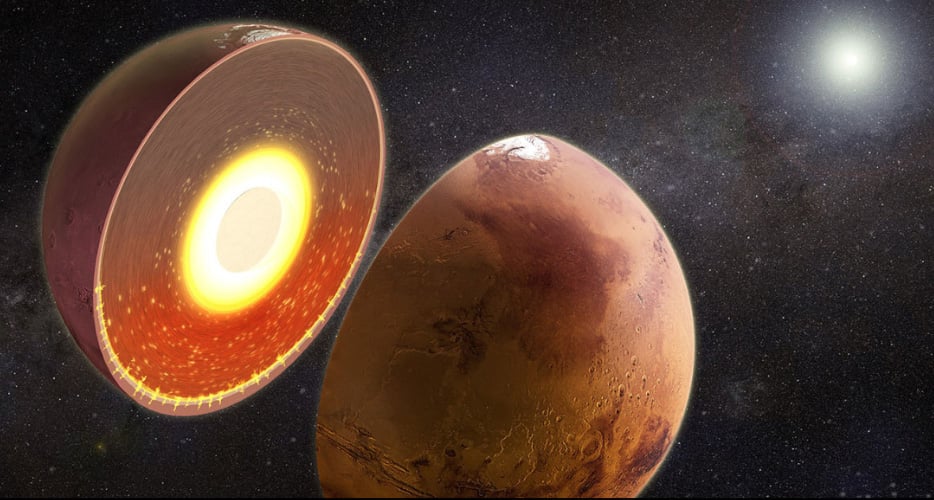
The planet Mars is a cold and dry world completely devoid of life, but billions of years ago things were much different. This is when Mars had a much warmer interior than it does today, resulting in active volcanism that replenished its atmosphere, a magnetic field that protected the planet from harmful solar and cosmic radiation, and a surface of flowing liquid water. But due to Mars’s small size, the interior cooled far faster than Earth’s has cooled, leading to a loss of volcanism, near-absolute depletion of its magnetic field, and complete evaporation of all surface liquid water. But what is the interior heat of Mars like today?
At least once in our lives, we’ve all seen a bright streak of light briefly blaze across the sky and have quickly referred to it as an asteroid, meteor, shooting star, comet, or some other whimsical name we’ve heard others use to describe it. For those calling it a meteor, you would be correct, but we’ll touch upon this later. The time it takes for a space rock, bolide being its scientific name, to travel through Earth's atmosphere and crash into the ground literally takes only a few seconds. But what happens to a space rock during this very brief travel time, and how can scientists use this to learn about a specific space rock’s origin and the potential damage it could cause if it explodes in mid-air?
When a meteoroid hits the Moon's surface, it does more than just dig up a little dirt. It actually excavates a little bit of cosmic history that recorded a long-ago supernova explosion. Scientists at the University of Hawaii Institute of Geophysics and Planetology have come up with a way to decode that history and learn something about such energetic events in the Universe.
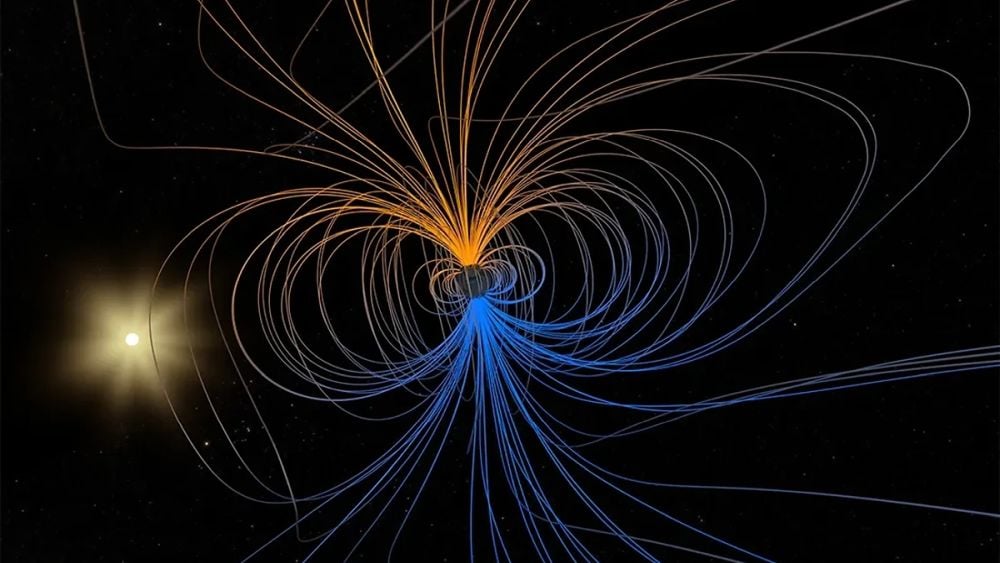
Those little dust grains that fall to Earth during meteor showers or end up as part of larger meteorites found on Earth may hold surprising clues to the formation of the Sun. That's because they record the state of the magnetic field in the protostellar nebula from which Earth (and ultimately the planets) formed.
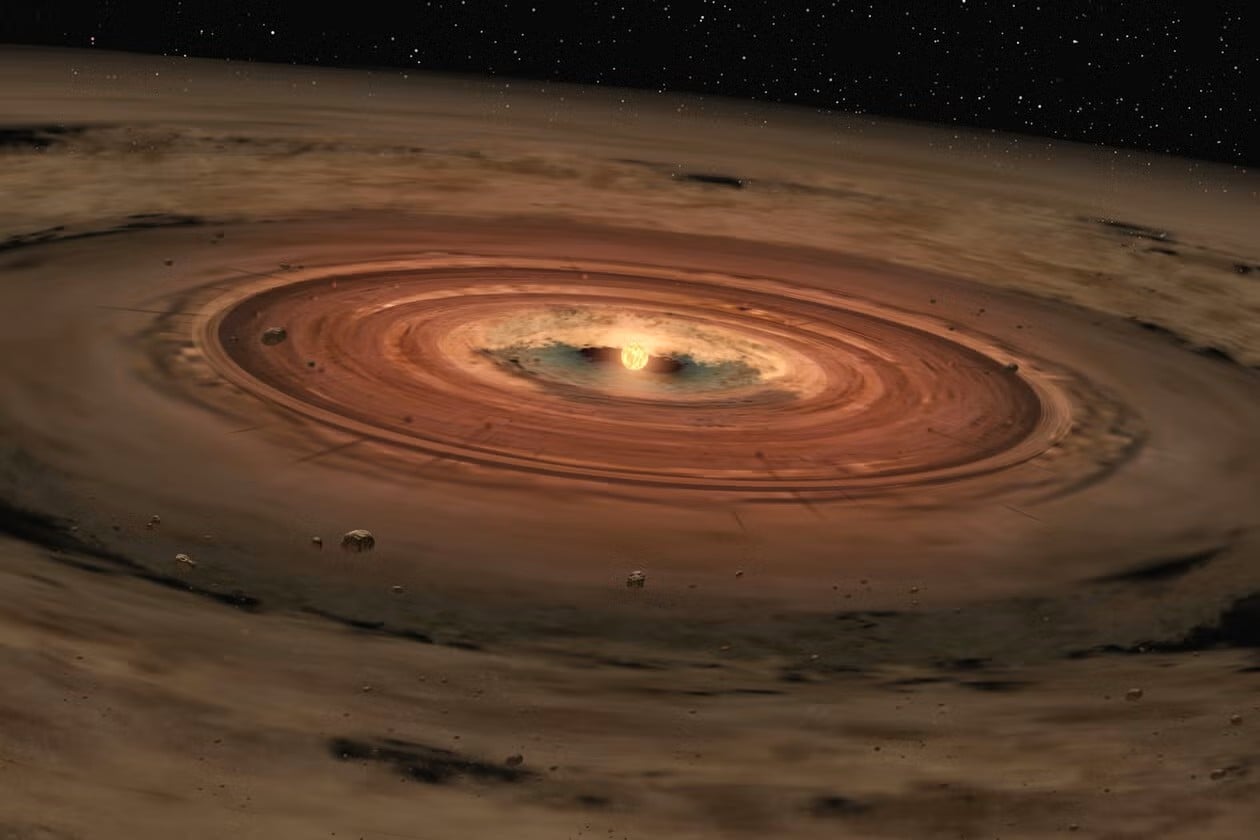
Planets form in protoplanetary disks, reservoirs of gas and dust around young stars. But young stars are a little hyperactive, and they emit powerful winds that can dissipate the gas. So planets, especially gas giants, are in a race against time to form. They only have a few million years before the gas is gone.
Some of the strangest weather in the solar system doesn’t happen on Earth, or even Jupiter’s Great Red Spot - it happens in the interior of the Ice Giants like Neptune and Uranus. Specifically, scientists have long believed that, at certain pressure and temperatures, it literally rains diamonds inside of these planets. And for the first time, scientists have mimicked the process they believe creates that. A new paper by physicists at the Lawrence Livermore National Laboratory (LLNL), published in Nature Physics, resolves a 20 year old scientific mystery, and shows how the same physics that makes it rain diamonds inside Neptune could also help us triple our fusion energy output.
The ESA's Sentinel satellites captured a 76 sq. km. chunk of ice breaking off from Greenland's Petermann Glacier. They watched the cracks and deformations happen in real time leading up to the calving. While calving is normal, it's happening more often, and this is another clear sign that the Arctic is rapidly changing due to the warming climate.
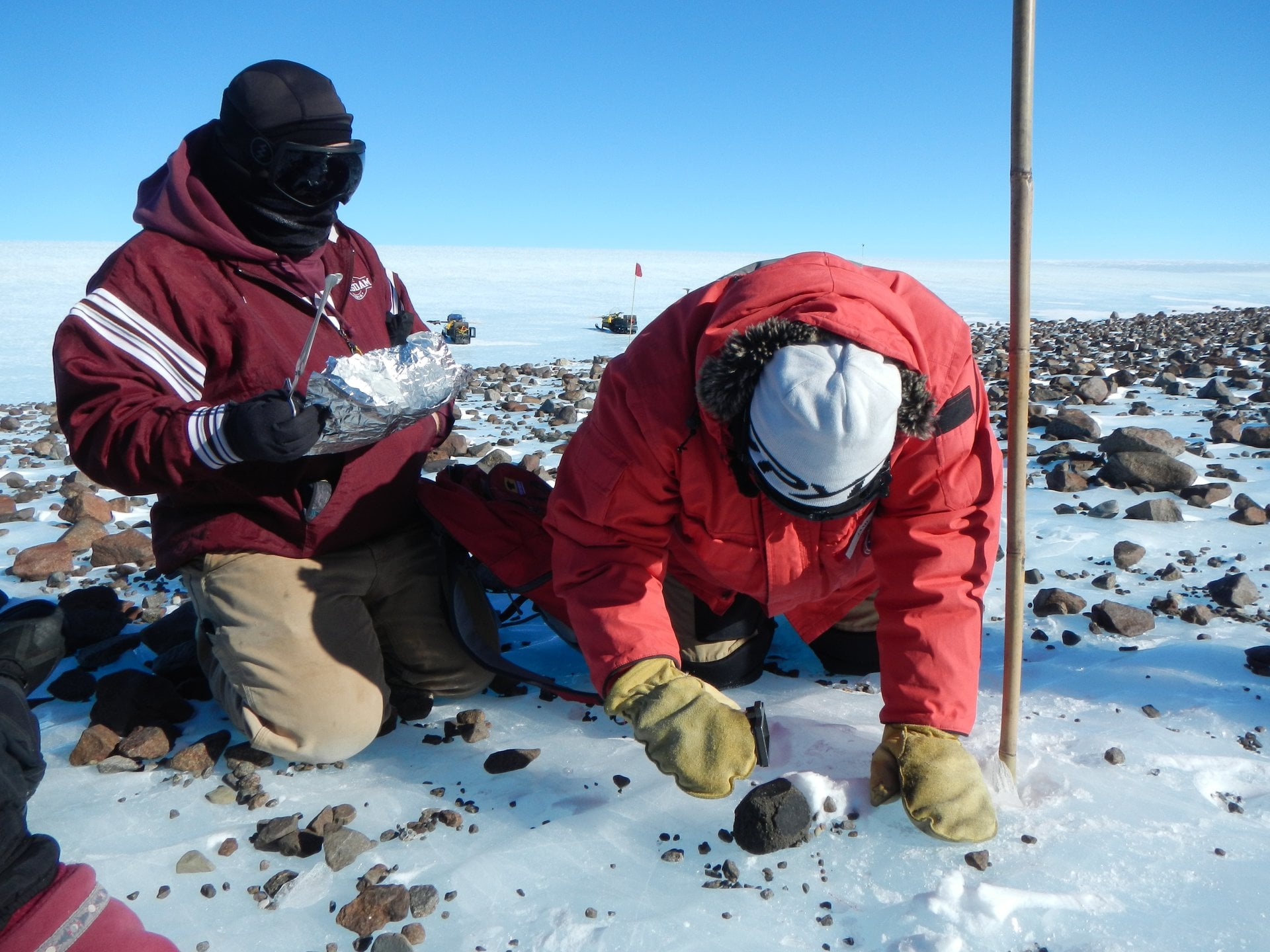
Billions of years ago, Mars was hypothesized to have been a habitable world with flowing liquid water and the potential for life. But directly studying its ancient past is currently limited to orbiters and rovers, as scientists have yet to obtain direct samples from Mars. However, meteorites have been found on Earth to have potentially originated from Mars during large impacts that flung chunks of the Red Planet into space, eventually being grabbed by Earth’s gravity and crashing into the Earth’s surface.
Astrobiologists use new starting points to produce ‘organic’ models of our solar system’s formation.
Something's wetting the surface of dwarf planet Pluto along the northern edge of Sputnik Planitia, and planetary scientists have found a good explanation for it. A recent study of new Horizons images taken during the 2015 flyby revealed evidence that liquid nitrogen is rising up through cracks in Sputnik Planitia. That's the giant heart-shaped glacial basin we see in all the Pluto images taken by the spacecraft.
Of Jupiter’s four Galilean moons, Callisto is the one that gets the least attention. Io is constantly being resurfaced by volcanoes. Europa has a giant liquid water ocean. And Ganymede has its own magnetic field that interacts with its parent planet in weird ways. Callisto, by comparison, seems sedate, with its ancient, crater-saturated surface seemingly frozen in time. But new data from the James Webb Space Telescope (JWST) shows that even this most benign of the Big Four moons is more active than previously realized.
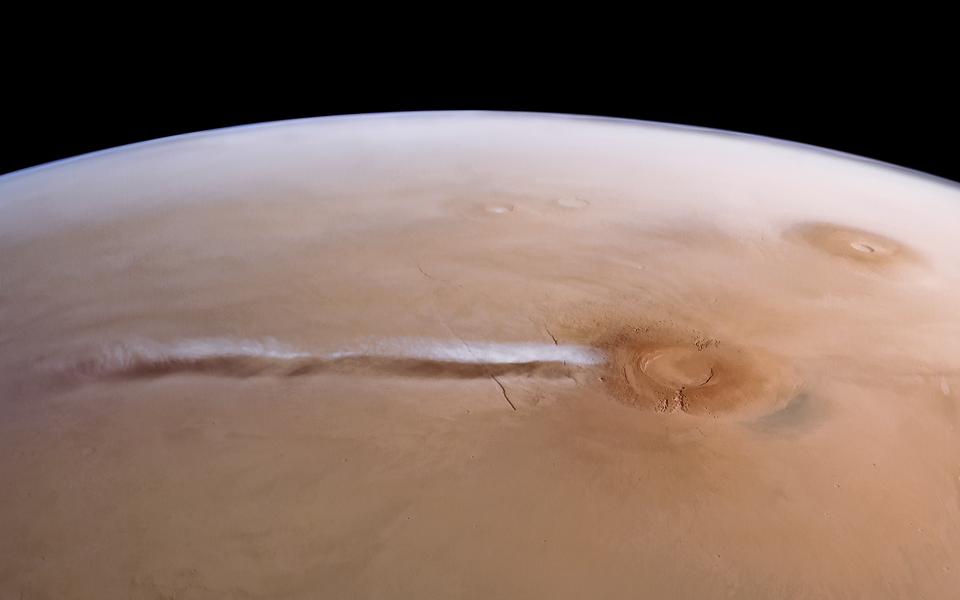
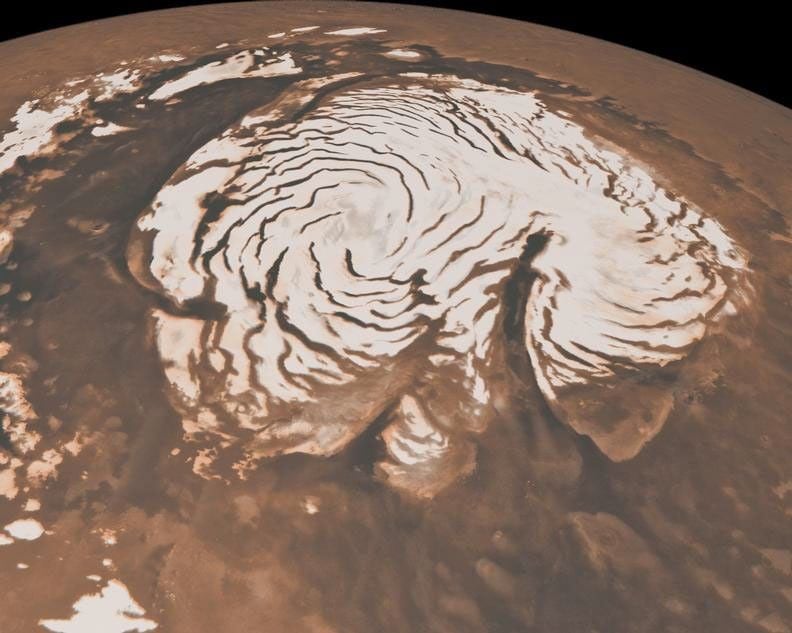
The surface of Mars is home to some of the most breathtaking and awe-inspiring landscapes in the solar system. This is primarily due to the Red Planet lacking several re-surfacing processes that Earth possesses, including plate tectonics, volcanism, and flowing water. While Mars does have dust storms, this has done little to reshape the planet’s surface, which has remained largely undisturbed for billions of years. However, this near-pristine landscape has enabled scientists to look back in time while slowly piecing together what Mars was like long ago.
Science seems like a straightforward endeavour. You come up with a hypothesis, collect data to prove or disprove it, and analyze that data to see if the hypothesis is right. But anyone who actually does science will tell you many times it’s not that straightforward. And one of the most common complexities is in data analysis. A new paper suggests that one such complexity, known as regression to the mean, might be causing us to massively underestimate how severe solar storms can truly be.