Universe Today
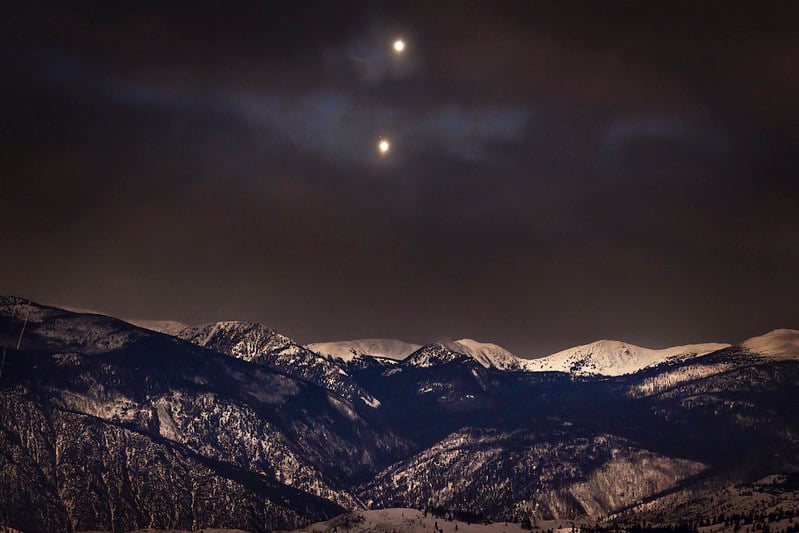
Don’t miss the convergence of the two brightest planets at dusk in early June.
It’s a familiar annual question, that we’re already hearing as we enter into June. “What are those two bright objects in the west?” They’re none other than the two brightest planets in the sky, Jupiter and Venus. Keep an eye on the dusk sky over the next week, and you’ll see the two worlds getting ever closer to each other in the west. Though this happens every year or so, an evening conjunction assures that lots of the general public will see one of the best planetary pairings of 2026.
You can easily see the planets change configuration from one night to the next. Jupiter and Venus make their closest pass on the night of June 9th at 21:00 Universal Time (UT) when they’re just 1.6 degrees apart, about three times the span of a Full Moon. The two will fit nicely in the field of view of binoculars or a telescope at low power.
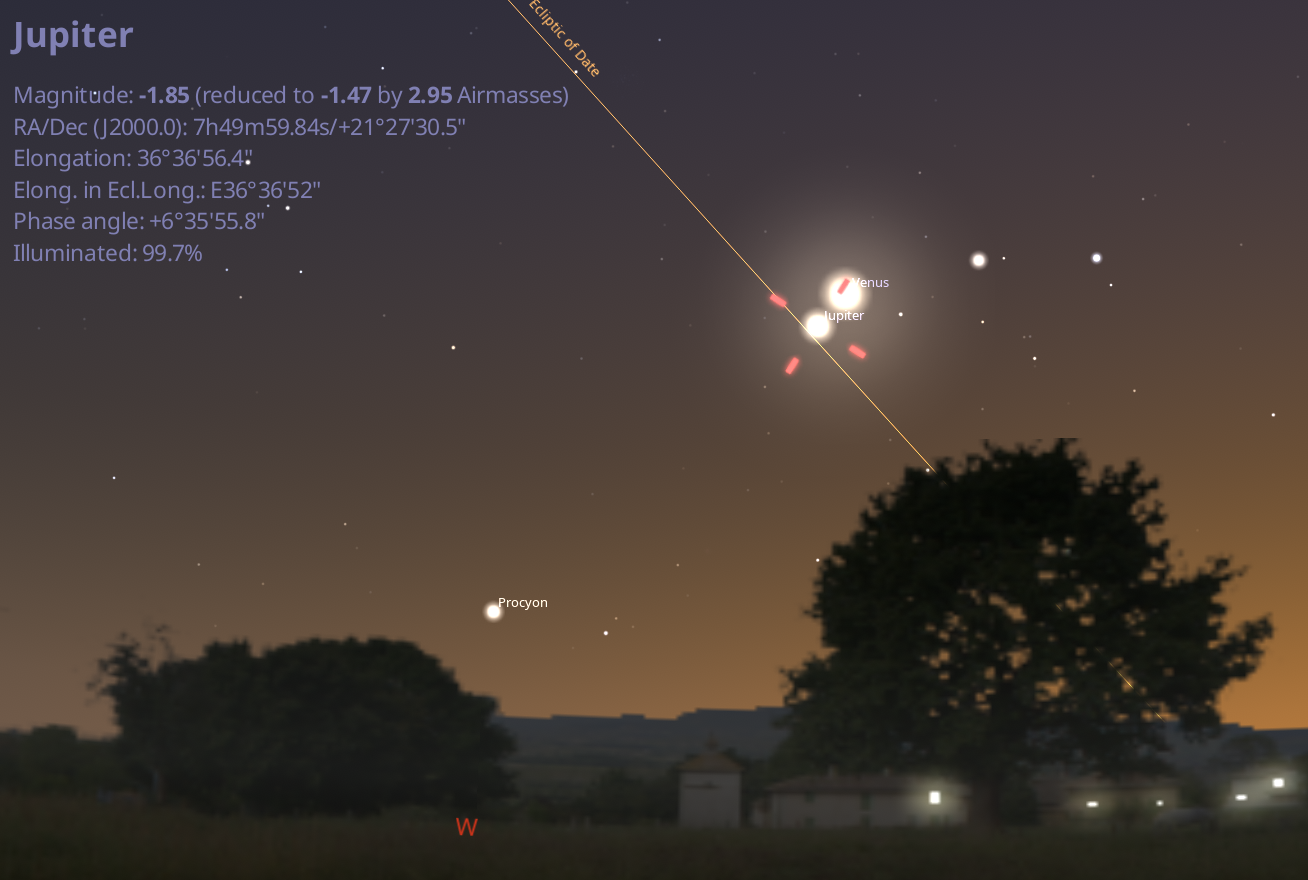 Looking west at dusk on the night of June 9th. Credit: Stellarium.
The pair sits 37 degrees east of the Sun at closest conjunction, with Jupiter shining at -2nd magnitude with a 32” disk, and Venus is over six times brighter at magnitude -4, with a 74% illuminated, gibbous 15” disk.
Now for the ‘Wow factor’ of what you’re actually seeing. The pass is actually only close as seen from our Earthly vantage point. Perched above the Jovian cloud tops, you’d see a close pass less than a degree apart of Venus vs Earth, and looking back from Venus (again from above the ever pervasive clouds), Earth would sit opposite of Jove in the Cytherean sky. We can be thankful that we reside on the one world of the three that’s occasionally cloud-free.
Jupiter is actually 905 million kilometers (6 Astronomical Units) distant, while Venus is five times closer to the Earth. This means the reflected sunlight took 50 minutes to reach Jupiter from the Earth, while Venus is only 10 light minutes away. Move Jupiter up to the orbit of Venus, and it would shine at near -6th magnitude, presenting a visible disk slightly smaller than the Full Moon easily visible in the daytime. Of course, we'd have other problems to think about, having a gas giant for a neighbor.
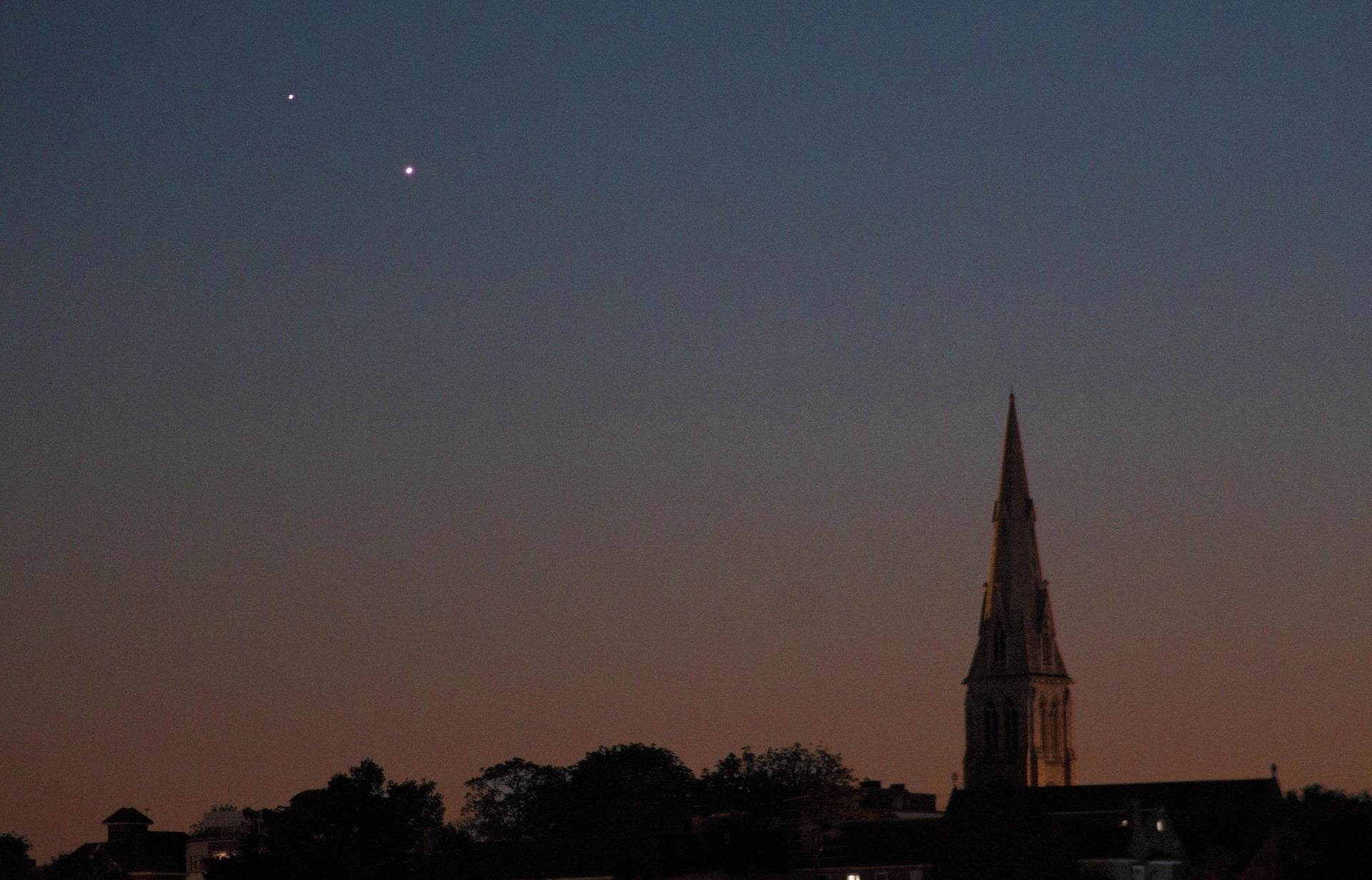 Venus and Jupiter over SW London from 2015. Credit: Roger Hutchinson.
As mentioned previously, a pairing of Jupiter vs Venus is not rare, as the two meet up roughly every 1-2 years. Jupiter orbits the Sun once every 11.9 years, meaning it moves eastward by roughly one constellation along the zodiac and the ecliptic every year. Venus, however, never strays far from the Sun, meaning that whenever we're about to lose Jupiter behind the Sun, it’ll probably pass Venus as well.
What's of note is a close pass less than a degree apart, or a conjunction of the two while they’re far from the Sun in the dusk or dawn sky like this month.
But what’s really rare is to see Venus transit in front of Jupiter. Stick around until the night of November 22nd, 2065, and you’ll see the only time this occurs in the 21st century.
Here are the Venus-Jupiter conjunctions for the remainder of the current decade:
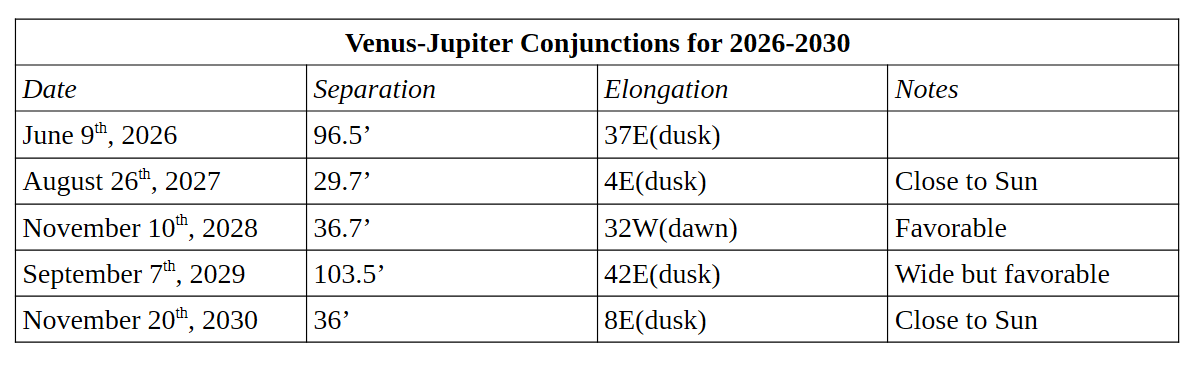 Jupiter versus Venus: close conjunctions for the remainder of the decade. Credit: Dave Dickinson.
Mercury and the waxing crescent Moon are about to join the complex scene as well. Mercury reaches greatest eastern dusk elongation 25 degrees from the Sun on June 15th, while the +12% illuminated, waxing crescent Moon passes the two on the evening of the 17th.
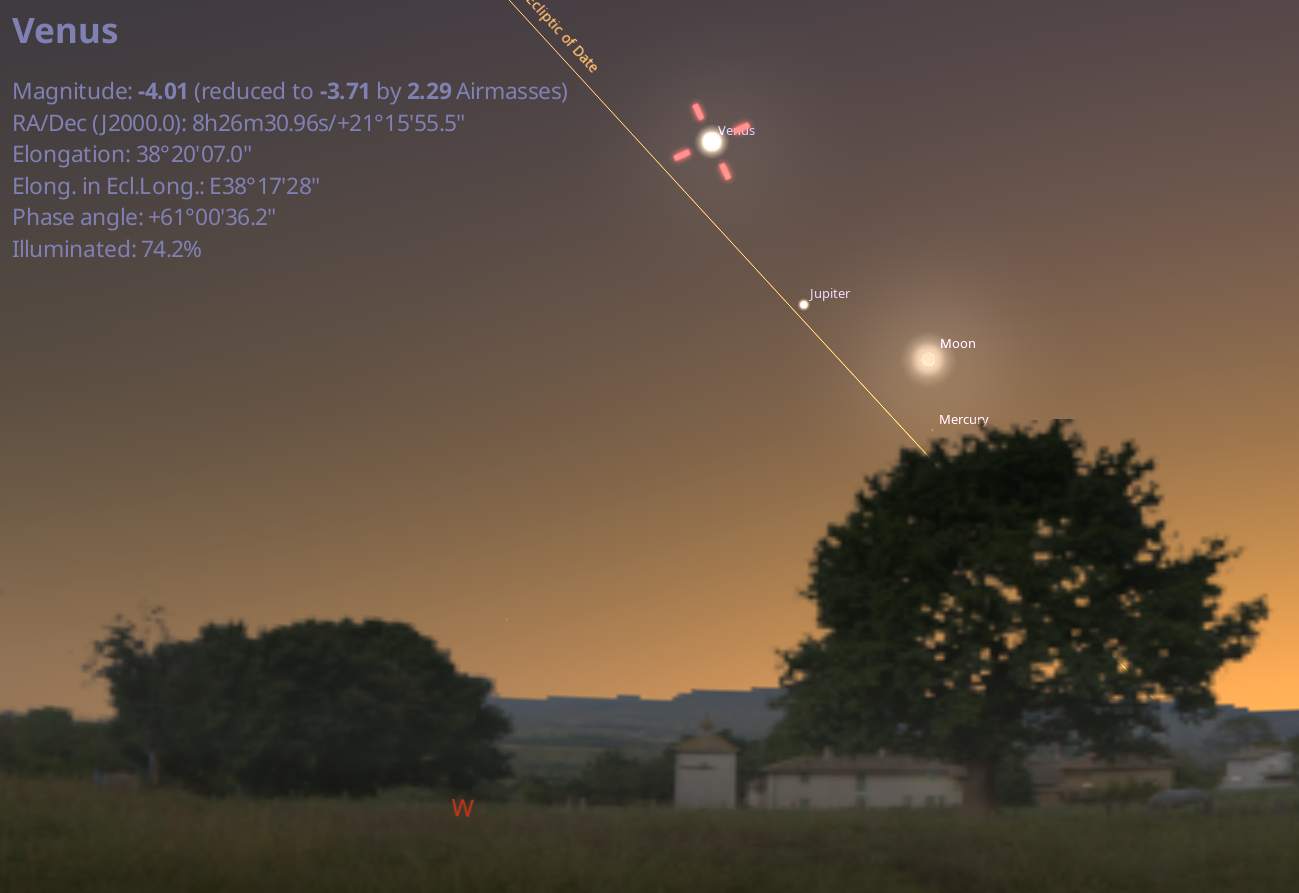 The sky scene looking westward on the evening of June 17th. Credit Stellarium.
The Moon actually occults Venus during the daytime on June 17th for much of North America. Can you see Venus near the Moon? Venus Venus against the daytime sky.
After June, the two planetary stars of the show part ways, with Jupiter receding from view sinking towards the Sun and solar conjunction on July 29th, while Venus ascends and reaches greatest elongation 46 degrees from the Sun dominating the dusk sky on August 15th.
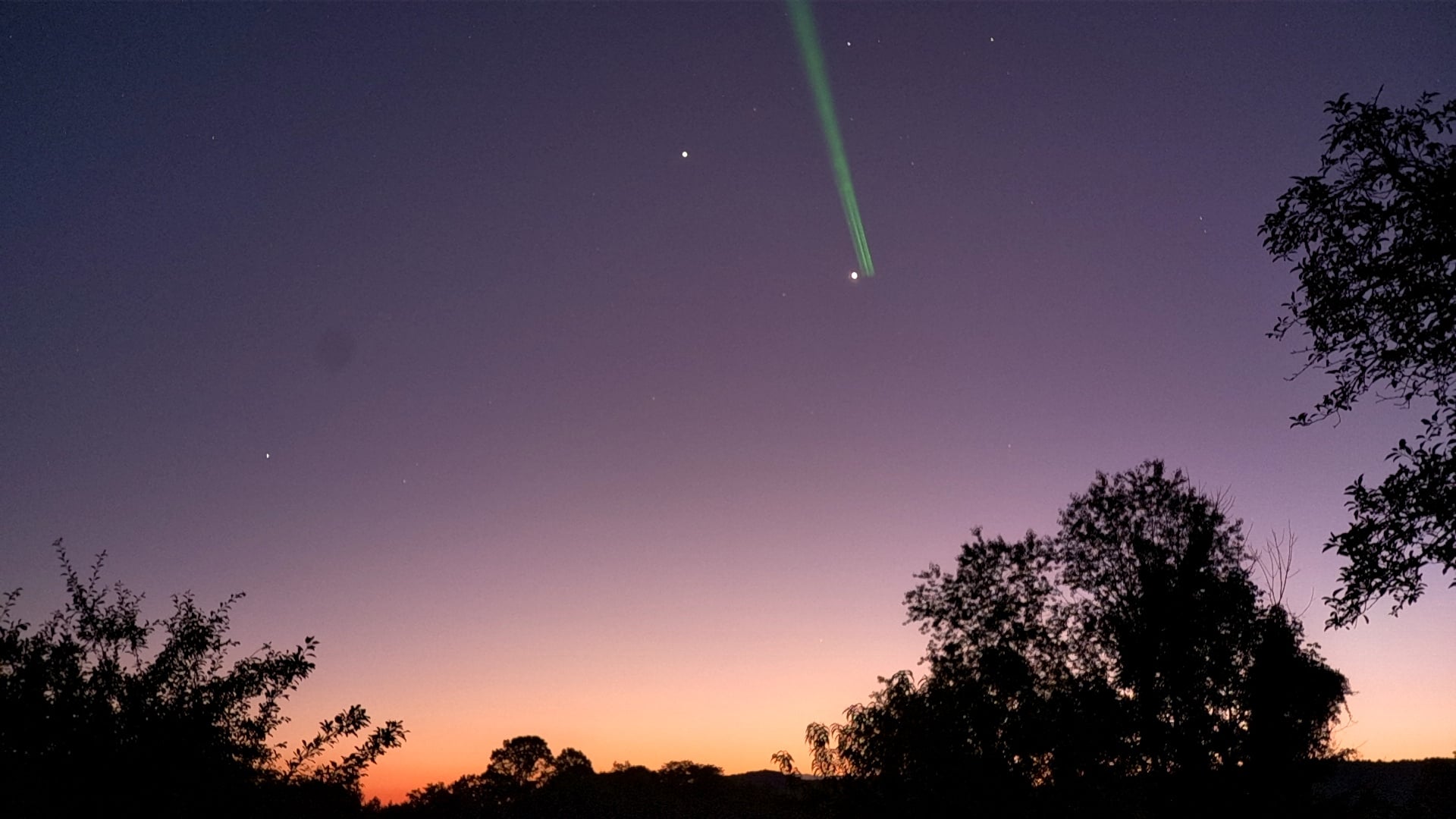 Shooting lasers at planets. Credit: Dave Dickinson.
Don’t miss a chance to show off the two brightest planets in the sky this coming week as Jupiter and Venus dance at dusk in early June.