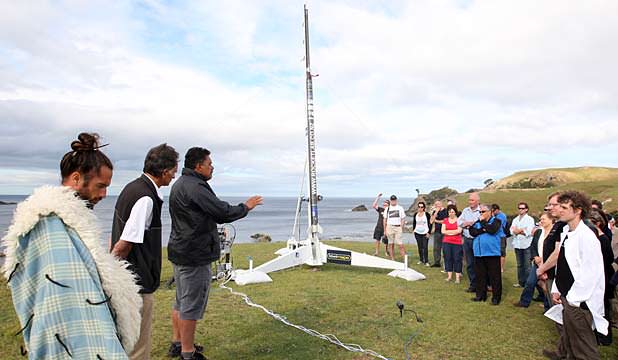
Footage obtained from Bill Ingall's melted camera shows exactly how flames triggered by the launch it was covering consumed the camera
Continue reading
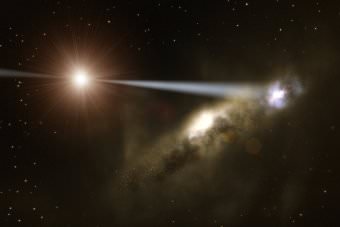
A team of Canadian astronomers viewed an eclipsing binary pulsar and used the gas as an "interstellar lens" to capture the most high-resolution observations of a pulsar ever.
Continue reading
A new study conducted by researchers from the Southwest Research Institute indicates that Pluto could have formed from a billion comets
Continue reading
Continue reading
Continue reading
Two upcoming missions - NASA's Parker Solar Probe and the ESA's Solar Orbiter - will get closer to the Sun than ever before in the hopes of unlocking its secrets.
Continue reading
After conducting their own tests on the EM Drive, a team from UT Dresden reported that any thrust coming from the engine might be due to interaction with Earth's magnetic field.
Continue reading
A team of astronomers, using the Herschel Observatory, recently observed a series of laser emissions coming from the ant nebula.
Continue reading
Continue reading
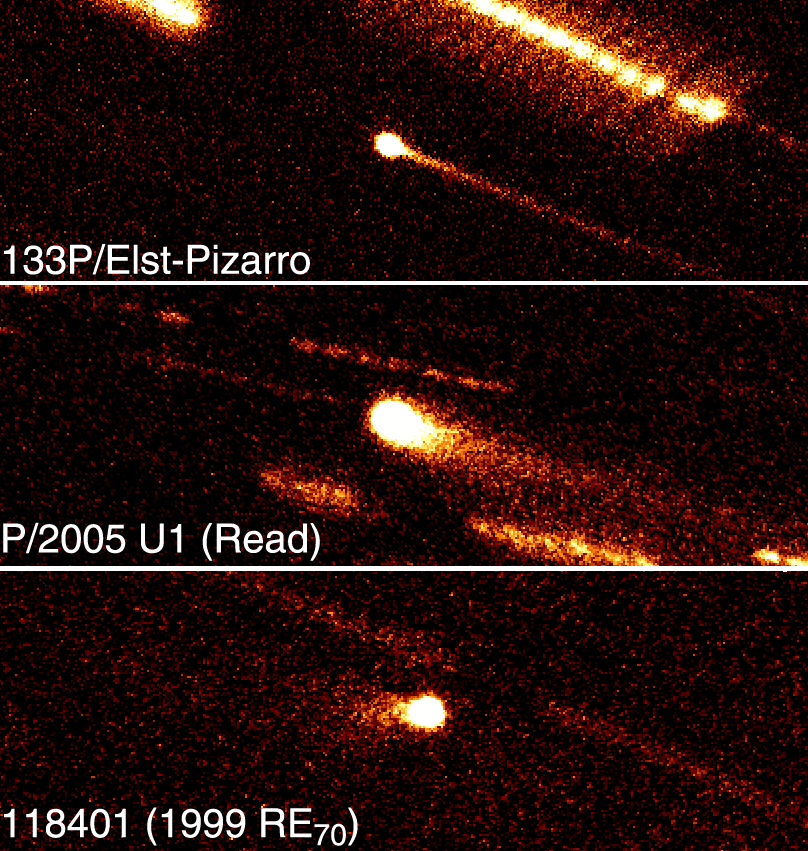
Have you been keeping an eye on Sol lately? One of the top astronomy stories for 2018 may be what's not happening, and how inactive our host star has become.
Continue reading
Continue reading
Continue reading
According to a new study from the Thomas Jefferson National Accelerator Facility, the pressure at the center of a proton is one-hundred times greater than at the core of a neutron star!
Continue reading
NASA's MarCO Cubesats, which are currently on their way to Mars with the InSight Lander, recently snapped a "pale blue dot" photo of Earth and the Moon.
Continue reading
According to a new study by a team of Chinese astronomers, fast radio bursts (FRBs) could be caused by the collapse of normal matter-crusts around "strange stars".
Continue reading
Using old data from the Galileo spaceprobe, a team of NASA scientists has found more evidence of plume activity on Europa's surface.
Continue reading
Based on the 2nd Gaia Data Release, a team of astronomers were able to directly detect and compile information on over 1000 white dwarf stars in our galactic neighborhood.
Continue reading
Continue reading
Continue reading
In a series of new studies, an international team of researchers found that if we live in a multiverse, it is likely to be as habitable as our own.
Continue reading