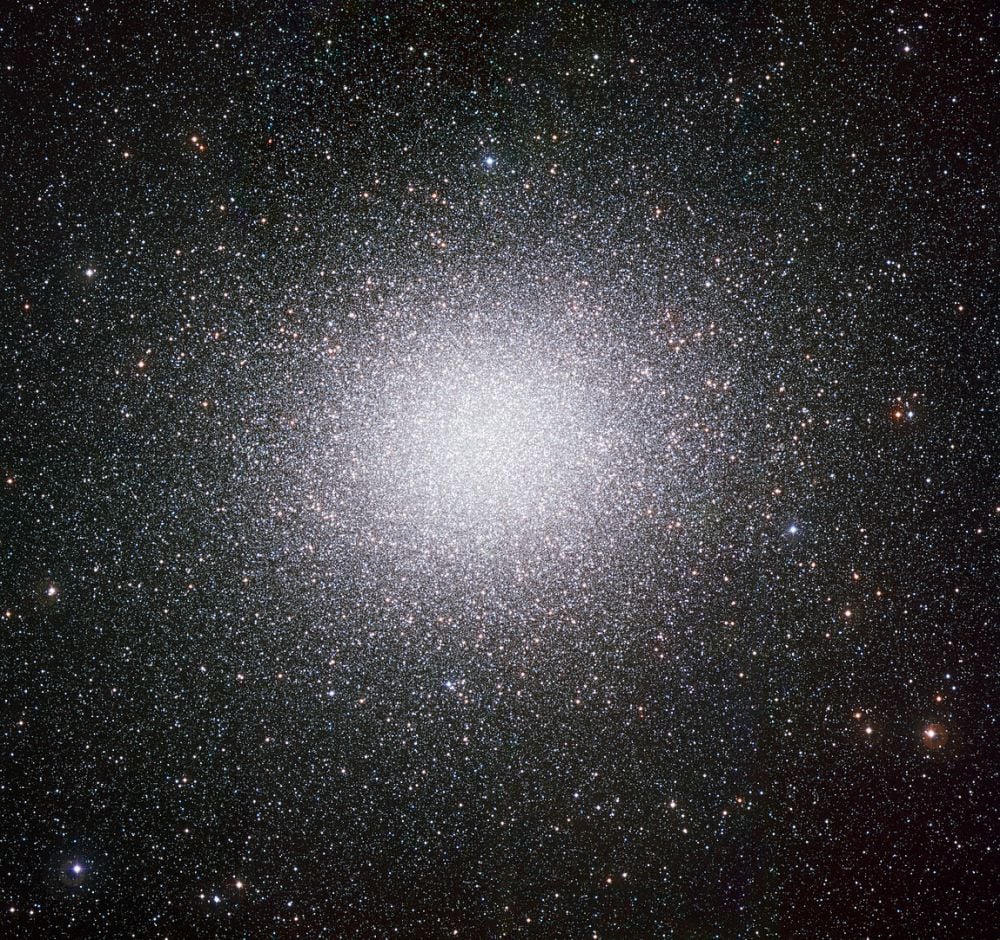
Astronomers have acquired evidence that Omega Centauri, the largest-known globular cluster in the Milky Way, hosts an intermediate mass black hole (IMBH). These elusive objects should exist, according to theory, but have been difficult to verify. The IMBH in Omega Centauri is considered a candidate black hole, and new research examined the region with the JWST for any conclusive evidence.
Continue reading
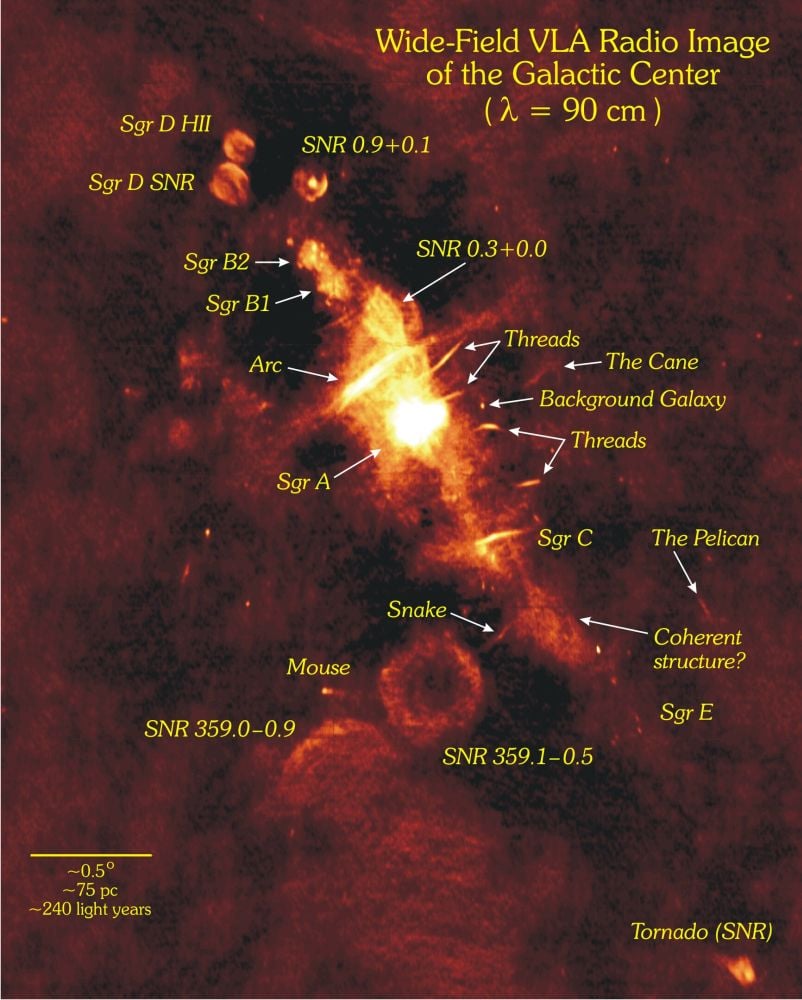
New research and observations with the VLT's ERIS instrument show that some stars are following predictable orbits near Sagitarrius A-star, the Milky Way's supermassive black hole. This goes against the established idea that the black hole's enormous gravity destroys stars and gas clouds. Even a binary star system in the region seems to go about its business unaffected.
Continue reading
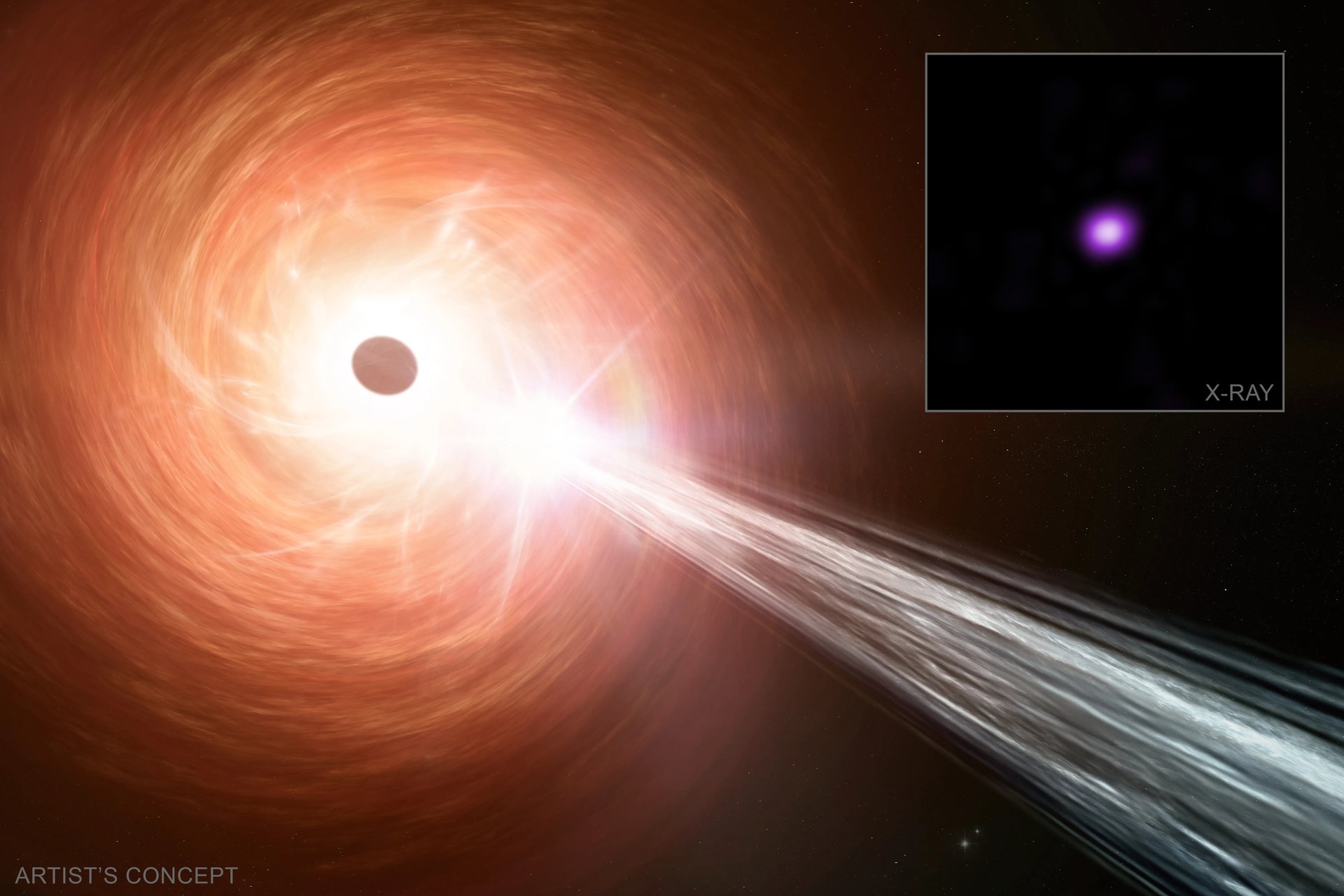
Do I really need to go over the evidence for dark matter again?
Okay, fine, for those of you in the back who weren’t paying attention the first time.
Continue reading
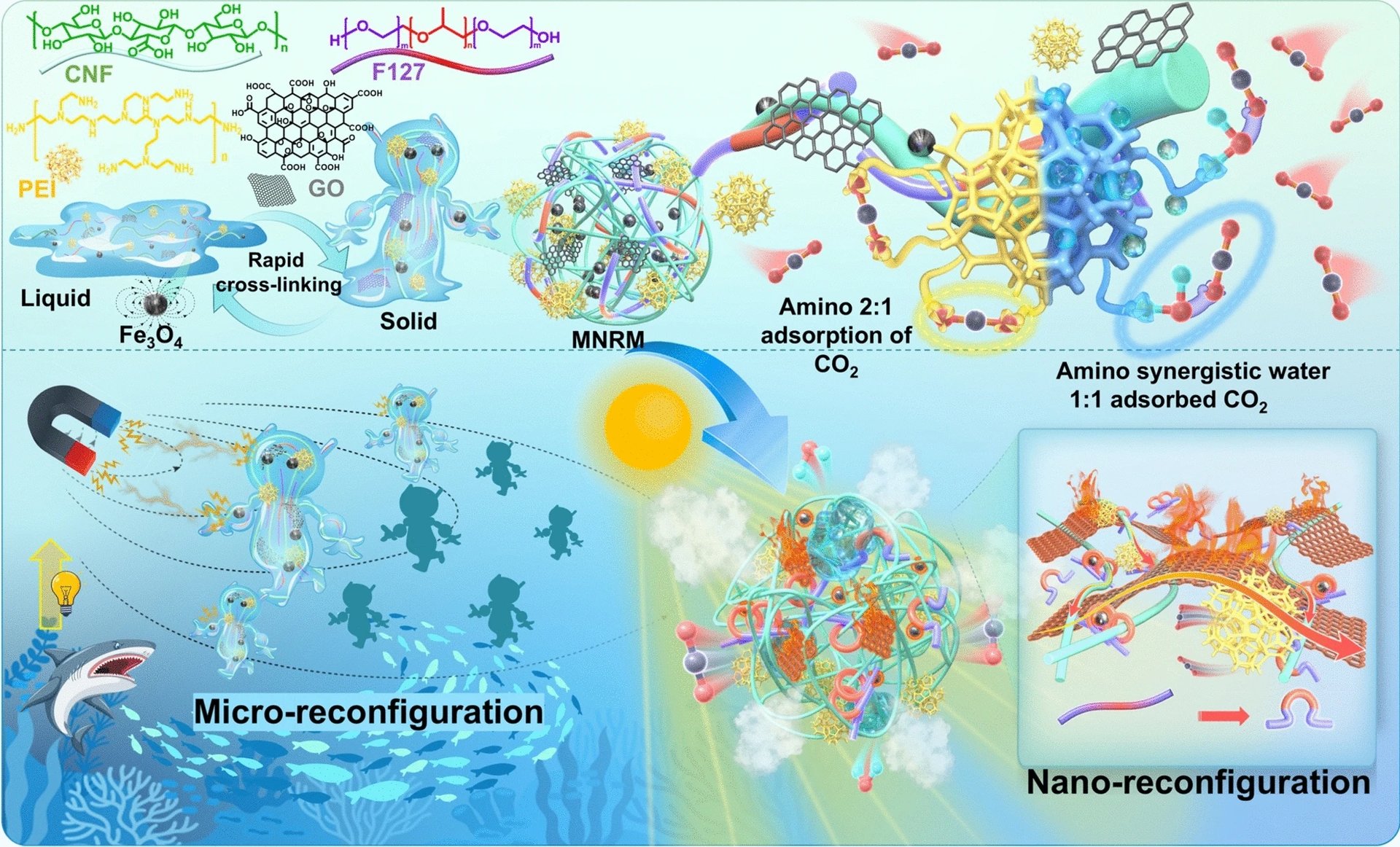
Removing, or “scrubbing”, carbon dioxide from the air of confined spaces is a critical component of any life support system on a spacecraft or submarine. However, modern day ones are energy intensive, requiring temperatures of up to 200℃ to operate. So a research lab led by Dr. Hui He at Guangxi University in China has developed what they call “micro/nano reconfigurable robots” (MNRM) to scrub CO2 from the air much more efficiently. Their work is described in a new paper in Nano-Micro Letters.
Continue reading
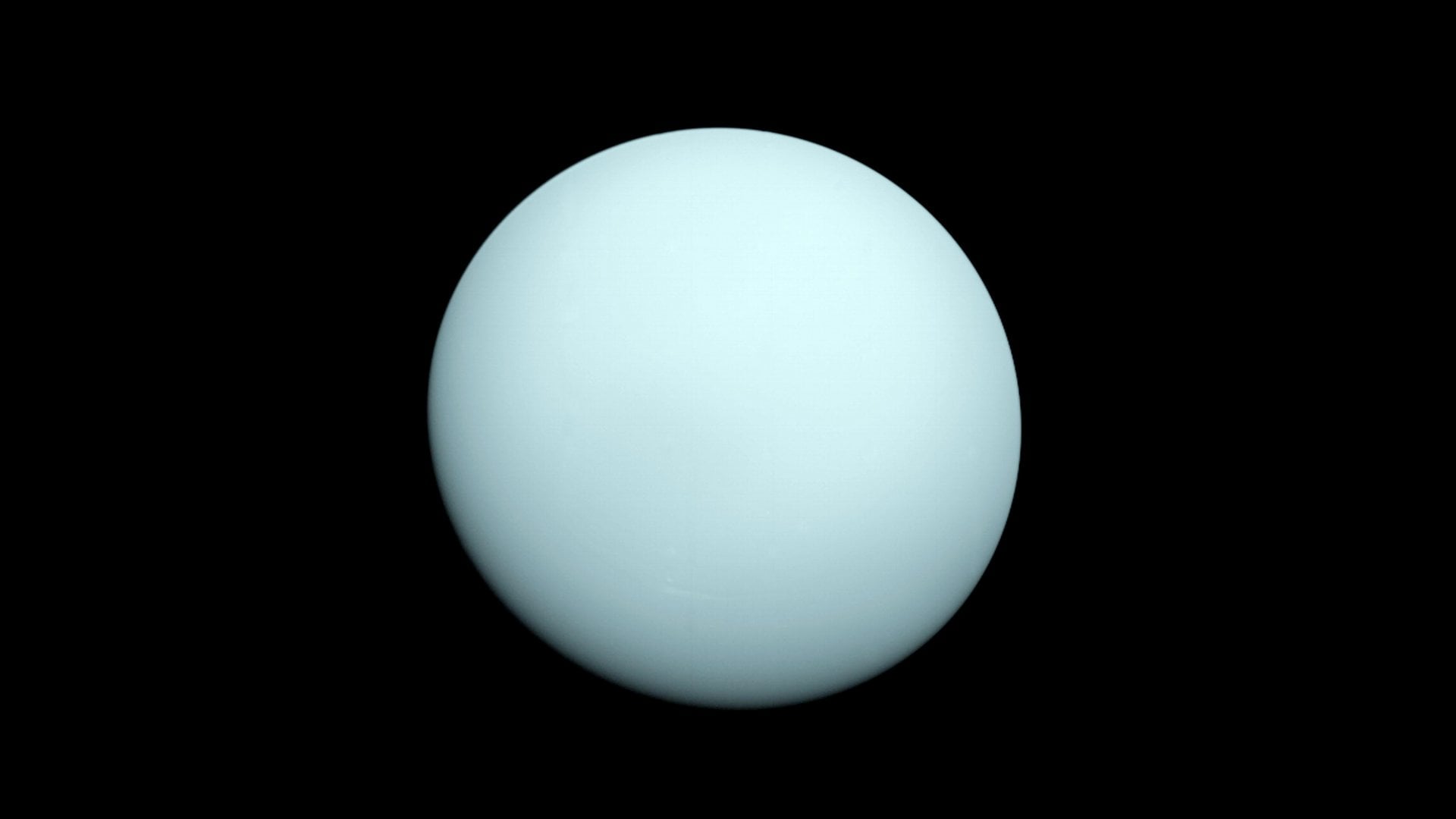
Southwest Research Institute (SwRI) scientists believe they may have resolved a 39-year-old mystery about the radiation belts around Uranus.
Continue reading
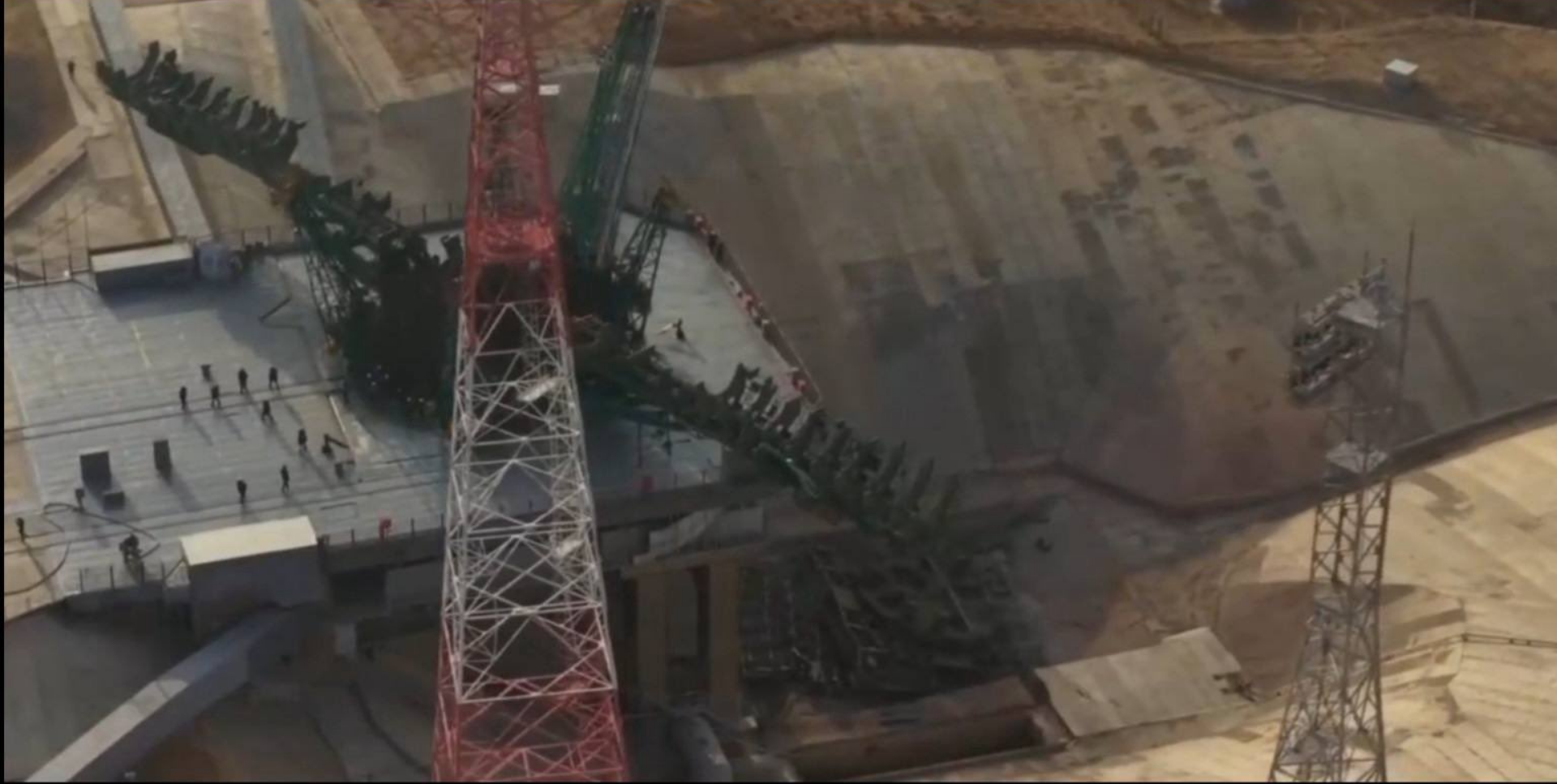
A severe accident at the Baikonur Cosmodrome involving a wrecked maintenance cabin has indefinitely delayed Russia's ability to launch crewed missions and payloads to the International Space Station (ISS).
Continue reading

What is “gum”? Most people have probably never considered this question, and might answer something like a chewy material you can put in your mouth. But, to a scientist they might answer something like “nitrogen-rich polymeric sheets”, because precisely defining the chemistry of a material is important to them. Or at least, that’s what they called a type of organic material found in the sample collected of the asteroid Bennu by the OSIRIS-REx spacecraft. But more informally, scientists have taken to calling it “space gum”, and the process it formed under is making some of them question current models of asteroid formation.
Continue reading
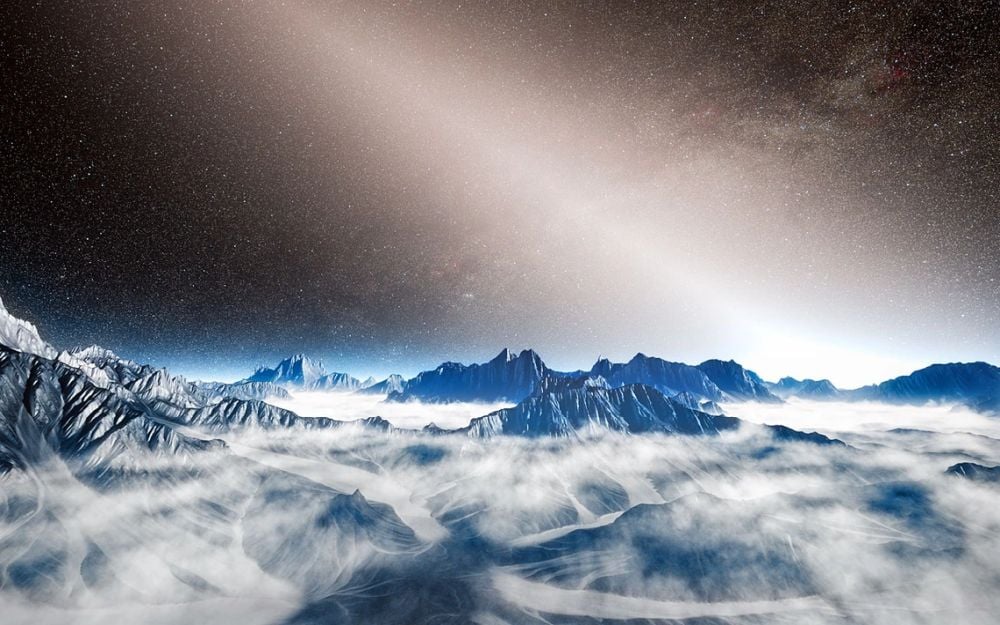
Hot exozodiacal dust can thwart our efforts to detect exoplanets. It causes what's called coronagraphic leakage, which confuses the light signals from distant stars. The Habitable Worlds Observatory will face this obstacle, and new research sheds light on the problem.
Continue reading
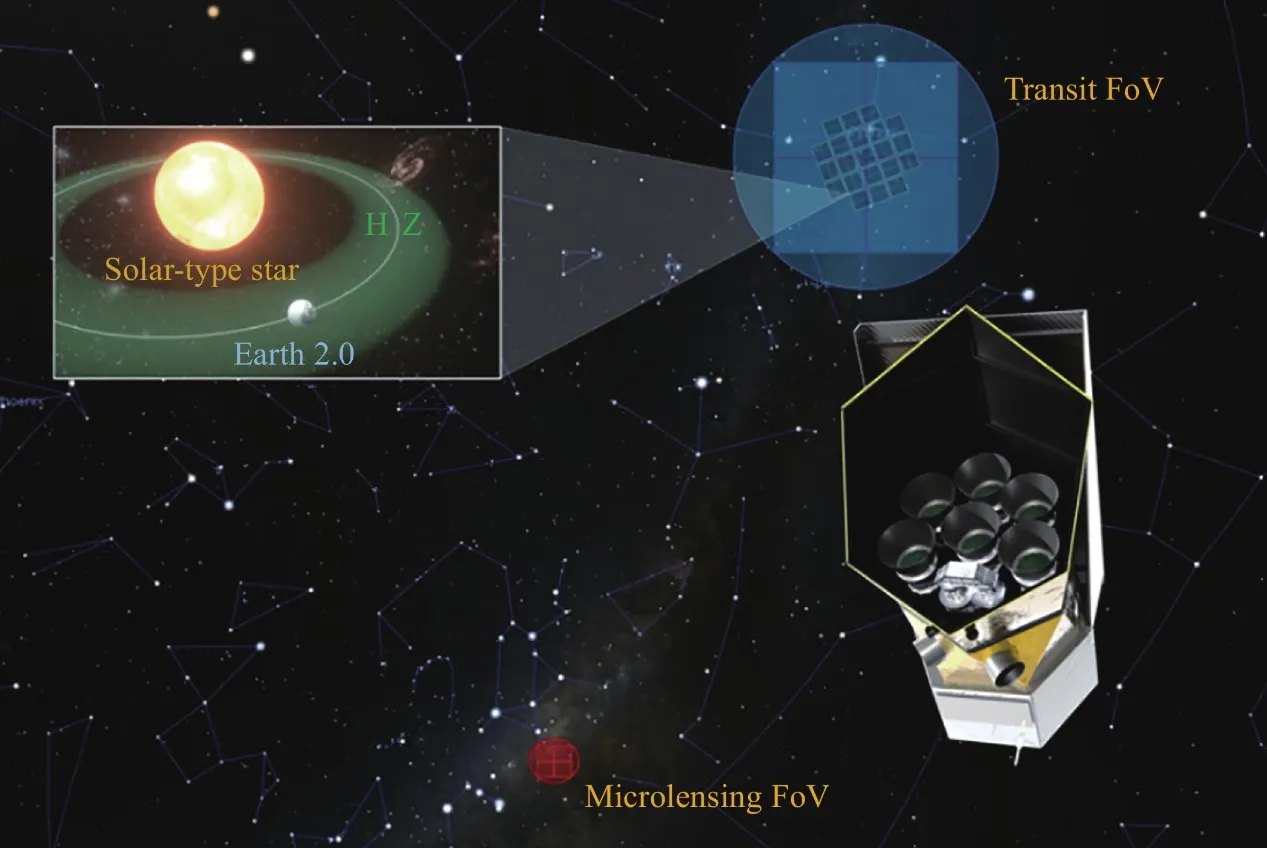
A video that appeared on CGTN's Hot Take details four missions that China will be sending to space in the coming years, including a survey telescope that will search for Earth 2.0.
Continue reading
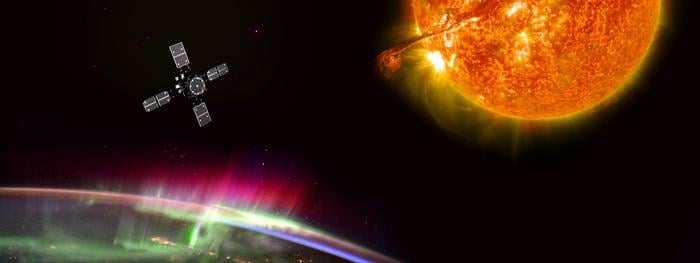
A powerful geomagnetic superstorm is a once a generation event, happening once every 20-25 years. Such an event transpired on the night of May 10/11, 2024, when an intense solar storm slammed into the Earth’s protective magnetic sheath. Now, a recent study shows just how intrusive that storm was, and how long it took for the Earth’s plasma layer to recover.
Continue reading
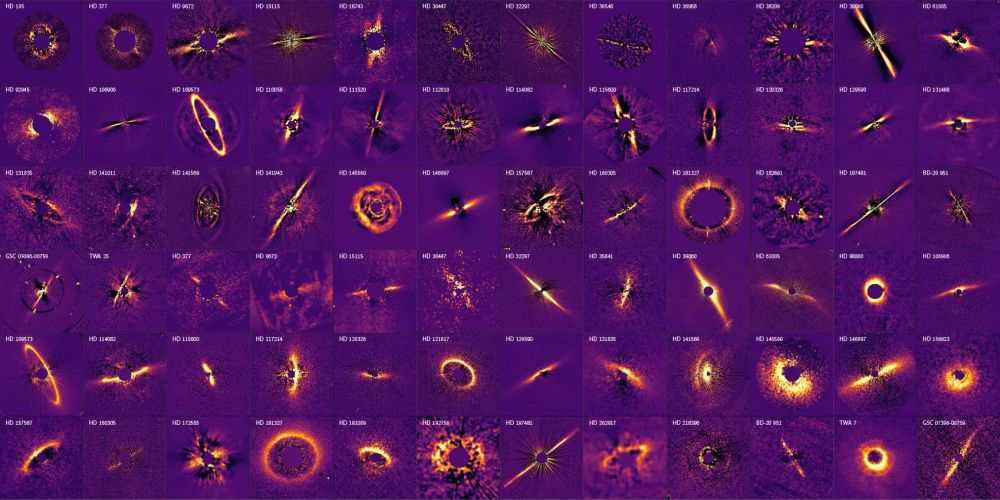
Observations with the SPHERE instrument on the European Southern Observatory's VLT revealed the presence of debris rings similar to structures in our Solar System. SPHERE found rings similar to the Kuiper Belt and the Main Asteroid Belt. Though individual asteroids and comets can't be imaged, these debris rings infer that other solar systems have architectures similar to ours.
Continue reading
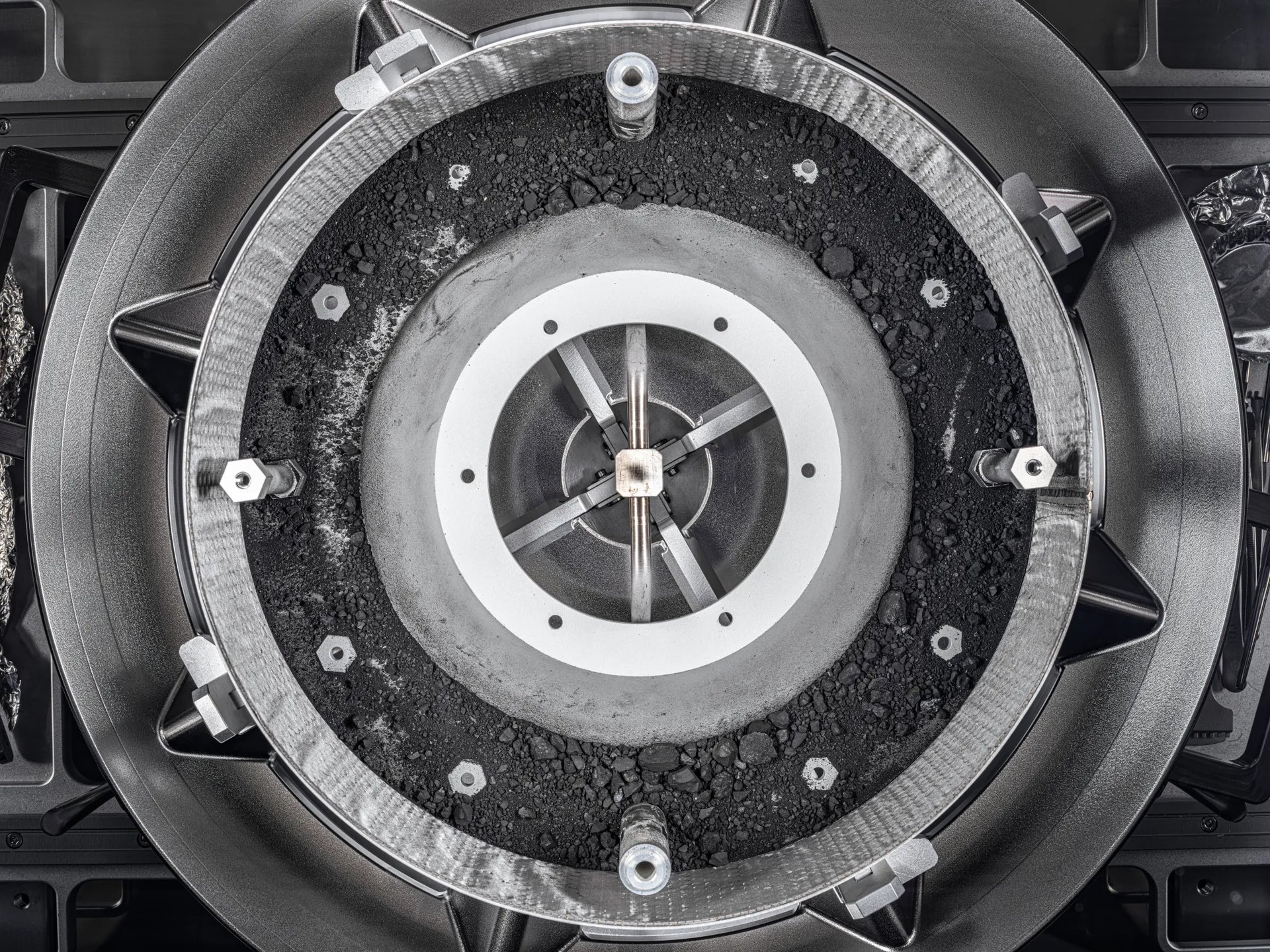
It’s been over two years since the samples from Bennu gathered by OSIRIS-REx were returned to Earth. But there’s still plenty of novel science coming out of that 121.6 g of material. Three new papers were released recently that describe different aspects of that sample. One in particular, from Yoshihiro Furukawa of Tohoku University in Japan and their co-authors, has already attracted plenty of attention, including from US Senator (and former astronaut) Mark Kelly. It shows that all of the building blocks for early life were available on the asteroid - raising the chances that planets throughout the galaxy could be seeded with the abiotic precursors for life.
Continue reading
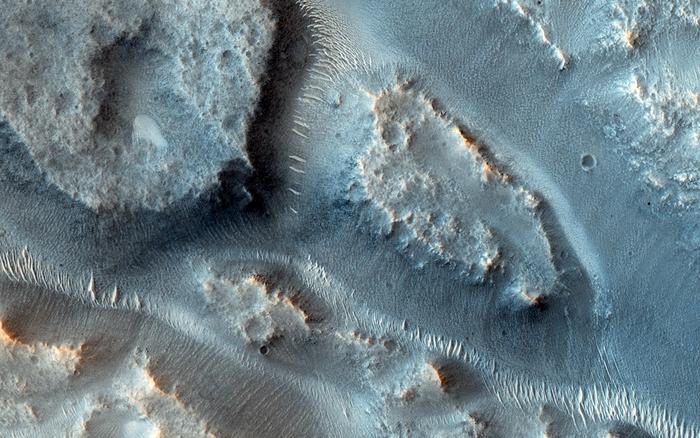
What can mapped drainage systems on Mars teach scientists about the Red Planet’s watery past? This is what a recent study published in the Proceedings of the National Academy of Sciences hopes to address as a team of scientists from the University of Texas at Austin (UT Austin) conducted a first-time mapping study involving Martian river basins. This study has the potential to not only gain insight into ancient Mars and how much water existed there long ago but also develop new methods for mapping ancient river basins on Mars and potentially other worlds.
Continue reading
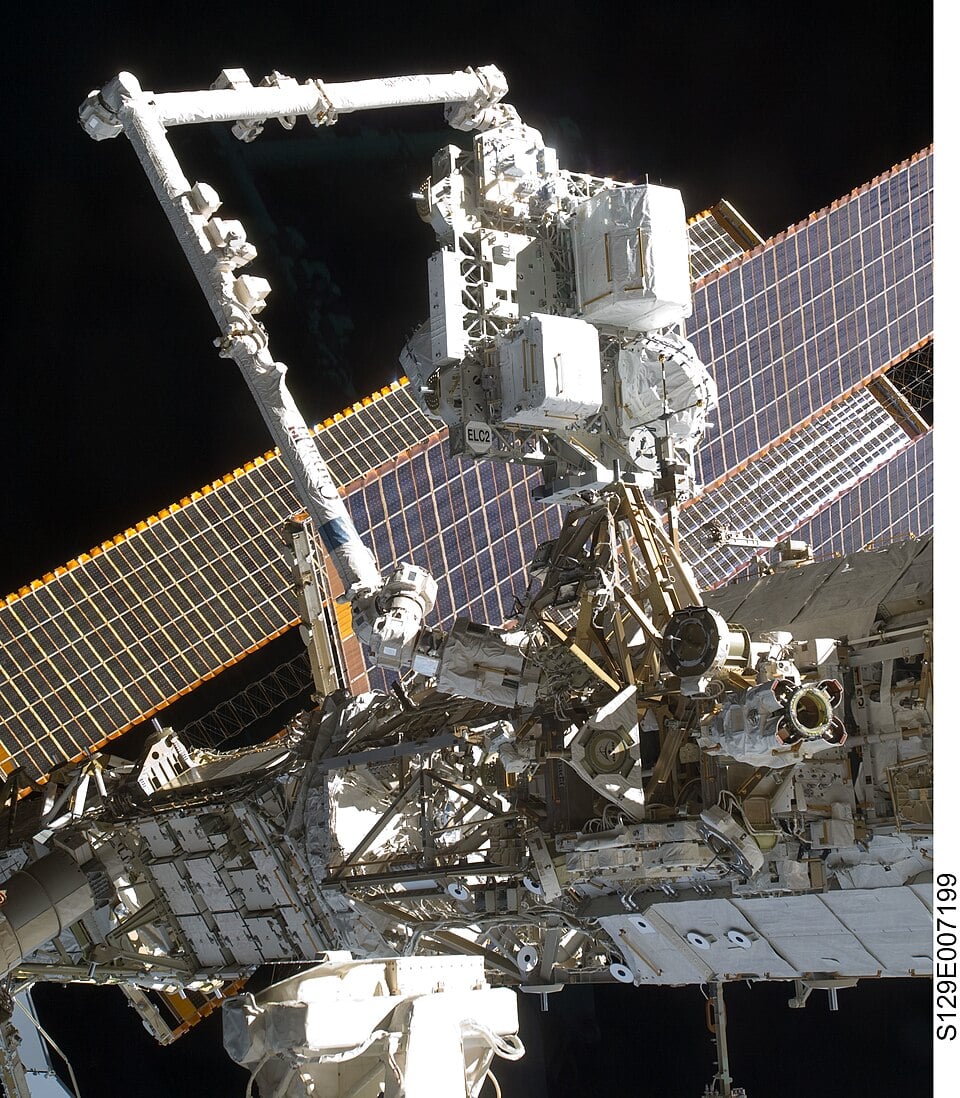
Scientists have launched COLIS, a special laboratory aboard the International Space Station designed to study how everyday materials like sunscreens, mayonnaise, and medications behave in near zero gravity. Researchers discovered that gravity influences the long term stability of soft matter far more dramatically than previously understood, affecting how these materials age and restructure at the molecular level. This research could fundamentally improve how we design everything from controlled release drugs to self assembling materials, demonstrating that understanding materials in space offers unexpected benefits for life on Earth.
Continue reading
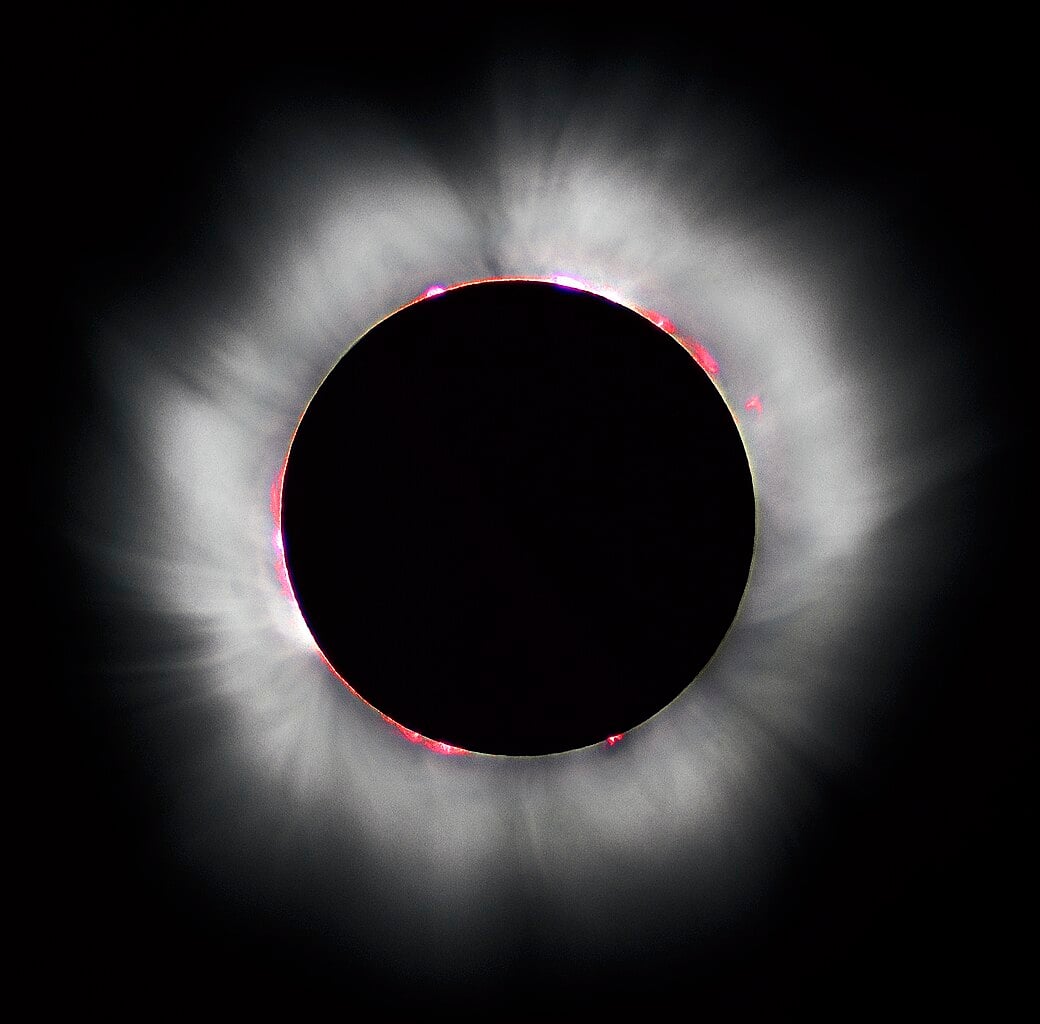
On a summer day in 709 BCE, scribes at the Lu Duchy Court in ancient China looked up to witness something extraordinary. The Sun vanished completely from the sky, and in its place hung a ghostly halo. They recorded the event carefully, noting that during totality the eclipsed Sun appeared "completely yellow above and below." Nearly three millennia later, that ancient observation has helped modern scientists measure how fast Earth was spinning and understand what our Sun was doing at a time when Homer was composing poetry.
Continue reading
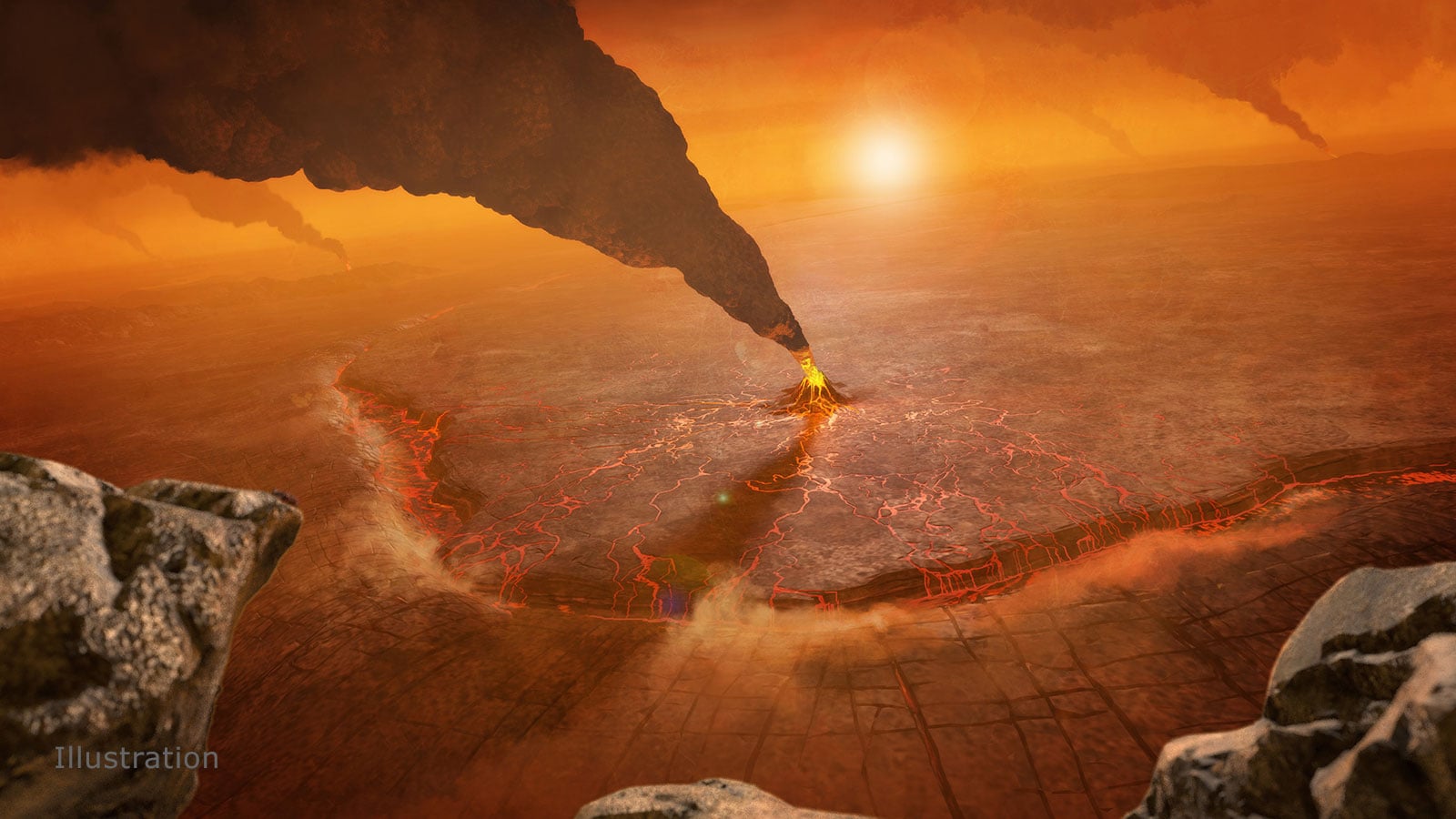
An international team has made a significant breakthrough in understanding the tectonic evolution of terrestrial planets. Using advanced numerical models, the team systematically classified for the first time six distinct planetary tectonic regimes. Their work provides a unified theory on the geological evolution of both Earth and Venus.
Continue reading
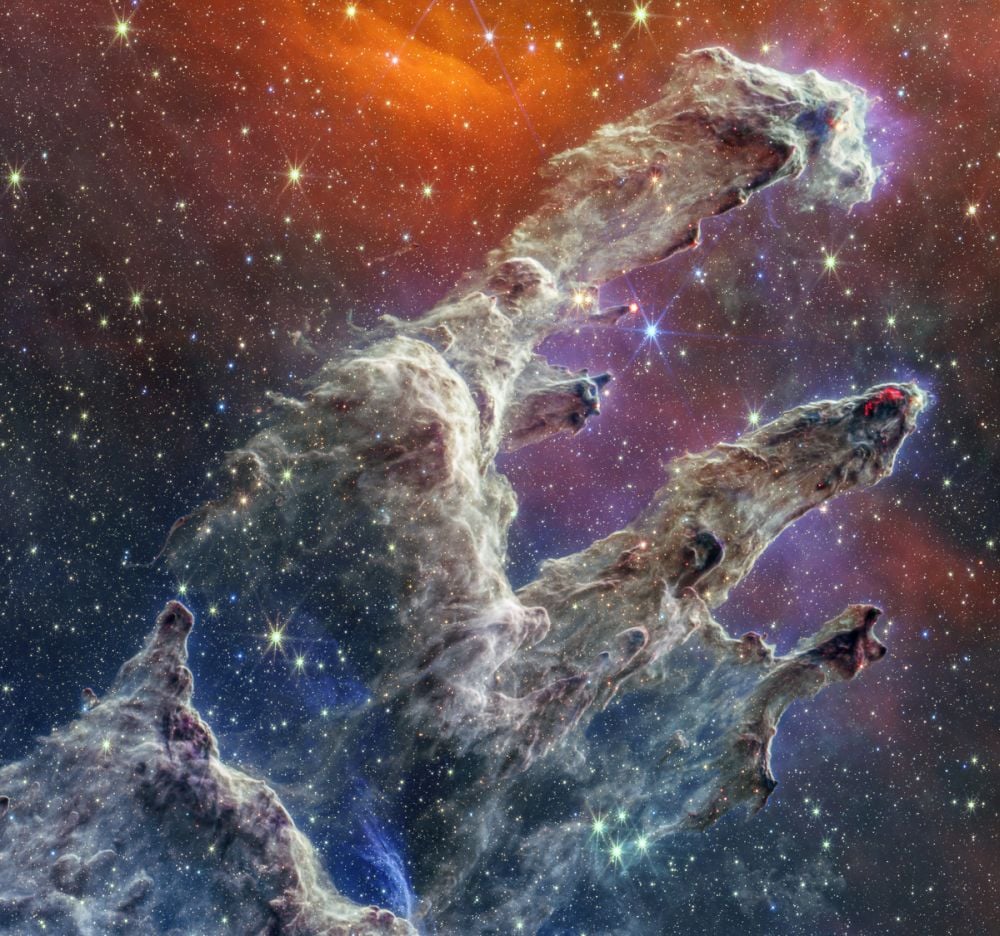
Intermediate mass stars experience periods of rapid growth in their late stages of formation. The growing young star emits more radiation that encourages greater accretion. Rather than depleting their protoplanetary disks and preventing gas giants from forming, the opposite is true.
Continue reading
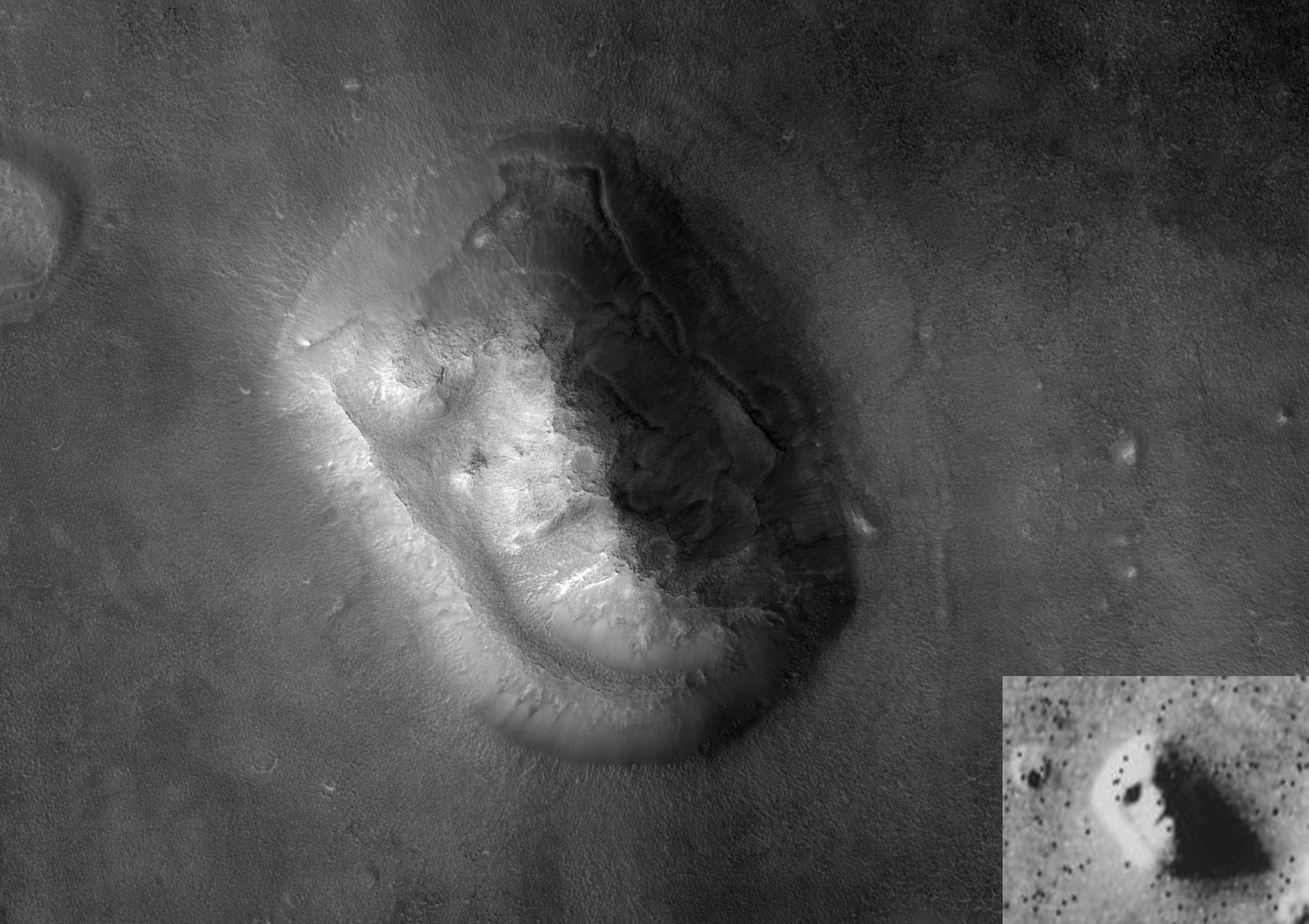
In a recent paper, a team of SETI and astrobiology specialists examines four controversial claims about the existence of extraterrestrial life. From these, they present recommendations for scientists and science communicators when addressing future claims of discovery.
Continue reading
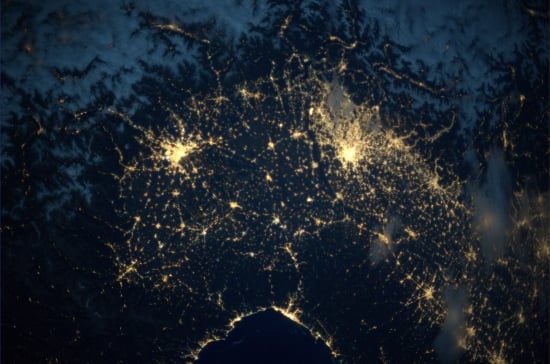
Searching for technosignatures - signs of technology on a planet that we can see from afr - remains a difficult task. There are so many different factors to consider, and we only have the technological capabilities to detect a relatively small collection of them. A new paper, available in pre-print on arXiv but also accepted for publication into The Astrophysical Journal Letters, from Jacob Haqq-Misra of the Blue Marble Space Institute of Science and his co-authors explores some of those capabilities by using a framework they developed known as Project Janus that estimates what technology will look like on Earth 1,000 years from now in the hopes that we can test whether or not we can detect it on another planet.
Continue reading
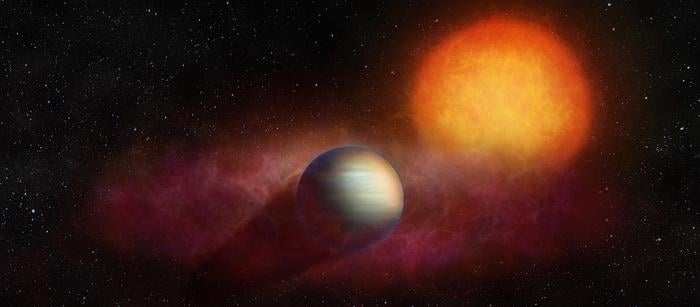
What can an exoplanet leaking helium teach astronomers about the formation and evolution of exoplanet atmospheres? This is what a recent study published in Nature Astronomy hopes to address as an international team of scientists investigated atmospheric escape on a puffy exoplanet. This study has the potential to help scientists better understand the formation and evolution of gas giant planets, specifically with many gas giant planets observed orbiting extremely close to their stars.
Continue reading
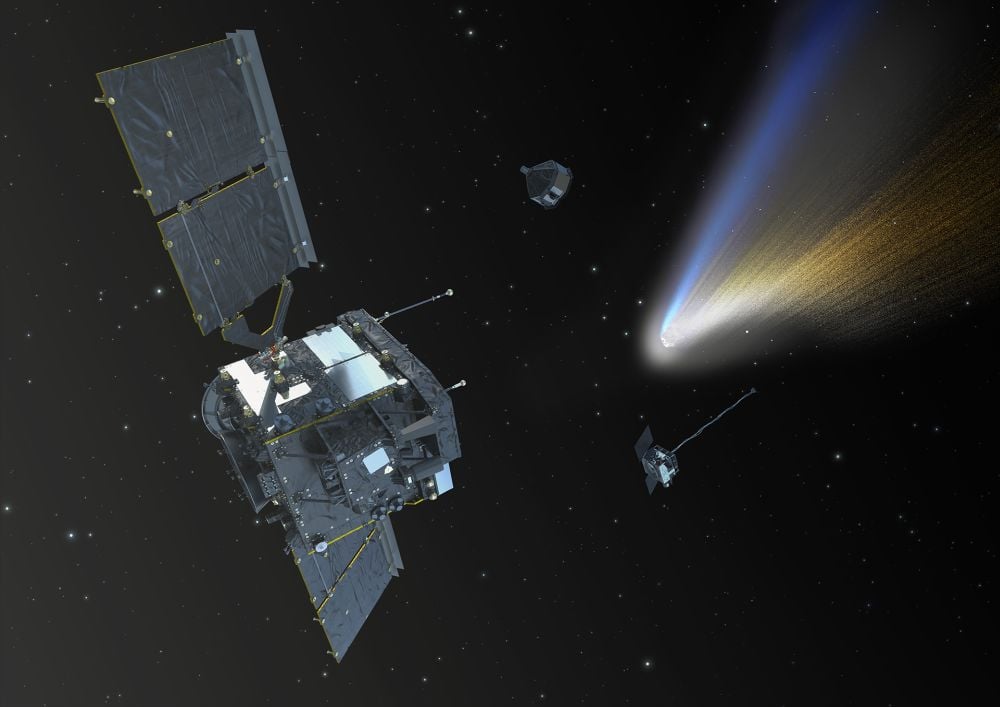
arXiv:2512.00492v1 Announce Type: new Abstract: We describe how the ESA Comet Interceptor mission, which is due to launch in 2028/29 to a yet-to-be-discovered target, can provide a conceptual basis for a future mission to visit an Interstellar Object. Comet Interceptor will wait in space until a suitable long period comet is discovered, allowing rapid response to perform a fast flyby of an object that will be in the inner Solar System for only a few years; an enhanced version of this concept ...
Continue reading
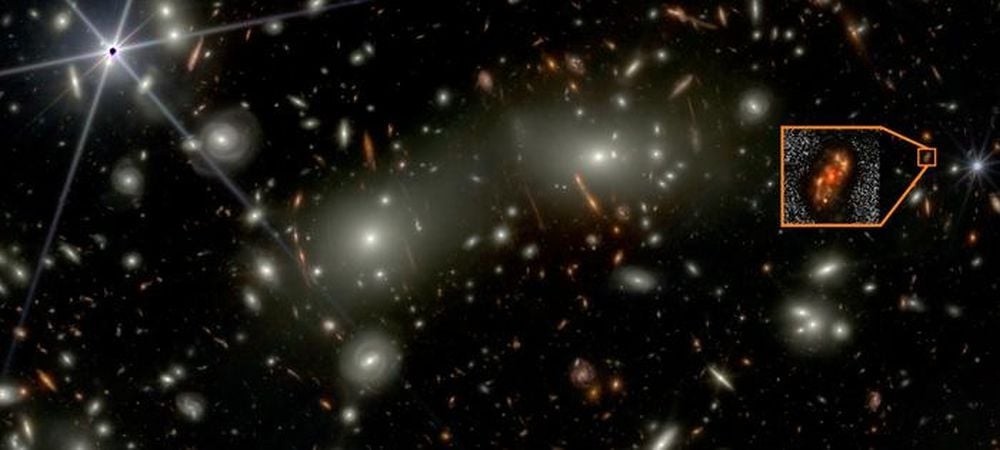
The JWST has made a name for itself by discovering mature galaxies in the Universe's early times. This time, a pair of Indian astronomers working with the JWST found a fully-formed spiral galaxy much like the Milky Way only 1.5 billion years after the Big Bang. The discovery, and others like it, are forcing scientists to reconsider their understanding of the cosmic timeline.
Continue reading
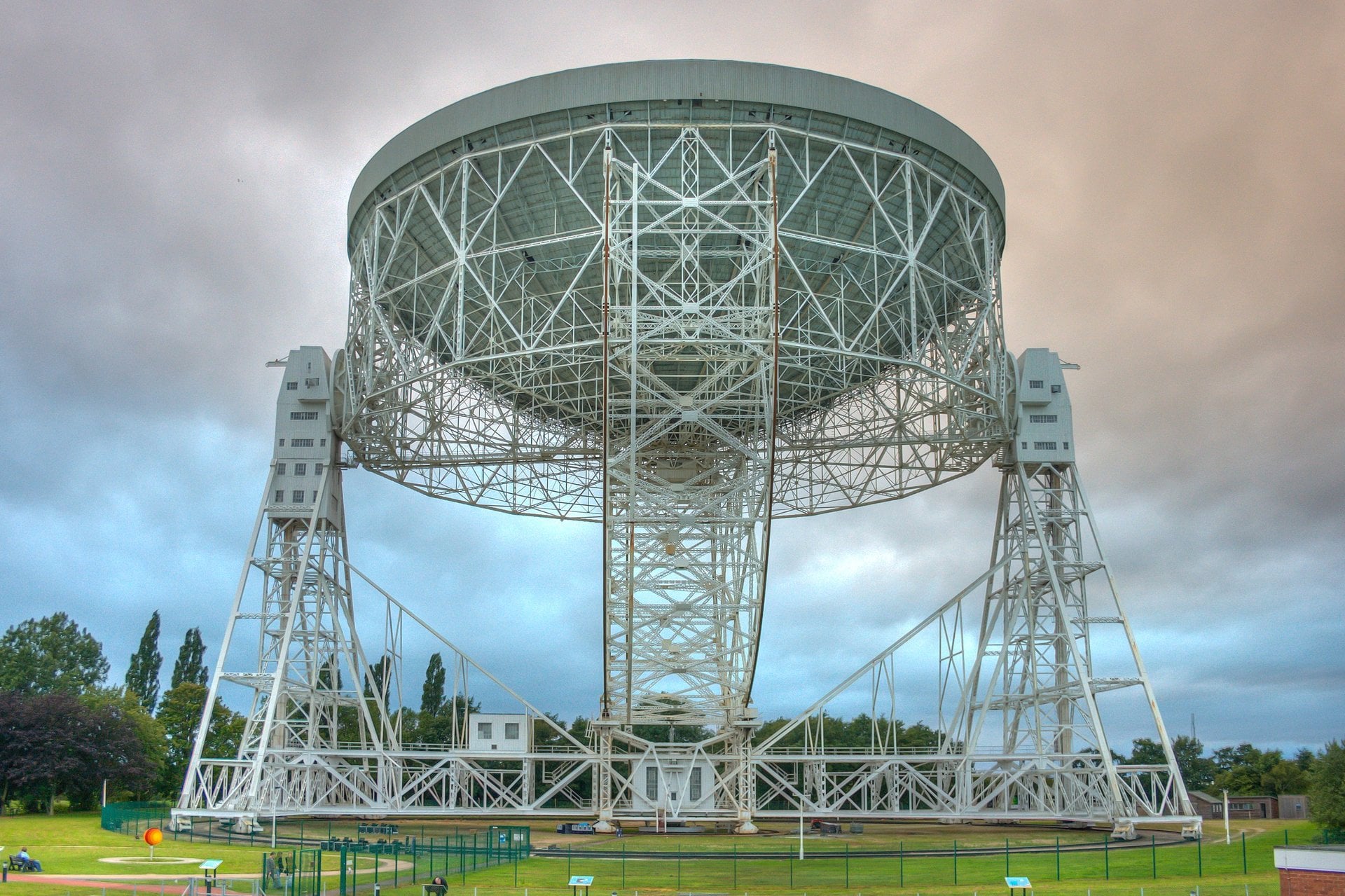
We've long known that we move through the Universe relative to the cosmic microwave background, but a new study of radio galaxies finds an even faster result, which could contradict the standard model of cosmology.
Continue reading
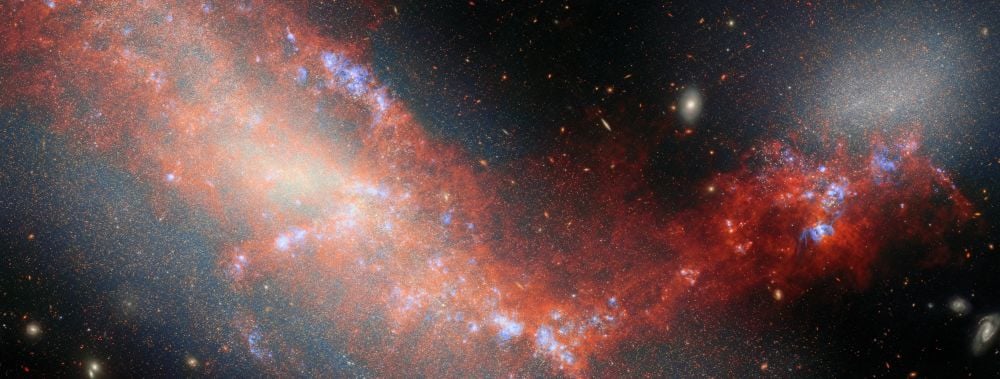
The European Space Agency has release its ESA/Webb Picture of the Month and it features a pair of dwarf galaxies engaged in a tentative dance, like nervous partners at a social. The pair are a staggering 24 million light-years away. But even at that great distance, the pair of galaxies is the closest-known interacting pair of dwarfs, other than the Milky Way's Magellanic Clouds, where both the stellar populations and the gas bridge linking the galaxies have been observed.
Continue reading
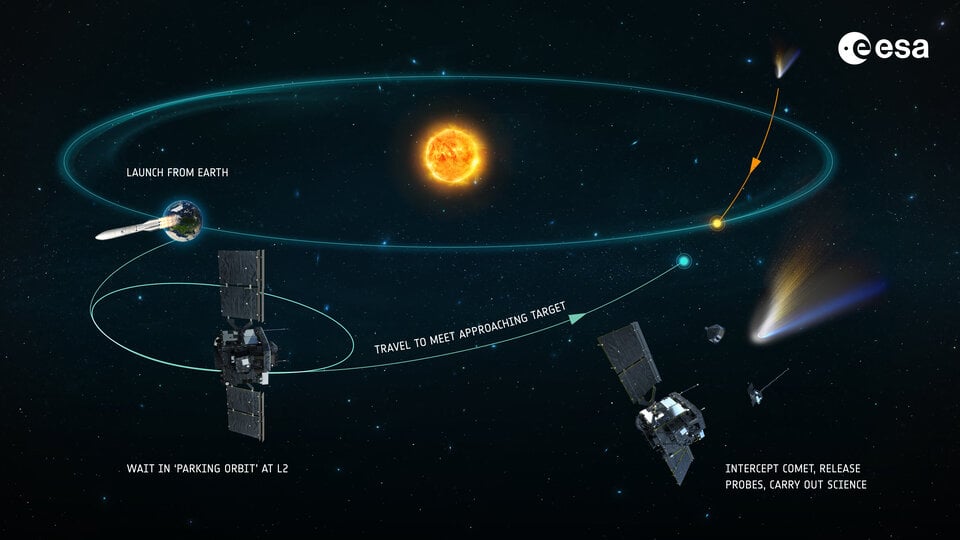
There’s been a lot of speculation recently about interstellar visitor 3I/ATLAS - much of which is probably caused by low quality data given that we have to observe it from either Earth, or in some case Mars. In either case it’s much further away that what would be the ideal. But that might not be the case for a future interstellar object. The European Space Agency (ESA) is planning a mission that could potentially visit a new interstellar visitor, or a comet that is making its first pass into the inner solar system. But, given the constraints of the mission, any such potential target object would have to meet a string of conditions. A new paper by lead Professor Colin Snodgrass of the University of Edinburgh of his colleagues, discusses what those conditions are, and assesses the likelihood that we’ll find a good candidate within a reasonable time of the mission's launch.
Continue reading
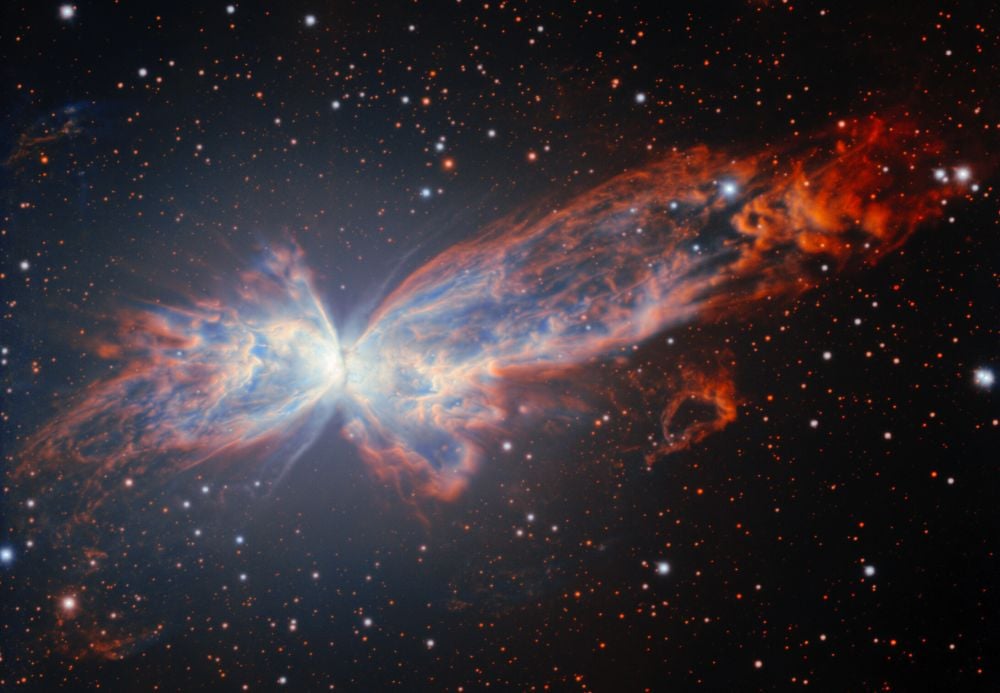
To celebrate 25 years since the completion of the International Gemini Observatory, students in Chile voted for the Gemini South telescope to image NGC 6302 — a billowing planetary nebula that resembles a cosmic butterfly. The International Gemini Observatory is partly funded by the U.S. National Science Foundation (NSF) and operated by NSF NOIRLab.
Continue reading
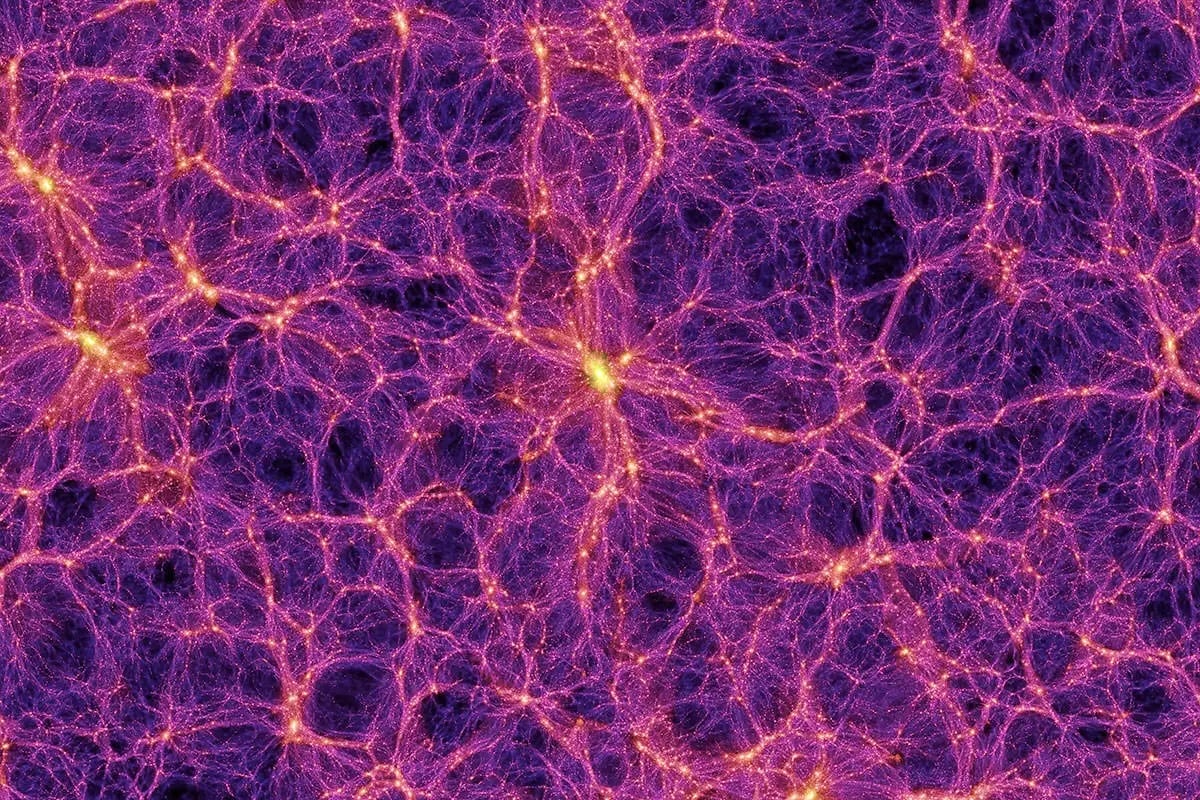
Why is the Universe filled with matter? Why isn't it an equal amount of matter and antimatter? We still don't know the answer, but a new approach looks at the symmetries of extended models of particle physics and finds a possible path forward. It's a knotty problem that may just have a knotty solution.
Continue reading
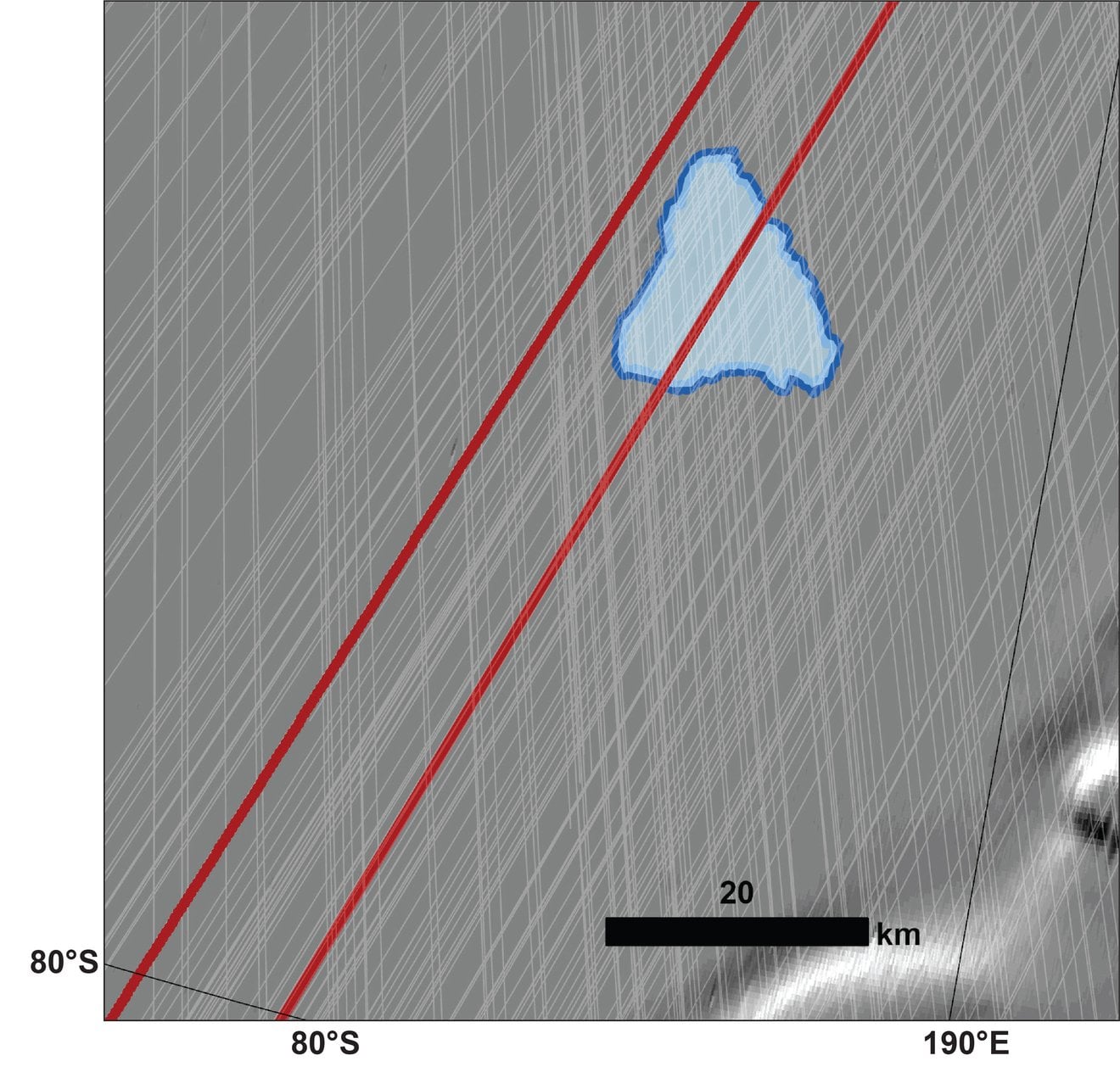
Remember back in 2018 when there was a discovery of a briny “lake” underground near the Martian south pole? Pepperidge Farm probably does, and anyone that works there that’s interested in space exploration will be disappointed to hear that, whatever might be causing the radar signal that finding was based on, it’s most likely not a lake. At least according to new data collected by the Mars Reconnaissance Orbiter (MRO) and published recently in Geophysical Research Letters by lead author Gareth Morgan of the Planetary Science Institute and his colleagues.
Continue reading

The complex molecules required for life on Earth might never have formed if it wasn’t for cosmic dust.
Continue reading
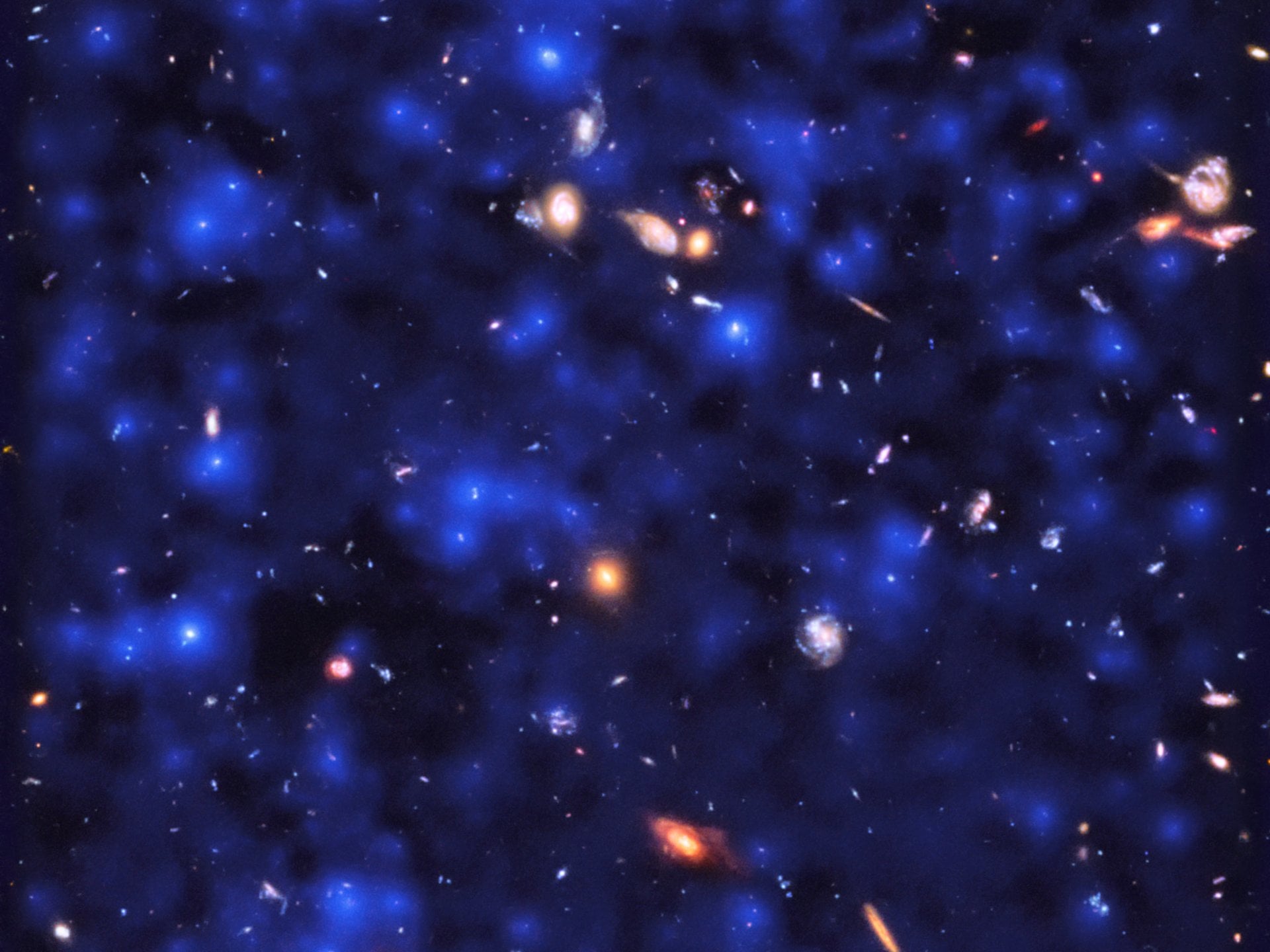
There is a period in the Universe known as the cosmic dark ages. It lies between the recombination of the first atoms and the ignition of the first stars, when the Universe was thought to be cold and dark. Now astronomers have looked at the faint glow of atomic hydrogen to find that while the Universe was dark, it wasn't quite as cold as we thought.
Continue reading
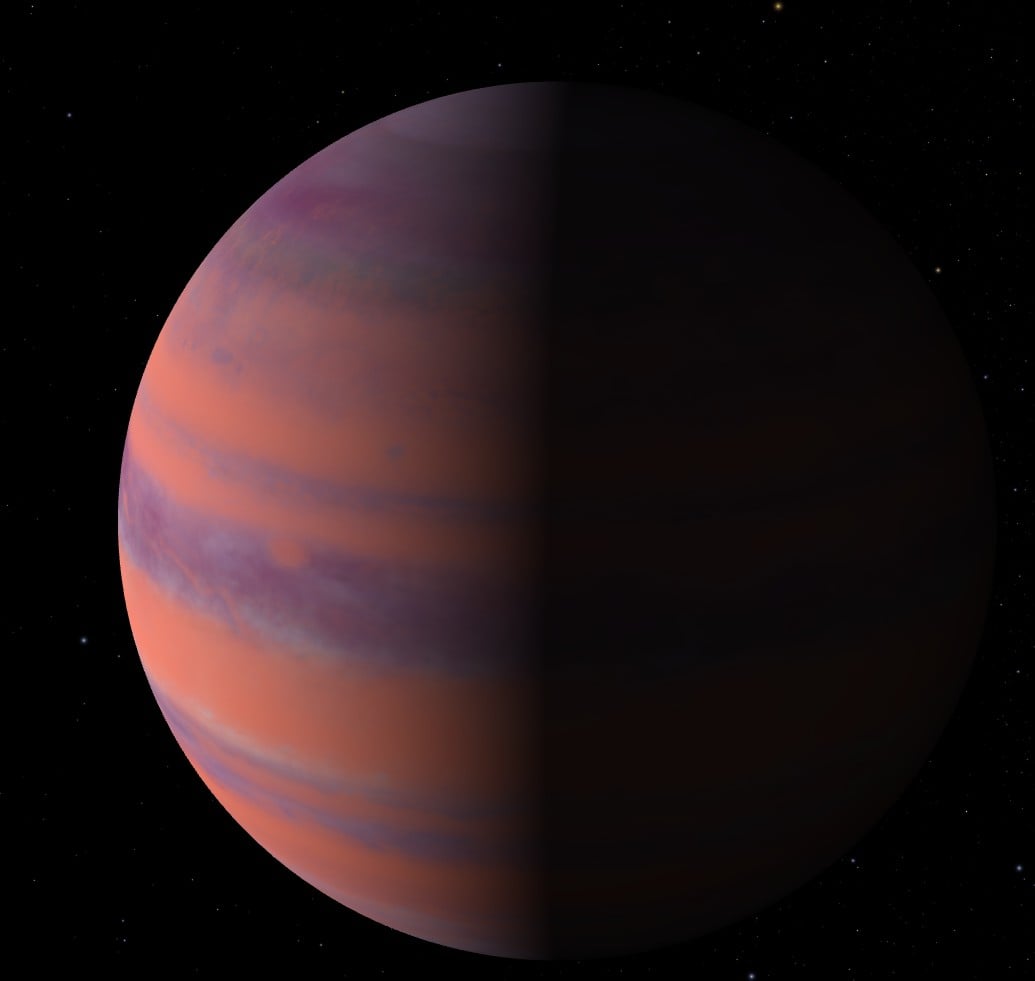
Searching for exomoons - moons the orbit around another planet - was one of the most exciting capabilities expected of the James Webb Space Telescope (JWST) when it launched in late 2021. So, after four years of operation, why hasn’t it found one yet? Turns out it’s really, really hard to find a moon around a planet light-years away. A new paper available in pre-print on arXiv from David Kipping of Columbia University (and Cool Worlds YouTube Channel fame) shows why. They used 60 hours of time on JWST’s NIRSpec instrument and weren't able to definitively confirm the existence of a possible exomoon.
Continue reading
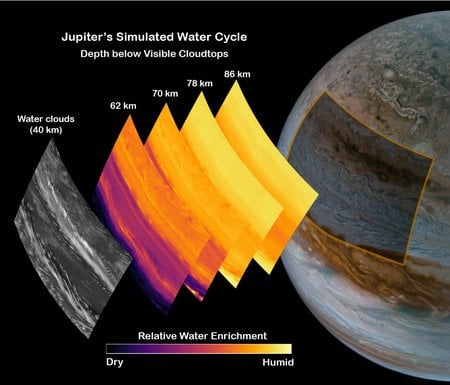
What can water in Jupiter’s atmosphere teach scientists about the planet’s composition? This is what a recent study published in the Proceedings of the National Academy of Sciences hopes to address as a team of scientists investigated the distribution of water with Jupiter’s atmosphere. This study has the potential to help scientists better understand Jupiter’s atmospheric dynamics, composition, and evolutionary history.
Continue reading
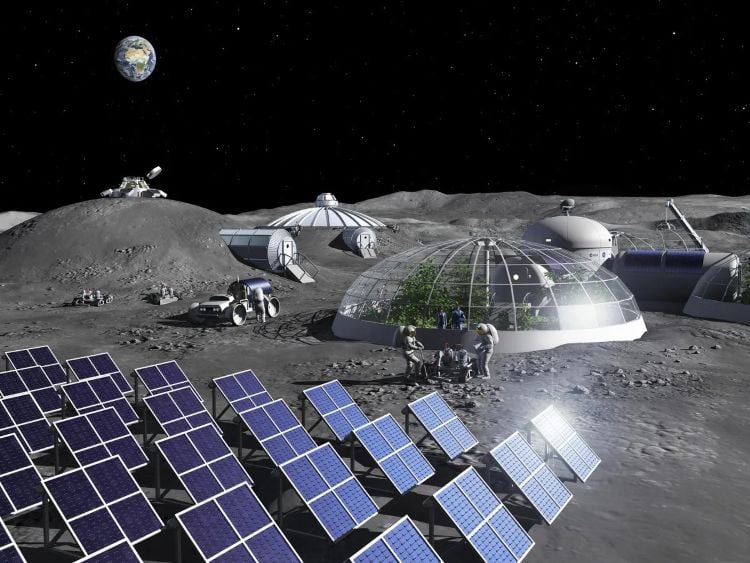
What steps can be taken to improve and enhance the lifetime of space solar cells? This is what a recent study published in Joule hopes to address as an international team of researchers investigated new methods for improving both the lifetime and performance of space solar cells from the harshness of space weather and radiation. This study has the potential to help scientists and engineers develop new space technologies, especially as several private companies and government organizations are extending their reach into space.
Continue reading
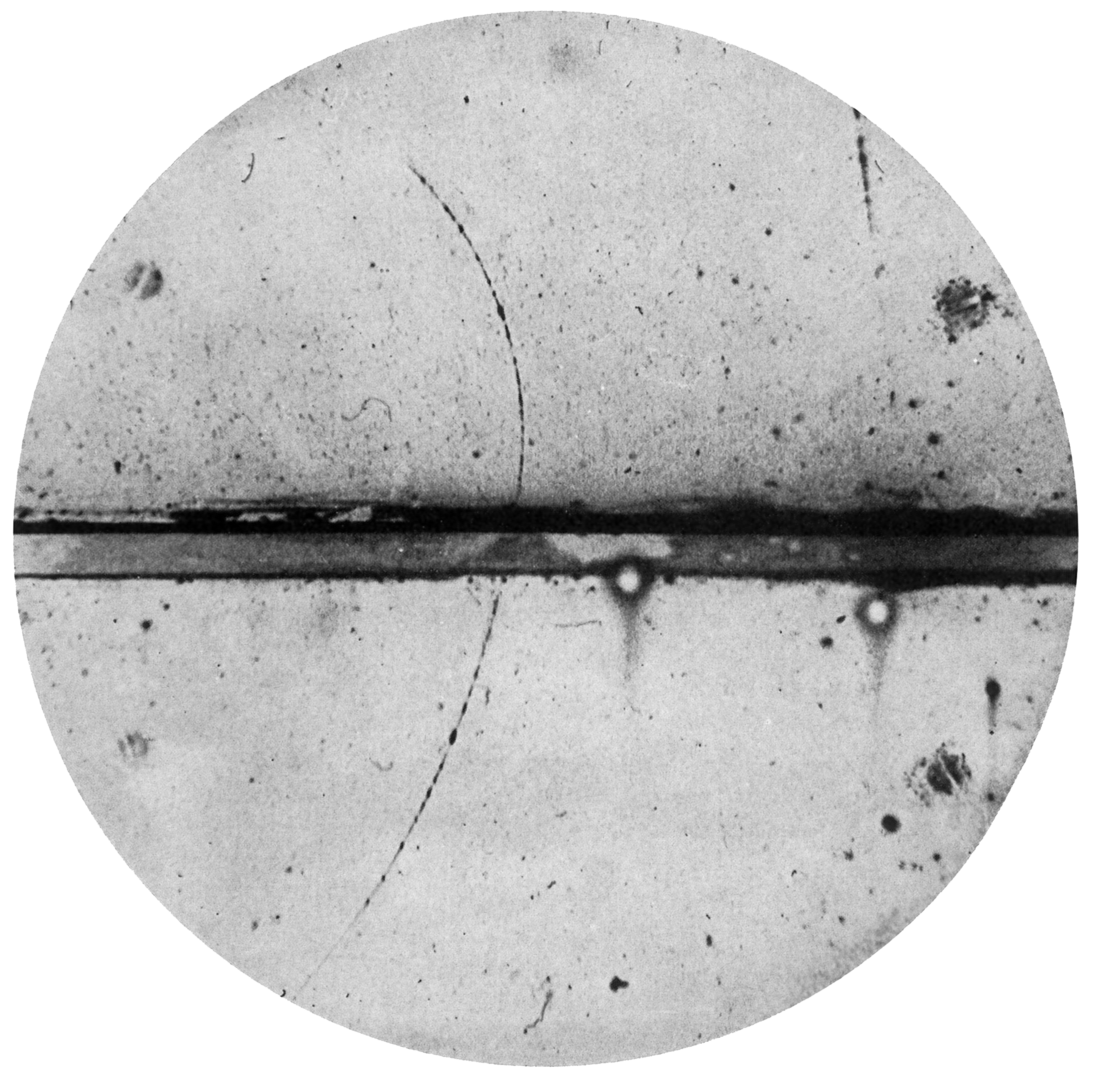
Chemical rockets have taken us to the Moon and back, but traveling to the stars demands something more powerful. Space X’s Starship can lift extraordinary masses to orbit and send payloads throughout the Solar System using its chemical rockets but it cannot fly to nearby stars at thirty percent of light speed and land. For missions beyond our local region of space, we need something fundamentally more energetic than chemical combustion, and physics offers or in other words, antimatter.
Continue reading
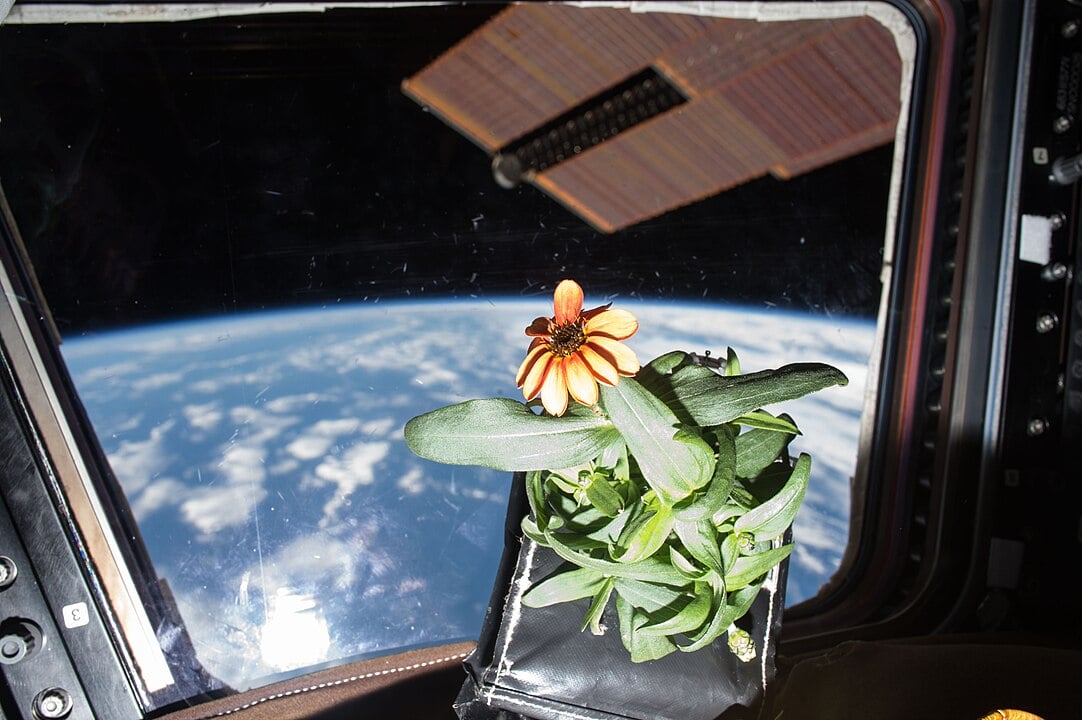
Growing fresh lettuce and strawberries might sound mundane until you consider doing it on the Moon or Mars. An international team has created a roadmap for cultivating plants in space, addressing one of NASA's highest priority challenges for long duration missions. These aren't just about providing fresh food for astronauts, plants in space will recycle air and water, produce pharmaceuticals, process waste, and support mental health during years long journeys to distant worlds. With the first lunar greenhouse scheduled to operate during NASA's 2027 Artemis III mission, humanity is on the verge of becoming an agricultural species across multiple worlds.
Continue reading
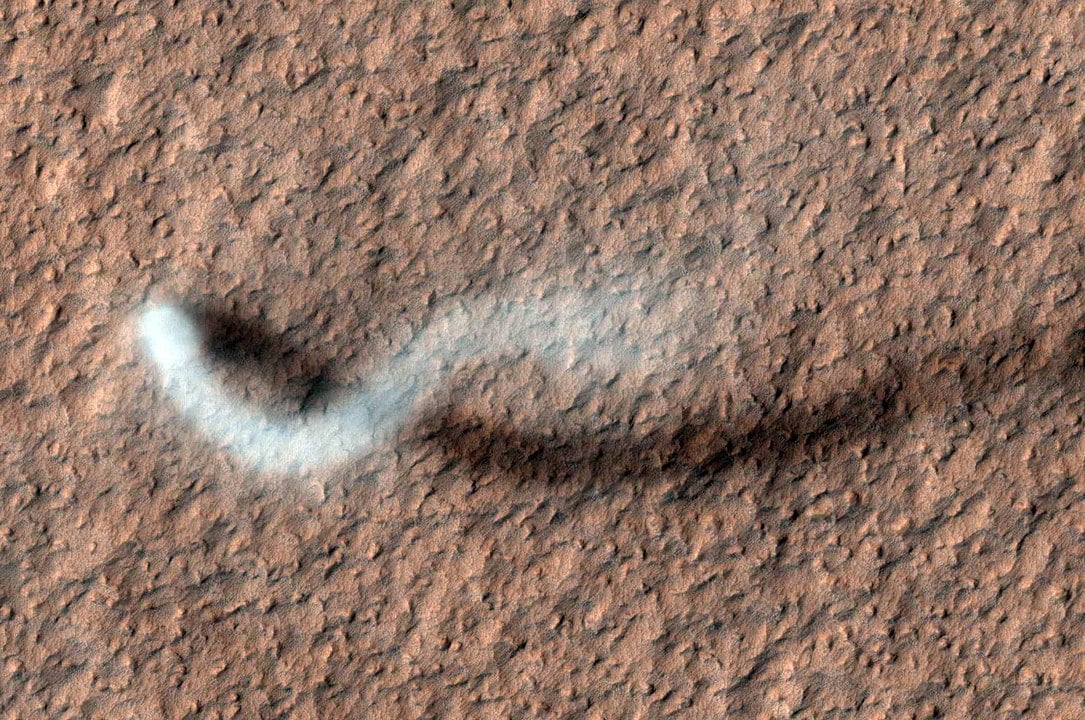
A team of scientists have detected electric discharges on Mars for the first time, confirming a phenomenon that was theorised for decades but never directly observed until now. The Perseverance rover's microphone accidentally captured the electromagnetic and acoustic signatures of sparks generated inside Martian dust devils, similar to the static shocks you might experience touching a metal door handle. This discovery changes our understanding of Mars's atmospheric chemistry and could explain longstanding mysteries about the rapid disappearance of methane in the Martian atmosphere, while also raising important safety considerations for future human missions to the red planet.
Continue reading
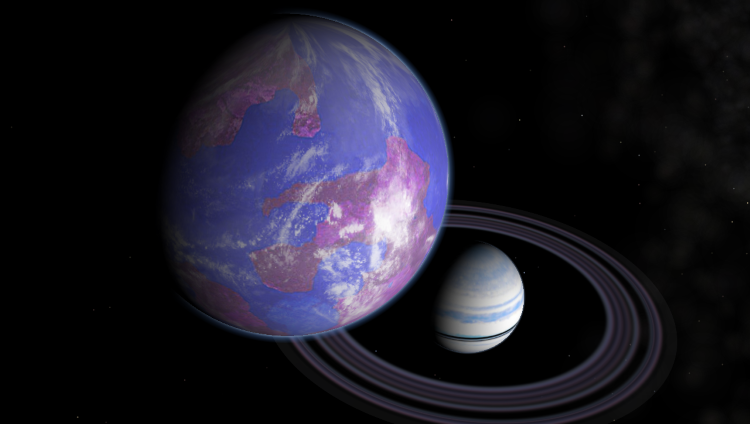
Have scientists finally confirmed the existence of the first exomoon? This is what a recent study accepted for publication in Astronomy & Astrophysics hopes to address as a large international team of researchers investigated new methods for identifying an exomoon orbiting a gas giant exoplanet. This study has the potential to help scientists develop new methods for finding exomoons, the latter of which has yet to be confirmed.
Continue reading
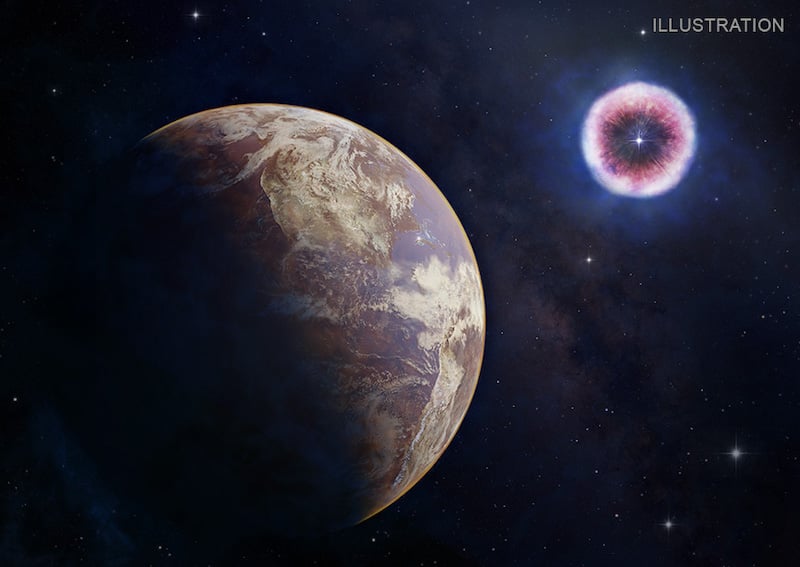
What can an ancient supernova teach scientists about Earth and celestial objects? This is what a recently submitted study to Astronomy & Astrophysics hopes to address as a team of scientists investigated the interaction of the remnants of supernova that occurred 10-million years ago with Earth. This study has the potential to help scientists better understand how Earth is influenced by celestial objects and what this could mean for the future of life on Earth, along with potentially habitable worlds beyond Earth.
Continue reading

What can equatorial jet streams on gas giant planets teach scientists about gas giant planetary formation and evolution? This is what a recent study published in Science Advances hopes to address as a team of scientists investigated the mechanisms of jet streams on gas giants (Jupiter and Saturn) and ice giants (Uranus and Neptune). This study has the potential to help scientists better understand not only the formation and evolution of giant planets in our solar system, but exoplanets, too.
Continue reading
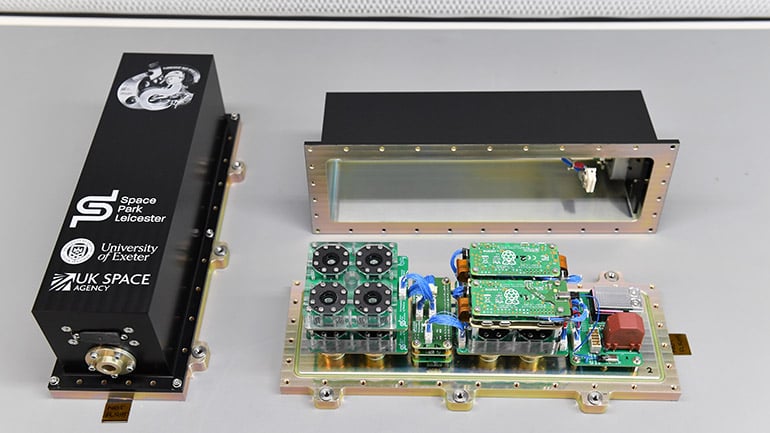
A crew of tiny worms will be heading on a mission to the International Space Station in 2026 that will help scientists understand how humans can travel through space safely, using a Leicester-built space pod.
Continue reading
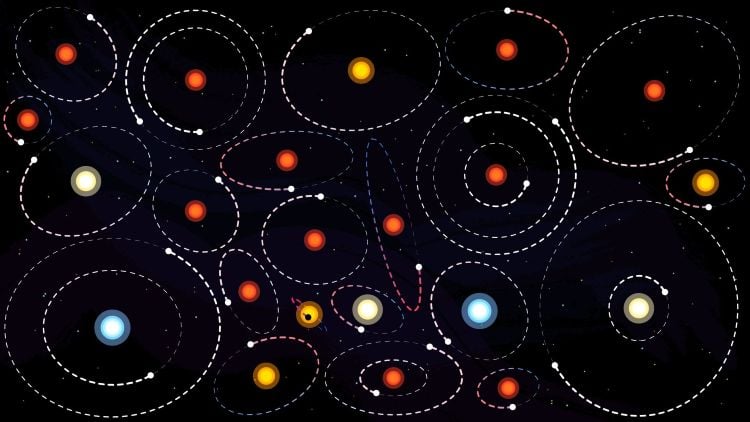
How can star populations help astronomers re-evaluate the search for intelligent extraterrestrial life, also called technosignatures? This is what a recently submitted study hopes to address as a team of scientists investigated the parameters of identifying locations of technosignatures, also called extraterrestrial transmitters. This study has the potential to help astronomers constrain the criteria for finding intelligent life in both our galaxy and throughout the universe.
Continue reading
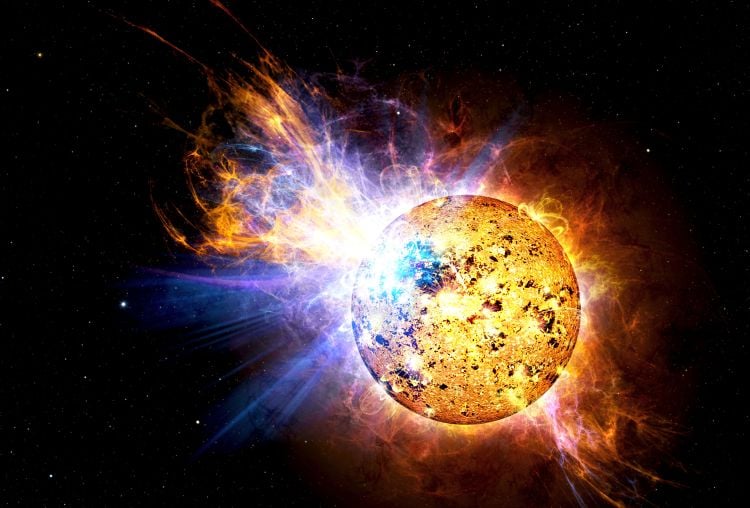
What can star variability—changes in a star’s brightness over time—teach astronomers about exoplanet habitability? This is what a recent study accepted to The Astronomical Journal hopes to address as a team of scientists investigated the interaction between a star’s activity and exoplanetary atmospheres. This study has the potential to help astronomers better understand how star variability plays a role in finding habitable exoplanets, specifically around stars that are different from our Sun.
Continue reading
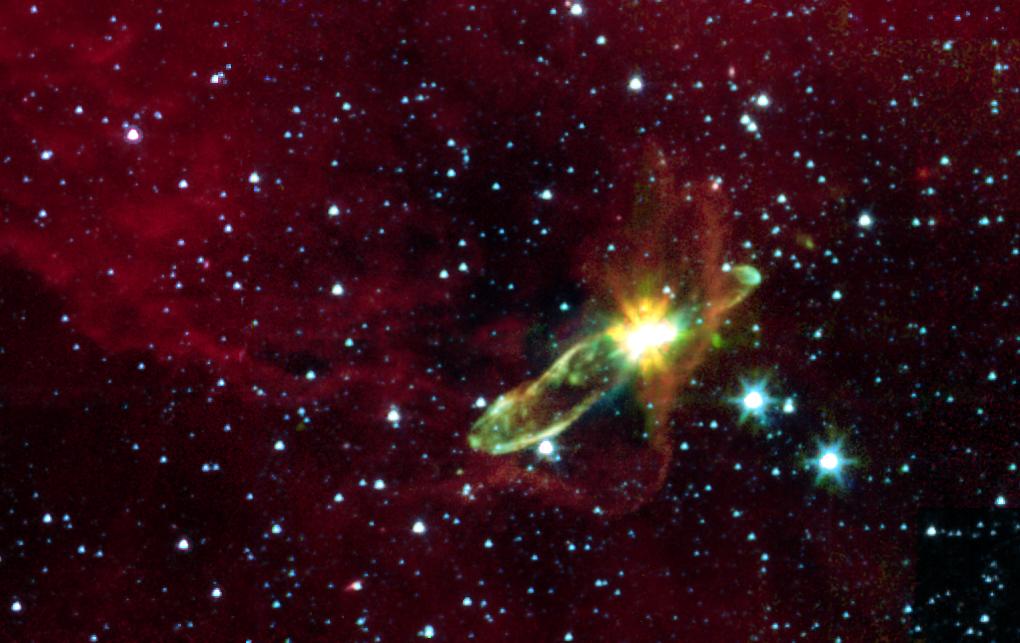
Young stars buried deep in molecular clouds are bathed in ultraviolet radiation, but they shouldn't be. Protostars are too cold and dim to produce UV light themselves, yet James Webb Space Telescope observations of five stellar nurseries in Ophiuchus reveal its unmistakable signature affecting the surrounding gas. Astronomers tested the obvious explanation that nearby massive stars illuminate these birthplaces but subsequently ruled it out. The UV radiation must be coming from inside the star forming regions themselves, forcing a fundamental rethink of how stars are born.
Continue reading
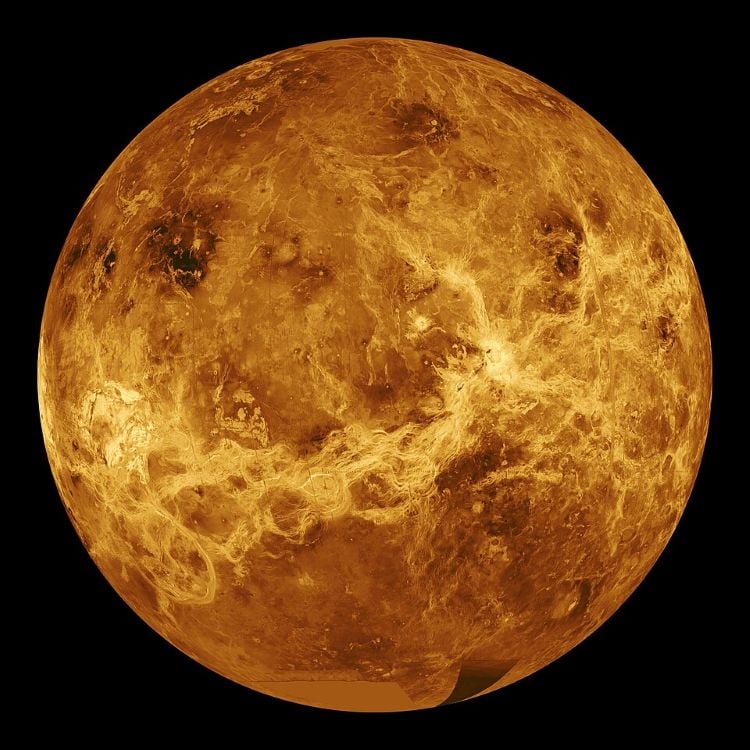
What is the importance of studying explosive volcanism on Venus? This is what a recent study published in the Journal of Geophysical Research: Planets hopes to address as a team of scientists investigated the potential altitudes of explosive volcanism on Venus. This study has the potential to help scientists better understand the present volcanic activity on Venus, along with gaining insight about its formation and evolution and other planetary bodies throughout the solar system and beyond.
Continue reading
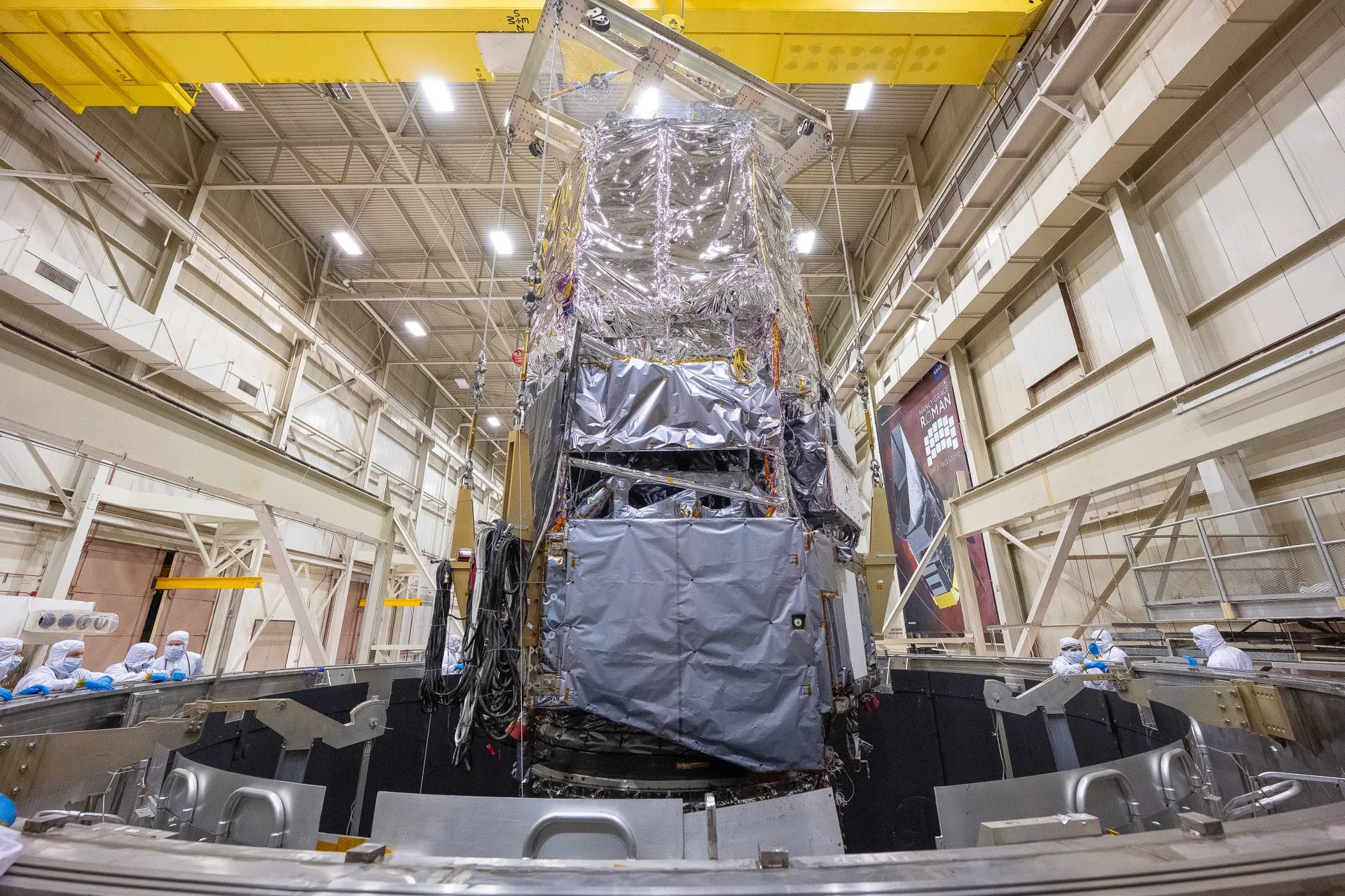
The Nancy Grace Roman Space Telescope continues its inexorable march toward launch. It recently completed another series of tests that brings it a few steps closer to a launch pad in Florida. This time, the telescope was split into two separate parts - an inner portion and an outer portion, each of which went through separate tests throughout the fall.
Continue reading
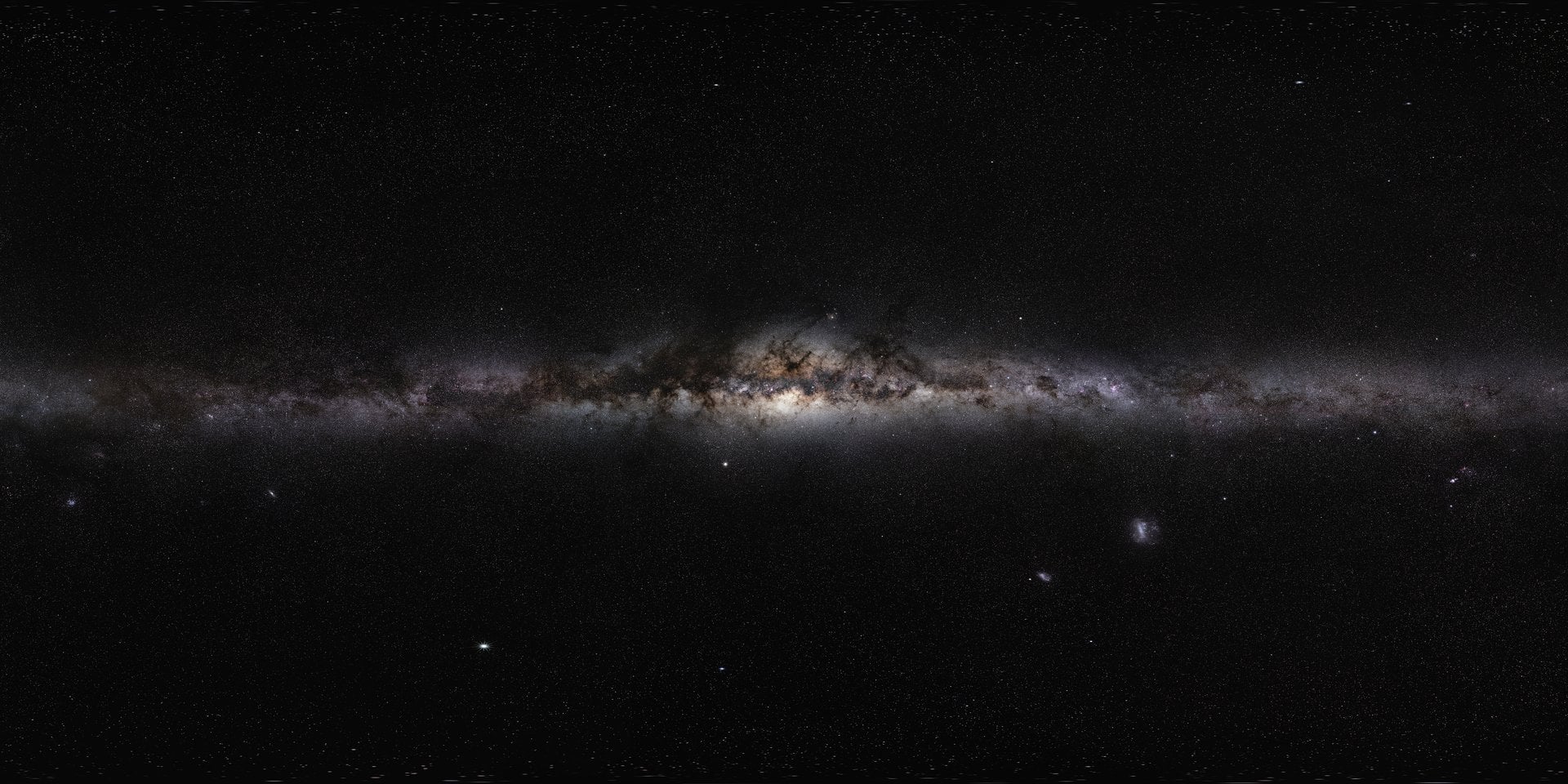
Research led by the RIKEN Center for Interdisciplinary Theoretical and Mathematical Sciences (iTHEMS) in Japan has successfully performed the world’s first Milky Way simulation that accurately represents more than 100 billion individual stars over the course of 10,000 years.
Continue reading
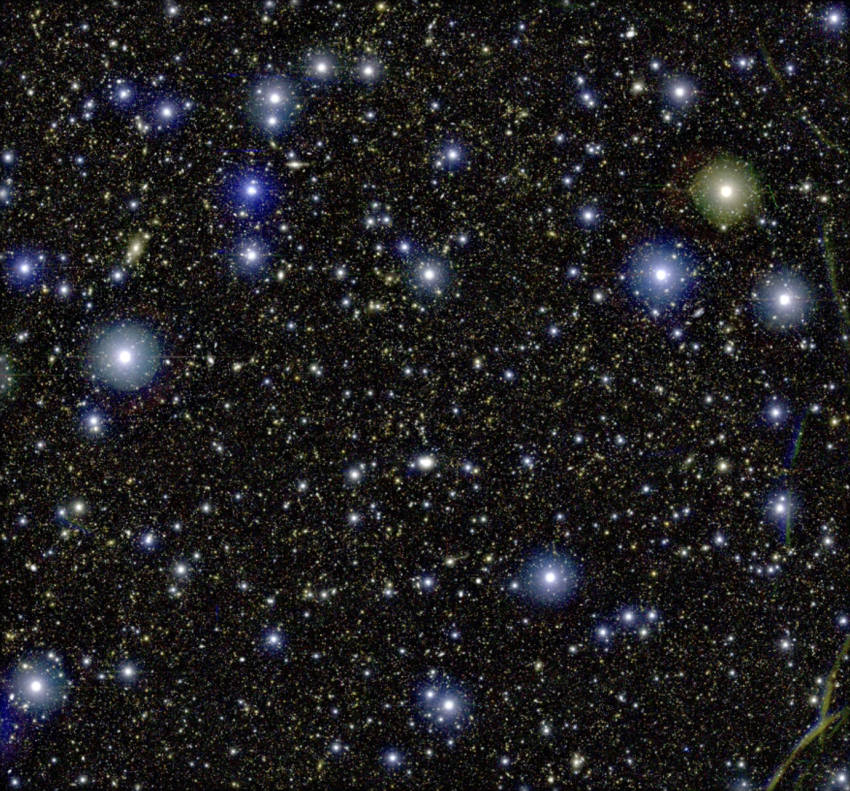
New research shows how a galaxy's surroundings influence its development. Its size, shape, and growth rate are all affected. It's all based on "the finer details of the cosmic landscape."
Continue reading
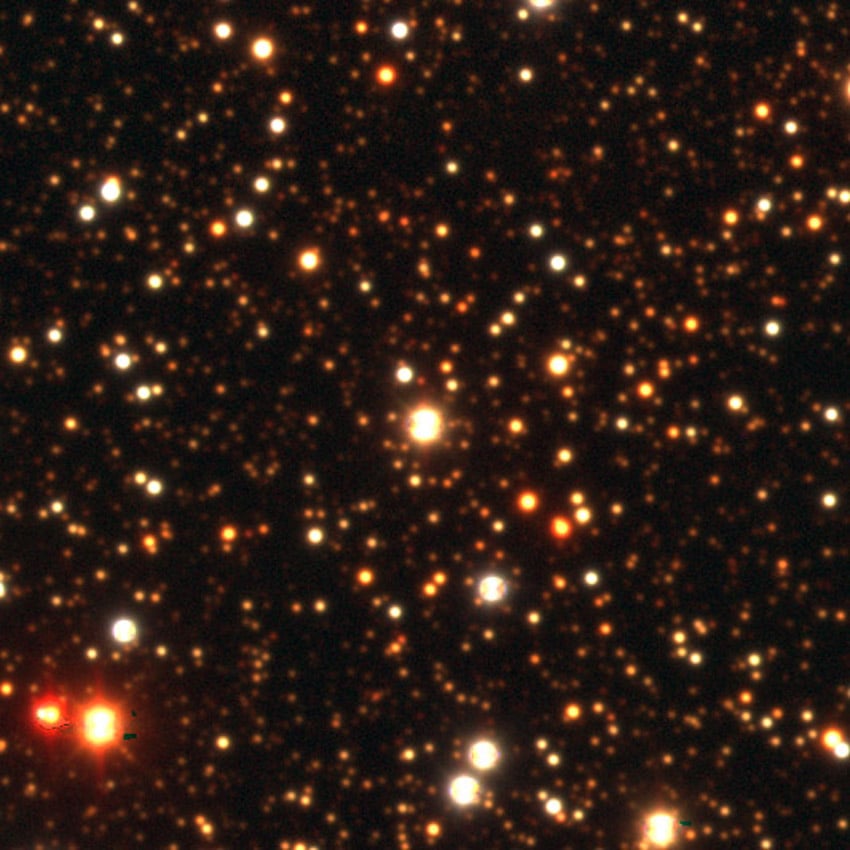
A red giant orbiting a dormant black hole is spinning impossibly fast and contains chemistry that makes it look ancient when it's actually relatively young. By listening to faint vibrations rippling through the star, astronomers have decoded a violent secret, that this star likely collided with and absorbed another star billions of years ago, an explosive merger that left it chemically confused and rotating once every 398 days. The discovery reveals how even quiet black hole systems can have turbulent histories written in starlight.
Continue reading
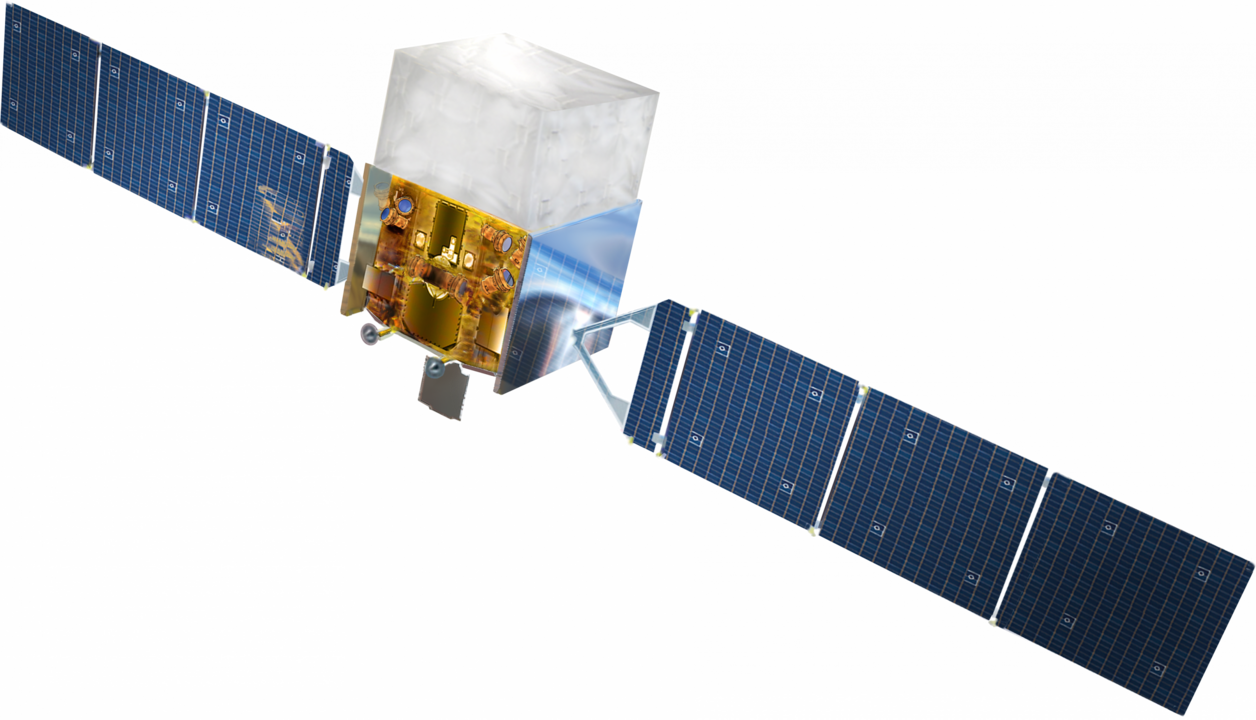
Ninety five years after Swiss astronomer Fritz Zwicky inferred its existence from galaxies moving impossibly fast, researchers may have detected the first direct evidence of dark matter, the invisible scaffolding that holds the universe together. Using gamma ray data from NASA's Fermi Space Telescope, a Japanese physicist has identified a halo of extremely energetic photons around the Milky Way's center that matches predictions for annihilating dark matter particles. If confirmed, humanity has finally "seen" the unseeable.
Continue reading
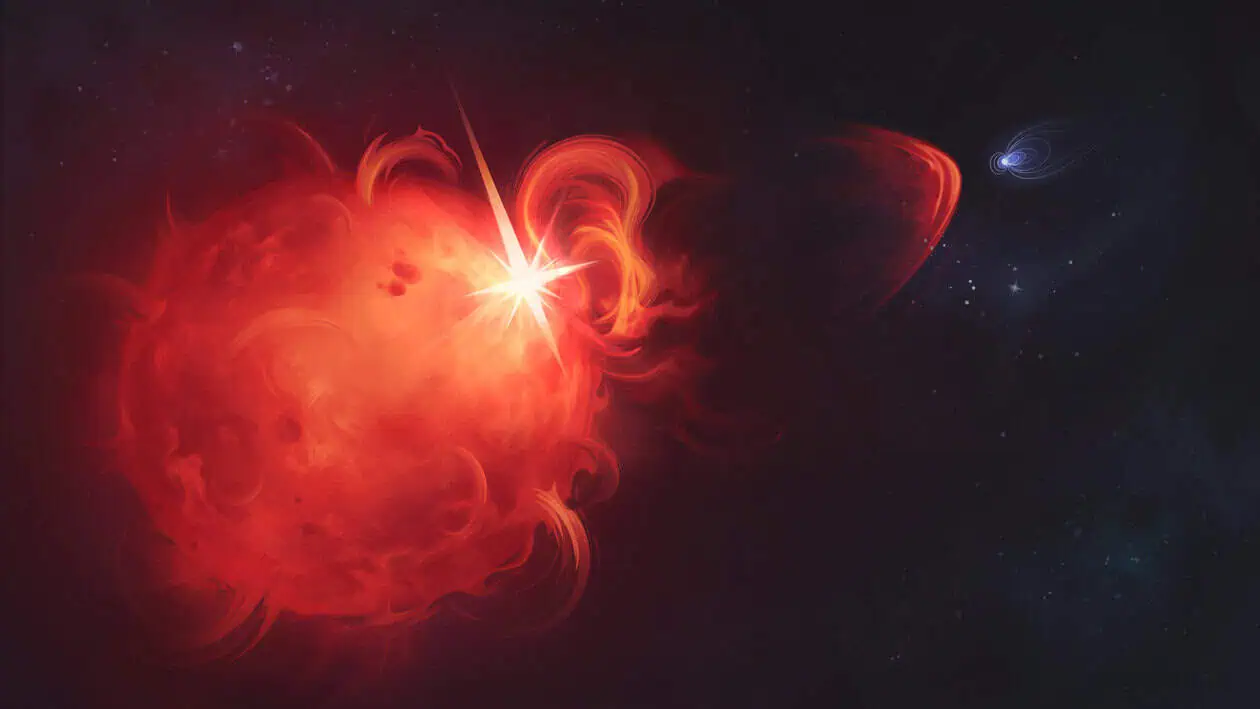
On Earth, Coronal Mass Ejections (CMEs) like the one we experienced earlier this month are aesthetic, even disruptive events, sending aurora southward and interrupting radio signals. But around other stars, they could prove lethal to life. This point was driven home by a recent CME detection from an M-class red dwarf star. This marks the first detection of an energetic Type II radio burst from a nearby star.
Continue reading
 Universe Today