Continue reading
MERRITT ISLAND NATIONAL WILDLIFE REFUGE, FL - Elon Musk's SpaceX is primed for another significant space first; the firms first launch of a spy satellite for the US governments super secret spy agency; the National Reconnaissance Office, or NRO - following today's successful static hotfire test of the Falcon 9 launchers first stage booster.
Continue reading
Scientists are working on a system of growing food for astronauts while away from Earth for extended periods of time.
Continue reading
According to a study by a team of researchers from the University of Edinburgh, the oldest temple site in the world may actually be an astronomical record of a comet hitting Earth.
Continue reading
On Friday, April 21st, the Cassini spacecraft conducted its last flyby of Titan, a maneuver which touched off the final phase of its mission around Saturn.
Continue reading
"Enhanced strangeness production" surprises experimenters at LHC's ALICE experiment.
Continue reading
Continue reading
NASA Astronaut Peggy Whitson set the endurance record for time in space by a U.S, astronaut today, Monday, April 24, during her current stint of living and working aboard the International Space Station (ISS) along with her multinational crew of five astronauts and cosmonauts.
Continue reading
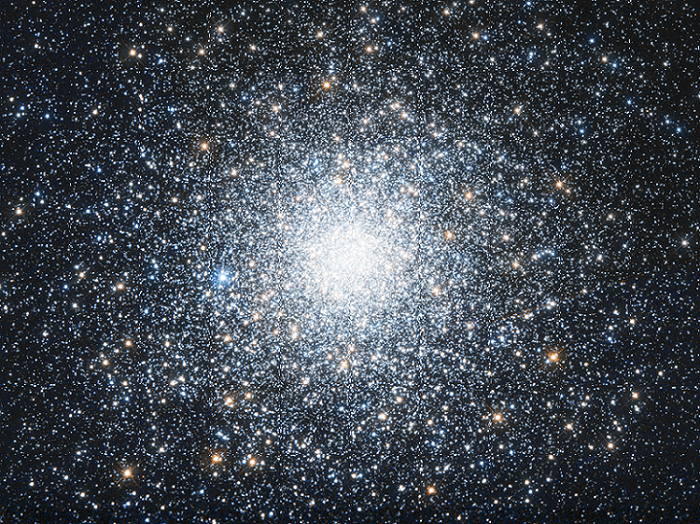
Located in the direction of the Ursa Major constellation is Messier 40 (Winnecke 4), an optical double star that looks like a double star system.
Continue reading
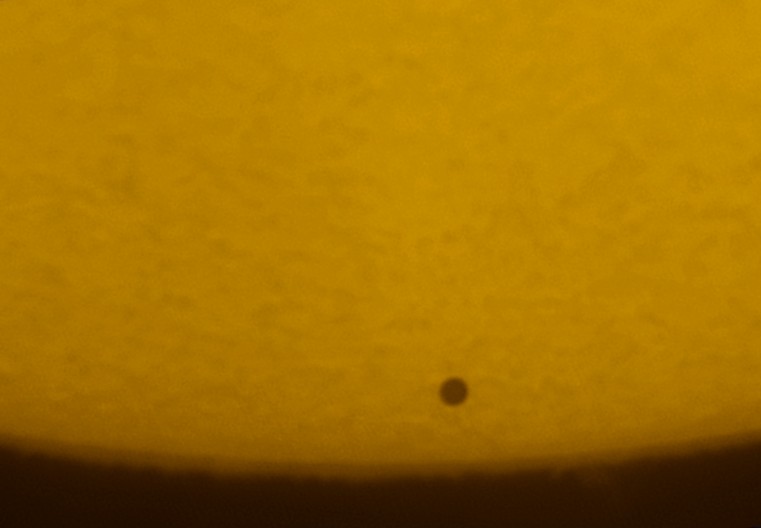
Because of its extremely eccentric orbit, slow rotation, and lack of an atmosphere, Mercury experiences extreme variations in surface temperature.
Continue reading
A new study of distant, early galaxies helps us understand the early days of our Universe.
Continue reading
Join Fraser and a panel of space friends for a marathon of COSMOS on Monday at 12:00pm PST. We'll watch 13 episodes, back to back, answer questions, update the science, and try not to go insane.
Continue reading
A research team from WSU has created, for the first time under laboratory conditions, a fluid that behaves as if it has a negative mass.
Continue reading
KENNEDY SPACE CENTER, FL - This week's blastoff of the 'SS John Glenn' Cygnus cargo freighter atop an Atlas V rocket on a critical mission delivering over 7000 pounds of science and gear to the International Space Station (ISS) yielded stellar imagery from all around the Florida Space Coast.
Continue reading
KENNEDY SPACE CENTER, FL - The SS John Glenn commercial Cygnus resupply vessel arrived at the International Space Station early this morning, April 22, carrying nearly four tons of science and supplies crammed inside for the five person multinational Expedition 51 crew.
Continue reading
The HiRise camera aboard NASA's Mars Reconnaissance Orbiter has captured color images of the Opportunity's 2004 Hole In One landing site inside Eagle Crater.
Continue reading
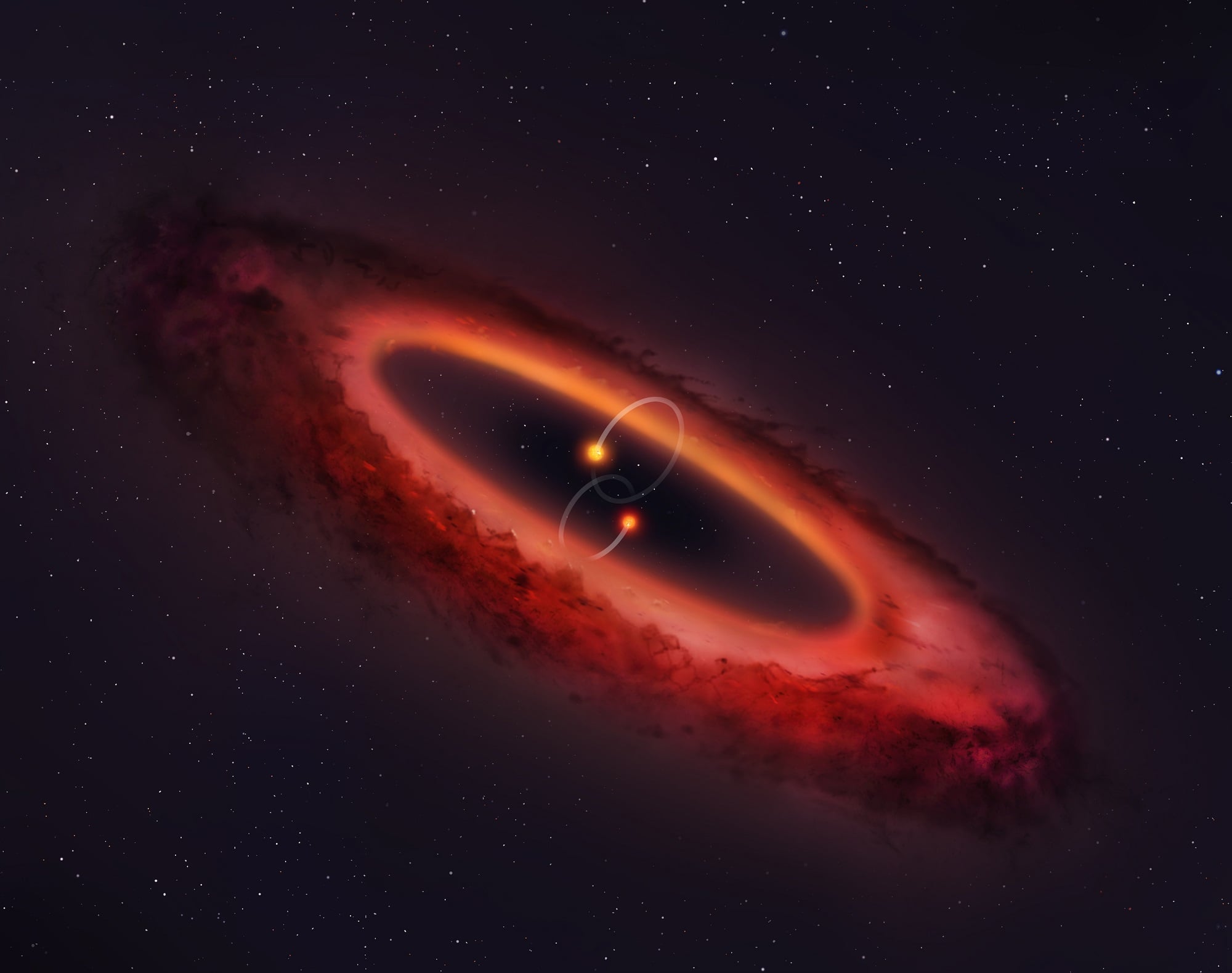
For the first time ever, an international team of astronomers - using the ALMA array - have taken a clear image of an accretion disk around a young protostar.
Continue reading
We assume that habitable exoplanets will have significant land masses, because that's what we have on Earth. Are we wrong?
Continue reading
Continue reading
Cassini took this rare photo of the Earth and moon on April 12 just before the start of its daring Grand Finale mission this weekend.
Continue reading
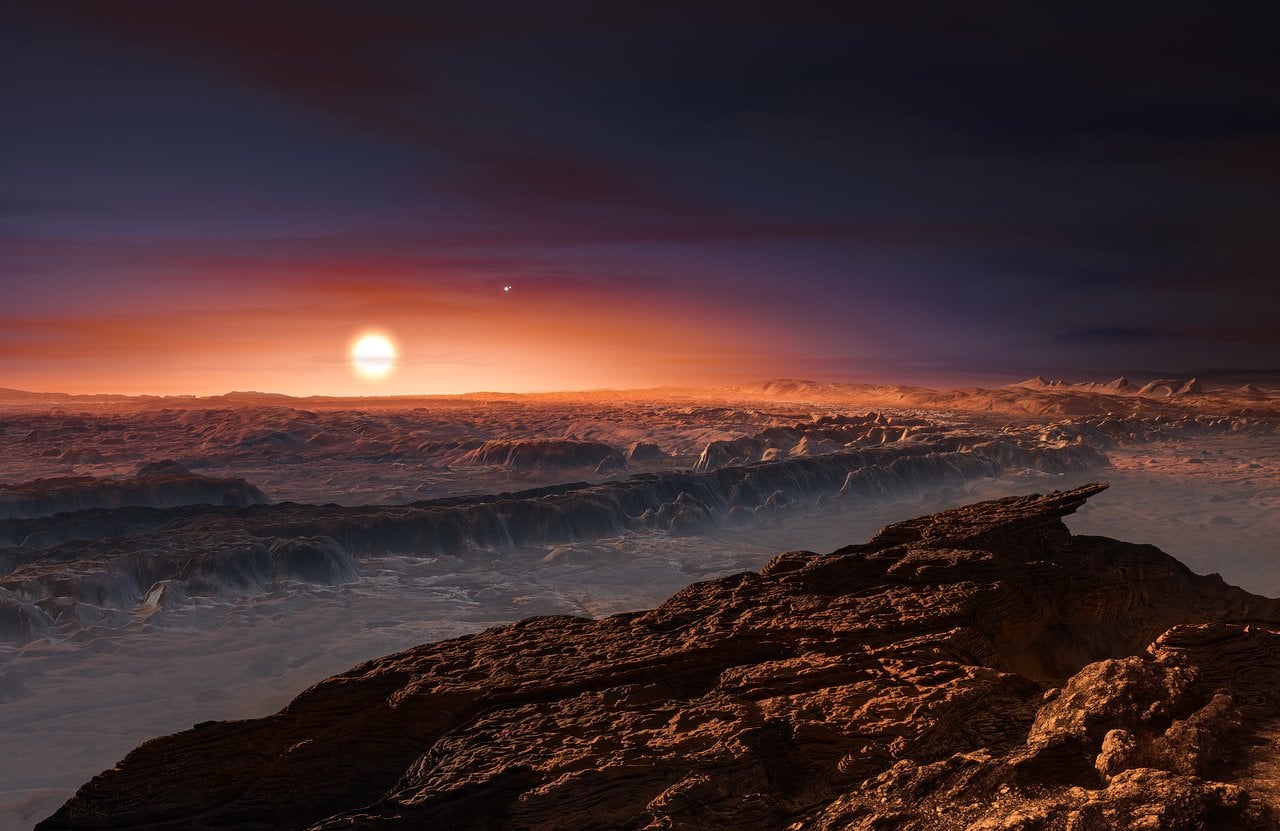
An international team of scientists has found another rocky planet (LHS 1140b) orbiting a nearby red dwarf star. And it looks to be our best bet to date for finding a habitable exoplanet.
Continue reading
Continue reading
A new study from the Finnish Meteorological Institute shows how jettisoned hardware and Martian weather could make a dangerous combination!
Continue reading
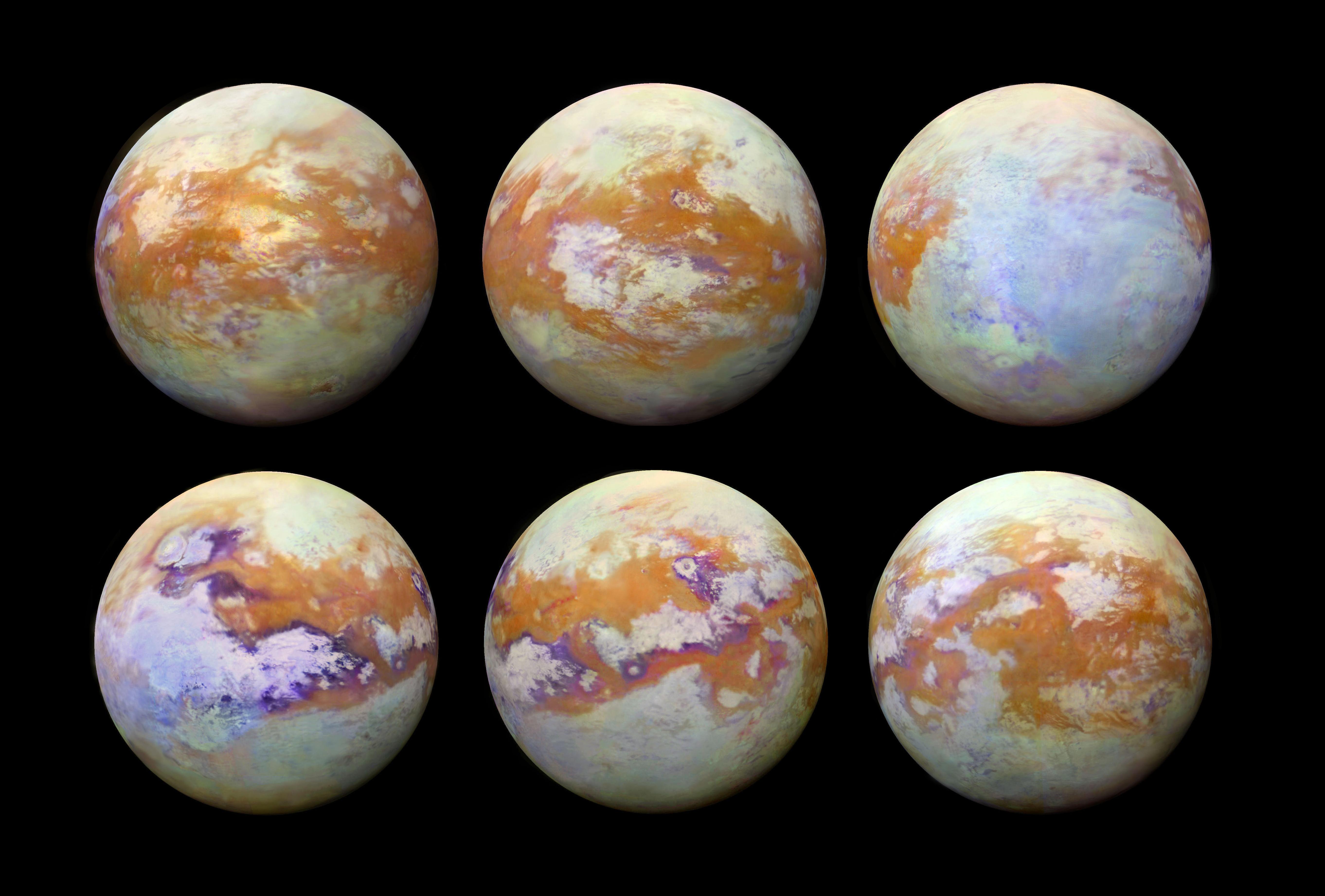
Titan's so-called "magic islands" are not islands at all, but nitrogen bubbles, according to researchers at NASA's Jet Propulsion Laboratory.
Continue reading
KENNEDY SPACE CENTER, FL - A new Russian/American duo has arrived at the International Space Station this morning, April 20, after a six-hour flight following their successful launch aboard a Russian Soyuz capsule on a fast track trajectory to the orbiting outpost.
Continue reading
In the week's FISO Telecon Series, NASA engineer Michael Paul presented a novel concept for an in-situ miission to Venus.
Continue reading
A relatively large potentially hazardous asteroid passed near Earth earlier today. Now, it's visible in small telescopes tonight.
Continue reading
NASA's collaboration with artists goes back to the early days of the Agency, and has produced some fascinating and thought-provoking work.
Continue reading
Researchers at the LHC beauty experiment (part of CERN) announced new test results that hint at the existence of new physics.
Continue reading
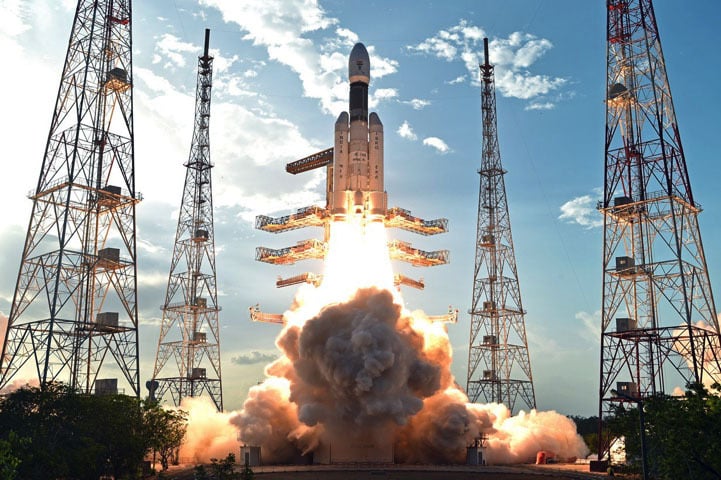
KENNEDY SPACE CENTER, FL - Orbital ATK's Cygnus supply ship soared to space from the Florida Space Coast at lunchtime today, Tuesday, April 18, drenched in sunshine and carrying the 'SS John Glenn' loaded with over three and a half tons of precious cargo - bound for the multinational crew residing aboard the International Space Station (ISS).
Continue reading
Continue reading
Researchers studying landslide on the surface of Ceres have noticed one with a distinctly Bart Simpson-like appearance.
Continue reading
Given its extreme distance from the Sun and slow orbital speed, a year on Neptune last as long as 164.5 years here on Earth.
Continue reading
Everyone always wants to know if I believe in aliens. They really want to know if I believe in UFOs, which I don't. But do I believe there are no aliens in the whole Universe?
Continue reading
KENNEDY SPACE CENTER, FL - The 'SS John Glenn' cargo freighter stands proudly poised for launch at pad 41 from the Florida Space Coast on Tuesday April 18, loaded with a stash of nearly 4 tons of science investigations and essential supplies atop a United Launch Alliance Atlas V rocket destined for the multinational crew aboard the International Space Station (ISS).
Continue reading
Given its considerable distance from the Sun, Saturn takes about 29.5 Earth years to complete a single orbit around the Sun.
Continue reading
According to a new study by researchers from Brazil, objects accelerating through space could be subject to increased radiation exposure.
Continue reading
Continue reading
Beneath the Atlantic Ocean is the Mid-Atlantic Ridge, an geological feature that runs north-south and measures some 16,000 km (10,000 mi) in length.
Continue reading
Uranus was discovered by British astronomer Sir William Herschel on March 13th, 1781, though it had been observed several times before this
Continue reading
KENNEDY SPACE CENTER, FL - Imagine watching a real rocket launch in a 360 degree live video broadcast. Well NASA is about to make it happen for the first time and in a big way on a significant mission.
Continue reading
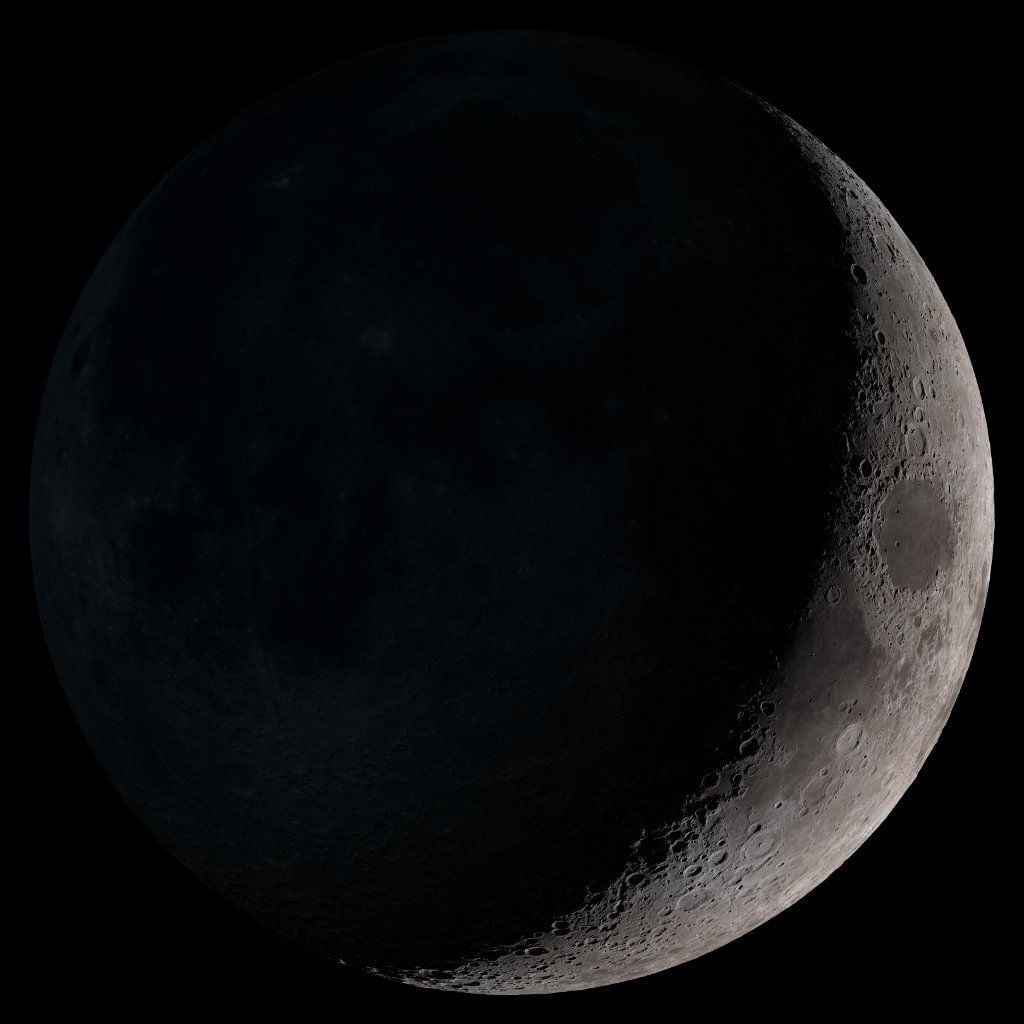
A new study produced by the ARES division provides an explanation for how the Moon was able to generate its own magnetic field.
Continue reading
New night-time images of Earth are more than just eye-candy. They can be a vital tool for scientists and governments.
Continue reading
Thanks to an international effort and multiple radio telescopes, astronomers have visualized an event horizon for the first time.
Continue reading
Continue reading
Astronomers at the University of Waterloo have given us the first image of a dark matter filament bridge between two galaxies.
Continue reading
Discovery of hydrogen at Enceladus raises hopes that life may exist in the icy moon's oceans.
Continue reading
It's a shooting gallery out there. The spattered face of Earth's Moon and large impact sites such as Meteor Crater outside of Flagstaff Arizona remind us that we still inhabit a dangerous neighborhood. But despite the inevitable cries for the "End of the World of the Week," humanity can breathe a collective sigh of relief next Wednesday on April 19th, when asteroid 2014 JO25 passes safely by the Earth.
Continue reading
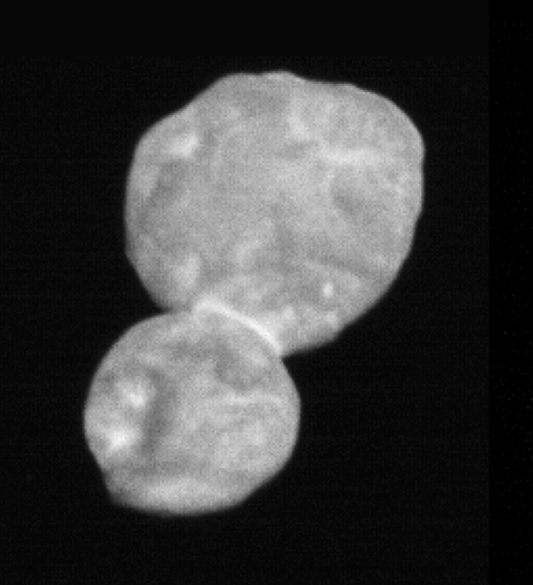
As it makes its way towards its next destination in the Kuiper Belt, the New Horizons probe has been given a new task - measuring the Cosmic Optical Background.
Continue reading
Comings and goings continue apace on the International Space Station! After living and working fruitfully for six months in space aboard the ISS, an international trio of astronauts and cosmonauts including NASA's Shane Kimbrough departed the orbiting lab complex aboard their Soyuz capsule and plummeted back safely through the Earth's atmosphere to a soft touchdown in Kazahkstan on Monday- as NASA meanwhile targets liftoff of the next US resupply ship a week from today.
Continue reading