 Universe Today
We think of atomic clocks as the definitive timekeepers. They are famous for being accurate down to the picosecond. Unfortunately, they are still subject to general relativity, so if you put them on a different planet, they will track time slightly faster or slower than on Earth, depending on the planet’s gravity. In Mars’ case, an atomic clock on its surface is sitting in a slightly shallower gravity well, meaning that time moves slightly faster there. Therefore, as we begin to expand our technological footprint on the Red Planet, we will need a way to standardize how time is measured there. Dr. Slava Turyshev, a researcher at NASA’s Jet Propulsion Laboratory, proposes just such a framework in a new paper available in pre-print on arXiv.
He introduces what he calls Areocentric Coordinate Time (TCA) - a Martian equivalent to Geocentric Coordinate Time (TCG), and its French-derived initialism. By anchoring the timekeeping on Mars within the IAU's Barycentric Celestial Reference System / Barycentric Coordinate Time (BCRS/TCB) formalism, which is standardized by the International Astronomical Union (IAU), this new paper established a mathematical pipeline from an astronaut’s wristwatch on Mars all the way back to the Solar System’s center.
No timekeeping method is 100% perfect, though. Physical effects of all shapes and sizes can have an (admittedly miniscule) effect on a clock’s experience of time. To account for this, Dr. Turyshev ignores effects that alter a clock’s time by less than 5x10^-18, or an accumulated error of 0.1 picosecond. That is an absurd level of precision - to put it into perspective, that’s how long it takes light, the fastest thing in the universe, to travel 0.03 millimeters.
Fraser talks about how light experiences timeExtrapolating that out to different areas around Mars shows the power of this new framework. A satellite operating in Low Mars Orbit (the equivalent to the Low Earth Orbit where many of our communications satellites now reside) will have a clock that operates 4.56 microseconds a day slower than one sitting on the Martian surface, due to the extreme orbital velocity needed to maintain their 300 km altitude. While that might seem inconsequential in the short term, over the long run of any sort of colonization effort, those numbers start to add up.
Spacecraft that are even farther out, such as in Areostationary Orbit, the slower orbital speeds and decreased gravity from the planet itself allows clocks onboard these spacecraft to tick faster by 9.13 microseconds every day. But the real pain point for calculating time differentials is in highly elliptical relay orbits. These orbits, which usually hold systems like communications relays, sweep in close to the planet’s poles and then swing far out into deep space. Using traditional timekeeping methods on these simply does not work - scientists and engineers hoping to keep precise timing in such an orbit will need to account for the spacecraft’s proper time at each step along its orbit.
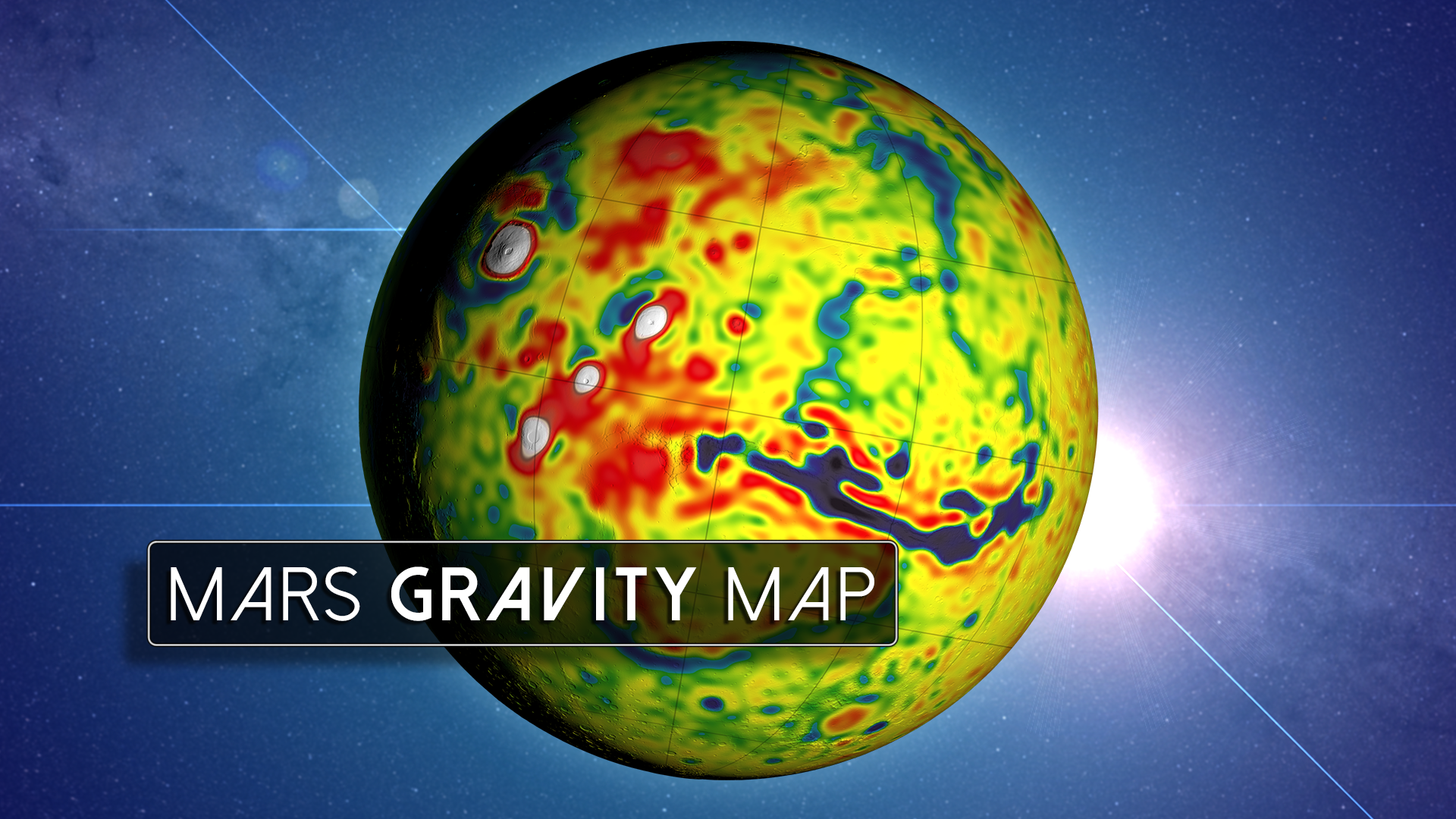
But perhaps the most interesting nuance in the paper showcases the influence Mars itself has on gravity. Dr. Turyshev uses the gravity field model GMM-3 to capture the relativistic shifts in time due to the planet’s uneven topography. For example, the equatorial bulge around Mars’ middle introduces a periodic time signature of about 87 picoseconds for a low-altitude satellite crossing its path.
Scott Manley explains time dilation. Credit - Scott Manley YouTube ChannelMars’ orbit also has an impact on its gravity, and therefore the time experienced on and around it. It has a highly eccentric orbit, and when it hits perihelion, the Sun’s quadrupole tide, which stretches the space around the planet, is even more pronounced, requiring point-calculations to prevent navigation errors for rovers and satellites alike. Even the relatively small gravitational pull of Phobos and Deimos must be accounted for if a spacecraft gets too close to one of the Martian moons.
The weather is the ultimate arbiter of Martian timekeeping, though. Mars has a massive carbon dioxide cycle, where CO2 freezes in the winter and is deposited onto polar ice caps, and then is sublimated in the summer and ends up back in the atmosphere. This massive seasonal migration of gas actually alters the planet's gravitational field, again impacting the calculation of time in various regions. Unfortunately, according to Dr. Turyshev, we don’t know enough about these seasonal shifts to accurately account for them in our timekeeping efforts, so, at least for now, a true sub-picosecond accurate timing array on Mars remains impossible.
Building such an array was never the intent of the paper anyway. It was intended to outline some choices and provide mathematical workflows in order to build a Mars Time Ephemeris. While it might still be awhile until we actually need to use the capabilities such as framework will give us, it's better to get started now than coming to terms with it only after a mismatch in an understanding of time leads to a system failure - good luck explaining that mistake to the funders of a mission.
Learn More:
S. G. Turyshev - High-Precision Relativistic Time Scales for Mars Surface and Orbital Clocks
UT - What Time is it on the Moon? Lunar GPS Needs to Know
UT - A "Cosmic Positioning System" in the Outer Solar System
UT - Do You Know What Time It Is? If You're On Mars, Now You Do.

