 Universe Today
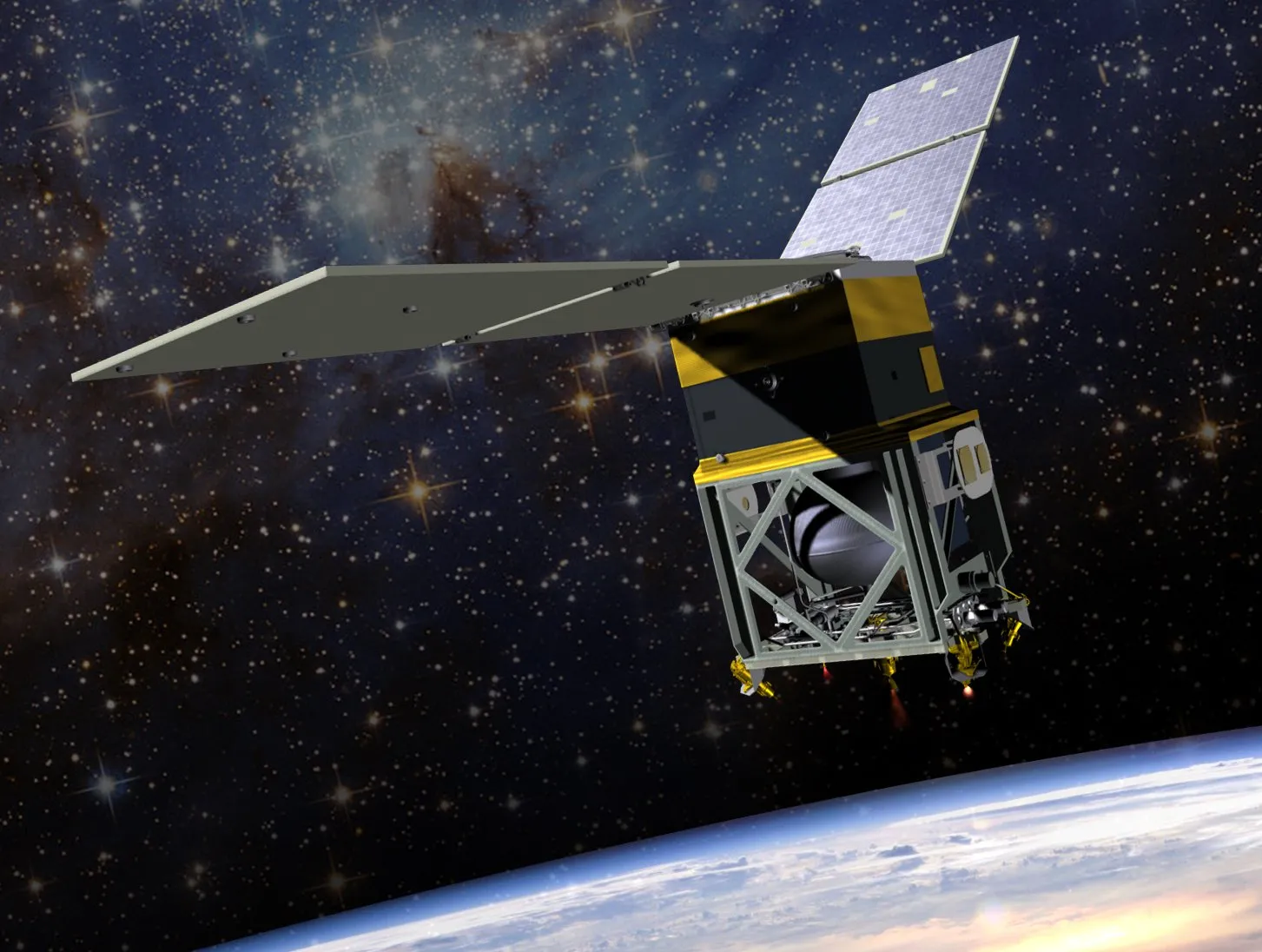
Rocket scientists have always faced a trade-off in propulsion technologies. Chemical rockets can provide lots of oomph, but burn through fuel so quickly they can only do so for a few minutes. Electric propulsion, on the other hand, can run for days, but the pushing power they provide is miniscule compared to their chemical cousins. A new paper in the Journal of Propulsion and Power from researchers at MIT describes a system that might be the best of both worlds - a propulsion system that includes an electrospray thruster that uses a chemical rocket propellant, and can seamlessly switch to a chemical rocket when needed.
The secret to this new technology is a type of novel “green” propellant. Hydrazine, the traditional chemical rocket fuel, is notoriously dangerous. It is toxic, carcinogenic, and corrosive, requiring teams to wear full hazmat suits just to load it onto a spacecraft. In order to lower the burden of dealing with this noxious chemical, the US Air Force set about developing a safer alternative - the Advanced Spacecraft Energetic Non-Toxic propellant (ASCENT). Originally known as AF-M315E, the fuel has the advantage of requiring fewer handling precautions while also offering a 50% increase in specific impulse over hydrazine. It was also successfully tested on the Green Propellant Infusion Mission (GPIM) back in 2019.
But there was another feature that caught the researchers’ eye - it’s also an ionic liquid. Ionic liquids, which are basically just liquids with ionic charges, are also propellant for electrospray thrusters, like the ones being worked on at the MIT lab. Electrospray thrusters are excellent examples of miniaturization in spacecraft. Instead of burning fuel, they extract charged ions from a liquid and shoot them out into space via a spray, generating a highly efficient, steady thrust in the process.
Fraser discusses the physics behind ion engines - though slightly different from electrospray thrusters, the concept is similar.To test whether ASCENT would work in their previously designed electrospray thrusters, the researchers set up a custom test bed using a vacuum chamber and magnetic levitation to mimic the conditions in outer space. They then loaded 1g of ASCENT (which has the consistency of baby oil) into a Lego-sized reservoir attached to the thruster and began the experiment. When they applied a voltage to the ionic liquid, they generated a thrust, spinning levitating satellite mock-up like a top. And they were able to do so for up to 100 hours.
That opens the way for a type of hybrid propulsion system. A CubeSat could use its electrospray thruster to efficiently and slowly navigate its way to a system such as Mars or Jupiter. Then, once nearer its target, it could use its chemical thruster to rapidly adjust its trajectory, point towards a specific target, or dodge hazards.
Such capabilities on a CubeSat would allow it to be used for all sorts of new mission scenarios. And luckily, it won’t take long for us to find out just how capable these thrusters actually are. The MIT team delivered four of them to NASA for the upcoming Green Propulsion Dual Mode (GPDM) mission. This mission, which is slated to launch in November, will fly a 6U CubeSat equipped with both chemical and electrospray thrusters, while containing only one fuel tank full of ASCEND.
Fraser talks about multi-stage interstellar ships that use a combination of propulsion technologies.If successful, this technology demonstration mission could prove to be the future for CubeSate propulsion. Soon we might see swarms of hybrid thruster satellites swarming Mars, Titan, or any other solar system body that the new technology would enable to reach. For those interested in smaller, cheaper, faster missions, this is exactly the type of enabling technology that’s needed.
Learn More:
MIT - New propulsion system could make tiny satellites both fast and fuel-efficient
A.R. Bruno, M.N. Corrado, & P.C. Lozano - Performance Characterization of Electrospray Thrusters with Energetic Ionic Liquid Monopropellant
UT - Multimode Propulsion Could Revolutionize How We Launch Things to Space

