Universe Today
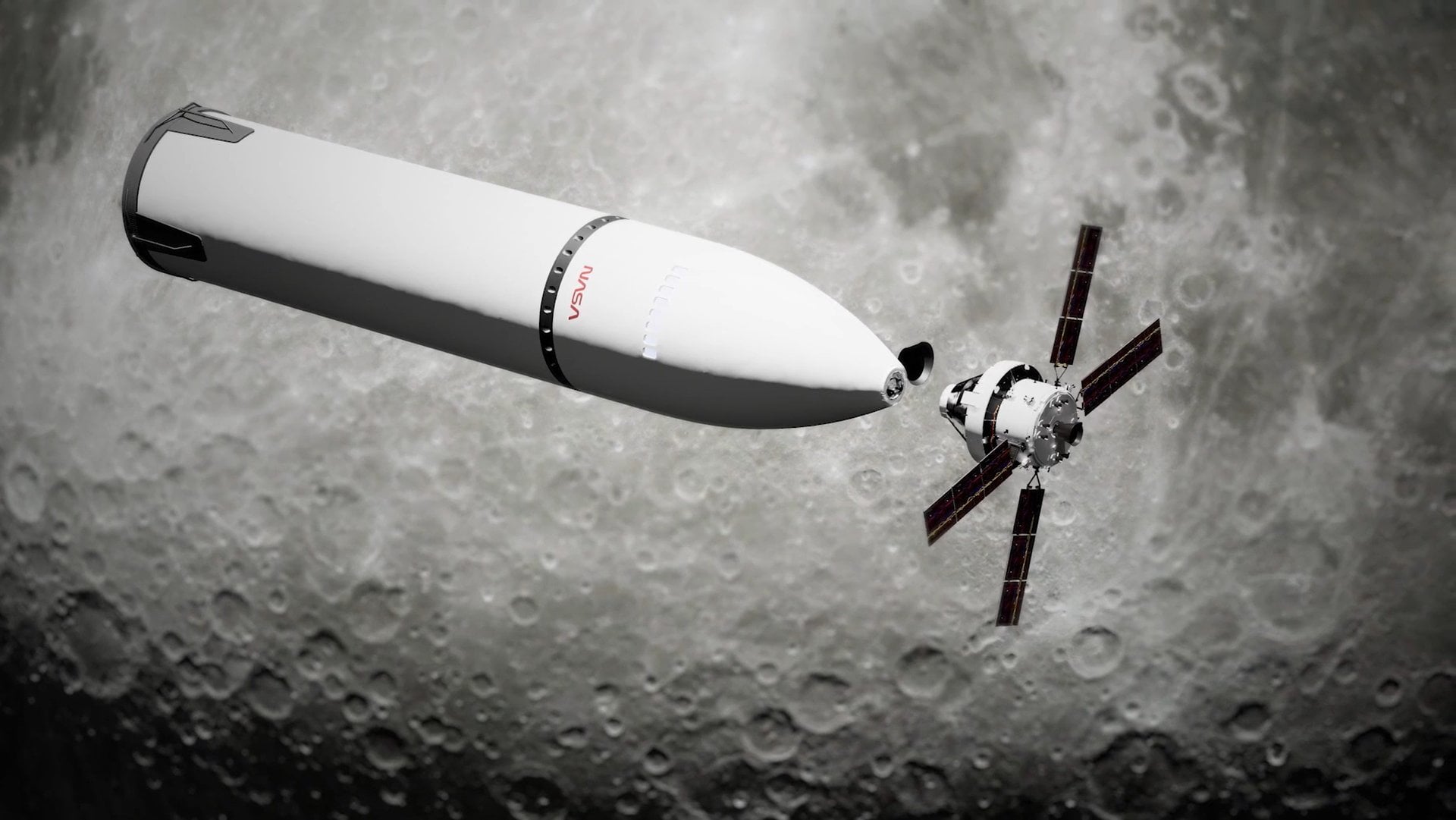
Earlier today, NASA announced that it would be increasing the cadence of its missions to meet its objectives under the Artemis Program. It is also making changes to its mission architecture to include a standard vehicle configuration and undertake one surface landing every year after 2027. In real terms, this means that a lunar landing will not take place as part of Artemis III in 2027, but during Artemis IV, currently scheduled for 2028. Instead, Artemis III will involve a rendezvous in Low Earth Orbit (LEO) to test the systems and operations for the first lunar landing in over sixty years.
The announcement came during a news conference at NASA's Kennedy Space Center, amid discussions about the status of the Artemis II mission. As Isaacman and other NASA officials stated, the agency now envisions an orbital rendezvous with a crewed Orion spacecraft and either the Starship HLS or Blue Origin's Blue Moon lander. This means that Artemis III will mirror the Apollo 9 mission, which took place in March 1969 and was the first test of the Apollo Lunar Module in space, including docking maneuvers in LEO.
Per the agency's statement, the mission will also include in-space tests of the docked vehicles, integrated life support, communications, propulsion, and the new Extravehicular Activity (xEVA) spacesuits. Further details on this test flight will be released pending completion of detailed reviews between NASA and its commercial partners, and it was indicated that updates will be made soon. As NASA Administrator Jared Isaacman explained, the key considerations here are safety, competition, and "standardization":
NASA must standardize its approach, increase flight rate safely, and execute on the President’s national space policy. With credible competition from our greatest geopolitical adversary increasing by the day, we need to move faster, eliminate delays, and achieve our objectives. Standardizing vehicle configuration, increasing flight rate and progressing through objectives in a logical, phased approach, is how we achieved the near-impossible in 1969 and it is how we will do it again.
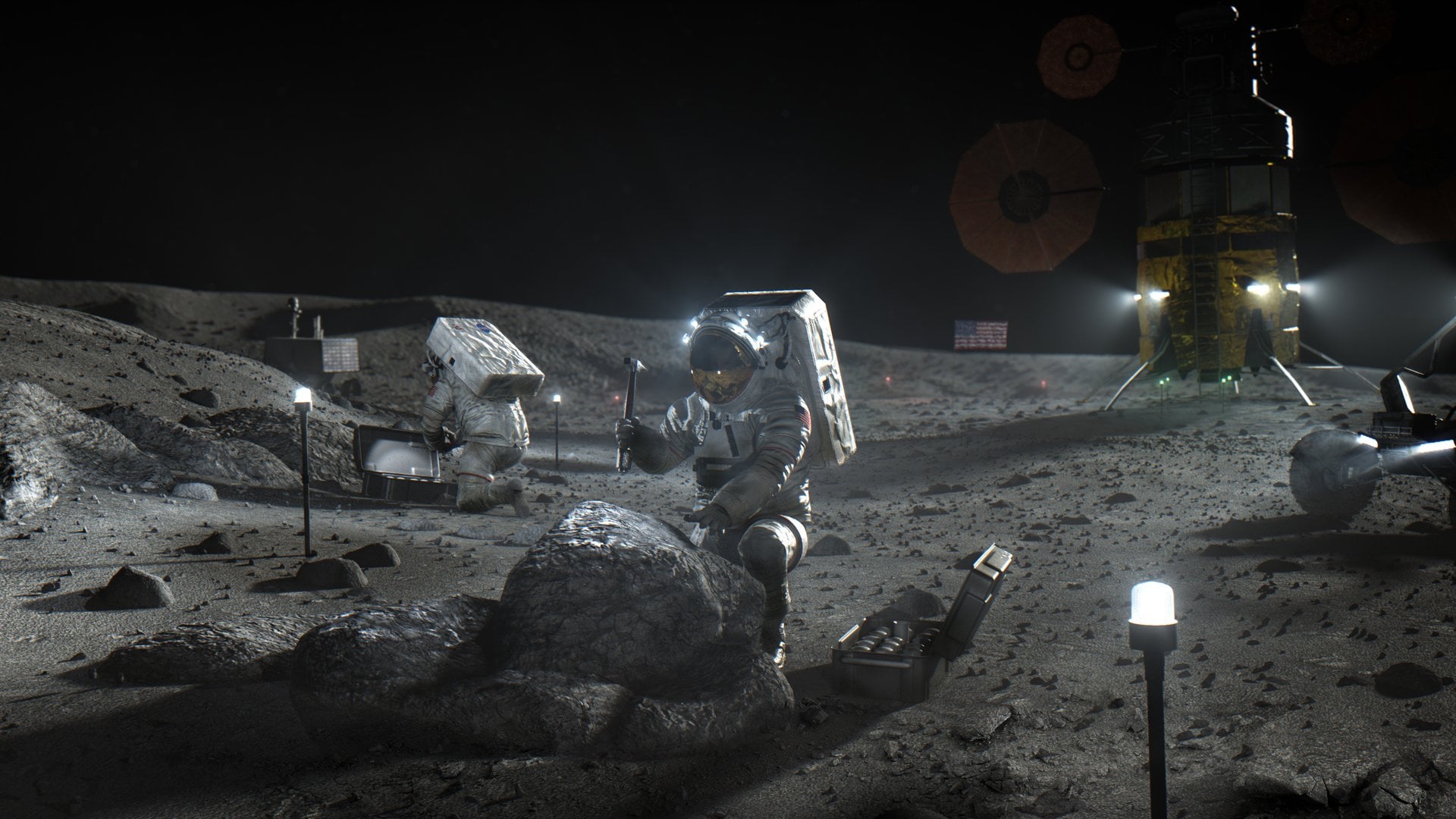 Artist's impression of NASA astronauts operating on the lunar surface, as part of the Artemis Program. Credit: NASA
What to make of this news? At face value, these sound like perfectly sensible considerations, but there are undeniable concerns that could be motivating this switch-up as well.
Delays?
For starters, this news comes about six months after the former acting-Administrator Sean Duffy announced that NASA was reopening the competition for a Human Landing System (HLS), a contract awarded exclusively to SpaceX in 2021. However, delays with the Starship's development have led NASA to conclude that the HLS will not be ready in time for Artemis III. This includes an in-orbit refueling demonstration, currently planned for later this year.
But between the Starship's current payload limits and fuel leaks and engine failures that have led to five out of eleven prototypes being lost, this is unlikely to happen. While the Starship is intended to launch between 100 and 150 metric tons (110 and 165 US tons) to LEO in its fully-reusable form, tests with the Block 2 prototype have been limited to about 35 metric tons (38.5 US tons). To perform in-orbit refueling, SpaceX will need to launch multiple refueling tankers into orbit in advance to fuel the proposed orbital depot fully.
Given the Starship's fuel capacity of up to 1,500 metric tons (1650 US tons), this means 10 to 15 tankers will need to launch to refuel one HLS fully. Even if, as Elon has suggested, it can perform its mission objectives with only half a tank of liquid methane and liquid oxygen, that means five to eight tankers will be needed. But only if they can reach their full payload capacity, something the company hopes to remedy with the Block 3 version of the Starship. The first test flight of this latest prototype is scheduled for April 7th, 2026. Significant tests will need to take place before SpaceX can conduct the multiple launches needed for a refueling demonstration.
Meanwhile, Blue Origin has been making great strides in developing its New Glenn orbital launch vehicle. Although the vehicle has launched only twice, the second stage has managed to reach orbit both times without incident. In fact, the first launch placed its payload (the Blue Ring pathfinder) in a Medium-Earth Orbit (MEO) while the second deployed NASA's Escape and Plasma Acceleration and Dynamics Explorers (ESCAPADE) mission at the Earth-Sun L2 Lagrange Point.
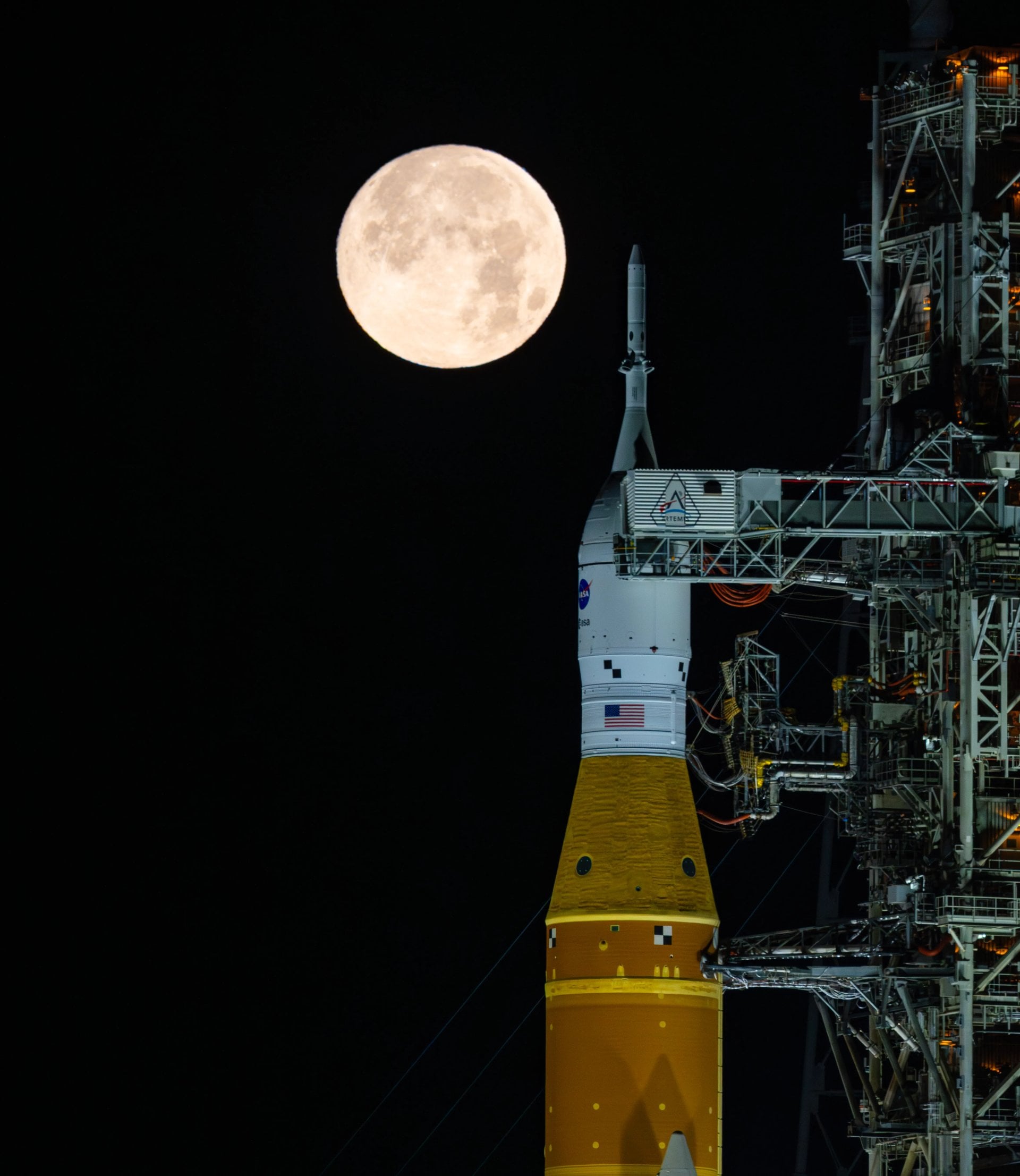 The Artemis II rocket on Launch Pad 39A at NASA's Kennedy Space Center. Credit: NASA
Under the circumstances, it is understandable why NASA is taking a more measured approach and pushing the date of the lunar landing mission forward.
No New Configurations
Another keyword in the statement is "standardization," referring to the configuration of the Space Launch System (SLS). Previously, NASA planned to upgrade the SLS design after Artemis III, moving from the Block 1 configuration to Block 1B. The first three SLS launches will rely on the former, with the Interim Cryogenic Propulsion Stage (ICPS), which provides propulsion to the Orion spacecraft after the solid rocket boosters and core stage are jettisoned, as part of the upper stage. The Block 1B version was to feature a larger Exploration Upper Stage (EUS), a four-engine liquid hydrogen/liquid oxygen propulsion system.
The purpose of this decision is to enable a faster launch cadence of a mission per year, something that Bill Gerstenmaier, the former Associate Administrator for Human Exploration and Operations, recommended in 2016. It also mirrors what NASA accomplished during the Apollo Era, where eight launches (Apollo 8 to 14) were conducted between 1968 and 1972. NASA Associate Administrator Amit Kshatriya indicated as much, referencing Apollo by name:
We are looking back to the wisdom of the folks that designed Apollo. The entire sequence of Artemis flights needs to represent a step-by-step build-up of capability, with each step bringing us closer to our ability to perform the landing missions. Each step needs to be big enough to make progress, but not so big that we take unnecessary risk given previous learnings. Therefore, we want to fly the landing missions in as close to the same Earth ascent configuration as possible – this means using an upper stage and pad systems in as close to the ‘Block 1’ configuration as possible.
Politics and Cutbacks
In its statement, NASA also mentioned its recently announced workforce directive as vital to the "acceleration" of the Artemis Program. The directive is intended to "rebuild core competencies in the civil servant workforce," which is a rather telling statement. On the one hand, it sounds reminiscent of Isaacman's past comments, in which he repeatedly criticized NASA's "bureaucratic" nature and how it has prevented progress. This could mean that "rebuilding core competencies" is merely an extension of his expressed desire to impose private-sector thinking on a public agency.
On the other hand, it could be a veiled reference to the recent cutbacks and layoffs NASA has been forced to contend with. In addition to a 25% reduction in overall funding for FY 2026, NASA experienced significant workforce reductions, with over 4,000 employees lost through buyouts and attrition. This has left more than 40 missions in danger, including Mars Odyssey, MAVEN, and OSIRIS-APEX. The same budget request also included the cancellation of the Space Launch System (SLS), the Orion spacecraft, and the Lunar Gateway, all vital aspects of NASA's long-term vision for a "sustained program of lunar exploration and development."
It also called for the cancellation of the Demonstration Rocket for Agile Cislunar Operations (DRACO) mission, a joint project initiated by NASA and DARPA in 2023. These decisions were enacted under Duffy, whom Isaacman got into a bit of a row with in November 2025 due to the leak of the "Project Athena" document, which outlined what Isaacman originally planned to do as NASA's Administrator. Eric Berger of Ars Technica, writing at the time, indicated it was possible Duffy himself leaked the document to "hold onto his job" as acting Administrator.
In essence, the leaked version of the plan appeared to be intended to lay the cancellations and layoffs at Isaacman's feet. According to Berger, the 62-page document (Isaacman stressed that the original was over 100 pages long) does not bear this out. As Isaacman stated in a post on X (dated Nov. 4th, 2025), "This plan never favored any one vendor, never recommended closing centers, or directed the cancellation of programs before objectives were achieved. The plan valued human exploration as much as scientific discovery."
Perhaps, then, this decision is motivated by a genuine desire to get NASA back on track and to restore the programs affected by measures enacted under Duffy, with the blessing of the current administration.
Competition
This certainly makes sense in light of what Isaacman said about competition from "our greatest geopolitical adversary" - aka China. For years, China has been making significant progress in its crewed and robotic space programs, and its plans for the future are nothing if not ambitious. But it is the progress they've seen in their lunar program that has left many analysts and observers in the West concerned that China could reach the Moon before NASA. This includes the development of the Long March-10 super-heavy launch system and the Mengzhou spacecraft, both of which passed a key launch test less than two weeks ago.
According to their current plan, the Mengzhou spacecraft and Lanyue lunar lander will launch separately aboard two Long March-10 rockets. This mission is slated for 2030 and is part of China's larger effort to develop an International Lunar Research Station (ILRS) in the Moon's southern polar region to rival NASA's Artemis Program.
Much like Elon Musk's recent announcement that SpaceX was pivoting to focus on the Moon instead of Mars, there are many common-sense reasons for these decisions. However, the context in which they occurred and additional incentives certainly warrant exploration. One thing is for certain: NASA has experienced repeated delays since the Moon-to-Mars mission architecture was first undertaken over 20 years ago, due to limited budget, shifting priorities, and needless shake-ups.
In the meantime, NASA continues to work on the Artemis II mission, which has been delayed again until April due to a helium flow issue that engineers identified in the ICPS during the latest wet dress rehearsal. After the Artemis II was rolled back into the Vehicle Assembly Building (VAB), the team immediately began working to resolve the issue. They're also preparing for several actions, including replacing batteries in the flight termination system, conducting end-to-end testing to meet range safety requirements, and more.
Further Reading: NASA