 Universe Today
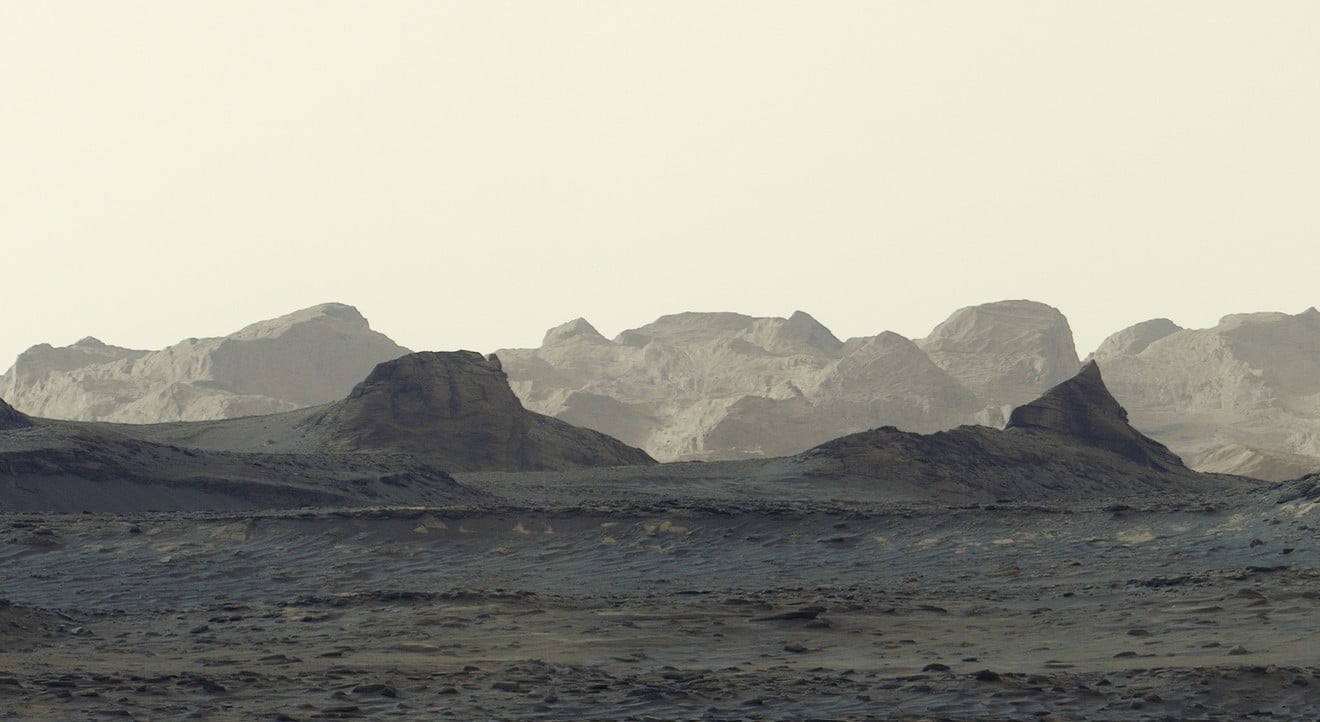
NASA’s Curiosity Mars Rover gives us another amazing view of its Gale crater home.
Mars is a planetary geologist’s paradise. NASA’s Curiosity rover drove that home recently, with a captivating panorama seen from the slopes of Mount Sharp. The image shows a stunning vista, and was not white-balance adjusted during processing, to show just what a viewer might really see at sunrise standing of Mars.
The view reminds me of Wadi Rum in southern Jordan. Perhaps that’s why principal location photography for the film The Martian was shot there, as the Earthly desert is a good stand-in for the surface of Mars.
You can see the varied landscape, the erosion and uplift that has worked the bizarre landscape of Mars. Mount Sharp is a treasure trove of geological history of the Red Planet, chronicling the flow of water and stream erosion on a once wet Mars which then gave way to the residue of salt deposits.
The stitched together image panorama is courtesy of the rover’s main MastCam imager, and is definitely worth exploring on a high resolution zoom in.
One key prominent feature in the scene are what are known as yardangs, or shark fin-shaped protrusions sculpted by wind erosion. The yardang layer seen in Curiosity’s view is massive, extending 16 kilometers across in the distance. Volcanism early in the history of Mars may have played a role in placing these cake-like layers down at such an odd angle.
“The yardang layer looks out of place. It’s the wrong color, the layers tilt at an odd angle, and it almost appears plastered on,” says Ashwin Vasavada (NASA/JPL) in a recent press release. “But that’s what makes it exciting to reach. No one is sure exactly what created this layer, but one idea is it may be ash deposited by ancient volcanic eruptions.”
We see yardang formations on Earth, but they seem to appear on a massive scale on Mars.
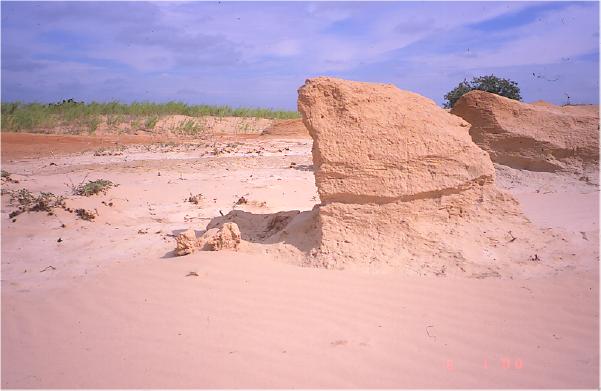 A yardang on Earth in Yoakum Dunes, Texas. Credit: USGS/Public Domain
The best may be yet to come, as Curiosity heads towards the field of yardangs and may soon reach out and sample them up close. Curiosity should reach these curious formations sometime in 2027.
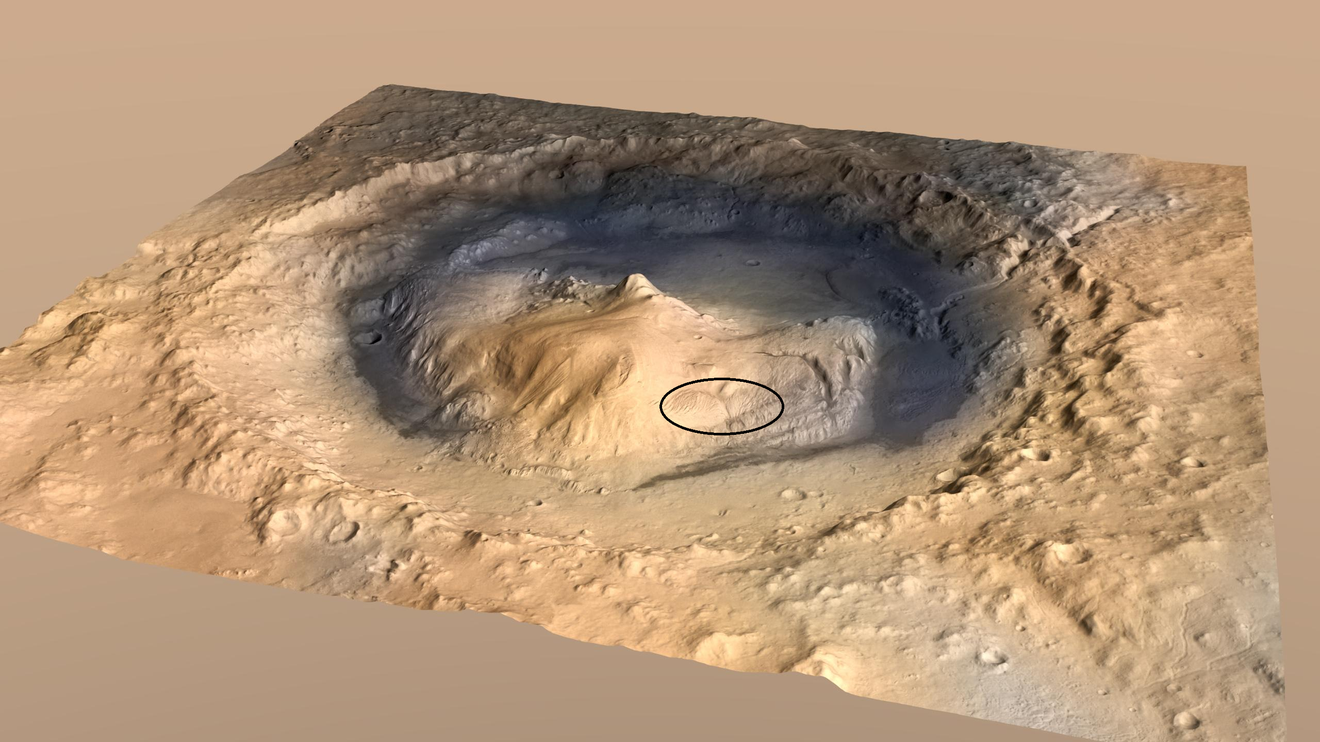 An overview of the Mount Sharp region on Mars, with the yardang region (circled). Credit: NASA/JPL-Caltech/ESA/DLR/FU Berlin/MSSS
Curiosity’s record climb of one full kilometer of elevation is the largest elevation gain for any rover on Mars (or for that matter, on the surface of another world to date). The ascent has only taken the rover since 2014 at a leisurely roll of 2.7 kilometers a year.
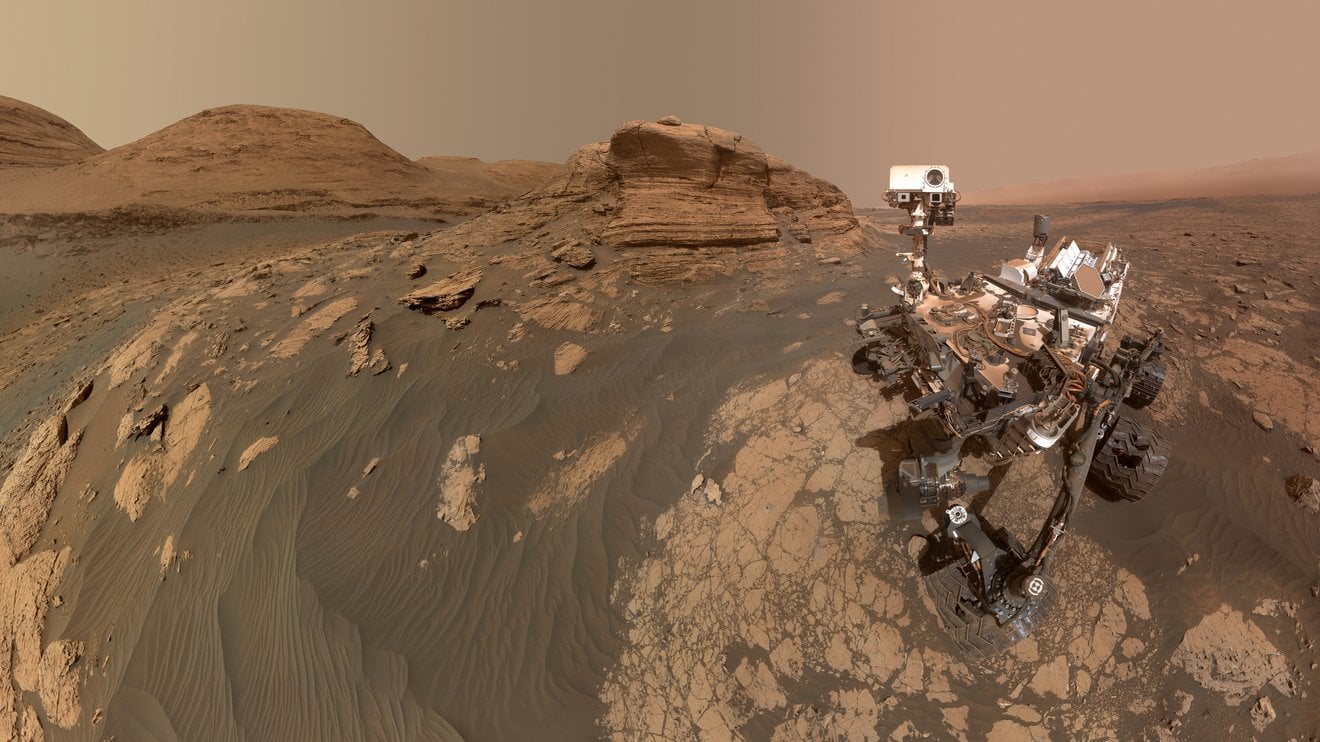 The Curiosity rover snaps a 'selfie' in 2021. Credit: NASA/JPL-Caltech.
Curiosity has a courageous back story. The mission launched on November 26, 2011, and made the first ever sky crane-style landing on Mars on August 6, 2012. Since then, the mission has endured hazardous terrain, slippery sand and wheels chewed up by the Martian terrain. Curiosity is now in its second year of its fifth mission extension, and its plutonium-fueled power source means it could well keep going into the 2030s. Perseverance landed in Jezero crater in 2021, joining Curiosity on the Martian surface.
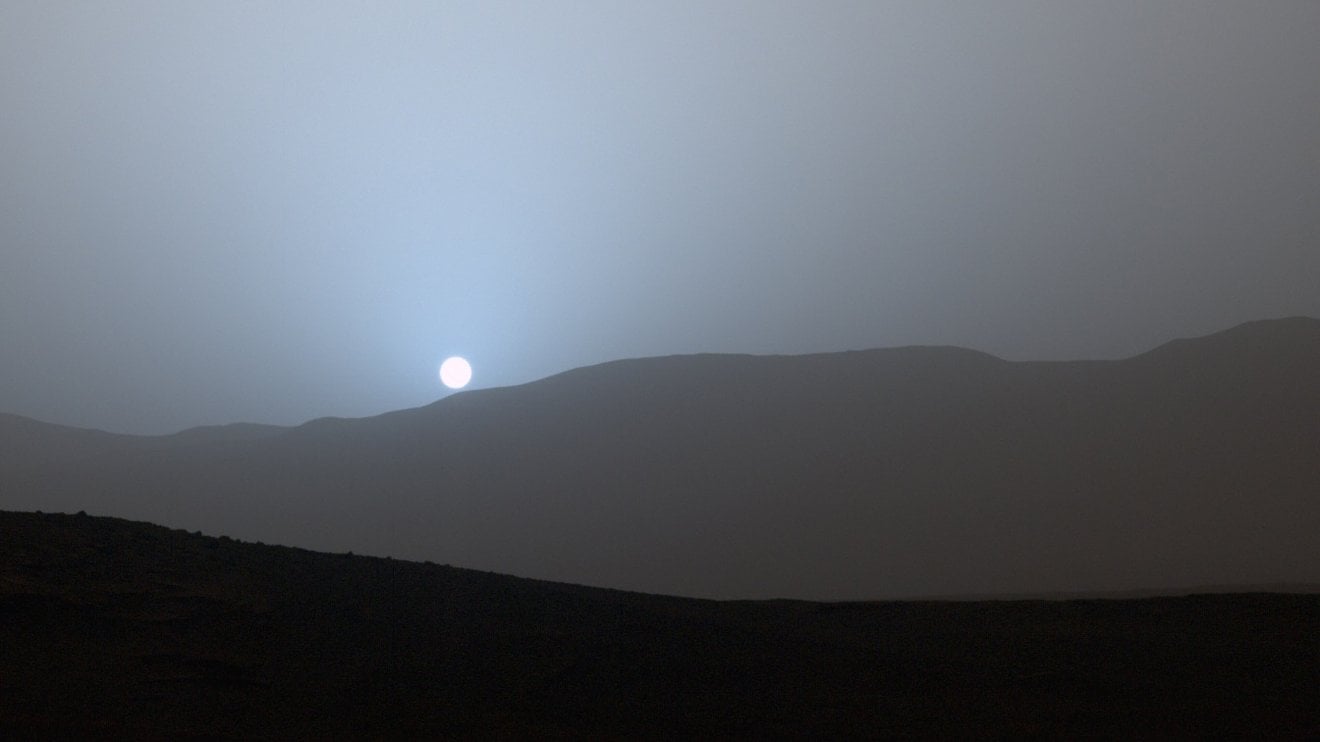 Curiosity spies a 'blue' Martian sunset in 2015. Credit: NASA/JPL-Caltech/MSSS/Texas A&M University
And the Mars launch opportunity window opens this month. Watch for the Japan Space Agency to launch the Mars Moons eXplorer (MMX) mission on October 19th, set to explore Phobos and Deimos up close. The rovers have actually played a small role in assisting this campaign, as they observe misshapen ‘eclipses’ of the two moons in an effort peg down their precise positions and orbits.
Expect more amazing alien panoramas to come from the surface of Mars, as Curiosity explores the curious geology of the Red Planet.