Universe Today
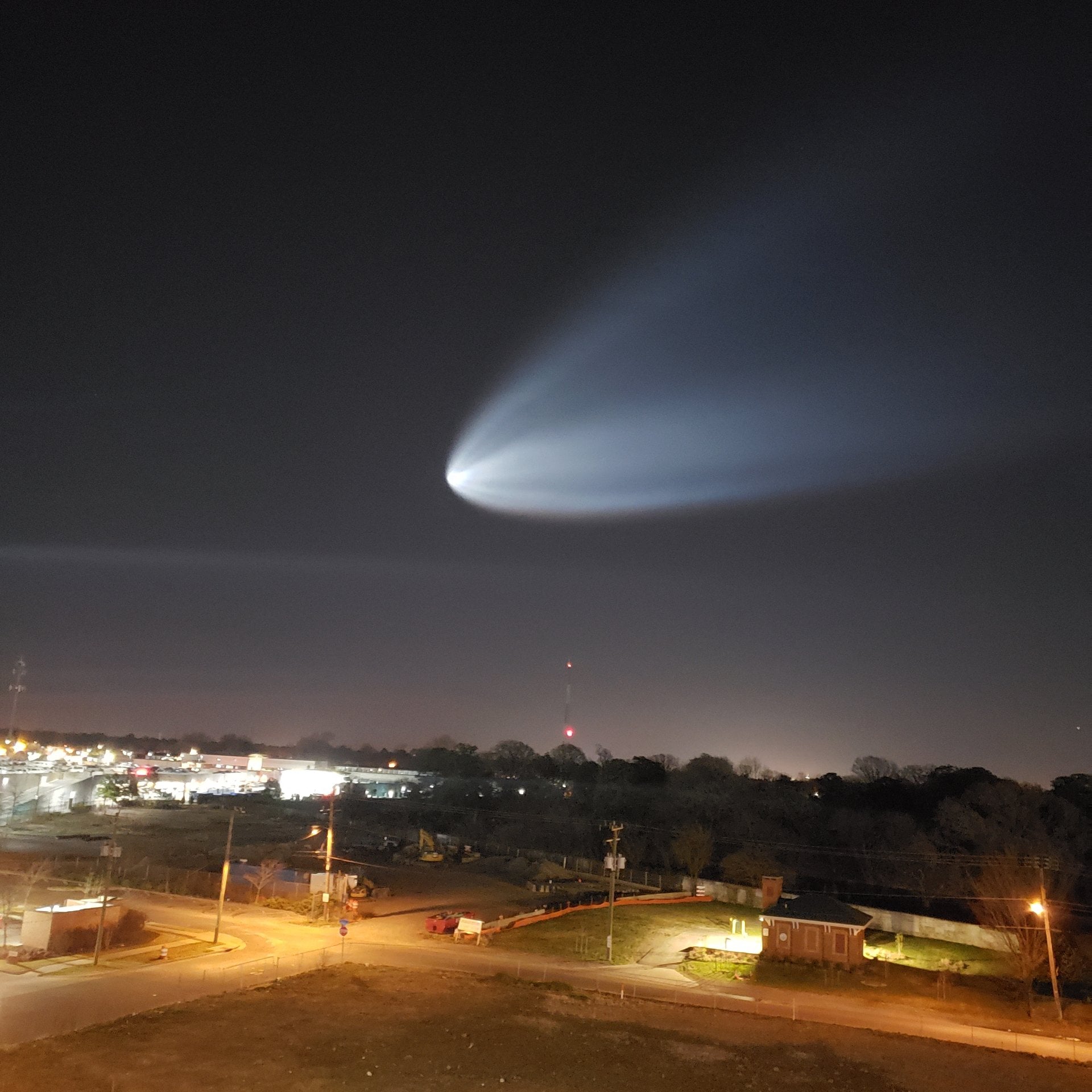
How to catch a luminous sky wonder of the modern space age.
What used to be a rare sight gracing the twilight sky is now becoming strangely commonplace. If you live on either U.S. coast, you have to good chance at seeing what’s become a common sky scene in our modern technocene era: a space launch jellyfish.
Why Jellyfishes Occur
It’s all about viewing geometry. An iridescent launch plume occurs near dusk or dawn, around an hour before local sunrise or after local sunset. These can appear especially dramatic, as the feathery exhaust trail rises over the curve of the Earth and hits sunlight, all while you’re watching it evolve from dark skies below. These can take on some pretty amazing (and, for the unsuspecting, startling) looking shapes, from a bulbous tentacled jellyfish to a slow moving, luminous 'comet'.
The increasing launch tempo has made this once rare scene commonplace, though that’s always in flux. The last five years broke the record for sheer number of launches worldwide. 2026 seems to be continuing this trend, with 203 successful orbital launches thus far.
Ironically, SpaceX just announced that the Starlink Group 10-49 launch from the Cape on August 25th may be the last from the Florida Space Coast, as the company transitions to launching Starlinks en masse onboard their massive Starship rocket from Boca Chica, Texas and a future Louisiana-based facility.
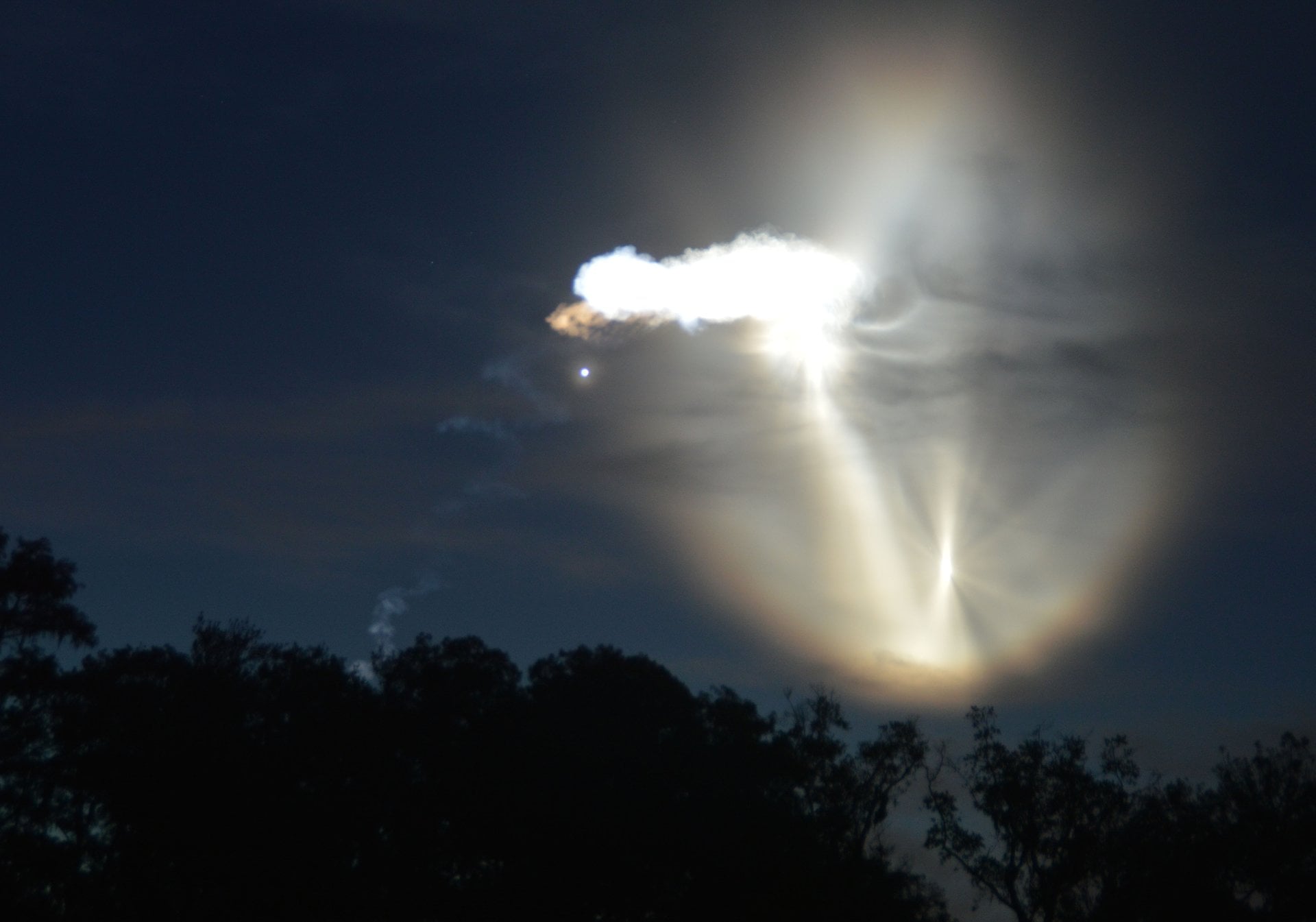 The morning launch of MUOS-4 on September 2nd, 2015. Credit: Dave Dickinson.
SpaceX may even attempt a first-ever orbital launch of Starship coming right up on September 15th. An increase in launches along the Gulf of Mexico coast could make Space Jellyfishes a common sight across the Gulf and Caribbean region.
Though this will make east coast launches less prevalent, there’s still lots more to watch for, especially Crew Dragon and Cargo Dragon launches chasing the International Space Station up the U.S. Eastern Seaboard. Rocket Lab’s promised Neutron rocket may also soon begin launching out of Wallops Island in Virginia starting in early 2027.
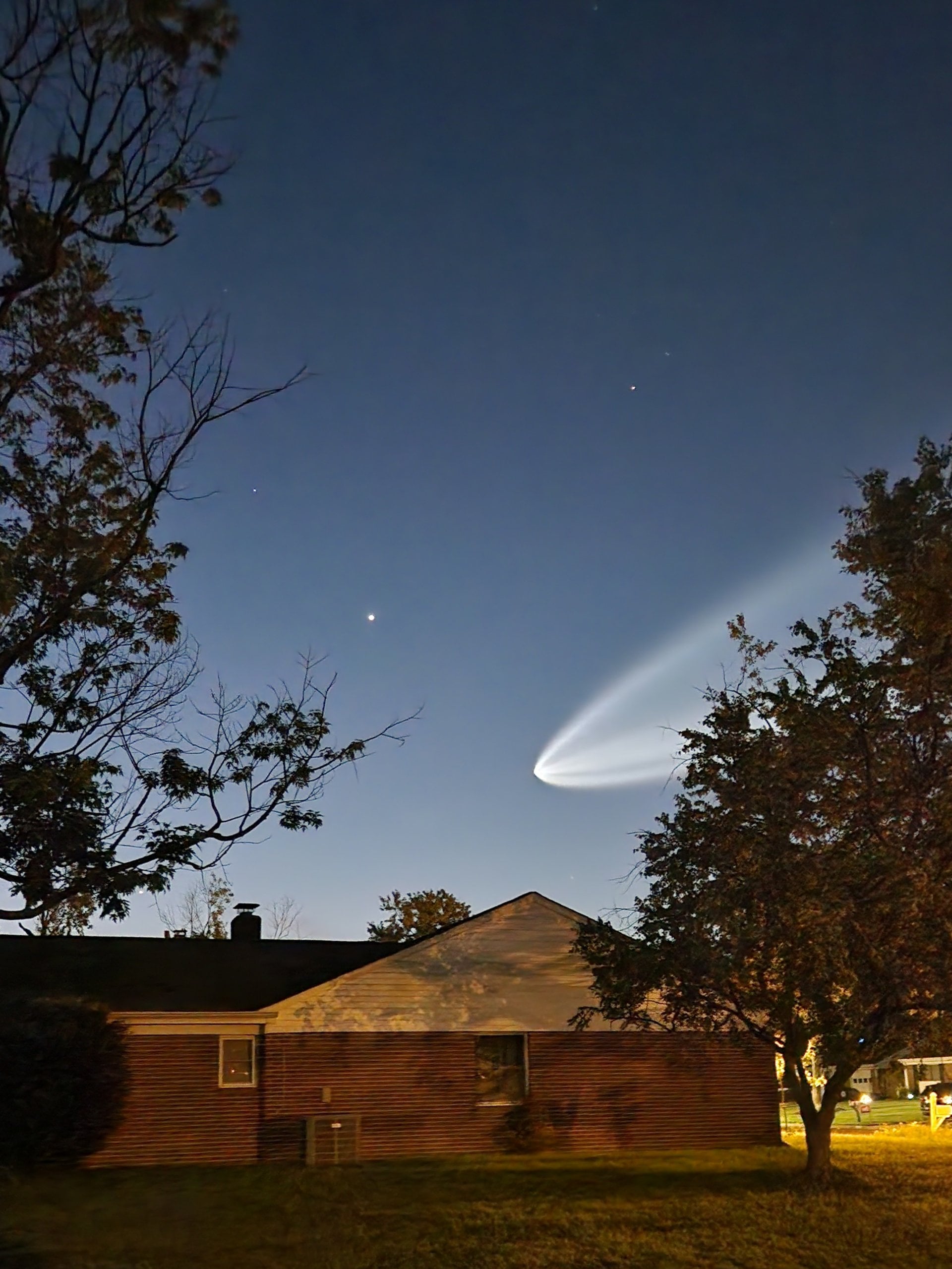 A July 26th, 2025 Starlink morning launch, as seen from Virginia Beach. Credit: Dave Dickinson.
Where to Watch Worldwide
Any twilight launch can produce a jellyfish. A majority these are due to SpaceX and the company’s efforts to fill out their Starlink mega-constellation. Likewise, you can see this strange-looking phenomenon near any launch site worldwide, though U.S. launch sites are still prime Jellyfish territory. For the U.S. West Coast this means dusk launches from Vandenberg Space Force Base in southern California, and on the U.S. eastern seaboard, Wallops in Virginia and the Florida Space Coast at dawn.
Launches out of the Kennedy Space Center and Cape Canaveral Space Force Station often send missions straight up the U.S. eastern seaboard and off the shores of the Canadian Maritimes.
I’ve seen launch jellyfishes as far inland as Asheville, North Carolina. The recent Isar Spectrum orbital launch from Andøya in northern Norway this past weekend on September 6th also produced a rare Arctic Jellyfish:
This was the first successful orbital launch conducted from continental Europe.
And speaking of Andøya, suborbital launches from this site and NASA Wallops can deliberately create an especially wild sky scene, as they release tracers to study the Earth’s upper atmosphere. It’s worth watching Andøya’s and Wallops’ websites for future experiment launches.
Planning and Observation
I saw my first jellyfish in Florida, with the launch of STS-131 on April 5th, 2010. Admittedly, launches were a common sight in central Florida, even before the advent of SpaceX.
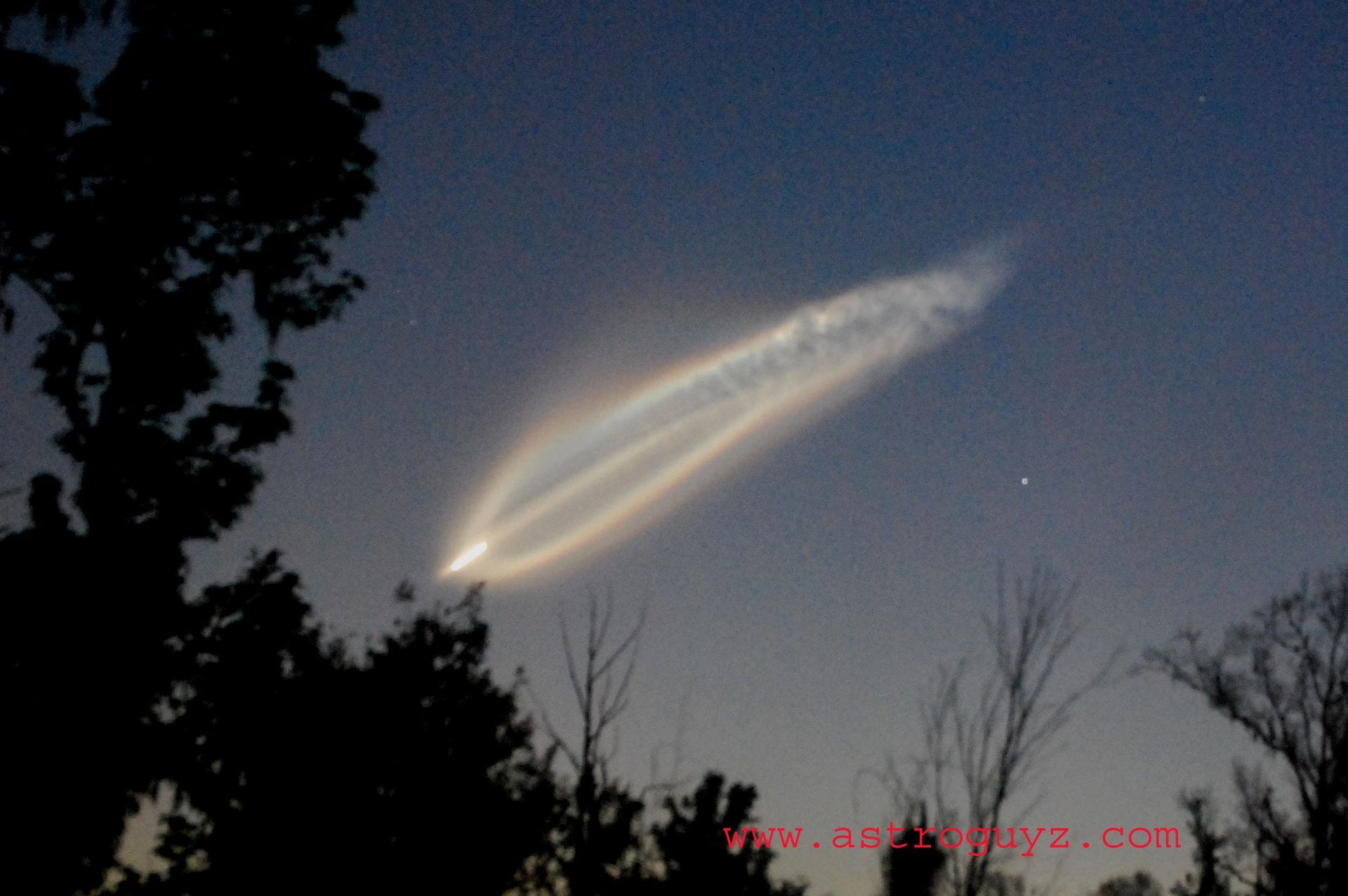 The launch of STS-131, as seen from Hudson, Florida. Credit: Dave Dickinson.
As with most skywatching, success in predicting and catching sight of a launch jellyfish involves knowing when and where to look, with a little patience and luck (re: clear skies) thrown in.
Where to Look Online For Predictions
You might be closer in time and space to seeing a launch jellyfish than you might think. I’m generally looking at launch schedules a week or so out. Next SpaceFlight is a great resource, and they seem to really be on top of updates and the ever fluid launch schedule, which is no mean feat. A launch within a couple hours of local sunrise or sunset will catch our interest, worth setting a wake-up alarm for. Pay attention to the launch azimuth, or the heading (direction to orbit) the launch will take after liftoff. Following the coast (say a Cape launch headed northeast) is a good sign in terms of visibility prospects.
Pay close attention to the launch window. A 2AM launch which many other predictions might dismiss might also have a 6 hour long launch window, and could slip through the twilight to well past local sunrise.
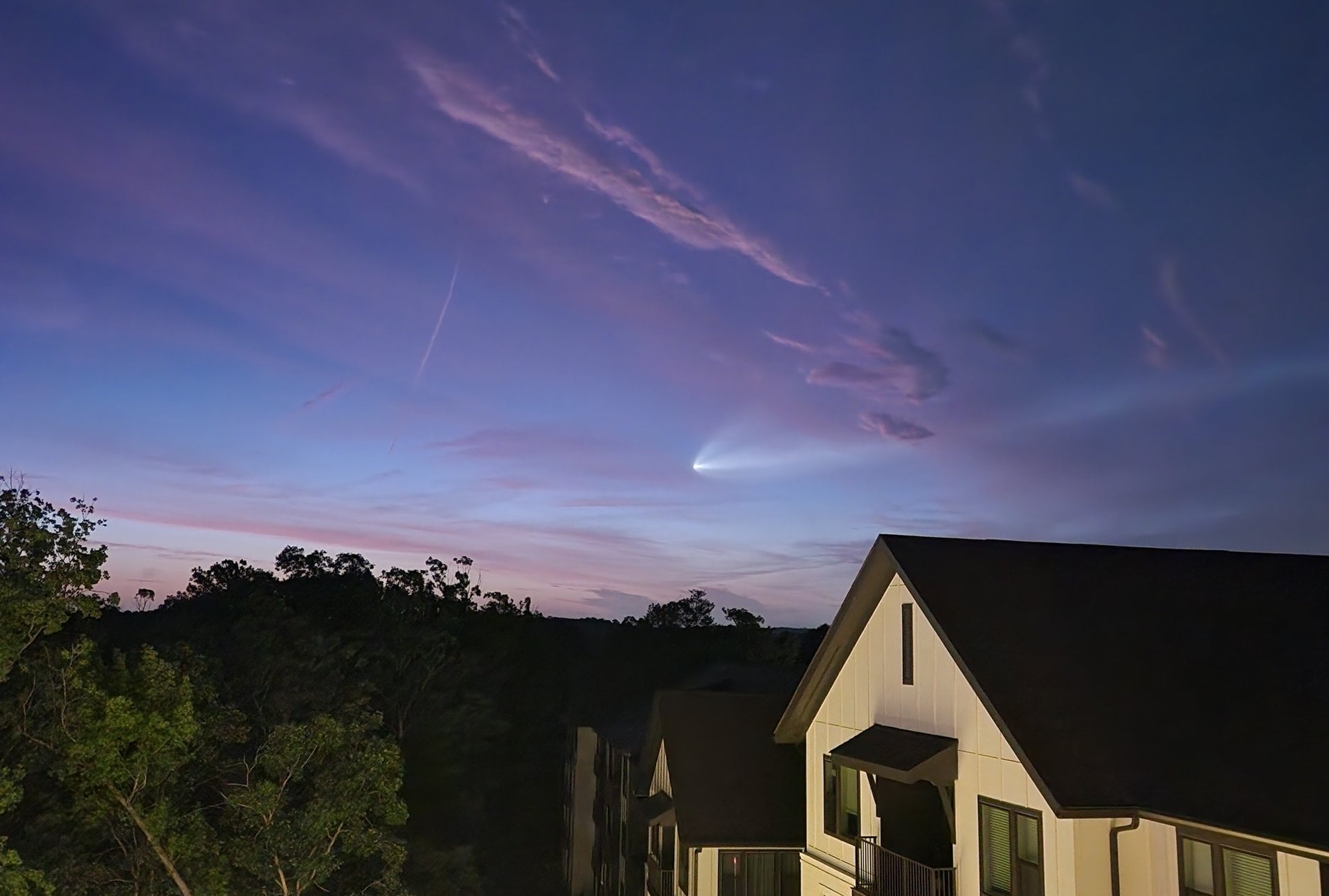 An early morning Starlink launch caught from Cary, North Carolina. Credit: Dave Dickinson.
Stick around after the show, and you may note another common post launch phenomenon known as noctilucent clouds. These lingering neon clouds are a fine sight in their own right, and may persist for up to an hour after a launch.
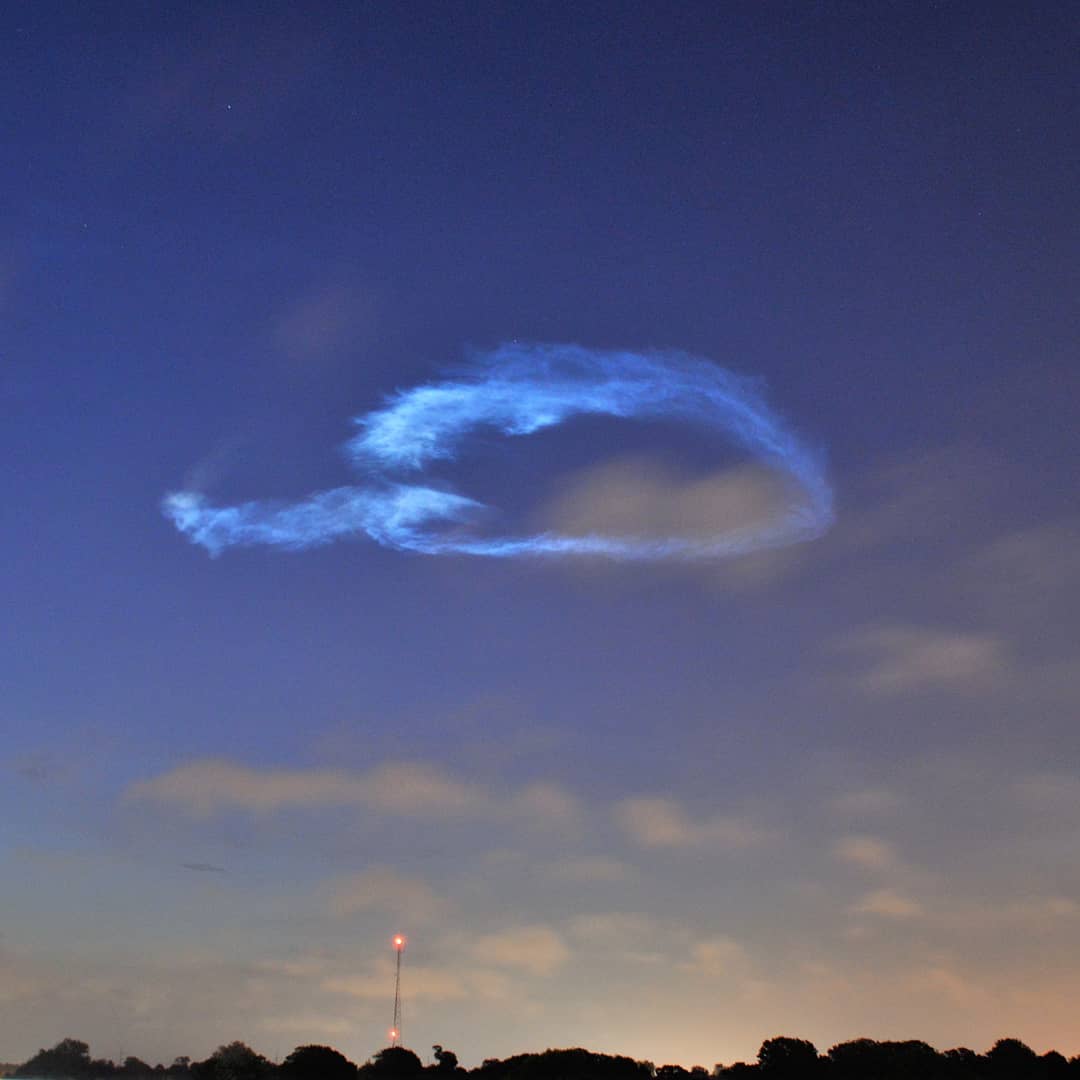 Neon-blue noctilucent clouds seen post launch. Credit: Dave Dickinson.
Launch spirals are trickier to spot. These are caused by upper stage venting, usually after an empty stage is discarded and a mission takes a transfer orbit on its way towards geostationary orbit. Automated all-sky watching meteor cameras catch these on occassion:
Keep an eye out for these sky wonders of the modern space era. Seeing a space launch jellyfish wriggling its way across the sky can be a truly bizarre sight.