Universe Today
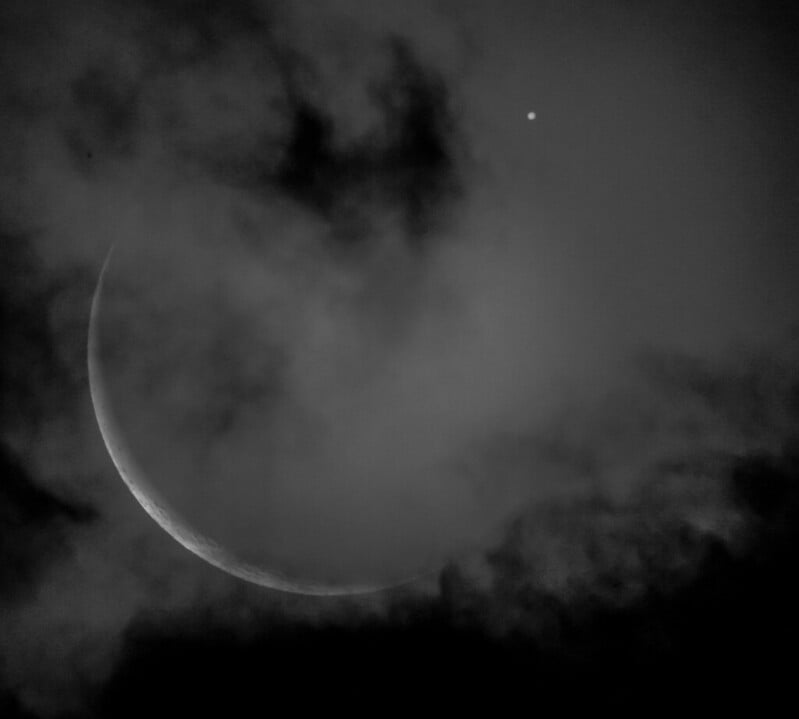
The first week of October kicks off with two don’t miss skywatching events.
It’s a busy skywatching month ahead. The first full week of October sees two top-notch skywatching events, with Saturn reaching opposition, and the Moon occulting Jupiter for North America on October 6th.
This month’s occultation of Jupiter by the Moon is one of the best-placed and top skywatching events for 2026. The event transpires in the early morning hours of Tuesday, October 6th, centered on 10:16 Universal Time/6:16 AM Eastern Time (EDT). The Moon is a -20% illuminated waning crescent when it covers up Jupiter, meaning the daytime illuminated side of the Moon will lead the way when Jupiter ingresses behind the Moon, and will reappear from behind the Moon’s dark limb.
The Moon moves its own half a degree apparent diameter about once every hour, though ingress/egress times will vary based on your location. Unlike last month’s daytime event, this month’s occultation of Jupiter occurs under predawn skies for the eastern contiguous United States (CONUS) and Canada. The IOTA has a list of ingress/egress times for select sites along the path.
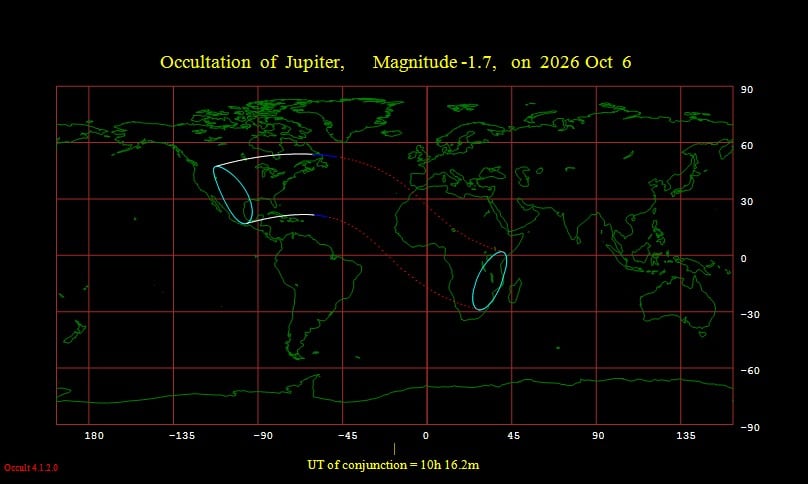 The visibility footprint for the October 6th occultation of Jupiter by the Moon. Credit: IOTA.
This event goes down during mutual transit season for Jupiter’s moons, currently underway. -1.9 magnitude Jupiter is 34” in apparent size, and will take a full minute to disappear/reappear from behind the Moon. This leisurely affair will lend itself to observing and recording on video, and the nighttime side of the Moon lit by Earthshine should round out a very photogenic celestial scene.
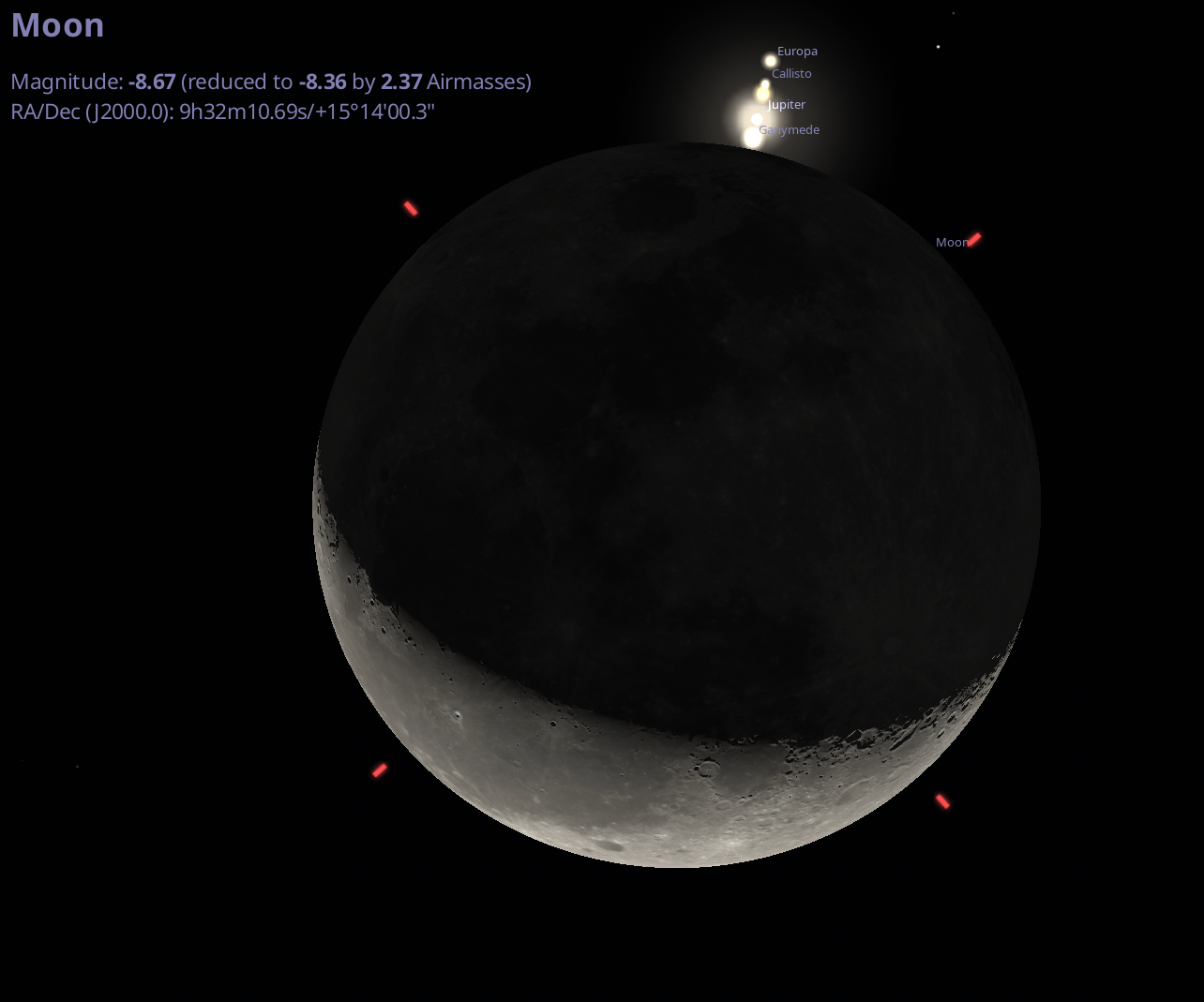 The reappearance of Jupiter from behind the Moon on October 6th. Credit: Stellarium.
The next good lunar occultation of Jove for the CONUS isn’t until the middle of the next decade on September 28, 2034.
Next up, Saturn reaches opposition for 2026 on October 4th. Falling near last month’s equinox, this puts Saturn in the rare position of straying just into the corner of the non-zodiacal constellation Cetus the Whale.
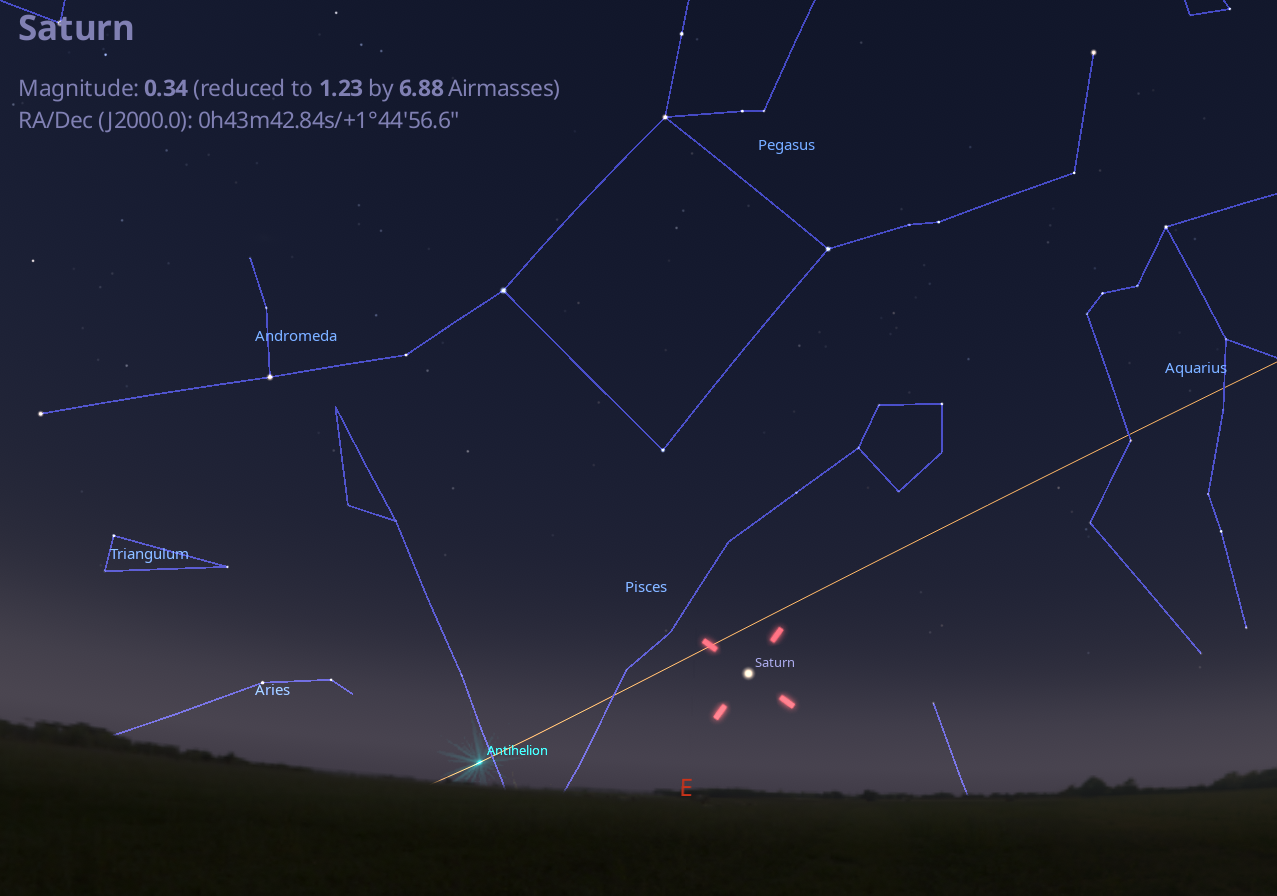 Saturn rising at opposition 2026. Credit: Stellarium.
The current tilt of the rings of Saturn are 12 degrees wide in late 2026, widening from edge-on in 2025. The rings will again reach their widest tilt in 2031. Saturn is always a sight to behold at the eyepiece, even in a small telescope.
It's worth watching for enigmatic spokes on Saturn's rings as we come off of last year's equinox season for the planet. These disruptions look like radial streaks across the plane of the rings, and are a thought to be due to meteoroid impacts.
An intriguing effect to watch for near opposition is what’s known as the Seeliger Effect, or opposition surge. This is a retro-reflector type phenomenon, as the planet reaches 100% illuminated phase versus the viewing angle. The Moon near Full experiences something similar, as it reaches up to a half dozen times as bright (over 2 full magnitudes) as the 50% illuminated 1st or Last Quarter phase Moon. All those little shadows (or lack thereof) do indeed add up.
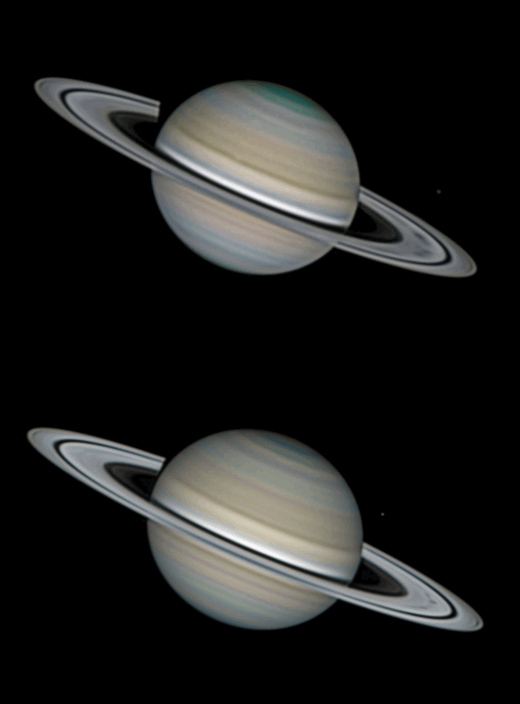 Saturn surging in brightness near opposition. the two images were taken nearly a month apart. Credit: Maximilian-Vlad Teodorescu.
This effect is already underway, and it especially prominent due to Saturn’s extended rings. The change is notable, with a surge in about 0.3 magnitudes in brightness. This varies based on how wide open the rings are near opposition. Does +0.3 magnitude Saturn seem brighter to you near opposition? Can you note the change over the next few weeks with the naked eye? zero magnitude stars Capella and Rigel and offer a good comparison contrast versus Saturn as the surge fades from view. It's strange to think, that you're witnessing the cumulative effect of millions of little snowball-sized particles in Saturn's rings, from millions of miles away.
There’s lots of skywatching to look forward to, and that’s a good thing. If skies are clear, be sure to check out Saturn at opposition this month, and don’t miss next week’s occultation of Jupiter by the Moon.