 Universe Today
The space between stars may seem like a barren desert, but over the past few decades scientists have been finding all sorts of interesting chemicals in it. From the precursors to proteins to the building blocks of cell membranes, there has been discovery after discovery of new molecules in the giant gas clouds between the stars. Now, a new paper available in pre-print on arXiv details the discovery of the first ever four-carbon sugar in the Interstellar Medium (ISM), and it is another brick on the path to understanding how life on Earth first developed.
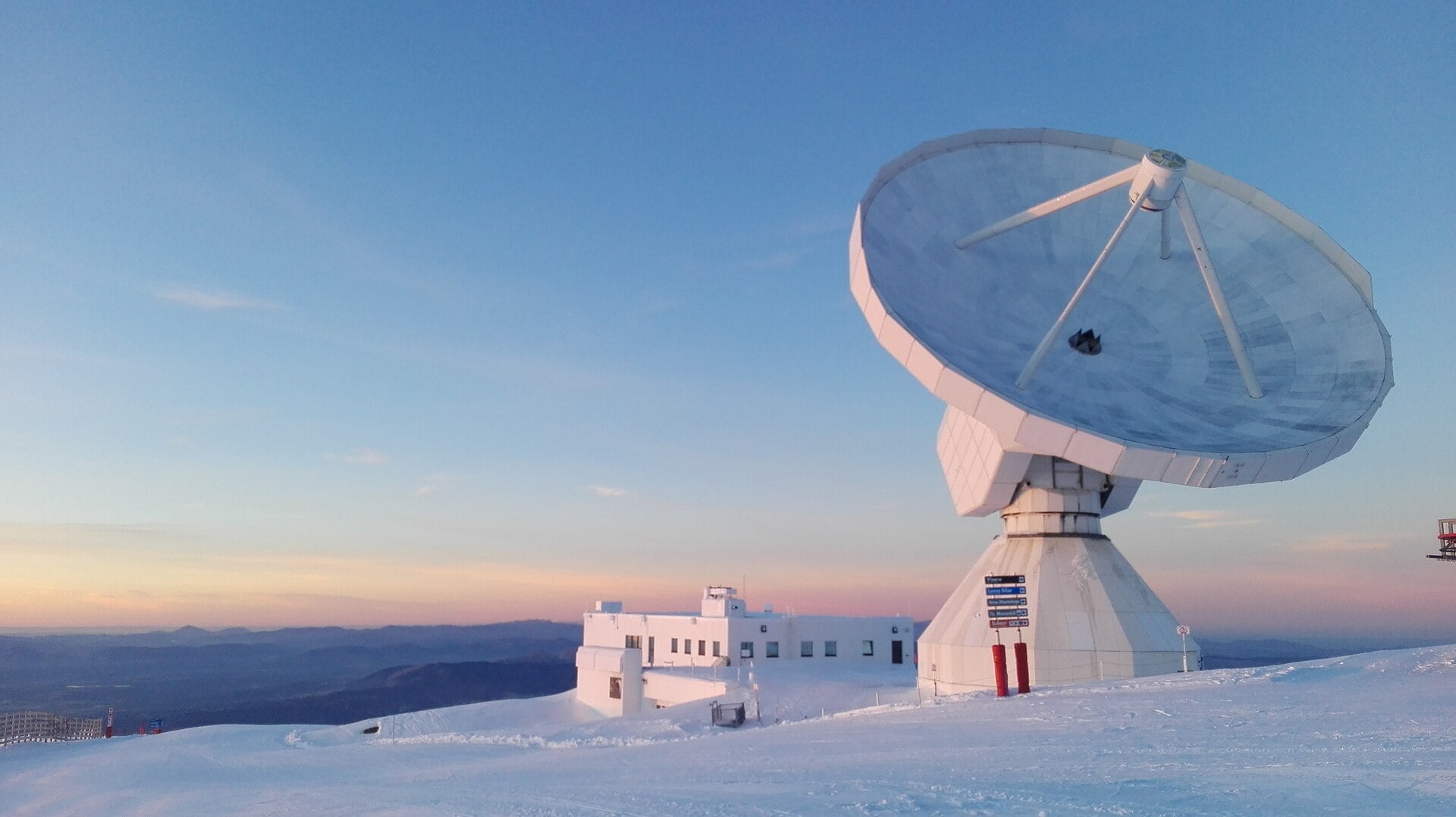
The sugar in question is called erythrulose, a type of “ketose” sugar and one that is, you guessed it, made up of a chain with four carbons in it. Researchers found it in a famously rich molecular cloud known as G+0.693-0.027, seemingly named that way because they love to torture journalists writing about it. In searching for it they used two powerful radio telescopes - the 40m Yebes telescope and the 30m IRAM telescope, and sifted through the clouds' dense spectral lines to find their target.
And find it they did - to a level that the chances of those specific spectral lines showing up randomly only amounted to 0.2%. But what might actually be more interesting is what they didn’t find - any three-carbon sugars. The erythrulose was at least eight times more abundant than its three-carbon analogs, such as glyceraldehyde. Which then begs the question - how did a four carbon sugar form without any three-carbon sugars available to seed it?
Video describing interstellar space. Credit - SpaceTime YouTube ChannelTo uncover this pathway, the researchers turned to advanced quantum chemical models and a type of simulation known as a Kinetic Monte Carlo (KMC) simulation. Through these tests, they found that erythrulose likely doesn’t build up one carbon atom at a time. Instead, it forms when two-carbon fragments such as glycoaldehyde and ethylene glycol combine on the icy surfaces of microscopic dust grains. In molecular clouds, those types of grains are constantly being bombarded by cosmic rays and atomic hydrogen, creating radical fragments that drive this reaction, resulting in a four-carbon sugar without the need for any three-carbon precursors.
That particular four-carbon sugar has dramatic implications for the origins of life. Modern biology uses DNA and RNA to store and transmit genetic information, both of which use a backbone of a five-carbon sugar known as ribose. Ribose, however, is notoriously difficult to synthesize in early-Earth conditions, so astrobiologists have hypothesized that, before modern DNA and RNA, there was a precursor genetic polymer that held the instructions for life.
A leading candidate for that precursor polymer is Threose Nucleic Acid, which uses a four-carbon sugar backbone called threose. And, in the presence of liquid water, ketose sugars like eryththrulose can readily transform into aldose sugars like threose. In other words, the four-carbon sugar that we just found in an interstellar cloud provides a direct chemical link to a possible precursor for DNA.
NASA video detailing the discovery of sugars on Bennu. Credit - NASA Video YouTube ChannelCritically, we already know that large amounts of these sugars were deposited on the Earth during the Late Heavy Bombardment, when early Earth was constantly being pummelled by space rocks. So that means that, by the time Earth’s oceans had cooled enough to support chemistry, plenty of erythrulose and other complex sugars were available to start reacting.
There were some uncertainties in the paper, such as an extremely low detection rate compared to the estimated rate from simulations, but that just means there’s more work to be done. This paper proves, with much certainty, that the potential precursors for the building blocks of life are actively being created in between the stars. All it would take is a delivery mechanism and some serendipity to kickstaff the biological process on a supportive planet, and now we are one step close to completing the picture that proves that.
Learn More:
I. Jimenez-Serra et al - Detection of a four-carbon sugar in interstellar space
UT - Scientists and Senators are Excited About the Sugars Found in the OSIRIS-REx Samples
UT - Sweet! Galactic Molecule Could Point to Alien Life
UT - Scientists Make a Game-Changing Find in the Bennu Asteroid

