Universe Today
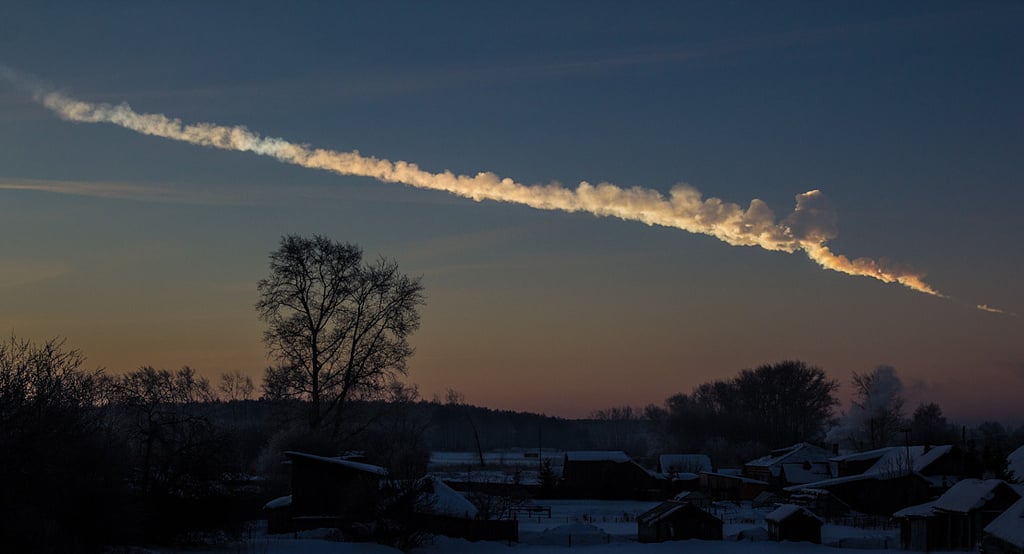
On a February morning in 2013, a rock the size of a house appeared without warning in the skies above Russia. The scary thing is that nobody saw it coming.
The asteroid that exploded over Chelyabinsk was only about 20 metres across so modest by astronomical standards, but it didn't need to be large to cause chaos. The shockwave from its atmospheric disintegration shattered windows across an enormous area, and more than 1,600 people were injured. The energy released was equivalent to roughly 500 kilotons of TNT, that’s around 33 Hiroshima bombs from an object that not a single monitoring system on Earth had spotted in advance. It was a wake up call that shook the planetary defence community to its core, and directly motivated the development of a new generation of asteroid warning systems. One of them, it turns out, is named after a small African mammal famous for standing guard.
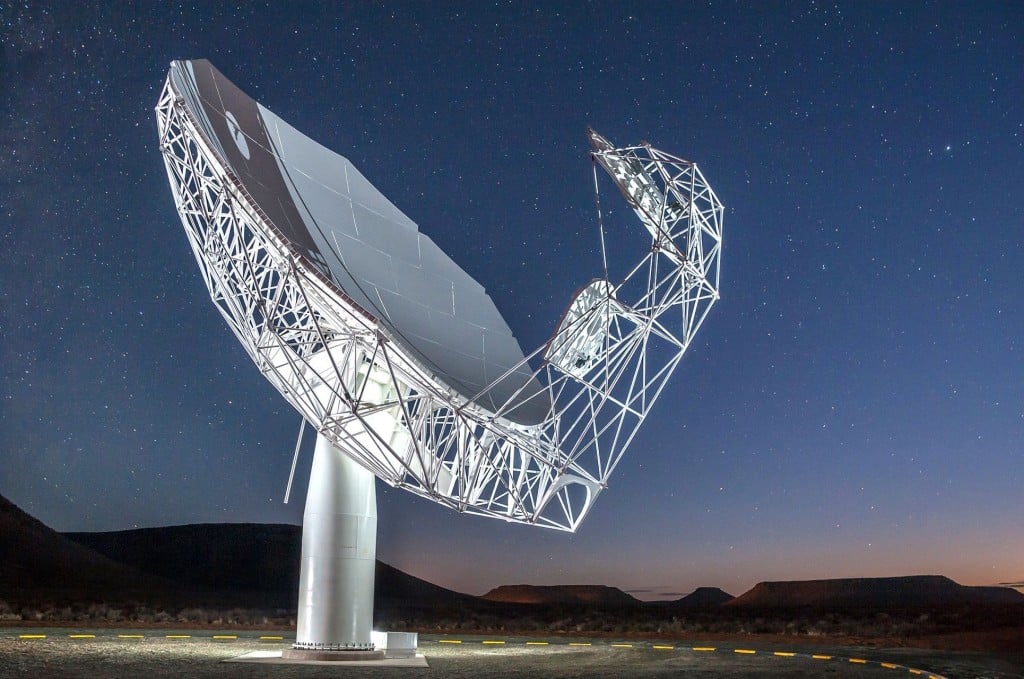 The MeerKAT radio telescope (Credit : Morganoshell)
Meet MeerKAT…. ESA's round the clock asteroid guard and one of four global systems now watching the skies for rocks that might be heading our way. It’s name was chosen deliberately though since in the wild, meerkat colonies post sentinels whose sole job is to watch for threats from above. The instant danger is spotted, a sharp alarm call goes out and the whole colony reacts with remarkable speed and coordination.
ESA's MeerKAT Asteroid Guard works on exactly the same principle. Operated by the Near-Earth Object Coordination Centre in Frascati, Italy, it runs 24 hours a day, seven days a week, scanning every newly discovered near Earth object and asking one urgent question ‘is this one heading for us?’
The challenge is formidable. When a new object is first spotted by a survey telescope, astronomers have very little to work with, perhaps a short trail of observations, a rough position or a direction of travel. From those fragments, MeerKAT has to calculate thousands of possible orbits and determine whether enough of them end at Earth to warrant sounding the alarm. It has to do all of this fast, because history is unambiguous on the timeline, every asteroid ever discovered before impact was first spotted less than 24 hours before it hit.
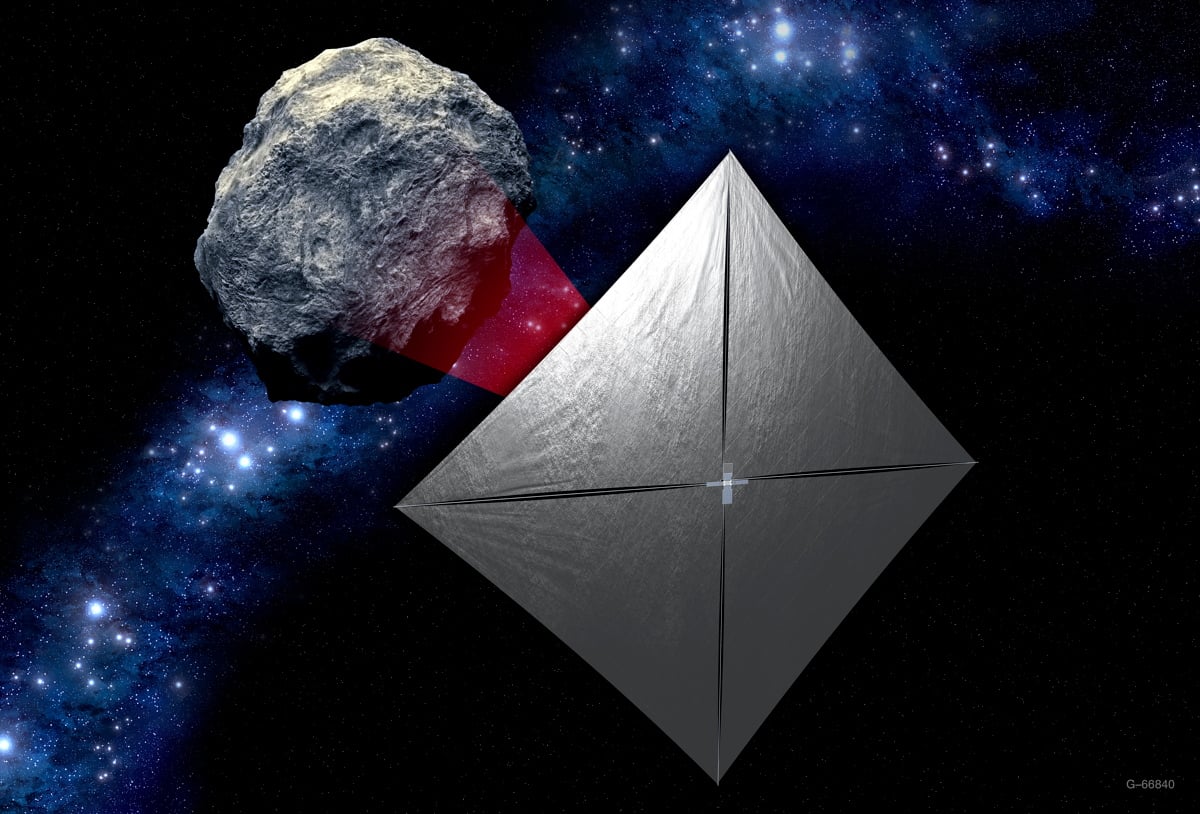 Artist impression of NASA's Near-Earth Asteroid Scout cube sat (Credit : NASA)
When MeerKAT's analysis flags a significant impact probability, an automated alert fires immediately, emails to subscribers, messages to NEOCC scientists, and a rapid mobilisation of follow up telescopes to refine the picture. A newly published paper covering its first five years of operation reveals that the system has successfully warned of all seven imminent impactors discovered before impact during that period and in several cases beating NASA's rival Scout system.
The most dramatic demonstration came in 2022 with asteroid 2022 WJ1. Within 30 minutes of MeerKAT's initial alert, follow up observations had narrowed the predicted impact zone to a region between Lake Erie and Lake Ontario, with a precise impact time. At exactly the predicted moment, 2022 WJ1 lit up the sky above southern Ontario. No damage, no casualties but a remarkable proof of concept. Chelyabinsk caught us completely off guard and now, thanks to MeerKAT and other systems like it, the next one won’t….or at least, shouldn’t!
Source : The ESA Meerkat Asteroid Guard: a monitoring service for imminent impactors