Universe Today
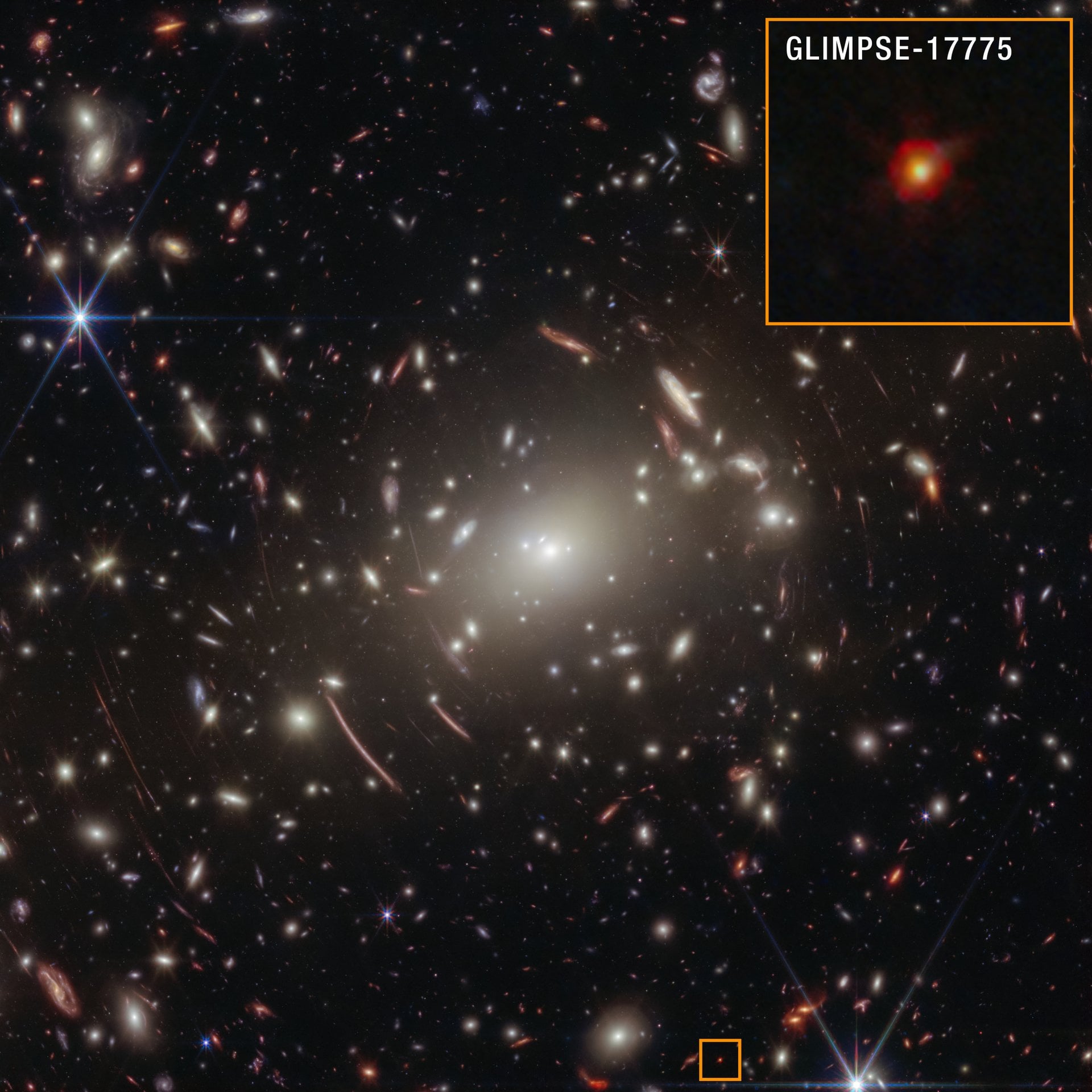
Sometimes the universe hands astronomers a single object so perfect that it cracks open a mystery that has resisted years of effort. The James Webb Space Telescope has just found one, and it goes by the distinctly unglamorous name GLIMPSE-17775.
To understand why it matters, we need to rewind to 2022. Almost as soon as Webb opened its eyes, it began spotting a strange new population of objects in the early universe. Small, intensely red, and surprisingly common, they appeared around 600 million years after the Big Bang and quickly earned the nickname "little red dots." Nobody was quite sure what they were. Some were so bright that researchers half joked they had broken our understanding of how galaxies grow.
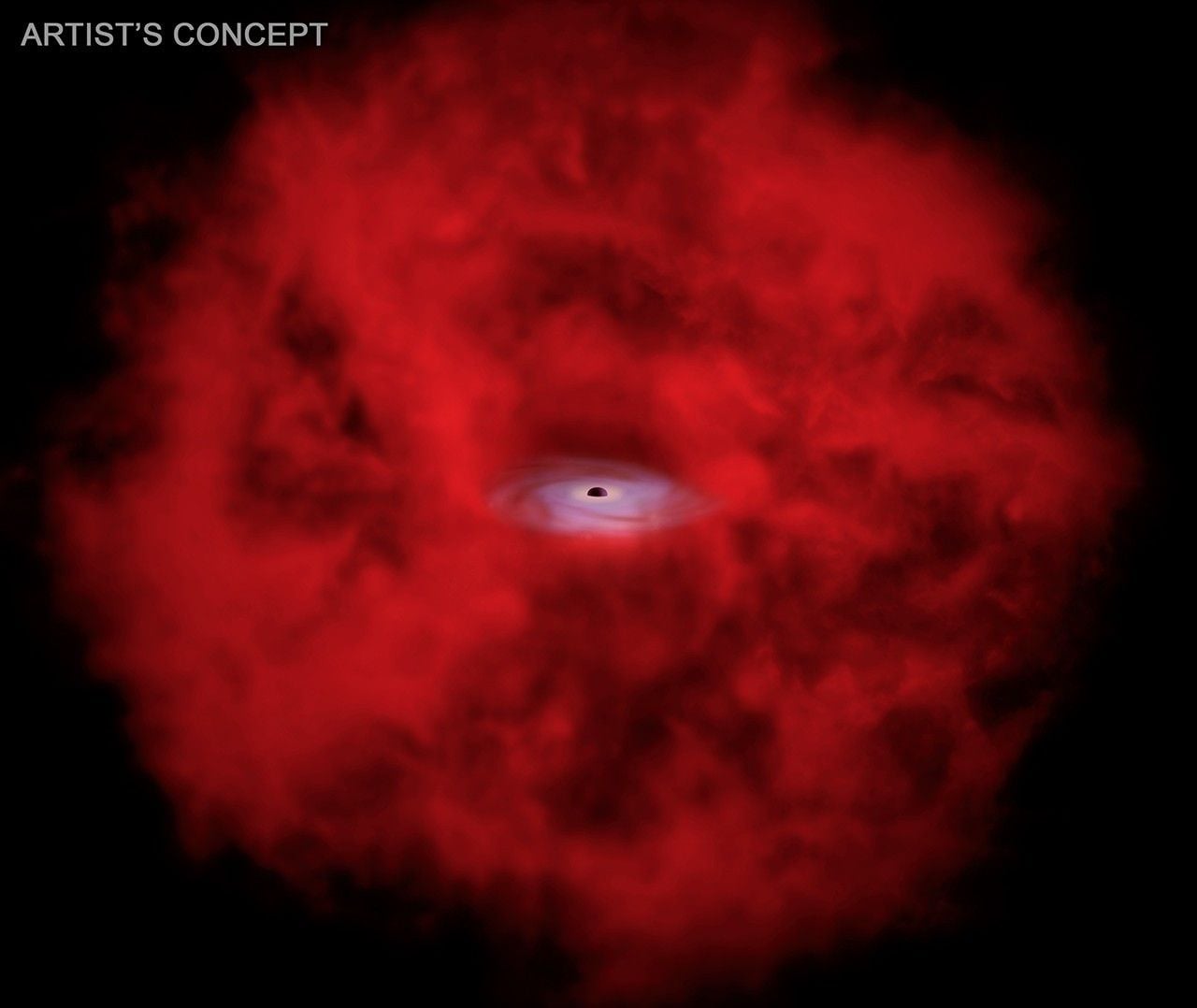 The black hole star scenario illustrated here is a growing supermassive black hole hidden inside a dense shroud of gas that reprocesses its ferocious light into a gentler red glow (Credit : NASA/CXC/SAO/M. Weiss; adapted by K. Arcand & J. Major)
A team led by Vasily Kokorev at the University of Texas at Austin has now taken the deepest spectrum ever recorded of one of these dots, and the result is remarkable. A spectrum is starlight split into its component colours, and within those colours sit dark and bright lines that act like a chemical fingerprint. From GLIMPSE-17775, Webb teased out more than forty separate lines, the richest set ever gathered from such an object.
Two strokes of luck made it possible. The dot happened to sit behind a massive galaxy cluster called Abell S1063, whose gravity acts as a natural magnifying glass, a trick of nature called gravitational lensing. Webb stared for 30 hours, but the lensing stretched that into the equivalent of 80. The combination turned a faint smudge into a treasure trove of detail.
So what is a black hole star? Despite the name, it is not a star at all. The idea is that a hungry black hole sits at the centre, swallowing gas at a furious rate, while a thick, dense shroud of that same gas wraps around it. The shroud soaks up the brutal radiation streaming from the black hole and re-emits it in softer, redder tones, so that from a great distance the whole package masquerades as something far gentler, almost starlike. It is a black hole hiding in plain sight, dressed in borrowed clothes.
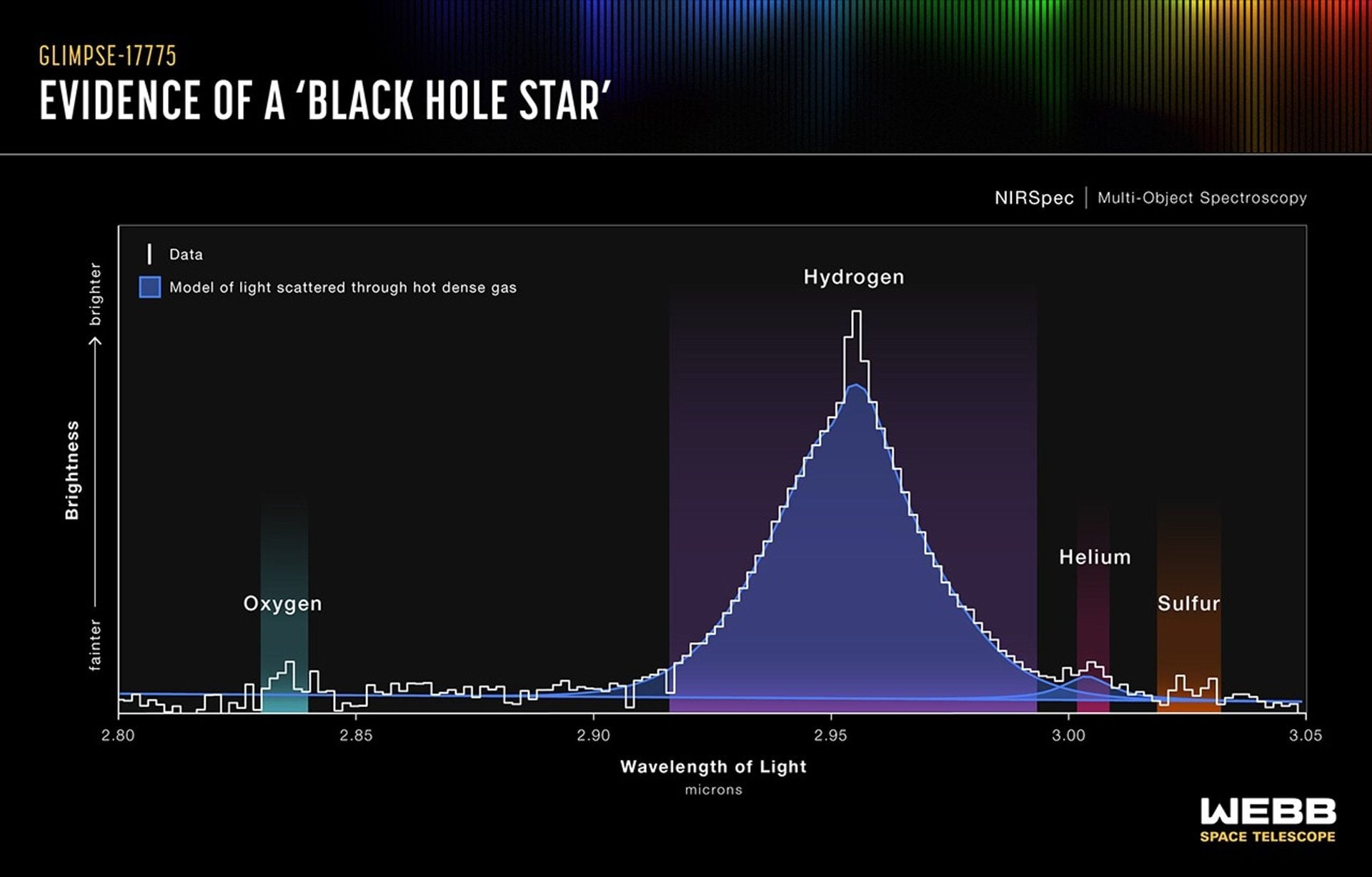 The record-breaking spectrum of GLIMPSE-17775. More than forty spectral lines, many independently pointing to a black hole shrouded in hot, dense gas (Credit : NASA, ESA, CSA, Vasily Kokorev (UT Austin); Designer: Leah Hustak (STScI))
And what those lines reveal is the headline. The best explanation for GLIMPSE-17775 is a rapidly feeding supermassive black hole, wrapped in a thick, dense cocoon of gas. The gas reprocesses the ferocious light pouring out from near the black hole, which is why the object looks the way it does. Astronomers call this a "black hole star," and the evidence here is layered and consistent. There is an "iron forest" of sixteen separate iron lines, telltale broadening from electrons scattering inside dense gas, and signatures of helium that all point the same way.
Best of all, it tidies up the mess. The black hole star model neatly explains why these dots are so faint in X-rays, and it means the early universe never broke our cosmology at all. As Kokorev put it, everything fits and nothing is broken. The next question is what truly powers these strange engines, and he reckons we may have the final answer within a year or two.
Source : NASA Webb Finds Strongest Evidence Yet for 'Black Hole Stars’