 Universe Today
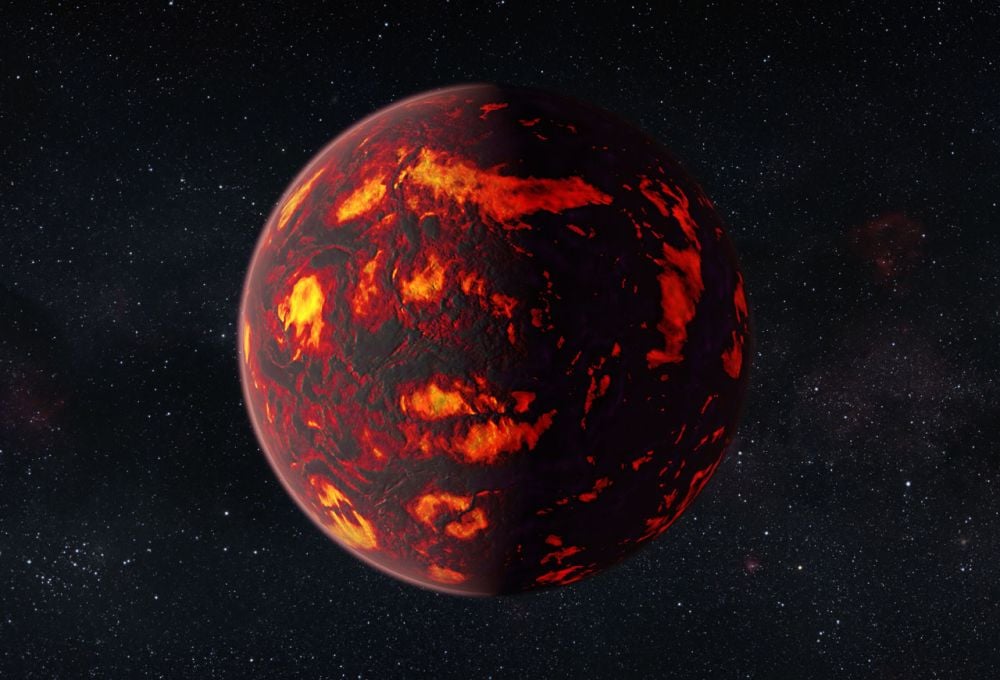
There's some misunderstanding among the public at large in regards to what a scientific theory is. They're statements about nature based on logic, evidence, and observation. But they're not papal pronouncements about reality that can never be challenged, lest the challenger be cast out and ridiculed.
In science, a theory adapts over time as new, reliable scientific information arrives. Some scientific theories seem rock solid, like Darwin's Theory of Evolution and Einstein's Theory of Relativity. In fact, scientists keep finding new ways to test relativity and the tests keep supporting it.
But when those theories were being developed, refined, and proposed, there was lots of discussion and arguing. It was just so long ago that it's not part of our cultural memory. For most of us alive today, those theories were always there in the textbooks.
Many of the things being theorized about currently, like black holes, supernova explosions, and even the Big Bang, are supported by evidence. But there are still questions, and asking questions and searching for answers is part of what solidifies a scientific theory. Every theory goes through this process, and in an ideal world, rational questioning of these theories would never cease completely. They would be continuously revisited as new evidence arose.
In this age of exoplanets, as we're just opening our eyes to the variety of exoplanet types and solar system architectures, planetary scientists are busy developing theories that govern planet formation, atmospheres, and habitability. A successful theory can explain everything we find, not just some types of planets in some situations.
This brings us to the idea of the cosmic shoreline.
The cosmic shoreline is an empirical boundary between planets and moons that retain atmospheres, and those that don't. The cosmic shoreline compares two factors: insolation, or the amount of energy a body receives from its star, and the body's escape velocity. Insolation drives atmospheric loss, and high escape velocities counteract it.
On one side of the shoreline are planets like Earth and Venus, and moons like Titan, all with thick atmospheres. On the other side are Mercury and Earth's moon, which have no appreciable atmospheres.
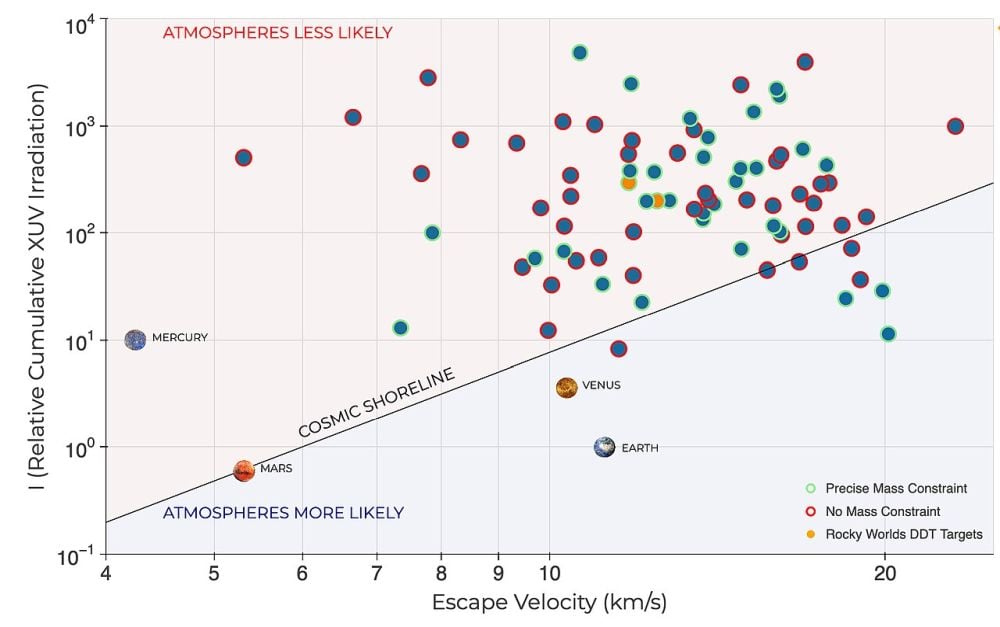 The cosmic shoreline separates worlds with atmospheres from those without, based on stellar insolation and escape velocity. But new research proposes a third regime: the airless valley. Image Credit: ESA/Hubble, CC BY 4.0, https://commons.wikimedia.org/w/index.php?curid=167925665
The cosmic shoreline is part of a broader field of atmospheric escape theory. As in multiple areas of space science, the JWST is providing new evidence that challenges and builds on that theory.
New research in The Astrophysical Journal Letters presents recent JWST observations of exoplanets that are challenging our current understanding of the cosmic shoreline and atmospheric escape theory. It's based on lava worlds, and the title is "An Evolving Cosmic Shoreline and Sandbar Bounding the Rocky Airless Valley." The lead author is Barron Nguyen, a grad student at the Stanford Doerr School of Sustainability.
"Recent JWST observations challenge the traditional “cosmic shoreline” from both sides, revealing thick volatile atmospheres on the hottest close-in “lava worlds,” where irradiation should drive the most extreme escape, and bare rocky surfaces on cooler terrestrial planets around M dwarfs, where atmospheres would be expected to survive," the authors write.
“These lava worlds have pointed to something being wrong with the cosmic shoreline boundary, but we’ve found a way for them to preserve their atmospheres by proposing a new regime beyond it,” lead author Barron Nguyen said in a press release.
The researchers worked with JWST data and atmospheric loss models to examine the cosmic shoreline more deeply. They found that there are actually two escape boundaries, not just one. The cosmic shoreline is just one boundary in this new understanding.
The other boundary they're calling the cosmic sandbar.
"Using a coupled atmosphere-interior evolution model, we show that atmosphere retention is governed not by a single escape boundary but by two: a hot, outgassing-regulated “cosmic sandbar” and a cooler, escape-regulated “cosmic shoreline,” separated by an “airless valley” that may mark a graveyard of stripped sub-Neptune cores," the authors write.
This results in three different regimes for atmospheric loss and retention on rocky planets close to stars.
The cosmic sandbar regime contains magma oceans and lava worlds like 55 Cancri e where outgassing maintains an atmosphere. The airless valley regime contains worlds like Mercury and TRAPPIST-1b. In the airless valley, atmospheric escape is greater than replenishment. In the cosmic shoreline regime, atmospheric replenishment is ongoing and residual outgassed atmospheres survive. Earth and Venus are here.
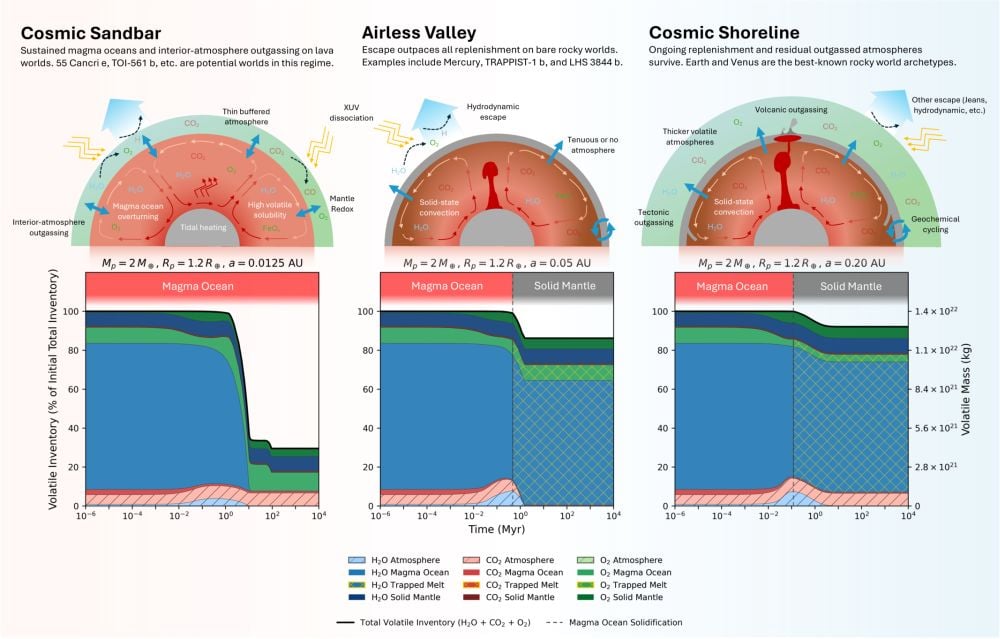 The cosmic shoreline, cosmic sandbar, and airless valley are three different regimes for atmospheric loss and retention on rocky planets close to stars. The upper row shows the mechanisms involved in each. Below that, "Colored regions show retained volatile inventories in the atmosphere, magma ocean, trapped melt, and solid mantle as percentages of the initial total volatile inventory, with equivalent kg on the right axis," the authors write. Image Credit: Nguyen et al. 2026. ApJL.
“Where the shoreline boundary is between airless worlds and those capable of sustaining an atmosphere has been a major open question in planetary science,” said Schaefer, the study’s senior author and an assistant professor of Earth and planetary sciences in the Doerr School of Sustainability. “The new model expands our understanding of this boundary and the factors that go into determining where it lies for specific stars and planets.”
This work relates to the search for potentially habitable worlds. That search, at its most basic level, is about surface liquid water. Without that, as far as we can tell, life is extremely unlikely, maybe even impossible. And for liquid surface water to persist, there has to be an atmosphere.
“Scientists have been interested in figuring out which planets have atmospheres and which do not, because that’s the first step of looking at planetary habitability,” said Nguyen.
Some exoplanet discoveries have put pressure on the cosmic shoreline idea. One of them, 55 Cancri e, is a super-Earth lava world that's extremely close to its star. It's orbital radius is only 0.01544 AU and it completes an orbit in less than 18 hours. That close to its star, it should have no atmosphere.
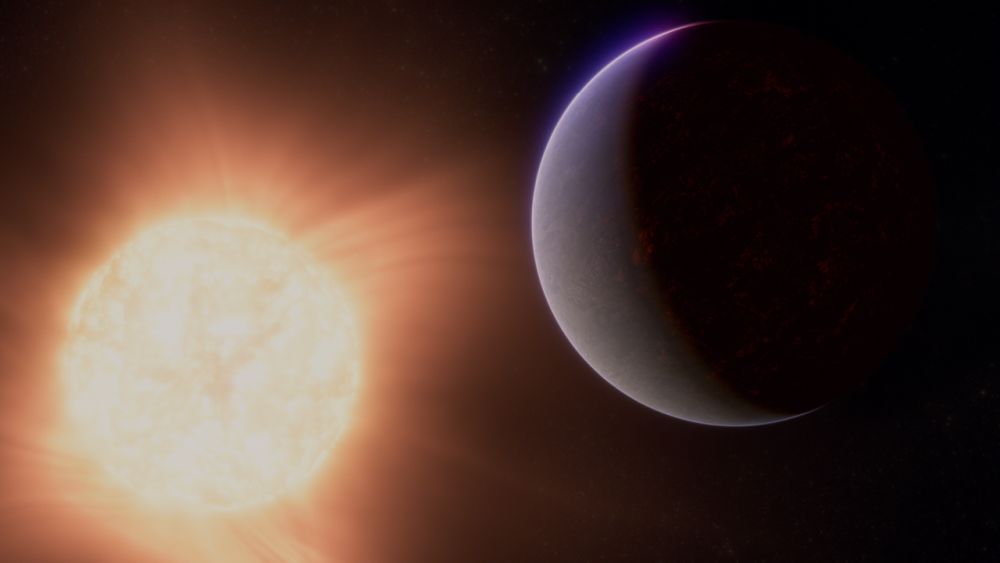 This artist's illustration shows the rocky super-Earth Cancri 55e. It's so close to its star that it's a lava world, or magma ocean. But observations show it has an atmosphere, surprising exoplanet scientist and calling our theories of atmospheric escape. Image Credit: Illustration NASA, ESA, CSA, Ralf Crawford (STScI) - Super-Earth Exoplanet 55 Cancri e (Artist’s Concept), Public Domain, https://commons.wikimedia.org/w/index.php?curid=148198921
But 55 Cancri e does have one. Initially, scientists thought that the exoplanet's atmosphere was made of vapourized rock. But research based on JWST observations show it has a substantial atmosphere containing either CO2 or CO. "The measurements rule out the scenario in which the planet is a lava world shrouded by a tenuous atmosphere made of vaporized rock and indicate a bona fide volatile atmosphere that is probably rich in CO2 or CO," the authors of a 2024 paper write. "This atmosphere can be outgassed from and sustained by a magma ocean."
Cancri 55 e is not the only lava world with an observable atmosphere. Many have been found recently. TOI-561 b is an Earth-size rocky exoplanet that's a magma ocean with a thick atmosphere. CoRoT-7b is another.
So despite being close to their stars and subject to extreme stellar insolation, worlds in the sandbar regime replenish their atmospheres through slow outgassing. These worlds are in no way habitable, but this work more fully explains how exoplanet atmospheres behave in different situations, and that's critical information for a thorough understanding of exoplanets.
"The sandbar arises because long-lived magma oceans, sustained further by tidal heating from secular eccentricity excitation in multi-planet systems, keep most volatiles dissolved and expose only a small atmospheric reservoir to escape, whereas cooler planets solidify, sequestering volatiles in the deep solid mantle while overexposing the rest to loss," the authors explain.
In our Solar System, Mercury represents the cooler planets. It solidified quickly, and its volatile gases are trapped in rock. Since it can't replenish its atmosphere, it remains in the airless valley.
“A major takeaway from our study is that the cosmic shoreline isn’t a lost cause,” said Nguyen. “There had been some pessimism about it because of these lava worlds, but now we know there’s a broader set of parameters that can enable a planet to generate and maintain an atmosphere.”
When we read about new scientific research like this we're watching our understanding of nature grow, driven by the scientific method. We're watching as theories are refined and built upon until they reflect nature more accurately. The scientific method is our most powerful intellectual tool. It'll never be perfect; nothing humanity ever does will ever be perfect. But it's better than anything else.
The scientific method was, is, and will continue to be our best tool for understanding the Universe and all the different types of worlds that form in it, including inhospitable lava worlds. One day in the future, our theory of planetary atmospheres will be much more complete, and it'll be because of work like this.
We're watching in real-time as scientific evidence builds up a theory, challenges that theory with new evidence, then rewrites the theory.

