Universe Today
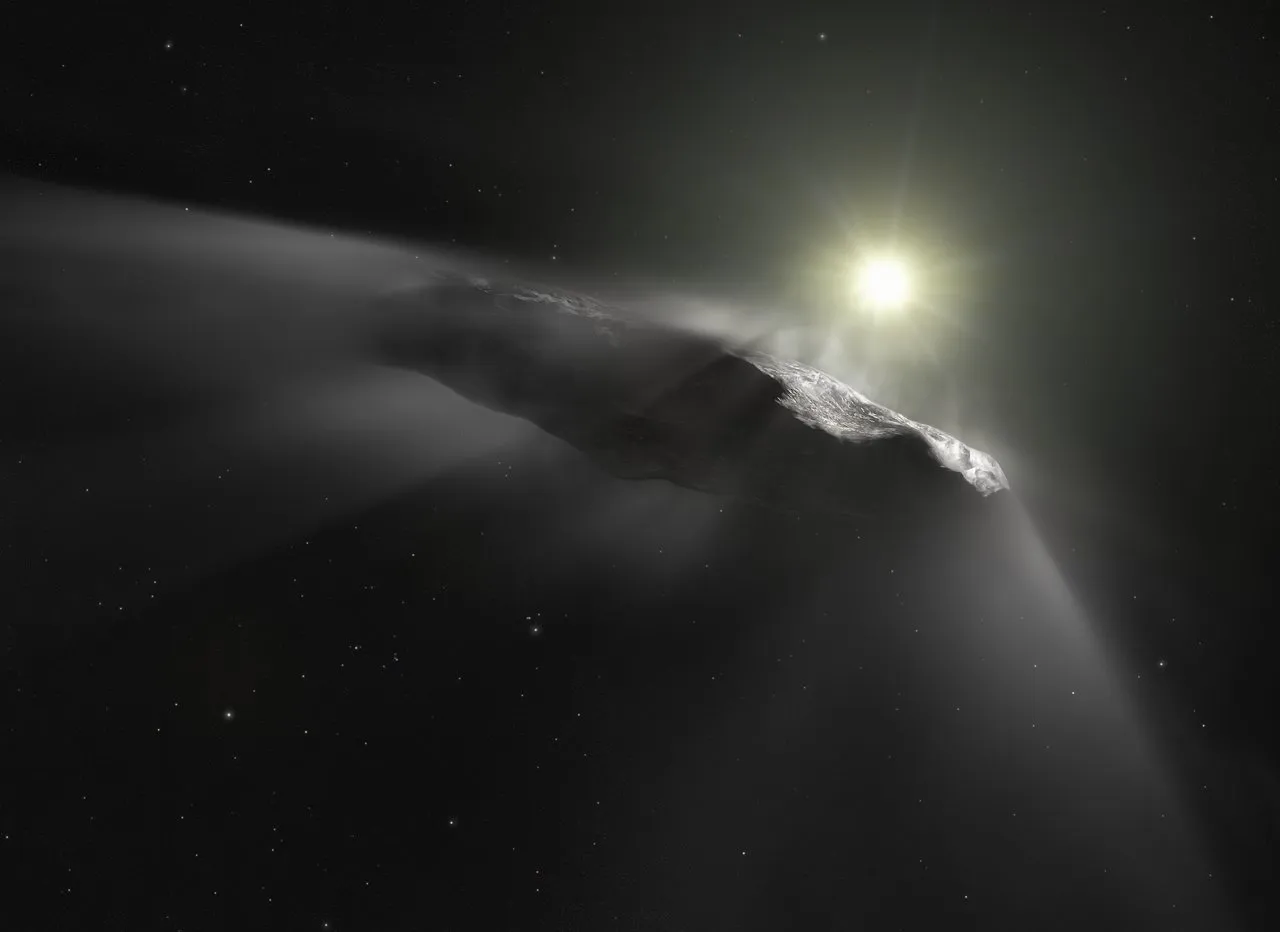
On July 1st, 2025, the Asteroid Terrestrial-impact Last Alert System (ATLAS) station announced the detection of another interstellar object (ISO) passing through our Solar System. Following on the heels of 1I/'Oumuamua in 2017 and 2I/Borisov in 2019, 3I/ATLAS became the third ISO to be witnessed by astronomers in the space of eight years. Like 2I/Borisov, this latest visitor began venting gas and dust as soon as it began approaching the Sun, indicating that it was clearly a comet.
But in keeping with the notion that extraterrestrials could be sending probes to interstellar space, scientists conducted a technosignature search of this object, just to be sure (much as they had of 1I/'Oumuamua and 2I/Borisov). In a recent study, a team led by researchers at the SETI Institute released the results of their survey, which "did not find any signals worthy of additional follow-up." Nevertheless, the study set upper limits on radio detection that will come in handy the next time an ISO comes around.
The team was led by Sofia Sheikh, a Technosignature Research Scientist and NSF MPS-Ascend Fellow and multiple researchers from the SETI Institute. They were joined by researchers from Breakthrough Listen, the Berkeley SETI Research Center, the Jodrell Bank Center for Astrophysics (JBCA), and multiple universities worldwide. The paper detailing their findings appeared in The Astronomical Journal.
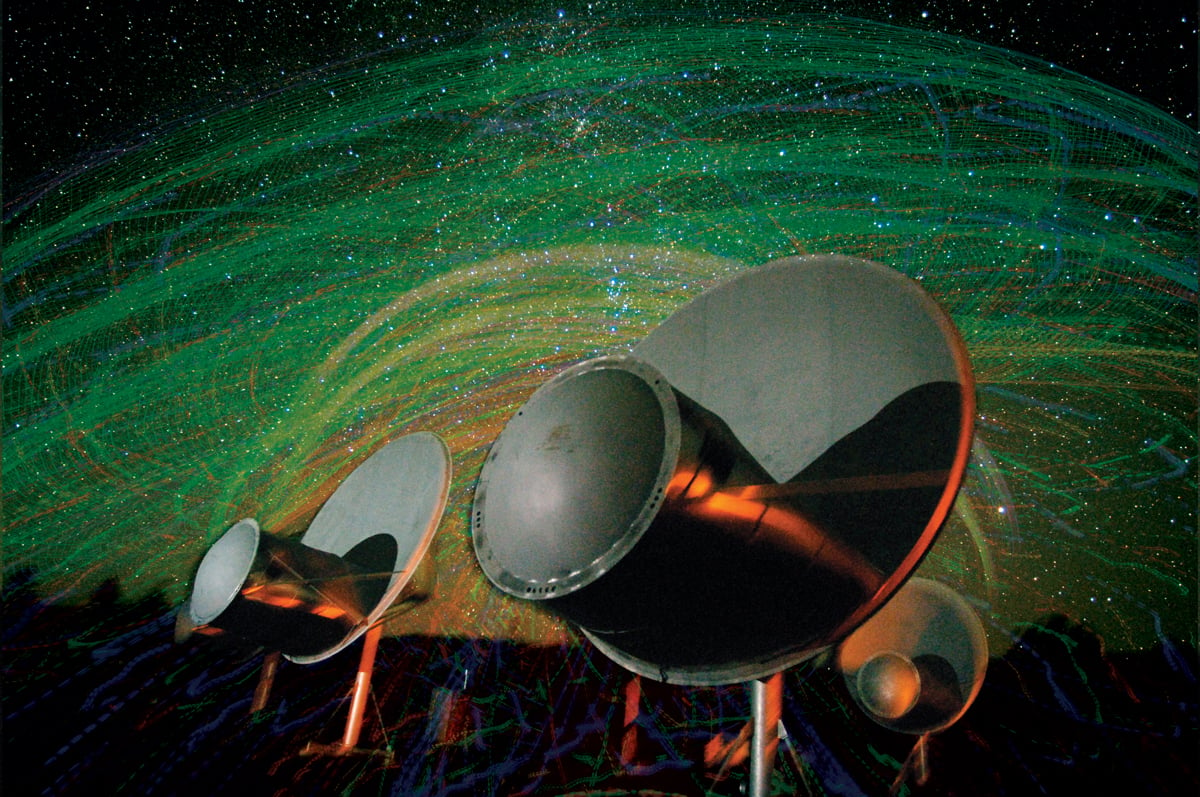 The ATA at the Hat Creek Observatory in Northern California. Credit: Seth Shostak/SETI Institute
Interstellar objects (ISOs) present a rare opportunity for astronomers to study how other planetary systems form and evolve. Since asteroids and comets are essentially leftover material from the formation of planets, their composition can tell scientists a lot about other star systems, without the burden of having to send missions there. Since humanity has an established history of sending probes to interstellar space - Pioneer 10 and 11, Voyager 1 and 2, and the New Horizons mission - there is always the possibility that an interstellar visitor could be an extraterrestrial messenger.
Scientists at the SETI Institute examined 3I/ATLAS for signs of technological activity (technosignatures) using the Allen Telescope Array (ATA) at the Hat Creek Radio Observatory. As they report in their study, they scanned the ISO for more than 7 hours across a wide range of radio frequencies - covering 1 to 9 gigahertz (GHz). This broad range allowed them to search for narrowband radio signals not found in nature, which would be evidence of technology.
The team initially identified 74 million narrowband signals, which were then filtered to eliminate radio-frequency interference (RFI). From this, they identified 211 signals of interest, which were visually inspected in the time-frequency domain. None of these were found to be artificial in nature, which was expected, given the composition and behavior of the object. As Dr. Sheikh said in a SETI Institute release:
Eventually, our own Voyager spacecraft will be extraterrestrial artifacts in other stellar systems. Given that, it is important that we understand the natural distribution of interstellar objects so that we will be able to identify any anomalies that could one day be signs of an artificial interstellar object.
While no technosignatures were found, the observations place upper limits on the power of any radio transmitter on or near 3I/ATLAS. Specifically, they ruled out signals stronger than about 10-110 watts over the detected frequencies. The study also demonstrates the ATA's rapid response to new interstellar objects, given that observations began less than a day after 3I/ATLAS was first detected.
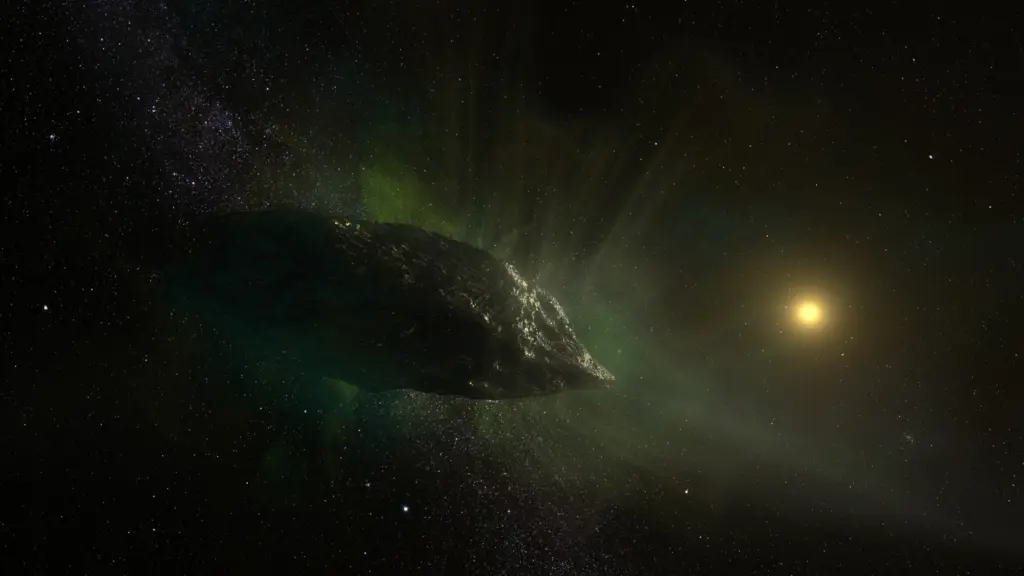 Artist's impression of interstellar comet 2I/Borisov. Credit: NRAO/AUI/NSF, S. Dagnello
According to co-author Valeria Garcia Lopez, a physics professor at Furman University and a member of Breakthrough Listen at UC Berkeley, this demonstrated the capabilities of modern instruments in identifying possible technosignatures. "The results from 3I/ATLAS show how realistic it is to detect a signal with the technology we have today,” she said. “That is why it is important to keep searching for technosignatures, even from objects we might not expect to have signals."
The study of ISOs also helps scientists better understand the natural properties of objects that are regularly ejected from star systems. It also allows them to probe the interstellar medium (ISM) by examining the effects billions of years of traveling through space have on these objects. As more ISOs are discovered, each presents a new opportunity to learn more about the cosmos and to search for possible evidence of extraterrestrial civilizations.
Further Reading: SETI Institute, The Astronomical Journal