Universe Today
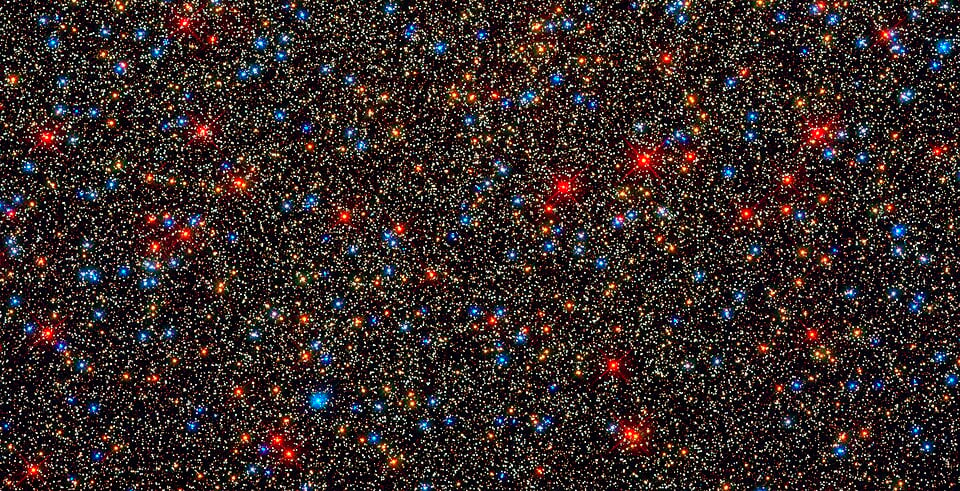
How do you check the universe's age without a birth certificate? One clever answer is to find its oldest surviving residents and see how old they've had time to become. A team led by Indranil Banik at the University of Portsmouth has just done exactly that, combing through the ages of nearly a quarter of a million stars scattered across the Milky Way, and the result lands squarely in the middle of one of modern cosmology's most heated disputes.
The study draws on a catalogue of 247,103 Milky Way stars, each studied using high resolution spectroscopy from the LAMOST telescope in China alongside precise distance measurements from the European Gaia satellite. Stellar ages were worked out using detailed computer models of how stars evolve over billions of years, allowing astronomers to read a star's age much like a geologist reads rock strata. Because ageing stars change more rapidly in their final stages of life, the team focused on stars nearing the end of their normal lifespan, where the numbers are most reliable.
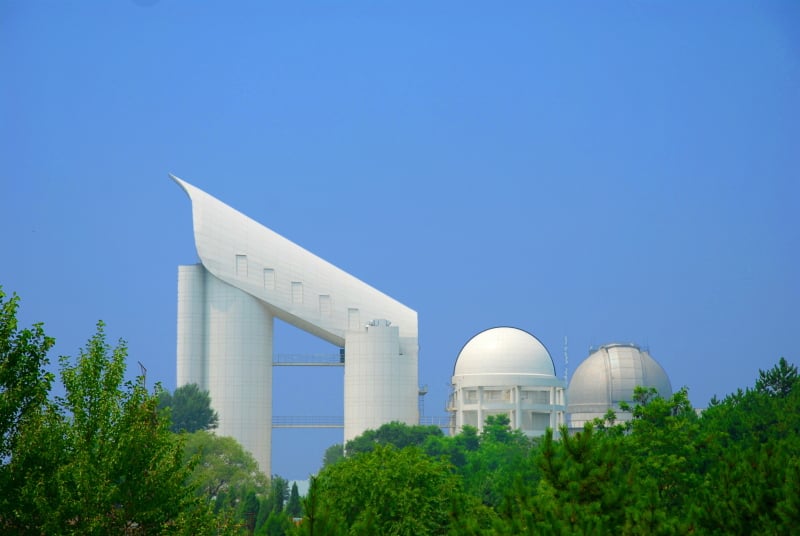 The LAMOST telescope at Xinglong Station in Hebei Province, China, whose high resolution spectroscopy of hundreds of thousands of stars was central to this new estimate of the universe's age.
Getting a trustworthy answer meant being ruthless about data quality. The team applied a series of careful checks, insisting that any genuinely ancient star also be metal poor and enriched in particular chemical elements, exactly what stellar formation theory predicts for objects born in the universe's earliest chapters. They also cross checked their results against a completely independent set of ages calculated using Gaia data alone. After all that filtering, a final, trustworthy sample of 155,600 stars remained.
The headline result is a figure for the oldest star in that sample of roughly 13.73 billion years, with only a narrow range of uncertainty either side. Add in a small allowance for the time it likely took the universe's first long lived stars to form after the Big Bang, and that points to a cosmic age of around 13.8 billion years, comfortably matching the figure derived independently from the cosmic microwave background, the faint afterglow of the Big Bang itself.
Cosmologists have spent years wrestling with this Hubble tension, a stubborn mismatch between two different ways of measuring how fast the universe is expanding today. Some proposed fixes for that puzzle rely on entirely new physics operating in the universe's earliest moments, and those particular solutions predict a noticeably younger universe, closer to 12.9 billion years old. If that were correct, the oldest stars found here simply shouldn't exist, since they would be older than the universe itself.
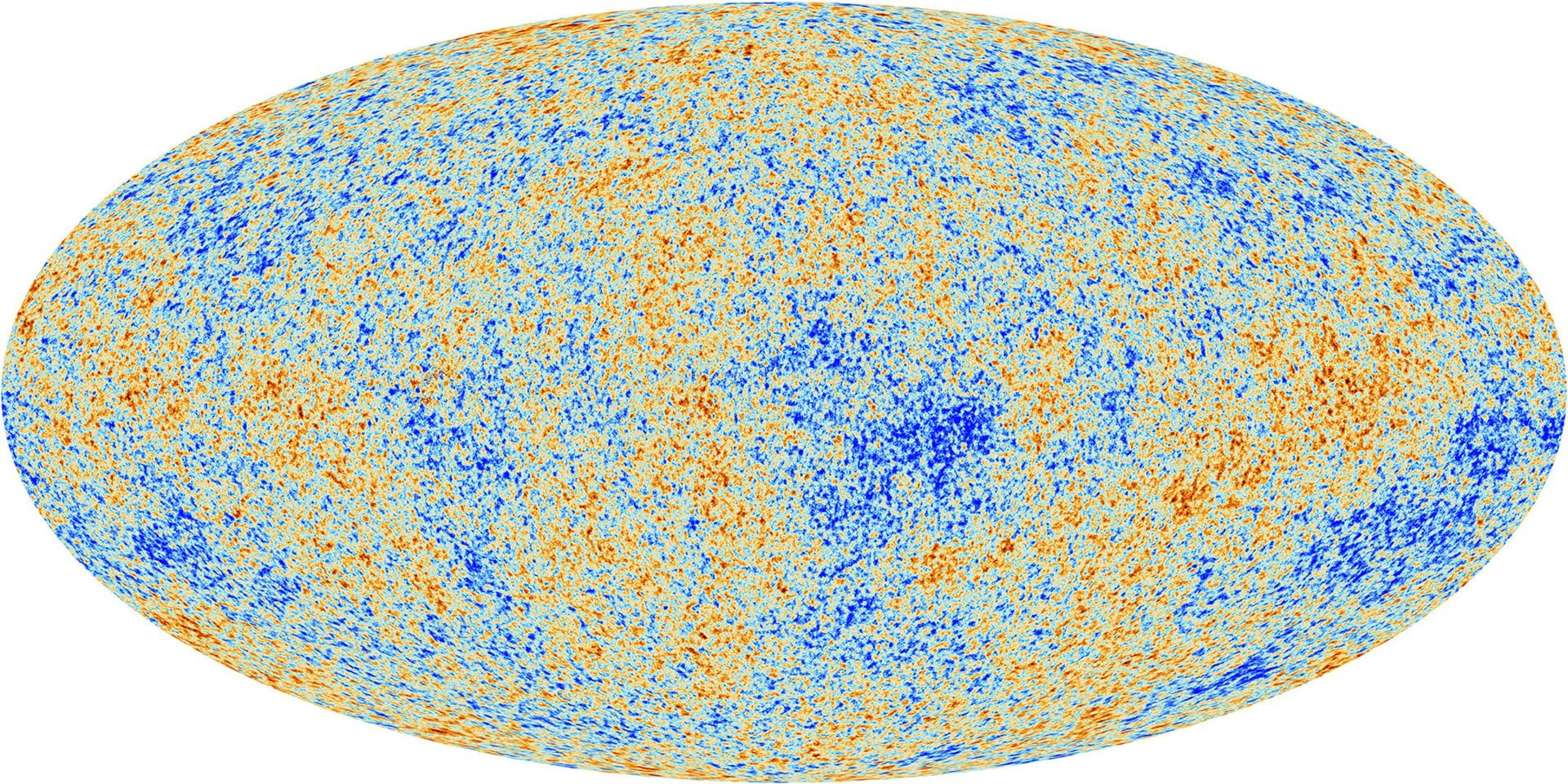 The cosmic microwave background, the oldest light in the universe, mapped by ESA's Planck satellite. This afterglow of the Big Bang gives an independent estimate of the universe's age, one this new study of ancient stars now closely matches (Credit : ESA and the Planck Collaboration)
Instead, the stars agree with the standard picture, casting real doubt on those early physics explanations for the Hubble tension, while leaving the underlying mismatch itself unresolved. It's a striking reminder that some of the universe's oldest inhabitants can still settle arguments among the astronomers studying them, simply by being exactly as old as expected, and not a day older.
Source : The age of the Universe from a large sample of the oldest Galactic stars