Universe Today
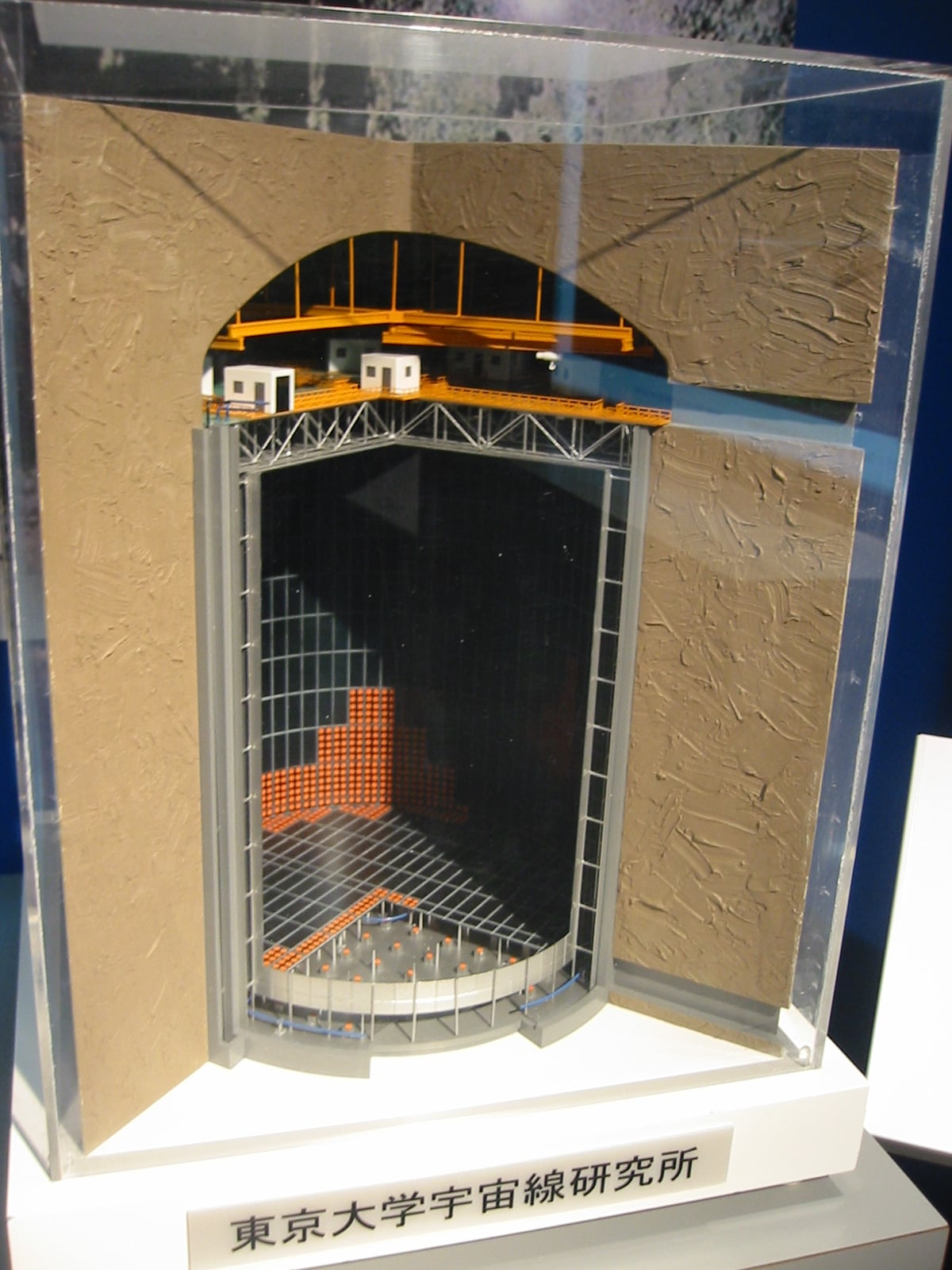
How do you listen for something quieter than almost anything else in nature, a signal built from ghostly particles that pass straight through solid rock without so much as slowing down? A thousand metres beneath Gifu Prefecture in Japan, an international team working at the Super-Kamiokande observatory believes they may have caught the very first hint of exactly that.
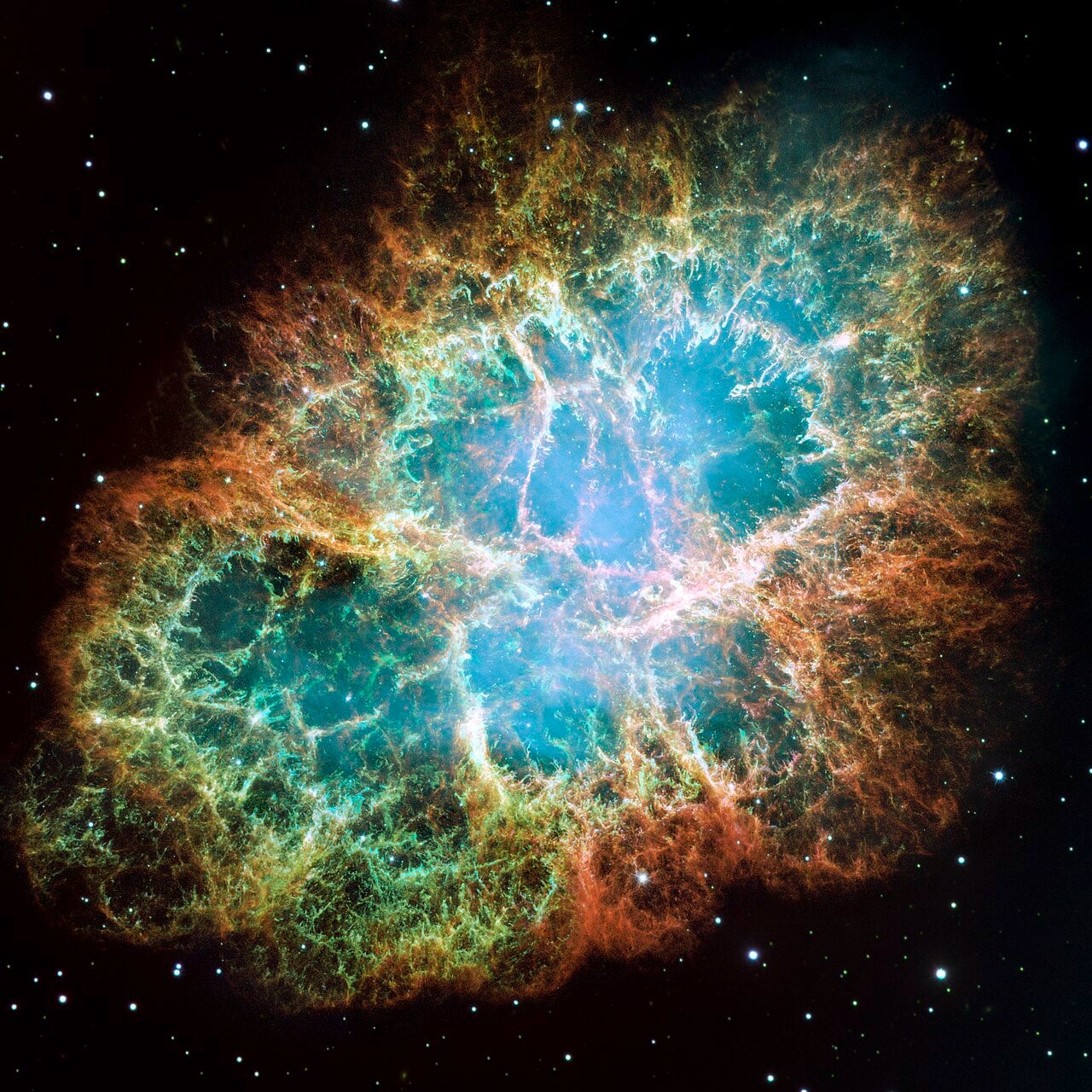 The Crab Nebula, the glowing remains of a star that exploded as a supernova nearly a thousand years ago. Every such explosion floods space with a burst of neutrinos, that scientists believe they may now be catching the faint, combined echo of (Credit : NASA/ESA)
Neutrinos are famously difficult to study. They carry no electric charge, barely interact with matter at all and were once thought to have no mass whatsoever. Every second, somewhere across the universe, a handful of massive stars collapse and explode as supernovae, each one flooding space with a burst of neutrinos. Over billions of years, the neutrinos from countless such explosions have spread out and mixed together into a faint, steady background hum known as the Diffuse Supernova Neutrino Background. Catching it would offer scientists a genuinely new way to trace how stars have formed and died across the entire history of the universe, effectively reading the accumulated whisper of every supernova that has ever gone off.
Detecting that whisper meant building an extraordinary piece of equipment and then waiting, and watching, for years. The Super-Kamiokande detector consists of a fifty thousand tonne tank of ultrapure water, watched over by around thirteen thousand sensitive light detectors, all buried deep underground specifically to shield it from cosmic rays and other noise that would otherwise drown out its target signal. When a neutrino interacts with the water, it produces a faint flash of light, and the team spent years sifting through roughly five thousand days of accumulated data, drawn from two separate phases of the experiment, one of which added the element gadolinium to the water to help identify the particles more precisely.
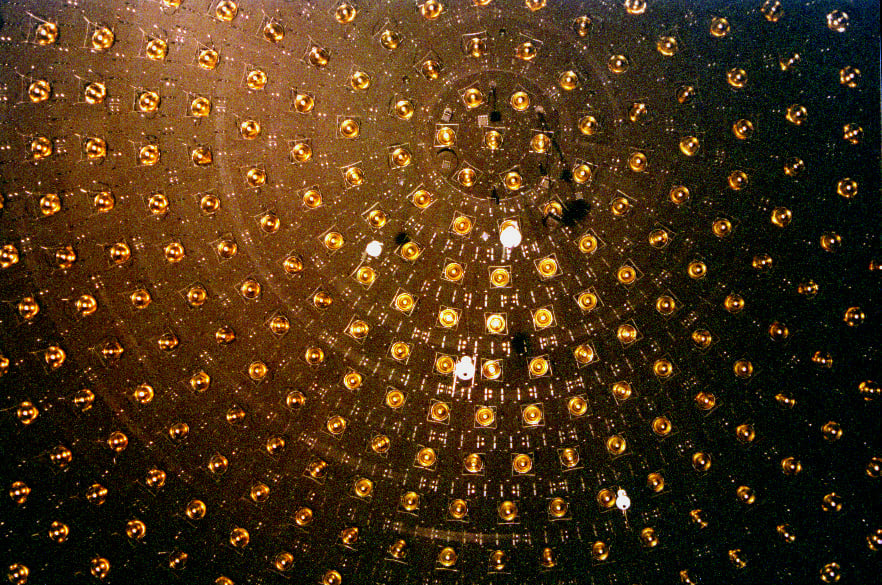 The MiniBooNE detector at Fermilab, a different experiment to Super-Kamiokande but built on the same principle, a tank lined with photomultiplier tubes, watching for the faint flash of light a neutrino leaves behind as it passes through (Credit : Fred Ulrich)
Buried within that mountain of data, the team found a small but consistent excess of neutrino events in a specific energy range, distinct enough from ordinary background noise to reach a confidence level of 99.5 percent. That falls just short of the far stricter threshold physicists require before declaring an official discovery, so for now the result stands as a strong and tantalising indication rather than a confirmed detection, a whisper heard but not yet fully verified.
Hiroyuki Sekiya, spokesperson for the Super-Kamiokande experiment, described the moment as a long cherished goal reached since the very beginning of the project, decades in the making. Yosuke Ashida, one of the researchers involved, noted that the team is already looking ahead, planning to combine ongoing data from Super-Kamiokande with its next generation successor, Hyper-Kamiokande, in the hope of sharpening the signal enough to cross that final threshold.
If confirmed, the discovery would give astronomers a genuinely new observational tool, one capable of tracing the birth of neutron stars and black holes, and the slow chemical enrichment of the cosmos, stretching back across billions of years. For now, deep beneath the mountains of Japan, scientists continue straining to hear a sound fainter than almost anything else in nature, and by the sound of it, they may finally be starting to catch it.
Source : Super-Kamiokande Unveils a Clue to the Faint "Whispers" Imprinted Across Cosmic History