Universe Today
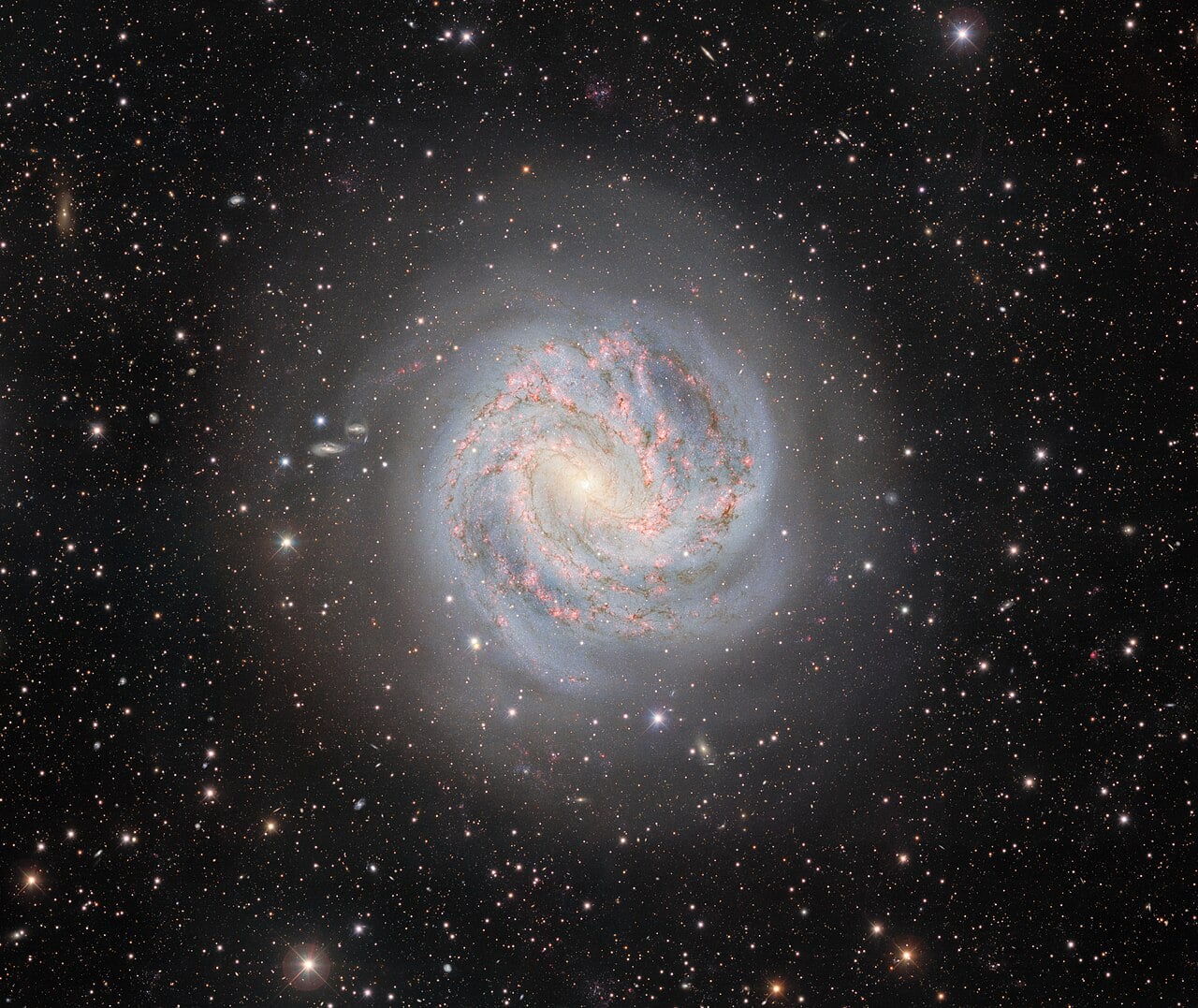
What should the aftermath of an exploding star look like? You would expect a vast cloud of shattered debris and hot gas, blazing at first and then slowly, steadily cooling over thousands of years. So when astronomers turned NASA's Chandra X-ray Observatory on a nearby galaxy, they were surprised to find dozens of these supposed embers that were starting to flare back up.
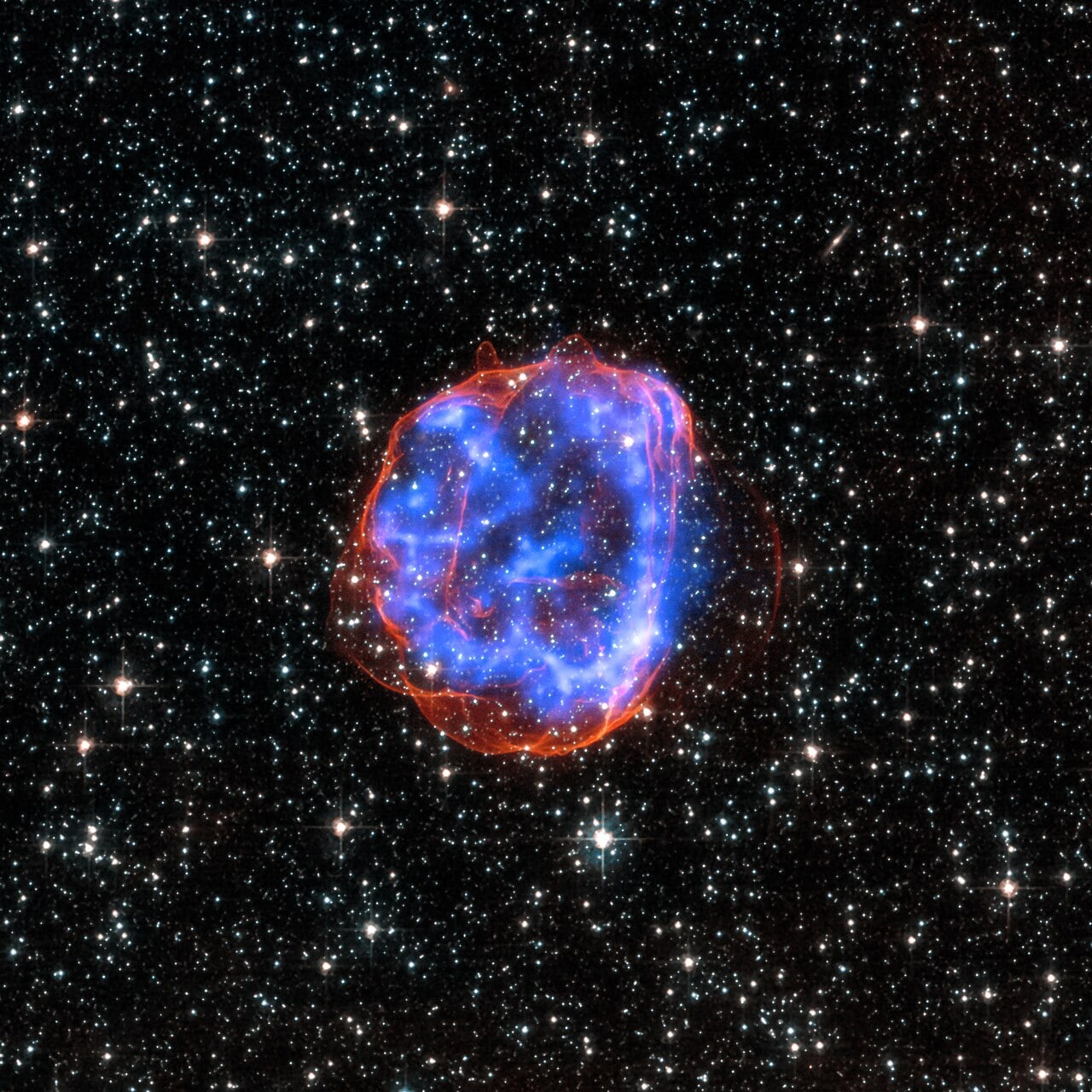 The remains of a dying star, SNR E0519-69.0 in the Large Magellanic Cloud (Credit : By X-ray: NASA/CXC/Rutgers/J.Hughes; Optical: NASA/STScI)
The galaxy is Messier 83, a busy spiral some 15 million light years away that is forming new stars at a great rate. Sifting through fourteen years of Chandra observations, a team led by Andrea Prestwich noticed that the X-ray glow from objects long catalogued as supernova remnants, the wreckage left when a massive star detonates, was doing something unusual. Remnants more than a century old are supposed to dim gently, yet around half of those studied were brightening and fading dramatically. Twenty two of them flickered like this, and that was deeply unexpected.
One had an easy answer. SN 1957D, debris from an explosion first seen nearly seventy years ago, is still slamming into the gas around it and flaring as it does. But there was no reason to think the other twenty one were all youngsters too, so something stranger had to be at work, something hiding inside the remnants themselves.
Each of these flaring sources, the team suspects, began as two massive stars circling one another. One of them died, collapsing and exploding and leaving behind a black hole or an incredibly dense neutron star. The other survived its partner's destruction, and now, locked in orbit with the corpse of its companion, it is being slowly devoured, gas peeled from its surface and dragged down towards the dead star. As that material falls it is heated to ferocious temperatures and blazes in X-rays, and that is the flickering Chandra has been picking up.
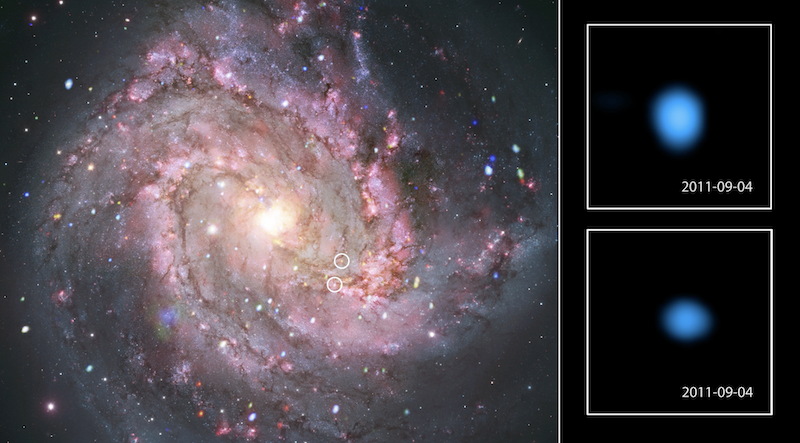 The location of two of the stars found in M83 (Credit : X-ray: NASA/CXC/SAO; Optical: NASA/ESA/AURA/STScI, Hubble Heritage Team, W. Blair (STScI/Johns Hopkins University) and R. O'Connell (University of Virginia); Image Processing: NASA/CXC/SAO/A. Jubett, L. Frattare and P. Edmonds)
Astronomers call these high mass X-ray binaries, and they have known of them for decades. What is new is finding so many tangled up with supernova remnants in a single galaxy. Until now only a handful had ever been linked across all the galaxies ever studied, M83 alone offers more than twenty candidates, clustered tellingly in the regions richest in massive stars.
Surprisingly, in some cases the dead star might not be feeding on a companion at all, but recapturing the very debris its own explosion flung outward, a kind of recycling in which the remains of a star fall back onto the object the blast created. Perhaps both are happening, in different remnants. M83 is not alone, a sister galaxy has just revealed the same strange flickering, hinting that wherever stars are being born in great numbers, the dead are quietly refusing to lie still.
Source : NASA's Chandra Finds Unexpected Fireworks in Aftermath of Stellar Explosions