Universe Today
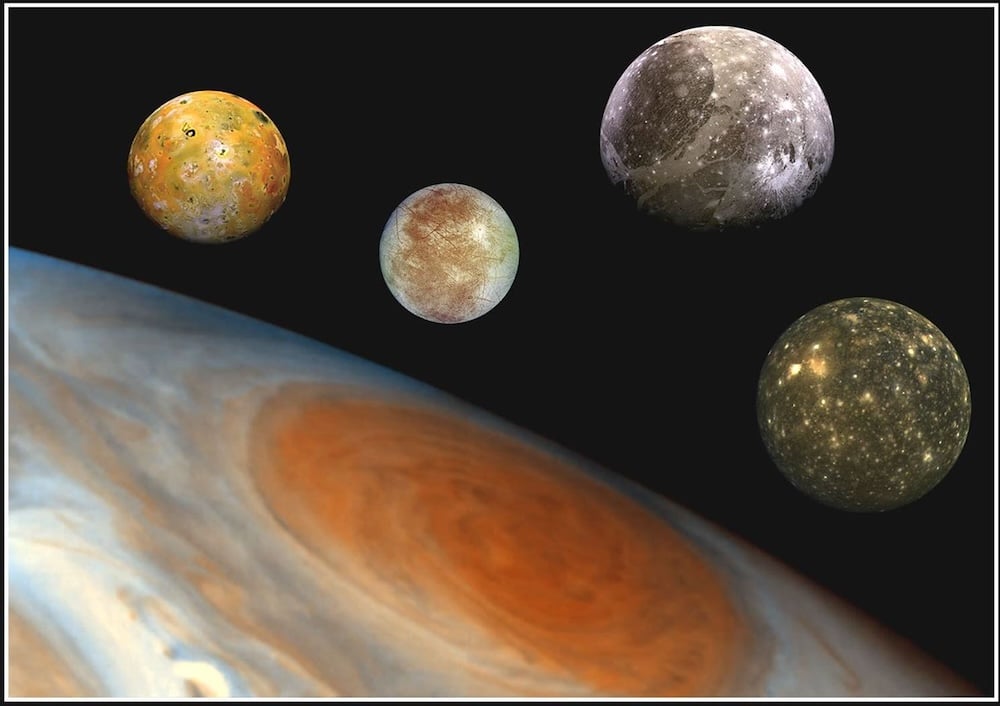
We have known for a while that the Milky Way is full of homeless worlds. Rogue planets, free floating planets, call them what you like but planets built in orderly systems around ordinary stars and then thrown out, either by a gravitational shove from a sibling planet or by a star that strayed too close. What has been much less clear is what becomes of any moons they were carrying at the time. Eviction is a violent business, and you would expect a moon to be the first thing lost.
Yannick Badoux and Simon Portegies Zwart at Leiden Observatory have now run the numbers properly, simulating close to thirty four thousand stellar encounters with a star drifting past a planetary system at every conceivable angle and distance, with the fate of both planet and moon tracked to the end.
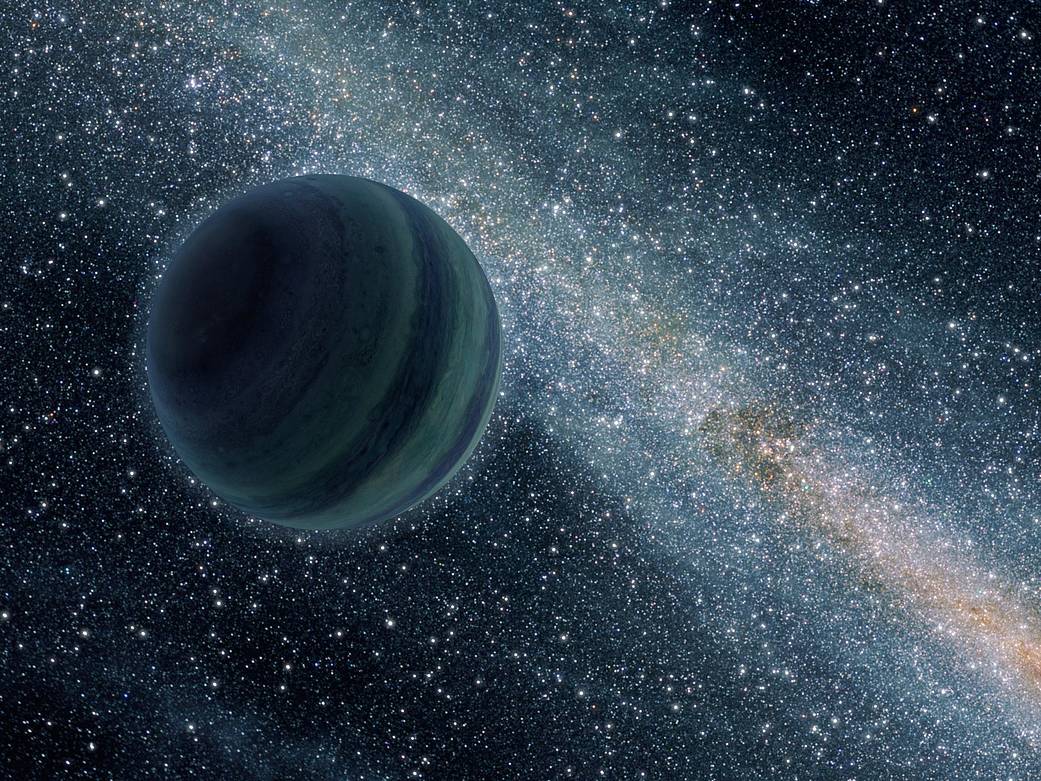 The standard picture of a rogue planet - a giant world alone in the dark. Notice what's missing. New work suggests that in many cases the eviction is not nearly this lonely and that moons often accompany the ejected planet (Credit: NASA/JPL-Caltech)
Everything turns on a boundary called the Hill radius, which is worth understanding because the whole result follows from it. Around every planet is a region where its own gravity beats the pull of its star, and any moon must live inside it. Think of it as the length of a leash. Where a moon sits along that leash decides its fate. Out to roughly four tenths of the way, moons hold on and leave with their planet. Past that the grip fails fast, and by halfway it’s hopeless where planet and moon part company mid-ejection and drift off separately.
This is very good news for moons like the ones we know. Io orbits at less than a hundredth of Jupiter's Hills radius length. Run the scenario, and if a passing star tore Jupiter out of the Solar System, Io, Europa, Ganymede and Callisto would all still be there when it left.
There is a subtler finding I like even more. Moons that survive close in emerge with tidy, almost circular orbits, while those that only just cling on come out visibly rattled, stretched and tilted by the encounter. A shove from a rival planet leaves rougher marks still. That means a rogue moon's orbit carries the fingerprints of how the eviction happened and since nearly nine in ten ejections barely change the planet–moon spacing at all, you can work backwards from what you see to what it once was.
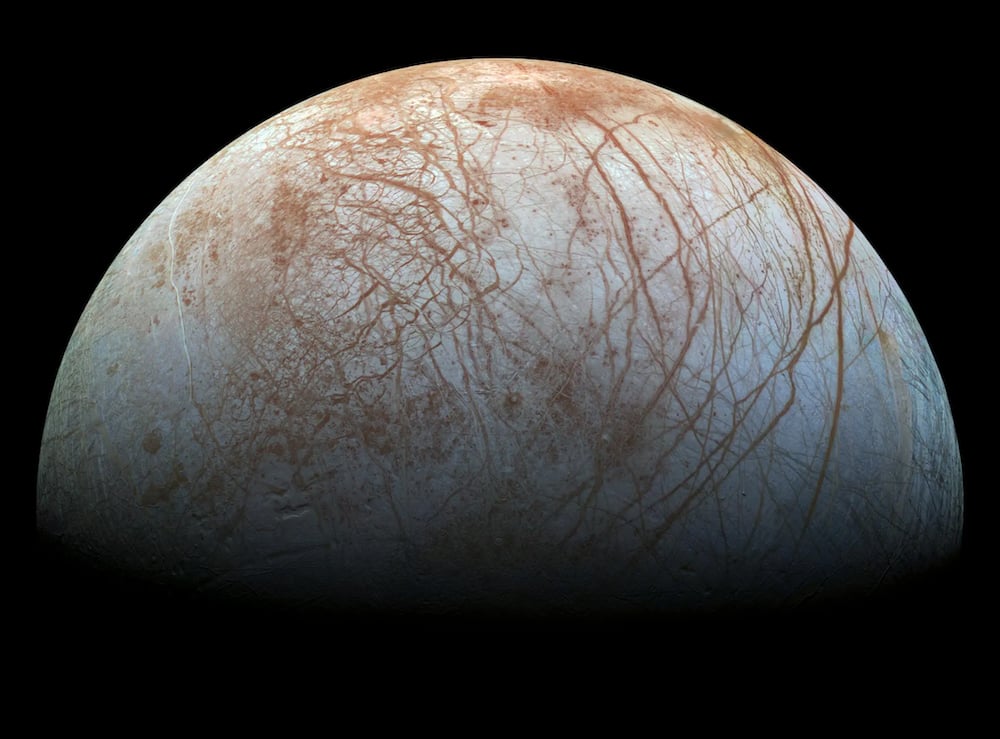 Europa's cracked ice shell conceals an ocean kept liquid by tidal flexing, not sunlight. Fling the whole Jovian system into interstellar space and that heat source keeps running (Credit: NASA/JPL-Caltech/SETI Institute)
The team have tried exactly that on a real candidate. A microlensing detection catalogued as MOA-2011-BLG-262L may be a rogue planet with a sub-Earth-mass moon, though the data stubbornly permit other readings. If it is, they find it most likely began life around 5.2 astronomical units from its star which, pleasingly, is precisely where Jupiter sits from the Sun.
There’s an interesting thought bolted on to this whole discovery. A moon squeezed and flexed by its planet's gravity generates heat from the inside, no sunlight required. Europa is one such world and plays host to a buried ocean that way. Eject the whole family into interstellar space and the tides keep working. Somewhere out in the dark, a Jupiter may be falling through the Galaxy with a warm, wet moon still in tow and who knows, maybe even aquatic extraterrestrial travellers!