Universe Today
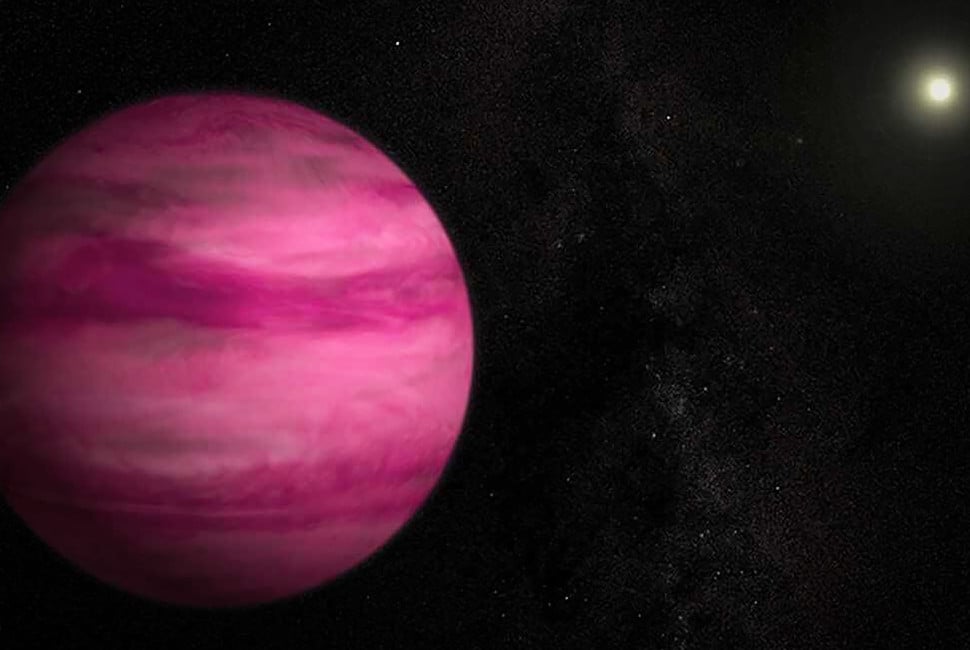
In 2013, astronomers made an unexpected discovery when they directly observed the coldest known planetary-mass companion with a rosy-hazed atmosphere. The object, GJ 504 b (better known as the "Pink Planet"), was too faint for astronomers to obtain spectroscopic readings indicating what its atmosphere is composed of. In addition, the faintness of the object prevented them from determining what class of object it might be - perhaps a giant planet or a brown dwarf - leading to the designation "planetary-mass companion."
In a new NASA-supported study, a team led by astronomers from Northwestern University and the University of California San Diego (UCSD) used the James Webb Space Telescope's sophisticated instruments and processing methods to obtain the planet's spectrum for the first time. These observations provided some of the first direct evidence of salt clouds in the atmosphere of a cold planetary-mass object.
The study was led by Aneesh Baburaj, a NASA FINESST and postdoctoral associate at Northwestern's Center for Interdisciplinary Exploration and Research in Astrophysics (CIERA). He was joined by researchers from Caltech, the Massachusetts Institute of Technology (MIT), the Lunar and Planetary Laboratory (LPL) at the University of Arizona, the European Space Agency (ESA), the Gemini Observatory/NSF NOIRLab, the Space Telescope Science Institute (STScI), and multiple universities and institutes worldwide.
The study that details their findings was published in the Astronomical Journal.
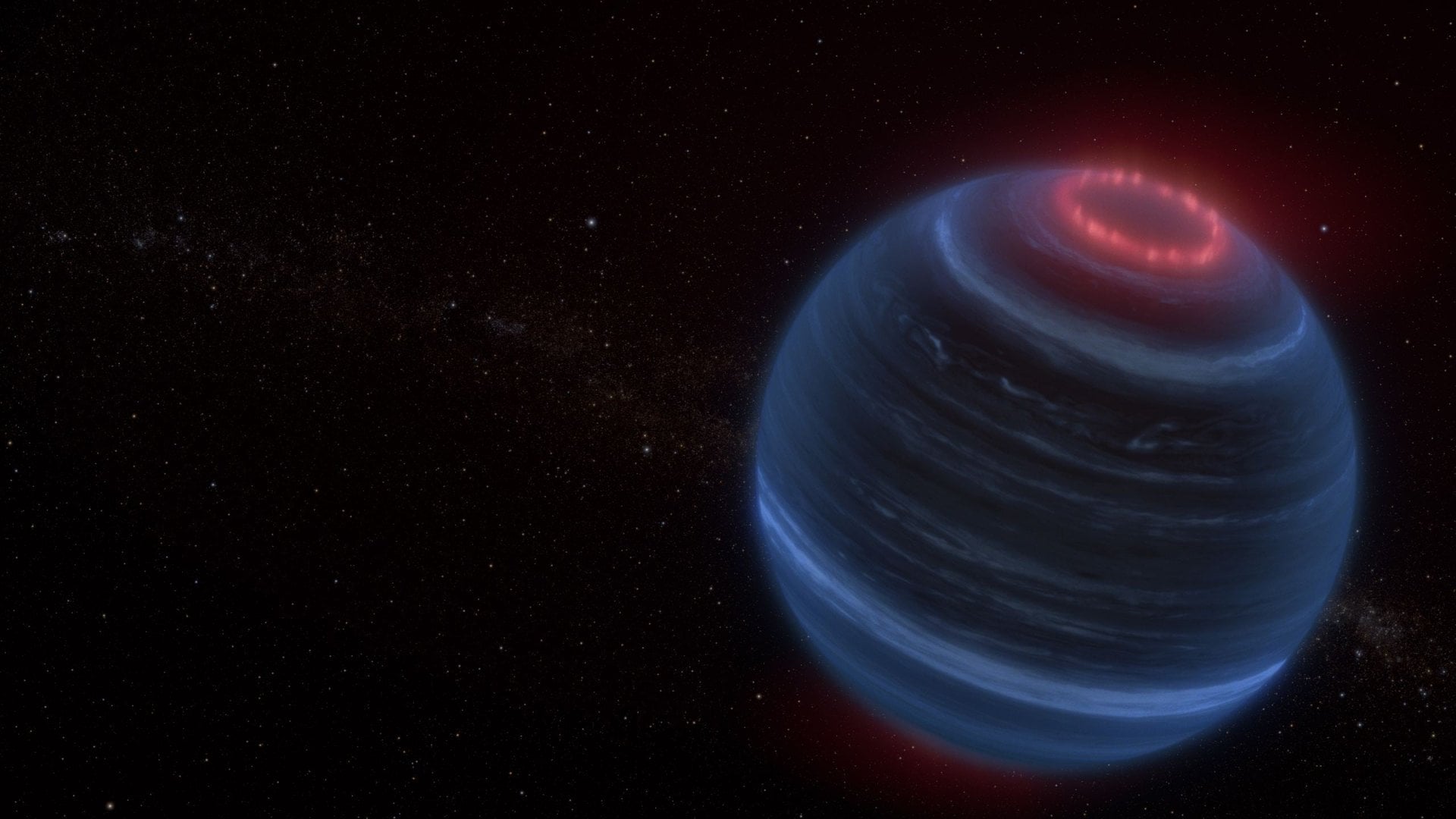 This artist concept portrays the brown dwarf W1935. Credits: Artwork: NASA, ESA, CSA, Leah Hustak (STScI)
For more than a decade, astronomers have puzzled over the nature of the Pink Planet. This object orbits a Sun-like star located 57 light-years from Earth and is estimated to have 25 times the mass of Jupiter. This places GJ 504 b near the boundary separating gas giants and brown dwarfs, the latter being gas giants that are not quite massive enough to form a star. Said Aneesh Baburaj, a NASA FINESST and postdoctoral associate at Northwestern University:
The Pink Planet is the coldest companion ever discovered using ground-based instruments. Many teams all around the world performed follow-up observations to study its light, but it was too faint for ground-based instruments. That made it a perfect target for JWST. When we finally obtained its spectrum, it immediately looked interesting. But once we started digging deeper into the data, we realized it was not like anything we have analyzed before.
As a member of Northwestern's CIERA group, Baburaj is well-versed in the study of exoplanets. His team's efforts were assisted by Marshall Perrin of the STScI, a member of the JWST Telescope Scientist Team who devised the observing programs for this object. Using the JWST, Baburaj, Perrin, and their colleagues used advanced data processing to remove the glare from its parent star, thus capturing GJ504b's faint light. This combination of advanced optics and data processing revealed the Pink Planet's spectrum for the first time.
The data revealed that GJ504b's atmosphere contains many chemicals, including water vapor, methane, carbon dioxide, ammonia, and others. The researchers then fed the data into an astrophysical model to simulate the structure and dynamics of the Pink Planet's atmosphere. However, the simulated atmosphere did not add up and could only match the observations if it included salt-containing clouds. Once these were added, the model made sense and indicated that the salty clouds obscured the atmosphere's deeper layers. Said Baburaj:
In the past, other astronomers observed the companion for an entire night with some of the biggest telescopes in the world to obtain a spectrum. And they could not see the object. With JWST, our entire observation took around two hours, and we were successful.
We ran simulations with clouds, and the results aligned with what we know about cold planets. We tried three different types of clouds, and salt clouds fit best. When we accounted for salt clouds, it subdued the signature of molecules hidden deeper in the companion’s atmosphere. Then, the results became physically possible.
The spectrum they observed also suggests that GJ 504 b has an unusually high metallicity, which is not typically seen in either gas giants or brown dwarfs. However, the mystery of how GJ 504 b formed, whether it formed like a planet or a low-mass star, remains unresolved. Luckily, the detection of salt clouds in the Pink Planet's atmosphere suggests that astronomers are getting closer.
“This is the first time we’ve found that salt clouds are critical to explaining the spectrum of an object,” Baburaj said. “It’s a good reminder to account for clouds in our models.”
Ongoing observations of gas giants have revealed some very interesting atmospheric features. For instance, several "Hot Jupiters," gas giants that orbit close to their stars, are known to have clouds composed of silica and metals. Meanwhile, cold objects like GJ 504 b appear to prefer salt when it comes to atmospheric phenomena. One can only imagine the other possibilities that are out there, waiting to be discovered!
Further Reading: Northwestern Now, The Astrophysical Journal