Universe Today
How life started on our own planet may not seem as sexy as finding evidence for life on Mars, or the icy moons of Europa or Enceladus. But the search for the first eukaryotes here on Earth remains as important to astrobiology as finding life on a far-flung planet. That’s in part because for ninety percent of Earth's history, life here was microbial.
On Earth, we had origins of life over three and a half billion years ago, Ross Anderson, a paleontologist at the U.K.’s University of Oxford, told me in his office. We had cyanobacteria and oxygenic photosynthesis at least 2.3 billion years ago; then we had eukaryotes at least 1.7 billion years ago, he says.
They were followed by algae at least a billion years ago, probably even earlier. Then the animal kingdom arrived at least 570 million years ago; probably slightly earlier.
But to find the common ancestor of the plant and animal kingdom you must go back to something like 1.6 billion years ago, says Anderson.
And so-called crown eukaryotes, the earliest eukaryotes on Earth are thought to have been fundamental to the development of complex life here on Earth. In fact, Anderson unequivocably considers eukaryotes as Earth’s first complex life.
What Are Eukaryotes?
Eukaryotes have a cell nucleus where DNA is enclosed, but they also have organelles, subcellular structures in their cells, such as the mitochondrion, that allows energy-intensive lifestyles.
It’s the eukaryotes which have developed complex multicellularity and macroscopic forms; all the animals, plants and fungi that we see around the world are eukaryotic, says Anderson.
No organism older than 500 million years had shells and skeletons as they hadn’t evolved yet. As a result, paleontologists are reliant on quite unusual environmental settings where cellular remains and soft tissues can be preserved. Consequently, researchers know very little about how life was evolving across a period which makes up 90 percent of Earth’s history.
As for Anderson?
I'm interested in how we went from a planet which just had bacteria to one which had complex multicellular organisms, says Anderson. Those kinds of multicellular fossils are hard to find, so I do a lot of work on the chemistry of the rocks to find out in which settings they are preserved, he says.
One problem is that eukaryotic microfossils are subject to billions of years of degradation.
But we know that the transition from single cellular to multicellular happened multiple times on different parts of the Earth, says Anderson. We're interested in how animals became so diverse today, he says.
Most of their diversity got set up across the Ediacaran/Cambrian transition. That’s an epoch some 540 million years ago that represented a major evolutionary step between soft bodied biota and the Cambrian explosion of life with mobility, shells and skeletons.
As for where to look for such ancient eukaryotic microfossils?
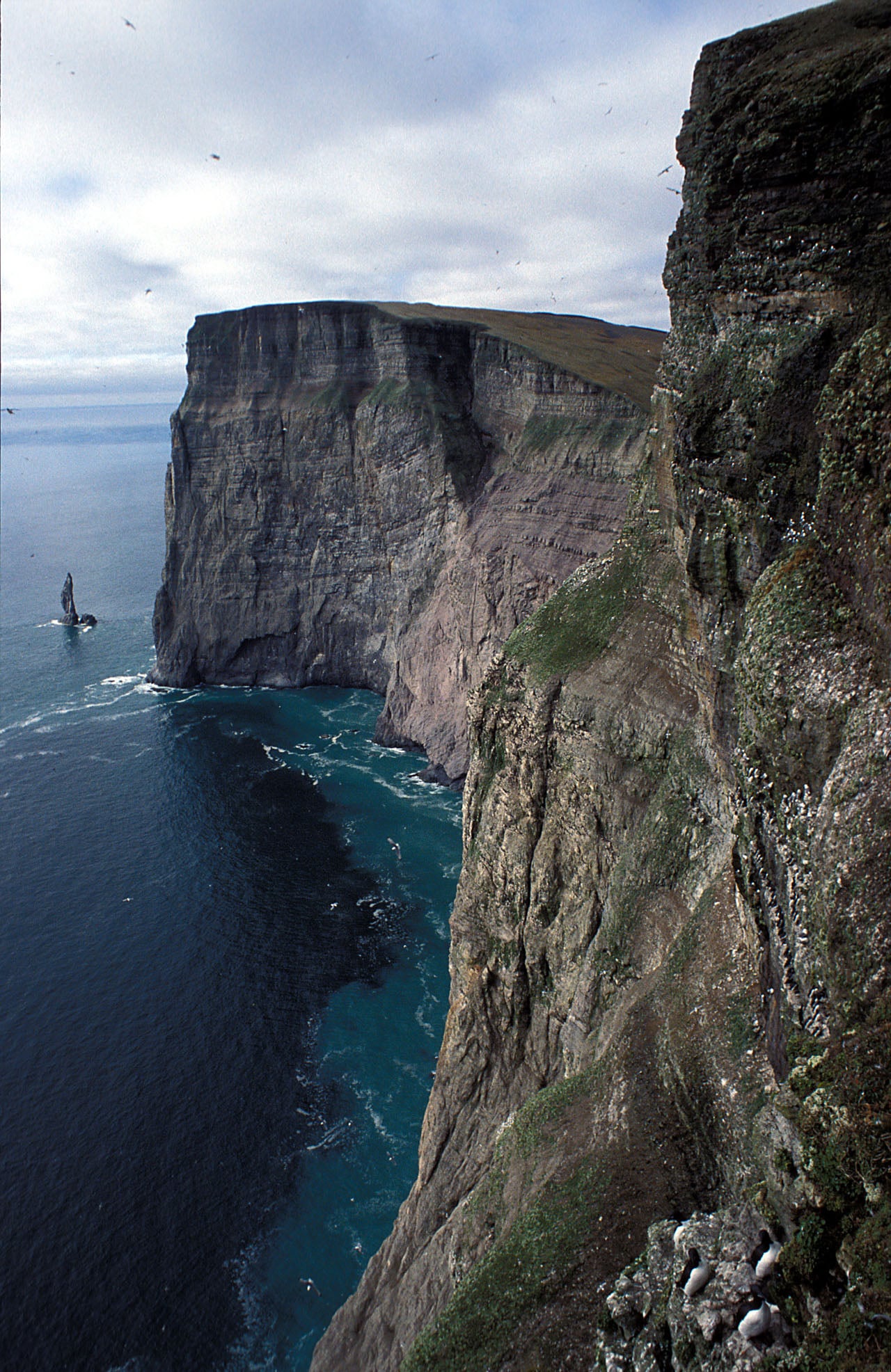
Anderson and colleagues are particularly interested in a 100sq. km area in what was a shallow sea, some 80 degrees North in a remote group of islands near Svalbard, Norway.
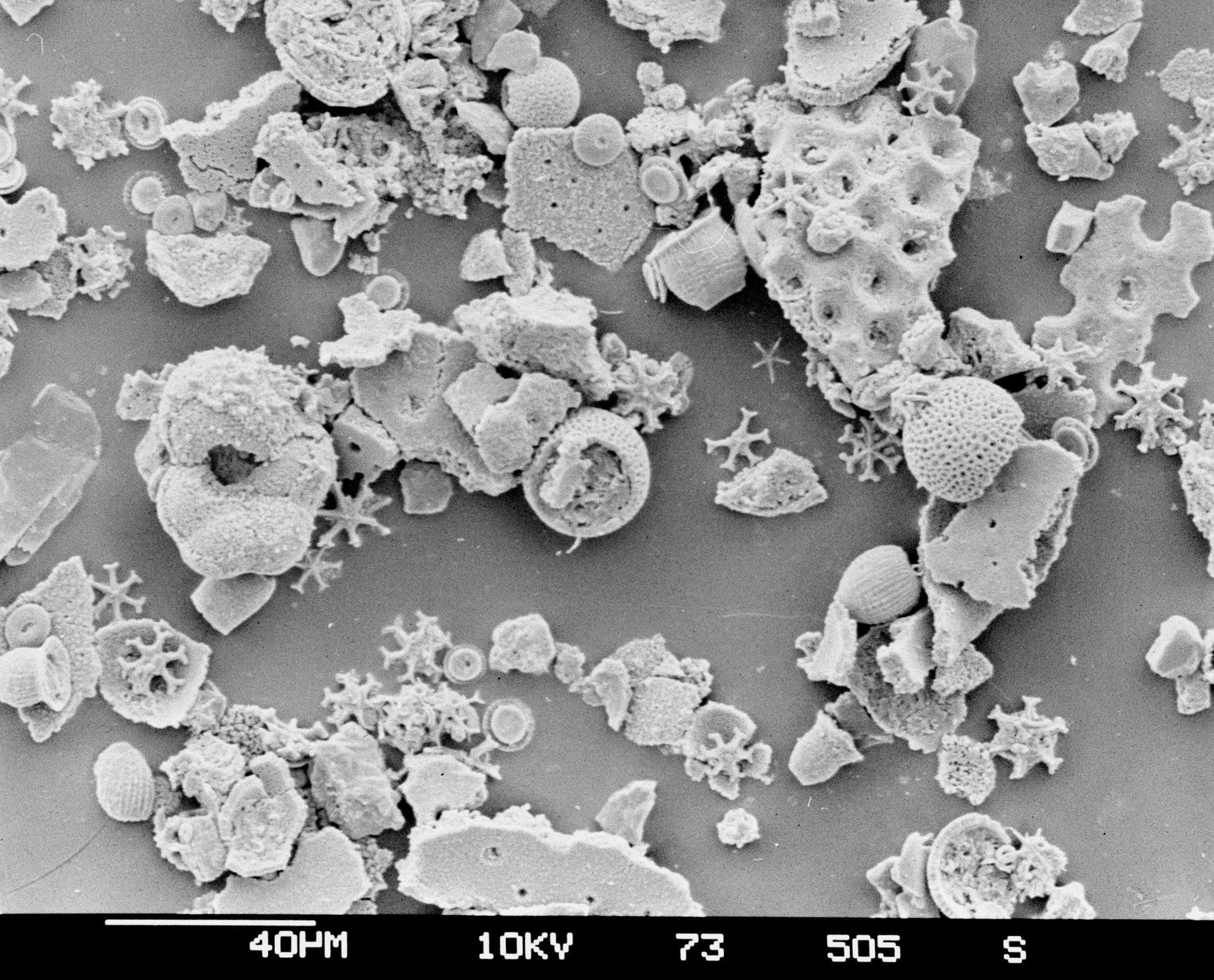 Deep Sea Microfossils. Credit: Wikipedia
And just last year, in Australia researchers found some of the oldest eukaryote microfossils ever discovered, dating back some 1.75 billion years.
The sweet spot for such microfossils usually is in ancient coastal areas, where eukaryotes would have had access to rich organics and plentiful nutrients, enabling them to grow in both multicellularity and diversity.
The idea is to go to areas that are either pristine or have not been sampled to any great extent. Anderson himself specializes in looking in areas that were subject to massive clay deposits that might have helped preserve these ancient eukaryotes.
Today, you’re looking at places that are desert or Arctic, where there's no vegetation so rocks are exposed, says Anderson.
None of which is easy. Looking for eukaryote microfossils is truly a herculean task, because they are both tiny and consist of unprotected soft tissue which has left them subject to massive degradation over billions of years.
The biggest challenge now is that we have an under sampled fossil record, says Anderson.
Are we any closer to answering the big questions about how complex life first started here?
We’ve started to figure out which are the right rocks to find early fossils and that's starting to give us the data with which we can record the history of Earth’s earliest life, says Anderson.
The Bottom Line?
A lot of the work we've done on clays was motivated by finding life on other planets, says Anderson. We’d better understand how life happened here if we hope to understand the likelihood of it happening elsewhere, he says.