Universe Today
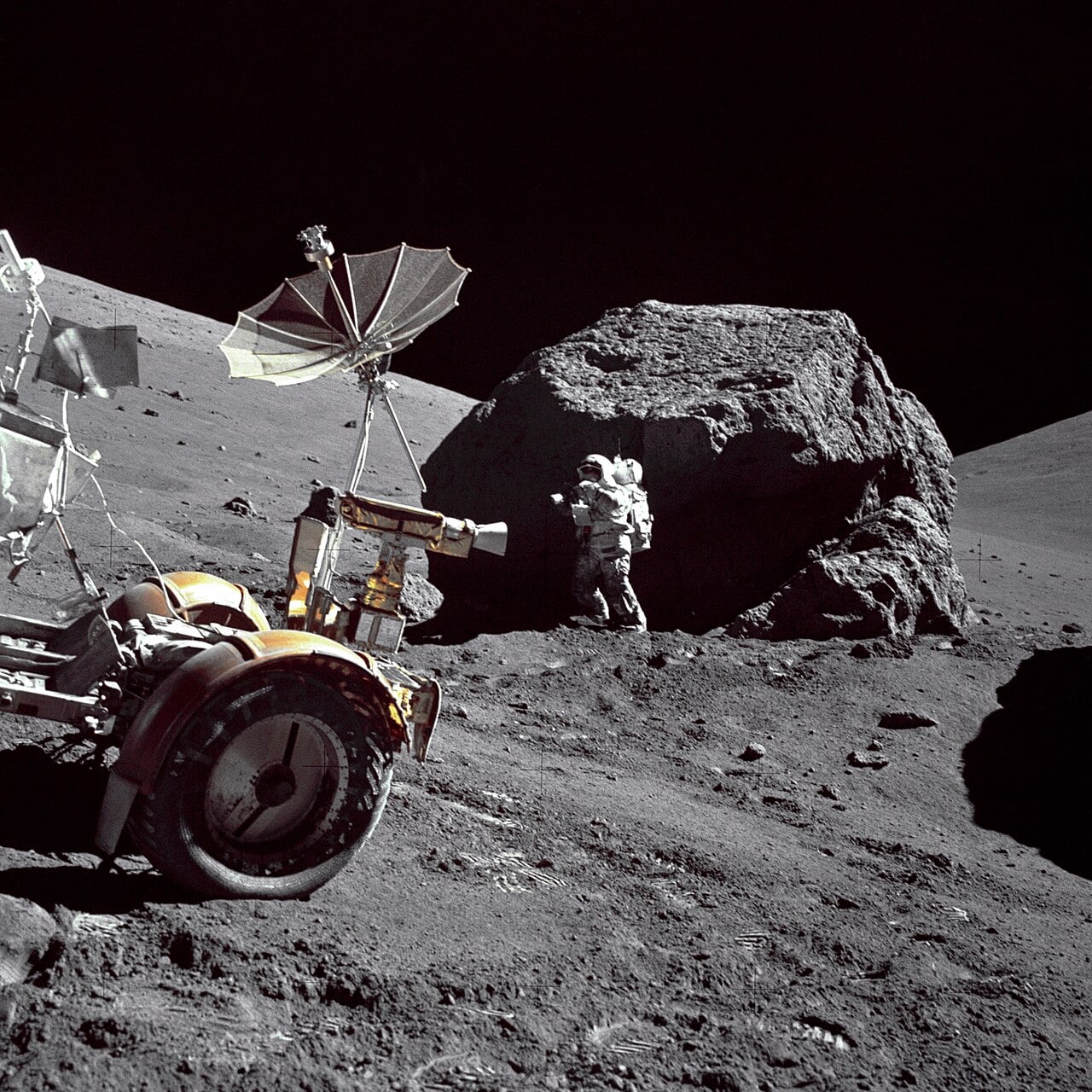
After decades of analyzing reams of lunar rocks back here on Earth, the canonical view of the Moon was that it was anhydrous; that it had extraordinarily little water. That all began to change in 2009 with new data from NASA’s Lunar Crater Observation and Sensing Satellite (LCROSS) and the much-ballyhooed evidence of water ice in the Moon’s permanently shaded polar regions (PSRs).
That’s still where most of the attention lies among future would-be colonists and lunar entrepreneurs.
But for scientific purposes, planetary scientists are still puzzling over whether the Moon has an abundance of water in its lunar interior, and the answer appears to be yes. But it's not the free-flowing water of Niagara Falls. Instead, this water is chemically bound up in rocks.
It was always a bit weird that the Apollo samples appeared to be so dry, Neil Bowles, a professor of planetary science at the U.K.’s University of Oxford, recently told me in his office.
Why is this important?
It gives us clues as to the initial water budget of our Earth-Moon system, which was created some 4.5 billion years ago when a Mars-sized impactor struck our nascent Earth. In the aftermath of the impact, our Moon soon coalesced from the resulting debris disk and into the body we see today.
Even so, many questions remain about how this putative water at the time of the impact was distributed into what became the Moon’s interior.
Lab-based investigations of returned lunar samples by Apollo missions using high-precision, low-detection, analytical instruments have for the first time provided the absolute abundance of water --- present mostly as structurally and minerally bound hydroxide (OH) in lunar samples, note the authors of a 2010 paper appearing the journal Earth, Moon and Planets.
The discovery of apatite, the only hydrous mineral phase of any significance in lunar samples, is of particular note.
Apatite is a type of mineral where its crystal grain structure, maybe a few hundred microns across, is good for holding onto water, Bowles says. And this apatite shows that the Moon had water and it's still present in the interior, basically bound to minerals, he says.
This was a surprise because initial analysis from the Apollo samples was that the Moon was extremely dry.
For lunar scientists and amateur enthusiasts alike, it's always been a puzzle as to why NASA hasn’t made more of a concerted effort to return to answer such lingering lunar science questions. But to be fair, the U.S. space agency did try to get to the bottom of the mystery surrounding the Moon’s putative water in early 2025.
Launched in February of last year, NASA’s Lunar Trailblazer orbiter spacecraft was due for a two-year nominal mission to detect and map the form, abundance and locations of water over the lunar landscape.
But then things went awry. A human induced failure --- caused by a misconfiguration of the spacecraft after separation from the launch vehicle, put an end to the mission.
One of its two instruments, the Lunar Thermal Mapper (LTM), was provided by the University of Oxford and funded by the U.K. Space Agency. And Bowles was the LTM’s instrument scientist.
Thus, despite this setback Bowles hasn’t given up because he’s still puzzled by where this lunar water actually lies; whether beneath the lunar surface, in the bottom of permanently shaded regions, or in the deep interior.
That’s one reason he’s hoping that a spare LTM instrument, which now lives in an Oxford basement lab, will soon bear fruit on a future lunar orbiter mission.
We're hoping that the spare lunar thermal mapper will go on a future NASA mission called UCIS (Ultra-Compact Imaging Spectrometer for the Moon), says Bowles.
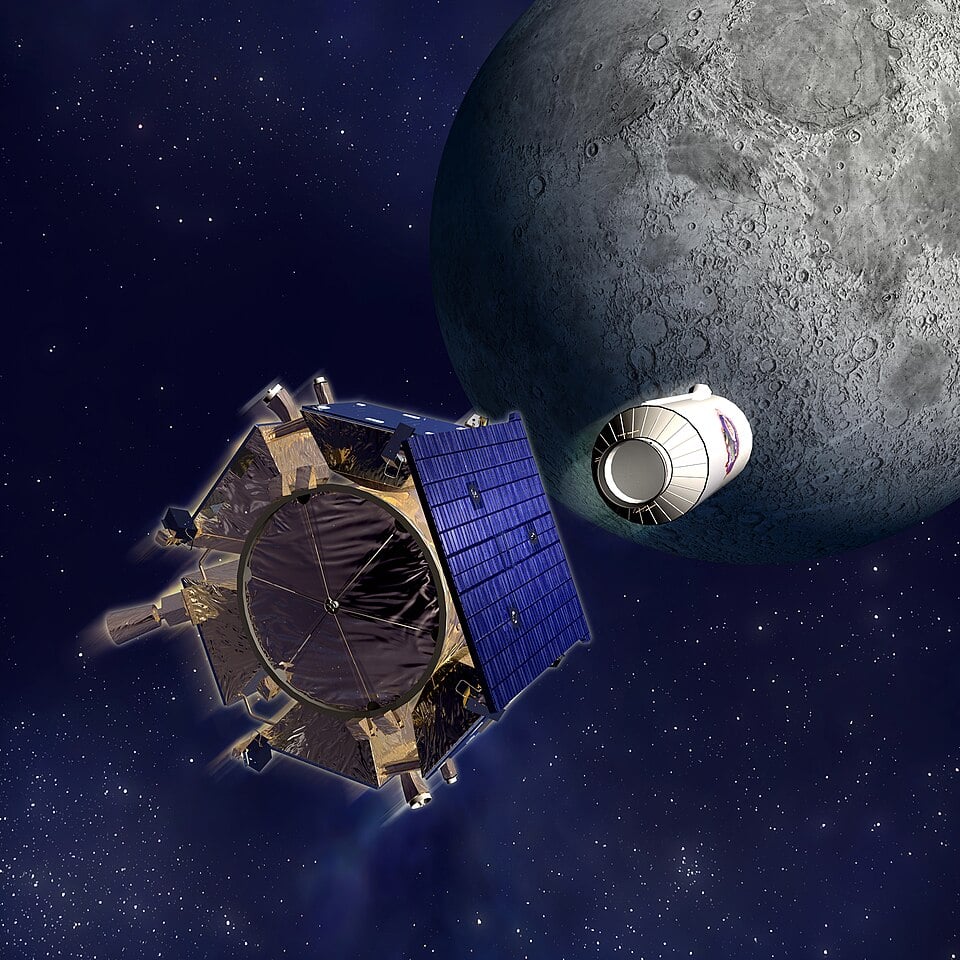 An illustration of the LCROSS Centaur rocket stage and Shepherding Spacecraft as they approach impact with the lunar south pole on October 9, 2009. Credit: NASA
Why go back to the Moon?
We need all the evidence we can get to understand how you end up with the Moon as we see it today, but also how the Moon has influenced Earth, says Bowles. Because the Earth and Moon are a system in space together, very unusual in our solar system, in terms of the size of the Earth and our satellite, he says.
As for why Looking for water on the moon scientifically important?
Extracting water from the polar regions would tell us how it was brought there, where it was brought from, and would preserve a record of that delivery process in the solar system, says Bowles. That would then tell us a great deal of information about how things like water are moved around inside the solar system eventually end up heading towards Earth, he says.