Universe Today
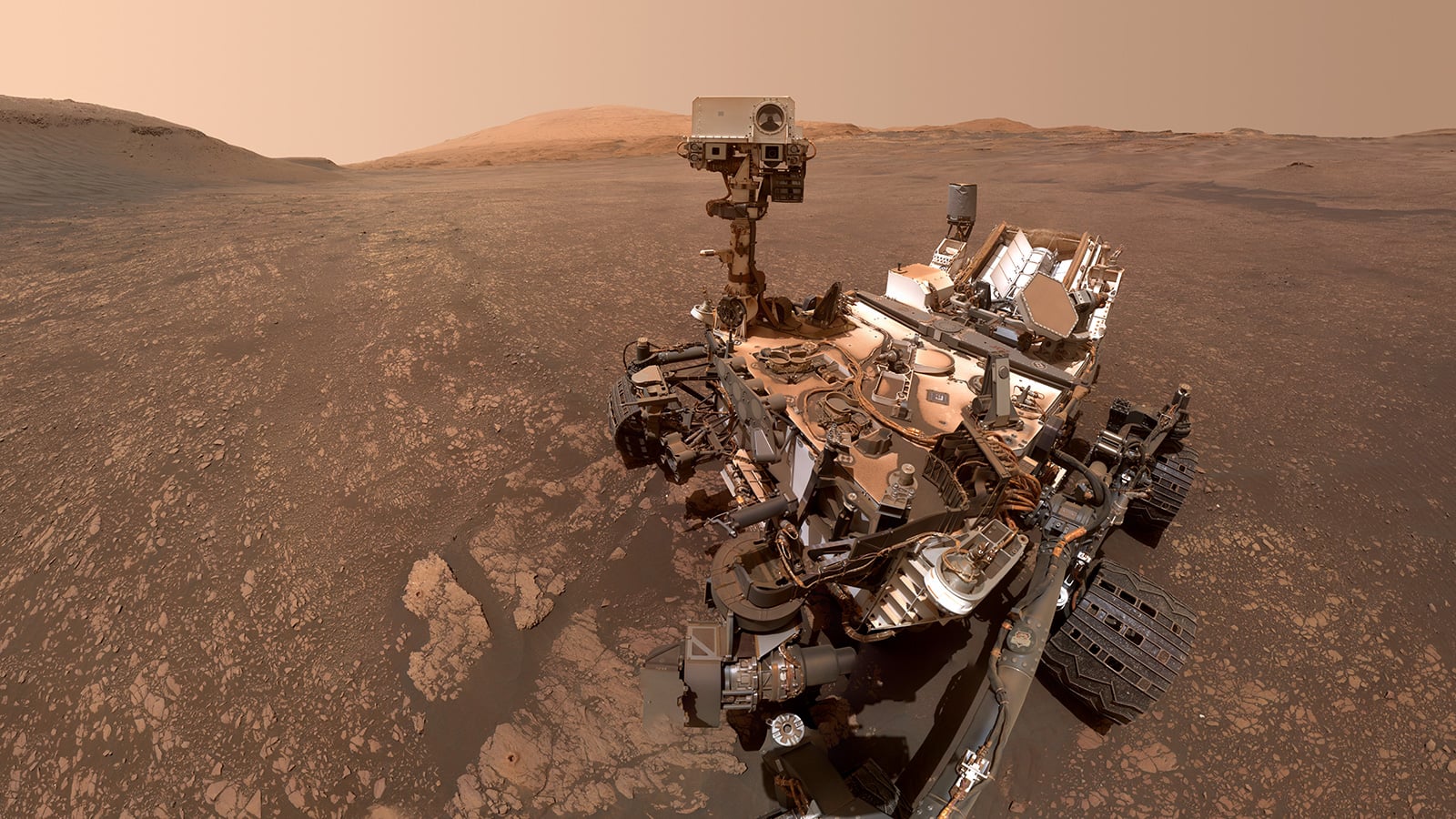
Despite continual habitability headlines, the debate over whether Mars ever had or currently has life still rages. At every new planetary conference, someone presents data that often for a few weeks at least appears to change the calculus of Martian astrobiology. But for well over two decades now, one of the biggest mysteries remains --- the origin of the putative methane detections made by the Tunable Laser Spectrometer (TLS) on NASA's Curiosity rover which has repeatedly reported several detections of methane.
This methane flap actually began with the European Space Agency’s Mars Express spacecraft which started orbital science operations in 2004. During Mars Express’ first year of observations and analysis, a small spectrometer on the spacecraft detected a very low-resolution spectral bump which indicated the tenuous infrared absorption of methane in the red planet’s atmosphere.
Yet the detections were at the limits of the instrument’s (the Planetary Fourier Spectrometer) sensitivity, ESA notes.
It's not that convincing, but at the very same time, two different independent research groups using ground-based telescopes were also claiming that they could see Mars methane through Earth's atmosphere, Kevin Olsen, a planetary scientist at the University of Oxford and a co-investigator of the ExoMars Trace Gas Orbiter's Atmospheric Chemistry suite instrument, told me in the U.K.
Habitability is the key.
The most important thing people care about is whether Mars has been or is habitable, and whether there's microbial life, and in the atmosphere the big thing is methane, which we don't see, says Olsen.
As for the ExoMars TGO?
The Trace Gas Orbiter primary objective is to definitively detect trace gasses such as compounds with sulfur, chlorine, and methane.
If methane is coming from a biosphere, then either living things are producing methane as they go about their daily life and use energy, says Olsen. Or maybe they're not living anymore, and there remains an ancient source of biologically created methane.
If methane is not coming from a biological source; then the most likely thing is active rock metamorphosis, he says.
This is where rock changes from one type into another, which would happen deep underground, at high pressure, with lots of heat, water and chemical energy. But after eight years of observations with TGO’s instruments working at nominal levels, the ESA team still has not found evidence for methane.
We have a thousand times better sensitivity than the Mars sample analysis suite on NASA’s Curiosity rover, but we do not see any sign of the absorption of methane in the Martian atmosphere, says Olsen.
What’s the explanation for this non-detection of methane?
The simplest explanation is that it's not there, says Olsen. And we are working really hard to reconcile the observations made by other teams and other instruments with ours, but we haven't done it yet, he says.
If the methane is produced by microbes, there are likely other organic molecules being produced alongside it.
If we were on the surface of Mars and other organic molecules being produced in association with methane, then Olsen says there's a good likelihood that we’re coming from methanogenesis. That’s the process by which anaerobic microbes produce methane as a byproduct of their metabolism.
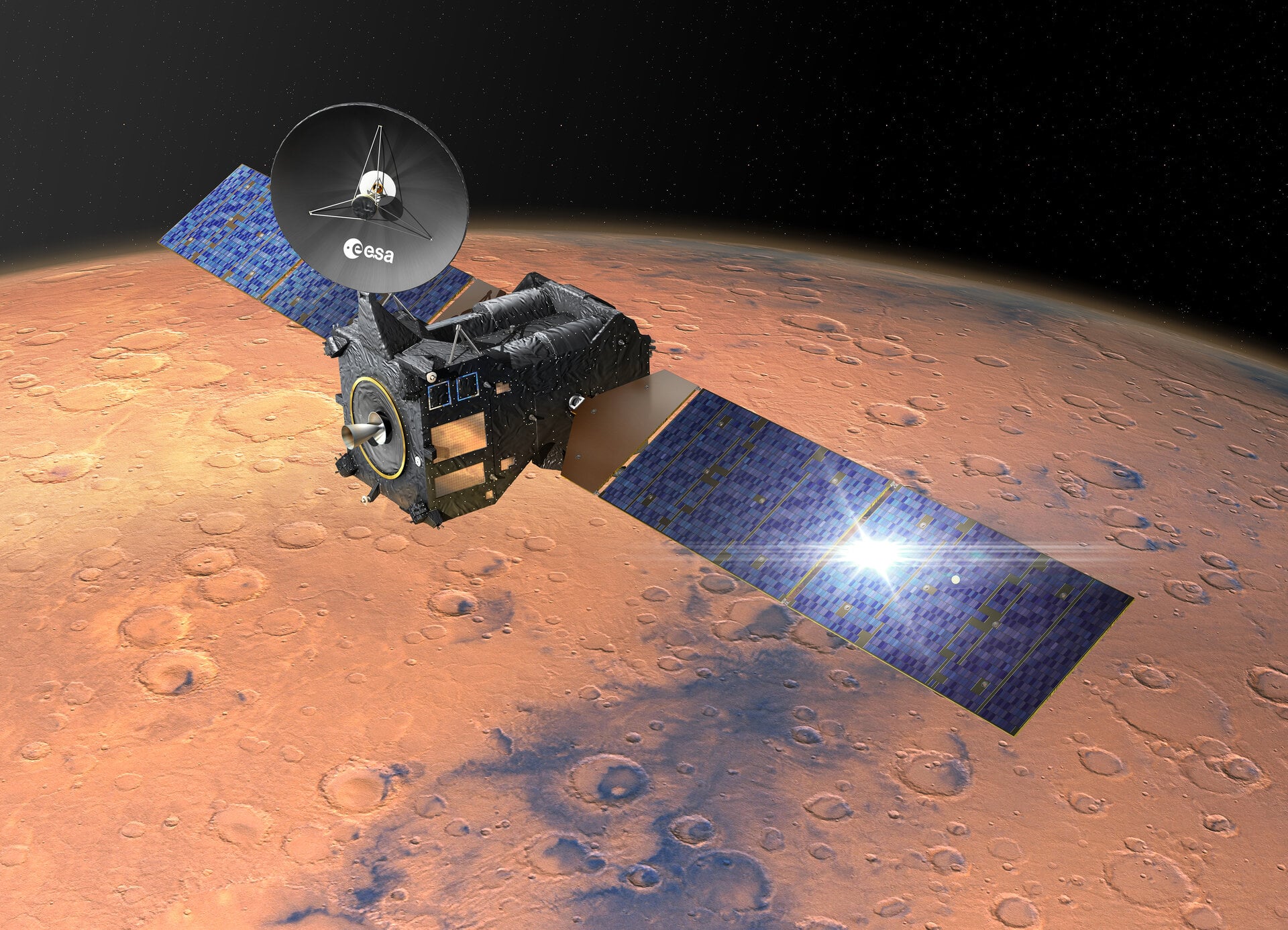 Artist’s impression of the ExoMars Trace Gas Orbiter, and heading for Mars. Credit: ESA–D. Ducros
Simple Salts
We know that there's chloride on the surface of Mars in the form of simple salts, says Olsen. One of them is the perchlorate measurement from NASA’s Phoenix lander and the other one is sodium chloride (table salt) from Martian meteorites, he says.
Yet hydrogen chloride is the only novel trace TGO has thus far detected.
Hydrogen chloride is the long-lived stable reservoir species for chlorine, and chlorine is important because it should come from a volcano, says Olsen. If we went to Mars and found sulfur and chlorine, maybe we’d have some sort of active volcanic activity or magmatic outgassing, but we are unable to measure sulfur or methane, which can also come from volcanoes, he says.
Detecting biosignatures on Mars has been a lot more difficult than people expected when NASA’s Viking 1 arrived on the red planet’s surface on July 4, 1976.
Before our mission started, there were already people that didn't believe the past methane observations, says Olsen. But without methane, then we're really back to square one, he says.
This lack of methane detection by the TGO still gnaws at Olsen. He wonders why other teams and their instruments see a clear Mars methane signature, but TGO doesn’t.
We can't be flippant and say that they made a mistake; we've seen their spectra, there's something there that needs explaining, says Olsen. We don't have that explanation, even though TGO has the sensitivity to detect trace amounts of methane, he says.
ESA may resolve the mystery after all.
The next thing that will really tell us what's going on will be the drill on ESA’s Rosalind Franklin Mars Rover which is currently scheduled to launch in 2029.
The Bottom Line?
I want to stress that I believe that Mars is currently habitable, which is why I am searching for signs of life with the ExoMars missions, says Olsen. And I haven't given up on methane yet, he says.