Universe Today
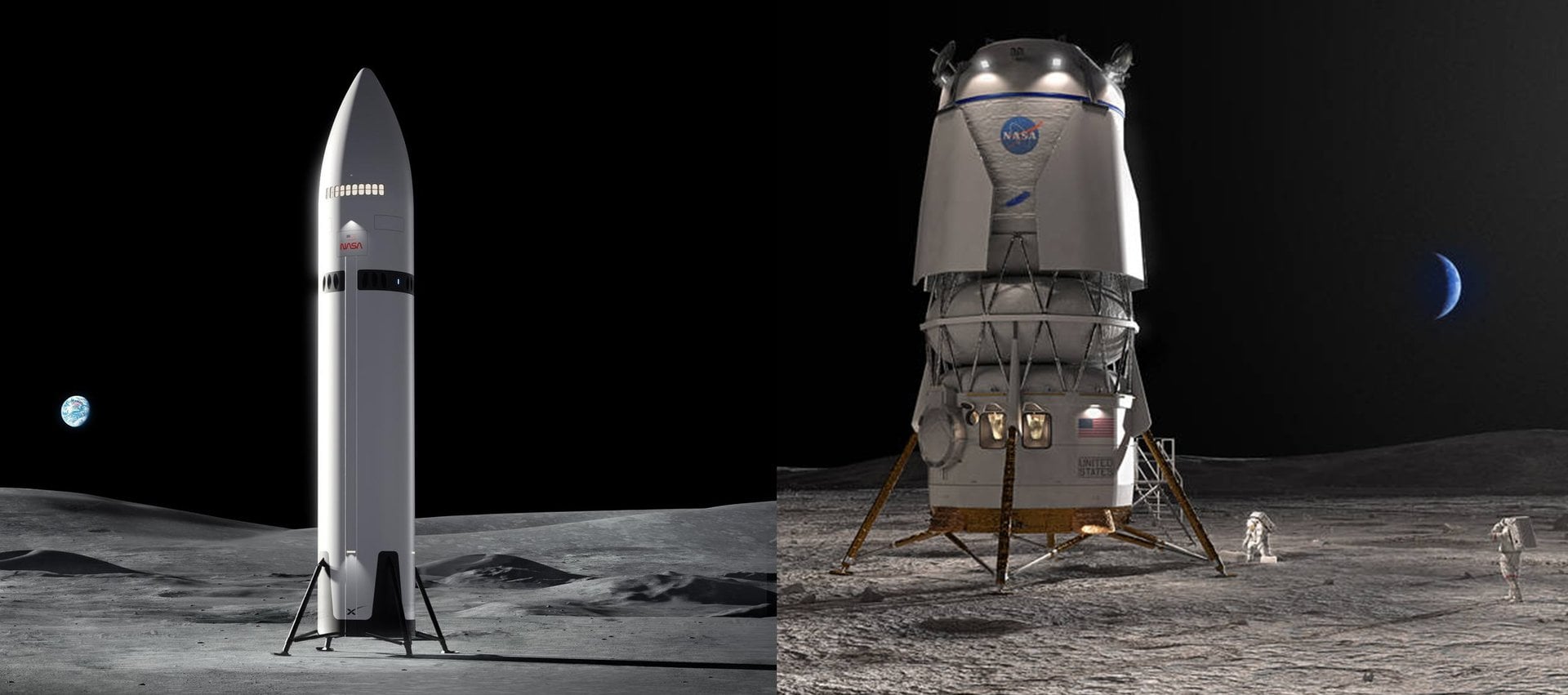
NASA is gearing up for its long-awaited return to the lunar surface for the first time since Apollo 17 in 1972. This is scheduled to take place in 2028 with Artemis IV, which will launch four astronauts to lunar orbit using the Space Launch System (SLS) and Orion spacecraft. The Orion and its crew will then rendezvous with a separately-launched Human Landing System (HLS) that will take two crew members to and from the surface. Before that happens, NASA plans to conduct a demonstration mission in Earth orbit sometime next year.
This mission will be a "dress rehearsal" for a lunar landing and will see Artemis astronauts practice rendezvous and docking operations with a commercial HLS system (along with teams on Earth). As expected, SpaceX and Blue Origin are the two commercial partners working with NASA to develop the landing systems that will be provided for Artemis III and IV. Data from this mission and an uncrewed demonstration mission at the Moon will help NASA ensure the safety and success of future crewed lunar landings.
For Artemis III, both SpaceX and Blue Origin will fly test versions (or test articles) of their crewed vehicles, which will be launched separately by the company's own rockets. Similar to what NASA has planned for the Artemis IV mission, the Artemis III crew will launch to Low Earth Orbit (LEO) aboard an Orion spacecraft atop an SLS rocket. For SpaceX, the latest version of the Starship (V3), while Blue Origin will test their Mark 2 Blue Moon lander, applying lessons from previous lunar missions.
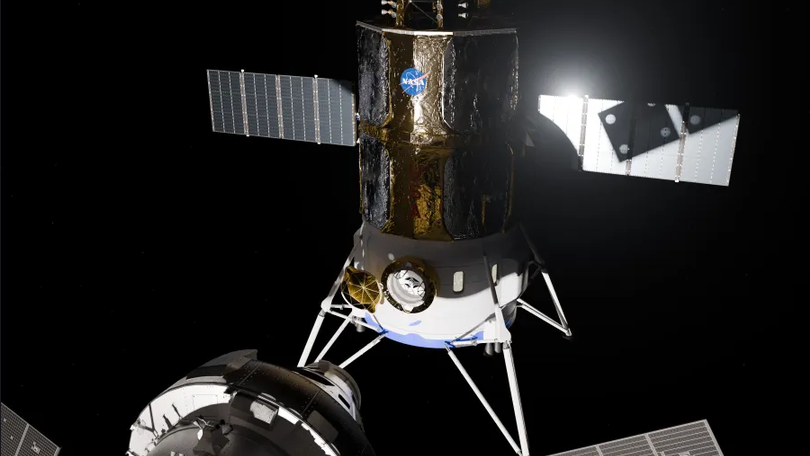 Artist's impression of an Orion spacecraft docking with Blue Origin's Blue Moon lander. Credit: NASA
This includes all the flight software and control systems to ensure flight operations from this demonstration mission can directly translate to crewed lunar flights. The production hardware must also incorporate crucial systems, such as the Environmental Control and Life Support System (ECLSS), a crew cabin, and avionics. Once the Artemis crew rendezvous with the HLS, two crew members will don Orion Crew Survival System (OCCS) suits, open the hatch, and enter the landing craft.
The Blue Origin lander will also carry a lunar surface spacesuit mass simulator, similar to the "Moonikin" carried aboard the uncrewed Artemis I test flight. Equipped with instruments and sensors, the spacesuit mass simulator will provide real-time feedback about the environment within the crew cabin. The Starship HLS, meanwhile, will carry an added docking system integrated to the nose of the spacecraft, enabling NASA and SpaceX to evaluate how the HLS and Orion will interact. However, none of the crew will enter the Starship test vehicle during this mission.
Said Steve Creech, the program manager of the Human Landing System Program at NASA’s Marshall Space Flight Center, in a NASA press release:
Each human landing system provider has taken a different approach to the Artemis III mission. Ultimately, SpaceX and Blue Origin have put forward a list of aggressive objectives and goals intended to complement upcoming uncrewed demonstration missions at the Moon so that we can gain both understanding and confidence in the spacecraft and launch vehicles prior to a crewed landing. The lander prototype designs will inform future development efforts and will continue to mature over the next year.
NASA, SpaceX, and Blue Origin will launch their respective spacecraft using the SLS, Starship/Superheavy, and the New Glenn rocket, three of the most powerful launch vehicles in the world. These will launch within a short timeframe as part of a "dual-launch campaign," with the lander prepositioned in LEO to wait for a crewed Orion. This launch cadence offers a unique opportunity to practice launch processing and operations.
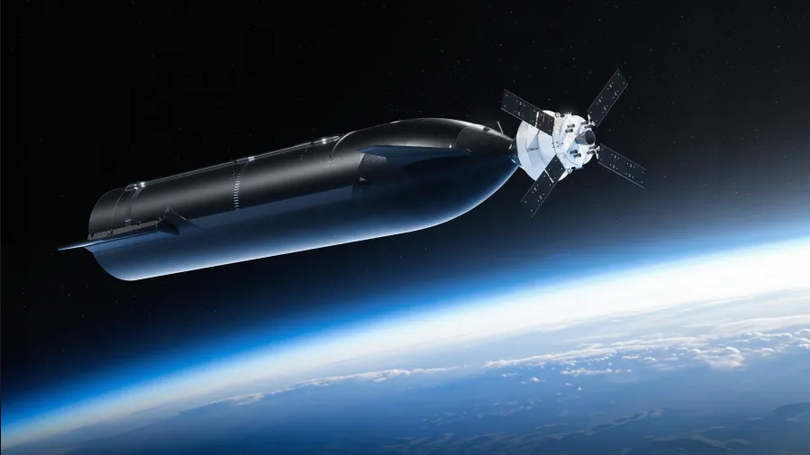 Artist's impression of the Starship HLS docking with a crewed Orion capsule in orbit. Credit: NASA
During the launches, the Artemis III crew will conduct rendezvous-and-docking operations with the lander test articles before returning safely to Earth. Meanwhile, NASA, SpaceX, and Blue Origin will each exercise ground processing, launch operations, control centers, networking, and exchanging data at key sites across the country. Blue Origin’s test vehicle will remain in a "parking orbit" for up to 30 days to run system checks before the launch of the SLS and Orion.
Following the completion of Blue Origin’s rendezvous and docking operations and the launch of Artemis III, the Starship HLS test vehicle will launch and rendezvous with the mission crew for its phase of testing. Whereas the Orion will dock alongside the Blue Moon test lander, adjacent to the crew cabin, it will dock nose-to-nose with the Starship HLS (see images above).
Throughout the mission, the Orion spacecraft will fly in a circular orbit to ensure that test vehicles can reach their designated altitude in a single launch and to facilitate more launch opportunities than are possible for lunar missions. SpaceX and Blue Origin have already tested and qualified their landers with NASA and demonstrated their docking capabilities (SpaceX in 2023, and Blue Origin earlier this year). Said Jeremy Parsons, the Artemis program's manager:
Artemis III will be a highly choreographed dance with a demanding launch sequence across multiple launch pads and equally demanding mission operations for our ground and flight crews, making it one of the most complex and ambitious missions NASA has ever undertaken. The demonstration mission will set the stage before our next giant leap. NASA’s expertise in systems engineering and integration, as well as launch and mission operations in low Earth orbit, will bring the mission together.
Further Reading: NASA