 Universe Today
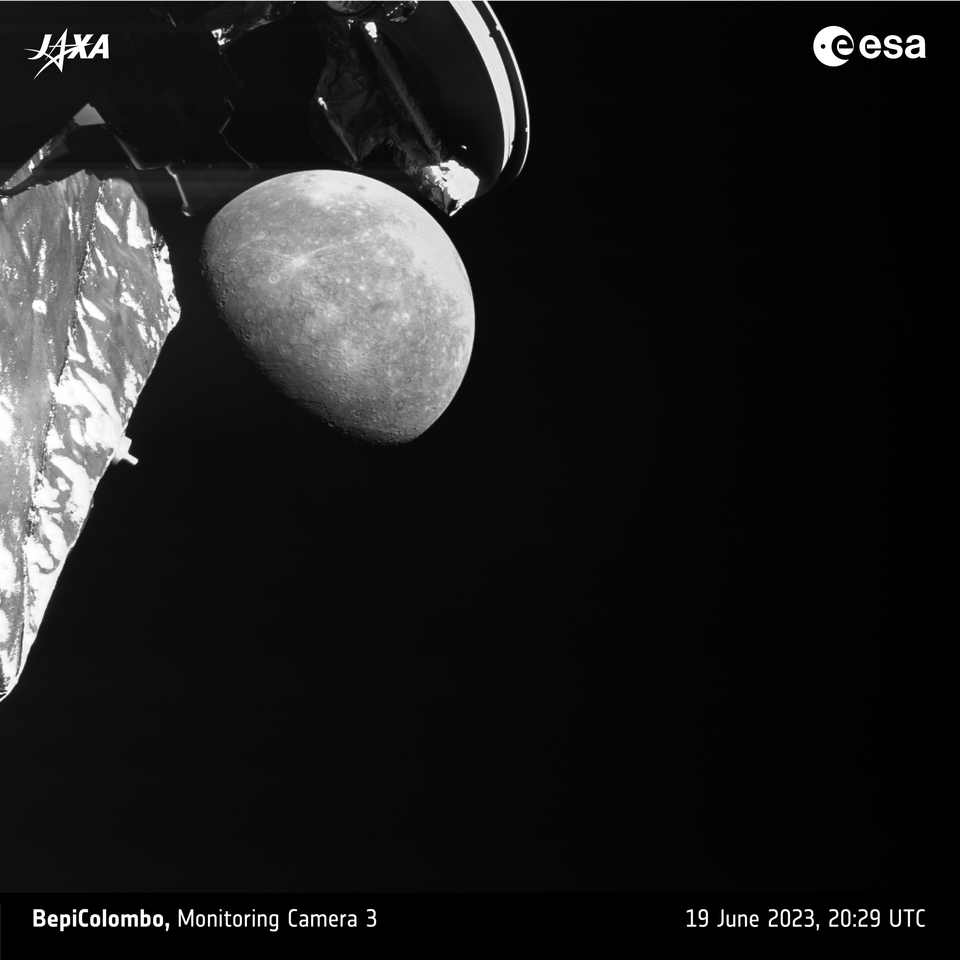
The latest mission to the innermost planet in the solar system hit a milestone last week. After an eight year journey, BepiColombo finally separated from its propulsion stage to set itself up for an orbital insertion to Mercury. Taking place on September 3rd, the separation, which is part of a much longer series of logistical steps over the next few months, seemed to go without a hitch. But getting to that point was certainly a process, and still more challenges lie ahead.
BepiColombo was launched in 2018, and over the past eight years has performed nine gravity assists - one of Earth, two of Venus, and six of Mercury itself. It might seem strange that a spacecraft would use the planet it is eventually trying to orbit as a gravity assist, but in this case the orbital maneuver was intended to slow the spacecraft down rather than speed it up. Falling towards the Sun is great in terms of gaining speed, but slowing down to get to a target nearer to it is a challenge.
One piece of technology that helped with that challenge was the Mercury Transfer Module (MTM). This ion drive served as the propulsion system for the mission so far. It successfully ferried BepiColombo over billions of kilometers, firing in between flybys to slow the spacecraft down or adjust its angle. But, with actual orbital insertion approaching, it has served its purpose - its job is done.
ESA video explaining the MTM separation. Credit - ESA YouTube ChannelOn September 3rd, operators at the European Space Operations Center in Darmstadt, Germany, sent a radio signal to BepiColombo with one important command - separate. It took the signal 11 minutes to travel the 200 million kilometers to the orbiter, so operators couldn’t watch the process in real time. But when it received that command, BepiColombo severed the connection between the MTM and the rest of the module, using what in the aerospace industry is known as “pyrotechnics” - essentially it burned through the connections. Then it engaged a series of springs intended to push the MTM away from the rest of the craft to ensure there would be no collisions.
After successfully pushing off, operators confirmed the separation by receiving a slightly modified radio signal showing a Doppler shift between the MTM and the rest of the craft. A few minutes later, the part of the craft that will continue the journey was up and running, having deployed its systems and begun generating power with its own solar arrays.
That is a great first step, but BepiColombo is actually more than just one spacecraft - it’s a collaboration between ESA and the Japanese Space Agency (JAXA) - each of which supplied their own orbiter to the mission. ESA’s orbiter, named the Mercury Planetary Orbiter (MPO), and nicknamed Bepi, will take over mission control for the next phase of operations. When it is finally in position, it will separate from the other orbiter, the Mercury Magnetospheric Orbiter (Mio) and begin a tight polar orbit, intending to map the surface in high resolution, analyze the planet’s mineral composition, and study its strange large iron core.
Fraser discusses some trouble BepiColombo was having on its journey.Mio, on the other hand, will slip into a wider, elliptical orbit, and is intended, as its name suggests, to study Mercury’s magnetic field. That would include how the planet interacts with the solar wind, and also how it holds onto a tenuous “exosphere”. Ultimately, the combination of the two orbiters will provide plenty of data on how an airless rock is buffeted by the Sun’s intense radiation and magnetic storms.
As mentioned, the successful separation was only the first stage in BepiColombo’s final approach. The next step happens in November when the combined craft performs an orbital insertion maneuver on the 21st. A few weeks later, Mio and MPO will finally separate from one another on December 9-10, beginning their journey to their separate orbital paths. And finally, once both spacecraft are fully deployed and ready, science operations are planned to begin in April.
That might seem like a long way away, but when you’ve been waiting for a spacecraft to reach its target destination for eight years, 7 months doesn’t feel so long. In the meantime, BepiColombo itself will still have to deal with the scorching heat of Mercury’s orbit, as well as all the chaotic space weather the Sun can throw at it. It’s been successful and handling that all so far. Let’s all hope it can make it another few months.
Learn More:
ESA - Latest updates: BepiColombo's arrival at Mercury
UT - The BepiColombo Mission To Mercury is Losing Power
UT - The Magnetic "Birdsong" of the Smallest Planet
UT - BepiColombo Just Completed its Sixth Flyby of Mercury. Here are the Best Images

