Universe Today
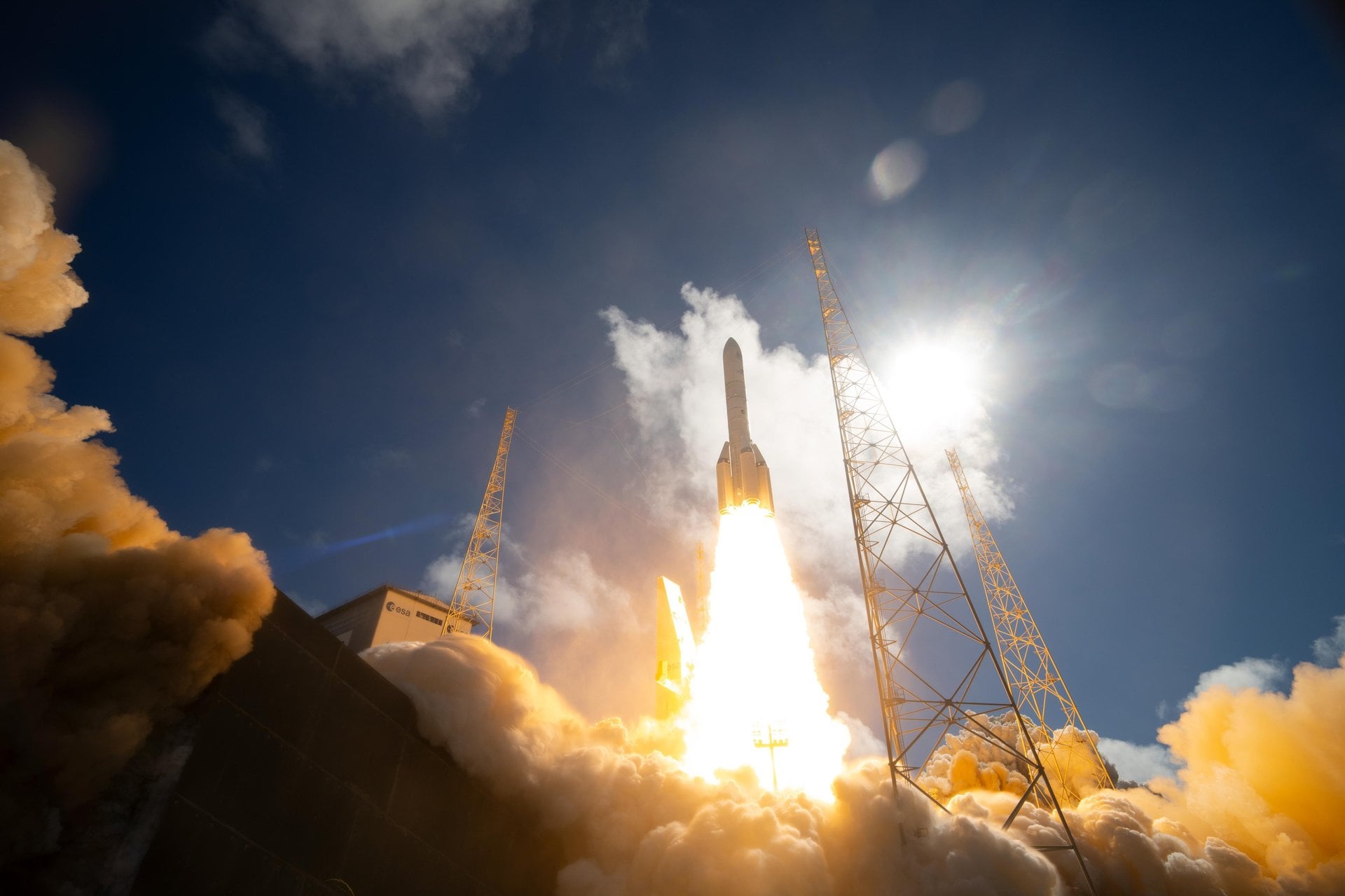
On June 17th, 2026, at 14:21 CEST, an Ariane 6 launched from Europe’s Spaceport in French Guiana carrying 36 satellites for Amazon’s Leo constellation. It was the eighth consecutive successful mission for Europe's latest launch system. However, this flight was special in that it featured four new boosters based on the P160C solid-propellant rocket motor developed for use as the first stage of the Vega C+ rocket. These boosters will provide a 10% to 15% increase in power, facilitating the launch of heavier payloads.
This makes the Ariane 6 Block 2 the most powerful version of the rocket to date and enabled this flight (VA269) to deploy 36 satellites into orbit, up from the previous 32. It also means the launch set a new record for the largest payload sent into space by a European rocket. The previous record was set in 2013 by the Ariane 5, which carried the 20-metric-ton (22 US tons) ATV Albert Einstein supply mission to the International Space Station (ISS).
ESA’s Director General Josef Aschbacher spoke of the historic launch in an ESA press release:
Ariane 6 has proven itself yet again, cementing its versatility as a launcher that can deliver all types of missions to all orbits, giving us more confidence and possibilities for Europe’s autonomous access to space. Ariane 6 was designed from the outset to be a modular launcher – we have now seen it launch in three versions in just two years – and we are not finished, further evolutions are still to come.
Each booster holds an additional 14 metric tons (~15.5 US tons) of fuel compared to the P120C for a total of 156 metric tons (172 US tons) of solid propellant. The motors that form the core of these boosters are also used on the smaller Vega-C, enabling the sharing of technology and hardware to lower costs and improve supply chains. This will, in turn, improve the rocket's launch cadence, providing for heavier payloads and more launches - and hence, more rapid growth for satellite constellations.
The expendable booster was developed by Europropulsion, a joint subsidiary of the Franco-German ArianeGroup and leading Italian aerospace company Avio S.p.A. The booster is also built by multiple European contractors: the structure is fabricated in Italy, the engine nozzles in France, and the igniters in Norway. This arrangement is a testament to the ESA's commitment to cooperation between its member nations and industry partners.
As a bonus, this latest launch disproves the claim that the Ariane 6 would be rendered obsolete, a prediction previously made by Elon Musk. Since SpaceX is the ESA's chief competitor in the domestic satellite market, the improved Ariane 6 will help the agency challenge the near-monopoly currently enjoyed by Musk's company. Said Géraldine Naja, ESA’s Director of Space Transportation:
What an amazing experience – as well as a great pride – to witness the most powerful launch in Europe’s history. It is a remarkable demonstration of European engineering excellence and of the teams constantly working to deliver and improve. I salute and congratulate everyone involved for the excellent Ariane 6 launch record and the constant improvements.
Further Reading: ESA