GRB

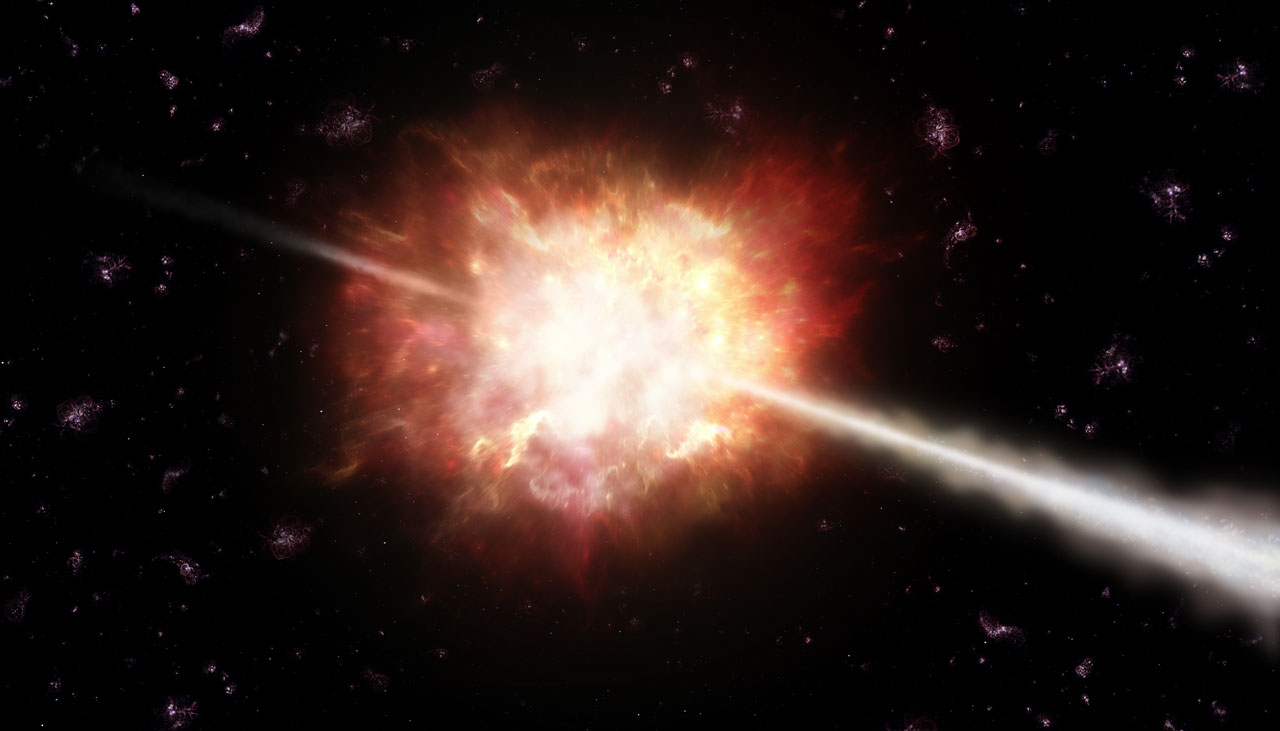
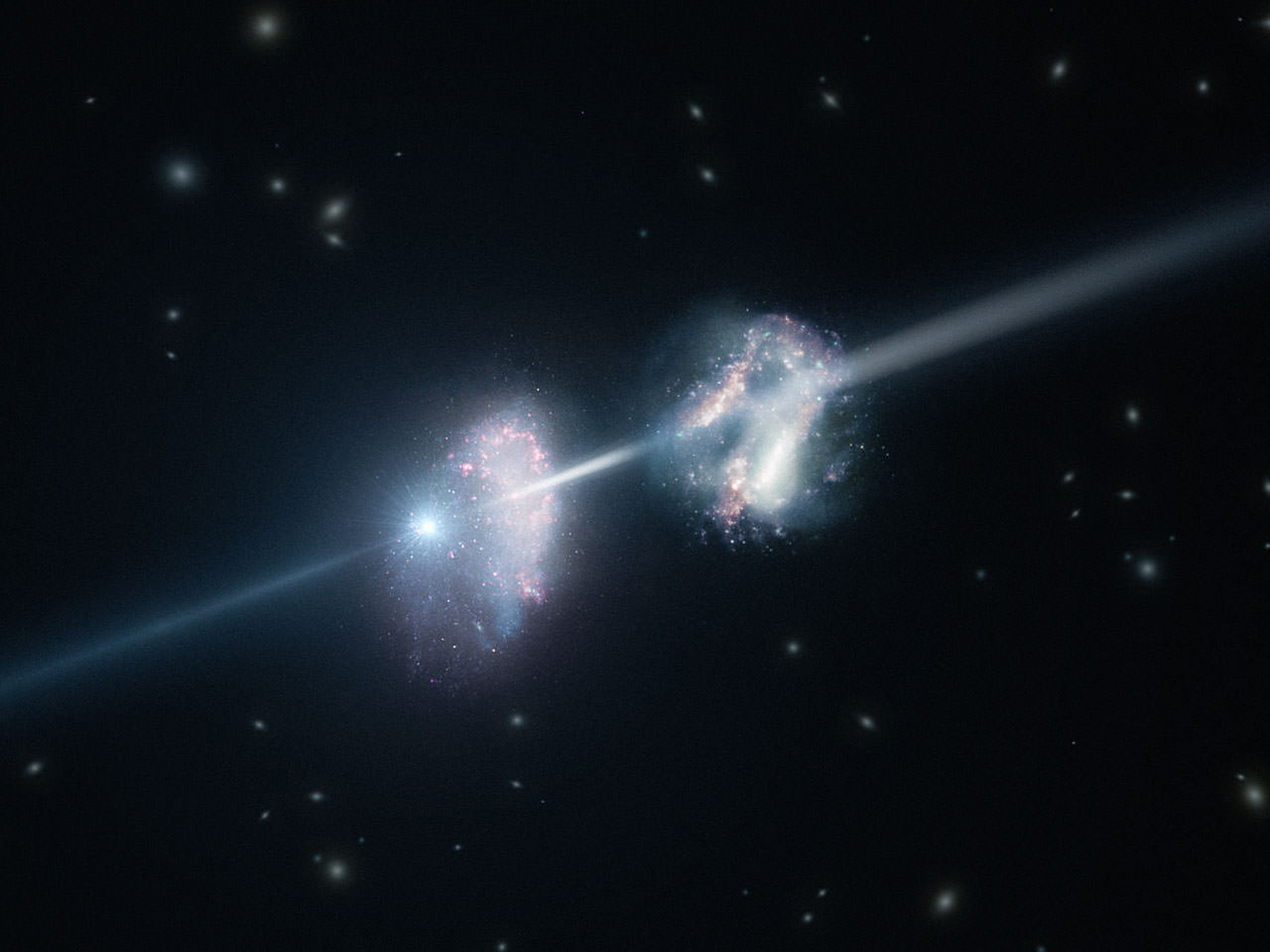
A GRB is a Gamma Ray Burst, an intense burst of gamma rays lasting a few seconds (or less, sometimes a bit more), in the sky. GRBs occur at a rate of about one a day (there are probably more, but are too faint to be 'seen' by today's gamma ray observatories), randomly, and never at the same location.
Although they were first observed in the late 1960s, by the US's Vela satellites, they remained top secret for nearly a decade (the Vela satellites were intended to detect secret nuclear weapons tests, and their capabilities, and findings, were classified), when a paper on them was published in the Astrophysical Journal (in 1973).
GRBs made astronomers intensely excited, and frustrated … it took until 1997 for the origin to be pinned down. Why? Because, first, it was very hard to locate them precisely enough on the sky (the 'error circles' were generally so big as to encompass dozens, if not hundreds, of possible sources); second, because when they were sufficiently well-localized, there was nothing there! Finally, BeppoSAX observed the x-ray afterglow of GRB 970228 fast enough (and precisely enough) for ground-based telescopes to detect (and localize) the optical afterglow … and later to discover there is a very, very faint galaxy there, one with a redshift of 0.695 (in the meantime, another GRB's host galaxy was detected, and as it is brighter, its redshift (0.835) was measured first).
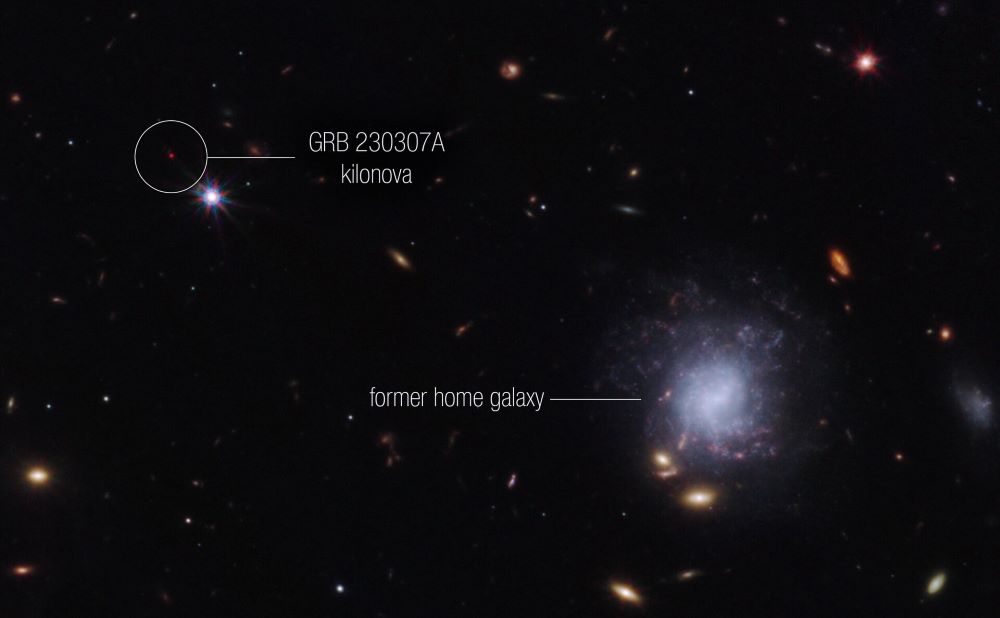
Studying GRBs was also exciting, and frustrating, because their light curves (plot of intensity, of gamma rays, against time) are all over the place … some have many peaks, some only one; some rise quickly and fall just as quickly, others rise (or fall) slowly); etc, etc, etc. However, two classes of GRBs have been identified – short (and hard) and long (and soft), referring to the average duration (and the average spectral energy distribution; 'hard' means more energy in the shorter wavelength gammas than 'soft'), and only one GRB mystery was solved in the late 1990s (long GRBs were localized, but no short ones were). It wasn't until 2005 that a short GRB was localized well enough for a likely source to be identified … it too was a distant galaxy.
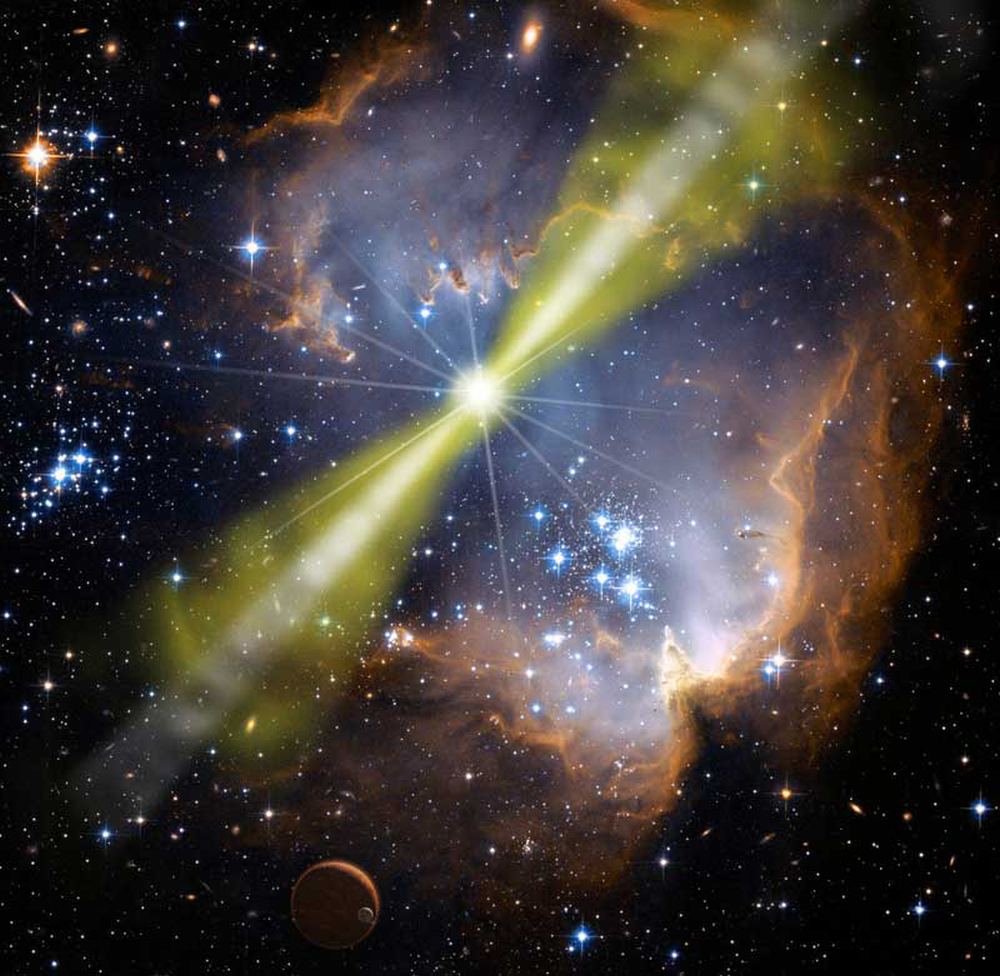
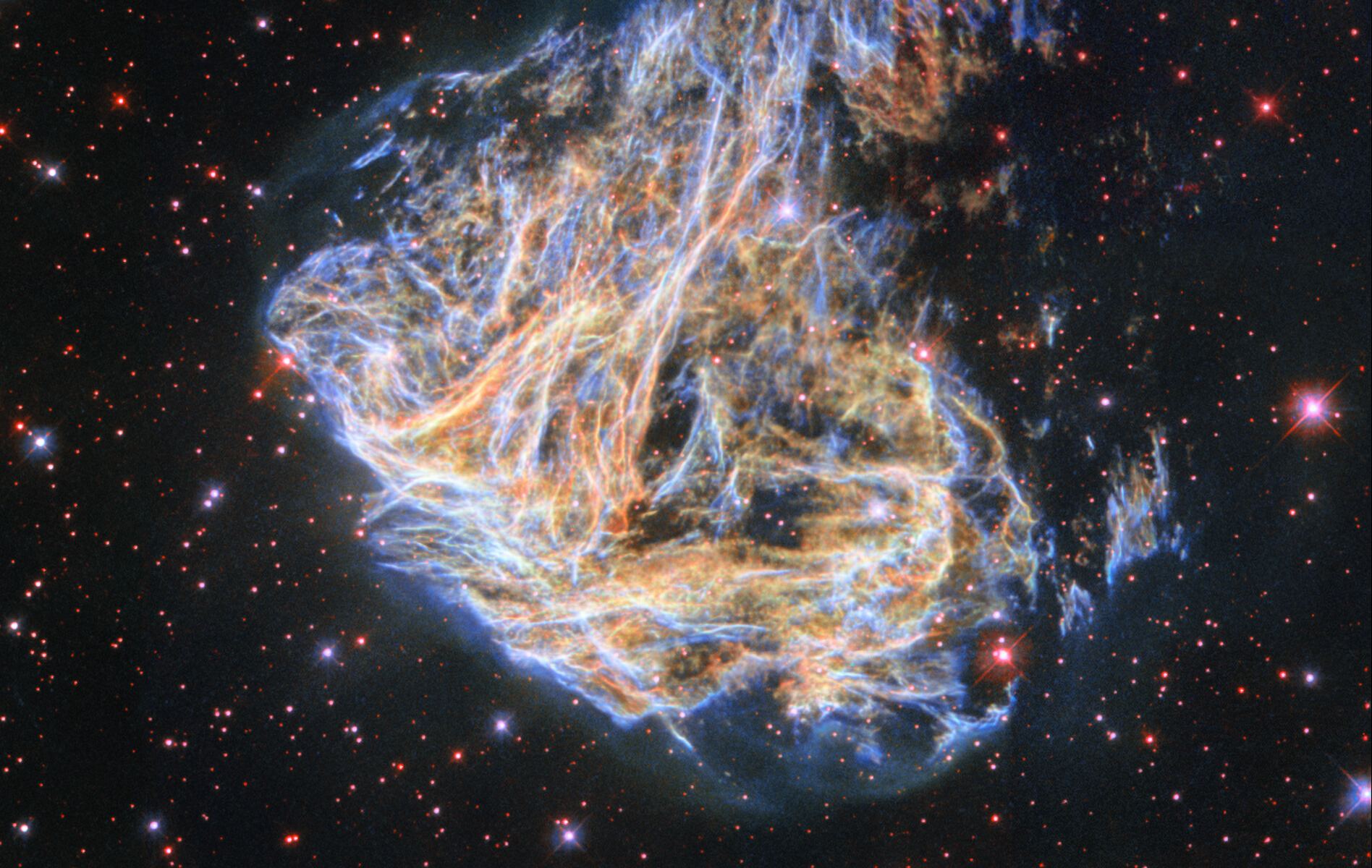
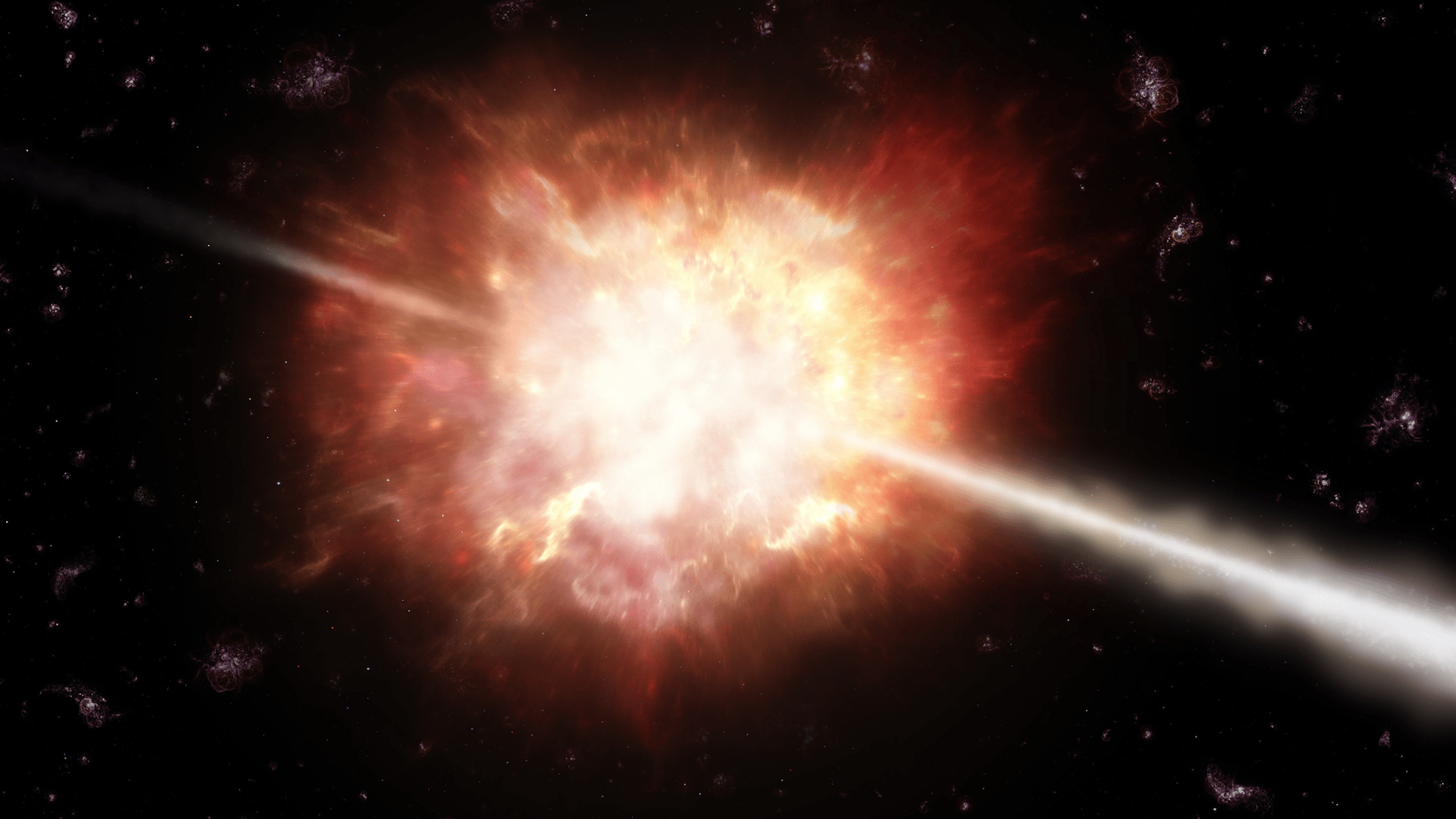
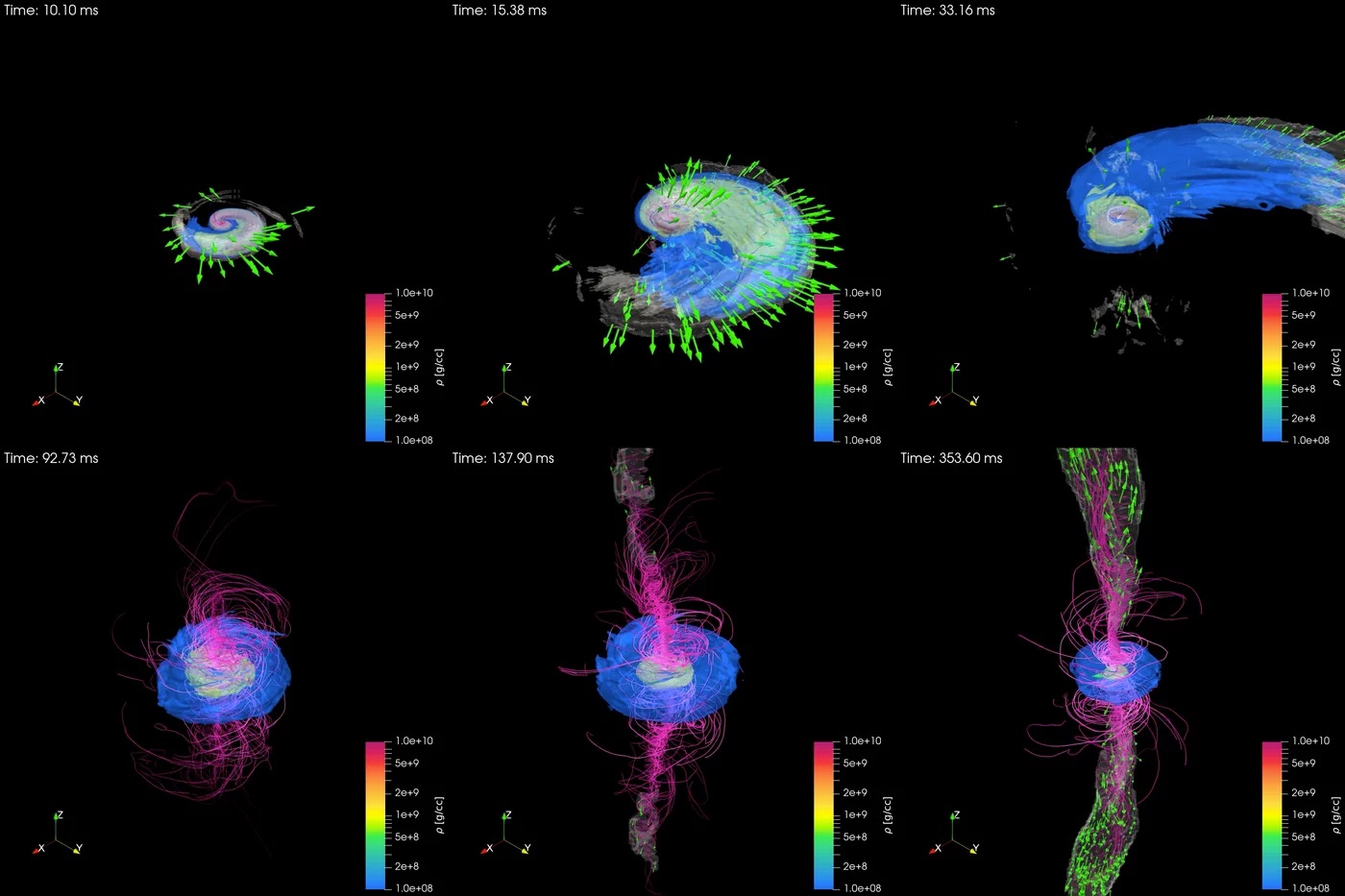
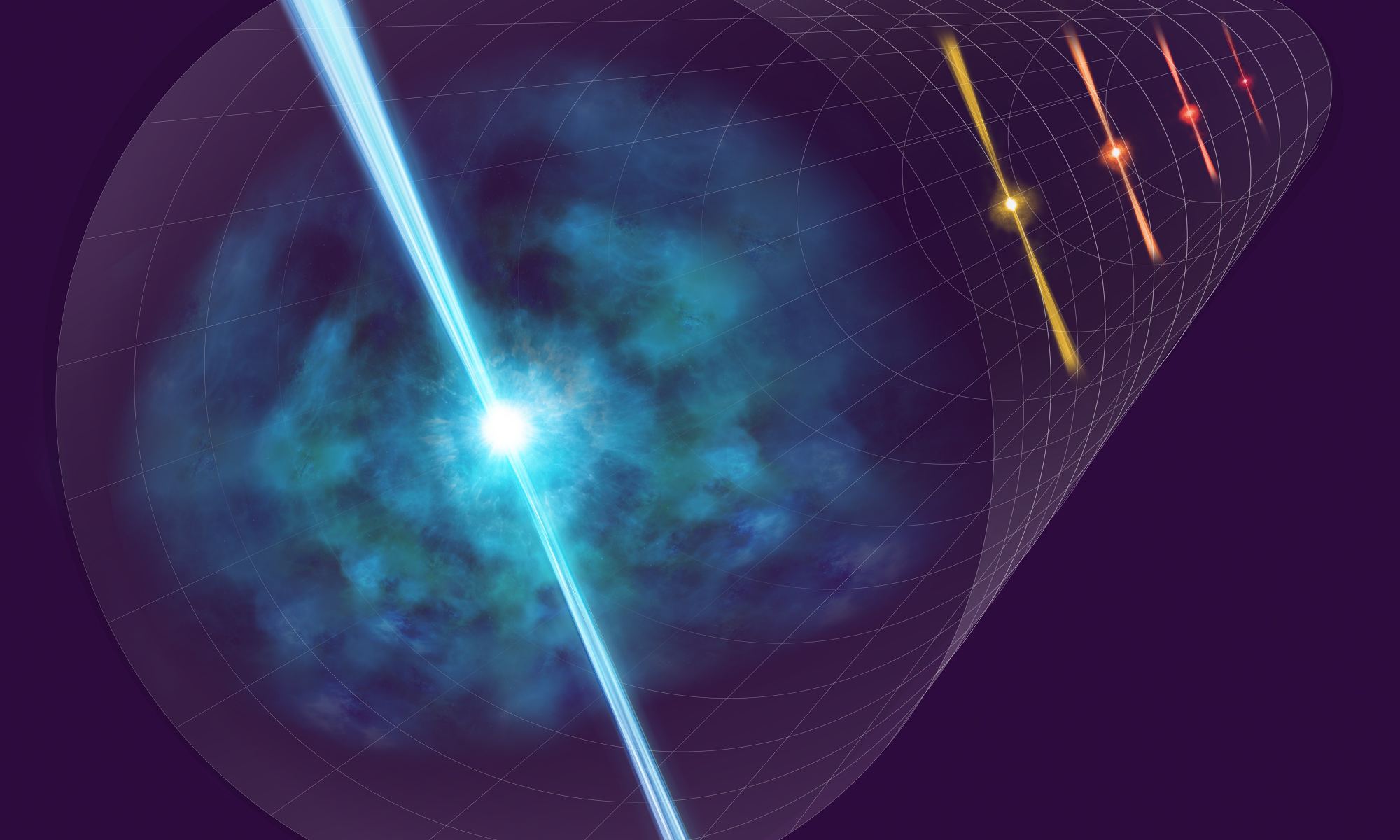
GRBs, especially the long kind, appear so bright because we are looking right into a narrow beam; long GRBs are most likely a particular kind of core-collapse supernova, in which two intense jets rip through the poles of the doomed star … we see the supernova itself only some time later (if at all). Short GRBs are still not well understood, but are most likely the merger of a pair of neutron stars (a close binary) or a black hole and a neutron star (also a close binary).
GRBs are the ultimate death ray … a GRB almost anywhere in our own galaxy, were its jets to be pointed at us, would instantly kill all life in the solar system, and, if close enough, vaporize the entire Earth (this scenario is one of the most interesting chapters in Phil Plait's book, Death from the Skies).
NASA has a simple intro to GRBs: Gamma Ray Bursts: Introduction to a Mystery.
There are LOTS of Universe Today articles on GRBs; here are a couple: More Observations of GRB 090423, the Most Distant Known Object in the Universe, and Closer, Dimmer Gamma Ray Burst Spotted.
Astronomy Cast has an episode dedicated to GRBs, Gamma-Ray Bursts; it's well worth a listen.
Filed under: Astronomy | No Comments »